

Note: This article contains affiliate links. If you click on these links and make a purchase, I may earn a small commission at no extra cost to you. This helps support my research and content. Read my full affiliate disclosure here.
If you grow mushrooms at home or at a small-scale operation, the substrate you use will determine how reliably mycelium colonizes and how consistent your flushes are. Coco coir is a popular base because it holds water without becoming waterlogged and has a neutral, fibrous texture that mixes well with supplements. Choosing the right coco coir matters for moisture stability, contamination resistance, and ease of preparation. This guide covers six shortlisted coco coir options suited for growing mushrooms and explains the evaluation criteria used. We focus on practical features gardeners and cultivators care about, like hydration behavior and consistency during colonization. Read on to find substrate options that match your setup and cultivation goals.
Top Picks at a Glance
| Best Overall The best all-around choice for most situations | North Spore Boomr Bag Sterile Manure-Based Mushroom Substrate, 5 lb |  |
| Best Quality Built to a higher standard if you want something more solid | North Spore Myco Coco Compressed Coco Coir Substrate, 3.4L |  |
| Best Value The sweet spot between price and what you get | North Spore CVG Sterilized Mushroom Substrate (1 pack) |  |
| Best Budget The cheapest option that still gets the job done reliably | MODELLOR Premium Super-Washed Coco Coir Bricks (2 pack) |  |
| Highest Rated A top-rated pick with lots of positive feedback | MycoSooner Premium CVG Mushroom Substrate, 5 lb |  |
| Most Popular A crowd favorite that many people choose with confidence | Boomer Shroomer Dry Bulk Mushroom Substrate (Coco Coir, Vermiculite, Gypsum) |  |
North Spore Boomr Bag Sterile Manure-Based Mushroom Substrate, 5 lb

| Item Weight | 5 pounds |
|---|---|
| Manufacturer | North Spore |
The North Spore Boomr Bag is a ready-to-use, sterile bulk substrate designed to speed colonization and maximize flush size for dung-loving mushrooms. Each 5 lb bag arrives hydrated to field capacity and contains a proprietary mix of composted horse manure, coco coir, and nutrient supplements formulated by mycologists. Typical use is to mix colonized grain spawn thoroughly into the substrate (North Spore suggests about 1 lb spawn per 5 lb bag) and incubate in monotubs, grow bags, trays, or directly from the bag in a humidity-controlled room. Notable features include commercial autoclave sterilization with biological indicator testing, room-temperature storage without refrigeration, and a formula optimized for vigorous mycelial growth. In practice the Boomr Bag reduces prep time compared with DIY substrates and produces consistent, large flushes when sterile technique is used. Limitations to plan for are that it is tailored to dung-loving species rather than hardwood species and successful results depend on proper inoculation and sterile handling to avoid contamination.
Best for: Growers who prioritize reliable performance and larger yields and want a ready-made, lab-sterilized substrate to cut prep time and improve consistency in monotub or controlled-room grows.
Less Ideal for: People focused on cultivating hardwood-loving species or those who prefer to formulate and sterilize their own custom substrates from raw materials.
- Sterilized in a commercial autoclave with biological indicator verification for contaminant-reduced starts
- Formulated by mycologists from composted horse manure and coco coir to support rapid mycelial growth
- Hydrated to field capacity so no additional watering or conditioning is required before inoculation
- Room-temperature storage allows keeping substrate on hand for several months without refrigeration
- Optimized specifically for dung-loving species and not the best choice for hardwood-loving mushrooms
Verdict: Choose the Boomr Bag when you want a lab-sterilized, ready-to-use substrate that speeds colonization and consistently boosts flush size for dung-loving mushrooms.
North Spore Myco Coco Compressed Coco Coir Substrate, 3.4L

| Volume | 1 gallons |
|---|---|
| Item Highlight | RHP Certified Coco Coir Brick – Triple-Washed and Buffered – Pest and Weed-Seed Free |
| Brand Name | North Spore |
North Spore Myco Coco is a compressed coco coir brick designed specifically for mushroom growing and casing layers. The brick rehydrates quickly with hot water into roughly 1 gallon (3.4 L) of loose coir that can be used as a thin 1/4 to 1/2 inch casing over colonized cakes or mixed into a bulk substrate recipe before pasteurizing or sterilizing. It is triple-washed, pH-buffered, and RHP certified, so it arrives free of pests and weed seeds and has consistent moisture-holding and air-to-water balance that supports steady mycelial colonization. Practical benefits include compact storage before use, predictable rehydration volume, and added trace magnesium and calcium that are helpful for mushroom growth. The product is intended for growers who want a clean, peat-free medium tailored to fungi rather than a generic coir. Important limitations are that it requires proper rehydration and pasteurization or sterilization before use and that one brick yields only about a gallon, so larger bulk grows will need multiple bricks or larger substrate products.
Best for: Serious hobbyists and small-scale growers who prioritize consistent, laboratory-minded substrates for reliable colonization and predictable casing behavior.
Less Ideal for: Large-scale commercial growers who need bulk volumes from a single purchase or beginners who want a plug-and-play grow kit with minimal prep.
- RHP certified and triple-washed for consistent, contaminant-resistant substrate
- Buffered pH and added trace magnesium and calcium to support mushroom growth
- Rehydrates to a predictable volume (about 1 gallon) for reliable planning
- Compact compressed brick stores easily until needed and expands quickly with hot water
- Small yield per brick means multiple units are needed for larger monotub or bulk projects
- Requires correct rehydration and pasteurization or sterilization before use to avoid contamination risks
Verdict: Choose Myco Coco when you want a small, lab-minded coco coir brick that reliably rehydrates into a clean, pH-balanced substrate tailored for consistent mushroom cultivation.
North Spore CVG Sterilized Mushroom Substrate (1 pack)

| Item Highlight | coco coir, vermiculite & gypsum blend; hydrated to field capacity; commercial autoclave sterilized |
|---|---|
| Number of Packs | 1 |
| Ingredients | Coco coir, Vermiculite, Gypsum |
| Style Name | Classic |
North Spore CVG is a ready-to-use bulk substrate blend of coco coir, vermiculite, and gypsum that comes prehydrated and autoclave-sterilized so you can spawn immediately without extra prep. Typical use is straightforward: inject a sterile bag with your chosen species or mix colonized grain spawn into the CVG in a monotub or Boomr Bin, then let it colonize and case with the included Myco Coco when specified. The formulation emphasizes moisture retention and aeration while keeping nitrogen low to reduce contamination risk, and the gypsum helps stabilize pH and provide calcium. Third-party tested ingredients and commercial sterilization give novices more confidence, and the bagged, field-capacity hydration saves time compared with mixing raw components. Limitations are that it is a generalist manure-friendly substrate rather than a nutrient-rich formula for every species, and growers who prefer outdoor log or pure hardwood substrates will want a different base. For steady indoor monotub grows, CVG speeds setup and reduces common beginner mistakes but does not eliminate the need for sterile technique and proper spawn ratios.
Best for: Buyers who want a low-fuss, reliable indoor substrate to reduce prep time and contamination risk when running monotub or bulk spawn projects.
Less Ideal for: Growers focused on outdoor log culture or those who want a highly customized, nutrient-rich substrate recipe for specialty species should look elsewhere.
- Ready-to-use and prehydrated so you can spawn immediately
- Commercially autoclave-sterilized to lower contamination risk
- Balanced CVG mix provides good moisture retention and aeration
- Third-party tested ingredients and batch verification for consistency
- Designed as a general CVG blend so it may not be optimal for species that prefer hardwood- or nutrient-rich substrates
- Requires sterile technique and proper inoculation ratios for best results
Verdict: Pick this sterilized, prehydrated CVG substrate if you want a low-prep, contamination-resistant starting point for indoor monotub and bulk mushroom grows.
MODELLOR Premium Super-Washed Coco Coir Bricks (2 pack)

| Number of Packs | 2 |
|---|---|
| Item Weight | 2.5 pounds |
| Volume | 18 quarts |
| Style Name | Coco Coir, Potting Mix, Bricks |
MODELLOR Premium Super-Washed Coco Coir comes as two compact bricks that hydrate into a loose, fibrous medium suitable for fresh substrate or bulk substrate mixes used in mushroom cultivation. Because the coir is triple-washed and low-salt it is ready to use without rinsing, which saves time when preparing spawn bags or bulk tubs. The light, airy texture improves water retention and aeration, making it easier to achieve a consistent moisture level for spawn colonization. At 18 quarts total from two bricks, it provides enough substrate for small to moderate home mushroom projects or to mix with pasteurized supplements. Practical limits: the quantity suits home growers rather than large batches, and coir lacks nutrients so growers must add appropriate supplements or a nutrient-rich bulk for higher yields. Also, while low in contaminants, strict sterile technique is still required for successful inoculation and fruiting. For budget-minded cultivators who want a clean, ready coir base, this product is a straightforward, space-saving option.
Best for: Home mushroom cultivators on a budget who need a clean, ready-to-use coir base for small to medium batch substrate or for mixing with supplements.
Less Ideal for: Large-scale growers or those who want a fully nutrient-rich substrate out of the box should look for larger volumes or pre-supplemented bulk substrates.
- Triple-washed and low-salt so it is usable straight from the package without additional rinsing
- Expands to a fluffy, aerated medium that holds moisture well for spawn colonization
- Compact bricks are easy to store and transport compared with loose coir bags
- Total volume is modest, better for small batches or mixes rather than large-scale substrate preparations
- No inherent nutrients so supplementation is required for higher-yield mushroom grows
Verdict: A compact, low-salt coco coir that hydrates to a clean, well-aerated substrate ideal for budget home mushroom growers preparing small batches.
MycoSooner Premium CVG Mushroom Substrate, 5 lb

| Unit Count | 80 Ounce |
|---|---|
| Number of Packs | 1 |
| Item Highlight | Coco coir, vermiculite and gypsum blend, sterilized and hydrated to field capacity, ready to use |
| Style Name | Premium CVG Blend |
This MycoSooner Premium CVG substrate is a pre-blended, sterilized 5 lb bag of coco coir, vermiculite and gypsum supplied hydrated to field capacity, which means you can skip measuring and mixing base ingredients. It is designed for mushroom growers who want a consistent CVG medium ready straight from the bag: open, inoculate or pasteurize according to your method, and proceed. The sterilization and hydration reduce prep time and variability, and the inclusion of gypsum helps buffer pH and supply calcium during colonization. For reliability-focused growers this product minimizes a common source of contamination and inconsistent texture that comes from hand-mixing. The main limitations are the fixed blend and quantity — experienced growers who prefer custom ratios, larger batches, or dry compact storage for long-term keeping will need a different option. Also, any additional sterilization or pasteurization steps required by a specific species or technique are still the grower’s responsibility.
Best for: Growers who prioritize consistent, low-prep substrate and want a reliable, ready-made CVG medium to reduce variability and handling before inoculation.
Less Ideal for: Cultivators who make large-volume runs, require dry bulk storage, or need to tailor coco coir, vermiculite and gypsum ratios for specific mushroom strains.
- Pre-sterilized and hydrated so it is ready to use out of the bag
- Pre-blended CVG formula removes the need to measure and mix separate ingredients
- Gypsum inclusion helps buffer pH and supply calcium during colonization
- Consistent texture and composition reduce variability between batches
- Fixed 5 lb quantity may be too small for growers who run large or multiple batches
- Blend ratios are not adjustable for growers who prefer custom substrate recipes
Verdict: Buy this if you want a reliable, ready-to-use CVG substrate that saves prep time and delivers consistent results for small to medium mushroom grows.
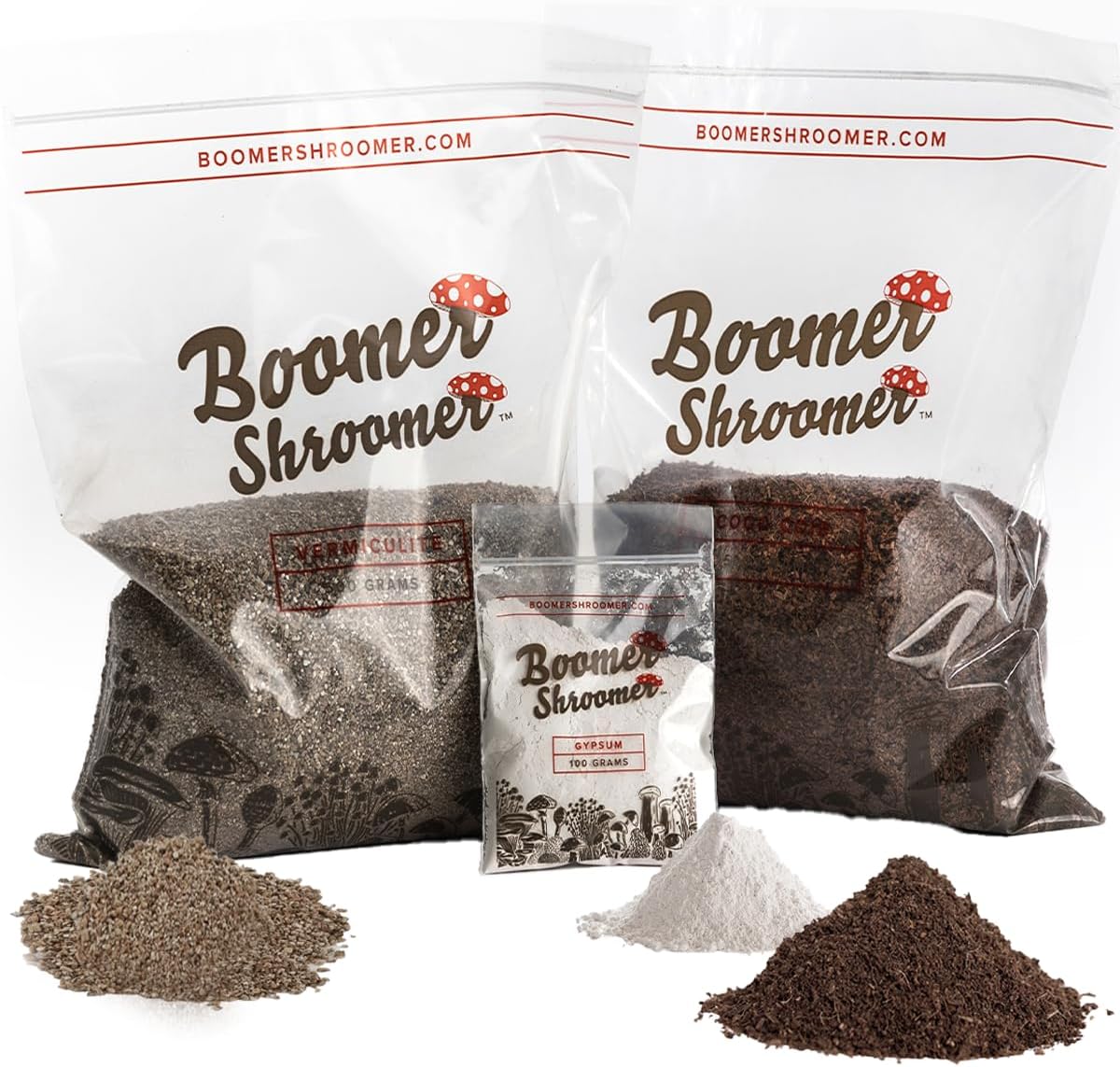
Boomer Shroomer Dry Bulk Mushroom Substrate (Coco Coir, Vermiculite, Gypsum)
| Style Name | Coco Coir,Vermiculite |
|---|---|
| Volume | 5 gallons |
This Boomer Shroomer bulk substrate arrives as a dry CVG blend (500 g coco coir, 500 g vermiculite, 100 g gypsum) intended for hydration and pasteurization in a 5-gallon bucket. The mix is simple to prepare: add boiling water, reach field capacity, and pasteurize for about 24 hours to create a ready-to-use substrate for spawn-to-bulk transfers. Coco coir retains moisture while vermiculite improves aeration and gypsum helps stabilize pH, which together support healthy mycelial colonization and multiple flushes. The stated yield is roughly 9 pounds of hydrated substrate, enough for two monotub grows or several smaller trays, which makes it convenient for hobbyists who want a consistent, no-mixing-from-scratch option. Limitations are that the package is a fixed recipe and quantity, so users who need larger volumes or different ratios must purchase multiple bags or adjust with additional ingredients. Also pasteurization and cleanliness remain the user responsibility to avoid contamination.
Best for: Buyers who want a ready-to-hydrate, reliably mixed substrate to speed up monotub or tray grows and who prefer guidance and consistent results over mixing individual components.
Less Ideal for: Large-scale cultivators seeking bulk volumes or growers who want to custom-tune substrate ratios for specific strains should consider purchasing raw components instead.
- Pre-measured CVG formula tailored for mushroom substrate preparation
- Simple hydration method using boiling water and 24-hour pasteurization
- Good moisture retention and aeration balance for strong mycelial growth
- Yield suitable for two monotub runs or multiple smaller fruiting setups
- Fixed bag quantity and ratio may not suit growers who prefer custom blends or larger batches
- Requires user-performed pasteurization and sterile technique to prevent contamination
Verdict: A convenient, beginner-friendly CVG mix that delivers a consistent, ready-to-hydrate substrate for hobbyist monotubs and small-scale mushroom grows.
Choosing the Right Coco Coir for Growing Mushrooms: Key Factors to Consider
Hydration and Water-Holding Capacity
Proper hydration is central to mushroom cultivation because mycelium needs a steady supply of water but not free-standing liquid. Coco coir that absorbs evenly gives you a substrate that stays moist through colonization and into fruiting without pooling water that encourages contaminants. Look for coir that rehydrates into a uniformly damp, crumbly texture rather than a muddy slurry.
Hydration behavior also affects how much supplementation you can add. If coir retains water well, you can maintain higher moisture levels during long colonization periods. Conversely, coir that drains too quickly will require more frequent misting or higher initial hydration, which increases labor and the chance of uneven colonization.
Fiber Texture and Consistency
The physical structure of coir-long fibers versus fine dust-changes how spawn interacts with the substrate. Coir with a consistent fibrous texture creates air pockets that facilitate mycelial spread while still holding moisture. Very fine or dusty coir can compact, reducing aeration and slowing colonization, while very coarse chunks may leave gaps that slow mycelial bridging.
Consistency matters batch to batch. When you can expect similar texture each time, your hydration and mixing protocols remain predictable. This is particularly important if you scale up production or use strict substrate ratios.
Contamination Risk and Cleanliness
Coco coir is not sterile by default, so reduced contamination risk comes from how the material was processed and packaged. Pre-washed and compressed coir often contains fewer stray organic contaminants than loose, unprocessed fiber. Less debris and fewer extraneous plant particles mean fewer food sources for unwanted molds or bacteria.
How you hydrate and pasteurize the coir also affects contamination outcomes, but starting with cleaner material lowers the baseline risk. Consider products that indicate they were rinsed, buffered, or processed to remove salts and dust when contamination control is a priority.
Ease of Preparation and Rehydration Speed
Time spent preparing substrate adds up, so coir that rehydrates quickly and breaks apart with minimal manual effort saves labor. Some compressed blocks require extended soaking and mechanical breaking to achieve a workable texture, while loose coir or quick-fluff blends come ready after a short soak.
Ease of preparation ties directly to consistency too. If a product requires variable soaking times, you will see batch-to-batch hydration differences that affect colonization speed and the timing of inoculation or spawning.
Packaging Size and Format
Coco coir comes in many formats: small bricks, large bales, loose bags, and pre-expanded blocks. The right format depends on your scale and storage options. Small compressed bricks are economical for hobbyists and are easy to store but require more prep. Large bales reduce handling for bulk growers but need space and equipment to break apart.
Consider how long the coir will sit after opening. Exposed coir can dry out or pick up dust and spores from the environment. Resealable packaging, compact bricks that remain intact until soaked, or formats that let you portion material easily reduce waste and contamination exposure.
pH and Salt Content
Coco coir can vary in pH and residual salts depending on how it was processed. High salt content can inhibit mycelial growth and interfere with added nutrients. Many growers prefer buffered coir that has been treated to remove excessive salts and bring pH into a neutral range suitable for fungi.
If a product does not specify buffering, assume you may need to rinse or buffer the coir before use. Monitoring pH and electrical conductivity becomes more important when you plan to supplement the substrate with nutrient-rich additives.
Preparing Coco Coir for Mushroom Substrate
Start by breaking compressed coir into small pieces and soaking it in warm water until fully expanded. Work the fiber with gloved hands or a clean tool to remove clumps and achieve an even, fluffy texture. Drain off excess liquid so the coir is moist but not dripping; the squeeze test-where a handful yields a few drops when squeezed-is a reliable target for most species.
If you plan to pasteurize, maintain the recommended temperature and time to reduce competing microbes without sterilizing the substrate entirely. For small batches, a covered pot or sanitized container works; larger volumes may need dedicated pasteurization equipment.
- Use clean water and a sanitized container to avoid introducing spores.
- Adjust soaking time based on the product format; bricks take longer than loose coir.
- Check moisture visually and with the squeeze test rather than relying solely on soak time.
Amending Coco Coir for Better Yields
Coco coir is often mixed with supplements like vermiculite, gypsum, or sterilized grain spawn to improve nutrient availability and structure. Choose amendments that match your species' nutritional needs and your contamination control workflow. Sterilized supplements require careful handling to prevent introducing contaminants.
Balance is key. Too much nutrient-rich amendment can invite competitors, while too little may limit fruit body development. Many growers start with conservative amendment ratios and adjust after observing colonization and fruiting performance.
- Vermiculite improves moisture retention and aeration.
- Gypsum can help maintain calcium levels and reduce clumping.
- Sterilized hydrated grain or sawdust adds nutrients but increases contamination risk if not handled properly.
Scaling From Hobby to Small Production
When increasing batch size, consistency in your coir source and preparation method becomes more important than finding a marginally cheaper option. Small differences in hydration or fiber size that were manageable at hobby scale can lead to uneven colonization and more contamination in larger runs.
Consider workflow changes when scaling: larger soaking vessels, mechanical fluffers, and dedicated storage for expanded coir can save time and reduce variability between batches.
- Standardize soak times and water ratios for repeatable results.
- Invest in reusable, easy-to-clean tools for breaking and mixing coir.
- Track batches so you can correlate substrate variations with cultivation outcomes.
Storage and Shelf Life of Coco Coir
Store dry coir in a cool, dry place away from direct sunlight and sources of contamination. Once a package is opened, reseal or transfer to clean, airtight containers to prevent dust and spores from settling into the fibers. Compressed bricks may last longer unopened, but once expanded they are more exposed to environmental spores.
If coir becomes damp during storage, discard or reprocess it because damp fibers are a breeding ground for molds and bacteria. Rotate stock so older bags are used first and keep records of lot conditions if you manage multiple batches.
- Keep opened coir off the ground and in sealed bins.
- Label storage containers with date opened and origin.
- Avoid storing near compost piles, potting soil, or other organic materials.
Troubleshooting Colonization Problems
Slow or patchy colonization often traces back to uneven moisture, compacted coir, or contamination. Verify that your hydration level matches the squeeze test and that the substrate has been mixed evenly with spawn. Avoid overpacking containers, which reduces air exchange and slows mycelial spread.
If contaminants appear, consider whether the coir was sufficiently pasteurized or whether preparation tools and containers were sanitized. Adjusting prep routines and using a cleaner starting material can reduce repeat contamination issues.
- Reassess moisture by sampling multiple spots in the substrate.
- Loosen compacted areas gently to restore aeration if contamination is not present.
- Document environmental conditions like room temperature and humidity to spot trends.
How We Chose the Best Coco Coir for Growing Mushrooms
We selected coco coir options based on attributes that directly affect mushroom cultivation success. Our filters prioritized substrate consistency, hydration characteristics, contamination risk, ease of preparation, and packaging format. We favored products with uniform fiber texture and predictable water-holding capacity because those traits influence how evenly mycelium spreads through the substrate. Hydration stability was assessed by how the coir absorbs and retains water without turning muddy, which impacts both colonization and fruiting stages. Contamination risk was judged by processing cleanliness and whether the product is pre-washed or compressed to limit foreign organic matter. Ease of preparation covered how quickly the coir breaks apart, how much soaking time is needed, and whether it rehydrates to a workable texture. Packaging format and volume were considered for different grow scales, from small jars to larger monotubs. We excluded coir mixes that were heavily amended at the factory or primarily intended as potting mixes with fertilizers, since additives can alter mycelial growth. The final picks reflect substrates that meet practical mushroom-growing needs while minimizing surprises during prep and colonization.
FAQ
Is coco coir sterile out of the bag?
No. Most coco coir is not sterile straight from packaging. It is processed plant fiber and may contain ambient microbes. Many growers pasteurize or properly hydrate and monitor coir before inoculation to lower contamination risk.
How do I test if my hydrated coir has the right moisture level?
Use the squeeze test: a handful should release a few drops when squeezed but not produce a stream. The substrate should feel uniformly damp and crumbly rather than wet and compact. Checking several spots ensures even hydration.
Can I reuse coco coir between grows?
Reusing coir is possible but not recommended for high-yield or sterile setups because residual mycelial byproducts and microbial populations can build up. If you reuse it, sterilize or pasteurize thoroughly and monitor for slower colonization or contamination.
Should I buffer coco coir to remove salts for mushroom cultivation?
Buffering can be helpful if you suspect high salt content, especially with coir sourced from coastal production. Rinsing and soaking in buffered water or following manufacturer instructions reduces residual salts that might inhibit fungal growth.
What is the best format of coir for a beginner grower?
Beginners usually benefit from pre-expanded or easy-to-fluff formats that require minimal soaking and produce consistent texture. Small compressed bricks are workable but need more prep time and handling experience to get consistent hydration.
Final Verdict
Choosing the right coco coir for growing mushrooms comes down to balancing moisture control, texture consistency, and contamination risk. Prioritize substrates that rehydrate predictably and have a uniform fiber structure so your spawn spreads evenly. Consider packaging and preparation time based on your scale, and plan for buffering or rinsing if salt content is a concern. Focus on controllable factors like hydration protocol, pasteurization routines, and clean handling. With the right coir and consistent preparation, you will reduce surprises during colonization and improve the reliability of your flushes.
