

Note: This article contains affiliate links. If you click on these links and make a purchase, I may earn a small commission at no extra cost to you. This helps support my research and content. Read my full affiliate disclosure here.
Picking the right fertilizer for flowering annuals changes how your beds and containers look across the season. The right formula feeds buds at the stages they need it, supports repeated flowering, and reduces runoff or burn risk when you are caring for pots, hanging baskets, or garden borders. This guide shortlists the top products suited specifically for blooming annuals and explains how they were judged on nutrient profile, ease of use, and real-garden performance. Read on to understand the tradeoffs between concentrated feeds, slow-release blends, and liquid options so you can pick a feeding plan that fits your schedule and planting style.
Top Picks at a Glance
| Best Overall The best all-around choice for most situations | Jack's Classic Blossom Booster Water-Soluble Fertilizer 10-30-20, 1.5 lb |  |
| Best Quality Built to a higher standard if you want something more solid | FoxFarm Tiger Bloom Liquid Plant Food (1 pint) |  |
| Best Value The sweet spot between price and what you get | Scotts Rose & Bloom Continuous Release Plant Food, 3 lb |  |
| Best Budget The cheapest option that still gets the job done reliably | ferti-lome All Purpose Water Soluble Plant Food 20-20-20 (8 oz) |  |
| Highest Rated A top-rated pick with lots of positive feedback | Miracle-Gro Water Soluble Bloom Booster Flower Food, 10-52-10, 1 lb |  |
| Most Popular A crowd favorite that many people choose with confidence | Miracle-Gro Water Soluble Bloom Booster Flower Food, 5.5 lb |  |
| Best Seller A high-volume bestseller chosen again and again | Jack's Classic Blossom Booster 10-30-20 Water-Soluble Fertilizer, 8 oz |  |
Jack's Classic Blossom Booster Water-Soluble Fertilizer 10-30-20, 1.5 lb

| Item Form | Powder |
|---|---|
| Application Method | foliar or root feeding |
| Target Species | Flowers |
| Mixing Ratio | 1:3:2 |
Jack's Classic 10-30-20 Blossom Booster is a concentrated powdered fertilizer formulated to push flowering and improve bloom color and quantity. It mixes with water using the included scoop and can be applied as a foliar spray, root drench, or in continuous-feed setups, which makes it convenient for both potted dahlias and garden beds. The high middle number (phosphorus) supports bud set and flowering while added micronutrients help overall plant health. Practical benefits include economical coverage from a powder concentrate, clear mixing directions for frequent or maintenance feedings, and compatibility with different application methods. Limitations to note are that it is a bloom-focused formula so it is not balanced for heavy leafy growth and must be measured and mixed correctly to avoid overfeeding. Users should follow the specified dilution rates and timing around bud set to get the best results for dahlias.
Best for: Gardeners who prioritize bigger, more plentiful blooms on dahlias and want a cost-effective, flexible fertilizer they can apply by spray or soil drench.
Less Ideal for: Growers focused on building foliage, establishing young plants, or those who want an all-in-one balanced feed for both vegetative growth and flowering.
- High phosphorus ratio (10-30-20) tailored to increase bloom set and flower production
- Water-soluble powder concentrates allow economical mixing for multiple gallons of feed
- Can be used as foliar spray or root drench and works with continuous-feed systems
- Includes a measuring spoon and clear mixing ratios for straightforward application
- Formulated primarily for flowering so it is not ideal when promoting strong vegetative growth
- Requires careful measuring and mixing which adds a small learning step for new users
Verdict: Choose this concentrated 10-30-20 water-soluble booster when you want a practical, application-flexible fertilizer to increase dahlia bloom number and color.
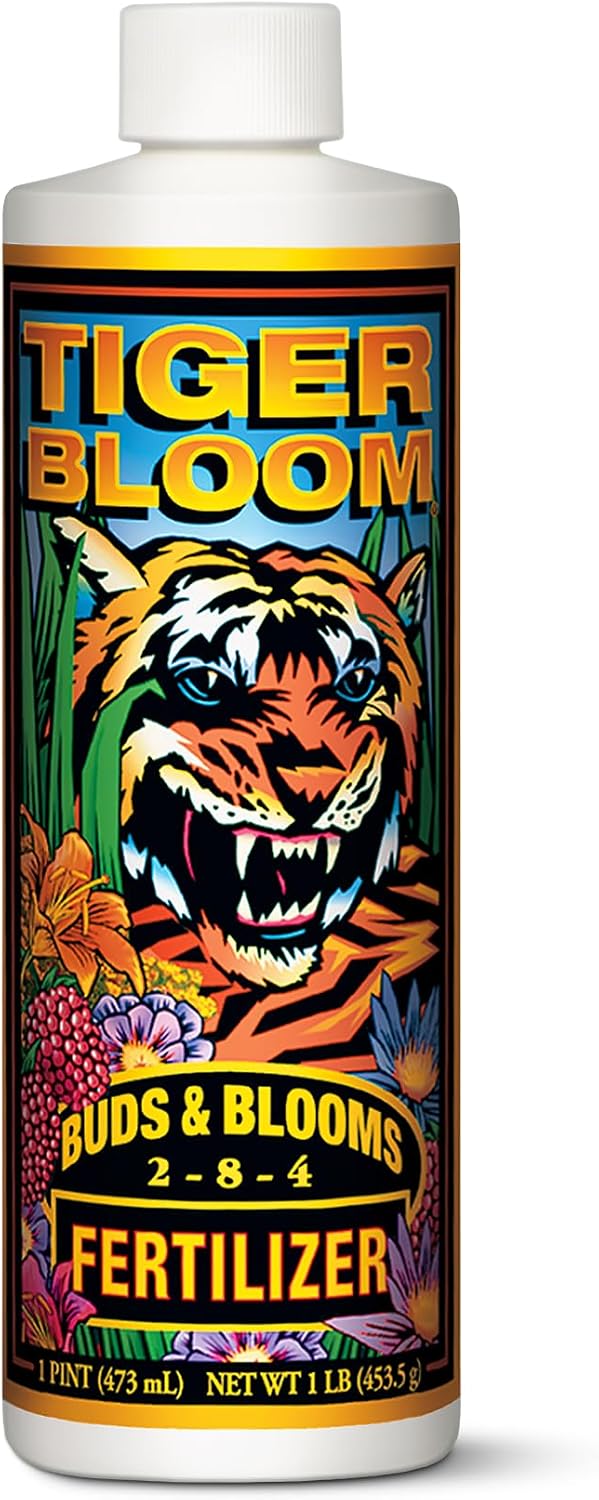
FoxFarm Tiger Bloom Liquid Plant Food (1 pint)
| Item Form | Liquid |
|---|---|
| Specific Uses For Product | Hydroponic |
| Application Method | Watering; Foliar spraying |
| Target Species | Flowering Plants |
| Mixing Ratio | 1:200 or 1:300 |
Tiger Bloom is a liquid, high-phosphorus fertilizer designed to push plants into a strong flowering and fruiting phase. You mix a small amount into the irrigation water or use it as a foliar spray and apply from first signs of flowering through harvest. The 2-8-4 formula and included micronutrients support bud set and larger blooms, and the concentrate mixes at 1:200 to 1:300 for routine feeding or 2 to 4 teaspoons per gallon for heavier feeding. It works in both soil and hydroponic setups and is formulated for quick nutrient uptake and stable micronutrient availability during storage. Practical benefits include flexible application methods, suitability for intensive flowering cycles, and a small bottle that lasts when used at recommended dilutions. Important limitations are that it is bloom-focused rather than an all-purpose feed so it may not meet vegetative needs, and the phosphorus content means users near waterways should follow local regulations to avoid runoff issues.
Best for: Serious growers who prioritize maximizing flower and bloom performance and want a concentrated, fast-acting bloom booster for soil or hydroponic environments.
Less Ideal for: Casual gardeners seeking a single all-purpose fertilizer for every growth stage or those managing turf or non-flowering lawns where phosphorus restrictions apply.
- High phosphorus NPK (2-8-4) concentrated for stronger bud development
- Works in soil and hydroponic systems for versatile use
- Liquid concentrate mixes easily for foliar or watering applications
- Formulated for quick nutrient uptake and stable micronutrient availability
- Focused on flowering so it is not a balanced all-stage fertilizer
- Contains phosphorus which may be restricted near waterways
Verdict: Choose Tiger Bloom when you need a concentrated, fast-acting bloom booster to maximize flower and fruit production.
Scotts Rose & Bloom Continuous Release Plant Food, 3 lb

| Item Form | Granules |
|---|---|
| Coverage | Medium |
| Target Species | Roses, annuals, perennials |
| Mixing Ratio | 12-4-8 |
| Unit Count | 48 Ounce |
This Scotts Rose & Bloom formula is a simple, no-frills granular fertilizer made to encourage flowering on roses, annuals and perennials. You apply it directly to soil, lightly rake it into the top 1–3 inches, water in, and it releases nutrients steadily for about two months. The N-P-K analysis (12-4-8) and emphasis on phosphorus means it favors bloom production over leafy growth, so it is useful during the flowering season. Its strengths are ease of use and predictable, slow feeding that reduces how often you need to treat beds. Because it is a granular continuous-release product, results appear over weeks rather than instantly like a liquid feed. Users should follow label rates to avoid overapplication and wear gloves to avoid skin or eye contact. For gardeners wanting a budget-friendly, low-maintenance way to increase bloom set, this product delivers reliable performance, but those who need rapid corrective feeding or precise soluble nutrition may prefer a water-soluble alternative.
Best for: Gardeners who want an affordable, low-maintenance fertilizer to increase flowering with fewer applications during the growing season.
Less Ideal for: Growers who need fast-acting, soluble feeds for quick correction or precise nutrient control should consider a water-soluble fertilizer instead.
- Continuous-release granules feed plants for up to two months, cutting application frequency
- Formulated to promote blooms on roses, annuals and perennials
- Easy application: sprinkle, rake into topsoil and water in
- Widely suitable for outdoor beds and containers when used as directed
- Not water-soluble so it does not provide an immediate nutrient boost
- Contains chemicals that require safe handling and temporary area reentry restrictions
Verdict: A budget-friendly, easy-to-use continuous-release fertilizer that reliably boosts blooms with only occasional applications.
ferti-lome All Purpose Water Soluble Plant Food 20-20-20 (8 oz)

| Item Form | Liquid |
|---|---|
| Application Method | soil drench and foliar spray |
| Target Species | Geraniums, Pansies, Petunias, Impatiens, annuals, perennials, hanging baskets |
| Mixing Ratio | 1:64 (soil), 1:256 (foliar) |
This 8 oz bottle of ferti-lome 20-20-20 is a straightforward, balanced water‑soluble fertilizer for flowering annuals like zinnias. It mixes easily—directions call for 1–2 teaspoons per gallon for soil applications and a much weaker foliar spray—so you can feed plants either through the potting mix or by spraying leaves. The even N-P-K ratio supports steady vegetative growth while supplying phosphorus and potassium for blooms and overall vigor. Because it is liquid and concentrated, small amounts treat many plants and you can apply it every watering or every few days for continuous bloom production. Limitations are the small 8 oz size if you maintain a large planting area and the lack of granular slow‑release option for low‑maintenance schedules. Also it is a general purpose formula rather than a zinnia-specific bloom booster, so some growers may prefer a higher-phosphorus feed when pushing heavy flower set.
Best for: Gardeners who want an affordable, easy-to-mix liquid fertilizer to keep zinnias and other bedding annuals blooming regularly without complicated feeding schedules.
Less Ideal for: Large-scale or low-maintenance gardeners who prefer slow‑release granules or a high‑phosphorus bloom formula tailored specifically for heavy flowering.
- Balanced 20-20-20 formula suitable for foliage and flowering needs
- Water‑soluble concentrate that mixes quickly for soil or foliar feeding
- Concentrated dosing means small bottle treats many plants when mixed correctly
- Small 8 oz bottle may require frequent repurchase for larger beds or repeated use
- Not a high-phosphorus bloom booster if you want to force extra-heavy flowering
Verdict: A compact, easy-to-use 20-20-20 liquid fertilizer that delivers frequent, balanced feeding to keep zinnias blooming without complicated mixing.
Miracle-Gro Water Soluble Bloom Booster Flower Food, 10-52-10, 1 lb

| Item Form | Liquid |
|---|---|
| Application Method | Water Soluble |
| Coverage | 500 square feet |
| Target Species | all blooming plants |
| Mixing Ratio | 1 tablespoon/gallon (1.5 tsp for indoor plants) |
This Miracle-Gro bloom booster is a water-soluble plant food designed for flowering annuals and perennials, and it is typically mixed into a watering can or used with a garden feeder. The 10-52-10 formula supplies a high phosphorus dose aimed at increasing bud set and flower production, and it starts working quickly through root and foliar feeding when applied as directed. Practical features include a simple mixing ratio (1 tablespoon per gallon for outdoor use, reduced rate for indoor plants) and compatibility with the Miracle-Gro garden feeder for easy coverage up to about 500 square feet per refill. For gardeners focused on colorful displays, the concentrated phosphorus and repeat feeding schedule (every 7 to 14 days during bloom) deliver noticeably fuller flower shows. Limitations are that it is specifically a bloom booster rather than an all-purpose fertilizer and should be used only during bud set and bloom to avoid nutrient imbalance; following label rates is important to prevent overfeeding. For basic container or bedding displays, it is an easy-to-use option that targets bloom performance without complicated application steps.
Best for: Gardeners who want an affordable, straightforward booster to increase flower production on annuals and container displays and who plan to feed regularly during the bloom period.
Less Ideal for: Those seeking an all-in-one, season-long fertilizer or a slow-release product for hands-off maintenance should look elsewhere.
- High phosphorus 10-52-10 formula to promote more blooms and better bud set
- Water-soluble for quick uptake and easy mixing in a watering can or garden feeder
- Clear mixing instructions with lower indoor rate to reduce risk of burning when used as directed
- Covers a substantial area per feeder refill, useful for beds and multiple containers
- Focused on bloom boosting rather than providing a balanced, all-season nutrient program
Verdict: If you want an inexpensive, easy-to-use booster that reliably increases blooms on annuals and containers, this is a strong, no-frills choice.
Miracle-Gro Water Soluble Bloom Booster Flower Food, 5.5 lb

| Item Form | Powder |
|---|---|
| Application Method | Mix with water |
| Target Species | Flower |
| Mixing Ratio | 1:Water |
Miracle‑Gro Water Soluble Bloom Booster is a powdered, water‑mix fertilizer designed to be dissolved and applied every 7 to 14 days to flowering plants. It carries a high middle number NPK (10‑52‑10) so it delivers an extra boost of phosphorus to encourage bud set and larger blooms, and it can be used for in‑ground beds, containers and indoor flowering plants when diluted to the package directions. The included mixing guidance and scoop make it straightforward to dose for small containers or larger garden areas, and one 5.5 lb container covers a substantial area. Practical benefits include fast uptake when watered in at the base of plants and compatibility with common feeders or a watering can. Limitations are that the concentrated phosphorus focus is for flowering performance rather than overall foliage growth and it requires regular reapplication through the blooming season rather than a single slow‑release feed. Also users should follow safety directions when handling and avoid overfeeding sensitive or newly transplanted plants.
Best for: Gardeners who prioritize showy, frequent blooms and want a product they can apply regularly to flower beds and containers during the flowering season.
Less Ideal for: People looking for an all‑season, low‑maintenance slow‑release fertilizer or those who need a balanced feed for foliage and establishment of new transplants.
- High phosphorus NPK (10-52-10) targets bud set and bloom production
- Water‑soluble powder mixes quickly for fast feeding and easy use in a watering can or garden feeder
- Suitable for both in‑ground beds and container flowering plants including roses and hydrangeas
- Covers a large area from a single 5.5 lb container when used to label directions
- Requires frequent applications during bloom period rather than providing long‑term slow release
- Formulation focuses on flowering so it is less balanced for leafy growth or general maintenance
Verdict: Choose this bloom booster if your goal is bigger, more frequent flowers by feeding a high‑phosphorus, fast‑acting soluble fertilizer during bloom season.
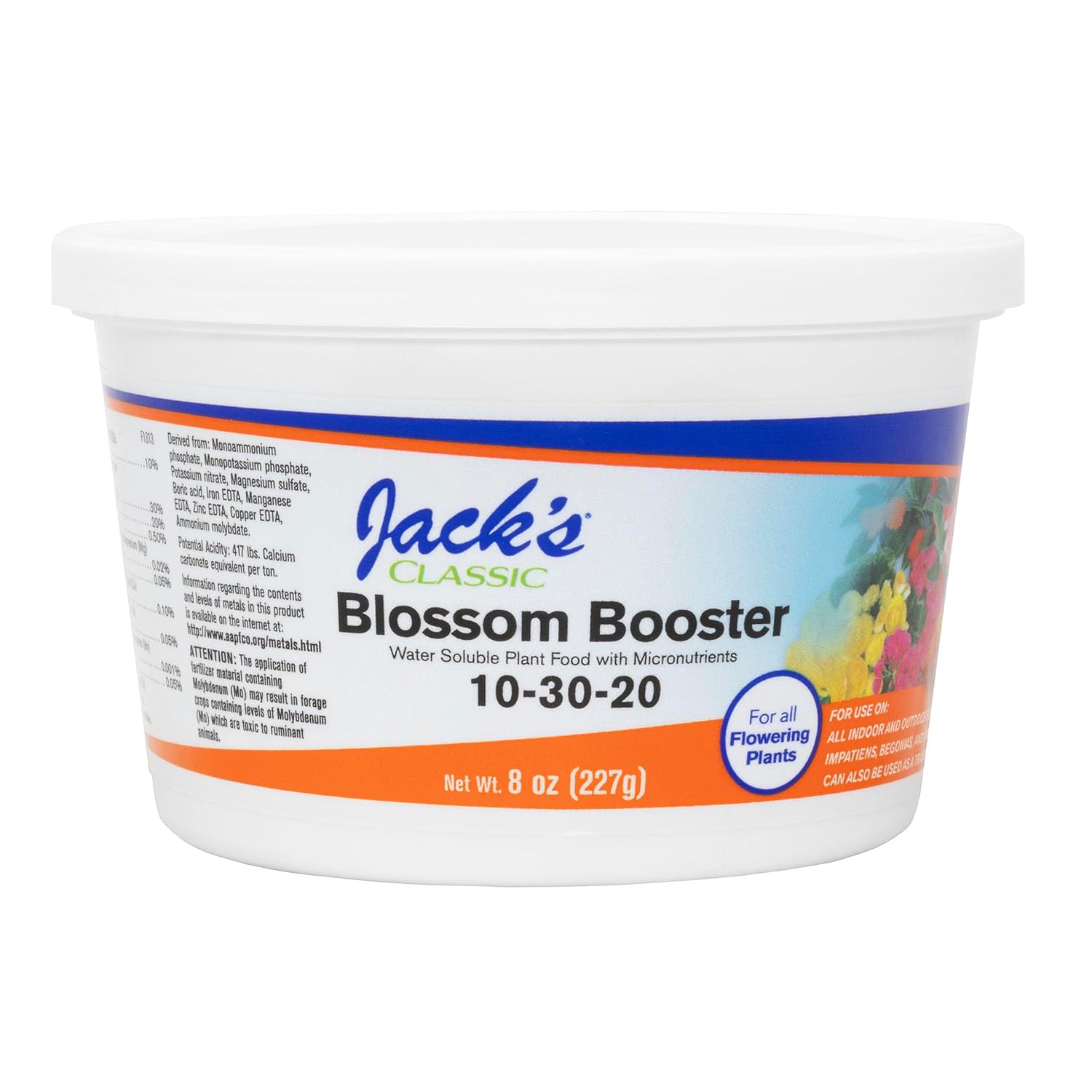
Jack's Classic Blossom Booster 10-30-20 Water-Soluble Fertilizer, 8 oz
| Item Form | Powder |
|---|---|
| Application Method | Watering or spraying on leaves |
| Mixing Ratio | 10-30-20 |
| Target Species | Flowering plants |
Jack's Classic Blossom Booster is a concentrated, water-soluble powder designed to increase bloom quantity and color on annuals and other flowering plants. You mix the powder with water using the included measuring spoon and apply it as a root drench or foliar spray, so it works for hand-watering, sprayers, or continuous feed systems. The 10-30-20 formulation provides a high middle number to push flowering rather than leafy growth, and the added micronutrients support overall plant health. As a powdered concentrate it is economical because one tub makes multiple gallons of feed. Practical benefits include clear mixing instructions, a small scoop for consistent dosing, and the flexibility to use on a wide range of flowering species. Limitations are that it requires careful measuring to avoid overfeeding and it is supplied in an 8 ounce tub, which may be small for very large gardens or season-long use. Also users who prefer ready-to-use liquids will need to mix before each application.
Best for: Gardeners who prioritize reliable, proven results for blooming annuals and want a controlled, repeatable feeding routine that targets flower production.
Less Ideal for: Those who want a one-step ready-to-use spray without measuring or gardeners managing very large beds who need bulk fertilizer solutions.
- High 10-30-20 NPK formulated to encourage more and brighter flowers
- Water-soluble powder stretches farther than premixed liquids for economical feeding
- Can be applied as a foliar spray or root drench for flexible use
- Includes a measuring spoon and clear mixing ratio for consistent dosing
- Small 8 ounce tub may require repurchasing for large or prolonged gardens
- Requires accurate measuring and mixing which adds a preparation step
Verdict: Choose this concentrated 10-30-20 water-soluble booster when you want a predictable, flower-focused feed to increase bloom size and color on annuals.
Choosing the Right Fertilizer for Blooming Annuals: Key Factors to Consider
Nutrient Ratio and Bloom Support
Flowering annuals need a nutrient mix that encourages bud formation and sustained bloom. Look for formulas that provide adequate phosphorus and potassium relative to nitrogen so plants channel energy into flowers rather than excessive leafy growth.
The label nutrient ratio (N-P-K) is a clear starting point but also check for included micronutrients like magnesium, iron, and calcium that support petal color and plant health. Overly high nitrogen can reduce flowering and increase watering needs, while too little phosphorus will limit bud set.
Application Method and Frequency
Decide whether you want a liquid feed, water-soluble granule, or slow-release pellet. Liquids and water-soluble feeds act fast and are useful when you need quick color recovery. Slow-release granules reduce the number of applications and lower the chance of missed feedings in busy seasons.
Consider how often you want to feed and the planting type. Containers and hanging baskets dry faster and usually need more frequent, lighter feeds. In-ground beds with better soil volume can handle quarterly slow-release products more easily.
Salt Accumulation and Root Safety
Concentrated fertilizers can raise soluble salts in potting mixes, which causes root burn or leaf-tip scorch in sensitive annuals. If you grow in containers, choose formulations noted for low salt index or use recommended dilution rates and periodic leaching with plain water.
Also check whether the product recommends rinse schedules or reduced rates for small pots. Some feeds include wetting agents or conditioners that lower salt stress and help nutrients move through compacted soil.
Ease of Measuring and Mixing
Clear dosing instructions matter. Gardeners often under- or over-apply when directions are vague, causing weak blooms or burned plants. Powdered and water-soluble feeds should have straightforward scoop-to-water ratios, while concentrated liquids should include measuring caps and easy dilution lines.
If you use multiple container sizes, look for guidance on how to scale doses by pot volume. Pre-measured pods and slow-release spikes reduce measuring errors but may limit flexibility for different plant sizes.
Compatibility with Containers and Bed Soils
Annuals are grown in everything from shallow window boxes to deep landscape beds. A suitable fertilizer performs reliably in a range of substrates including commercial potting mix, garden soil amended with compost, and soilless mixes.
Check whether the formulation lists compatibility with acidic or alkaline soils and whether it is safe for common container materials. Some blends are optimized for soilless mixes and require slightly different application timing in heavier soils.
Environmental and Disposal Considerations
Gardens near storm drains or sensitive waterways need fertilizers that minimize runoff risk. Choose products with lower immediate runoff potential and follow label guidance to time applications when heavy rain is unlikely.
Also consider packaging recyclability and whether leftover concentrate can be stored without degrading. Proper storage and disposal reduce accidental over-application and environmental impact.
Liquid Feeds Vs Granules: Picking the Right Format
Liquid feeds deliver nutrients quickly, which is helpful when containers or hanging baskets look faded and you want a fast color boost. They are best used on a regular schedule and when you need precise control over strength for young transplants or sensitive varieties.
Granular and slow-release formats reduce labor by providing steady nutrition for weeks to months. They are convenient for in-ground beds and larger containers where fewer applications are preferred. Think about how much time you want to spend feeding and how often you can realistically water and fertilize.
- Liquids: rapid uptake, more frequent applications, easy to adjust strength
- Water-soluble granules: flexible dosing, quick effect when dissolved
- Slow-release granules: lower maintenance, gradual nutrient delivery
Timing Feedings for Maximum Bloom
Start with a gentle feed when you transplant or pot up annuals to reduce transplant shock. After the plants establish, switch to a bloom-oriented schedule-usually higher phosphorus and potassium relative to nitrogen-applied at recommended intervals.
For repeat-flowering annuals, trim spent blooms and follow with a maintenance feed to encourage more bud set. Avoid late-season high-nitrogen feeds that push new leafy growth when plants should be maturing their final flush of flowers.
- Feed at transplanting with a starter formula
- Use bloom-focused feeds during peak flowering
- Reduce heavy feeding late in the season to harden plants
Adjusting Rates for Pots, Baskets, and Beds
Containers dry and concentrate salts faster than in-ground plantings, so reduce recommended rates or divide applications into smaller, more frequent feedings. Hanging baskets often benefit from weekly liquid feeds at reduced strength.
In larger beds with compost-rich soil, you can rely more on slow-release products and less frequent liquid top-ups. Match the release profile to soil type and irrigation frequency to avoid leaching or nutrient waste.
- Small pots: lower doses, more frequent feeds
- Large containers: moderate feed frequency, monitor runoff
- In-ground beds: favor slow-release or monthly feeding
Organic Options and Natural Boosters
Organic fertilizers and natural boosters like compost teas and fish-based feeds supply nutrients more slowly and improve soil biology over time. They are particularly useful when you want steady long-term vigor and improved soil structure.
Keep in mind that organic feeds often release nutrients more slowly and may need to be combined with targeted supplements during high bloom demand. They also vary in odor and concentration, which matters for small patios or indoor-summer setups.
- Benefits: improves soil life, lower salt risk
- Considerations: slower action, variable nutrient ratios
Practical Tips to Avoid Common Feeding Mistakes
Always follow label dilution and frequency instructions. Overconcentrating feeds is the most common cause of burned roots and stunted plants. If you see leaf-tip browning or wilting after feeding, flush containers with plain water to reduce salt buildup.
Rotate between feed types if a single method is not delivering expected results. For example, use a slow-release granule at planting and top up with light liquid feeds during peak bloom periods. Keep a simple feeding log so you can spot patterns between applications and plant response.
- Flush pots periodically to prevent salt accumulation
- Keep feeding consistent but adjust when plants show stress
- Record application dates and concentrations
How We Chose the Best Fertilizer for Blooming Annuals
We focused on attributes that matter to gardeners growing annuals for continuous blooms and visual impact. Primary evaluation criteria included nutrient balance and bloom-promoting ratios to ensure adequate phosphorus and potassium without overstimulating foliage. Application method and dosing clarity were assessed so that feeding is straightforward for containers, mixed beds, and hanging baskets. Release profile was tested conceptually, comparing quick-acting liquids against slow-release granules for flexibility in frequency and labor. Safety for young roots and salt buildup potential were considered, since annuals are often in restricted soil volumes. Packaging and concentrate strength were examined for shipping practicality and accuracy of mixing. Products were excluded if they were targeted only at lawns, were specialty formulations for woody shrubs or trees, or lacked clear labeling of N-P-K and micronutrients. We also filtered out mixes that required complex pre-treatment or proprietary equipment to apply. The result is a list of broadly useful fertilizer formats gardeners can use confidently across common annual planting situations.
FAQ
How often should I feed blooming annuals in containers?
It often depends on the fertilizer format. Liquids and water-soluble feeds are usually applied every one to two weeks at reduced strength, while slow-release granules can last six to twelve weeks depending on the product and pot size.
Can too much fertilizer stop my annuals from flowering?
Yes. Excessive nitrogen encourages leafy growth at the expense of flowers. Use a bloom-focused ratio and reduce nitrogen-heavy feeds once plants are established to promote bud set.
Are organic fertilizers effective for producing big blooms?
Organic fertilizers can support strong flowering but they generally release nutrients more slowly than synthetic options. For large, rapid bursts of color you may supplement with a quick-acting water-soluble feed while maintaining organic soil building practices.
What signs indicate fertilizer burn or salt buildup?
Common signs include leaf-tip browning, yellowing between veins, and wilting despite moist soil. If you suspect buildup, leach containers by watering thoroughly until excess drains, then hold off on feeding until plants recover.
Is it okay to mix different fertilizer types?
Mixing formats is possible but do so carefully. Avoid double-dosing by reducing rates when combining a slow-release product with periodic liquid feeds. Always check label compatibility and adjust strength to avoid over-application.
When should I stop feeding annuals for the season?
Typically you taper feeding as temperatures drop and plants slow growth. Reduce frequency several weeks before expected first frost to avoid stimulating tender new growth that could be damaged by cold.
Final Verdict
Choose a fertilizer that matches how and where you grow annuals. If you want fast color boosts in containers and baskets, favor water-soluble or liquid feeds applied at reduced strength. If low-maintenance, larger beds are your focus, slow-release granules offer steady nutrition with fewer applications. Prioritize nutrient ratio, release profile, and salt risk when deciding. Keep dosing clear and consistent, adjust for pot size and soil type, and flush containers periodically. With those priorities in mind, you can pick a feeding routine that reliably produces abundant, long-lasting blooms.
