

Note: This article contains affiliate links. If you click on these links and make a purchase, I may earn a small commission at no extra cost to you. This helps support my research and content. Read my full affiliate disclosure here.
Bleeding hearts are shade-loving perennials with delicate foliage and a short, intense bloom period. The right fertilizer supports strong roots and fuller flower production without forcing weak, floppy growth. In this guide we narrowed the field to six top fertilizers suitable for bleeding hearts in gardens, containers, and woodland borders. We evaluated products on nutrient balance, soil compatibility, application ease, and how they interact with shade conditions and moisture levels. Below you will find concise guidance about feeding timing and methods that suit these plants, followed by our shortlisted picks.
Top Picks at a Glance
| Best Overall The best all-around choice for most situations | Espoma Organic Plant-Tone 5-3-3 All-Purpose Granular Plant Food (2 × 4 lb.) |  |
| Best Quality Built to a higher standard if you want something more solid | FoxFarm Happy Frog Acid-Loving Plant Fertilizer, 4 lb |  |
| Best Value The sweet spot between price and what you get | Osmocote Smart-Release Plant Food Plus Outdoor & Indoor, 1 lb |  |
| Best Budget The cheapest option that still gets the job done reliably | Miracle-Gro Water Soluble All Purpose Plant Food, 1.5 lb |  |
| Highest Rated A top-rated pick with lots of positive feedback | Espoma Organic Rose-Tone 4-3-2 Organic Fertilizer, 18 lb. Bag (2-Pack) |  |
| Best Seller A high-volume bestseller chosen again and again | Miracle-Gro Water Soluble All Purpose Plant Food, 3 lb |  |
Espoma Organic Plant-Tone 5-3-3 All-Purpose Granular Plant Food (2 × 4 lb.)

| Item Form | Granules |
|---|---|
| Specific Uses For Product | Organic,Plant Food |
| Coverage | All-purpose |
| Target Species | all flowers, vegetables, trees and shrubs |
| Mixing Ratio | 5-3-3 |
Espoma Plant‑Tone is a ready‑to‑use granular organic fertilizer designed to feed a wide range of garden plants, from roses and perennials to shrubs and vegetables. You broadcast it around the drip line and water it in; because it is slow‑releasing, it builds a steady nutrient reservoir rather than delivering a quick burst. Notable features include its 5-3-3 NPK formulation with added calcium and the Bio‑Tone microbial blend that aids nutrient breakdown and uptake. Practical benefits are improved bloom and foliage development with monthly applications for flowers and vegetables and spring/fall feeding for trees and shrubs, plus certification for organic gardening. Limitations are that results are gradual compared with synthetic quick‑release fertilizers and the product is sold in multiple small bags, which may require more frequent replenishing for larger beds. Also it is a general all‑purpose formula, so gardeners seeking highly specific high‑nitrogen or bloom‑boost mixes will need to supplement or choose a specialized product.
Best for: Gardeners who prioritize steady, plant‑friendly performance and organic inputs for shrubs and flowering beds and who plan regular seasonal or monthly feedings.
Less Ideal for: Growers who need immediate, high‑intensity nutrient boosts for rapid vegetative growth or who prefer single large bulk bags for extensive acreage.
- Organic, slow‑release granules that feed plants steadily over time
- Includes Bio‑Tone microbes to help break down organics and improve nutrient availability
- Versatile all‑purpose formula suitable for flowers, vegetables, trees and shrubs
- Slower visible results compared with fast‑acting synthetic fertilizers
- Packaging is in 4 lb. bags which may be small for very large gardens
Verdict: Choose Espoma Plant‑Tone when you want a proven organic, slow‑release fertilizer that reliably improves shrubs and flowering plants over the season.
FoxFarm Happy Frog Acid-Loving Plant Fertilizer, 4 lb

| Item Form | Powder |
|---|---|
| Application Method | Granular |
| Coverage | Medium |
| Target Species | Acid-loving plants |
| Mixing Ratio | 1/16 cup per gallon |
FoxFarm Happy Frog Acid-Loving Plant Fertilizer is a granular, slow-release powder designed for azaleas, rhododendrons and other low-pH garden plants. It is typically worked into potting mix or top-dressed around established shrubs following the package mixing instructions, and it delivers gentle feedings that reduce the risk of burning sensitive roots. Notable features include an OMRI-listed formulation and added soil microbes and mycorrhizal fungi intended to enhance nutrient uptake and water absorption. In practice this means steady, low-maintenance nutrient delivery and healthier root development over weeks rather than a single flush of growth. Application is straightforward using the suggested mixing ratio or the established plant application table, making it suitable for beds and containers. The main limitations are that it is tailored specifically to acid-loving species and does not replace targeted micronutrient or corrective soil amendments if your soil test shows deficiencies or pH issues; gardeners with neutral or alkaline soils will need to adjust pH first for best results.
Best for: Gardeners focused on getting consistent, long-term performance from azaleas, rhododendrons and other acid-loving ornamentals who prefer low-maintenance, steady feeding rather than frequent liquid fertilizing.
Less Ideal for: Growers who need an all-purpose fertilizer for mixed beds or who require rapid corrective feeding based on specific soil test results should consider other products.
- Formulated specifically for acid-loving plants like azaleas and rhododendrons
- Slow-release granular formula provides steady, low-burn feedings
- Contains mycorrhizal fungi and beneficial soil microbes to support root health and nutrient uptake
- Easy-to-follow mixing ratio and application instructions for beds and containers
- Not suitable as a general-purpose fertilizer for neutral or alkaline soil without pH adjustment
- Does not replace corrective amendments when specific nutrient deficiencies are identified
Verdict: Choose this product when you want a purpose-built, slow-release feed that supports stronger roots and steady growth in azaleas and rhododendrons.
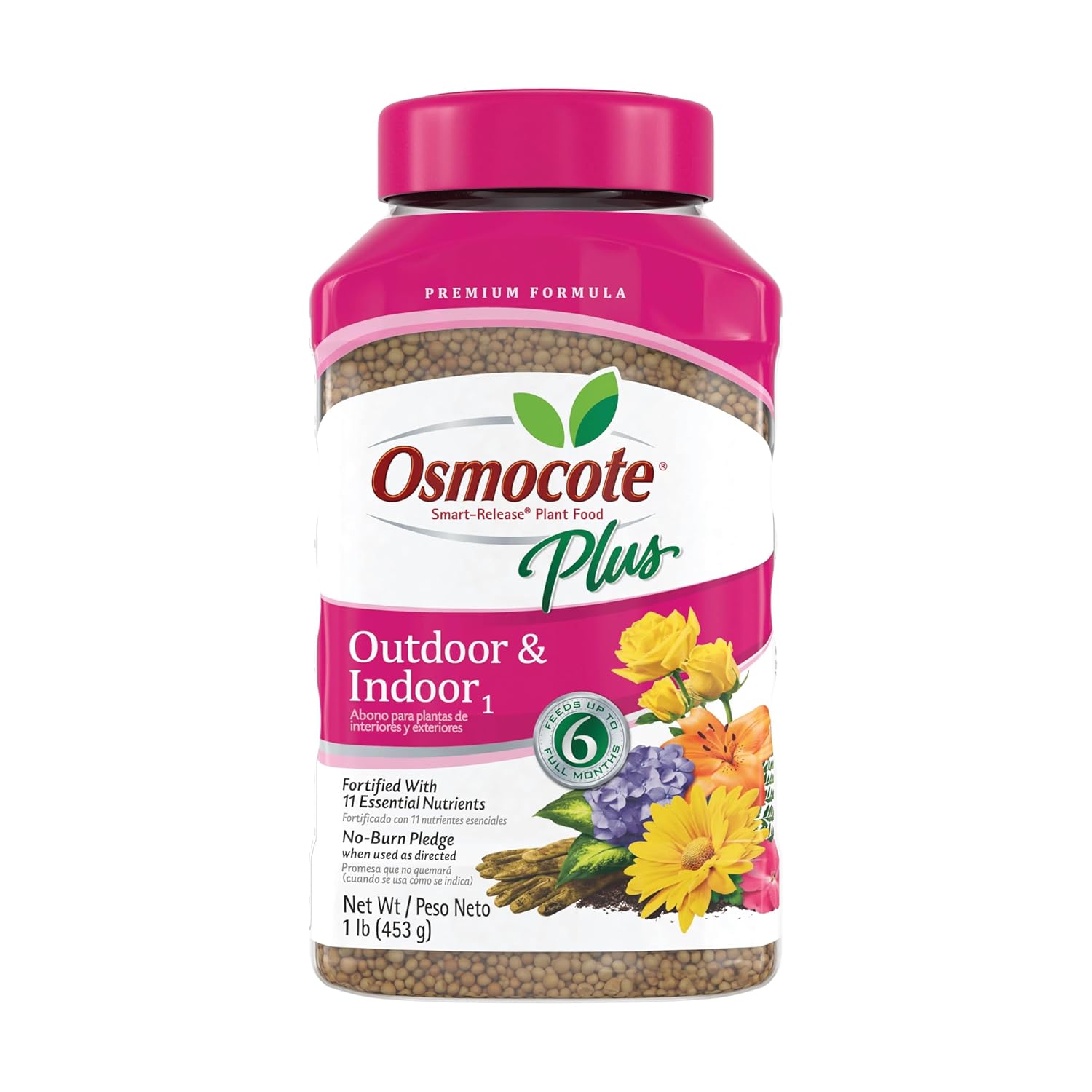
Osmocote Smart-Release Plant Food Plus Outdoor & Indoor, 1 lb
| Item Form | Granules |
|---|---|
| Specific Uses For Product | Plant Food |
| Application Method | sprinkle around the base and work into the soil |
| Unit Count | 16 Ounce |
Osmocote Smart-Release Plant Food Plus is a resin-coated granular fertilizer designed to deliver steady nutrition to a wide range of plants for up to six months from a single application. You apply it by sprinkling the recommended scoop into the top inch or so of potting mix for containers or around plants in garden beds, then watering to activate the coating. The product contains 11 essential nutrients and is formulated to release based on soil temperature, which helps reduce overfeeding and supports consistent bloom and foliage performance in hanging baskets. Its no-burn pledge makes it easy to use at the recommended rates for mixed annuals, trailing plants, and container veggies. Limitations are that coverage is modest from a 1 lb. container so frequent use on many large baskets will require buying more, and release timing still depends on temperature so plants in cool, shaded spots may receive nutrients more slowly than those in warm sun.
Best for: Gardeners who prioritize steady, low-maintenance feeding for hanging baskets and containers and want consistent bloom and foliage without frequent fertilizing.
Less Ideal for: Those who need immediate, short-term nutrient boosts or precise liquid feeding schedules for plants that demand fast correction.
- Resin-coated granules provide controlled release of nutrients for up to six months
- Formulated with 11 essential nutrients suitable for a wide variety of plants
- No-burn pledge when used as directed reduces risk of damaging roots in containers
- Simple sprinkle-and-water application works well for hanging baskets and pots
- 1 lb container covers a limited area so multiple baskets will need additional product
- Release rate depends on temperature so nutrient delivery can be slower in cool conditions
Verdict: An easy, low-maintenance slow-release fertilizer that keeps hanging baskets fed for months with minimal effort.
Miracle-Gro Water Soluble All Purpose Plant Food, 1.5 lb

| Item Form | Powder |
|---|---|
| Application Method | Watering Can |
| Target Species | For all flowers, vegetables, trees, shrubs and houseplants |
| Mixing Ratio | 24-8-16 |
Miracle-Gro Water Soluble All Purpose Plant Food is a powder concentrate you mix with water to give a quick nutrient boost to flowers, vegetables, houseplants, shrubs and trees. It is typically dissolved in a watering can or used with a compatible garden feeder to soak soil at the base of plants, delivering nitrogen-heavy nutrition that shows effects faster than granular fertilizers. Notable features include an easy scooping method for indoor and outdoor dosing, compatibility with containers and in-ground planting, and clear directions for feeding every one to two weeks. In practice this makes the product a convenient option when you want visible growth and greener foliage quickly, and the 1.5 lb container covers roughly 600 sq. ft. Important limitations are that it is a fast-release, high-nitrogen formula best used as a regular quick feed rather than a long-term slow-release solution, and it requires careful measuring to avoid overfeeding. For routine maintenance combine with good watering and follow the label to avoid nutrient imbalance.
Best for: Buyers who prefer proven, easy-to-use feeding routines and want noticeable growth quickly for a variety of garden and houseplants, guided by established usage directions and broad user experience.
Less Ideal for: Gardeners seeking a single, long-term slow-release solution or those who prefer organic or low-nitrogen fertilizers for sensitive plantings should consider alternative products.
- Water-soluble powder starts working quickly at the roots when mixed and applied
- Clear, simple dosing for indoor and outdoor use with included scoop guidance
- Suitable for a wide range of plants including vegetables, flowers, shrubs and houseplants
- Covers a large area from a small container (about 600 sq. ft. per 1.5 lb)
- Fast-release formula means benefits are short-term compared with slow-release granular fertilizers
- Requires precise measuring and regular reapplication to avoid overfeeding
Verdict: A reliable, fast-acting water-soluble plant food for gardeners who want easy, repeatable feeding and quick visible results.
Espoma Organic Rose-Tone 4-3-2 Organic Fertilizer, 18 lb. Bag (2-Pack)

| Item Form | Granules |
|---|---|
| Specific Uses For Product | Organic Plant Food for flowers |
| Coverage | Medium |
| Target Species | roses |
| Mixing Ratio | 4-3-2 |
Espoma Rose-Tone is a ready-to-use granular organic fertilizer designed for roses and other flowering shrubs like viburnum. You apply it around the plant drip line and water in monthly during the growing season to encourage green growth and abundant blooms. The 4-3-2 N-P-K balance with added calcium and the company s Bio-tone blend provides gentle, slow-release nutrition suited to established shrubs and repeat feeding without mixing. Being an approved organic input makes it a dependable choice for gardeners who want predictable, soil-friendly feeding that supports long-term plant health. The product is medium coverage per bag and comes in a large unit suited to multiple plants or repeat monthly applications. It does not dissolve instantly like a liquid feed, so results build over weeks rather than days, and it requires correct placement and watering to be effective. For reliability-focused gardeners this fertilizer reduces guesswork by using a proven formula, but those needing rapid correction of severe deficiencies may prefer a soluble supplement.
Best for: Gardeners who prioritize consistent, low-risk feeding for flowering shrubs and want an organic, easy-to-apply fertilizer they can use monthly through the growing season.
Less Ideal for: Growers who need a fast corrective feed for acute nutrient deficiencies or who prefer liquid concentrates for quick uptake should consider alternative products.
- Organic formulation approved for organic gardening and soil-friendly feeding
- Balanced 4-3-2 N-P-K with added calcium supports flowering and overall plant vigor
- Ready-to-use granular form that requires no mixing and is easy to apply around the drip line
- Suitable for repeat monthly applications through the growing season for steady nutrition
- Slow-acting granular formula means results accumulate over weeks rather than delivering an immediate boost
- Coverage is described as medium so very large plantings may require multiple bags
Verdict: A reliable, organic granular fertilizer that delivers steady monthly nutrition to support flowering shrubs like viburnum and roses.
Miracle-Gro Water Soluble All Purpose Plant Food, 3 lb

| Item Form | Powder |
|---|---|
| Application Method | Mix with water in a watering can |
| Fertilizer Analysis (N‑P‑K) | 24-8-16 |
| Unit Count | 48 Ounce |
| Coverage | Feeds approximately 1,200 sq. ft. |
Miracle‑Gro Water Soluble All Purpose Plant Food is a powdered NPK 24‑8‑16 formula that dissolves in water to give plants a quick nutrient boost. You mix measured scoops into a watering can and apply to the soil at the base of plants every 7–14 days for outdoor use or every 14 days for houseplants. Notable features include a high nitrogen content for leafy growth, compatibility with containers and in‑ground beds, and guidance for use with a Miracle‑Gro Garden Feeder for larger areas. In practical terms this is a fast‑acting feed that encourages bigger, greener foliage and works well in regular maintenance of perennials like hostas. Limitations are that it is a fast‑release fertilizer rather than a slow‑release option, so it requires regular reapplication and careful measuring to avoid overfeeding. Also, the 24‑8‑16 balance is geared toward vegetative growth, so it is not optimized if you want to prioritize flowering or bloom boosting.
Best for: Buyers who want a reliable, fast‑acting feed to maintain lush, leafy perennials and container plants and who value proven products with broad user endorsement.
Less Ideal for: Gardeners seeking a single, long‑lasting granular fertilizer or a bloom‑focused formula should consider alternative slow‑release or high‑phosphorus products.
- Water‑soluble powder mixes easily for quick uptake by roots
- High nitrogen formula promotes robust leafy growth ideal for shade plants
- Clear mixing and application instructions for both indoor and outdoor use
- Suitable for containers and in‑ground gardens and compatible with garden feeders
- Requires frequent applications so it is not a low‑maintenance, slow‑release option
- High nitrogen ratio is less suitable when the primary goal is more flowers than foliage
Verdict: A fast‑acting, water‑soluble fertilizer that reliably produces bigger, greener hosta leaves when used as directed.
Choosing the Right Fertilizer for Bleeding Hearts: Key Factors to Consider
Nutrient Ratio and Bloom Priority
Bleeding hearts respond best to a fertilizer that favors bloom development without pushing excessive leafy growth. A moderate nitrogen level paired with steady phosphorus helps set flowers while keeping stems sturdy. Overly high nitrogen can lengthen stems and increase susceptibility to flopping and disease.
Consider fertilizers labeled for flowering perennials or those with balanced ratios that tilt slightly toward phosphorus. This factor matters because the wrong ratio alters plant form and bloom intensity, which directly affects the ornamental value of this species.
Release Type and Feeding Schedule
Slow-release formulations provide a steady supply of nutrients over weeks to months, which suits bleeding hearts because it avoids sudden surges in soft growth. Liquid feeds offer quicker uptake and can be useful early in spring if plants look weak or need a bloom boost. Granular products can be applied at planting or as a seasonal top-dress.
Match the release type to how much time you spend on garden maintenance and to rainfall or irrigation patterns. In consistently wet, shaded beds choose more frequent, lighter applications; in drier, mulched beds lean toward slow-release options to prevent nutrient washout.
Soil Texture and pH Interaction
Bleeding hearts prefer humus-rich, well-draining soil with slightly acidic to neutral pH. Some fertilizers alter soil chemistry more than others: mineral salts can raise soluble salt levels, while organic amendments improve structure and feed soil life.
Evaluate your soil texture and pH before selecting a fertilizer. In heavy clay or very sandy soils, choose a product that includes organic matter or pairs well with compost so nutrients are retained and released gradually. If your soil is notably alkaline or acidic, pick formulations that will not push pH outside the plant's comfort range.
Application Method and Garden Location
These plants are commonly found in shaded borders, under trees, or in containers, and access can be limited. Foliar feeding or liquid drenches work well for container-grown specimens and small beds, while granular top-dressings or slow-release spikes suit larger borders and less-frequent maintenance.
Consider how you will apply the product each season. If bleeding hearts are under tree canopy, avoid heavy granular broadcast that may not reach root zones. In containers choose water-soluble or diluted liquid feeds for even distribution.
Impact on Companion Plants and Bulbs
Bleeding hearts are often planted alongside spring bulbs and shade-loving companions. A fertilizer that overstimulates leafy growth can disrupt the growth cycle of bulbs or favor dominant plants over more delicate neighbors.
Choose formulas that provide balanced feeding so bulbs complete their cycle and so companion perennials are not outcompeted. If you have bulbs that finish early, time fertilization to support bleeding hearts after bulbs have gone dormant to avoid interfering with bulb maturation.
Environmental and Safety Considerations
Fertilizer choice affects runoff, soil life, and local water quality. Organic options tend to pose lower runoff risk and feed soil organisms, while some high-salt chemical products can stress roots in shaded, moisture-retentive soils.
Consider the proximity of water features and how much rainfall your site receives. Also factor in handling safety if you have children or pets. Choosing a low-salt, soil-friendly product reduces the risk of root burn in delicate bleeding-heart roots and supports long-term soil health.
When to Feed Bleeding Hearts
Feed timing affects bloom performance and plant health. Apply a light, balanced feed in early spring as new growth appears to support root development and initial leaf-out. Avoid heavy feeding once flowering is well underway because a late nitrogen boost can extend leaf growth at the expense of blooms and increase the risk of stem collapse.
A second, modest feeding after flowering can help plants replenish reserves, especially if you removed spent foliage. If plants are in containers, monitor growth more closely and feed on a more regular, lighter schedule because potting mixes lose nutrients faster.
- Apply first feed when shoots are 1-2 inches tall.
- Skip heavy late-season nitrogen applications; opt for a low-dose maintenance feed.
- Reduce or suspend feeding if plants are stressed by drought or disease.
Feeding Techniques for Containers and Borders
Containers and borders demand different approaches because of root volume and drainage. Use water-soluble or liquid feeds for containers every 2-4 weeks during the active season to maintain steady nutrient levels. For in-ground borders, a slow-release granular or a light top-dressing of compost in early spring is often sufficient.
When using granular products, work them lightly into the topsoil and water in to move nutrients toward root zones. In shaded locations with limited evaporative demand, avoid overapplication that might lead to salt buildup.
- Containers: dilute liquid fertilizer and follow a regular schedule.
- Borders: top-dress with slow-release or compost in spring.
- Always water after applying granular fertilizers to move nutrients into the root zone.
Signs of Overfeeding and Nutrient Deficiency
Overfeeding typically shows as lush, floppy foliage, weakened stems, and fewer flowers. Leaf scorch, especially on older leaves, or reddish leaf margins can signal salt stress from excessive fertilizer. Conversely, pale leaves, stunted growth, or reduced blooms indicate nutrient deficiency-often nitrogen or phosphorus shortfalls.
If you observe signs of overfeeding, flush the soil with water and pause fertilization until the plant recovers. For deficiency signs, use a gentle corrective feed and check soil pH because nutrient availability changes with pH.
- Floppy, elongated growth suggests too much nitrogen.
- Pale or stunted plants may need a mild boost of balanced nutrients.
- Leaf scorch and brown margins point to salt buildup; flush soil and reduce dosing.
Integrating Fertilizer With Mulch and Compost
Mulch and compost are vital to the long-term health of bleeding-heart beds. A layer of compost in spring supplies slow, broad-spectrum nutrients and improves soil structure, reducing the need for frequent synthetic feeding. Mulch moderates soil temperature and moisture levels so fertilizer is used more efficiently by roots.
Combine compost top-dressing with lighter, targeted fertilizer applications when needed rather than relying on heavy chemical feeding. This approach supports soil life and reduces nutrient runoff while maintaining steady plant nutrition.
- Apply a 1-2 inch compost top-dress in early spring.
- Use mulch to conserve moisture and slow nutrient leaching.
- Pair compost with light targeted feeds for bloom support.
How We Chose the Best Fertilizer for Bleeding Hearts
We prioritized fertilizers that match the specific needs of bleeding hearts rather than general heavy-feeding regimes. Primary evaluation criteria included nutrient balance with emphasis on moderate phosphorus and low-to-moderate nitrogen to encourage blooms without excessive vegetative growth; soil compatibility covering pH sensitivity and organic matter interaction; release profile such as slow-release versus liquid to favor consistent feeding through the bloom season; application method and ease for gardeners working in shade, woodland, or container settings; and safety for delicate foliage and nearby bulbs or perennials. We excluded products designed for high-nitrogen lawn feeding, bulbs in forced bloom, or aggressive bloom boosters that can overstimulate soft-stemmed perennials. Products that required specialized equipment or risky handling were also set aside. The final selections reflect options that deliver predictable nutrient delivery, match typical garden soils, and fit common planting situations where bleeding hearts thrive.
FAQ
How often should I fertilize bleeding hearts to encourage blooms?
Usually a light application in early spring and a modest feed after flowering is sufficient. Container plants may need diluted liquid feed every 2-4 weeks during active growth.
Can I use general-purpose fertilizer on bleeding hearts?
General fertilizers can work if they are not excessive in nitrogen. Choose a balanced formula or one labeled for flowering perennials and reduce the dose to avoid overly vegetative growth.
Will fertilizer help if my bleeding hearts are not blooming?
It depends. Lack of blooms can stem from age, too much shade, or incorrect nutrient balance. A mild phosphorus-containing feed in spring can help, but address light and plant health first.
Is organic fertilizer better for shaded beds with bleeding hearts?
Organic fertilizers release nutrients slowly and improve soil structure, which suits shaded, humus-rich beds. They also support soil organisms and reduce the risk of salt buildup in delicate root zones.
Should I fertilize bleeding hearts after I cut back the foliage?
Yes, a light feeding after cutting back spent foliage helps replenish root reserves, especially if the plant looks weak or was heavily stressed during the season. Avoid heavy nitrogen at this time.
Final Verdict
Prioritize a fertilizer that supports blooms without encouraging weak, floppy foliage. For most bleeding-heart situations that means a moderate nutrient mix with a slow-release or organic release profile, applied sparingly in early spring and, if needed, once more after flowering. Balance the product choice with soil condition, container versus in-ground planting, and nearby companion plants. Use feeding to supplement good soil and cultural practices rather than as a fix-all. When you match nutrient ratio, release type, and application method to your site conditions you will preserve plant health and maximize bloom quality.
