

Note: This article contains affiliate links. If you click on these links and make a purchase, I may earn a small commission at no extra cost to you. This helps support my research and content. Read my full affiliate disclosure here.
Summer is the season lawns are under the most stress from heat, drought, and heavier foot traffic. Choosing the right fertilizer for grass in the summer matters because the wrong formula can burn turf or force shallow, thirsty growth. The picks in this guide are shortlisted options suited to summer use, each evaluated for nutrient mix, release profile, and how they support root health and stress tolerance. This guide explains why summer-specific feeding differs from spring or fall programs, what to expect from different fertilizer types, and how we judged the best options for warm-season lawn care. Read on to see the top choices and the decision factors gardeners should weigh before applying feed in hot weather.
Top Picks at a Glance
| Best Overall The best all-around choice for most situations | Scotts Turf Builder Lawn Food, 12.5 lb |  |
| Best Quality Built to a higher standard if you want something more solid | The Andersons Professional PGF Complete 16-4-8 Granular Lawn Fertilizer (covers 5,000 sq ft) |  |
| Best Value The sweet spot between price and what you get | GreenView Lawn Food 22-0-4, 16 lb bag |  |
| Best Budget The cheapest option that still gets the job done reliably | O.M. Scott & Sons Natural Grass Food, 12.72 lb |  |
| Highest Rated A top-rated pick with lots of positive feedback | Scotts Green Max Lawn Food (46.67 lb) | 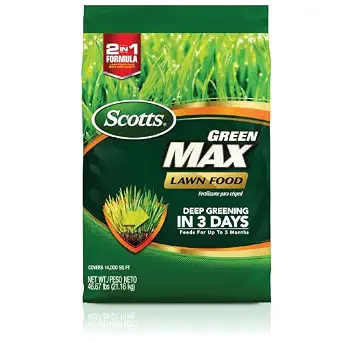 |
| Most Popular A crowd favorite that many people choose with confidence | Scotts Green Max Lawn Food (16.67 lb) |  |
| Best Seller A high-volume bestseller chosen again and again | Scotts Turf Builder Weed & Feed 3, Granular Lawn Fertilizer and Weed Killer, 14.29 lb |  |
Scotts Turf Builder Lawn Food, 12.5 lb

| Item Form | Powder |
|---|---|
| Specific Uses For Product | Lawn |
| Coverage | 5,000 sq. ft. |
| Mixing Ratio | 32:0:4 |
Scotts Turf Builder Lawn Food is a general-purpose granular fertilizer formulated for use on any grass type to thicken turf and improve root strength. You spread it with a broadcast or drop spreader (Scotts provides recommended settings) and can apply it to wet or dry lawns in spring, summer, or fall. The formula is pesticide-free and emphasizes building deeper roots so the lawn better absorbs water and nutrients, which helps turf resist stress over the season. One 12.5 lb bag covers about 5,000 sq. ft., making it a simple option for small to medium yards or spot treatments. Practical benefits include clear application guidance, compatibility with common spreaders, and the option to water in for faster greening. Limitations are that this single bag covers a modest area compared with larger homeowner bags and it does not include weed control or insect protection, so you may need additional products for comprehensive lawn care.
Best for: Buyers who want a reliable, easy-to-apply granular fertilizer to strengthen and green a small to medium lawn and prefer products with widespread user approval and clear instructions.
Less Ideal for: Homeowners needing one-step weed or pest control, or those with large properties who want a single bag to cover many thousands of square feet.
- Works on all common grass types so one product fits mixed lawns
- Builds stronger, deeper roots to improve water and nutrient uptake
- Clear spreader settings and can be applied to wet or dry turf for flexibility
- Pesticide-free formula suitable when you only want fertilization
- Covers only about 5,000 sq. ft. per bag, requiring multiple bags for larger yards
- Does not include weed or insect control so additional products may be needed
Verdict: A reliable, easy-to-use granular lawn food that builds stronger roots and is a solid choice for feeding small to medium lawns.
The Andersons Professional PGF Complete 16-4-8 Granular Lawn Fertilizer (covers 5,000 sq ft)

| Item Form | Granules |
|---|---|
| Specific Uses For Product | Soil Conditioning |
| Target Species | lawn grasses |
| Unit Count | 288 Ounce |
| Mixing Ratio | 4-1-2 ratio |
This granular fertilizer is built to boost turf performance with a 16-4-8 N-P-K ratio that delivers both immediate and extended nitrogen release for up to eight weeks. It is typically applied with a broadcast spreader at the recommended rate on dry foliage, then lightly watered to activate the Humic DG technology that helps nutrients move into the root zone. Notable features include super-fine particles for even coverage, added iron and micronutrients for richer color, and a mix of quick and slow-release nitrogen for steady growth without frequent reapplication. Practical benefits for a performance-focused buyer are visibly greener turf, reduced application frequency, and improved soil conditioning from humic acids. Important limitations are that it is a granular product so precise spreader calibration and steady walking are required for uniform results, and it is not labeled for sale in California which restricts availability in that state.
Best for: Gardeners focused on high-performance, visibly greener lawns who want a single application product that delivers both immediate and extended feeding and supports soil health.
Less Ideal for: Small container gardeners or people who prefer liquid or organic-only fertilizer programs should consider other formats or formulations.
- Balanced 16-4-8 N-P-K with both quick- and slow-release nitrogen for immediate color and sustained feeding
- Super-fine particles designed for even distribution across the lawn
- Includes iron and multiple micronutrients to improve turf color and overall plant nutrition
- Humic DG additive to help move nutrients into the soil and support soil conditioning
- Requires correct spreader settings and consistent walking speed to avoid streaking
- Not available for sale in California
Verdict: Choose this fertilizer when you want a performance-focused granular formula that delivers quick color boost plus up to eight weeks of sustained feeding for greener grass.
GreenView Lawn Food 22-0-4, 16 lb bag

| NPK | 22-0-4 |
|---|---|
| Form | Granules |
| Coverage | 5,000 sq. ft. |
| Application | Broadcast or drop spreader |
GreenView Lawn Food is a granular, broadcast-applied lawn fertilizer designed to boost root development, speed spring green-up, and maintain deeper green color through an eight-week controlled-release formula. You apply it with a broadcast or drop spreader over up to 5,000 sq. ft., and the MESA controlled-release nitrogen delivers both immediate and slow-release nutrition so you get quicker green-up without a surge of excessive top growth. The zero-phosphate 22-0-4 blend focuses on nitrogen and potassium to improve drought resistance and nutrient uptake in established turf. Practical benefits for summer care include longer feeding intervals, better water retention from improved root vigor, and fewer repeat applications compared with quick-release products. Limitations are that it is not a starter fertilizer for new seed because it contains no phosphorus and it requires a spreader for even coverage; hand spreading is discouraged. Also the 16 lb bag suits small to medium lawns rather than large properties where multiple bags would be needed.
Best for: Homeowners who want a low-maintenance summer feed that reduces how often you need to reapply and prioritizes steady green-up and root health.
Less Ideal for: Those establishing new lawns from seed or managing large commercial turf areas who need phosphorus or high-coverage bulk quantities.
- Controlled-release MESA nitrogen gives up to 8 weeks of feeding for fewer applications
- Applicable with common broadcast or drop spreaders for even coverage
- Zero-phosphate formula aligns with lawn-use restrictions and protects waterways
- 22-0-4 NPK focuses on root development and drought resilience
- Not suitable as a phosphorus-containing starter fertilizer for new seed
- 16 lb bag covers about 5,000 sq. ft. so larger lawns will need multiple bags
Verdict: A convenient, controlled-release summer lawn food that keeps small to mid-size lawns greener longer with fewer applications.
O.M. Scott & Sons Natural Grass Food, 12.72 lb

| Feeds up to | 10 weeks |
|---|---|
| Coverage | Up to 2,000 sq. ft. |
| Usage | Outdoor |
| Unit count | 203.52 Ounce |
O.M. Scott & Sons Natural Grass Food is a straightforward, natural lawn fertilizer meant for routine spring and seasonal feedings. You use it by filling a spreader, setting the dial per the bag directions, walking the lawn to apply, then lightly watering so the nutrients start working right away. The formula contains no added artificial ingredients or pesticides and is marketed as safe for people and pets when directions are followed. A single 12.72 lb. bag covers about 2,000 square feet and is formulated to feed for up to 10 weeks, so one bag can support a small-to-medium yard through the main growing season. The recyclable paper bag is a small eco-friendly plus. Limitations are its coverage and frequency: homeowners with larger lawns will need multiple bags and repeat applications every 8 to 10 weeks, and the product is not presented as a targeted solution for specific problems like weed control or soil pH correction. Still, for routine spring feeding on common grass types it delivers predictable, easy-to-follow results.
Best for: Homeowners who want a simple, natural spring feed for a small to medium lawn and prioritize easy application and pet-safe ingredients.
Less Ideal for: Those with large lawns, persistent weed issues, or who need specialty fertilizers for nutrient-deficient or pH-imbalanced soils should consider more targeted products.
- Natural formula without added artificial ingredients or pesticides
- Feeds immediately after watering and continues feeding up to 10 weeks
- Easy to apply with a standard spreader using bag dial settings
- Covers up to 2,000 sq ft per 12.72 lb. bag suitable for small to medium yards
- Recyclable paper packaging
- Limited coverage per bag so larger lawns require multiple purchases
- Not formulated to handle weeds or specific soil deficiencies
Verdict: A simple, pet-safe natural lawn food that makes spring feeding easy for small to medium yards.
Scotts Green Max Lawn Food (46.67 lb)

| Item Form | Granules |
|---|---|
| Target Species | Lawn Grass |
| Item Weight | 46.7 pounds |
| Contains Iron | 5% |
Scotts Green Max Lawn Food is a coarse granular fertilizer formulated to feed turf and speed up greening thanks to a 5% iron supplement. It is intended for spring through fall use on any grass type and is applied with a broadcast or drop spreader using the manufacturer’s recommended settings. The product claims visible deep greening in about three days and is formulated not to stain concrete or driveways when used as directed. One 46.67 lb bag covers roughly 14,000 square feet, which makes it convenient for homeowners with mid to large lawns who want a single-application product. Practical benefits include broad seasonal use, clear application guidance for common spreader types, and the inclusion of iron for faster color improvement. Limitations are that it is a single formulation without granular detail on N-P-K ratios in the listing and it is a heavy bag that requires handling assistance for transport and spreader loading. Follow watering and application instructions closely to avoid overapplication and to achieve the advertised fast greening.
Best for: Homeowners with medium to large lawns who prioritize predictable, fast greening and want clear application guidance for reliable results.
Less Ideal for: Gardeners who prefer precise fertilizer formulations for specialized turf problems or those with very small lawns where a large bag would be unnecessary.
- Includes 5% iron to accelerate visible greening
- Suitable for use on any grass type and across spring, summer, and fall
- Large coverage per bag (about 14,000 sq. ft.) reduces frequency of purchases
- Manufacturer provides spreader settings for straightforward, even application
- Formulated and labeled to avoid staining hard surfaces when used as directed
- N-P-K ratio is not specified in the provided product details
- Bag is heavy which can make handling and loading into a spreader awkward
Verdict: Choose this product if you want a no-fuss granular fertilizer that delivers quick, reliable greening across a large lawn.
Scotts Green Max Lawn Food (16.67 lb)

| Item Form | Granules |
|---|---|
| Coverage | 5000 square feet |
| Specific Uses For Product | Lawn |
| Target Species | lawn grass |
Scotts Green Max Lawn Food is a granular, all-purpose lawn fertilizer formulated to deliver fast greening with a 2-in-1 feed plus 5% iron supplement. It is applied with a broadcast or drop spreader to any grass type and is recommended for routine spring, summer, or fall applications. Notable features include a guaranteed nonstaining formula when used as directed and settings provided for Scotts spreaders to help get an even application across the advertised 5,000 sq ft coverage. The iron content speeds visible greening in as little as three days and the granules are ready to water in for faster uptake. For a risk-averse homeowner growing fescue in spring, the product is straightforward to use and safe to re-enter the lawn immediately after application. Limitations are that proper spreader settings and sweeping up excess product are important to avoid runoff and that it is a general lawn food rather than a specialized product for nutrient-deficient soils, so a soil test is still useful for targeted corrections.
Best for: Homeowners who want a low-risk, easy-to-apply lawn food that produces quick green results on fescue lawns in spring and prefer established brand guidance for application.
Less Ideal for: Gardeners seeking a product to correct a specific nutrient imbalance or those who prefer liquid or organic-only fertilizing approaches.
- Includes 5% iron for faster, deeper greening visible in about three days
- Premeasured granular form covers up to 5,000 sq ft from one bag
- Manufacturer provides spreader settings to simplify even application
- Formulated not to stain concrete or driveways when used as directed
- Not a tailored corrective fertilizer for specific soil deficiencies
- Requires correct spreader settings and cleanup to prevent runoff
Verdict: A simple, fast-acting granular lawn food with added iron that reliably greens fescue lawns when applied with a spreader.
Scotts Turf Builder Weed & Feed 3, Granular Lawn Fertilizer and Weed Killer, 14.29 lb

| Item Form | Granule |
|---|---|
| Coverage | 5000 square_feet |
| Active Ingredients | 2,4-D 1.220%, Mecoprop 0.081% |
Scotts Turf Builder Weed & Feed3 is a granular lawn product that combines a fertilizer with broadleaf weed control for routine lawn maintenance. It is applied with a broadcast or drop spreader to a wet lawn when daytime temperatures are between 60 and 90°F, and it uses WeedGrip technology to help granules stick to weed leaves for better uptake. In practice it kills common weeds such as dandelion and clover while delivering nutrients to thicken grass, so treated areas often green up and look fuller over a few weeks. The package covers about 5,000 sq. ft. and manufacturer instructions recommend avoiding certain grass types and keeping people and pets off the lawn until dust settles. Important limitations are that it is not safe for some turf species and must not be watered for 24 hours after application; timing and correct spreader settings affect results. For homeowners wanting a combined feed-and-weed treatment for standard lawns, it simplifies two tasks into one application, but it requires following the label closely for safe and effective use.
Best for: Homeowners seeking a straightforward, combined fertilizer and weed-control treatment to maintain and thicken common cool- and warm-season turf in a typical yard.
Less Ideal for: Specialist turf managers, owners of sensitive turf varieties (listed on the label), or those who need spot treatment only rather than whole-lawn applications.
- Combines fertilizer and broadleaf weed control in one granular product
- WeedGrip formulation helps granules adhere to weed leaves for improved herbicide contact
- Covers approximately 5,000 sq. ft. per 14.29 lb bag, suitable for many small to medium lawns
- Clear application guidance for use with common spreaders and specific temperature/wetting windows
- Contains active herbicide ingredients not appropriate for all turf types and must be avoided on listed grasses
- Requires strict timing and no watering for 24 hours after application to be effective and safe
Verdict: A practical one-step weed-and-feed for typical lawns that feeds turf while targeting common broadleaf weeds across a 5,000 sq. ft. area.
Choosing the Right Fertilizer for Grass in the Summer: Key Factors to Consider
Nutrient Ratio and Secondary Elements
The N-P-K ratio determines how the fertilizer affects top growth versus root development. In summer you often want a moderate nitrogen level to avoid excessive blade lushness that increases water demand, paired with adequate phosphorus and potassium to support root strength and stress resilience. Secondary elements like magnesium, calcium, and iron can correct common turf deficiencies and improve chlorophyll production, which helps grass photosynthesize efficiently under heat.
Balanced micronutrients matter because visible symptoms of deficiency show up faster during heat stress. A product labeled with only N-P-K may still be useful, but hybrid formulas that list key micronutrients give you more predictable results for maintaining color and vigor through prolonged hot spells.
Release Profile and Burn Risk
Slow-release nitrogen and stabilized formulations give a steady supply of nutrients without the surge that can scorch grass in high temperatures. Granular products with coated or polymer-controlled release reduce the chance of burning and limit the need for frequent applications. Fast-release or liquid feeds deliver quick color but increase risk if applied during hot afternoons or without adequate watering.
Check the product literature for expected weeks of release and whether the fertilizer contains urea, ammonium sulfate, or stabilized nitrogen. These details influence how soon you can mow, how much initial watering is needed, and how the lawn will respond during heat waves.
Root Development and Soil Health
Summer feeding that encourages deep roots helps lawns endure dry periods and recover faster after stress. Formulations that include potassium, phosphorus in appropriate levels, and certain micronutrients support root growth. Some fertilizers also include ingredients meant to feed soil biology or contain humic substances that improve moisture retention in the root zone.
Consider whether the fertilizer complements your soil condition. Sandy soils need products that reduce leaching and support water retention, while heavier soils benefit from nutrients that encourage roots to explore and improve overall soil structure over time.
Compatibility With Lawn Type
Different turfgrasses have distinct summer behaviors. Warm-season grasses usually perform best with summer feeding that maintains vigor, while cool-season grasses can struggle under peak heat and may require gentler programs. The fertilizer you choose should be appropriate for the species you grow and its seasonal growth pattern.
Read product guidance about recommended turf types and timing windows. A fertilizer that is too aggressive for cool-season turf in midsummer can cause stress, while underfeeding warm-season grass can leave it pale and vulnerable to pests.
Application Convenience and Timing
Ease of application affects how accurately you can follow recommended rates and avoid over- or underfeeding. Granular products require even spreader settings and calibration, while liquids offer quicker coverage but need mixing and extra equipment. Application timing matters in summer; early morning or late afternoon reduces burn risk.
Also factor in the frequency of reapplication the product recommends. A longer-lasting product reduces time in the garden but may be more difficult to adjust for immediate corrections. Look for clear spreader settings and guidance to simplify real-world use.
Environmental Impact and Runoff Control
In hot weather, irrigation patterns and sudden storms can increase the chance of nutrient runoff. Products formulated with slow-release nitrogen and lower soluble salts reduce runoff risk and protect nearby plants and waterways. Some fertilizers are explicitly formulated to be low-salt or to contain stabilized nitrogen that minimizes leaching.
If your lawn borders water features, steep slopes, or permeable soils, prioritize formulations and application methods that reduce off-site movement of nutrients. Proper timing and conservative application rates further mitigate environmental impact.
When to Feed Your Lawn in Summer
Timing is critical for summer fertilizer use. Apply in the cooler part of the day, typically early morning or late evening, to reduce foliar burn and allow nutrients to move into the root zone with minimal stress.
Avoid feeding during heat waves or prolonged drought unless you can irrigate appropriately. For many lawns a mid-summer maintenance application works best when growth has slowed from spring but the plant still needs support for root health and stress tolerance.
- Target early morning or late evening for application
- Skip feeding during peak heat or when drought restrictions prevent watering
- Light, steady feeding is preferable to heavy summer pushes
Granular Vs Liquid Fertilizers for Summer Use
Granular slow-release products deliver nutrients over weeks and help reduce burn risk, making them a common choice for summer applications. They are convenient for larger areas and require less frequent repeating.
Liquid fertilizers act quickly and are useful for correcting visible nutrient deficiencies, but they usually provide shorter-term results and increase the chance of scorch in high temperatures. If you use liquids, apply diluted solutions in the cool part of the day and follow with light irrigation when appropriate.
- Granular slow-release for steady feeding and lower burn risk
- Liquid feeds for fast correction, used cautiously in heat
- Calibrate spreaders and mixers to avoid uneven application
How Soil Type Changes Your Summer Feeding Plan
Sandy soils drain quickly and lose nutrients faster. In summer this means a preference for slow-release fertilizers and split applications to keep nutrients available without heavy leaching. Adding organic matter also improves water holding capacity and reduces stress on turf.
Clay and loamy soils retain moisture but can hold salts and nutrients near the surface. Avoid heavy, frequent high-salt feeds in these soils and look for formulas that emphasize root development and balanced micronutrients. Testing soil before feeding gives a clearer picture of what your lawn truly needs.
- Sandy soils: slow-release, split applications, add organic matter
- Clay/loam soils: moderate application, monitor salt buildup
- Soil testing helps tailor summer fertilizer choices
Watering After Application
Proper watering after applying fertilizer makes a big difference. A light irrigation after spreading assists granules into the root zone and activates many slow-release coatings. Avoid heavy watering that causes runoff or moves nutrients away from roots.
If rainfall is expected within 24 hours, consult product guidance. Some slow-release formulas are designed to be rainfast, while others advise delaying application to prevent wash-off. Always follow label instructions for irrigation timing and amounts.
- Use light irrigation to move nutrients into the root zone
- Avoid heavy runoff after feeding
- Check product rainfast guidance before applying prior to forecasted rain
Adjusting Rates for Stressed Lawns
If your lawn is already drought-stressed, reduce application rates or delay feeding until recovery begins. Applying full-strength fertilizer to stressed turf can worsen damage and slow recovery. Instead, prioritize soil moisture management and apply a gentler maintenance formula.
For lawns showing disease or insect damage, address those issues first. Fertilizing a lawn under active attack can shift resources away from recovery and make problems worse. Once the stressor is managed, a targeted feeding can aid regrowth and root repair.
- Reduce rates on drought-stressed or disease-affected lawns
- Resolve major pest or disease issues before heavy feeding
- Use maintenance-strength applications to support recovery
How We Chose the Best Fertilizer for Grass in the Summer
We prioritized fertilizers that help grass survive heat and dry conditions while supporting steady growth. Key evaluation criteria included nutrient balance and formulation to ensure appropriate N-P-K and secondary nutrients for summer needs, release mechanism and predictability to minimize burn risk and provide steady nutrition, and root support including micro-nutrients and formulation features that encourage deeper rooting rather than lush, shallow topgrowth. Application safety and flexibility were assessed by looking at recommended spreader settings, tolerance windows around peak heat, and versatility across common turf species. Environmental considerations were part of the filter, including reduced runoff potential and the presence of slow-release or stabilized nitrogen to limit leaching. Ease of use and timing guidance rounded out the criteria to reflect real-world garden handling. We excluded products intended only for spring green-up, specialty ornamentals, or those with application requirements that are impractical for typical home lawns. Choices that required professional-only equipment or repeated daily watering post-application were not considered. The resulting shortlist focuses on practical, gardener-friendly fertilizers that balance summer stress tolerance with safe, predictable performance.
FAQ
Can I fertilize my cool-season lawn in midsummer?
Often it depends on regional climate and lawn condition. Cool-season grasses are generally less active in midsummer and can be stressed by heavy feeding. Use a light, maintenance-strength product and apply during cooler periods of the day, or delay until early fall when growth resumes.
How soon after application can I mow?
Timing varies by product. Many slow-release granular fertilizers recommend waiting at least 24 hours or until the granules are settled and dry on the leaf. Follow label directions and avoid mowing immediately after application when fertilizer is still on blades to reduce uneven distribution.
Will fertilizer burn my lawn in hot weather?
Fertilizer can burn if it delivers a sudden surge of soluble salts or if applied during extreme heat without adequate watering. Choosing slow-release formulas, applying during cooler parts of the day, and following recommended rates reduces the risk considerably.
How often should I apply summer fertilizer?
Many gardeners use a single maintenance application in mid-summer or split lighter doses every 6 to 8 weeks depending on product release profile. Frequency should match the fertilizer's stated duration and your lawn's response rather than a fixed calendar.
Do I need to water after applying granular fertilizer?
Light watering is usually beneficial to move nutrients into the root zone and activate coated granules. Heavy watering that creates runoff should be avoided. Check the product label for specific irrigation recommendations.
Final Verdict
Summer fertilizer choices are a balance between supporting stress tolerance and avoiding growth that increases water demand. Prioritize products with steady-release nitrogen, root-supporting nutrients, and clear application guidance to reduce burn and runoff risk. Match the formulation and timing to your turf type and soil conditions, and err on the side of moderation when lawns are stressed. When you follow these priorities, you can maintain color and resilience through the hottest months while preserving soil health and minimizing environmental impact. Use the scoring criteria and factors above to pick the option that fits your lawn and routines with confidence.
