

Note: This article contains affiliate links. If you click on these links and make a purchase, I may earn a small commission at no extra cost to you. This helps support my research and content. Read my full affiliate disclosure here.
Getting the right fertilizer for passion flower matters because these vigorous vines need a steady supply of nutrients to set abundant flowers while maintaining healthy foliage and strong growth. Whether you grow passion flowers in containers, a small patio trellis, or a backyard fence, the wrong feed can mean leggy growth, few blooms, or yellowing leaves. This guide covers seven shortlisted fertilizer options chosen for gardeners who want more reliable flowering and robust vines. We evaluate each option on nutrient balance, ease of application, and how well it supports bloom production and vine health. Read on to learn the practical differences so you can pick the best feed for your planting situation.
Top Picks at a Glance
| Best Overall The best all-around choice for most situations | FoxFarm Tiger Bloom Liquid Plant Food (1 qt) |  |
| Best Quality Built to a higher standard if you want something more solid | FoxFarm Big Bloom Liquid Plant Food, 16 fl oz |  |
| Best Value The sweet spot between price and what you get | Element Nutrients Flower Fuel PK 1-34-32 Bloom Booster, 250 g |  |
| Best Budget The cheapest option that still gets the job done reliably | Miracle-Gro Water Soluble Bloom Booster Flower Food, 10-52-10, 1 lb |  |
| Highest Rated A top-rated pick with lots of positive feedback | Gardenera Premium Liquid Silica Plant Supplement for Passion Fruit — 8 oz |  |
| Most Popular A crowd favorite that many people choose with confidence | Farmer's Secret Fruit & Bloom Booster Liquid Fertilizer (8 oz) |  |
| Best Seller A high-volume bestseller chosen again and again | Miracle-Gro Shake 'N Feed Rose & Bloom Plant Food, 4.5 lb |  |
FoxFarm Tiger Bloom Liquid Plant Food (1 qt)

| Item Form | Liquid |
|---|---|
| Specific Uses For Product | Hydroponic |
| Coverage | Medium |
| Mixing Ratio | 100:2 or 100:3 |
FoxFarm Tiger Bloom is a concentrated liquid bloom booster designed for use from the first signs of flowering through harvest. With a 2-8-4 N-P-K ratio and a low pH formulation, it supplies extra phosphorus and micronutrients that encourage larger flowers and better fruit set. Typical use is dilute feeding at 2 to 3 teaspoons per gallon every other watering, or foliar sprays applied early in the morning. Its liquid form makes it fast-acting and easy to mix for both soil and hydroponic setups, and the mixing ratio options let you adjust strength for heavier feeding. Important limitations are that it contains phosphorus, which may be restricted for lawn use in some areas, and that overuse can risk nutrient imbalance, so careful measuring is required. Safety precautions are recommended for handling and storage because it is a concentrated solution.
Best for: Growers focused on maximizing flower and fruit production who want a fast-acting, easy-to-dose bloom fertilizer for soil or hydroponic setups.
Less Ideal for: Casual gardeners who do not need high-phosphorus feedings or users who prefer slow-release granular fertilizers for low-maintenance lawns and beds.
- Phosphorus-rich 2-8-4 formula targets bud and bloom development
- Liquid concentrate mixes quickly for fast nutrient uptake
- Suitable for both soil and hydroponic systems
- Flexible mixing ratios allow light to heavy feeding schedules
- Contains phosphorus which may be restricted for non-agricultural turf in some jurisdictions
Verdict: Choose Tiger Bloom when you want a concentrated, phosphorus-focused liquid fertilizer to quickly boost buds and blooms.
FoxFarm Big Bloom Liquid Plant Food, 16 fl oz

| Item Form | Liquid |
|---|---|
| Specific Uses For Product | Organic |
| Application Method | watering can, sprayer, or drip system |
| Liquid Volume | 16 fluid ounces |
| Mixing Ratio | 4 |
Big Bloom is a concentrated liquid bloom fertilizer aimed at boosting flowers and fruit by supplying readily available organic nutrients. It mixes into water (manufacturer recommends 4 tablespoons per gallon) and can be applied with a watering can, sprayer, hose-end siphon, or through drip systems, so you can feed potted plants, beds, or containers without changing your routine. Notable features are its OMRI listing for organic use and the inclusion of bat guano and earthworm castings, which provide phosphorus and organic matter to encourage blooms and seed set. Because it is liquid and fast-acting, you can expect visible perk-up within a short time after feeding, and it is suitable for regular use at watering times to extend flowering. Limitations to consider are the small 16 fl oz size for larger gardens and the presence of phosphorus, which may be restricted in some locales and requires careful application to avoid runoff.
Best for: Gardeners focused on maximizing blooms and fruit who want an organic, fast-acting feed they can add to routine watering for container and bed-grown flowering plants.
Less Ideal for: Large-scale landscapers or very large perennial beds who need bulk fertilizer solutions or want to avoid phosphorus-based products due to local regulations.
- OMRI-listed organic formula with natural inputs like bat guano and earthworm castings
- Liquid concentrate allows fast nutrient uptake and flexible application methods
- Works with watering cans, sprayers, hose-end siphons, and drip systems for easy integration
- Small 16 fl oz bottle may require frequent repurchasing for larger flower beds
- Contains phosphorus so local restrictions on phosphorus fertilizers may apply
Verdict: Choose Big Bloom when you want an OMRI-listed, easy-to-apply liquid fertilizer that delivers fast organic nutrients to boost flowering and fruiting.
Element Nutrients Flower Fuel PK 1-34-32 Bloom Booster, 250 g
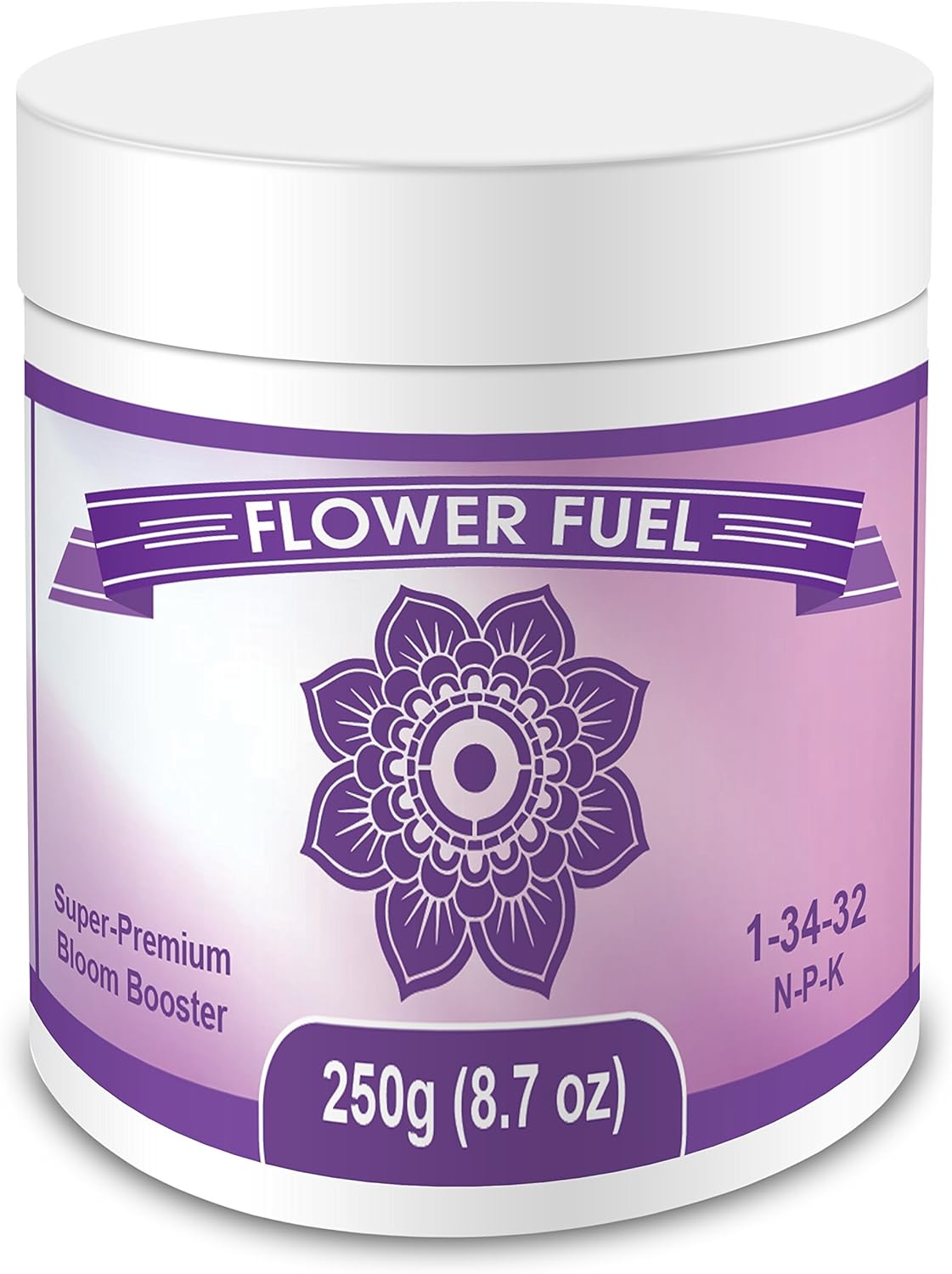
| N-P-K | 1-34-32 |
|---|---|
| Item Form | Powder |
| Specific Uses For Product | Hydroponics |
| Mixing Ratio | 1/4 teaspoon per 1 gallon |
Flower Fuel 1-34-32 is a powdered phosphorus-potassium bloom booster designed to be used alongside a base nutrient throughout the flowering cycle. It mixes at 1/4 teaspoon per gallon and is supplied with measuring scoops, making it simple to dose for small garden tanks, containers, or hobby hydroponic setups. The high P and K formulation targets flower development, helping produce fuller, heavier blooms when combined with a complete nutrient program. Its soluble powder form is convenient for mixing into feed solutions for soil, coco, and hydro systems and treats a large volume of water from a single jar. Important practical notes: it is an additive rather than an all-in-one nutrient so you must continue a balanced base feed, and because it contains phosphorus it may be restricted for some turf or non-agricultural applications in certain areas. Follow safety guidance when handling the powder and measure carefully to avoid overfeeding sensitive plants.
Best for: Gardeners who want to optimize bloom size and yield by adding a targeted P and K booster to an existing nutrient program and who value straightforward dosing and cost efficiency.
Less Ideal for: Beginners looking for an all-in-one feed or gardeners who cannot use phosphorus-containing fertilizers due to local restrictions.
- High phosphorus and potassium ratio specifically formulated for bloom development
- Soluble powdered form mixes easily into feed water for soil, coco, or hydroponics
- Includes measuring scoops and a clear mixing ratio for straightforward dosing
- Treats a large volume from one jar, offering good per-gallon value
- Not a complete base nutrient so must be paired with a balanced fertilizer
- Contains phosphorus which may be regulated for some outdoor turf or municipal areas
Verdict: Choose Flower Fuel if you want an affordable, high-PK bloom booster to noticeably increase flower density when used with a complete base nutrient.
Miracle-Gro Water Soluble Bloom Booster Flower Food, 10-52-10, 1 lb

| Item Form | Liquid |
|---|---|
| Application Method | Water Soluble |
| Coverage | 500 square feet |
| Target Species | all blooming plants |
| Mixing Ratio | 1 tablespoon/gallon (1.5 tsp for indoor plants) |
This Miracle-Gro bloom booster is a water-soluble plant food designed for flowering annuals and perennials, and it is typically mixed into a watering can or used with a garden feeder. The 10-52-10 formula supplies a high phosphorus dose aimed at increasing bud set and flower production, and it starts working quickly through root and foliar feeding when applied as directed. Practical features include a simple mixing ratio (1 tablespoon per gallon for outdoor use, reduced rate for indoor plants) and compatibility with the Miracle-Gro garden feeder for easy coverage up to about 500 square feet per refill. For gardeners focused on colorful displays, the concentrated phosphorus and repeat feeding schedule (every 7 to 14 days during bloom) deliver noticeably fuller flower shows. Limitations are that it is specifically a bloom booster rather than an all-purpose fertilizer and should be used only during bud set and bloom to avoid nutrient imbalance; following label rates is important to prevent overfeeding. For basic container or bedding displays, it is an easy-to-use option that targets bloom performance without complicated application steps.
Best for: Gardeners who want an affordable, straightforward booster to increase flower production on annuals and container displays and who plan to feed regularly during the bloom period.
Less Ideal for: Those seeking an all-in-one, season-long fertilizer or a slow-release product for hands-off maintenance should look elsewhere.
- High phosphorus 10-52-10 formula to promote more blooms and better bud set
- Water-soluble for quick uptake and easy mixing in a watering can or garden feeder
- Clear mixing instructions with lower indoor rate to reduce risk of burning when used as directed
- Covers a substantial area per feeder refill, useful for beds and multiple containers
- Focused on bloom boosting rather than providing a balanced, all-season nutrient program
Verdict: If you want an inexpensive, easy-to-use booster that reliably increases blooms on annuals and containers, this is a strong, no-frills choice.
Gardenera Premium Liquid Silica Plant Supplement for Passion Fruit — 8 oz

| Item Form | Liquid |
|---|---|
| Specific Uses For Product | Passion Fruit Plants |
| Application Method | Watering Can; Hose End Sprayer; Foliar Spray |
| Coverage | Makes 45 Gallons |
| Mixing Ratio | 1-1.5 tsp/gal grow, 1 tsp/gal bloom |
This Gardenera liquid silica supplement is designed specifically for passion fruit plants and is used as a regular additive to your watering or as a foliar spray. It supplies bioavailable silica intended to strengthen cell walls, which helps produce thicker stems, reduced leaf browning, and improved resilience to heat and drought. Typical use is simple: mix the recommended teaspoon-per-gallon ratio into a watering can every grow or bloom watering, use a hose-end sprayer for larger plantings, or apply as a foliar spray for faster uptake. Notable features include a concentrated formula that makes up to 45 gallons, compatibility with soil, coco, peat and hydroponic systems, and clear mixing ratios for grow and bloom phases. In practice the product makes it easy to add silica to routine feeding and can reduce structural weakness in vines and fruiting stems. Limitations to consider are that it is a single-ingredient silica supplement rather than a complete fertilizer, so you will still need balanced nutrients for overall plant nutrition, and results depend on consistent use and correct mixing.
Best for: Buyers who prioritize consistent, resilience-focused care for passion fruit vines and want a reliable supplement to reduce stem weakness and leaf damage as part of a regular feeding routine.
Less Ideal for: Gardeners looking for an all-in-one fertilizer or those who prefer to manage plant nutrition without additional specialized additives.
- Concentrated formula covers up to 45 gallons, so small bottle treats many waterings
- Bioavailable silica intended to strengthen stems and reduce leaf browning
- Compatible with soil and hydroponic systems and usable as foliar spray
- Clear mixing instructions for grow and bloom phases and for hose-end application
- Not a complete fertilizer so it must be used alongside balanced nutrient feeds
- Small 8 oz bottle may be inconvenient for very large plantings despite coverage claims
Verdict: Use this concentrated silica supplement to reliably strengthen passion fruit stems and improve leaf health when added routinely to your feeding plan.
Farmer's Secret Fruit & Bloom Booster Liquid Fertilizer (8 oz)

| Item Form | Liquid |
|---|---|
| Liquid Volume | 8 fluid ounces |
| Mixing Ratio | 1 teaspoon : 2 gallons |
| Application Method | dilute with water and pour or spray |
Farmer's Secret Fruit & Bloom Booster is a concentrated liquid plant food designed for mid-to-late season use when plants begin to bud and set fruit. You dilute a small amount (1 teaspoon per 2 gallons) and apply it either to the soil with your watering can or as a foliar spray, repeating every 1 to 2 weeks. The formula emphasizes phosphorus and potassium alongside trace minerals to promote root development, flowering and fruit set, which is the kind of nutrient profile banana growers look for during fruiting. Because it is liquid and already mixed, nutrients are immediately available and it is easy to integrate with irrigation or regular watering. The bottle is small but very concentrated, so a little goes a long way. A practical limitation is that the 8 ounce size supplies only a limited number of applications for larger banana plants or multiple trees, so you will need to plan purchases for season-long feeding. Follow dilution directions carefully to avoid overapplication.
Best for: Gardeners who prefer a proven, easy-to-use liquid feed to encourage blooms and fruit and who want straightforward instructions and predictable results.
Less Ideal for: Growers with large banana groves or multiple mature plants who need bulk or long-term feeding should consider larger-volume fertilizers or granular options.
- High phosphorus and potassium formulation supports flowering and fruit set
- Liquid concentrate delivers nutrients immediately and is usable as soil or foliar feed
- Simple, low-strength mixing ratio makes it easy for beginners to apply safely
- Contains additional trace minerals (iron, zinc, calcium) that support overall plant health
- Small 8 oz bottle provides relatively few applications for mature banana plants or multiple trees
Verdict: A highly concentrated, easy-to-use liquid booster that quickly delivers flowering and fruiting nutrients for backyard banana plants and other fruiting ornamentals.
Miracle-Gro Shake 'N Feed Rose & Bloom Plant Food, 4.5 lb

| Item Form | Granules |
|---|---|
| Specific Uses For Product | Plant Food |
| Coverage | 4.5 pounds |
| Target Species | roses and flowering plants |
Miracle-Gro Shake 'N Feed Rose & Bloom is a granular, slow‑release plant food designed to encourage bigger blooms and sustained flowering with minimal upkeep. You apply it by shaking the granules onto dry soil around the plant, working them in, and watering to start the release; one application is meant to feed for up to three months. The formula contains organic ingredients such as kelp, feather meal, bone meal, and earthworm castings that support soil microbes and root development, which can improve water efficiency and bloom production. For ranunculus growers seeking reliable bloom performance without frequent feedings, this product offers convenient, season‑long nutrition for both in‑ground beds and containers. Limitations to consider are that it is a general rose/flower formula rather than a ranunculus‑specific NPK balance and results will depend on proper soil preparation and watering; heavy feeders or growers wanting very precise nutrient ratios may prefer a specialty bulb or bloom booster fertilizer. Pack size and the granular format make it easy to apply to small beds but do require occasional incorporation into the topsoil.
Best for: Gardeners who prioritize reliable, low‑maintenance bloom feeding and want season‑long results with minimal reapplication for their flowering borders or containers.
Less Ideal for: Specialists who need a fertilizer matched precisely to ranunculus tuber requirements or growers who prefer water‑soluble feeds and exact NPK control.
- Slow‑release formula feeds up to three months from one application
- Contains natural, soil‑building ingredients that support microbes and root health
- Easy granular application for beds and containers
- Suitable for both in‑ground and container flowering plants
- Not formulated specifically for ranunculus so NPK is not tailored to bulb/tuber needs
- Granules must be worked into soil surface for best effect rather than delivered directly to the crown
Verdict: Provides convenient, long‑lasting nutrition to boost blooms with one easy granular application every three months.
Choosing the Right Fertilizer for Passion Flower: Key Factors to Consider
Nutrient Ratio and Bloom Promotion
Passion flower tends to respond to a balanced feed that still favors flower production. A moderate to slightly higher phosphorus level relative to nitrogen helps encourage bud set and flower retention without producing excessive soft growth that is prone to damage. Understanding the NPK ratio tells you whether a fertilizer is oriented toward foliage, blooms, or root development.
For gardeners, matching ratio to the plant's growth phase matters. Use a bloom-oriented feed during the flowering period and a more balanced or slightly nitrogen-lean formula when you want to reduce leafy overgrowth. Checking the label for clear NPK numbers and suggested timing will make it easier to plan regular feedings that support steady flowering.
Micronutrients and Trace Elements
Micronutrients like iron, magnesium, zinc, and manganese play an outsized role in leaf color, enzyme function, and overall plant vigor. Passion flower can show nutrient deficiency symptoms as yellowing between veins or slowed growth if trace elements are lacking. A fertilizer that includes chelated iron or magnesium can prevent common chlorosis in container-grown vines.
Choose formulas that list essential micronutrients or those labeled for flowering shrubs and vines. In some soils, a separate soil amendment or foliar feed may be needed to correct specific deficiencies, but a broad-spectrum fertilizer reduces the need for frequent spot treatments.
Release Type and Feeding Frequency
Fertilizers come as quick-release liquids, water-soluble granules, or slow-release pellets. Each type affects how often you must feed and how stable nutrient availability is. Quick-release solutions give fast results and are useful for a short-term bloom boost. Slow-release products offer steady feeding that reduces the chance of overfertilizing and suits gardeners who prefer less frequent maintenance.
Think about your watering routine and planting situation. Containers dry out faster and may benefit from more regular, milder feeds, while in-ground plantings with established root zones can handle less frequent, longer-lasting products. Follow label directions closely to avoid buildup of salts in pots.
Application Method and Practicality
How a fertilizer is applied affects day-to-day gardening. Water-soluble fertilizers mix into irrigation or a watering can and are quick to use, which is handy for periodically boosting blooms. Granular and slow-release options are broadcast or worked into the topsoil and require fewer repeat applications but need correct placement to reach roots.
Consider accessibility of your passion flower planting. If vines are trained high on a trellis or nearby a hard-to-reach fence, a system that lets you feed from the ground or through irrigation tubing is more practical. Ease of measuring and the clarity of dosing instructions also reduce the risk of mistakes.
Container and Soil Compatibility
Many gardeners grow passion flower in containers, which concentrates nutrient changes and salt buildup. Container mixes often need fertilizers formulated for pots, with lower salt index and clear reapplication intervals. In-ground soils vary widely; sandy soils may leach nutrients quickly while heavy soils can lock up certain elements.
Match fertilizer type to your growing medium. Look for products that specify container use when planting in pots, and for in-ground plants, choose formulations that work with your soil type or plan to pair feeding with organic matter to improve nutrient retention.
Timing Relative to Bloom Cycle
The timing of feeding influences whether energy goes to new leafy growth or flower development. Applying a bloom-focused feed as flowering begins supports bud set and petal development. Conversely, heavy nitrogen applications right before bloom can divert energy into foliage instead of flowers.
Plan a feeding schedule that aligns with your climate and the plant's growth phases. In temperate climates this might mean starting bloom feedings in late spring and tapering after the first flush, while in warmer regions you might maintain lighter, steady feeding through multiple bloom cycles.
Feeding Passion Flower in Containers
Containers concentrate both nutrients and salts, so feeds should be chosen and dosed with this in mind. Use lighter, more frequent liquid or water-soluble applications to avoid salt buildup. Flush pots occasionally with plain water to prevent accumulation, especially when using quick-release formulas.
Select potting mixes with good drainage and organic matter to buffer nutrient swings. If you prefer slow-release pellets, choose a low-salt product formulated for flowering containers and monitor the plant for signs of overfeeding or nutrient deficiency.
- Apply diluted water-soluble feed every 2 to 4 weeks during active growth.
- Flush containers once a month if buildup is suspected.
- Top-dress slow-release granules at the start of the season for low-maintenance feeding.
Feeding Passion Flower in the Ground
In-ground vines benefit from feeding approaches that account for soil texture and existing fertility. Incorporating compost in spring improves nutrient retention and supports root health, reducing the need for heavy synthetic feeding.
Granular fertilizers worked into the soil near the root zone provide a steady source of nutrients. Liquid feeds can be used for quick corrective action if you notice yellowing or poor bud set.
- Apply granular fertilizer in early spring and again midseason if growth stalls.
- Work compost or well-rotted organic matter into the planting area annually.
Organic Versus Synthetic Options
Organic fertilizers release nutrients more slowly and improve soil structure over time, which benefits long-term vigor. They are often gentler in containers and reduce the risk of salt buildup. Synthetic feeds provide predictable NPK ratios and quicker correction of deficiencies, which can be useful to induce a bloom flush.
Balancing both approaches can be effective: use organic matter and periodic slow-release organics for baseline fertility, with targeted soluble feeds when you need a bloom boost.
- Use compost and well-rotted manure for steady background fertility.
- Reserve soluble synthetic feeds for targeted bloom stimulation or fast corrections.
Addressing Common Nutrient Deficiencies
Yellowing between leaf veins often indicates magnesium or iron deficiency. A targeted foliar spray or a fertilizer containing these micronutrients will correct symptoms faster than bulk NPK changes. Chlorosis that affects new growth more than old growth typically signals iron shortage.
If leaves are overall pale and growth is weak, this is more likely a nitrogen shortfall. Always confirm suspected deficiencies by checking soil moisture, pH, and recent feeding history before applying corrective treatments.
- Use a soil test or pH kit to check for locking of nutrients.
- Apply chelated iron or magnesium products when interveinal chlorosis appears on new leaves.
Timing Feedings Around Pruning and Training
Pruning and training influence nutrient demands. After a heavy pruning or when establishing new runners on a trellis, give a balanced feed to support root recovery and new growth. Before expected bloom flushes, switch to a bloom-emphasizing feed to encourage bud formation.
Avoid heavy nitrogen applications immediately prior to the main flowering period to prevent delayed or reduced blooms. Instead, use a controlled-release or lower-nitrogen formula to maintain vigor without sacrificing flower production.
- Feed lightly after major pruning to support regrowth.
- Shift to bloom-focused feeding in the few weeks leading up to the first major flowering.
How We Chose the Best Fertilizer for Passion Flower
We focused on fertilizers that meet the specific nutritional needs and growth habits of passion flower vines. Selection prioritized nutrient formulations that favor flower production without forcing weak, overly lush foliage. We also considered delivery methods gardeners actually use in the yard and containers. Evaluation criteria included NPK balance and micronutrient content to assess bloom and leaf support, ease of application and dosing for routine garden use, release type and frequency to match container and in-ground schedules, and formulation suitability for common planting situations like pots, mixed beds, and trained trellises. We excluded products designed only for lawns or purely slow-release tree feeds that do not allow control over bloom-targeted nutrient ratios. Products that require specialized equipment or are mainly for commercial production were not considered. The final picks balance bloom encouragement, vine vigor, and practical usability for home gardeners.
FAQ
How often should I fertilize a passion flower vine in a pot?
Often fertilizing every 2 to 4 weeks with a diluted, water-soluble feed during the growing season works well. If you use a slow-release product, one application at the start of the season is usually enough, with monitoring and supplemental liquid feed if blooms drop or leaves yellow.
Can I use a general-purpose fertilizer for passion flower?
Usually a general-purpose fertilizer will support growth, but a formula with a slightly higher phosphorus proportion or labeled for flowering shrubs will better encourage blooms. Adjust the timing to favor bloom formation rather than heavy leafy growth.
What signs indicate my passion flower needs a different fertilizer?
Look for few or aborted flower buds, excessive leggy growth, or persistent leaf yellowing. These symptoms can indicate imbalanced nutrients or lacking micronutrients. Confirm soil moisture and pH first, then consider a fertilizer with the missing elements.
Is foliar feeding effective for correcting micronutrient issues?
Yes, foliar sprays with chelated iron or magnesium often correct chlorosis quickly because leaves absorb these elements faster than roots. Foliar feeding is a good short-term fix while you address underlying soil pH or long-term nutrient needs.
When should I stop feeding passion flower for the season?
Typically reduce or stop regular feeding as growth slows in late autumn or when the plant goes partly dormant in cooler climates. Continue light feeding in warm regions if the vine is actively flowering, but taper inputs ahead of winter to harden plants.
Final Verdict
Choose a fertilizer for passion flower by prioritizing a nutrient balance that encourages flowering while maintaining healthy vine growth. Match the release type to your routine and planting style: containers usually need gentler, more frequent feeding, while in-ground vines can take longer-lasting products. Pay attention to micronutrients and timing relative to pruning and bloom cycles. Focus on predictable NPK ratios and clear application instructions so you can support blooms without causing excess foliage or salt buildup. With those tradeoffs in mind, you can confidently pick a feed that fits your planting situation and flowering goals.
