

Note: This article contains affiliate links. If you click on these links and make a purchase, I may earn a small commission at no extra cost to you. This helps support my research and content. Read my full affiliate disclosure here.
A well-chosen ground cover can revive thin turf, reduce mowing, and fill shady or steep areas where grass struggles. For lawns, the right ground cover balances durability with low maintenance so you get a tidy, living surface that needs less fertilizer and less water than conventional turf. This guide shortlists seven top ground cover options for lawns and explains how each one behaves in a real yard. We evaluated candidates for shade and sun adaptability, wear tolerance, and care needs so you can pick a cover that matches your site conditions and maintenance appetite.
Top Picks at a Glance
| Best Overall The best all-around choice for most situations | BuildASoil No-Till 60% Clover Seed Mix — 12-Species Cover Crop Blend (1 lb) |  |
| Best Quality Built to a higher standard if you want something more solid | X-Seed Microlawn Grass Seed & Microclover Mix, 5 lb |  |
| Best Value The sweet spot between price and what you get | Pennington Bare Spot Repair Central Grass Seed Mix, 1 lb |  |
| Best Budget The cheapest option that still gets the job done reliably | White Dutch Clover Seeds, 1 oz (approx. 30,000 seeds) |  |
| Highest Rated A top-rated pick with lots of positive feedback | Pennington No Mow Mix Fine Fescue Grass Seed, 3 lb |  |
| Most Popular A crowd favorite that many people choose with confidence | Scotts Turf Builder Grass Seed Sun & Shade Mix, 5.6 lb |  |
| Best Seller A high-volume bestseller chosen again and again | Pennington Smart Seed Perennial Ryegrass with Fertilizer, 3 lb |  |
BuildASoil No-Till 60% Clover Seed Mix — 12-Species Cover Crop Blend (1 lb)

| Unit Count | 16 Ounce |
|---|---|
| Indoor Outdoor Usage | Outdoor |
| Brand Name | BUILD A SOIL |
| Manufacturer | BuildASoil LLC |
This 12-species mix from BuildASoil is formulated around clover (60 percent) to establish a low-growing, no-mow ground cover that suppresses weeds and improves soil biology. It is typically broadcast over lawns, garden beds, or larger plots and left to establish as a perennial clover lawn, living mulch, or seasonal cover crop. Notable features include a high clover proportion with white and red varieties, a diversity of companion species for resilience, and a non-GMO USA-made seed source. In practice the mix brings practical benefits: quick ground cover and early nitrogen fixation reduce fertilizer needs, the dense clover habit lowers mowing and irrigation demands, and pollinators are supported when flowers set. Important limitations are that a clover-dominant lawn looks and behaves differently than traditional turf (different texture, patching, and flowering) and it may not be ideal where heavy foot traffic or uniform turf appearance is required. Also, one pound is sized for small areas so larger sites need bigger quantities.
Best for: Home gardeners and homeowners looking for an easy-to-maintain, soil-building ground cover or low-maintenance lawn alternative who value biodiversity and reduced mowing.
Less Ideal for: People who need a traditional uniform turf for heavy play areas, sports, or a manicured formal lawn should consider conventional grass seed or alternative surfaces.
- High clover content (60%) encourages fast, low-growing cover and nitrogen fixation
- Twelve-species blend increases biodiversity and resilience against pests and variable conditions
- Designed for no-till and no-mow use, reducing mowing and irrigation needs
- Suitable for lawns, raised beds, and larger plots as a cover crop or living mulch
- Clover lawn appearance and flowering differ from conventional turf and may not suit formal lawns
- One-pound unit covers only about 900 sq ft, requiring larger purchases for big areas
Verdict: Choose this mix if you want a low-maintenance, clover-dominant ground cover that improves soil and cuts mowing and fertilizer needs.
X-Seed Microlawn Grass Seed & Microclover Mix, 5 lb

| Indoor Outdoor Usage | Outdoor |
|---|---|
| Other Special Features of the Product | Drought Tolerant |
| Sunlight Exposure | Partial Shade |
| Moisture Needs | Moderate Watering |
| Material Features | Grass seed and micro-clover seed mixture |
This X-Seed Microlawn mix combines tall fescue, perennial ryegrass, and microclover to create a thick, low-input groundcover ideal for lawns. It is typically broadcast or hydroseeded over prepared soil, lightly raked in, and kept moist until seedlings establish. Notable features include a ProNitro coating on half the seed for improved moisture retention and early root development, a microclover component that naturally adds nitrogen, and a formulation aimed at crowding out weeds and tolerating foot traffic. Practically, that means quicker, more uniform germination, less need for fertilizing, and a lawn that stays green with reduced watering once established. Limitations are that results still depend on proper site prep and consistent watering during germination, and microclover mixes produce a shorter, clover-flecked appearance rather than a uniform single-species turf. This product is best for homeowners who want a resilient, lower-maintenance lawn and are comfortable with a mixed turf aesthetic rather than a traditional monoculture lawn.
Best for: Gardeners who prioritize a durable, low-maintenance groundcover and want a lawn that recovers from wear with less feeding and watering.
Less Ideal for: Those seeking a perfectly uniform, traditional turf appearance or who do not want any clover mixed into their lawn.
- Mix of fescue, perennial ryegrass, and microclover for dense, weed-suppressing coverage
- ProNitro coated seed for improved germination and early root development
- Microclover adds nitrogen naturally, reducing the need for fertilizer
- Formulated for drought tolerance and high-traffic durability
- Establishment still requires regular watering and soil preparation for best results
- Produces a mixed-look lawn with clover rather than a uniform single-species turf
Verdict: Choose this mix if you want a resilient, low-fertilizer lawn that establishes densely and holds up to traffic while requiring less ongoing maintenance.
Pennington Bare Spot Repair Central Grass Seed Mix, 1 lb

| Sunlight Exposure | Full Sun to Medium Shade (4-8 hrs sun) |
|---|---|
| USDA Hardiness Zone | 1-12 |
| Moisture Needs | Moderate Watering |
| Expected Planting Period | Spring |
| Plant or Animal Product Type | Grass Seeds |
Pennington Bare Spot Repair Central is a small, ready-to-use grass seed mix aimed at patching bare spots and thinning turf. It is formulated for the Central region and combines tall fescue and annual ryegrass with a penkote coating to promote quick germination, with visible results often in 5 to 14 days. Typical use is straightforward: mow low, loosen the soil, sow at the recommended rate, lightly rake to cover and keep consistently watered until established. The coating and blend make it useful for fast coverage and for homeowners who want a simple lawn repair kit rather than a full overseed. It covers roughly 100 square feet per pound and is intended for areas that receive four to eight hours of sun. Limitations are its small bag size for larger jobs and the mix includes annual ryegrass, so some areas may require follow-up overseeding with permanent turf varieties for long-term uniformity.
Best for: Homeowners who want a practical, no-fuss solution to repair small bare patches quickly and prefer a product tailored to Central U.S. lawns.
Less Ideal for: People restoring large lawns or aiming for a perfectly uniform, long-term turf should choose bulk turf-specific seed blends or professional overseeding options.
- Quick germination and visible coverage in 5 to 14 days for fast patching
- Blended for the Central U.S. climate to improve regional performance
- Penkoted coating helps seed-to-soil contact and easier handling
- Simple 3-step application suitable for DIY lawn repairs
- Small 1 lb bag only covers about 100 sq ft, so multiple bags are needed for larger areas
- Contains annual ryegrass which may not match permanent turf color or texture long term
Verdict: Choose this if you want a fast, region-specific DIY patching seed that fills bare spots quickly with minimal fuss.
White Dutch Clover Seeds, 1 oz (approx. 30,000 seeds)

| Expected Planting Period | Spring or Fall |
|---|---|
| Sunlight Exposure | Full Sun |
| USDA Hardiness Zone | 1-10 |
| Soil Type | Clay Soil |
| Moisture Needs | Regular Watering |
This packet contains roughly 30,000 White Dutch Clover seeds intended for seeding as a low lawn alternative, pasture mix, or pollinator-friendly ground cover. It is typically broadcast or overseeded in spring or fall on sites that get full sun and receive regular watering. Notable features include broad USDA hardiness (zones 1 to 10), suitability for clay and silt soils, and heirloom seed stock that establishes quickly and provides nectar for bees and other pollinators. In practice you can use it to patch thin turf, reduce fertilizer needs by taking advantage of the clover's nitrogen-fixing habit, or replace part of a traditional grass lawn with a mixed clover lawn that tolerates light traffic. Limitations are that it prefers cool, moist conditions and does not tolerate deep shade or prolonged drought without irrigation, and it will attract grazing animals if your property has deer or livestock. Expect a lawn with shorter, flowering growth rather than a uniform turf surface.
Best for: Cost-conscious homeowners or gardeners who want an affordable, low-input alternative to traditional grass and value pollinators and soil improvement.
Less Ideal for: Those seeking a uniform, manicured turf aesthetic or homeowners in hot, dry landscapes who cannot provide supplemental watering.
- Large seed count (about 30,000) suitable for treating multiple small areas or overseeding
- Adapted to a wide USDA zone range (1–10) for broad geographic use
- Fixes nitrogen, which can reduce the need for synthetic fertilizers
- Attractive to pollinators and extends nectar availability when mixed with yellow clover
- Performs best in cool, moist conditions and may require irrigation in dry climates
- Not well suited to heavy shade or areas with frequent, heavy foot traffic
Verdict: A budget-friendly bulk seed option for replacing or mixing into lawns to create a low-growing, pollinator-friendly ground cover that reduces fertilizer needs.
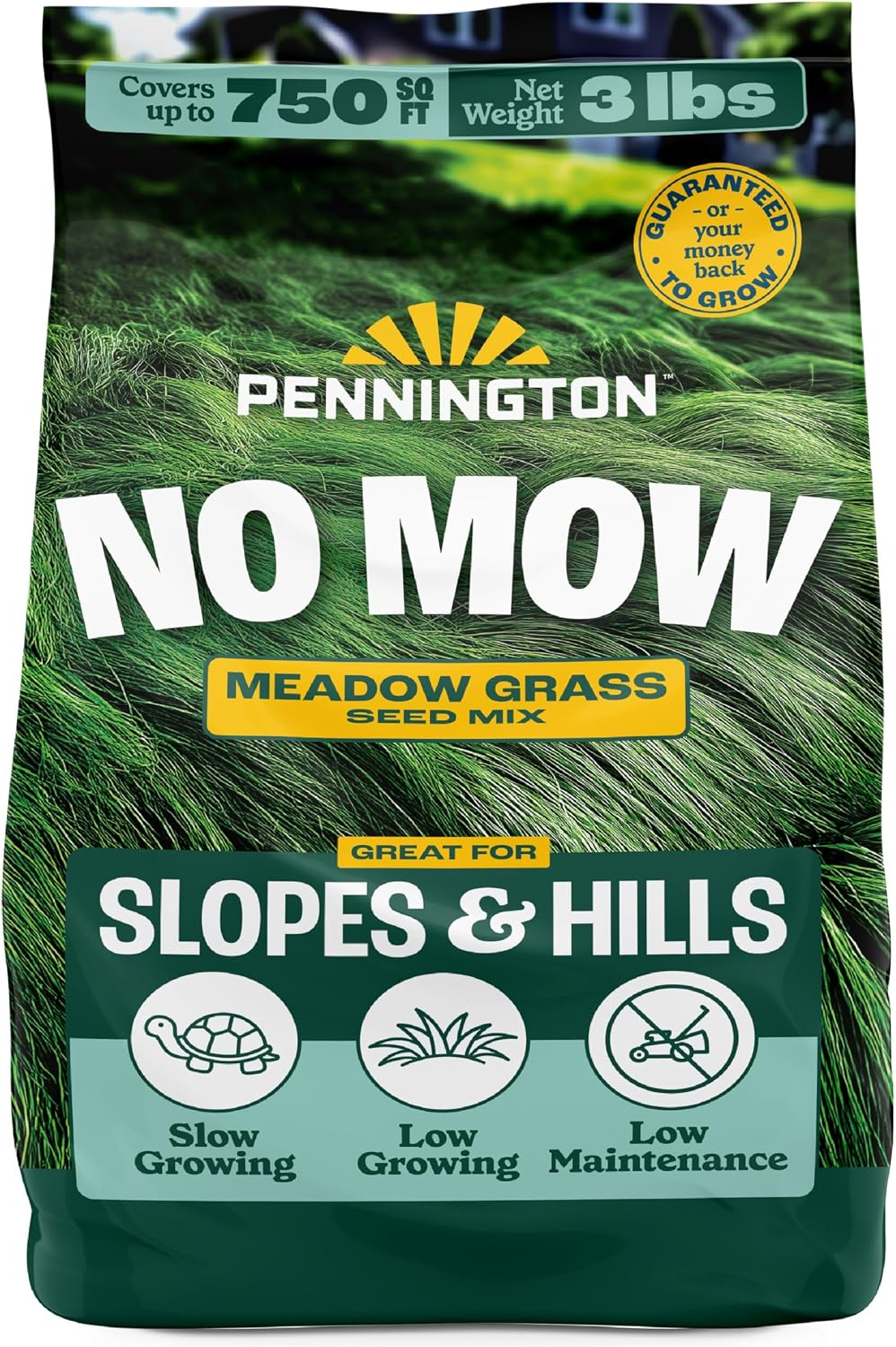
Pennington No Mow Mix Fine Fescue Grass Seed, 3 lb
| Sunlight Exposure | 4-6 Hours of Sun Per Day |
|---|---|
| Expected Planting Period | Fall |
| USDA Hardiness Zone | 1-12 |
| Moisture Needs | Regular Watering |
| Material Features | Fine fescue blend including creeping red fescue and chewings fescue |
Pennington No Mow Mix is a fine fescue blend intended for homeowners who want a low-effort ground cover instead of a traditional turf. It contains creeping red and chewings fescues that germinate into a soft, meadow-like cover that reaches about 12 inches before naturally falling to roughly 6 inches, eliminating routine mowing once established. Typical use is overseeding or establishing a no-mow area on slopes, hills, or difficult-to-mow corners where erosion control and a natural look are priorities. The seed needs regular watering during establishment and prefers 4 to 6 hours of sun per day; it is best planted in spring or fall and is drought tolerant after maturity. Notable features are its adaptability across USDA zones 1 to 12, suitability for hard-to-mow terrain, and a composition aimed at uniform coverage. Limitations include a different aesthetic than a manicured lawn, slower establishment compared with fast-germinating turfgrasses, and the need for initial consistent moisture to get reliable results.
Best for: Buyers who prioritize dependability and low ongoing maintenance for ground cover and want a simple, long-term solution for slopes, hills, or hard-to-mow yards.
Less Ideal for: Homeowners seeking a short, manicured turf for high-traffic play areas or those who need immediate, fast-establishing green cover.
- Designed for low-maintenance no-mow lawns that eliminate routine mowing once established
- Fine fescue blend (creeping red and chewings fescue) suited for slopes and hard-to-mow areas
- Drought tolerant after establishment which reduces long-term irrigation needs
- Wide USDA hardiness zone range making it adaptable across climates
- Requires consistent watering and attention during establishment for reliable germination
- Produces a meadow-like appearance rather than the short, manicured look of traditional turf
Verdict: Choose this mix when you want a reliable, low-maintenance meadow-style ground cover for slopes and hard-to-mow areas that eliminates routine mowing.
Scotts Turf Builder Grass Seed Sun & Shade Mix, 5.6 lb

| Indoor Outdoor Usage | Outdoor |
|---|---|
| Other Special Features of the Product | Medium Drought Tolerant, combination seed fertilizer soil improver |
| Sunlight Exposure | Full Sun |
| Expected Planting Period | Spring |
| Seed Treatment Method | Scotts Spreader |
Scotts Turf Builder Sun & Shade Mix is a ready-to-use lawn seed blend that also includes fertilizer and soil-improving ingredients to help new lawns or overseeded turf establish faster. You spread it with a broadcast or hand spreader, lightly rake it into the topsoil, and keep the area consistently moist; germination is expected in about 6 to 12 days with visible fill-in by five to seven weeks. The mix includes several cool-season grasses aimed at sun and partial shade, and the Root-Building Nutrition helps seedlings develop deeper roots for greater durability and medium drought tolerance. Practical benefits include built-in feed so you do not need a separate starter fertilizer and label guidance for spreader settings to get even coverage. Limitations are that it is optimized for spring or fall applications within a specific temperature range and requires regular watering and follow-up care to achieve the advertised results. Coverage figures are provided on the bag so you can plan how many bags you need for new lawn versus overseeding projects.
Best for: Homeowners who want a low-fuss seed option that pairs seed with starter nutrition and clear application guidance, especially for repairing or overseeding cool-season lawns in spring or fall.
Less Ideal for: Those planting warm-season grasses, gardeners who cannot water daily during establishment, or buyers needing instant erosion control on steep slopes.
- Combination formula: seed plus fertilizer and soil improver reduces need for separate starter products
- Root-Building Nutrition promotes deeper root development for improved durability
- Formulated for both full sun and moderate shade so it works across varied yard light conditions
- Clear application guidance and spreader settings on the label for even coverage
- Requires consistent watering and specific temperature windows for best germination
- Coverage per bag may be insufficient for larger lawns, requiring multiple bags
Verdict: Choose this mix if you want a bundled seed plus starter nutrition that helps establish deeper roots for a thicker cool-season lawn in sun and partial shade.
Pennington Smart Seed Perennial Ryegrass with Fertilizer, 3 lb

| Sunlight Exposure | 4-6 Hours |
|---|---|
| Expected Planting Period | Spring |
| USDA Hardiness Zone | 1-12 |
| Moisture Needs | Moderate Watering |
| Seed Treatment Method | Coated |
Pennington Smart Seed Perennial Ryegrass is a coated cool-season grass seed blend designed to establish quickly and produce a fine-bladed turf. It is typically used for overseeding existing lawns or starting small new patches where you want visible results fast; germination is often noticeable within 8 to 14 days. The formula includes fertilizer and a seed coating that helps retain moisture and supports early root development, which is why it is marketed to use less water than ordinary seed. It performs best in areas receiving about 4 to 6 hours of sun and is noted for disease resistance and reasonable durability under foot traffic. Practical benefits include faster visual cover for filling bare spots and reduced early watering needs. Limitations are that it is a cool-season ryegrass, so it is best for spring or fall planting and may act as a temporary cover in warm-season lawns rather than a permanent solution in hot summers. Coverage claims are modest, so larger lawns will require multiple bags or a different product sized for big areas.
Best for: Homeowners who want a fast-establishing, low-fuss ground cover for small lawns or to overseed bare spots and prioritize reliable, predictable results.
Less Ideal for: Large properties that need broad coverage or gardeners in consistently hot, warm-season climates seeking a permanent turf solution.
- Fast germination with visible results in 8 to 14 days
- Coated seed with built-in fertilizer to support early growth and reduce initial watering
- Good disease resistance and holds up reasonably well to foot traffic
- Covers up to 750 sq ft for overseeding, making it efficient for small to medium areas
- Formulated as a cool-season ryegrass so it can be temporary in hot-season lawns
- 3 lb bag may not be cost-effective for large lawns where more coverage is needed
Verdict: Choose this seed when you need fast, dependable turf cover for small lawns or quick overseeding results.
Choosing the Right Ground Cover for Lawns: Key Factors to Consider
Site Light and Shade
Light exposure determines which ground covers will survive and spread. Some species thrive in full sun and will scorch in dense shade, while others will languish in blazing afternoon light. Consider both daily sun hours and seasonal changes; a spot that seems bright in spring may be shaded by tree canopy later in summer.
Also assess reflected heat from nearby walls or driveways. Ground covers that tolerate filtered light often perform best under trees or near hedges, whereas sun-loving species are better for open lawn pockets.
Wear Tolerance and Traffic Patterns
Think about how often people or pets cross the area. Some ground covers form dense, resilient mats that recover quickly from trampling. Others are decorative and will thin or die back under repeated foot traffic.
If the area is a walkway substitute or a play zone, prioritize species known for quick lateral growth and strong underground stems. For low-traffic decorative borders, you can choose softer, lower-growing plants.
Soil Type and Drainage
Soil texture and drainage influence establishment and long-term health. Sandy, fast-draining soils favor drought-tolerant ground covers but may require more frequent watering until established. Heavy clay holds water and can cause root rot for species that need excellent drainage.
Amending compacted or low-organic soils before planting speeds establishment. For slopes, select covers that root deeply or spread aggressively to reduce erosion.
Water Needs and Drought Resilience
Choose a ground cover whose water needs match your available irrigation and local rainfall. Some options need regular moisture through the growing season; others go dormant and brown during drought but bounce back after rain.
If you plan to reduce watering compared with a traditional lawn, favor drought-tolerant species. In irrigated or high-rainfall lawns, less drought tolerance is acceptable if the cover offers other benefits like dense coverage or seasonal interest.
Establishment Method and Speed
Establishment can be by seed, plugs, or sod-like mats. Seed is often the most economical but takes longer and can be vulnerable to birds and weeds. Plugs and pre-grown mats establish faster and suppress weeds sooner but cost more.
Faster-establishing covers reduce erosion risk and outcompete weeds earlier. Think about when you need coverage-do you want quick results for a slope, or can you afford a slower, long-term approach?
Maintenance and Seasonal Care
Maintenance includes mowing height (if any), trimming frequency, and seasonal cleanup. Some ground covers require annual thinning or light shearing to keep them tidy; others are effectively no-mow once established.
Also consider susceptibility to pests and disease. Plants that need frequent inputs or delicate care may negate the low-maintenance benefits that attract people to ground covers in the first place.
Best Uses for Ground Cover in Lawn Design
Ground cover works well where grass underperforms: shady strips under trees, narrow side yards, steep banks, and between stepping stones. In these situations, ground cover replaces high-maintenance turf and provides a living, erosion-resistant surface.
Use lower-growing, dense species close to paths and borders to prevent tripping and to create a uniform look. Taller, flowering ground covers can add seasonal color in larger swaths without needing frequent mowing.
- Erosion control on slopes
- Low-mow alternatives in shaded areas
- Interplanting with stepping stones and paths
- Reducing maintenance on narrow or awkward strips
Preparing the Lawn Area for Planting
Prepare the site by removing weeds and loosening compacted soil. A shallow till or double-dig in small areas helps roots penetrate and speeds establishment. Incorporating organic matter improves soil structure and moisture retention.
For seed installations, firm the soil and keep the surface consistently moist until seedlings are established. For plugs or mats, water deeply after planting and maintain regular irrigation through the first growing season.
- Clear competing vegetation
- Improve drainage or add organic matter
- Firm seedbeds and maintain moisture
- Use erosion controls on steep slopes during establishment
Integrating Ground Cover With Existing Lawn
Transition lines between turf and ground cover should be clean and intentional. Use edging or a shallow border trench to prevent runners from spreading where you want to keep grass. Gradual blends using a narrow band of transitional plants soften the visual edge.
When replacing thin turf, consider overseeding adjacent lawn to thicken the grass and reduce weed pressure. Regular monitoring during the first year helps catch encroaching weeds before they establish deep roots.
- Create clean edges with edging or trenches
- Use transitional plantings for softer borders
- Overseed nearby turf to reduce weed invasion
Seasonal Care and Long-Term Management
Most ground covers need regular observation rather than intensive care. Remove weeds while small, shear back when the plant becomes leggy, and refill bare patches with plugs or seed. A light layer of mulch at planting can conserve moisture but avoid deep mulches that smother runners.
Expect some seasonal changes: many covers will flower briefly and then focus on foliage. Plan any necessary pruning in late spring or early summer to encourage fresh growth before dormancy or hot weather.
- Spot-weed and thin annually as needed
- Shear leggy growth once per year for tidiness
- Top up bare spots with plugs or seed
Environmental Benefits of Replacing Turf
Replacing high-maintenance turf with an appropriate ground cover reduces mowing, fuel use, and the need for fertilizers. Many ground covers also provide better habitat value and help retain soil moisture compared with shallow-rooted turf.
Choosing native or well-adapted species supports local pollinators and requires fewer inputs. Even small patches of ground cover can reduce runoff and improve lawn biodiversity over time.
- Lower mowing and maintenance emissions
- Improved soil moisture retention
- Enhanced habitat for pollinators and beneficial insects
How We Chose the Best Ground Cover for Lawns
We selected ground covers that succeed in lawn settings where traditional turf often fails. Our editorial filters favored species and mixes with proven performance in common lawn challenges: shaded corners, compacted soil, slopes, and areas with intermittent foot traffic. We prioritized plants that establish reliably from seed or plugs, maintain attractive foliage across seasons, and need minimal grooming. Evaluation criteria focused on measurable garden realities: shade tolerance, wear and traffic resistance, water needs and drought tolerance, establishment speed and spread habit, and required maintenance including trimming and pest resilience. We excluded annual bedding plants, invasive species known to escape home lawns, and purely decorative matting products. Choices here reflect long-term garden behavior rather than short-term color or novelty traits.
FAQ
Will a ground cover survive heavy foot traffic in a family yard?
It depends on the species. Some ground covers tolerate intermittent foot traffic and recover quickly, while others will thin out and need replacement. Choose a variety specifically noted for wear resistance for higher-traffic areas.
How long does it take for ground cover to fill in a bare lawn patch?
Establishment time varies widely. Fast-spreading plugs or mats can cover small areas in one growing season, while seeded installations often take several seasons to fully fill in. Soil preparation and consistent moisture speed the process.
Can ground cover reduce lawn maintenance requirements?
Usually yes. Ground covers commonly reduce or eliminate the need for regular mowing, cutting down on labor and equipment use. However, some covers still require annual trimming or spot maintenance to stay tidy.
Are ground covers suitable for sloped lawns and erosion control?
Many ground covers are excellent for stabilizing slopes because they form dense mats or have aggressive root systems. Choose species known for strong anchoring and rapid lateral spread on slopes to reduce erosion risk.
Do ground covers attract pests or invasive behavior?
Some species can attract pests or become invasive outside their intended area. Select well-adapted, noninvasive plants and monitor runners near beds or sensitive habitats. Regular maintenance prevents unwanted spread.
Final Verdict
Ground cover for lawns is a practical alternative where traditional turf struggles or where you want to cut mowing and irrigation. Prioritize covers that match your light, soil, and traffic conditions, and be realistic about establishment time versus long-term payoff. Balance drought resilience, wear tolerance, and maintenance needs when deciding. With thoughtful site preparation and the right species, ground cover can give you a low-effort, attractive living surface that outperforms thin grass in problem areas.
