

Note: This article contains affiliate links. If you click on these links and make a purchase, I may earn a small commission at no extra cost to you. This helps support my research and content. Read my full affiliate disclosure here.
Pechay responds quickly to nutrients, and the right fertilizer can mean the difference between sparse, slow growth and full, tender heads. Whether you grow a single pot on a balcony or manage several beds, feeding that matches pechay's appetite for leafy growth and steady root development helps reduce bolting and pest pressure. This guide covers seven shortlisted fertilizers chosen for common Pechay situations, from short-season plantings to continuous harvests. We evaluate each option on nutrient balance, ease of application, and how they fit into typical small-plot and container routines, so you can pick a feeding approach that works with your time and setup.
Top Picks at a Glance
| Best Overall The best all-around choice for most situations | YARDi Brassicas & Greens Liquid Plant Food 32 oz (8-3-3) |  |
| Best Quality Built to a higher standard if you want something more solid | Brut Organic Worm Castings, 5 lb |  |
| Best Value The sweet spot between price and what you get | Southern Ag All Purpose Granular Fertilizer 10-10-10 (5 lb) |  |
| Best Budget The cheapest option that still gets the job done reliably | Miracle-Gro Water Soluble All Purpose Plant Food, 1.5 lb |  |
| Highest Rated A top-rated pick with lots of positive feedback | Jack's Classic 20-20-20 All Purpose Water-Soluble Fertilizer (24 oz) | 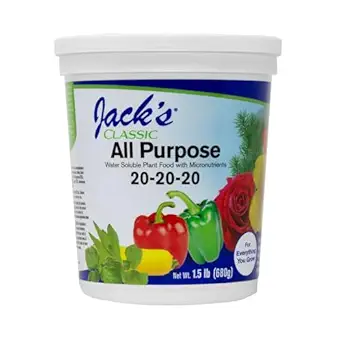 |
| Most Popular A crowd favorite that many people choose with confidence | Miracle-Gro Water Soluble All Purpose Plant Food, 3 lb |  |
| Best Seller A high-volume bestseller chosen again and again | Ahopegarden 800ml A&B Hydroponic Nutrients Liquid Plant Food |  |
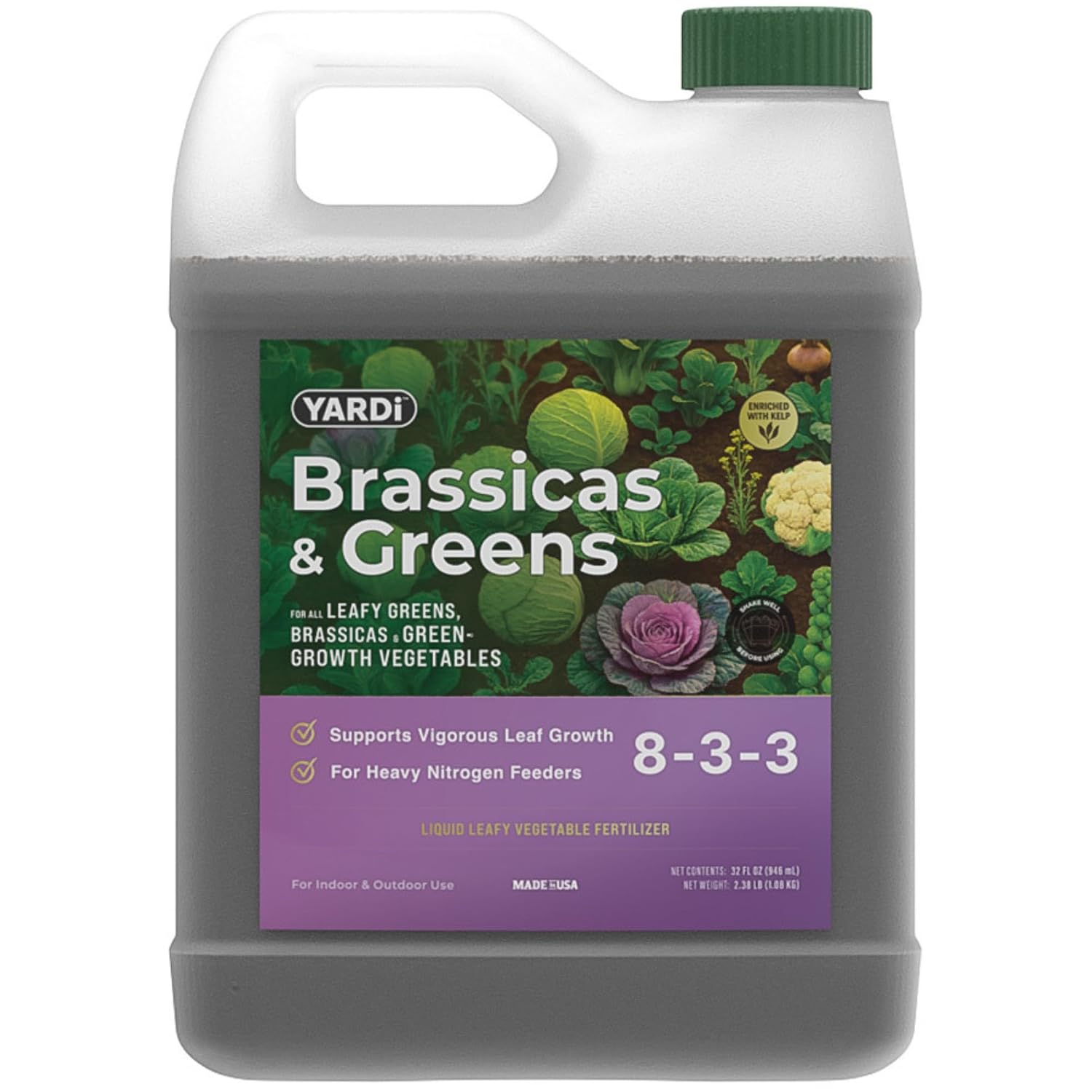
YARDi Brassicas & Greens Liquid Plant Food 32 oz (8-3-3)
| Item Form | Liquid |
|---|---|
| Specific Uses For Product | Leafy Greens |
| Target Species | Vegetables |
| Unit Count | 32 Fluid Ounces |
This 32-ounce YARDi liquid plant food is a nitrogen-forward 8-3-3 concentrate designed for outdoor brassicas and salad greens. It mixes easily with water (the label suggests 1–2 teaspoons per gallon) and can be applied as a soil drench, foliar spray, through drip irrigation, or with a hose-end applicator, making it flexible for beds, raised planters, and small-scale vegetable plots. The higher nitrogen ratio promotes lush, dark green foliage and sustained leafy growth in crops like kale, cabbage, broccoli, spinach and lettuce, and the formula includes micronutrients to support overall plant vigor. Practical benefits include straightforward dilution instructions and multiple application methods so you can feed regularly every 2–3 weeks during the growing season. Limitations are that the product is targeted to leafy vegetables and may be less appropriate for fruiting or flowering stages where balanced or phosphorus-heavy feeds are preferred, and frequent foliar or high-nitrogen use can require monitoring to avoid excess vegetative growth at the expense of yield.
Best for: Gardeners who prioritize big, healthy leaves on brassicas and salad greens and want a simple liquid feed they can use across beds and containers throughout the season.
Less Ideal for: Growers focused on flowering or fruiting crops or those who prefer granular slow-release fertilizers for low-maintenance feeding.
- High nitrogen 8-3-3 formula tailored for vigorous leafy growth
- Liquid concentrate that dilutes easily for foliar, soil drench, drip, or hose-end use
- Clear directions for regular feeding every 2–3 weeks during the season
- Includes micronutrients to support plant vigor beyond basic NPK
- Formulated specifically for leafy greens so not ideal as an all-purpose or bloom-promoting fertilizer
- Requires regular applications and careful dosing to avoid excessive leafy growth
Verdict: Choose this liquid 8-3-3 feed when your goal is consistently lush, vigorous leafy growth in brassicas and salad greens.
Brut Organic Worm Castings, 5 lb

| Item Form | Granules |
|---|---|
| Specific Uses For Product | Gardening,Organic |
| Target Species | All plants |
| Mixing Ratio | 1:5 |
Brut Organic Worm Castings function as a concentrated, natural soil amendment you mix into potting mixes or top-dress garden beds and raised beds. Typical use is mixing at the recommended 1:5 ratio for new indoor plants, sprinkling a cup around established houseplants, or working into outdoor planting holes and beds according to the brand directions. The product is OMRI/CDFA listed and produced in controlled conditions, which supports consistent nutrient content and beneficial microbial life that help roots establish, improve soil structure, and increase moisture retention without burning plants. Practical benefits for raised garden beds include improved aeration, slow-release nutrients, and a boost in microbial activity that supports long-term fertility. Limitations are that it is not a complete NPK fertilizer for immediate heavy feeding needs and larger beds require significant quantities to hit the suggested per-square-foot rates, so frequent applications or bulk purchases may be needed for big projects.
Best for: Gardeners who prioritize dependable, organic soil improvement for raised beds and container gardens and prefer predictable, low-risk amendments that support long-term soil health.
Less Ideal for: Those needing immediate, high-NPK feeding for heavy-feeding crops or gardeners who want to amend very large beds without buying supplemental bulk material.
- Certified organic and produced indoors for consistent purity
- Rich in beneficial microbes that improve soil structure and plant vigor
- Easy-to-use granular form suitable for mixing or top-dressing
- Not a standalone high-NPK fertilizer for rapid nutrient correction
- Five-pound bag may be small for large raised beds and repeated seasonal use
Verdict: Use this OMRI/CDFA-listed worm castings product to reliably build long-term fertility and microbial health in raised beds and containers.
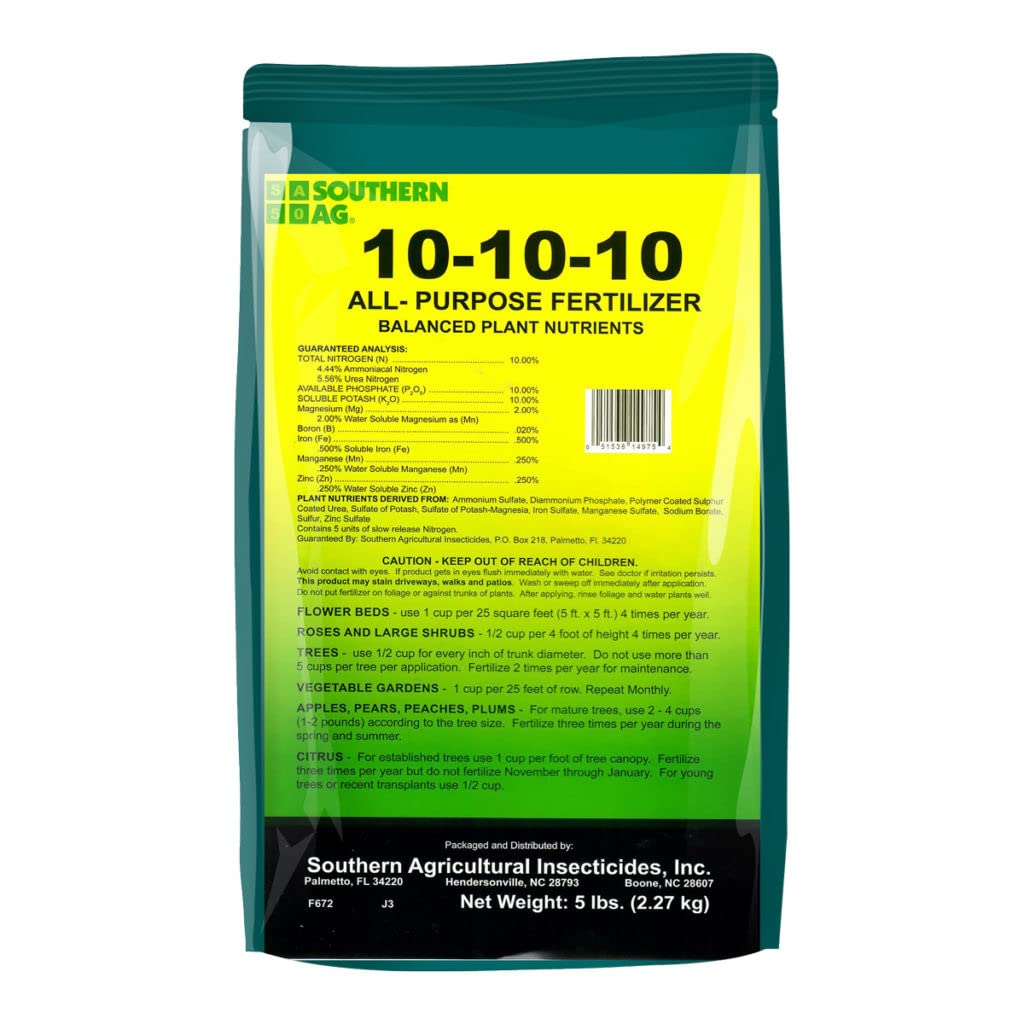
Southern Ag All Purpose Granular Fertilizer 10-10-10 (5 lb)
| Item Form | Granules |
|---|---|
| Specific Uses For Product | Citrus and Fruit Trees, Flowerbeds, Roses, and Large Shrubs, Vegetable Gardens |
| Application Method | Broadcast evenly over area and water in. |
| Mixing Ratio | 10:10:10 |
This 5 lb bag of Southern Ag 10-10-10 granular fertilizer is a straightforward, balanced all-purpose feed for vegetable beds, fruit trees, roses, and shrubs. You spread the granules uniformly over soil or beds and water them in; directions and recommended cup measurements are printed for common uses so dosing is easy. The formula supplies equal parts nitrogen, phosphorus, and potassium plus trace minerals like magnesium, iron, manganese, zinc, and boron, which supports steady vegetative growth and overall plant health. For asparagus specifically it can be used as a periodic maintenance feed during the growing season to support fern growth and energy storage in crowns. The product is simple to store and apply, and the small bag size is convenient for trialing on a single bed or patch. Limitations are that it is a general blend rather than a tailored asparagus formula, so heavy feeders or soils needing specific nutrient correction may require additional amendments, and granular broadcast feedings require careful placement to avoid contact with foliage or runoff risks described on the label.
Best for: Gardeners on a budget who want a simple, balanced fertilizer to maintain small asparagus patches and other mixed beds without buying specialty formulas.
Less Ideal for: Growers managing large asparagus plantings, or who need a targeted high-potassium or soil-specific amendment, should choose a crop-specific or soil-test-driven fertilizer.
- Balanced 10-10-10 N-P-K supports general growth and root development.
- Includes micronutrients (iron, manganese, zinc, boron) for broader plant nutrition.
- Clear application instructions and coverage rates for common garden uses.
- Small 5 lb size is convenient for testing on a single asparagus bed or small garden.
- Not formulated specifically for asparagus so may lack the higher potassium or phosphorus some heavy beds benefit from.
- Granular broadcast application can stain hard surfaces and requires watering after application to activate nutrients.
Verdict: A low-cost, easy-to-use balanced granular fertilizer that is a practical maintenance feed for small asparagus beds and mixed gardens.
Miracle-Gro Water Soluble All Purpose Plant Food, 1.5 lb

| Item Form | Powder |
|---|---|
| Application Method | Watering Can |
| Target Species | For all flowers, vegetables, trees, shrubs and houseplants |
| Mixing Ratio | 24-8-16 |
Miracle-Gro Water Soluble All Purpose Plant Food is a powder concentrate you mix with water to give a quick nutrient boost to flowers, vegetables, houseplants, shrubs and trees. It is typically dissolved in a watering can or used with a compatible garden feeder to soak soil at the base of plants, delivering nitrogen-heavy nutrition that shows effects faster than granular fertilizers. Notable features include an easy scooping method for indoor and outdoor dosing, compatibility with containers and in-ground planting, and clear directions for feeding every one to two weeks. In practice this makes the product a convenient option when you want visible growth and greener foliage quickly, and the 1.5 lb container covers roughly 600 sq. ft. Important limitations are that it is a fast-release, high-nitrogen formula best used as a regular quick feed rather than a long-term slow-release solution, and it requires careful measuring to avoid overfeeding. For routine maintenance combine with good watering and follow the label to avoid nutrient imbalance.
Best for: Buyers who prefer proven, easy-to-use feeding routines and want noticeable growth quickly for a variety of garden and houseplants, guided by established usage directions and broad user experience.
Less Ideal for: Gardeners seeking a single, long-term slow-release solution or those who prefer organic or low-nitrogen fertilizers for sensitive plantings should consider alternative products.
- Water-soluble powder starts working quickly at the roots when mixed and applied
- Clear, simple dosing for indoor and outdoor use with included scoop guidance
- Suitable for a wide range of plants including vegetables, flowers, shrubs and houseplants
- Covers a large area from a small container (about 600 sq. ft. per 1.5 lb)
- Fast-release formula means benefits are short-term compared with slow-release granular fertilizers
- Requires precise measuring and regular reapplication to avoid overfeeding
Verdict: A reliable, fast-acting water-soluble plant food for gardeners who want easy, repeatable feeding and quick visible results.
Jack's Classic 20-20-20 All Purpose Water-Soluble Fertilizer (24 oz)

| Item Form | Powder |
|---|---|
| Specific Uses For Product | Plant Growth |
| Coverage | All |
| Mixing Ratio | 0.22 |
Jack's Classic 20-20-20 is a professional‑grade, water‑soluble powder fertilizer intended for general feeding of indoor and outdoor plants. You dissolve the measured spoonfuls in water and apply as a root drench or foliar spray every 7 to 14 days, or use weaker mixes for seedlings and cuttings. The even 20-20-20 NPK formula promotes quick green‑up and leaf expansion, while included micronutrients support overall plant health. Because it is a powder concentrate, a small tub makes multiple gallons of feed, which is convenient for regular maintenance across beds, containers, and ornamentals. The product ships with a measuring spoon and clear directions, so it is easy to dose consistently. Limitations to note are that it is a generalist formula rather than crop‑specific booster, so plants with specialized needs may do better with targeted blends, and it requires careful handling and dilution to avoid overfeeding. Protective handling is recommended since the powder can irritate skin and eyes.
Best for: Gardeners who want a reliable, easy-to-use all‑around fertilizer for regular maintenance of outdoor beds, containers, and ornamentals and who value predictable, balanced nutrition.
Less Ideal for: Growers seeking a specialized bloom booster or a fertilizer tailored to a single crop should choose a targeted formula instead.
- Balanced 20-20-20 NPK supports fast green-up and leaf growth across many plant types
- Water‑soluble powder stretches farther than comparable liquid feeds so one tub makes multiple gallons
- Usable as both foliar spray and root feed for flexible application
- Includes measuring spoon and clear mixing directions for consistent dosing
- Added micronutrients reduce need for separate supplements
- General all-purpose formula is not optimized for bloom or fruit boosting
- Requires accurate measuring and dilution to avoid fertilizer burn
Verdict: A straightforward, professional‑grade balanced fertilizer that delivers reliable, easy-to-dose nutrition for maintaining healthy outdoor plants.
Miracle-Gro Water Soluble All Purpose Plant Food, 3 lb

| Item Form | Powder |
|---|---|
| Application Method | Mix with water in a watering can |
| Fertilizer Analysis (N‑P‑K) | 24-8-16 |
| Unit Count | 48 Ounce |
| Coverage | Feeds approximately 1,200 sq. ft. |
Miracle‑Gro Water Soluble All Purpose Plant Food is a powdered NPK 24‑8‑16 formula that dissolves in water to give plants a quick nutrient boost. You mix measured scoops into a watering can and apply to the soil at the base of plants every 7–14 days for outdoor use or every 14 days for houseplants. Notable features include a high nitrogen content for leafy growth, compatibility with containers and in‑ground beds, and guidance for use with a Miracle‑Gro Garden Feeder for larger areas. In practical terms this is a fast‑acting feed that encourages bigger, greener foliage and works well in regular maintenance of perennials like hostas. Limitations are that it is a fast‑release fertilizer rather than a slow‑release option, so it requires regular reapplication and careful measuring to avoid overfeeding. Also, the 24‑8‑16 balance is geared toward vegetative growth, so it is not optimized if you want to prioritize flowering or bloom boosting.
Best for: Buyers who want a reliable, fast‑acting feed to maintain lush, leafy perennials and container plants and who value proven products with broad user endorsement.
Less Ideal for: Gardeners seeking a single, long‑lasting granular fertilizer or a bloom‑focused formula should consider alternative slow‑release or high‑phosphorus products.
- Water‑soluble powder mixes easily for quick uptake by roots
- High nitrogen formula promotes robust leafy growth ideal for shade plants
- Clear mixing and application instructions for both indoor and outdoor use
- Suitable for containers and in‑ground gardens and compatible with garden feeders
- Requires frequent applications so it is not a low‑maintenance, slow‑release option
- High nitrogen ratio is less suitable when the primary goal is more flowers than foliage
Verdict: A fast‑acting, water‑soluble fertilizer that reliably produces bigger, greener hosta leaves when used as directed.
Ahopegarden 800ml A&B Hydroponic Nutrients Liquid Plant Food

| Item Form | Liquid |
|---|---|
| Specific Uses For Product | Hydroponic Nutrients, Plant Growth, Root Development, Seed Development |
| Target Species | Vegetables, Fruits, Flowers |
| Liquid Volume | 800 ml |
| Mixing Ratio | 1:1 (5ml A + 5ml B per 1L then use 1:200) |
This two-part Ahopegarden hydroponic nutrient comes as an 800 ml concentrate intended to feed plants through every growth stage in indoor hydroponic systems. You mix 5 ml of Solution A and 5 ml of Solution B into 1 L of water (a 1:200 working ratio) and dose that solution to your reservoir; the product separates incompatible minerals across two bottles to keep the formula stable and bioavailable. In practice it is easy to use for beginners thanks to clear directions and a marked cap for measuring, and the complete A&B formula means you do not need multiple specialty bottles for veg versus bloom phases. The concentrate should support many refill cycles, which helps stretch value for budget-minded growers. Limitations are typical of concentrated A&B systems: you must keep the two parts separate until mixing and follow the dosing precisely to avoid nutrient imbalance, and no N-P-K breakdown or micronutrient list is provided on the label for fine-tuning advanced nutrient programs.
Best for: Growers who want an affordable, all-in-one hydroponic nutrient that is easy to measure and stretches across multiple refill cycles for year-round indoor vegetables and herbs.
Less Ideal for: Advanced hobbyists who need exact N-P-K and micronutrient specifications or growers running specialized nutrient regimens will want a product with full analytical data.
- Large 800 ml concentrate provides enough solution for multiple grow cycles
- Two-part A&B formulation keeps incompatible minerals separate for stable potency
- Simple, marked cap and clear mixing instructions make it beginner-friendly
- Marketed as complete full-cycle feed suitable for vegetables, fruits, and flowers
- Label does not list a detailed N-P-K or full micronutrient breakdown for precision feeding
- Requires careful mixing of two parts and accurate dosing to avoid imbalance
Verdict: Ahopegarden's 800 ml A&B concentrate is a budget-friendly, easy-to-use complete feed that stretches across many hydroponic cycles for reliable full-cycle indoor growing.
Choosing the Right Fertilizer for Pechay: Key Factors to Consider
Nutrient Ratio and Balance
Pechay is a leafy brassica that benefits from a fertilizer leaning toward nitrogen while still supplying adequate potassium and modest phosphorus. A proper N-P-K ratio promotes lush leaf expansion without encouraging excessive stalky growth or premature bolting.
Consider how the listed nutrient numbers translate to actual feeding. High first-number ratios support quick leaf gain, but if phosphorus is extremely low over several feedings the plant may show weaker roots and poorer transplant recovery. Look for balanced options or plans to supplement as needed during the crop cycle.
Formulation and Solubility
How a fertilizer dissolves and becomes available affects how fast Pechay shows a response. Water-soluble feeds produce rapid leaf greening and are useful for fast-turn harvests, while granular slow-release products provide steadier nutrition that reduces feeding frequency.
For containers and small beds where leaching is limited, soluble feeds allow fine control with each watering. In raised beds or heavier soils, controlled-release granules can prevent nutrient spikes and protect young roots. Choose a formulation that matches how often you want to feed and how closely you monitor plant growth.
Application Method and Timing
The practicality of applying a fertilizer matters in small-scale and urban gardens. Liquid feeds can be applied through a watering can or hose-end applicator, giving you precise control over concentration. Granules and spikes require incorporation into the root zone or surface application at set intervals.
Timing is equally important. Pechay does best with regular, moderate feeding from establishment through heading. Overfeeding at the wrong stage can accelerate bolting or create excessive foliage at the cost of head formation. Look for feeding schedules that match your planting rhythm, whether single quick crops or staggered plantings for continual harvest.
Container and Small-Bed Suitability
Pots and shallow beds change how nutrients move and how quickly plants use them. Containers often dry and concentrate salts faster, so fertilizers with clear dilution guidelines and lower salt indices are safer choices. Small beds can tolerate broader range, but compaction and drainage will affect nutrient availability.
If you use recycled potting mixes or lightweight soilless media, choose soluble feeds that restore nutrients between plantings. For heavier garden soil, a blended slow-release or a light organic amendment can maintain steady supply without repeated measurements.
Organic Compatibility and Soil Health
Some gardeners prioritize organic fertilizers to build soil biology alongside plant nutrition. Organic feeds release nutrients more slowly as microbes break them down, which can reduce the risk of burning tender seedlings and support long-term soil structure.
Keep in mind that purely organic inputs may not act as fast as synthetic soluble feeds, which matters for short-duration crops. If you prefer organic methods, plan for earlier soil enrichment or pair an organic base amendment with light supplemental feeds during the crop cycle.
Concentration, Packaging, and Waste
Concentration affects how long a single purchase lasts and how easy it is to store and measure. Highly concentrated liquids and granules reduce packaging bulk but require accurate dilution to avoid overfeeding. Small packets or concentrated bottles are often better for gardeners with minimal storage space.
Also consider packaging that keeps the product dry and stable. Moisture intrusion can clump dry fertilizers and reduce efficacy. For frequent small plantings, smaller, resealable packaging helps preserve product life and reduces waste.
Feeding Schedules for Different Planting Plans
Pechay can be grown as a quick single crop or in continuous succession. For quick-turn plantings under 35 days, use a lighter, more frequent soluble feed every 7 to 10 days to support rapid leaf expansion. For longer cycles or staggered plantings, reduce frequency but maintain consistent nutrient levels to avoid dips that trigger bolting.
Match feed strength to plant stage. Use a weaker dilution for seedlings and increase slightly as plants approach mid-growth. Keep a simple calendar or marker to track feed dates when managing multiple beds or containers so no planting gets missed.
- Seedling stage: half-strength soluble feed every 10-14 days
- Vegetative growth: regular feed every 7-10 days or slow-release top-up
- Pre-harvest: avoid heavy feed 7-10 days before harvest to reduce excess salts
Integrating Organic Amendments
Organic options like compost, well-rotted manure, and plant-based meals improve soil structure while providing nutrients more slowly. Apply these before planting to allow microbes to start the breakdown process, which ensures nutrients are available when pechay needs them most.
If you prefer organic feeding but want quicker response, combine a baseline of organic matter with periodic light soluble feeds. This gives the immediate nutrient boost without sacrificing long-term soil health.
- Top-dress with compost two weeks before transplanting
- Use tea or compost extracts as mild supplemental feeds between main applications
Adjusting Feeding for Containers and Balconies
Containers demand closer attention because nutrients and moisture fluctuate more than in-ground beds. Choose products with clear dilution instructions and err on the side of slightly weaker solutions to avoid salt build-up. Flush container media occasionally with clean water to prevent concentration of salts.
Pick compact feeding regimes that fit your watering routine. If you water every other day, include a diluted feed every third watering rather than separate full-feed sessions to simplify care.
- Use lower-salt feeds or reduced-strength mixes in small pots
- Schedule a leaching water every 3-4 weeks to remove excess salts
Seasonal Considerations and Temperature Effects
Pechay grows faster in cool to moderate temperatures. During heat spells, plants can bolt, and heavy feeding may compound stress. Reduce feed concentration during hot weather and prioritize consistent moisture to reduce bolting risk.
In cooler seasons or early spring, plants use nutrients more slowly. Maintain feed intervals but reduce concentration slightly to avoid nutrient accumulation in cold soil.
- High heat: reduce nitrogen-rich feed and maintain even moisture
- Cool weather: slightly lower concentration but keep regular schedule
Common Feeding Mistakes to Avoid
Overconcentration is a frequent issue that causes leaf scorch, poor root development, and increased vulnerability to pests. Always follow dilution guidance and start with weaker mixes when trying a new product. Avoid applying heavy phosphorus-focused fertilizers that do not support leafy growth and can be wasteful for Pechay.
Another mistake is inconsistent feeding. Long gaps followed by heavy feedings stress plants and can trigger bolting or lax head formation. Keep a predictable routine tailored to your planting plan and container size.
- Do not apply full-strength solutions to seedlings
- Avoid abrupt changes in feed schedule or concentration
How We Chose the Best Fertilizer for Pechay
We selected products that demonstrated clear relevance to Pechay's feeding needs and common growing situations. Evaluation focused on measurable, garden-ready criteria: nutrient ratio and bioavailability to match leafy vegetable demands; application method and schedule to suit containers and beds; solubility or formulation for uptake speed; safety and suitability around frequent harvests; and packaging size or concentration that fits small-scale growers. We excluded fertilizers aimed primarily at fruiting crops with very high phosphorus that do not support leaf production, and formulations that require specialized equipment uncommon to home gardeners. We prioritized products with transparent N-P-K information, soluble or slow-release options appropriate for repeated harvests, and formulations with clear directions for leafy greens. Final choices reflect a mix of feeding styles so gardeners can choose a straightforward water-soluble feed, an organic option for soil building, or a slow-release for low-maintenance plots.
FAQ
How often should I fertilize Pechay in containers?
Container-grown Pechay usually benefits from lighter, more frequent feeding. A common approach is a half-strength soluble feed every 7 to 10 days or following product directions for frequent low-dose applications. Monitor leaf color and growth rate and reduce concentration if you see tip burn or slowed root development.
Can I use compost alone to feed Pechay?
Compost provides steady nutrients and improves soil structure, but it releases nutrients slowly. For quick-turn plantings or when rapid leaf growth is needed, pairing compost with occasional soluble feeds gives both immediate and long-term benefits. For succession plantings, build soil fertility between cycles with compost before planting.
What N-P-K ratio is best for leafy vegetables like Pechay?
Leafy vegetables generally respond well to a fertilizer with higher nitrogen relative to phosphorus, while maintaining adequate potassium. A balanced feed that emphasizes nitrogen supports leaf expansion, but avoid extreme imbalances. Exact ratios depend on soil tests and local conditions, so start with moderate N-focused mixes and adjust based on plant response.
Is foliar feeding useful for Pechay?
Foliar feeding can give a quick nutrient boost, particularly for micronutrients or to correct short-term deficiencies. It should supplement, not replace, root feeding and is most useful when plants show early signs of deficiency or during fast growth. Apply in the cooler parts of the day and follow concentration guidance to avoid leaf burn.
How do I prevent bolting when fertilizing Pechay?
Bolting is triggered by heat, stress, and sometimes sudden nutrient shifts. Maintain even moisture, avoid over-fertilizing with high-nitrogen solutions during heat waves, and use regular, moderate feeding rather than heavy, infrequent doses. Choose varieties and planting times suited to your climate to reduce risk.
Final Verdict
Choose a fertilizer approach that matches your planting rhythm and container or bed conditions. Prioritize a nutrient balance favoring nitrogen for leafy growth, choose a formulation that fits how often you want to feed, and be mindful of concentration to avoid salt build-up. Organic feeds support long-term soil health but act slower, so combine methods when you need both quick response and sustained fertility. Ultimately, pick the feeding style that fits your schedule and space: soluble feeds for fast results and tight rotations, or controlled-release and organic amendments for lower-maintenance plots. Consistent, measured feeding will give the most reliable, tender heads of Pechay.
