

Note: This article contains affiliate links. If you click on these links and make a purchase, I may earn a small commission at no extra cost to you. This helps support my research and content. Read my full affiliate disclosure here.
When you need a ground cover that can handle relentless foot traffic, poor soil, or steep slopes, picking the right plant matters for long-term success. Tough ground cover is about more than looks. You want species that establish quickly, hold soil, tolerate stress, and reduce maintenance needs in busy or exposed parts of the garden. This guide highlights seven top options shortlisted for resilient landscaping needs. We evaluate establishment speed, wear tolerance, and maintenance demands so you can choose the best fit for patios, pathways, slopes, and compacted areas. Read on to see the practical traits that matter most when planting ground cover for tough conditions.
Top Picks at a Glance
| Best Overall The best all-around choice for most situations | Super Geotextile Woven Polypropylene Fabric, Heavy-Duty Driveway (20 x 60 ft) |  |
| Best Quality Built to a higher standard if you want something more solid | Super Geotextile 6 oz Non-Woven Geotextile Fabric, 3 x 50 ft |  |
| Best Value The sweet spot between price and what you get | UWIOFF 4 ft x 100 ft Heavy Duty Weed Barrier Landscape Fabric |  |
| Best Budget The cheapest option that still gets the job done reliably | JOYSWAN Heavy-Duty Woven Weed Barrier Landscape Fabric (multiple sizes) |  |
| Highest Rated A top-rated pick with lots of positive feedback | Teurabied Heavy-Duty Weed Barrier Landscape Fabric (3 ft x 50 ft) |  |
| Most Popular A crowd favorite that many people choose with confidence | Happybuy 13 ft x 60 ft Woven Geotextile Driveway Fabric (5 oz) |  |
| Best Seller A high-volume bestseller chosen again and again | DeWitt Sunbelt Heavy-Duty Woven Weed Barrier Fabric, 3.2 oz |  |
Super Geotextile Woven Polypropylene Fabric, Heavy-Duty Driveway (20 x 60 ft)

| Material | Woven polypropylene |
|---|---|
| Weight | 4 oz |
| Intended use | Driveway and road stabilization, underlayment |
This Super Geotextile woven polypropylene fabric is a heavy-duty ground covering intended to stabilize driveways, gravel roads, paths, and other underlayment jobs. Sold in a single large 20 x 60 ft piece, the 4 oz woven construction gives it high tensile strength and dimensional stability so it resists tearing and holds up when buried beneath gravel or soil. Typical use is laying the fabric over prepared subgrade, cutting to fit, and covering with aggregate or soil to separate materials and limit mixing and rutting. Notable features called out are the heavy woven build, long service life when properly installed, and multiple size options to reduce on-site seams. Practical benefits include reduced maintenance from better drainage and separation, easier installation by cutting one large piece to size, and suitability for both small driveway repairs and larger site work. Limitations are that the material ships folded which may cause creases that need flattening and that successful long-term performance depends on correct installation and adequate cover depth rather than the fabric alone.
Best for: Buyers who want a robust, long-lasting ground cover for stabilizing driveways or multi-use outdoor projects and prefer a durable product that reduces seams and site prep time.
Less Ideal for: Those who need a lightweight, temporary landscape fabric or users unwilling to follow installation best practices for proper burial and coverage.
- Heavy woven 4 oz polypropylene construction for high tensile strength and durability
- Large single-piece size reduces seams and speeds installation
- Designed for long service life when properly buried, improving long-term stability
- Versatile for driveways, gravel roads, paver beds, retaining walls, and weed barrier applications
- Ships folded which can leave creases that require smoothing before use
- Performance depends on correct installation and adequate cover rather than being a standalone solution
Verdict: Choose this heavy woven polypropylene geotextile when you need a durable, single-piece ground cover built to stabilize driveways and reduce maintenance over the long term.
Super Geotextile 6 oz Non-Woven Geotextile Fabric, 3 x 50 ft
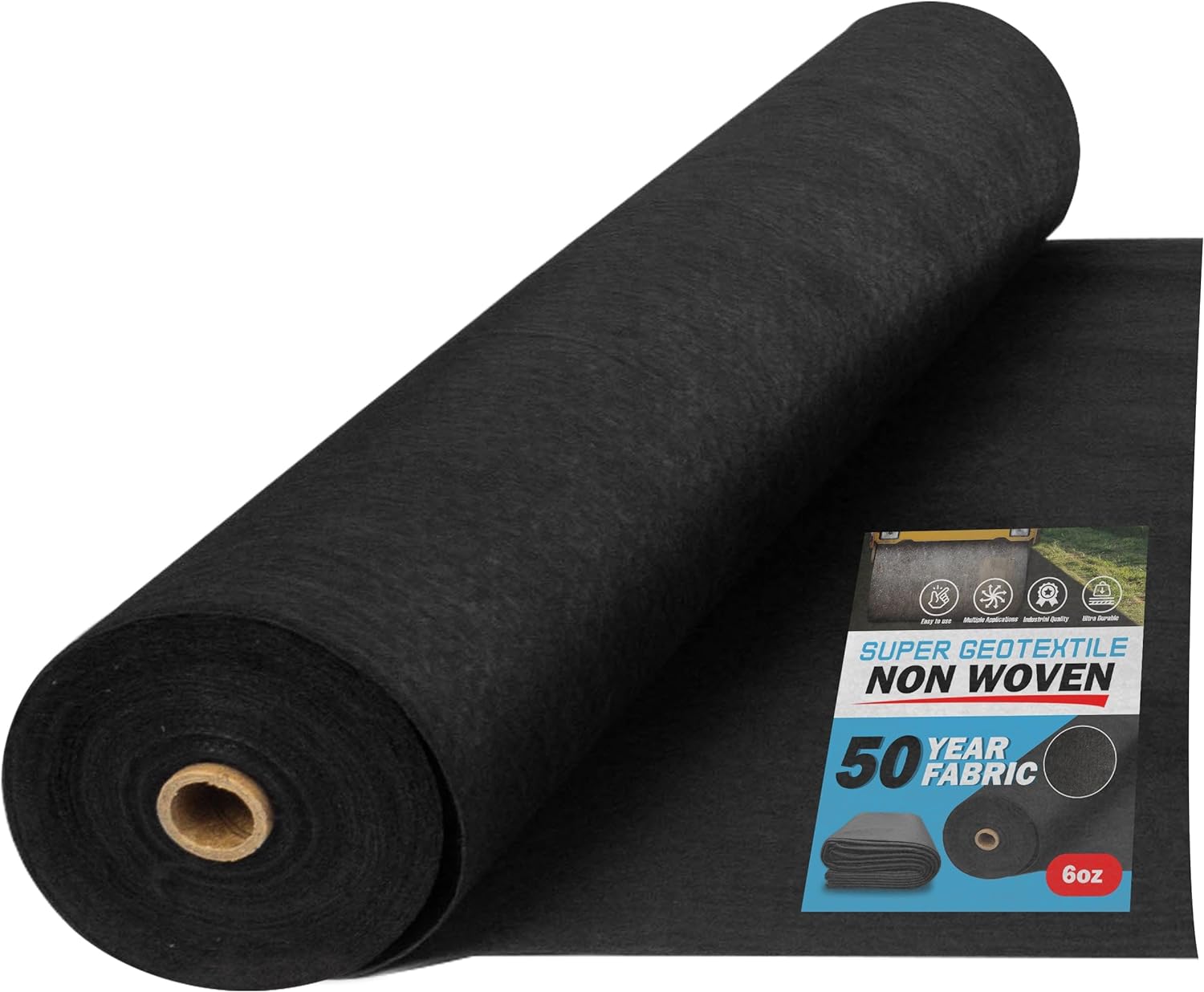
| Fabric weight | 6 oz |
|---|---|
| Roll length | 50 ft |
| Roll width | 3 ft |
| Material | Non-woven geotextile |
| Features | UV and rot resistant |
This 6 oz non-woven geotextile is a heavy-duty ground cover intended for demanding landscaping and drainage jobs. Typically used as weed barrier under mulch, underlayment for ponds, or as filter fabric behind riprap and in French drains, the single-piece 3 x 50 ft roll reduces seams and installation time. Notable features include a high-strength, dimensionally stable construction plus UV and rot resistance, which means it should hold up for years in exposed conditions. Because it is produced in a heavier weight, it handles foot traffic and backfill better than lighter weed fabrics and provides reliable filtration for soil and drainage applications. Limitations are that the fabric is a single-layer non-woven material, so it will not block weed growth as completely as thick plastic sheeting and needs proper overlap and secure fastening to prevent edge lift; it also requires cutting to shape on site. For heavy-use sites where durability and long-term performance matter, this fabric is a practical choice.
Best for: Gardeners and contractors who need a robust, long-lasting ground cover for high-impact landscaping and drainage work and prioritize durability and performance over lowest cost.
Less Ideal for: Small decorative garden beds where an invisible surface is preferred or projects that require a fully impermeable weed barrier or temporary, low-cost solutions.
- Heavy 6 oz non-woven construction for greater tear and puncture resistance
- UV and rot resistant for extended outdoor lifespan
- Large single-piece roll minimizes seams and speeds installation
- Versatile for landscaping, drainage, pond underlayment and erosion control
- Not an impermeable weed seal so persistent weeds can grow through without proper prep
- Requires on-site cutting and secure fastening to prevent lifting at edges
Verdict: Choose this 6 oz geotextile when you need a heavy-duty, long-lasting ground cover built for tough landscaping and drainage jobs.
UWIOFF 4 ft x 100 ft Heavy Duty Weed Barrier Landscape Fabric

| Material | PE |
|---|---|
| Available sizes | 4ft x 10ft / 4ft x 20ft / 4ft x 30ft / 4ft x 50ft / 4ft x 100ft / 5ft x 30ft |
| Included | 20 x Staples |
This UWIOFF landscape fabric is a heavy-duty woven PE weed barrier intended for long-term ground cover projects where durability matters. Install it under mulch, gravel, artificial turf, or in vegetable and flower beds to suppress weed germination while letting water and air penetrate to the soil. The material is UV treated and rated to resist aging, so it is positioned for multi-year use; the manufacturer states a lifespan of more than five years. The fabric is breathable, which helps conserve soil moisture and supports plant health compared with impermeable covers. It comes with alignment stripes for easier cutting and placement and includes ground staples for quicker installation. Expect a robust, flexible sheet that is easier to handle than brittle alternatives but will still need edging or overlap to prevent weed intrusion at seams and around plantings. This product is best when used as a long-term underlayer rather than a quick short-term solution, and it does not eliminate the need to prepare the soil and control persistent weeds at edges.
Best for: Buyers who want a long-lasting, no-nonsense ground cover to reduce weeding and protect planted beds or hardscape underlayers without using chemicals.
Less Ideal for: People needing a temporary or decorative surface cover for a single season or gardeners who prefer fully biodegradable, short-term fabric options.
- High-density woven PE material with UV treatment for multi-year outdoor durability
- Permeable construction allows water and air to reach soil while blocking weed germination
- Includes alignment stripes and ground staples for easier installation
- Flexible yet tough fabric that adapts to beds, pathways, and under artificial turf
- Does not prevent weeds from growing where soil or mulch covers seams or edges
- Requires proper edge restraint and overlap for long-term effectiveness
Verdict: A tough, UV-resistant polyethylene ground fabric built for multi-year weed suppression across beds, paths, and under artificial turf.
JOYSWAN Heavy-Duty Woven Weed Barrier Landscape Fabric (multiple sizes)

| Material | High-density polypropylene woven fabric |
|---|---|
| UV resistance | Yes |
| Weight | 3.2oz/sq.yd |
This JOYSWAN woven weed barrier is a straightforward, no-frills ground cover aimed at reducing weed pressure in beds, pathways, and under gravel. Made from high-density polypropylene with claimed UV resistance, the fabric is tear-resistant yet easy to cut so you can size it to flower beds, vegetable patches, or driveways. Its woven construction lets water and air permeate, which helps keep soil from puddling while retaining moisture beneath the fabric. The product comes in several long-roll sizes that reduce seams for larger projects and the lightweight roll packs down for storage. Expect practical benefits like fewer weeds, less frequent hand-weeding, and simpler mulching over a stable base. Limitations are typical of woven landscape fabric: it will suppress surface weeds but not eliminate deep-rooted perennials and it needs secure fastening and occasional maintenance around plantings where weeds can creep in at edges or through planted holes.
Best for: Gardeners and landscapers who want a cost-effective, durable ground cover to cut down on routine weeding across large beds, paths, or under gravel and mulch.
Less Ideal for: People seeking a permanent solution for aggressive, deep-rooted weeds or those who prefer a fully organic, no-fabric approach to weed control.
- Woven high-density polypropylene construction provides tear resistance for long-lasting use
- Permeable to water and air so soil stays aerated and avoids surface puddling
- UV resistant to reduce degradation from sunlight exposure
- Available in long rolls to cover large areas with fewer seams
- Does not prevent deep-rooted or established perennial weeds from coming through
- Requires proper fastening and edge management to prevent shifting and weed intrusion
Verdict: A budget-friendly, UV-resistant woven fabric that delivers durable, permeable ground cover for large weed-control projects.
Teurabied Heavy-Duty Weed Barrier Landscape Fabric (3 ft x 50 ft)

| Material Type | Polypropylene (PP) |
|---|---|
| Unit Count | 1 Count |
| Number of Packs | 1 |
| Model Number | Teurabied-US-01 |
This heavy-duty landscape fabric is built from woven polypropylene to provide long-lasting weed suppression for garden beds, paths, and under gravel or pavers. In use you unroll the fabric, cut it to shape with scissors using the printed guide lines, and secure it in place to form a stabilizing layer that separates soil from aggregate and prevents weed growth. The open woven construction emphasizes permeability so water drains quickly and air reaches root zones, reducing ponding and the risk of root rot. Notable features include tear-resistant construction suited for installation under stone or light traffic and spaced alignment stripes that make layout and cutting faster for DIY installs. Limitations are that it does not replace proper edging or heavy-duty sub-base for vehicle traffic and will need to be overlapped and staked carefully to prevent soil intrusion over time. For reliability-focused projects where durability and drainage matter, this fabric performs as a straightforward, low-maintenance ground cover.
Best for: Buyers who prioritize a durable, low-maintenance ground cover for long-term weed control and good drainage in garden beds, paths, and landscaped areas.
Less Ideal for: Do not choose this if you need a fabric rated for heavy vehicle loads or a permanent structural underlayment for driveways without additional base materials.
- Heavy-duty woven polypropylene construction resists tearing and punctures during installation
- High permeability allows rapid water drainage and air flow to plant roots
- Printed guide lines every 12 inches speed layout and cutting for neat installation
- Versatile for use under gravel, pavers, raised beds, and pathways
- Not engineered to replace structural sub-base for regular vehicle traffic
- Requires proper overlapping and staking to prevent soil migration over time
Verdict: A tough, breathable polypropylene ground cover that reliably suppresses weeds and drains well for long-lasting landscape use.
Happybuy 13 ft x 60 ft Woven Geotextile Driveway Fabric (5 oz)

| Material | Polypropylene |
|---|---|
| Coverage | 780 sq ft (13 x 60 ft) |
| Tensile strength | 600 Pounds grab |
| Weight class | 5 oz woven |
This Happybuy woven geotextile is a heavy-duty landscape underlayment intended for stabilizing driveways and paving projects while limiting weed growth and allowing water to pass through. Installed under gravel, pavers, or base aggregate, the fabric separates subgrade from fill to reduce rutting and soil migration and is commonly used for driveways, paths, and French drains. Notable features include a 5 oz woven PP construction with a grab tensile strength of 600 pounds and a large 780 sq ft coverage that can be cut to fit irregular areas. The fabric’s high permeability helps drainage systems perform better and prevents washout without trapping moisture in the soil. Practical benefits are easier installation over uneven ground, reduced maintenance from fewer weeds, and improved longevity of paved surfaces. Limitations are that woven geotextile does not stop persistent weeds where light reaches between joints, it will require proper overlap and secure fastening to prevent shifting, and heavy compaction or sharp edges can eventually abrade the weave.
Best for: Owners planning paved or gravel driveways and paver installations who want a durable underlayment to stabilize base materials and improve drainage while cutting down on weed maintenance.
Less Ideal for: People who need a complete weed-proof barrier for tight jointed pavers or who prefer an adhesive or impermeable membrane for impermeable surfaces should consider other solutions.
- Heavy woven polypropylene construction (5 oz) offers durability for driveway and paving underlayment
- 600 lb grab tensile strength supports aggregate and vehicle loads without tearing easily
- High water permeability lets water drain through for use with French drains and permeable pavers
- Large single roll covers about 780 sq ft so fewer seams on medium projects
- Woven fabric does not completely block all light so persistent weeds can emerge at joints or seams
- Requires proper overlap and secure fastening to prevent movement during installation
Verdict: A robust, high-permeability woven geotextile that stabilizes base materials and improves drainage for pavers and gravel driveways.
DeWitt Sunbelt Heavy-Duty Woven Weed Barrier Fabric, 3.2 oz

| Material | Woven polypropylene |
|---|---|
| Weight | 3.2 oz |
| UV-stabilized | Yes |
| Alignment stripes | Every 12 inches |
This DeWitt Sunbelt woven weed barrier is built for long runs and heavier traffic where reliable weed suppression is needed. The polypropylene weave is UV-stabilized so it can be used outdoors for beds, walkways, greenhouse floors, and raised rows without breaking down quickly. Alignment stripes every 12 inches make laying out straight planting rows or spacing plants simple, and the fabric’s resistance to tears and punctures means it stands up to tools and occasional repositioning. Because it is permeable, water and nutrients still reach the soil which helps plant health compared with impermeable mulches. The material is thicker than lightweight landscape cloth, so installation is more durable but slightly stiffer to handle and cut. If you need clean edges or want to plant through it frequently, expect to spend a bit more time cutting and securing it compared with thinner options. For balanced, long-term outdoor use this fabric gives a dependable combination of durability and soil permeability.
Best for: Gardeners or landscapers who want a durable, long-lasting fabric for beds, walkways, greenhouses, or large landscape runs and value dependable weed control with soil permeability.
Less Ideal for: People who need a lightweight, highly flexible fabric for small DIY projects or frequent replanting where very easy cutting and removal is the priority.
- Woven polypropylene construction resists tears and punctures for long-term use
- UV-stabilized formula suitable for exposed outdoor areas
- Permeable fabric allows water, air, and nutrients to reach soil
- Alignment stripes every 12 inches simplify straight rows and spacing
- Thicker, heavy-duty material is stiffer and takes more effort to cut and shape
Verdict: Choose this DeWitt Sunbelt fabric when you need a durable, UV-stable woven barrier that balances long-term weed suppression with soil permeability for medium to large landscape projects.
Choosing the Right Toughest Ground Cover: Key Factors to Consider
Establishment Speed and Ground Coverage
How quickly a ground cover fills in determines how long bare soil is exposed to erosion and weeds. Faster-establishing species cut down on weed pressure, reduce the need for temporary mulch, and give immediate soil protection. Planting density, season of planting, and starter care like watering and light soil preparation also affect how fast you see complete coverage.
Consider whether you need instant visual cover for a public path or whether a slower but tougher option fits a slope that will be lightly trafficked. Faster establishment often means more initial watering and monitoring but can prevent long-term maintenance headaches caused by weeds and erosion.
Wear Resistance and Trampling Tolerance
Some ground covers can survive regular foot traffic, pet activity, or light vehicle use while others will quickly thin and expose soil. Look for species that have low growth habit, flexible stems, and either a mat-forming habit or quick regrowth from nodes. Wear resistance is also influenced by leaf toughness and root density; shallow, dense roots help the plant rebound after damage.
If the area will be used as an informal pathway, prioritize varieties noted for trampling tolerance. For formal paths or heavy-duty access, pair ground cover with stepping stones to protect the plants while maintaining coverage.
Soil, Moisture, and Climate Adaptability
Tough ground covers vary in their tolerance of clay, sand, shade, drought, and waterlogged conditions. A plant that thrives in well-drained poor soil may fail in heavy clay or constantly wet spots. Matching a cover to your garden's typical moisture regime and soil texture reduces irrigation needs and supplemental soil work.
Also account for winter hardiness and summer heat tolerance in your local climate. Many hardy, low-maintenance covers perform across a broad range of conditions, but microclimates around buildings, patios, or slopes can create stress that narrows suitable choices.
Erosion Control and Root Structure
On slopes, banks, or bare patches, the ability of a ground cover to hold soil is critical. Species with fibrous, dense root systems and rapid lateral spread stabilize topsoil and reduce runoff. A dense surface mat of foliage also dissipates raindrop impact and slows water flow.
Consider how a plant spreads: runners, stolons, or tightly interlocking roots each provide different stabilization patterns. In erosion-prone areas, combine ground cover with structural measures like terraces or check dams for best results.
Maintenance Needs and Long-Term Management
Maintenance demands affect whether a ground cover remains practical over years. Low-maintenance covers require occasional trimming, minimal fertilization, and rare replanting. Others may need frequent thinning to prevent overcrowding or cutting back to maintain appearance near walkways.
Assess tolerance for mulch, leaf litter, and seasonal dieback. Some covers decline in hot, dry summers and need replacement or seasonal watering. Plan for weed control during establishment and a tolerance threshold for rejuvenation or spot-replanting as part of routine garden care.
Invasiveness and Neighbourhood Impact
A plant that spreads aggressively can escape planting beds and dominate nearby garden areas, creating management issues for you and neighboring properties. Toughness does not equal safety; some resilient species are also highly invasive in certain regions.
Choose covers with predictable spread rates and noninvasive habits for most residential settings, or be prepared to contain vigorous runners with edging. Check local guidance on invasive status and prefer species that are easy to remove or control if needed.
Best Uses by Garden Situation
Match the ground cover to the intended use before planting. For erosion-prone slopes choose covers with strong root mats and lateral spread. For pet and play areas pick species that tolerate trampling and recover quickly. For ornamental borders prioritize low growth habit and tidy regrowth.
Think about microclimates: sunny compacted soil near driveways will favor different plants than a shaded, moisture-retentive corner under trees. Mapping sites by sun, moisture, and intended use helps narrow choices quickly.
- Steep slopes: prioritize erosion control and deep fibrous roots
- High-traffic edges: look for fast regrowth and wear tolerance
- Shaded beds: select shade-tolerant, low-mat forming species
- Dry, poor soil: choose drought- and nutrient-tolerant covers
Planting and Establishment Best Practices
Prepare the area by removing persistent weeds and loosening compacted soil. Ground covers establish faster when the surface is free of competing roots and weed seed banks.
Space transplants or plugs according to expected spread so they will touch within a growing season. Water regularly during the first 6 to 12 weeks of establishment, then taper irrigation as plants develop deeper roots. A thin layer of mulch can conserve moisture but avoid smothering young runners.
- Stagger plantings in cooler seasons for better root development
- Use cuttings or runners where appropriate to speed coverage
- Monitor and remove aggressive weeds early to protect seedlings
Combining Ground Cover with Hardscape
Ground cover can soften pathways, fill joints between paving, and reduce exposed soil around walls. When used with stepping stones, choose plants that tolerate intermittent foot traffic and can regrow from the edges of pavers.
Install edging where you need a clean separation from turf or flower beds. Edging helps keep running varieties contained and preserves tidy lines for formal designs.
- Pair dense mat-formers with narrow paver joints
- Allow buffer zones between aggressive spreaders and delicate beds
- Use permeable joint filler and compacted base to support both plants and foot traffic
Seasonal Care and Troubleshooting
Watch for signs of stress after extremes of heat or prolonged wet. Supplementary watering during drought and improved drainage in wet periods can prevent dieback. Spot-prune or thin overly vigorous patches to maintain coverage without smothering neighbors.
If bare patches appear, fill them quickly with plugs or seed to prevent weed invasion. For persistent pest or disease issues, remove affected material and improve air circulation or drainage rather than relying on repeated treatments.
- Replant thin areas in spring or fall for best root establishment
- Reduce fertilizer to avoid weak, leggy growth in dense mats
- Improve soil structure with organic matter if plants struggle in compacted sites
How We Chose the Best Toughest Ground Cover
We shortlisted plants and mixes that demonstrate real-world resilience in gardens, yards, and landscape uses rather than theoretical attributes alone. Selection favored species with documented tolerance to trampling, drought, or poor soils and those that form consistent, living cover quickly. We prioritized measurable, gardener-relevant dimensions: establishment speed, wear and trampling tolerance, soil- and moisture-range adaptability, maintenance intensity, and erosion-control effectiveness. Exclusions included aggressive invasives that create long-term management problems, ornamentals that lack durability under stress, and plants that require highly specialized care. We also filtered out varieties that need ideal soil or constant irrigation to survive. The resulting entries scored well on the criteria above and represent practical choices for gardeners who need lasting, low-fuss coverage in challenging spots.
FAQ
Can tough ground cover survive being walked on regularly?
Many tough ground covers tolerate light to moderate foot traffic and can regrow after trampling. Tolerance varies by species, so pick covers noted for wear resistance for paths and consider stepping stones in high-use areas.
How long does it take for ground cover to fully establish?
Establishment typically ranges from a single growing season to several seasons depending on species, planting density, and site conditions. Fast-establishing options can form a continuous mat within months, while slower types may need a year or more.
Will ground cover reduce erosion on steep slopes?
Yes, ground covers with dense root systems and lateral spread significantly reduce surface runoff and hold soil in place. In severe cases combine ground cover with terraces or structural erosion controls for best results.
Are tough ground covers high maintenance?
Not usually. The hardiest covers are chosen for low maintenance, requiring occasional pruning, spot replacement, and basic weed control. Some vigorous spreaders may need periodic containment to prevent encroachment.
Can I grow ground cover under trees?
You can, but success depends on shade tolerance and root competition. Choose shade-adapted covers and improve soil by adding leaf compost. Watering carefully during establishment helps overcome tree root competition.
Final Verdict
Prioritize the traits that match your site: rapid establishment for quick soil protection, strong root systems for erosion control, and wear tolerance where people or pets use the area. Expect tradeoffs between spread rate, containment needs, and visual form. Focus on plants that suit your soil and moisture conditions and plan for initial care during establishment. With the right match and simple maintenance, a tough ground cover will stabilize soil, reduce upkeep, and keep high-wear areas looking green and functional for years.
