

Note: This article contains affiliate links. If you click on these links and make a purchase, I may earn a small commission at no extra cost to you. This helps support my research and content. Read my full affiliate disclosure here.
If you want dependable mushroom harvests, the compost you choose matters more than many gardeners expect. The right substrate supports even mycelial colonization, holds moisture without becoming waterlogged, and reduces the chance of competitor molds that can ruin a run. This guide collects the top compost options chosen specifically for growing mushrooms and explains why each made the shortlist. We evaluated factors that matter in a real growing setup: nutrient balance, contamination resistance, and physical structure that supports fruiting. Read on for practical notes on handling, preparation, and which compost traits suit different growing methods.
Top Picks at a Glance
| Best Overall The best all-around choice for most situations | North Spore Boomr Bag Sterile Manure-Based Mushroom Substrate, 5 lb |  |
| Best Quality Built to a higher standard if you want something more solid | North Spore CVG Sterilized Mushroom Growing Substrate (1 Pack) |  |
| Best Value The sweet spot between price and what you get | SGM LABS Cow Coco Mushroom Substrate (5 lb) |  |
| Best Budget The cheapest option that still gets the job done reliably | SGM LABS 5 lb Black Coco Mushroom Substrate (CVG Pre‑Hydrated Bag) |  |
| Highest Rated A top-rated pick with lots of positive feedback | MycoSooner Premium CVG Mushroom Substrate, 5 lb |  |
| Most Popular A crowd favorite that many people choose with confidence | Boomer Shroomer CVG Bulk Substrate (Coco Coir, Vermiculite, Gypsum) |  |
North Spore Boomr Bag Sterile Manure-Based Mushroom Substrate, 5 lb

| Item Weight | 5 pounds |
|---|---|
| Manufacturer | North Spore |
The North Spore Boomr Bag is a ready-to-use, sterile bulk substrate designed to speed colonization and maximize flush size for dung-loving mushrooms. Each 5 lb bag arrives hydrated to field capacity and contains a proprietary mix of composted horse manure, coco coir, and nutrient supplements formulated by mycologists. Typical use is to mix colonized grain spawn thoroughly into the substrate (North Spore suggests about 1 lb spawn per 5 lb bag) and incubate in monotubs, grow bags, trays, or directly from the bag in a humidity-controlled room. Notable features include commercial autoclave sterilization with biological indicator testing, room-temperature storage without refrigeration, and a formula optimized for vigorous mycelial growth. In practice the Boomr Bag reduces prep time compared with DIY substrates and produces consistent, large flushes when sterile technique is used. Limitations to plan for are that it is tailored to dung-loving species rather than hardwood species and successful results depend on proper inoculation and sterile handling to avoid contamination.
Best for: Growers who prioritize reliable performance and larger yields and want a ready-made, lab-sterilized substrate to cut prep time and improve consistency in monotub or controlled-room grows.
Less Ideal for: People focused on cultivating hardwood-loving species or those who prefer to formulate and sterilize their own custom substrates from raw materials.
- Sterilized in a commercial autoclave with biological indicator verification for contaminant-reduced starts
- Formulated by mycologists from composted horse manure and coco coir to support rapid mycelial growth
- Hydrated to field capacity so no additional watering or conditioning is required before inoculation
- Room-temperature storage allows keeping substrate on hand for several months without refrigeration
- Optimized specifically for dung-loving species and not the best choice for hardwood-loving mushrooms
Verdict: Choose the Boomr Bag when you want a lab-sterilized, ready-to-use substrate that speeds colonization and consistently boosts flush size for dung-loving mushrooms.
North Spore CVG Sterilized Mushroom Growing Substrate (1 Pack)

| Ingredients | Coco coir, Vermiculite, Gypsum |
|---|---|
| Sterilization | Commercial autoclave sterilized |
| Hydration | Pre-hydrated to field capacity |
| Number of Packs | 1 |
| Style Name | Classic |
North Spore CVG is a ready-to-use bulk substrate made from coco coir, vermiculite, and gypsum that arrives hydrated and commercially autoclave-sterilized so you can spawn immediately. It is intended for manure-loving species and monotub setups where contamination resistance and consistent moisture retention matter. The coir gives strong water-holding capacity, vermiculite improves aeration and even moisture distribution, and gypsum helps stabilize pH while supplying calcium. North Spore tests ingredients by batch and markets the blend as lower in bacterial load and nitrogen than nutrient-rich alternatives, which reduces contamination risk for growers aiming for high performance. Typical use is mixing colonized grain spawn into the bagged CVG in a clean space, allowing full colonization, then casing and fruiting in a monotub. The main limitations are that this is a general-purpose manure-style substrate rather than a nutritionally rich formula for every species, and successful large yields still depend on good inoculation rate and sterile technique. For growers focused on consistent, low-contamination bulk substrate that minimizes prep time, CVG is a practical, performance-minded choice.
Best for: Growers who prioritize consistent colonization and low contamination risk and want a ready-to-use bulk substrate that reduces prep time for monotub and indoor mushroom production.
Less Ideal for: People seeking a high-nutrient or species-specific substrate recipe for unconventional mushrooms or those who prefer to custom-mix and sterilize their own substrates.
- Pre-hydrated and commercially autoclave-sterilized for immediate spawning
- Coco coir and vermiculite balance moisture retention and aeration for uniform colonization
- Gypsum stabilizes pH and supplies calcium to support mycelial growth
- Formulated to be low in nitrogen and lower bacterial load, reducing contamination risk
- Third-party ingredient testing and batch verification increase consistency
- Designed as a general CVG/manure-style substrate rather than a species-specific high-nutrient formula
- Performance still depends on proper inoculation rates and sterile technique
Verdict: Buy this if you want a lab-verified, ready-to-use CVG substrate that maximizes contamination resistance and consistent colonization for performance-driven indoor mushroom grows.
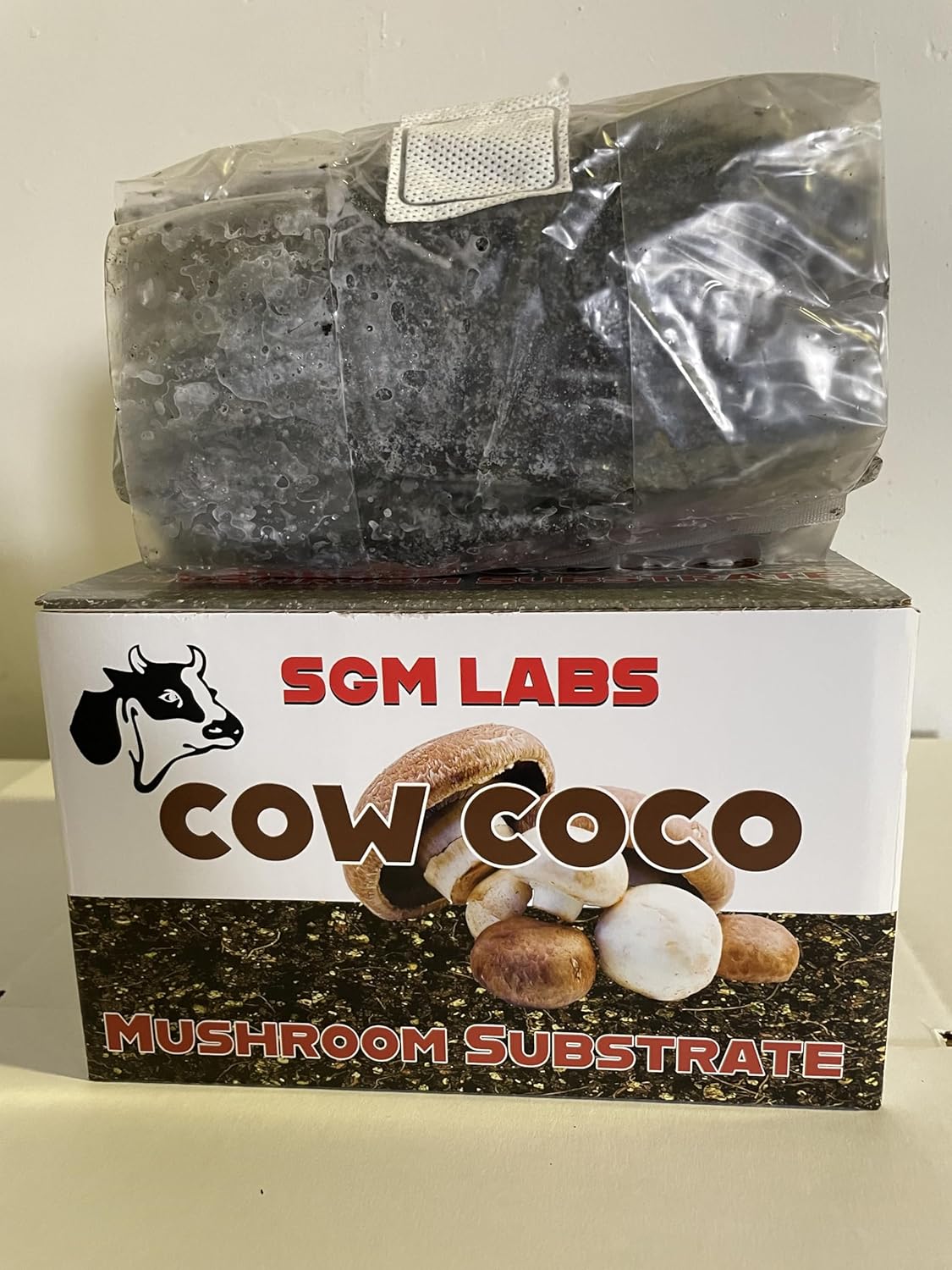
SGM LABS Cow Coco Mushroom Substrate (5 lb)
| Brand Name | SGM LABS |
|---|---|
| Unit Count | 80 Fluid Ounces |
| Item Type Name | cowcoco |
| Volume | 6.54 quarts |
This 5 lb Cow Coco substrate is a ready-to-use CVG (coco coir, cow manure, vermiculite, gypsum) mix designed for mushroom cultivation from spawn to fruiting. It arrives pre-hydrated in a 0.2 micron bag so you can dump it straight into a monotub, use it as a casing layer, or mix with colonized grain without additional preparation. The blend balances moisture retention and structure from coir and vermiculite while cow manure supplies nutrients to support mycelial expansion and pinset. Practical growers will appreciate the sterile, convenient packaging and the ability to scale by combining multiple bags for larger tubs. Limitations are that the bag size is modest for commercial-scale runs and the fixed recipe leaves little room to adjust nutrient ratios or hydration level without manual rework. Also you should still follow sterile technique when introducing spawn since contamination risk remains if handled poorly.
Best for: Growers who prioritize a low-prep, reliable substrate for small to medium mushroom grows and want to minimize time spent on mixing and hydrating media.
Less Ideal for: Commercial producers running high-volume or continuous batches who need larger quantities or custom nutrient profiles.
- Pre-hydrated and packaged in a sterile 0.2 micron bag for immediate use
- Balanced CVG formula (coco coir, cow manure, vermiculite, gypsum) suited for spawning and casing
- Works in multiple setups: monotubs, grow bags, or as a casing layer
- Ready-to-use format reduces prep time and mess for hobbyists and small-scale growers
- 5 lb volume may be small for large or continuous cultivation runs
- Fixed formulation limits on-the-fly adjustment of nutrients or moisture
Verdict: Buy this if you want a convenient, pre-hydrated CVG substrate that gets your small-to-medium mushroom grows started with minimal setup.
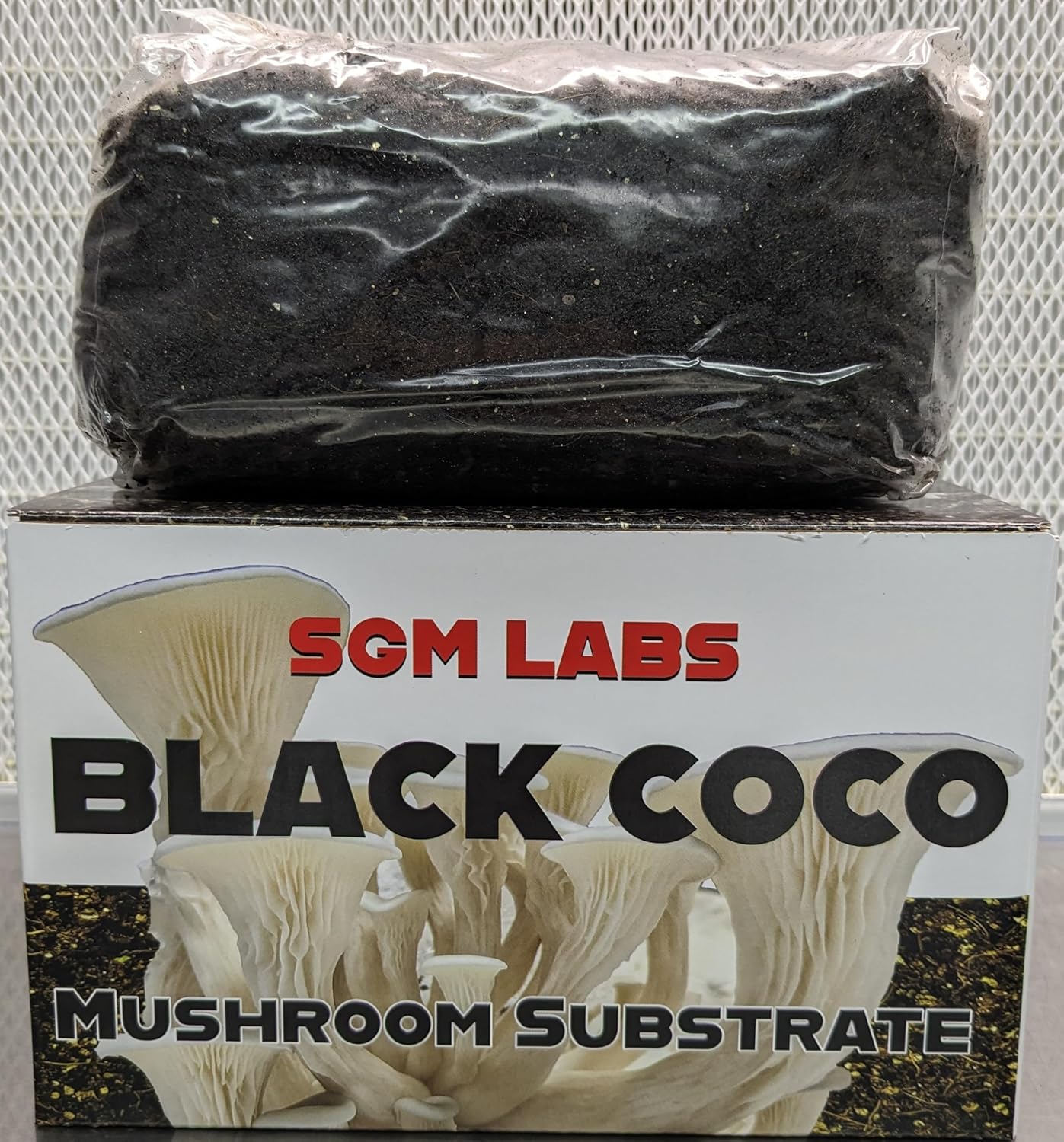
SGM LABS 5 lb Black Coco Mushroom Substrate (CVG Pre‑Hydrated Bag)
| Unit Count | 80 Fluid Ounces |
|---|---|
| Item Type Name | bulk mushroom substrate |
| Style Name | mushroom grow bag |
| Volume | 240 cubic inches |
This 5 lb Black Coco substrate from SGM LABS is a ready-to-use CVG (coco coir, vermiculite, gypsum) mix packaged in a sterile 0.2 micron fruiting bag intended for mushroom cultivation. You simply open or dump the prehydrated bag into a monotub, use it as casing, or mix with spawned grain, which saves prep time and reduces contamination risk compared with making substrate from scratch. The formula supplies the basic physical texture and minerals mycelium needs to colonize and fruit, and the sterile bag format is convenient for small-scale or hobby growers who want a low-effort solution. Important limitations are its fixed 5 lb quantity and prehydration, which limits flexibility if you need larger batches, dry substrate, or a different moisture level. Also, experienced cultivators who tailor nutrient blends or bulk substrate formulations may find the ready mix less customizable. For gardeners focused on straightforward, low-cost mushroom runs, this product streamlines setup and lowers the chance of contamination compared with DIY substrate preparation.
Best for: Buyers who want an inexpensive, low-effort substrate to start small mushroom batches without mixing ingredients or sterilizing at home.
Less Ideal for: Large-scale cultivators, growers who need custom nutrient enrichment, or anyone wanting dry substrate to fine-tune moisture before use should look elsewhere.
- Prehydrated CVG mix ready to use straight from the 0.2 micron sterile bag
- Sterile fruiting bag reduces contamination risk during colonization and fruiting
- Balanced coco coir, vermiculite, and gypsum blend provides good texture and basic nutrients for mycelium
- Convenient for monotubs, casing, or dumping spawned grain with minimal prep
- Fixed 5 lb quantity may be too small for larger or repeated bulk grows
- Prehydrated mix limits control over final moisture content and nutrient adjustments
- Not formulated for specialty species that require enriched or high-nutrient substrates
Verdict: A convenient, low-cost prehydrated CVG bag that gets hobby growers into mushroom fruiting fast with minimal prep.
MycoSooner Premium CVG Mushroom Substrate, 5 lb

| Unit Count | 80 Ounce |
|---|---|
| Item Highlight | Coco coir, vermiculite and gypsum blend, sterilized and hydrated to field capacity, ready to use |
| Brand Name | MycoSooner |
| Style Name | Premium CVG Blend |
MycoSooner Premium CVG is a pre-blended, sterilized substrate intended for growers who want a dependable starting medium without measuring and mixing components. The bag contains a 5 lb portion of coco coir blended with vermiculite and gypsum, hydrated to field capacity so it can be used straight from the package for inoculation or casing depending on your chosen method. Notable features are the sterilization and consistent hydration level, which reduce preparation time and lower contamination risk when basic sterile technique is observed. For small-scale grows and experimental batches this saves effort and produces a neutral, moisture-stable base that supports colonization. Limitations are the fixed bag size and composition — advanced growers who prefer to tweak nutrient content, add supplements, or scale to larger runs will still need to mix their own substrate or supplement this product. Also, because it is sold as a prepared blend, the product assumes you will follow sterilization and handling steps appropriate for your spawn and strain.
Best for: Growers who prioritize a reliable, low-prep substrate for small to medium experimental grows and want to minimize prep steps and contamination risk.
Less Ideal for: People running large commercial batches or growers who need a customizable substrate recipe and frequent supplementation should consider bulk or mix-your-own options.
- Sterilized and hydrated to field capacity for immediate use
- Pre-blended coco coir, vermiculite, and gypsum eliminates measuring and mixing
- Consistent, neutral base suitable for many mushroom strains
- Convenient 5 lb single bag size for small grows and trials
- Fixed formulation limits ability to adjust nutrients or additives
- Single 5 lb bag may be inefficient for larger-scale cultivation
Verdict: Buy this if you want a dependable, ready-to-use sterilized CVG substrate that saves prep time for small mushroom grows.
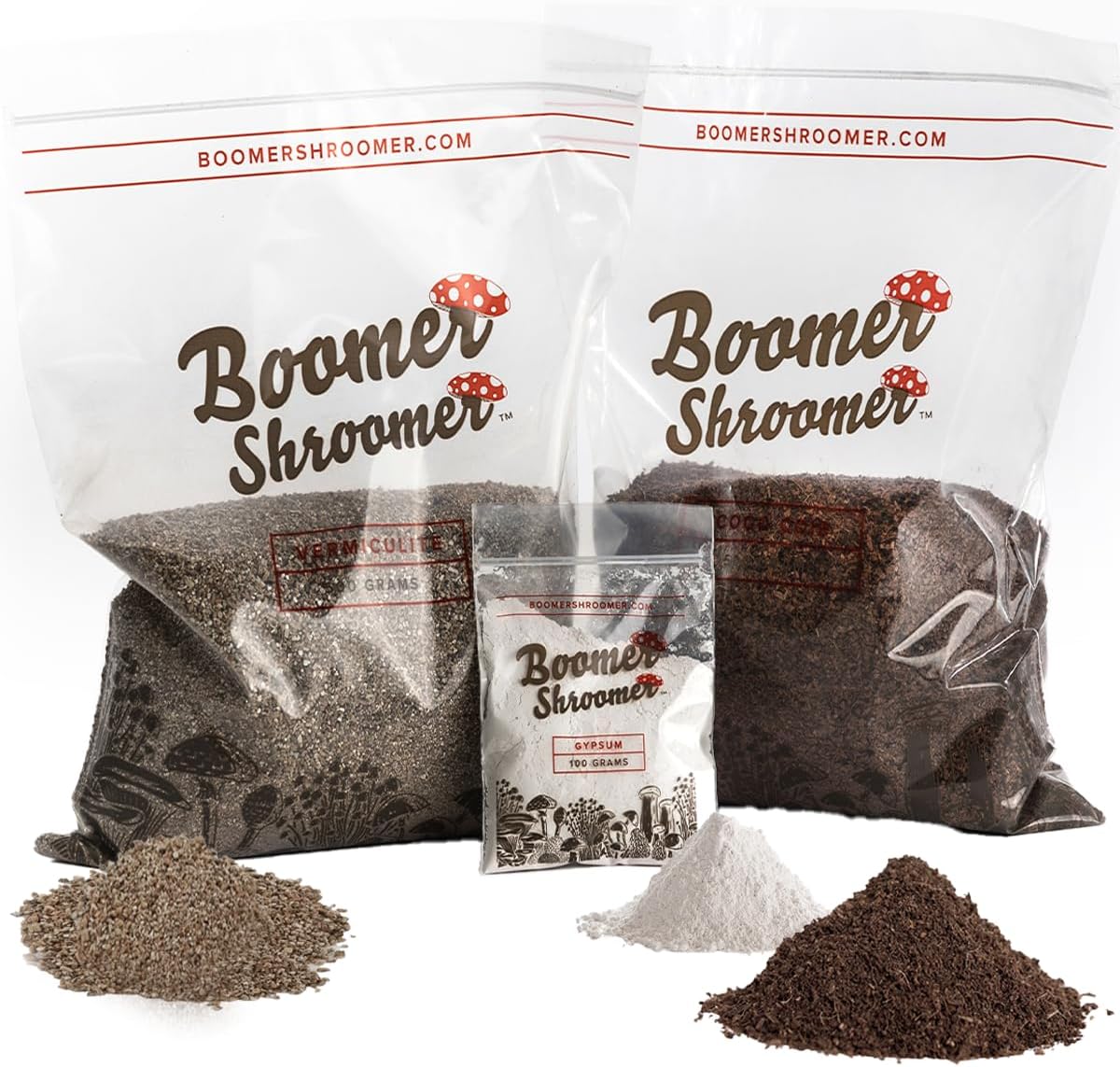
Boomer Shroomer CVG Bulk Substrate (Coco Coir, Vermiculite, Gypsum)
| Style Name | Coco Coir,Vermiculite |
|---|---|
| Volume | 5 gallons |
This Boomer Shroomer CVG bulk substrate supplies a ready-made dry mix of coco coir, vermiculite, and gypsum intended for spawn-to-bulk mushroom cultivation. You hydrate the mix with boiling water in a 5-gallon bucket, pasteurize for about 24 hours, then use the hydrated substrate in monotubs, trays, or filter bags; the package claims it yields roughly nine pounds of hydrated substrate, enough for two monotub grows. Coco coir helps retain moisture, vermiculite improves aeration and structure, and gypsum stabilizes pH, which together support steady mycelial colonization and multiple flushes. The convenience of pre-measured components reduces prep and measurement mistakes, making it approachable for beginners while still useful for experienced growers who want a consistent base blend. Limitations include the need to follow proper pasteurization and sterile handling for good results and that the bag is a single blend ratio, so growers who prefer different substrate recipes or larger volumes will need to mix additional ingredients separately.
Best for: Growers who want a reliable, ready-to-use bulk substrate that reduces measuring errors and speeds prep for monotub or tray grows, especially those who value products with positive user feedback.
Less Ideal for: Large-scale cultivators needing bulk quantities or hobbyists who prefer to fine-tune substrate ratios and additives for specific mushroom species.
- Pre-measured combo of coco coir, vermiculite, and gypsum simplifies substrate prep
- Hydrates to about nine pounds of bulk substrate suitable for two monotub grows
- Coco coir and vermiculite provide a balance of moisture retention and aeration
- Gypsum helps buffer pH for more stable mycelial growth
- Single blend ratio may not suit growers who want custom substrate formulations
- Requires correct pasteurization and handling to avoid contamination
Verdict: Choose this blend if you want a convenient, consistent coco coir/vermiculite/gypsum base that gets you to pasteurized bulk substrate quickly and reliably.
Choosing the Right Compost for Growing Mushrooms: Key Factors to Consider
Nutrient Profile and Supplement Needs
Nutrient content influences how aggressively mycelium colonizes and how well it fruits. Composts with a balanced carbon-to-nitrogen ratio tend to support steady growth without encouraging fast-growing competitor organisms.
Some composts are close to ideal out of the bag and need only hydration and pasteurization, while others benefit from modest supplementation such as bran or other nitrogen sources. Knowing whether your chosen compost requires supplements affects labor, contamination risk, and the harvest timeline.
Contamination Load and Pasteurization Tolerance
Initial microbial load varies by compost source and how it was processed. A higher bioburden increases the risk of green mold, Trichoderma, and other competitors during spawn run and fruiting.
Choose compost that tolerates straightforward pasteurization or sterilization methods appropriate for your setup. Composts that are too biologically rich can be difficult to sanitize without industrial equipment, while overly sterile mixes may need extra nutrients added back in.
Moisture Holding Capacity
Mycelium needs consistent moisture but not free water. Compost structure and organic content determine how well a substrate holds water between waterings and keeps air pockets for oxygen exchange.
A compost that dries out too fast forces frequent monitoring and rehydration, which can stress mycelium. Conversely, a compost that holds too much free water will suffocate roots and favor anaerobic bacteria. Target substrates that retain moisture uniformly while still draining excess.
Physical Texture and Aeration
Texture affects spawn run speed and fruit body development. Coarse, fibrous composts create air channels that help mycelium breathe, while very fine, compacted mixes can restrict gas exchange and slow colonization.
Consider how easily the compost mixes with spawn and supplements. A blendable texture makes even distribution of spawn possible, which reduces contamination hotspots and promotes uniform fruiting.
pH Stability and Salt Content
Mushrooms are sensitive to pH and salinity. Composts with extreme pH or high soluble salt levels can stunt mycelium or inhibit pinning. A near-neutral to slightly acidic pH is commonly suitable for many mushroom species.
Salt content matters especially when using manures or processed organic waste. Excess salts concentrate as water evaporates and can harm developing mycelium. Choose substrates with moderate, predictable pH and low soluble salts, or be prepared to leach before inoculation.
Practical Handling and Availability
Accessibility and how easy the compost is to handle in small batches affects whether a grower will maintain consistent practices. Bulky, wet compost is harder to move, while very dry, dusty material creates cleanup and health concerns.
Look for composts available in manageable bag sizes or that break down cleanly for mixing. Also consider storage stability: some substrates compact or sour in storage, requiring you to use them promptly or take extra steps to refresh them.
Preparing Compost for Inoculation
Proper preparation reduces contamination risk and gives mycelium an even environment to colonize. Start by checking moisture visually and by feel; the compost should be moist but not dripping when squeezed. If the mix is dry, add water gradually and mix thoroughly.
Next, follow an appropriate sanitation step for the compost type. This may be a hot-water pasteurization, steam treatment, or, for small sterile runs, pressure sterilization. Allow the substrate to cool to room temperature before adding spawn to avoid killing the mycelium.
After pasteurization, break up clumps and test texture by squeezing a handful. It should hold shape lightly without compacting into a tight ball. Proper clump size helps maintain air channels and speeds up colonization.
- Hydrate slowly and test by feel rather than adding measured water blindly
- Use a thermometer during pasteurization when possible to hit target temperature ranges
- Cool and aerate the compost thoroughly before mixing with spawn
Matching Compost Traits to Mushroom Species
Different mushroom species have different substrate preferences. Agaric-type growers often prefer nutrient-rich composts that support vigorous fruiting, while many wood-loving species do better on fibrous, low-nutrient substrates. Match the compost's nutrient profile and texture to the species you plan to grow.
Also account for environmental needs. Some species tolerate higher humidity and denser substrates, others need more aeration. When in doubt, start with a neutral, versatile compost and adjust with supplements or casing layers as you gain experience.
- High-nutrient composts suit species that fruit heavily and quickly
- Fiber-rich substrates are better for wood-decomposing or slower species
- Use casing layers to moderate moisture and encourage pinning on nutrient-rich substrates
Common Troubles and How Compost Helps
Slow colonization is often caused by poor aeration, incorrect moisture, or competing microbes. Improving compost texture and ensuring correct pasteurization usually speeds spawn run. If contamination appears, isolating affected batches and reviewing sanitation steps will reduce future losses.
Pinning failures can result from nutrient imbalances or inadequate humidity cycling. Selecting compost with a known nutrient baseline and using a light casing or humidification schedule helps trigger fruit body formation. Regular observation during the run helps you catch problems early.
- Watch for discoloration or unusual smells as early contamination signs
- Adjust humidity and fresh air exchange instead of overwatering to encourage pinning
- Record compost source and prep method to identify consistent winners
Scaling From Small Batches to Larger Runs
Procedures that work for a single tray need modification at scale. Heat retention, pasteurization time, and mixing uniformity all change when volume increases. Compost that performs predictably in small batches tends to be easier to scale because it responds consistently to temperature and moisture adjustments.
When increasing batch size, test one larger batch first rather than switching all your substrate at once. Monitor center temperatures during pasteurization and ensure airflow through larger piles to prevent anaerobic pockets.
- Increase pasteurization times and monitor internal temperatures in larger piles
- Use mechanical mixers or shovels to ensure even spawn distribution
- Scale incrementally and document results for each compost type
Storing and Refreshing Leftover Compost
Store unused compost in a cool, dry place away from direct sunlight. Sealed, breathable bags slow drying and reduce contamination risk. For longer storage, periodic turning and inspection will prevent heating or souring.
If compost smells sharply acidic or has visible mold, it is safer to refresh or discard it. Refreshing can mean diluting with fresh, pasteurized material or adding a balanced supplement and pasteurizing again before use.
- Keep stored compost off the ground on pallets or shelves
- Avoid long storage in warm, humid conditions that encourage microbial growth
- Refresh suspect compost with pasteurization and fresh amendments when feasible
How We Chose the Best Compost for Growing Mushrooms
We focused on properties that directly affect mushroom culture success in small-scale and hobby settings. Selection prioritized composts with stable nutrient profiles that support mycelium without encouraging aggressive competitor fungi. Physical structure was assessed for adequate porosity and water-holding capacity so mycelium can spread without waterlogging. Contamination control was a major filter. We favored compost types that tolerate standard pasteurization or sterilization steps and that have lower initial bioburdens. Ease of preparation and handling were considered, including how readily a compost blends with supplements or spawn. Environmental consistency was another criterion, with an eye toward substrates that perform across common humidity and temperature ranges used for popular mushroom species. We excluded materials that require industrial processing or heavy chemical inputs not practical for home growers. Also omitted were substrates that are only suitable for sterile lab conditions. The resulting list reflects composts that balance practicality, biological suitability, and predictable results under typical hobbyist procedures.
FAQ
Can I use garden compost directly for mushroom growing?
Often garden compost has a high and variable microbial load that increases contamination risk. It can work if you pasteurize properly and understand its nutrient profile, but many growers prefer purpose-made composts for more predictable results.
How do I know when compost is moist enough for inoculation?
Squeeze a handful; it should feel like a wrung-out sponge with a few drops of water possible but not dripping. Excess water will reduce oxygen and invite anaerobes, while too dry slows mycelial spread.
Is it necessary to supplement compost before adding spawn?
Supplementation depends on the compost's baseline nutrients and the mushroom species. Some composts perform well without supplements, while others benefit from modest additions to support larger yields. Supplements can raise contamination risk if not mixed and sanitized carefully.
What pasteurization method is best for hobby growers?
Hot-water pasteurization and steam pasteurization are practical for most hobby setups. They reduce competing organisms without requiring full sterilization and are effective when target temperatures and times are followed consistently.
How long can prepared compost sit before inoculation?
Prepared compost should be cooled and used within a short window to limit recontamination. If storage is necessary, keep it cool and sealed; long delays increase the chance that unwanted microbes will re-establish and compete with your spawn.
Final Verdict
Choose compost that matches the species you grow and the level of labor you want to invest in prep and sanitation. Prioritize substrates with predictable nutrient balance, good texture for aeration, and manageable moisture retention. Expect tradeoffs between nutrient richness and contamination risk, and select a compost that fits your pasteurization method and scale. With attention to preparation and handling, a well-chosen compost for growing mushrooms will make spawn run and fruiting more reliable and reduce time spent troubleshooting. Focus on the few key factors above to narrow options and build consistent harvests.
