

Note: This article contains affiliate links. If you click on these links and make a purchase, I may earn a small commission at no extra cost to you. This helps support my research and content. Read my full affiliate disclosure here.
If you manage a yard with hills, thick turf, or tight turns, picking the right rear drive lawn mower changes how easily you mow and the quality of the finish. Rear-wheel drive mowers put traction at the rear, which helps with climb and control but can also shift the handling feel compared with front- or all-wheel drive units. This guide covers seven shortlisted rear drive lawn mowers chosen for their cutting consistency, traction, and user-friendly controls. Below you will find practical notes on how these mowers perform in real garden conditions, plus the decision factors we used to evaluate them and answers to common questions about rear-drive operation and maintenance.
Top Picks at a Glance
| Best Overall The best all-around choice for most situations | PowerSmart 22" Self-Propelled Gas Lawn Mower with 170cc OHV Engine |  |
| Best Quality Built to a higher standard if you want something more solid | SENIX 22" 201cc Rear-Wheel Self-Propelled Gas Lawn Mower |  |
| Best Value The sweet spot between price and what you get | SENIX 22" Self-Propelled Gas Lawn Mower with 170cc OHV Engine |  |
| Best Budget The cheapest option that still gets the job done reliably | AMERISUN 21" Self-Propelled Gas Lawn Mower with 170cc OHV Engine |  |
| Highest Rated A top-rated pick with lots of positive feedback | SENIX 22-inch 201cc Rear-Wheel Self-Propelled Gas Lawn Mower |  |
| Most Popular A crowd favorite that many people choose with confidence | SENIX 201cc 22" Self-Propelled 3-in-1 Gas Lawn Mower |  |
| Best Seller A high-volume bestseller chosen again and again | PowerSmart 22" Self-Propelled Gas Lawn Mower with 140cc Briggs & Stratton Engine |  |
PowerSmart 22" Self-Propelled Gas Lawn Mower with 170cc OHV Engine

| Engine Displacement | 170cc |
|---|---|
| Cutting Width | 22 in. |
| Cutting Height Range | 1.5 in to 3.9 in |
| Drive Type | Self-Propelled RWD |
| Fuel Tank Capacity | 0.21 gal |
This PowerSmart 22-inch self-propelled gas mower is built for homeowners who want a straightforward, no-frills machine that gets the job done. The 170cc OHV engine and rear-wheel-drive system provide consistent power and traction on slight slopes and uneven ground while the single-speed self-propelled drive reduces effort over a push mower. The steel 22-inch deck and heavy-duty blade give a clean cut across typical suburban lawns and the 2-in-1 bagging and mulching options let you choose between quick cleanup or returning clippings to the turf. Height adjusts across six positions from 1.5 to 3.9 inches to suit seasonal needs. Practical details such as the 1.4-bushel rear bag and higher rear wheels improve control and reduce trips to empty clippings. Expect routine maintenance like oil and spark plug checks and manual pull-starting. It is best for up to half-acre yards; very steep slopes, very large properties, or users who prefer electric starts will want a different model.
Best for: Homeowners who prioritize practical performance and value for routine lawn care on yards up to about half an acre and want a gas mower that reduces push effort without extra frills.
Less Ideal for: People with very large properties, steep terrain requiring all-wheel traction, or those who prefer electric starting and zero-emission operation should consider other options.
- Powerful 170cc OHV engine for reliable cutting performance
- Self-propelled rear-wheel drive reduces effort on flat and mildly uneven terrain
- Durable 22-inch steel deck with heavy-duty blade for broad, efficient mowing
- 2-in-1 bagging and mulching options plus a 1.4-bushel rear bag for easier cleanup
- Six cutting-height positions accommodate seasonal and grass-type needs
- Pull-cord start requires physical effort and can be harder in cold conditions
- Fuel-powered operation needs regular maintenance and produces exhaust
- Single-speed drive limits pace control compared with variable-speed models
Verdict: A no-nonsense, value-focused gas self-propelled mower that delivers reliable cutting power and easy cleanup for yards up to half an acre.
SENIX 22" 201cc Rear-Wheel Self-Propelled Gas Lawn Mower

| Power Source | Gas Powered |
|---|---|
| Cutting width | 22 inches |
| Number of Positions | 6 |
| Maximum Adjustable Cutting Height | 4 inches |
| Minimum Adjustable Cutting Height | 1.25 inches |
The SENIX 22" mower is a gas-powered, rear-wheel self-propelled machine built for typical suburban lawns where speed and versatility matter. Its 201cc four-stroke OHV engine supplies steady power while the variable drive helps maintain a comfortable walking pace on moderate slopes. The mower’s 3-in-1 steel deck lets you choose mulching, side discharge, or rear bagging depending on grass conditions and cleanup preferences, and a 22-inch cutting width reduces passes compared with narrower units. Height is adjusted with a single-handle, four-wheel synchronized system across six positions from about 1.25 to 4 inches, so you can change finish without fuss. Practical strengths are the robust engine, the larger cutting swath, and the rear-wheel self-propel feature that eases longer jobs. Expect typical gas-mower upkeep such as fuel, oil, spark plug and air filter maintenance, and the unit’s 64-pound weight means it is less convenient to lift or store than lighter electric models. If you want a reliable, straightforward gas mower that balances power, cut options, and size for everyday yard work, this model is a solid choice.
Best for: Homeowners who need a dependable gas mower that balances power, cutting versatility, and efficient coverage for medium to larger yards and who prefer straightforward mechanical controls over battery systems.
Less Ideal for: People with very small yards, limited storage space, or anyone wanting a low-maintenance, quieter battery-electric mower.
- Powerful 201cc 4-stroke OHV engine delivers consistent cutting performance
- 3-in-1 deck (mulch, bag, side discharge) adapts to different lawn and cleanup needs
- 22-inch cutting width speeds up mowing on medium to large lawns
- Six-position synchronized height adjustment lets you quickly change cutting height
- Rear-wheel self-propel reduces effort on longer runs and gentle slopes
- Heavier and bulkier than battery or electric models, making storage and lifting harder
- Requires regular gas-engine maintenance and storage care
Verdict: Choose this mower if you want a powerful, versatile gas self-propelled mower that covers medium to large lawns efficiently while offering mulching, bagging, and side-discharge options.
SENIX 22" Self-Propelled Gas Lawn Mower with 170cc OHV Engine

| Power Source | Gas Powered |
|---|---|
| Engine | 170 cc 4-cycle OHV |
| Cutting width | 22 inches |
| Number of Positions | 6 |
The SENIX 22" self-propelled mower is a straightforward gas-powered machine built for routine yard care on small to medium lawns. It pairs a 170cc 4-cycle OHV engine with a rear-wheel single-speed self-propel system to reduce effort when mowing slopes or longer runs. The 22-inch steel deck supports three discharge modes—mulch, side discharge, and rear bagging—and comes with a 19-gallon bagger and mulch plug for flexible cleanup. Height is adjusted with a single lever across six positions from 1.25 to 4 inches, so you can change finish quickly. Practical touches include a washout port for deck cleaning, foldable handle for vertical storage, and a package that includes engine oil and basic attachments. Expect a reliably simple machine for regular use, though the single-speed drive limits speed control and the mower is fairly heavy to lift for transport or repairs. For buyers who want a conventional gas mower that covers most suburban lawns without advanced features, this is a competent, no-frills option.
Best for: A cautious homeowner who wants a conventional, easy-to-operate gas mower for regular maintenance of a small to medium yard and values simple, proven features over advanced electronics.
Less Ideal for: Do not choose this if you want precise speed control, a lighter transportable model, or if you prefer battery-electric mowers for quieter, lower-maintenance operation.
- 170cc OHV engine provides consistent power for typical residential mowing
- 22-inch deck with 3-in-1 cutting (mulch, side discharge, rear bag) for flexible lawn cleanup
- Single-lever 6-position height adjustment makes changing cut height quick and easy
- Foldable handle and vertical storage reduce footprint in a garage or shed
- Includes 19-gallon bagger, mulch plug, and basic engine oil so it is ready to use
- Single-speed self-propelled drive offers no variable ground speed control
- Relatively heavy unit which can be awkward to lift or move for storage and maintenance
Verdict: A solid, no-frills 22-inch gas mower that delivers dependable power and versatile 3-in-1 cutting for routine suburban lawn care.
AMERISUN 21" Self-Propelled Gas Lawn Mower with 170cc OHV Engine

| Engine Displacement | 170cc |
|---|---|
| Power Source | Gas Powered |
| Cutting Width | 21 inch |
| Cutting Height Options | 1.5 in to 3.9 in |
| Cutting Options | Bag, Mulch, Side-Discharge |
This AMERISUN 21-inch self-propelled mower is built around a 170cc OHV gas engine and a reinforced steel deck to tackle small to medium yards with minimal fuss. It is typically used for half-acre or smaller lawns where rear-wheel drive helps maintain traction on gentle slopes and uneven ground. Notable features include a 3-in-1 cutting system (bag, mulch, side-discharge), a six-position single-lever height adjustment from 1.5 to 3.9 inches, and a folding handle that saves storage space. The self-propelled RWD system reduces physical effort when pushing across longer runs, while the heavy-duty blade and fine-cutting design produce small clippings that decompose more easily. Practical benefits are easy starting from the auto-choke and pull-cord, a 1.4-bushel bag for collecting clippings, and relatively quick setup since the mower ships mostly assembled. Important limitations are typical of budget gas mowers: fuel and maintenance are required, the 0.21 gallon tank is small so multiple fills may be needed for longer jobs, and the machine is heavier than electric alternatives which affects maneuverability and storage handling.
Best for: Homeowners who want a budget-friendly petrol mower that still offers self-propelled traction and versatile cutting modes for a small to medium yard.
Less Ideal for: People who prefer low-maintenance, emission-free mowing or who need very quiet operation across tightly spaced landscaping areas.
- 170cc OHV engine delivers reliable gas-powered cutting performance and easy starting with auto-choke
- Rear-wheel drive self-propelled system improves traction on slopes and uneven turf
- 3-in-1 cutting options (bag, mulch, side-discharge) adapt to different cleanup preferences
- Single-lever, 6-position height adjustment lets you change cutting height quickly
- Foldable handle design reduces storage footprint when not in use
- Small 0.21 gallon fuel tank may require refilling for larger jobs
- Heavier weight makes it less convenient to lift or move compared with cordless models
Verdict: A cost-conscious rear-drive mower that delivers solid gas-powered performance and versatile 3-in-1 cutting for small to mid-size yards.
SENIX 22-inch 201cc Rear-Wheel Self-Propelled Gas Lawn Mower
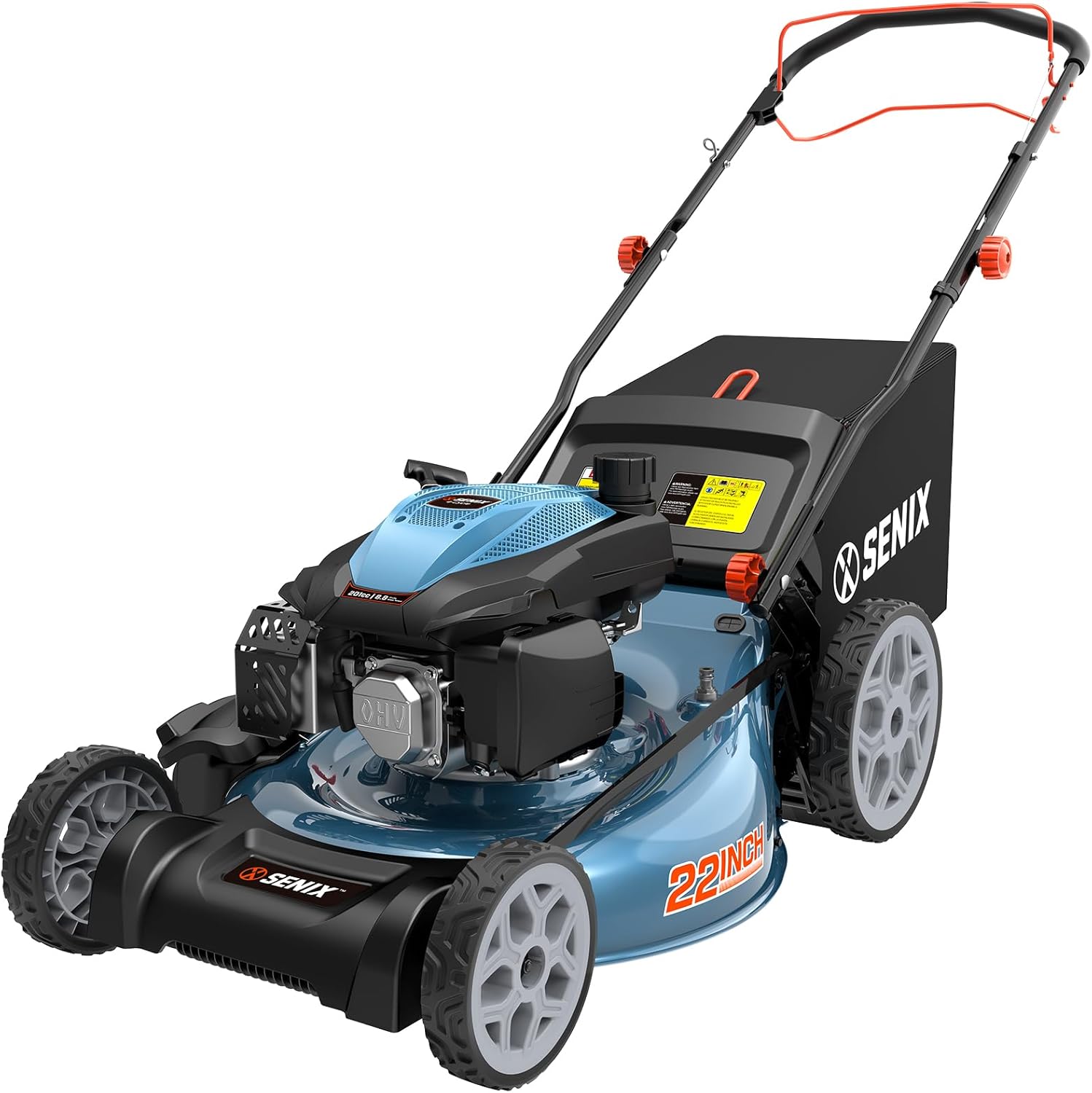
| Power Source | Gas Powered |
|---|---|
| Cutting width | 22 inches |
| Operation Mode | Automatic |
| Number of Positions | 6 |
| Material Type | Metal |
This SENIX mower is built for homeowners who want gas-powered performance without complexity. Its 201cc OHV 4-cycle engine produces enough torque for thick grass while the rear-wheel single-speed self-propelled drive (up to about 2.9 MPH) reduces fatigue on larger yards. The 22-inch steel deck and hardened manganese blades give efficient coverage and clean cuts, and the mower supports three modes — mulching, side discharge, and rear bagging — so you can adapt to seasonal conditions. Central six-position height adjustment (1.25 to 4 inches) makes switching cutting heights quick. The steel deck and vortex-style airflow aim to improve discharge and collection, and the folding handle helps store the mower in tighter spaces. Expect routine gas-engine upkeep and occasional tuneups, and note the single-speed drive limits control on steep slopes compared with variable-speed models. Assembly and break-in will be required before peak performance is realized.
Best for: Buyers who prioritize strong, gas-powered cutting performance and want a low-complexity self-propelled mower for medium to larger suburban lawns.
Less Ideal for: People who need very fine speed control for steep or highly uneven terrain or those who prefer battery-electric zero-emission options.
- Powerful 201cc OHV 4-cycle engine for consistent cutting through thicker turf
- 22-inch cutting deck covers ground quickly for medium to large yards
- 3-in-1 mowing (mulch, bag, side discharge) for seasonal versatility
- Durable steel deck and hardened manganese blades for long wear and reliable grass flow
- Central 6-position height adjustment for fast changes to cutting height
- Single-speed self-propelled drive offers less speed control than variable-speed models
- Gas engine requires regular maintenance and fuel storage
Verdict: Choose this mower if you want a solid, gas-powered 22-inch self-propelled machine that delivers reliable cutting power and 3-in-1 versatility for performance-focused lawn care.
SENIX 201cc 22" Self-Propelled 3-in-1 Gas Lawn Mower

| Power Source | Gas Powered |
|---|---|
| Cutting width | 22 inches |
| Operation Mode | Automatic |
| Number of Positions | 6 |
| Maximum Adjustable Cutting Height | 4 inches |
The SENIX 201cc 22" self-propelled mower is built to cover medium to large yards more quickly than a standard 20-inch mower thanks to its wider 22-inch steel deck and sharp blade. It is powered by a 201cc OHV 4-cycle engine that provides steady cutting performance and pairs with an eleven-inch rear-wheel drive for easier handling on slopes and uneven ground. The mower offers three discharge options — bagging, mulching, and side discharge — so you can switch modes to match lawn conditions, and a single-lever, six-position height adjustment (1.25" to 4") makes it simple to dial in the desired finish. Practical benefits include faster mowing per pass, improved traction on tougher terrain, and the flexibility to manage grass clippings based on season or yard care goals. Important limitations are its gas engine maintenance needs, heavier weight compared with electric models, and the typical noise and emissions of a gasoline mower, which may matter in noise-sensitive neighborhoods.
Best for: Buyers who prioritize efficient coverage and reliable gasoline power for medium to large lawns and who value proven features and peer-reviewed performance when choosing a robust, wider-cut walk-behind mower.
Less Ideal for: People who need a very quiet, low-maintenance, or lightweight mower for small yards or who prefer emissions-free electric operation should consider compact battery or electric models instead.
- 22-inch steel cutting deck covers more ground per pass than 20-inch mowers
- 201cc OHV 4-cycle engine delivers consistent power for medium to large lawns
- Rear-wheel self-propelled drive with 11-inch wheels improves traction and maneuverability
- 3-in-1 bagging, mulching, and side discharge offers versatile grass management
- Single-lever six-position height adjustment for quick deck changes
- Gas engine requires regular maintenance and fuel handling
- Heavier and louder than battery-electric alternatives
Verdict: Choose this SENIX if you want a wider 22-inch gas mower that combines reliable 201cc power with self-propelled traction for faster, more confident mowing of medium to large lawns.
PowerSmart 22" Self-Propelled Gas Lawn Mower with 140cc Briggs & Stratton Engine

| Engine Displacement | 140cc |
|---|---|
| Cutting Width | 22 inch |
| Cutting Options | Mulch, Side-Discharge, Rear Bag |
| Cutting Height Options | 6-position, 1.5 in to 3.9 in |
| Fuel Tank Capacity | 0.21 gal |
This PowerSmart mower is built for straightforward, performance-focused yard work. The Briggs & Stratton E550 140cc engine delivers reliable pull-start power while rear-wheel drive and a self-propelled system make it easier to maintain momentum on flat yards and gentle slopes. The 22-inch stamped steel deck and heavy-duty blade give clean, even cuts and the 3-in-1 capability lets you mulch, side-discharge, or rear-bag depending on finish and grass conditions. Height is adjusted with a two-lever, six-position system from 1.5 to 3.9 inches so you can dial in finish quickly. Practical touches include a 1.4-bushel grass bag and a compact folded size for storage. Expect a mower that handles half-acre lawns efficiently and reduces push effort compared with push-only mowers. Downsides for performance-minded buyers are the relatively small 0.21 gallon fuel tank and pull-cord start which can mean more refills and occasional extra pulls compared with larger-engine, electric-start models.
Best for: Buyers who prioritize reliable gas-powered cutting and want a rear-wheel drive self-propelled mower that makes maintaining up to a half-acre lawn easier and produces a quality finished cut.
Less Ideal for: People who need electric start, want very large acreage capacity, or prefer cordless battery mowers for lower noise and emissions should consider other options.
- 140cc Briggs & Stratton engine provides dependable gas-powered performance
- Rear-wheel drive self-propelled system reduces physical effort on slopes and uneven terrain
- 22-inch stamped steel deck and heavy-duty blade deliver consistent cutting quality
- 3-in-1 cutting (mulch, side-discharge, rear bag) adapts to different lawn needs
- Six-position height adjustment lets you quickly change cut height from 1.5 to 3.9 inches
- Small 0.21 gallon fuel tank requires more frequent refilling for larger lawns
- Pull-cord start lacks the convenience of electric start for quick restarts
Verdict: A solid choice for performance-minded homeowners who want a rear-wheel drive, self-propelled 22-inch gas mower that delivers dependable cutting and versatility for up to half-acre lawns.
Choosing the Right Rear Drive Lawn Mower: Key Factors to Consider
Cut Consistency & Deck Construction
How a mower cuts determines the lawn appearance after each pass. Deck shape, material, and depth affect airflow and how grass is lifted into the blade for an even cut. A well-designed deck resists clogging when grass is wet or tall and produces uniform clippings that either discharge cleanly or mulch finely depending on your preference.
Deck construction also affects durability. Thicker stamped steel or reinforced shells resist dents and stay true over time, which helps keep blade-to-deck clearance consistent. Consider how the deck handles debris and whether inspection or cleaning is straightforward; easy access to the blade area reduces downtime and keeps cutting consistent season after season.
Traction and Slope Performance
Rear-wheel drive shifts traction to the rear wheels, which helps pulling power on inclines and in thicker grass. Effective traction matters for safety and for preventing stalls or wheel spin on steep lawns. Tire tread pattern, wheel diameter, and weight distribution all influence how well a mower grips the ground.
Think about your typical mowing conditions. If your yard has frequent slopes or slippery surfaces, look for machines with deeper treads, larger rear wheels, or adjustable weight balance. Good traction reduces the need for repeated passes and keeps cutting lines straight when climbing or descending grades.
Maneuverability and Turning Radius
How easily the mower navigates around trees, beds, and tight corners affects time spent edging and trimming. Rear-drive units can feel different in turns because the driven end is at the back; some models pivot more predictably, while others require more steering input.
A compact footprint, responsive steering linkages, and well-positioned control levers make for faster work in complex yards. Also consider wheelbase and handle clearance so you can get close to obstacles without scalping. Maneuverability is especially important if you frequently mow around landscaping features.
Power Delivery and Speed Control
Smooth, controllable power keeps blade speed steady through varying grass conditions and reduces scalping or bogging. The drive system should provide predictable acceleration and deceleration so you can match ground speed to grass density for an even finish.
Look for mowers with variable speed controls that are easy to adjust on the move, and check how the drive responds when you encounter thicker patches. Consistent blade RPM under load is preferable to a mower that slows significantly in denser turf, as that preserves cut quality and reduces the need for multiple passes.
Maintenance Accessibility and Serviceability
Routine maintenance keeps a mower reliable and extends its service life. Easy access to the blade, belt, and air filter simplifies common tasks like blade sharpening, belt inspection, and seasonal service. Components that are modular and straightforward to remove reduce the time you spend in the garage.
Also consider the availability of replacement parts and the design of grease points or lubrication paths. A mower that is simple to service encourages regular upkeep, which leads to better traction, consistent cutting, and fewer surprises during the mowing season.
Operator Comfort and Control Layout
Comfort matters when you spend an hour or more mowing. Handle height, vibration damping, and the ergonomics of throttle or drive controls all affect fatigue and precision. A comfortable operator is more likely to maintain steady speed and accurate turns, which improves the final appearance of the lawn.
Controls should be logically placed and easy to reach without shifting your body. Grip texture and handle angle can influence steering precision, especially on slopes. Consider how easy it is to fold or adjust the handle for storage as part of the comfort and convenience equation.
Best Practices for Mowing Slopes with Rear-Drive Mowers
Mowing slopes requires planning and a cautious approach. Rear-drive mowers offer improved pulling traction uphill, but the handling changes when the driven wheels are at the rear. Keep movements smooth and avoid sudden turns or speed changes that could unsettle traction.
Position yourself and the mower to maintain balance. When climbing, use a moderate ground speed and take slightly wider turns to prevent tipping or wheel slip. If you must mow across a steep face, maintain a steady pace and avoid braking hard while turning. Inspect the slope for wet patches or loose debris before starting, and consider lowering cutting height only when necessary to prevent the deck from catching on uneven ground.
- Keep a steady, moderate ground speed
- Avoid abrupt steering inputs on inclines
- Check for wet or loose ground before mowing slopes
How Cutting Height Affects Lawn Health
Cutting height influences grass health, thatch buildup, and the frequency of mowing. Taller settings generally promote deeper roots and better drought tolerance, while too-low cuts stress turf and invite weeds. Rear-drive mowers should be able to maintain consistent blade contact at your chosen height without causing scalping around bumps or lawn edges.
Adjust height progressively over the season. In spring, start a little higher to promote root growth, then lower slightly in mid-season if needed for appearance. If the mower struggles to maintain even contact at lower heights on uneven terrain, raise the deck or slow your ground speed to avoid damage to the lawn.
- Use higher heights for stress tolerance
- Adjust gradually through the season
- Raise deck if scalping appears on rough ground
Mulching Versus Side Discharge With Rear-Drive Units
Mulching cuts clippings into fine pieces and recycles nutrients back into the turf, while side discharge clears clippings from the bed for a tidy finish. Rear-drive mowers can handle either task, but deck airflow and blade type determine how well clippings are processed.
If you prefer mulching, choose a mower with a deck geometry and blade that promote strong circulation. For side discharge and bagging, ensure the chute location and airflow keep clippings from clogging, especially when grass is wet. Switching between modes should be straightforward so you can adapt to changing grass conditions during the season.
- Mulching returns nutrients to the lawn
- Side discharge keeps the lawn tidy when clippings are heavy
- Deck design influences mulching effectiveness
Routine Checks Before Each Mow
A short pre-mow checklist prevents many common problems. Inspect the blade for nicks and proper sharpness, check tire pressure if adjustable, and confirm that drive cables and belts are free of fraying or looseness. Clearing debris from the deck and chute improves airflow and cutting quality.
Also verify fuel or battery charge levels and that safety features engage properly. Regular quick checks reduce the risk of stalling or poor cuts mid-job and keep maintenance from becoming a larger task later in the season.
- Inspect blade sharpness and condition
- Clear deck and chute of debris
- Check tire pressure and drive components
How We Chose the Best Rear Drive Lawn Mower
We focused on practical, garden-tested attributes most relevant to people choosing a rear drive lawn mower. Our selection filters emphasized cutting system design and traction because those determine the quality of the finish and slope performance. We also weighed handling features such as steering response and speed control, durability of drive components, ease of routine maintenance, and user comfort during extended mowing. Maneuverability around obstacles and the ability to handle taller or damp grass without bogging were important performance markers. Excluded from this list were specialized commercial-only units, lawn tractors, and machines intended solely for large acreage mowing; we limited picks to walk-behind rear drive mowers appropriate for typical residential yards. Each candidate met minimum standards for blade quality, engine or motor reliability, and available replacement parts. Final choices balanced real-world traction and cutting consistency with straightforward upkeep and operator ergonomics.
FAQ
Are rear-drive mowers better on hills than front-drive models?
Rear-drive mowers often provide better pulling traction uphill because the driven wheels are under the engine and deliver force directly to the rear. Performance depends on tire tread, wheel size, and weight distribution, so a rear-drive machine is usually better on moderate slopes but may not replace a purpose-built high-traction model on very steep terrain.
Can I use a rear-drive mower on wet grass?
You can, but wet grass increases the chance of slipping and clogging. Reduce ground speed, avoid sudden turns, and be cautious on slopes. Wet conditions also make mulching and side discharge less effective, so consider clearing heavy wet clippings from the deck more frequently.
How often should I sharpen the mower blade?
Blade sharpening frequency depends on wear and mowing conditions, but a good rule is at least once per mowing season or whenever you notice tearing rather than clean cuts. Inspect the blade after encountering rocks, sticks, or thick thatch and sharpen as needed to maintain cut quality.
Do rear-drive mowers require special tires or weights for better traction?
Some rear-drive units offer optional tires with deeper treads or the ability to add wheel weights to improve grip. These upgrades can help on slippery or steep surfaces, but they should be applied according to the manufacturer guidelines so they do not negatively affect handling.
Is a rear-drive mower harder to steer in tight yards?
They can feel different rather than harder. Because the driven wheels are at the rear, turning behavior can be more pivot-like and may require slightly different steering inputs. Look for models with responsive steering linkages and an appropriate wheelbase to ease turns in yards with lots of obstacles.
Final Verdict
Prioritize the factors that match your yard: traction and wheel design for slopes, deck geometry for the cut you want, and comfortable controls for longer sessions. Expect tradeoffs between maximum traction and tight-turn maneuverability, and balance those based on how often you tackle inclines and how intricate your landscape is. Choose a mower that provides predictable power delivery, accessible maintenance points, and a deck that handles the grass conditions you face most often. With those priorities, you can pick a rear drive lawn mower that delivers steady, even cuts and reduces the physical effort of mowing challenging terrain.
