

Note: This article contains affiliate links. If you click on these links and make a purchase, I may earn a small commission at no extra cost to you. This helps support my research and content. Read my full affiliate disclosure here.
If you want a tidy, green carpet without weekly mowing, choosing the right no mow ground cover matters. These low-growing plants change routine lawn care into occasional maintenance, freeing time while reducing fuel and water use in many landscapes. The shortlist that follows includes top-performing no mow ground covers suited to a range of sun, soil, and moisture conditions. We evaluated options for how quickly they establish, how well they choke out weeds, and what routine care they actually need. Read on to see the picks and the criteria used to compare them, then use the buying guidance to match a ground cover to your garden conditions.
Top Picks at a Glance
| Best Quality Built to a higher standard if you want something more solid | BuildASoil No-Till 60% Clover Seed Mix — 12‑Species Cover Crop (1 lb) |  |
| Best Budget The cheapest option that still gets the job done reliably | Outsidepride White Dutch Clover Seed (1/4 lb) |  |
| Highest Rated A top-rated pick with lots of positive feedback | Pennington No Mow Mix Fine Fescue Grass Seed, 3 lb |  |
| Most Popular A crowd favorite that many people choose with confidence | Outsidepride Perennial White MiniClover Seed (1 lb) |  |
| Best Seller A high-volume bestseller chosen again and again | KVITER Purple Rock Cress (Aubrieta deltoidea) Heirloom Flower Seeds — 1,000 Count |  |
BuildASoil No-Till 60% Clover Seed Mix — 12‑Species Cover Crop (1 lb)

| Unit Count | 16 Ounce |
|---|---|
| Indoor Outdoor Usage | Outdoor |
| Brand Name | BUILD A SOIL |
| Manufacturer | BuildASoil LLC |
| UPC | 810166421461 |
This blend is built around clover (about 60% of the mix) plus 11 other species to create a dense, low‑growing ground cover that suppresses weeds and improves soil biology without regular mowing. Typical uses include converting a high‑maintenance lawn into a bee‑friendly clover lawn, seeding raised beds or garden paths as living mulch, or planting as a no‑till cover crop between growing seasons. The high clover ratio means fast nitrogen fixation and visible green cover quickly in many conditions, and the mix is formulated for frost seeding and varied planting windows. Practical benefits are reduced watering and mowing, improved soil structure from diverse roots, and pollinator value from flowering clovers. Limitations are that a clover‑heavy mix will not mimic a fine turf grass aesthetic, and parts of the mix may perform differently in deep shade or very compacted soils. For performance‑minded gardeners this is a focused, low‑maintenance option for building living ground cover and boosting soil health.
Best for: Gardeners who prioritize low‑maintenance performance, soil improvement, and pollinator support over a traditional turf look and want a seed mix that establishes reliably across seasons.
Less Ideal for: Homeowners seeking a classic manicured grass lawn or those who need a fine, uniform turf for sports or heavy foot traffic.
- High clover content (60%) for rapid nitrogen fixation and dense coverage
- Twelve species blend increases biodiversity and soil resilience
- Formulated for no‑till/no‑mow use and compatible with frost seeding
- Versatile for lawns, raised beds, and larger cover crop applications
- Clover‑dominant appearance differs from traditional fine turf lawns
- Performance may be reduced in deep shade or very compacted soils
Verdict: Choose this clover‑dominant no‑till mix when you want a fast‑establishing, low‑mow living ground cover that improves soil and supports pollinators.
Outsidepride White Dutch Clover Seed (1/4 lb)

| USDA Hardiness Zone | 3 |
|---|---|
| Moisture Needs | Little To No Watering |
| Sunlight Exposure | Full Sun |
| Plant or Animal Product Type | white dutch |
This Outsidepride White Dutch clover seed is a practical, budget-friendly option for turning high-maintenance turf or bare patches into a low-growing, pollinator-friendly ground cover. Treated (nitrocoated and inoculated) seed helps faster establishment and supports soil nitrogen, so you can seed alone or mix with grass seed for overseeding. Typical use is broadcast seeding at about 1/4–1/2 lb per 1,000 sq ft, light raking, and keeping the area moist until germination within roughly two weeks at optimal temperatures. The plants form a dense mat that suppresses weeds, reduces erosion, and stays short, making it well suited for no-mow areas and pathways where a uniform low cover is desired. It tolerates a range of soils and climates (zones 3–10) and attracts pollinators when in bloom. Limitations are that it will flower and be more visible during summer and fall and it may not match a traditional turf aesthetic for formal lawns; initial watering and weed control are still needed until established.
Best for: Buyers who want an inexpensive, low-maintenance alternative to mowing — ideal for homeowners or managers converting open turf, slopes, or pathways into a no-mow ground cover that supports soil health and pollinators.
Less Ideal for: Not a good choice for those who need a formal, uniform turf for sports or manicured lawns or for sites that require instant erosion protection without establishment time.
- Treated seeds (nitrocoated and inoculated) for improved germination and soil benefits
- Forms a dense, low-growing mat that suppresses weeds and reduces erosion
- Adaptable to USDA zones 3–10 and various soil types
- Attracts pollinators with fragrant white flowers
- Low ongoing maintenance and drought tolerant once established
- Establishment requires initial watering and some site prep until the stand is dense
- Will produce visible white blooms in season which may not suit formal lawn preferences
Verdict: An affordable, low-maintenance white clover seed that establishes into a short, weed-suppressing ground cover ideal for no-mow areas.
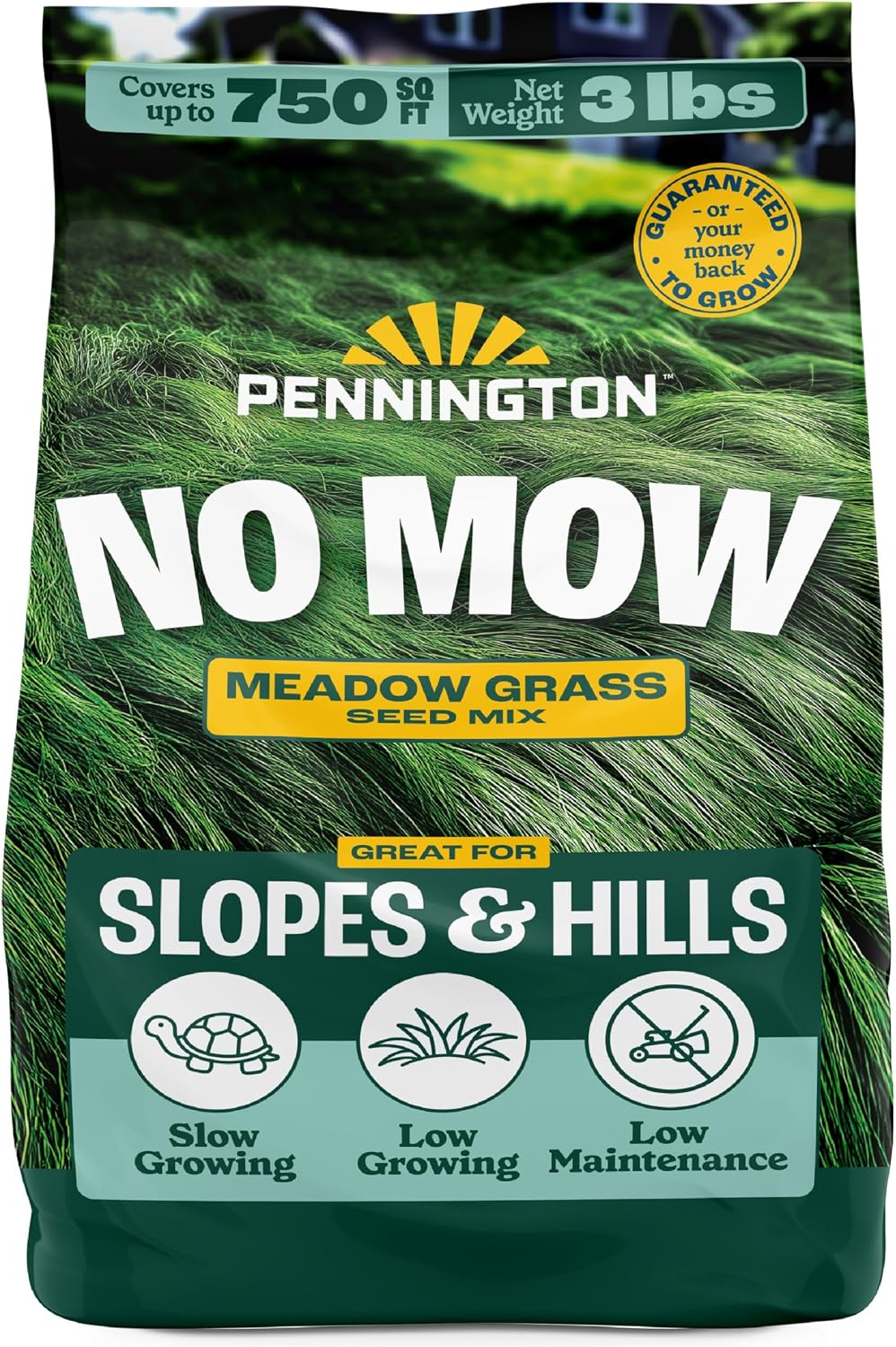
Pennington No Mow Mix Fine Fescue Grass Seed, 3 lb
| Sunlight Exposure | 4-6 Hours of Sun Per Day |
|---|---|
| Expected Planting Period | Fall |
| USDA Hardiness Zone | 1-12 |
| Material Features | Fine fescue blend including creeping red and chewings fescue |
Pennington No Mow Mix is a fine fescue blend intended to create a meadow-style ground cover that grows up to about 12 inches and naturally flops to roughly 6 inches so mowing is not required once established. You sow it like any grass seed: loosen and level soil, spread seed at the recommended rate, and keep the area consistently moist until seedlings are established. The mix uses creeping red and chewings fescue varieties that tolerate partial sun and perform well on slopes and hard-to-mow areas, providing erosion control and a soft, uniform appearance. It is drought tolerant after establishment and suited to a wide range of USDA zones, so it is a reliable long-term, low-input option for homeowners who want a natural look without regular mowing. Allow a season for full establishment and expect a meadow habit rather than a traditional clipped lawn, so it is not appropriate where a short, formal turf is required.
Best for: Homeowners who prioritize a low-maintenance, dependable ground cover and want a natural meadow look for slopes, hard-to-mow spots, or eco-friendly yards.
Less Ideal for: Gardeners seeking a short, formal turf or high-traffic play lawns should choose a traditional turfgrass seed instead.
- Formulated for no-mow use so routine mowing is unnecessary after establishment
- Fine fescue blend suited to slopes, hills, and erosion-prone areas
- Drought tolerant once established, reducing long-term watering needs
- Performs across a wide range of USDA hardiness zones for dependable results
- Requires consistent watering and monitoring during establishment period before drought tolerance develops
Verdict: Choose this mix if you want a reliable, low-maintenance meadow-style ground cover that eliminates regular mowing on slopes and hard-to-mow areas.
Outsidepride Perennial White MiniClover Seed (1 lb)

| Indoor Outdoor Usage | Outdoor |
|---|---|
| Other Special Features of the Product | Drought Tolerant |
| Expected Blooming Period | Summer |
| Moisture Needs | Moderate Watering |
Outsidepride Perennial White MiniClover is a micro clover seed intended as a low‑maintenance ground cover or lawn mix‑in. It is typically used for overseeding bare patches, creating a low-mow lawn alternative, stabilizing slopes or pathways, and improving soil nitrogen naturally. Notable features include very small leaves and stoloniferous growth that allow it to form a dense mat, low watering needs once established, and a short summer flowering period that attracts pollinators if left unmowed. Practical benefits are reduced mowing and irrigation, improved soil fertility through nitrogen fixation, and rapid establishment when sown at recommended rates. Limitations to consider are its preference for full sun to partial sun rather than deep shade, a modest one‑month bloom period if mowed regularly, and that it will reach only a few inches tall so it does not replace taller shade-tolerant groundcovers. For shaded areas this clover can work at garden edges or spots with filtered light, but it is not the best choice for densely shaded understories where true shade specialists perform better.
Best for: Gardeners who want a low‑maintenance, eco‑friendly ground cover or lawn mix‑in that reduces mowing and fertilizing and works well in sunny to partly shaded spots.
Less Ideal for: People seeking a groundcover for deep shade or for taller, year‑round ornamental coverage should consider shade‑specialist plants instead.
- Drought tolerant once established, reducing watering needs
- Fixes atmospheric nitrogen to improve soil fertility naturally
- Very small leaves and stolons create a dense, low-mow ground cover
- Suitable for erosion control on slopes and quick establishment of bare areas
- Not well suited to deep, heavily shaded areas and performs best in sun or partial sun
- Short seasonal flowering window if regularly mowed
Verdict: Choose this micro clover if you want an easy, low‑mow ground cover that improves soil naturally and cuts maintenance in sun or partly shaded areas.
KVITER Purple Rock Cress (Aubrieta deltoidea) Heirloom Flower Seeds — 1,000 Count

| Unit Count | 1000 Count |
|---|---|
| USDA Hardiness Zone | 3-10 |
| Sunlight Exposure | Full Sun |
| Expected Blooming Period | Spring to Summer |
| Material Features | GMO Free, Heirloom |
These KVITER Aubrieta (purple rock cress) seed packets supply 1,000 heirloom seeds for establishing a low, drought-tolerant ground cover. The seeds are surface-sown and need light to germinate, typically sprouting in 10–14 days around 60–65°F, and can be started indoors about six weeks before the last frost. Once established the plants form 6-inch mats with a cascading habit that works well in rock gardens, along paths, or on low walls. Key product features include a detailed growing guide in each packet, non-GMO heirloom seed, and suitability across USDA zones 3–10. Practical benefits are long seasonal color in late spring, low maintenance after establishment, and good tolerance of well-drained, sandy soils, which matches drought-tolerant plantings. Limitations to expect are the need for careful surface sowing and consistent moisture during germination, and that it performs best in full sun to part sun so shadier sites may underperform. Seed quantity is generous but germination rates in real gardens can vary, so plan accordingly.
Best for: Buyers who want a low-growing, drought-tolerant ground cover for rock gardens or sunny slopes and prefer a straightforward seed option with clear instructions and broad climate tolerance.
Less Ideal for: Gardeners seeking instant mature cover or those with heavily shaded, clay or poorly drained sites should consider plugs or different shade-tolerant species instead.
- Large 1,000-count pack suitable for covering larger areas or multiple plantings
- Heirloom non-GMO seeds with a growing guide included for step-by-step planting
- Adapted to USDA zones 3–10, making it usable across a wide range of climates
- Forms low, spreading mats that work well as drought-tolerant ground cover in well-drained soils
- Requires light for germination and consistent moisture during the seedling stage
- Performs best in full sun to part sun so heavily shaded spots may not thrive
Verdict: A cost-effective seed option for establishing low, drought-tolerant purple ground cover across a wide range of climates when planted in sunny, well-drained spots.
Choosing the Right No Mow Ground Cover: Key Factors to Consider
Sun Exposure and Microclimate
Sun exposure dictates which No Mow Ground Cover species will thrive. Full-sun sites favor drought-tolerant, low-growing plants that form dense mats, while shady areas need species adapted to filtered light and lower evaporation rates.
Consider microclimates created by nearby structures, trees, or pavement. South- or west-facing slopes get hotter and drier, which increases the importance of selecting covers with proven heat and drought tolerance. Conversely, north-facing or heavily shaded beds may require species that tolerate moisture and lower light. Choosing a ground cover that matches actual light conditions reduces the need for extra watering and corrective replacements.
Soil Type and Drainage
Soil texture and drainage affect root health and spread. Sandy soils drain quickly and favor species that tolerate dryness and extract nutrients efficiently, while clay soils retain moisture and can stress plants that need good aeration.
Before planting, assess soil depth and compaction. Amending a thin layer with organic matter improves establishment and reduces initial losses. In poorly drained spots, choose covers that tolerate periodic wetness or consider raised planting areas to avoid rot and disease. A match between soil conditions and plant preferences accelerates establishment and lowers long-term care.
Spread Habit and Maintenance Needs
Different no mow ground covers spread by runners, stolons, rhizomes, or clumping growth. Some form tight mats that suppress weeds effectively, while others have looser habits that leave gaps if not sited correctly.
Evaluate how aggressive you want the cover to be. Aggressive spreaders can fill large areas quickly but may encroach on nearby beds. Less vigorous types need denser initial planting to avoid weed invasion. Maintenance varies accordingly: mat-formers usually require minimal trimming, while looser growers benefit from occasional thinning or edge control.
Drought Resilience and Water Needs
Water availability is a major determinant of success and long-term input requirements. Many gardeners choose no mow covers to reduce irrigation, so prefer species rated for drought tolerance once established.
Plan for the establishment period when new plants need more consistent watering. After roots are established, drought-tolerant covers should survive extended dry spells with minimal supplemental water. In climates with summer drought or on slopes that shed moisture quickly, prioritize covers with deep or fibrous root systems that retain access to soil moisture.
Seasonal Interest and Evergreen Qualities
Consider whether you want year-round green cover or seasonal dieback. Evergreen ground covers provide visual continuity through winter, but some seasonal species offer attractive flowers or foliage color at certain times of year.
Think about how seasonal appearance fits the landscape design. Flowering ground covers can add pollinator value and curb appeal, but may require deadheading or light grooming. Evergreen options reduce winter bare spots and the perception of neglect, which matters for street-facing areas or formal plantings.
Compatibility With Nearby Plants and Use
Match the ground cover to adjacent plantings and intended use. Taller perennials or shrubs may cast shade and compete for moisture, so select covers that tolerate partial shade and root competition.
For light-walk areas, choose covers with higher foot traffic resilience. If you plan to plant under trees, pick species that cope with root competition and limited nutrients. Also verify that the chosen cover will not become invasive in your region; compatibility with local ecology preserves garden balance and reduces management headaches.
Planting and Establishment Best Practices
Successful establishment depends on preparation and initial care. Clear the area of weeds and perennial roots before planting. If existing turf is present, smother or remove it to prevent regrowth that competes with the new cover.
Space plants according to the growth habit so they meet and knit together quickly; closer spacing speeds coverage but costs more up front. Water consistently during the first growing season to encourage deep rooting, then taper irrigation as the plants mature.
- Test soil pH and adjust only if values are far from the species preference.
- Apply a moderate layer of mulch to conserve moisture without burying crowns.
- Water deeply but infrequently after establishment to encourage root depth.
Managing Weeds Without Frequent Mowing
A dense ground cover reduces weed pressure, but some intervention is still necessary in the first year. Hand-weeding and shallow cultivation are effective while the cover is filling in. Avoid broad, repeated herbicide use that can also harm desirable groundcovers.
If weeds persist, consider spot treatments or thin and replant gaps in early spring to prevent long-term infiltration.
- Use landscape fabric temporarily only if it does not prevent root spread.
- Pull annual weeds before seeding to limit seed bank replenishment.
Combining Ground Cover With Hardscape
No mow ground covers are useful between pavers, along paths, or at the base of retaining walls. Choose low, tram-tolerant species for high-use edges and denser mat-formers where you want minimal edge maintenance.
Allow a small buffer of mulch or edging where needed to prevent encroachment into beds and improve long-term neatness.
- Select covers that tolerate light foot traffic for stepping-stone joints.
- Use edging to contain aggressive spreaders without regular trimming.
Seasonal Care and Long-Term Upkeep
Once established, most no mow ground covers need only occasional grooming: light shearing, removal of debris, and replacement of small gaps. Fertilize sparingly; excessive fertility encourages leggier growth and may increase water needs.
Inspect annually for disease or pest issues and remove affected sections promptly. Periodic rejuvenation by selective thinning keeps a mat dense and healthy.
- Plan for occasional touch-up plantings each few years in high-wear zones.
- Monitor for invasive spread and prune roots or runners back from sensitive areas.
Design Uses and Landscape Roles
Think beyond turf replacement. No mow ground covers work well for erosion control on slopes, as filling between stepping stones, or to unify mixed beds where low height is desired. Their low profile complements taller perennials and shrubs, reducing visual clutter and maintenance.
Use mixes of compatible species to extend seasonal interest and improve resilience to pests or weather extremes.
- Combine flowering and evergreen covers to balance year-round structure with seasonal color.
- Use ground covers to reduce bare soil and conserve moisture in drip-irrigated zones.
How We Chose the Best No Mow Ground Cover
We focused on real-world garden performance and long-term maintenance burden when shortlisting No Mow Ground Covers. Primary evaluation criteria included establishment speed, because gardeners want reliable, visible coverage within a single season; spread habit and density, since a mat-forming habit reduces weed pressure; and drought tolerance, given many landscapes face dry spells. We also looked at seasonal appearance and resilience to foot traffic for areas that see light use. Disease and pest resistance were considered to avoid selections that require frequent interventions. Plants with invasive tendencies in many regions were excluded to prevent ecological harm. We filtered out cultivars and varieties lacking documented landscape performance or those that need frequent clipping or aggressive maintenance. The final list prioritizes species and varieties that create durable, low-care cover, perform across common soil types, and limit ongoing inputs like water and fertilizer. These criteria align with the practical needs of gardeners aiming to replace or reduce traditional turf mowing.
FAQ
How long does a no mow ground cover take to fill in an area?
It depends on species and planting density. Many mat-forming covers will show solid coverage within one growing season when spaced appropriately, while slower growers may take two seasons to fully knit together.
Can I plant no mow ground cover under trees?
Often yes, but success depends on species and tree root competition. Choose covers that tolerate shade and shallow soils, and prepare the planting area by reducing turf and adding organic matter.
Will no mow ground covers prevent erosion on slopes?
Many will help reduce erosion because their roots hold soil and the foliage intercepts rain. Select species with fibrous root systems and plant densely for best results on slopes.
Do no mow ground covers attract pollinators?
Some species produce flowers that attract bees and beneficial insects, while evergreen mat-formers prioritize foliage. If pollinator habitat is a goal, pick varieties known for blooms and stagger selections to extend bloom time.
How much watering do these covers need after establishment?
Established drought-tolerant covers usually need little supplemental water except during prolonged drought. New plantings require regular watering until roots are established, typically the first season.
Final Verdict
Prioritize the site conditions you actually have: light, soil, and intended use dictate which no mow ground cover will succeed with the least upkeep. Balance spread habit against maintenance tolerances and pick drought-tolerant, dense mat-forming options for low-input areas. For visual interest or pollinator value, mix in flowering or seasonal varieties while retaining a core of evergreen mat-formers for winter continuity. The right choice reduces routine mowing, lowers water and labor inputs, and keeps a clean, attractive ground plane. Focus on establishment practices and matching plant traits to your microclimate for the best long-term results.
