

Note: This article contains affiliate links. If you click on these links and make a purchase, I may earn a small commission at no extra cost to you. This helps support my research and content. Read my full affiliate disclosure here.
Potted bougainvillea need a feeding approach that supports heavy flowering while avoiding root stress in confined soil. The wrong fertilizer can produce lush green growth at the expense of blooms or cause salt buildup that damages container roots. This guide shortlists five fertilizers suited to bougainvillea grown in pots and explains the practical tradeoffs you need to weigh. We looked at nutrient ratios, application frequency, and ease of use so you can pick a formula that keeps container plants blooming and the potting mix healthy. Read on for the criteria that mattered and quick tips for feeding schedules and application methods.
Top Picks at a Glance
| Best Overall The best all-around choice for most situations | Miracle-Gro Pour & Feed Liquid Plant Food, 32 fl. oz. | 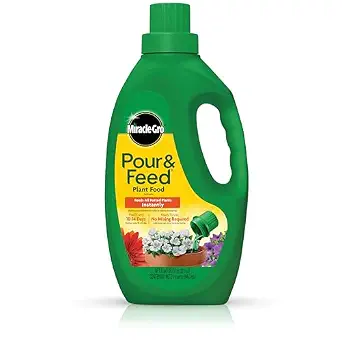 |
| Best Quality Built to a higher standard if you want something more solid | Nelson NutriStar Bougainvillea & Flowering Vine Food, Granular 17-7-10 (2 lb) |  |
| Best Value The sweet spot between price and what you get | Purived All-Purpose Liquid Houseplant Fertilizer, 16 fl oz (Makes 50 Gallons) |  |
| Highest Rated A top-rated pick with lots of positive feedback | Miracle-Gro Water Soluble All Purpose Plant Food, 1.5 lb |  |
| Most Popular A crowd favorite that many people choose with confidence | TPS NUTRIENTS Bougainvillea Liquid Fertilizer, 8 oz |  |
Miracle-Gro Pour & Feed Liquid Plant Food, 32 fl. oz.

| Item Form | Liquid |
|---|---|
| Application Method | Directly to the soil |
| Target Species | potted plants |
| Unit Count | 32 Fluid Ounces |
Miracle-Gro Pour & Feed is a ready-to-use liquid fertilizer designed for container plants and houseplants. You apply it by measuring with the bottle cap and pouring the recommended amount directly onto the soil around each pot, so no mixing or watering-can prep is required. Its convenience makes it easy to maintain a regular 10–14 day feeding schedule for bedding plants like petunias in containers. The product is formulated for potted plants only, and the liquid form gives fairly quick nutrient availability compared with slow-release granules. Practical benefits include simple dosing with the cap, suitability for indoor and outdoor use, and a clearly stated application rhythm that helps keep flowering plants vigorous. Important limitations are that it is not intended for in-ground beds and that frequent applications mean you need to remember regular feedings; it is also a general all-purpose formula rather than a petunia-specific bloom booster.
Best for: A plant owner who prefers simple, low-effort care for container flowers and wants a dependable, easy-to-measure fertilizer to keep petunias and other potted ornamentals blooming.
Less Ideal for: Gardeners seeking a long-term, in-ground soil amendment or those who prefer an infrequent, slow-release feeding schedule should consider other products.
- Ready-to-use liquid requires no mixing so application is fast and low-effort
- Cap-measure dosing makes it easy to apply the correct amount for each container
- Suitable for both indoor and outdoor container plants so one product covers many uses
- Feeds on a 10–14 day schedule for consistent nutrient supply to flowering containers
- Not formulated for in-ground planting so unsuitable for garden beds
- Requires frequent application compared with slow-release fertilizers
Verdict: Use this if you want a no-mix, easy-to-measure liquid fertilizer to keep container petunias fed and blooming on a regular schedule.
Nelson NutriStar Bougainvillea & Flowering Vine Food, Granular 17-7-10 (2 lb)

| Item Form | Granules |
|---|---|
| Application Method | Granular |
| Coverage | Medium |
| Target Species | bougainvillea vines and flowering |
| Mixing Ratio | 17:7:10 |
This granular NutriStar formula is built for gardeners who want bigger, more frequent blooms from bougainvillea and similar flowering vines. You apply the slow‑release granules on the soil surface for use in pots, hanging baskets or the ground, feeding every 14 days until blooming then monthly during bloom. The 17-7-10 blend with four sources of nitrogen, added sulfur and gypsum is designed to encourage root health, acidify soil slightly and support sustained flower production without frequent liquid feeding. In practice it simplifies maintenance: it is easy to sprinkle, creates little mess and supports both indoor and outdoor plants. Expect noticeable improvements in bloom size and quantity when used as directed, especially on acid‑loving vines. Limits to consider are that the product is a targeted bloom formula so it emphasizes flowering over foliage greening and the 2 lb jar covers medium area only compared with larger commercial bags, so frequent users or larger plantings will need the bigger sizes.
Best for: Gardeners focused on maximizing bloom production from bougainvillea and other flowering vines who want an easy, low‑maintenance granular feed for pots and landscapes.
Less Ideal for: People managing large beds or many plants who need bulk coverage or those seeking a balanced fertilizer to drive leafy growth rather than flowering.
- 17-7-10 slow‑release formula developed to boost bloom size and frequency
- Contains sulfur and gypsum to help acidify soil and improve root zone structure
- Four sources of nitrogen provide sustained feeding without liquid fertilizers
- Suitable for indoor and outdoor use in hanging baskets, pots, and ground plantings
- Small 2 lb package provides limited coverage compared with larger sizes
- Formula prioritizes flowering which may not correct nitrogen deficiencies for heavy foliage growth
Verdict: Choose this slow‑release 17-7-10 granular feed if you want an easy, bloom-focused fertilizer that reliably increases flower size and frequency on bougainvillea and other flowering vines.
Purived All-Purpose Liquid Houseplant Fertilizer, 16 fl oz (Makes 50 Gallons)

| Item Form | Liquid |
|---|---|
| Application Method | soil drench, foliar feed, full & semi hydroponics |
| Target Species | Houseplants |
| Mixing Ratio | 320:1 |
Purived All-Purpose Liquid Houseplant Fertilizer is a concentrated 16 fl oz bottle that mixes 1 cap per gallon to treat up to 50 gallons of water. It is formulated for indoor potted plants and supports multiple application methods including soil drench, foliar spray, and full or semi-hydroponics, so you can use the same product whether you water, mist, or run nutrient solutions. The formula lists primary macronutrients and a range of micronutrients, which helps correct common deficiencies and supports steady growth when used at the recommended dilution. Practical benefits include an easy-to-follow mixing ratio, an odorless solution that is simple to store, and broad compatibility with different feeding routines. Important limits are that the label gives no N-P-K percentages, so precise nutrient planning for sensitive seedlings or specialty plants is not possible, and safety precautions mean you must handle and store it carefully. For new plants, start at or below the recommended dilution and observe growth before increasing frequency.
Best for: Buyers who want a versatile, no-fuss fertilizer for establishing and maintaining new houseplants and who value a single product that works across watering, misting, and basic hydroponic setups.
Less Ideal for: Growers who need exact N-P-K formulations for seedlings, specialty plants, or strict hydroponic nutrient regimens should consider a product with full nutrient breakdown and concentration details.
- Very concentrated so one bottle treats up to 50 gallons, reducing repurchase frequency
- Suitable for multiple application methods: soil drench, foliar feed, and hydroponics
- Includes a range of micronutrients in addition to primary NPK components
- Simple, clear mixing ratio (320:1) that is easy to follow
- No N-P-K ratio listed on the product information, limiting precise nutrient management
- Requires careful handling and storage due to safety warnings
Verdict: A concentrated, easy-to-use all-purpose fertilizer that covers feeding, foliar, and basic hydroponic needs for new houseplants.
Miracle-Gro Water Soluble All Purpose Plant Food, 1.5 lb

| Item Form | Powder |
|---|---|
| Application Method | Watering Can |
| Target Species | For all flowers, vegetables, trees, shrubs and houseplants |
| Mixing Ratio | 24-8-16 |
Miracle-Gro Water Soluble All Purpose Plant Food is a powder concentrate you mix with water to give a quick nutrient boost to flowers, vegetables, houseplants, shrubs and trees. It is typically dissolved in a watering can or used with a compatible garden feeder to soak soil at the base of plants, delivering nitrogen-heavy nutrition that shows effects faster than granular fertilizers. Notable features include an easy scooping method for indoor and outdoor dosing, compatibility with containers and in-ground planting, and clear directions for feeding every one to two weeks. In practice this makes the product a convenient option when you want visible growth and greener foliage quickly, and the 1.5 lb container covers roughly 600 sq. ft. Important limitations are that it is a fast-release, high-nitrogen formula best used as a regular quick feed rather than a long-term slow-release solution, and it requires careful measuring to avoid overfeeding. For routine maintenance combine with good watering and follow the label to avoid nutrient imbalance.
Best for: Buyers who prefer proven, easy-to-use feeding routines and want noticeable growth quickly for a variety of garden and houseplants, guided by established usage directions and broad user experience.
Less Ideal for: Gardeners seeking a single, long-term slow-release solution or those who prefer organic or low-nitrogen fertilizers for sensitive plantings should consider alternative products.
- Water-soluble powder starts working quickly at the roots when mixed and applied
- Clear, simple dosing for indoor and outdoor use with included scoop guidance
- Suitable for a wide range of plants including vegetables, flowers, shrubs and houseplants
- Covers a large area from a small container (about 600 sq. ft. per 1.5 lb)
- Fast-release formula means benefits are short-term compared with slow-release granular fertilizers
- Requires precise measuring and regular reapplication to avoid overfeeding
Verdict: A reliable, fast-acting water-soluble plant food for gardeners who want easy, repeatable feeding and quick visible results.
TPS NUTRIENTS Bougainvillea Liquid Fertilizer, 8 oz

| Item Form | Liquid |
|---|---|
| Specific Uses For Product | Bougainvillea Growth |
| Coverage | Bougainvillea plants |
| Target Species | Bougainvillea |
| Liquid Volume | 8 fluid ounces |
This 8 oz liquid formula from TPS Nutrients is designed for bougainvillea and aims to boost blooming, foliage health, and root development. You use it as a water-soluble feed for potted or in-ground bougainvillea, applying per the included directions to support more abundant bracts and stronger vine growth. Notable features are its high-potassium focus for flowering, liquid form for easy mixing and even distribution, and packaging sized for hobby or small-plot use. In practice it makes feeding straightforward for container growers and gardeners training vines on trellises or fences, and the small bottle is handy for spot treatments or seasonal bloom pushes. Limitations to keep in mind are the small 8 oz volume if you manage multiple large plants and the formula being targeted to bougainvillea so it is less versatile for general-purpose fertilizing. Expect visible bloom improvement with regular, properly diluted applications but plan to buy multiple bottles for larger gardens.
Best for: Buyers who want a plant food tuned to coax bigger, brighter blooms on bougainvillea and prefer a simple liquid feed for containers or single vines.
Less Ideal for: Gardeners managing many large bougainvillea specimens or seeking a multi-purpose fertilizer for a variety of plant types should consider larger or broader-use options.
- Formulated specifically to increase flowering in bougainvillea
- Liquid concentrate for easy dilution and even application
- Supports root and foliage health in addition to blooms
- Small 8 oz bottle may require multiple purchases for several or large plants
- Product is targeted to bougainvillea and not formulated as a general-purpose fertilizer
Verdict: A compact, easy-to-use liquid feed focused on producing bigger, more vibrant bougainvillea blooms.
Choosing the Right Fertilizer for Potted Bougainvillea: Key Factors to Consider
Nutrient Ratio and Concentration
Bougainvillea flowering responds best to a fertilizer that leans toward phosphorus and potassium with moderate nitrogen. High nitrogen encourages soft, leafy growth that can reduce flowering and create leggy plants in pots.
In containers, concentration matters because there is less soil to dilute salts. A concentrated fertilizer applied at full strength can quickly build up salts and damage roots. Look for formulas that offer the appropriate N-P-K balance for flowering shrubs and clear dilution guidance for container use.
Salt Load and Solubility
Salt accumulation is a common problem in potted plants because repeated feedings and limited leachate concentrate soluble salts in the root zone. High-salt granular formulas or concentrated liquid feeds can cause brown leaf tips, root burn, and poor water uptake.
Soluble, low-salt formulations or controlled-release granules designed for containers reduce the frequency of flushes and the risk of toxicity. Consider how often you can flush pots and whether the fertilizer recommends occasional leaching to manage salts.
Formulation Type and Release Profile
Water-soluble fertilizers give fast results and let you adjust feeding frequency, which is useful during active bloom periods. Liquid feeds work well for quick corrective treatments but require consistent dosing.
Slow-release granules supply steady nutrients and reduce the chance of user error, but some release rates accelerate in heat, which can lead to uneven feeding during summer. Choose a formulation whose release profile matches your watering routine and the seasonal growth cycle of bougainvillea.
Application Ease and Dosing Accuracy
Precise dosing is critical for potted bougainvillea. Too little fertilizer reduces flower production; too much causes salt stress. Products with clear, container-specific directions or measured applicators help you feed reliably.
Consider whether you prefer monthly granules, weekly dilute liquid feeds, or concentrate drops. Ease of measuring and mixing influences how consistently you will apply the product, which directly impacts plant health and flowering rhythm.
Micronutrients and pH Buffering
Bougainvillea can be sensitive to micronutrient deficiencies, especially iron and manganese, when grown in potting mixes with high pH or low organic matter. Fertilizers that include chelated micronutrients or pH-stabilizing components help maintain color and vigor.
A product that supplies trace elements reduces the need for separate supplements. However, avoid formulations with excessive chelates if your potting mix already contains sufficient organic matter, as unnecessary additives can contribute to salt load.
Container and Root Health Considerations
Because pots restrict root growth, fertilizers should support root resilience. Ingredients that encourage balanced root development without promoting weak, rapid shoot growth are preferable.
Also think about the potting mix and drainage. A fertilizer that works well in free-draining mixes may cause problems in poor-draining containers. Match the fertilizer to your container medium and water schedule to protect root health.
When to Feed Potted Bougainvillea
Feed timing affects bloom cycles and overall vigor. In spring and during active growth, increase feeding frequency to support new shoots and heavy flowering. Reduce or pause feeding during periods of slowed growth or dormancy to avoid stimulating unnecessary foliage growth that drains the plant's energy.
Regular, light feedings typically produce steadier blooms than infrequent heavy applications. If using a water-soluble feed, apply at the lower recommended concentration weekly or every two weeks during peak bloom. For slow-release granules, follow the package interval and avoid supplemental high-strength liquid feeds unless plants show clear deficiency symptoms.
- Start a feeding program when new growth begins in spring.
- Switch to maintenance dosing after the main flowering flush.
- Flush pots with clear water occasionally to prevent salt buildup.
Adjusting Feed for Pot Size and Soil Mix
Smaller pots concentrate nutrients more quickly, so reduce concentration or frequency compared with larger containers. Heavier, moisture-retentive mixes slow nutrient movement and increase salt risk, while fast-draining mixes may require more frequent feeding to maintain bloom energy.
When repotting, refresh the potting mix and reduce fertilizer for the first few weeks while roots re-establish. Choose a balanced container mix and ensure good drainage to get the most predictable response from any fertilizer.
- Reduce dose in small pots and increase leaching frequency.
- Use fresh, free-draining potting mix when repotting to reset nutrient balance.
Application Methods and Best Practices
Apply fertilizer to evenly moist soil to prevent concentrated solutions from contacting dry roots. For liquid feeds, dilute to the lower end of the recommended range for containers and water through thoroughly to distribute nutrients into the root ball.
If using granules, scatter them evenly and avoid piling against the stem. When using slow-release products, note that heat and frequent watering can accelerate release, so consider seasonal adjustments. Always follow label guidance for container use and rinse any residue off foliage after foliar feeding to prevent leaf spotting.
- Apply to moist soil and water in to avoid root shock.
- Avoid contact between granules and stems to reduce burn risk.
Managing Common Nutrient Problems
Yellowing leaves with green veins can indicate iron deficiency, especially in alkaline potting mixes. Pale overall foliage with weak blooming often points to low phosphorus or inadequate overall feeding. Brown leaf tips or stunted growth are typical signs of salt accumulation.
Corrective measures include using a balanced, bloom-oriented fertilizer at a reduced rate, applying chelated micronutrients if deficiency symptoms persist, and flushing pots with fresh water to reduce salts. Make changes gradually and monitor new growth for improvement.
- Identify symptoms before changing the fertilizer regimen.
- Use flushing and partial repotting to address severe salt build-up.
How We Chose the Best Fertilizer for Potted Bougainvillea
We evaluated candidate fertilizers based on criteria that matter in container bougainvillea culture. First, nutrient balance and concentration were central: bougainvillea benefit from a fertilizer that favors bloom-supporting phosphorus and potassium while keeping nitrogen moderate to avoid excessive leafy growth in small pots. Second, salt load and solubility were assessed because high-salt formulations or slow-draining mixes raise the risk of root damage in containers. Third, application convenience and dosing flexibility were considered; products that allow precise, repeatable feeding reduce the chance of over- or under-fertilizing. Fourth, formulation type was reviewed, comparing water-soluble, granular slow-release, and liquid feed approaches for how they behave in pots. Finally, we looked at plant-friendly additives such as micronutrients and pH buffering that help bougainvillea access nutrients in typical potting mixes. We excluded products formulated strictly for lawns, succulents, or indoor foliage where nutrient ratios and salt behavior differ substantially. We did not consider bulk garden amendments that require heavy mixing or re-potting. The listed criteria guided selection and are reflected in the scoring metrics used for each pick.
FAQ
How often should I fertilize bougainvillea in pots?
It depends on the formulation. Water-soluble feeds are commonly applied every one to two weeks at reduced strength during the growing season. Slow-release granules typically work for one to three months before reapplication, depending on the product and pot temperature.
Can I use houseplant fertilizer on potted bougainvillea?
Some houseplant fertilizers work but may be too high in nitrogen, which encourages leafy growth rather than flowers. Pick a formula with a balanced or bloom-oriented N-P-K and follow container-specific dosing recommendations.
How do I prevent salt buildup in container-grown bougainvillea?
Flush containers periodically by running water through the pot until it drains freely to remove accumulated salts. Use low-salt formulations, avoid overfertilizing, and repot with fresh mix if salts have become severe.
Should I change fertilizer when I repot my bougainvillea?
Repotting usually refreshes the soil's nutrient reservoir, so reduce or pause fertilizer for a few weeks while roots settle. After established growth resumes, restart feeding at a conservative rate.
Are micronutrients important for bougainvillea in pots?
Yes. Trace elements like iron and manganese are often needed for vibrant foliage and consistent flowering, especially if your potting mix leans toward alkaline. Fertilizers with chelated micronutrients can prevent common deficiencies.
Final Verdict
Prioritize a fertilizer that balances bloom-supporting nutrients with low salt risk and dosing clarity. In most container situations, a moderate phosphorus-forward formula delivered at conservative concentrations gives the best balance between steady flowering and root safety. Weigh formulation type against your watering routine and pot size: choose soluble feeds for quick responsiveness and small, frequent doses, or controlled-release options when you prefer lower-maintenance care. Stick to container-specific dosing and monitor foliage for signs of imbalance, and you will keep potted bougainvillea blooming reliably.
