

Note: This article contains affiliate links. If you click on these links and make a purchase, I may earn a small commission at no extra cost to you. This helps support my research and content. Read my full affiliate disclosure here.
Prickly pear cactus respond differently to fertilizer than typical garden plants. Too much nitrogen makes soft, floppy pads while the right mix encourages firm growth, more blooms, and better fruit set. This guide looks at seven top options suited for prickly pear cacti and similar desert-adapted succulents. We shortlisted products that match common garden situations for cactus growers and evaluated them on nutrient balance, ease of application, and how they handle in containers and landscape beds. Read on to see the kinds of formulations and application styles that tend to work best for prickly pear cactus and why those factors matter.
Top Picks at a Glance
| Best Overall The best all-around choice for most situations | Grow More Cactus Juice Liquid Fertilizer (1-7-6) 16 oz |  |
| Best Quality Built to a higher standard if you want something more solid | Cactus & Succulent Pro Controlled-Release Fertilizer 15-6-12 (3 lb) |  |
| Best Value The sweet spot between price and what you get | The Grow Co Slow-Release Succulent & Cactus Fertilizer, 5 oz |  |
| Best Budget The cheapest option that still gets the job done reliably | Schultz Cactus Plus Liquid Plant Food 2-7-7, 4 fl oz |  |
| Highest Rated A top-rated pick with lots of positive feedback | Purived Succulent & Cactus Liquid Fertilizer, 16 oz (Makes 50 Gallons) |  |
| Most Popular A crowd favorite that many people choose with confidence | Miracle-Gro Indoor Plant Food for Cactus & Succulent, 8 fl. oz. (2-Pack) |  |
| Best Seller A high-volume bestseller chosen again and again | TPS NUTRIENTS Succulent Fertilizer Liquid Plant Food, 8 oz |  |
Grow More Cactus Juice Liquid Fertilizer (1-7-6) 16 oz

| NPK | 1-7-6 |
|---|---|
| Item Form | Liquid |
| Target Species | Cactus |
| Mixing Ratio | 1 teaspoon per gallon |
Grow More Cactus Juice is a water-soluble liquid fertilizer made for cacti, succulents and similar houseplants. It uses a 1-7-6 NPK ratio with added calcium, so you feed plants by mixing the concentrated solution into water (manufacturer recommends 1 teaspoon per gallon) and applying during the growing season. In practice it encourages fuller top growth and stronger root systems without excess nitrogen that would spur overly soft tissue. The liquid form makes dilution and foliar or soil application straightforward and easy to dose for small pots or mixed collections. Because it is a specialty formula for low-feeding species, it is not intended as a high-nitrogen houseplant tonic but rather as a balanced maintenance feed to promote blooms and root health. Buyers should follow dilution instructions carefully since concentrated applications can stress drought-adapted plants. The bottle size is convenient for hobbyists with multiple small plants and the calcium content is a useful benefit for preventing soft growth and supporting overall plant structure.
Best for: A practical hobbyist who wants a predictable, cactus-specific feed to maintain healthy prickly pear and other succulents during the growing season; ideal for those prioritizing root strength and bloom support.
Less Ideal for: Gardeners looking for an all-purpose, high-nitrogen houseplant fertilizer or those who need a granular slow-release product for outdoor beds.
- Cactus-focused 1-7-6 formula tailored for bloom and root development
- Liquid concentrate is easy to mix and apply at low rates
- Contains calcium to help strengthen tissue and prevent soft growth
- Low-nitrogen balance reduces risk of leggy, over-vigorous shoots
- Not suitable as a heavy-feeding general houseplant fertilizer
- Requires careful dilution to avoid fertilizer burn
Verdict: Pick this liquid 1-7-6 cactus fertilizer if you want a calcium-enriched, easy-to-mix feed that promotes stronger roots and better blooms on prickly pear and other succulents.
Cactus & Succulent Pro Controlled-Release Fertilizer 15-6-12 (3 lb)

| NPK | 15-6-12 |
|---|---|
| Net weight | 3 Pounds |
| Release duration | 10–12 Month Controlled Release |
| Target plants | Cacti & Succulents |
This controlled-release granular fertilizer is formulated specifically for cacti and succulents, delivering a 15-6-12 NPK ratio with added micronutrients to support long-term plant performance. You apply it sparingly to container or landscape plantings where one application provides steady nutrition over 10 to 12 months, reducing the need for frequent feeding. The lower nitrogen content helps limit lanky vertical growth and encourages compact, well-branched forms that are desirable in prickly pear and other desert-adapted species. Micronutrients such as magnesium, iron, manganese, and copper support root activity and overall foliage health, which is useful for maintaining color and vigor. Because it is a granular, controlled-release formula it gives even coverage and predictable uptake, but it is not an instant liquid feed so visible effects can take weeks. For growers focused on measured, season-long performance this product simplifies fertilization, though those needing rapid correction of specific deficiencies or precise dosing for seedlings may prefer supplemental liquid feeds or targeted foliar treatments.
Best for: Growers who want predictable, season-long feeding for prickly pear and other desert succulents and prefer a low-maintenance, performance-minded approach to fertilization.
Less Ideal for: People who need fast corrective feeding, precise nutrient control for seedlings, or who prefer liquid fertilizers and foliar sprays for immediate results.
- Controlled-release formula supplies nutrients for 10–12 months with a single application
- Low nitrogen NPK (15-6-12) helps prevent excessive vertical growth in cacti and succulents
- Includes micronutrients (magnesium, iron, manganese, copper) to support root function and foliage color
- Granular form allows even coverage for both containers and outdoor beds
- Slow-acting controlled-release granules are not suitable when rapid correction of deficiencies is needed
- Single NPK ratio may not match every stage of growth or specific soil nutrient profiles
Verdict: A low-nitrogen, season-long controlled-release fertilizer that keeps prickly pear and other succulents compact and healthy with minimal reapplication.
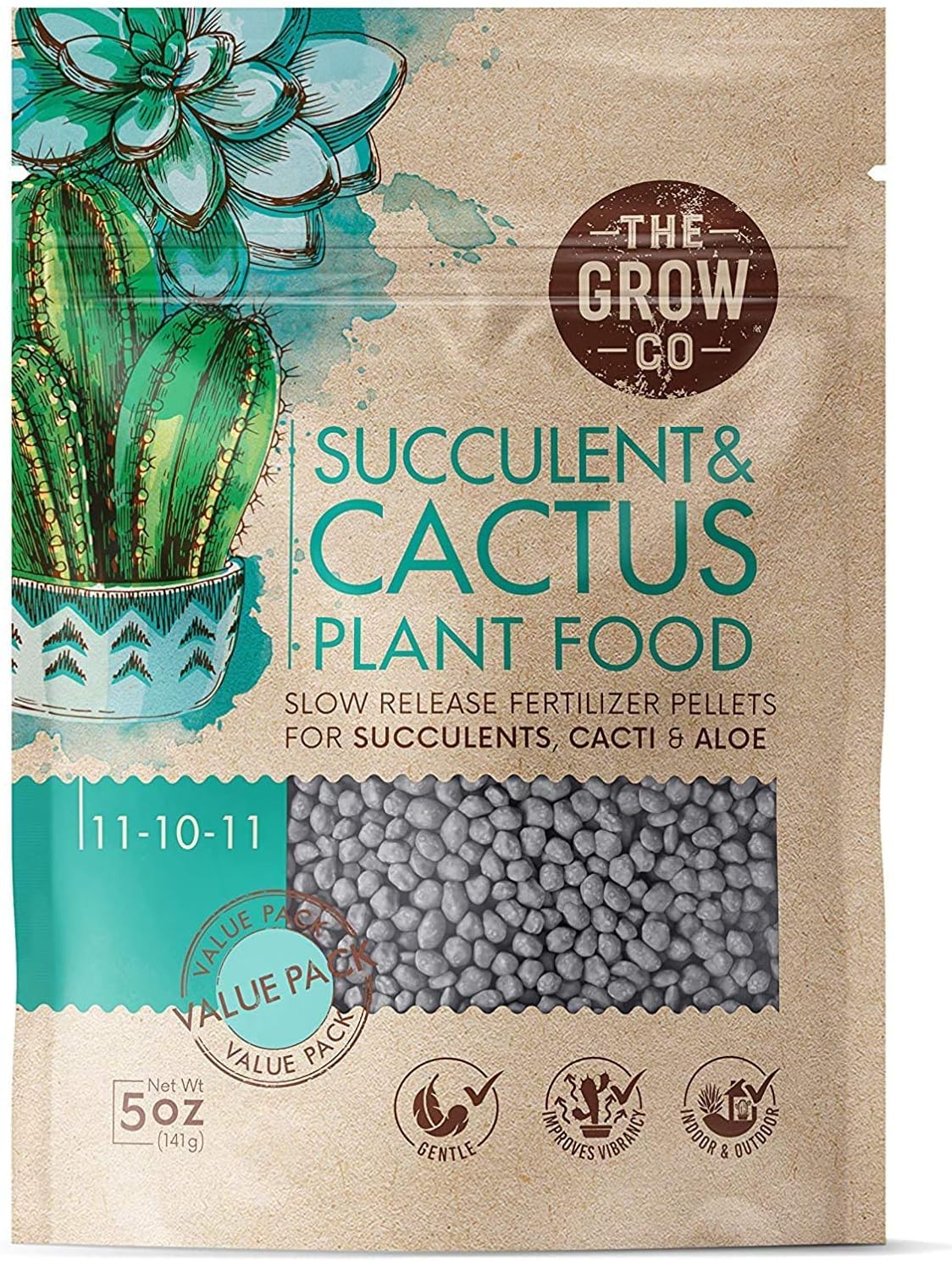
The Grow Co Slow-Release Succulent & Cactus Fertilizer, 5 oz
| Item Form | Granules |
|---|---|
| Specific Uses For Product | Plant Food,Root Development |
| Application Method | Sprinkle or Poke Holes |
| Target Species | Cactus |
| Unit Count | 5 Ounce |
This 5 oz jar of slow-release granules provides a low NPK, gentle feed designed specifically for potted cacti and succulents. You sprinkle or poke the pellets into the potting mix, water once to activate them, and the coated granules release nutrients slowly over about nine months, which reduces the need for frequent liquid applications. The product is intended for indoor and outdoor container plants and is useful when you want steady root development, improved color and occasional blooms without risking fertilizer burn. Because it is granular and ready to use, it is handy for busy growers or those who prefer a set-and-forget approach; the directions give a simple dosage by pot width. Important limits are that it is sized for container use rather than landscape planting and the small 5 oz unit will treat only a limited number of pots before needing replacement. Also, users must still follow good drainage and conservative watering practices since overwatering, not fertilizer, is the primary threat to prickly pear and other succulents.
Best for: Best for growers who want a low-maintenance, steady feeding program for potted prickly pear and other container succulents and prefer simple, infrequent applications.
Less Ideal for: Not a good match for gardeners needing to feed large outdoor beds or many mature in-ground cacti where bulk, spreadable fertilizer is required.
- Slow-release coating feeds plants consistently for up to nine months
- Low NPK formulation designed to minimize risk of fertilizer burn on succulents
- Ready-to-use granular form that is simple to apply (sprinkle or poke)
- Suitable for indoor and outdoor potted succulents and cacti including delicate varieties
- Small 5 oz container provides limited coverage for multiple or large pots
- Formulation is intended for containers and not sized or specified for in-ground garden beds
Verdict: A convenient slow-release granular fertilizer that delivers gentle, nine-month nutrition for potted prickly pear and other container succulents with minimal upkeep.
Schultz Cactus Plus Liquid Plant Food 2-7-7, 4 fl oz

| Item Form | Liquid |
|---|---|
| Specific Uses For Product | Plant Food |
| Coverage | Medium |
| Target Species | Cacti, Succulents |
| Unit Count | 4 Fluid Ounces |
Schultz Cactus Plus is a small, concentrated liquid plant food designed specifically for cacti, jade, aloe and other succulents. It is used by adding a tiny measured amount to the water you normally give your plants—the directions call for just seven drops each time you water—which makes it easy to dose for small pots and infrequent watering schedules. The 2-7-7 formula provides higher phosphorus and potassium relative to nitrogen, which supports root strength and flowering without encouraging overly lush, water-needy growth. Because it feeds through the roots and comes in a 4 ounce bottle, it is convenient for hobbyists with a modest collection and for spot-feeding individual plants. Important limitations are its small volume, which means frequent repurchase for larger collections, and the minimal dosing guidance on exact dilution per water volume beyond the drop instruction. Also take normal safety precautions when handling concentrated liquids near pets and children.
Best for: Someone building or maintaining a small-to-moderate collection of cacti and succulents who wants an easy, low-effort fertilizer to use at each watering.
Less Ideal for: Not a good fit for gardeners with large collections or commercial growers who need bulk quantities and clearer dilution ratios.
- Formulated specifically for cacti and succulents so it matches those plants' needs
- Very concentrated dosing (7 drops) makes it easy to apply to small pots and reduces waste
- Higher phosphorus and potassium helps root development and encourages blooming
- Liquid formula feeds through the roots for faster uptake than solids
- Small 4 fl oz bottle may require frequent replacement for larger collections
- Mixing instructions are minimal and do not give an exact water volume for the 7-drop dose
Verdict: A concentrated, easy-to-dose liquid fertilizer tailored to cacti and succulents for hobbyists who want simple, regular feeding.
Purived Succulent & Cactus Liquid Fertilizer, 16 oz (Makes 50 Gallons)

| Item Form | Liquid |
|---|---|
| Application Method | Soil Drench |
| Target Species | Succulent & Cactus Plants |
| Mixing Ratio | 320:1 |
| Liquid Volume | 16 fluid ounces |
This concentrated liquid fertilizer is designed specifically for succulents and cacti and comes in a 16 ounce bottle that makes about 50 gallons of feed solution. It is a water-soluble, odorless soil-drench formula with a balanced 1-2-2 nutrient profile plus calcium and micronutrients, so you can apply it directly when watering to give plants quick, gentle nourishment. Typical use is mixing 1 capful (about 2 teaspoons) per gallon and feeding every other watering during active growth or much less frequently during dormancy. Practical benefits include easy measuring, low smell, and compatibility with a wide range of desert-loving houseplants and outdoor potted cacti. Important limitations are that it is a liquid concentrate that requires dilution and careful dosing to avoid overfeeding, and it is not formulated for heavy-feeding garden plants outside the succulent/cactus group. For someone who wants dependable, no-fuss nutrient boosts for slow-growing succulent collections, this product offers a simple routine; buyers should follow the mixing and seasonal directions to avoid stressing plants.
Best for: Buyers who prioritize consistent, hassle-free care for indoor or potted succulents and cacti and want a reliable, concentrated feed that fits a regular watering routine.
Less Ideal for: Gardeners seeking a general-purpose or high-nutrient fertilizer for vegetables, lawns, or heavy-feeding ornamentals should consider other products tailored to those plants.
- High concentrate makes about 50 gallons from one 16 oz bottle, reducing purchase frequency
- Formulated specifically for succulents and cacti with a 1-2-2 nutrient balance and added calcium
- Water-soluble and odorless, applies easily as a soil drench mixed with watering
- Clear dosing instructions for routine feeding and reduced application during dormancy
- Requires accurate dilution and dosing to avoid overfertilizing sensitive succulent roots
- Not intended for general garden or heavy-feeding plants outside succulents and cacti
Verdict: A concentrated, easy-to-use liquid feed that reliably supplies balanced nutrients to keep succulents and cacti healthy with minimal fuss.
Miracle-Gro Indoor Plant Food for Cactus & Succulent, 8 fl. oz. (2-Pack)

| Item Form | Liquid |
|---|---|
| Application Method | Directly to soil or mixed with water |
| Target Species | Cactus and Succulents |
| Mixing Ratio | 8 pumps:1 quart of water |
| Unit Count | 16 Fluid Ounces |
This two-pack of Miracle-Gro Indoor Plant Food for Cactus & Succulent is a liquid fertilizer designed to give indoor succulents an easy, regular nutrient boost. It is formulated with phosphorus and potassium and can be applied directly to soil or mixed with water (mixing ratio 8 pumps per quart) so you can either feed while watering or spot-treat small pots. Typical use is every two weeks for active growth or to help plants recover from stress. The pump dosing and small 8 fl. oz. bottles make it convenient for desktop collections and for targeting individual containers. Practical benefits include fast uptake compared with granular feeds and a formulation tailored for sun-loving succulents and cacti. Important limitations are that it provides low coverage per bottle so frequent repurchasing may be necessary for larger collections, and liquid feeding requires regular application on a schedule rather than a set-and-forget spike. Also it does not list a specific NPK breakdown on the label beyond key elements, so growers wanting precise ratios may prefer a product with full NPK percentages.
Best for: A practical indoor plant owner who manages a small to medium collection of cacti and succulents and values easy, regular liquid feeding to keep plants resilient and actively growing.
Less Ideal for: Gardeners with large collections or outdoor cactus beds who prefer low-maintenance, slow-release fertilizers or precise NPK control should consider other options.
- Formulated specifically for cacti and succulents with phosphorus and potassium to support resiliency
- Flexible application: pump directly into soil or mix 8 pumps per quart to feed while watering
- Small bottles and pump dispensing make it easy to dose for small pots and desktop collections
- Feeds instantly as a liquid, so plants receive nutrients more quickly than slow-release granules
- Low coverage per 8 fl. oz. bottle means frequent purchases for larger collections
- No full NPK percentages listed in the product details for growers who want exact ratios
Verdict: A convenient liquid feed that makes regular, targeted nutrition for indoor cacti and succulents simple and fast.
TPS NUTRIENTS Succulent Fertilizer Liquid Plant Food, 8 oz

| Brand | TPS NUTRIENTS |
|---|---|
| Item Form | Liquid |
| Target Species | Cactus |
| Unit Count | 8 Fluid Ounces |
| Mixing Ratio | 1 teaspoon per gallon |
This 8 ounce liquid succulent fertilizer from TPS Nutrients is designed to feed potted succulents and cacti without encouraging leggy, stretched growth. It mixes at a very dilute rate (about 1 teaspoon per gallon) so you can feed small indoor or outdoor containers safely and avoid nutrient buildup. The product promotes firmer leaves, compact habit, and better root development, which is useful for Echeveria, Jade, and other common cacti and succulents. It is a liquid formula, so it dissolves quickly and is easy to apply with routine watering. Practical benefits include a gentle NPK balance targeted at preventing overvigorous top growth and a coverage level suited to medium-sized collections. Limitations are the small bottle size if you have many plants and the need to follow safety warnings to keep it away from children and pets. For gardeners who prefer low-risk, easy-to-control feeding, this is a straightforward option that supports steady, compact growth.
Best for: For cautious plant owners who want a mild, easy-to-control fertilizer to maintain compact, healthy succulents and cacti without risking overgrowth.
Less Ideal for: Not the best choice for gardeners with large outdoor beds or commercial growers who need bulk quantities or higher-strength formulations.
- Formulated specifically to prevent leggy growth and encourage compact succulent form
- Easy-to-mix liquid formula with a very dilute mixing ratio for safe container feeding
- Supports root development and nutrient uptake for healthier plants
- Suitable for indoor and outdoor use on common succulents and cacti
- Small 8 oz bottle may require frequent repurchasing for larger collections
- Not intended for edible food crops and requires careful storage away from children and pets
Verdict: A gentle, easy-to-use liquid fertilizer ideal for risk-averse succulent and cactus owners who want compact, healthy plants.
Choosing the Right Fertilizer for Prickly Pear Cactus: Key Factors to Consider
Nutrient Ratio and NPK Balance
Prickly pear cactus prefer modest nitrogen compared with phosphorus and potassium. Too much nitrogen encourages soft, weak pads that are more prone to rot and pest issues. A fertilizer with lower N and adequate P and K supports stronger pad tissue, flowering, and fruiting.
Also look for micronutrients like magnesium and calcium in small amounts because they help cell wall strength and reduce tip burn. Avoid fertilizers that list only a generic "complete" blend without giving actual NPK numbers or micronutrient details.
Release Profile and Application Frequency
How a fertilizer releases nutrients affects plant response. Fast-release soluble fertilizers show quick results but can also cause sudden flushes of growth and raise salt levels in the root zone if overapplied. Slow-release granular options provide steadier feeding, which is safer for cacti that evolved in low-nutrient soils.
Consider how often you want to fertilize. If you prefer a set-and-forget approach, a controlled-release pellet with a growing-season duration can reduce the chance of overfeeding. For potted prickly pears where drainage and salt buildup matter, light, infrequent applications of a dilute water-soluble formula often work better.
Salt Index and Root Safety
High salt fertilizers can concentrate in potting mixes and harm shallow-rooted succulents. Prickly pear roots are adapted to lean soils, so they are more sensitive to excess soluble salts than many garden plants. Choose products labeled low-salt or formulated for succulents and cacti when possible.
When using granular or tablet fertilizers, remember that uneven placement can create hot spots. For containers, flush the potting mix with clean water occasionally to prevent salt accumulation and watch for tip browning or slowed growth as signs of buildup.
Formulation Type and Ease of Use
Fertilizers come as water-soluble powders, granular slow-release pellets, or liquid concentrates. Each has practical implications. Soluble powders and liquids let you apply a weak solution frequently and are easy to measure for small plants. Granules reduce application frequency but require more care in placement and dosing.
Think about your routine and tools. If you have many potted cactus, a water-soluble option that mixes into a watering can may be quickest. For landscape beds, a broadcast or root-zone slow-release product is often more convenient and reduces disturbance to established plants.
Container Versus In-Ground Suitability
Growing prickly pear in pots changes fertilizer needs. Containers have limited soil volume and can accumulate salts quickly, so dilute, less frequent feeding is safer. In-ground plants benefit from more robust slow-release feeding because native soils buffer salts and root systems spread beyond the immediate application zone.
Also consider the potting mix. A fast-draining cactus mix will leach more quickly, which can mean more frequent light feedings, whereas heavier soils retain nutrients longer and may need fewer applications.
Application Timing and Seasonal Considerations
Prickly pear cactus have distinct active growth and dormancy periods tied to warm seasons. Apply fertilizer during the active growth window in spring and early summer when pads expand and flowers form. Avoid fertilizing during hot drought stress or winter dormancy because the plant will not use those nutrients and they may promote weak late-season growth.
A common approach is a few light feedings during the growing season rather than a single heavy application. This aligns nutrient supply with the plant's uptake and reduces stress risk from sudden nutrient influx.
How Fertilizer Affects Blooming and Fruit Set
Flowering and fruiting in prickly pear are influenced by phosphorus and potassium as much as by nitrogen. Adequate phosphorus supports bud formation while potassium helps overall plant vigor and fruit development. If you want more blooms and fruit, choose a fertilizer with a balanced or slightly bloom-enhancing ratio rather than one that is heavily nitrogen-skewed.
- Phosphorus supports bud and root development
- Potassium aids stress tolerance and fruit quality
- Avoid high nitrogen during bloom stage to prevent foliage growth at bloom expense
Adjusting Feedings for Young Plants Versus Established Pads
Young pads and newly transplanted plants are more sensitive to fertilizer strength and salt levels. For new transplants, start with a very dilute solution or wait until the plant shows stable growth. Established plants can handle slightly stronger feeding but still prefer moderation compared with many ornamental garden plants.
- Use quarter-strength solutions for seedlings or recent transplants
- Increase concentration gradually as the plant matures
- Watch growth rate rather than calendar alone to adjust feeding
Mixing and Applying Fertilizer in Containers
Containers require careful measurement and mixing. Dissolve water-soluble formulas thoroughly and apply at reduced strength to avoid root burn. After applying soluble feeds, flush the pot every few months with plain water to move accumulated salts out of the media.
For granular products, avoid placing them directly against the plant crown or stem. Spread granules evenly and lightly work them into the top inch of soil to reduce the risk of concentrated contact with roots.
- Measure precisely for small pots to avoid overdosing
- Flush containers periodically to prevent salt buildup
- Place granules evenly, not touching stem base
Organic Versus Synthetic Options for Prickly Pear
Organic fertilizers release nutrients slowly as microbes break them down, which often aligns well with cactus needs. They also tend to have lower soluble salt levels. Synthetic formulas can offer precise NPK ratios and predictable results when used correctly.
Consider soil biology and your gardening philosophy. Organic amendments improve long-term soil structure and microbial life, but may require more frequent application in fast-draining mixes. Synthetic options offer convenience and clear dosing directions that many gardeners appreciate.
- Organics are gentler and build soil life
- Synthetics give predictable nutrient availability
- Both types can work when matched to application frequency and soil drainage
Signs of Overfertilizing and How to Respond
Watch for soft, swollen pads, leaf-tip discoloration, slowed growth, or sudden dieback in roots or pads as signs of overfertilizing. In pots you may notice white crusty deposits on the soil surface, which indicate salt accumulation.
If overfertilizing is suspected, stop feeding and flush containers well with clean water. For in-ground plants, deep water thoroughly to leach salts away from the root zone. Reduce future applications and switch to a lower-strength or slow-release option.
- Soft or floppy pads suggest excess nitrogen
- White crust on soil means salt buildup
- Flush pots or deep-water beds to leach salts
How We Chose the Best Fertilizer for Prickly Pear Cactus
We focused on fertilizers that suit the specific physiology and growing conditions of prickly pear cactus. Selection filters prioritized balanced or bloom-forward nutrient ratios with modest nitrogen levels, formulations that allow controlled feeding rather than sudden nutrient spikes, and products available in forms gardeners commonly use: granular, water-soluble, and slow-release. Evaluation criteria included nutrient ratio and microelements, release profile and application ease, suitability for containers and in-ground plantings, and whether the formula avoids excess salts that can stress succulents. We excluded general high-nitrogen lawn and foliage fertilizers, any product designed exclusively for acid-loving plants, and mixes with unclear ingredient lists. We also considered practicality: whether directions are clear for small-scale home gardeners, how easy a product is to measure and apply, and whether it performs across typical prickly pear situations such as full sun beds, rocky soils, and patio containers. The resulting shortlist represents options that match those filters and the scoring criteria used in our per-product evaluations.
FAQ
How often should I fertilize a prickly pear cactus?
Usually fertilize during the active growing season with light feedings every 4 to 6 weeks or use a single slow-release application in spring. Frequency depends on whether the plant is in a container or the ground and on the product's release profile.
What NPK ratio is best for prickly pear cactus?
Aim for a low-to-moderate nitrogen level with balanced phosphorus and potassium. Ratios that emphasize bloom and root support rather than high nitrogen deliver firmer pads and better flowering.
Can I use organic fertilizer on prickly pear cactus?
Yes. Organic fertilizers release nutrients slowly and tend to be lower in soluble salts, which suits prickly pear. They work particularly well when incorporated into a well-draining mix or applied as light top-dressings.
Will fertilizer make my prickly pear grow too fast?
Overuse of high-nitrogen fertilizers can cause rapid, weak pad growth. Controlled feeding with appropriate NPK and correct timing reduces that risk and encourages stronger, more resilient pads.
Do I need to fertilize potted prickly pear differently from ground-planted ones?
Yes. Containers concentrate salts and have limited nutrient reserves, so use more dilute solutions and flush pots occasionally. In-ground plants tolerate less frequent, slower-release feeding because surrounding soil buffers nutrients.
When is the worst time to fertilize a prickly pear?
Avoid fertilizing during winter dormancy or during severe drought stress. Feeding when the plant is not actively growing can promote weak growth and increase stress risk.
Final Verdict
Choosing the right fertilizer for prickly pear cactus means prioritizing nutrient balance, low salt impact, and a release profile that matches how you grow them. Favor formulations with modest nitrogen and clear directions for dilute applications in containers or slow-release options for landscape beds. Balance convenience and plant safety: if you want low-maintenance feeding, choose controlled-release products; if you need more control in pots, use dilute soluble feeds and flush regularly. Focus on timing and restraint to get firmer pads, reliable blooms, and healthy fruit set.
