

Note: This article contains affiliate links. If you click on these links and make a purchase, I may earn a small commission at no extra cost to you. This helps support my research and content. Read my full affiliate disclosure here.
If white clover is spreading across your lawn or landscape, choosing the right herbicide matters for effective removal without damaging desirable turf or plants. This guide covers seven shortlisted herbicides specifically for white clover control and focuses on how they perform in real garden situations. You will get practical information on effectiveness, turf safety, and application style so you can match a product to your yard, seeding plans, or maintenance routine. Read on to understand the evaluation criteria and which attributes matter for your situation.
Top Picks at a Glance
| Best Overall The best all-around choice for most situations | T-Zone Turf Herbicide, 1 Quart (PBI Gordon) |  |
| Best Quality Built to a higher standard if you want something more solid | Tenacity Turf Herbicide (8 fl oz) |  |
| Best Value The sweet spot between price and what you get | Ortho WeedClear Ready-to-Spray Weed Killer for Lawns, 32 fl. oz. |  |
| Best Budget The cheapest option that still gets the job done reliably | Spectracide Weed Stop for Lawns Concentrate, 40 oz |  |
| Highest Rated A top-rated pick with lots of positive feedback | T-Zone SE Broadleaf Herbicide, 1 Gallon |  |
| Most Popular A crowd favorite that many people choose with confidence | Ortho WeedClear Weed Killer for Lawns with Comfort Wand, 1 gal |  |
| Best Seller A high-volume bestseller chosen again and again | Roundup Weed & Grass Killer with Comfort Wand, 1.33 gal. |  |
T-Zone Turf Herbicide, 1 Quart (PBI Gordon)
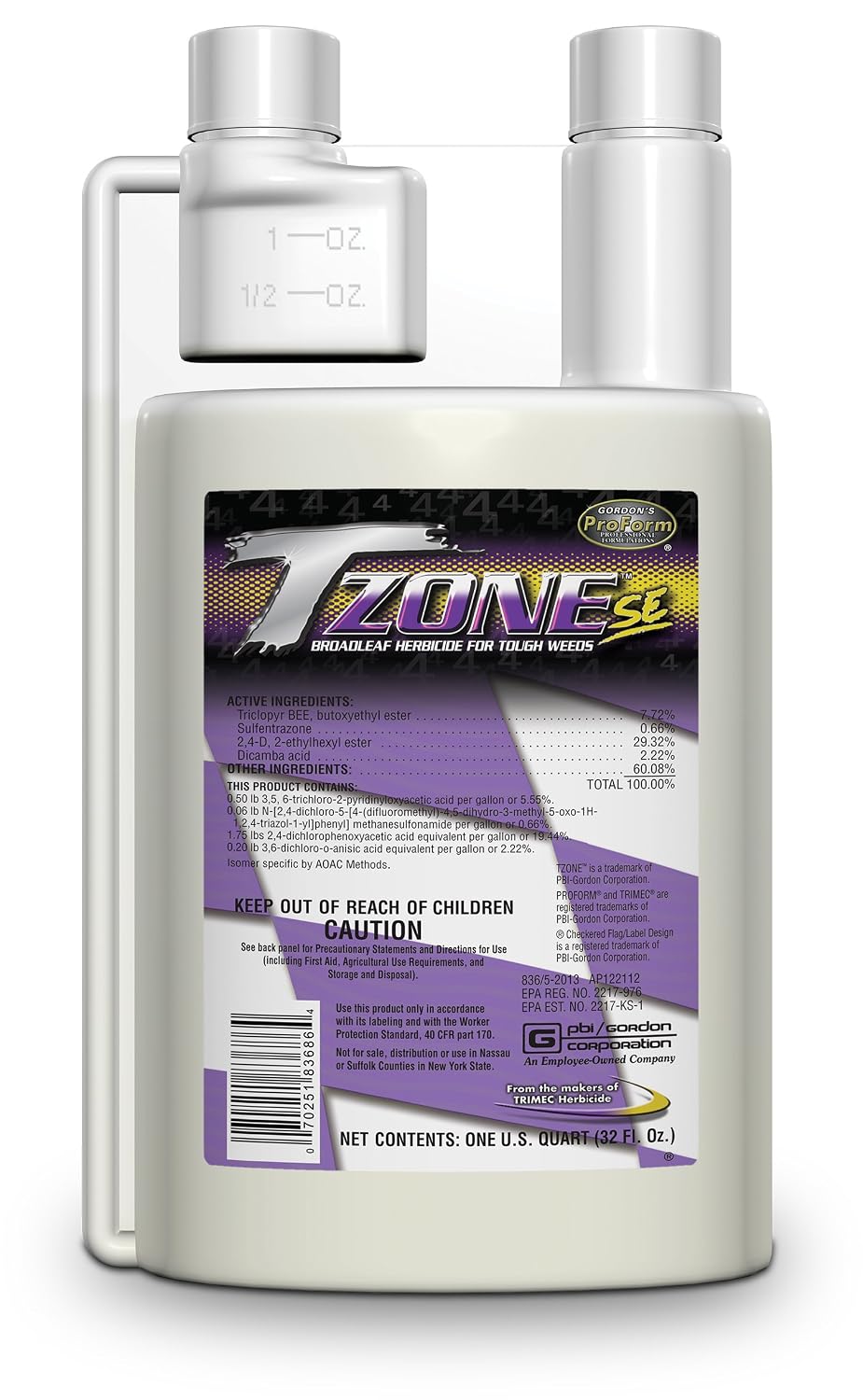
| Unit Count | 32 Fluid Ounces |
|---|---|
| Item Form | Liquid |
| Coverage | broad-leaf weeds, grassy weeds |
| Active Ingredients | Dicamba, triclopyr, sulfentrazone |
T-Zone Turf Herbicide is a ready-to-mix liquid designed to kill a broad spectrum of broadleaf weeds and suppress some grassy species in lawns. It contains multiple active ingredients including triclopyr and dicamba that produce relatively fast visible control and provide a cool-weather application window down to about 50°F. Typical use is spot-treating patches or broadcast applications on established turf where clover and other broadleaf weeds are present; follow label directions for mixing rate and protective equipment. The formulation also lists sulfentrazone, which helps with yellow nutsedge suppression and expands the product's utility beyond just clover control. Practical benefits include versatile weed coverage and usefulness on residential, commercial, and turf settings such as golf sites. Limitations to expect are the standard safety precautions for potent herbicides, the need to avoid spray drift onto desirable plants, and that repeat treatments may be required for deep or extensive infestations.
Best for: Homeowners and property managers who want a dependable, all-purpose weed control product for established lawns and turf where clover and other broadleaf weeds are common, and who are comfortable following label safety and application instructions.
Less Ideal for: Gardeners who need an organic or non-chemical method of clover control or who plan to use the product around sensitive ornamental beds or vegetable gardens where drift is a concern.
- Broad-spectrum control of many broadleaf weeds including clover
- Contains multiple active ingredients for faster visual response
- Effective at cooler temperatures down to about 50°F
- Includes an ingredient that helps suppress yellow nutsedge
- Requires protective gear and careful handling due to strong active ingredients
- Risk of spray drift damaging nearby desirable plants
- May need repeat applications for persistent or heavily established weeds
Verdict: Choose T-Zone when you need a versatile, fast-acting herbicide that tackles clover and other broadleaf weeds across lawns and turf, including cool-weather applications.
Tenacity Turf Herbicide (8 fl oz)

| Unit Count | 8 Fluid Ounces |
|---|---|
| Item Form | Liquid |
| Coverage | 2000 ft^2 per 1sp of product |
| Active Ingredients | Mesotrione |
Tenacity is a concentrated turf herbicide formulated for both pre-emergence and post-emergence control of common lawn weeds. Applied as a spray, it works systemically and provides contact plus residual activity, so it can stop weeds as they emerge and suppress existing seedlings. The product lists mesotrione as the active ingredient and covers a wide range of targets that includes clover and dandelion, which makes it suitable for tackling persistent white clover in lawns. Because one 8 ounce bottle covers a large area when mixed per label directions, it is useful for treating multiple small to medium lawns or spot-treating recurring trouble spots. Important limitations are that it is a turf-selective herbicide, so correct application rates and timing are crucial to protect desirable grasses, and it requires careful mixing and spraying to get uniform coverage. Users should follow label instructions for turf type compatibility and reentry intervals to avoid turf injury.
Best for: Gardeners focused on effective, performance-driven weed control in lawn turf who are willing to follow label directions for mixing and application timing.
Less Ideal for: People seeking a non-chemical or instant knockdown solution or those who do not want to manage precise application rates and turf compatibility.
- Selective pre- and post-emergent action lets you control clover at multiple growth stages
- Contains mesotrione, an effective active ingredient against many broadleaf weeds
- Concentrated 8 fl oz size covers large lawn areas when mixed per label
- Provides residual activity to reduce short-term re-infestation
- Requires careful rate and timing to avoid damage to some turf species
Verdict: A concentrated, mesotrione-based turf herbicide engineered to deliver effective control of white clover when applied correctly.
Ortho WeedClear Ready-to-Spray Weed Killer for Lawns, 32 fl. oz.

| Item Form | Liquid |
|---|---|
| Coverage | 16000 square_feet |
| Unit Count | 32 Fluid Ounces |
| Item Type Name | Grass (When Used as Directed), Kills Dandelion & Clover |
| Active Ingredients | Herbicide |
Ortho WeedClear Ready-to-Spray is a hose-end lawn herbicide formulated to control broadleaf weeds such as clover and dandelions without harming turf when applied according to the label. You connect the bottle to a garden hose, flip the on switch and spray affected areas for spot or area treatments; the formula contains three active ingredients aimed at quickly wilting weeds with visible results in hours and rainproof protection after about an hour of drying. The product claims coverage large enough for average yards — one 32 fl. oz. bottle treats up to 16,000 sq ft in Southern lawns (8,000 sq ft in Northern lawns) — and is best applied in spring or fall when weeds are actively growing. Practical benefits include simple hose-end application, fast visible action, and targeted broadleaf control that limits damage to lawn grass. Important limitations are the reliance on correct application timing and technique for best results and that it is designed for broadleaf weeds specifically rather than grassy or woody invasives, so multiple treatments or different products may be needed for tougher species.
Best for: Buyers who want a straightforward, low‑effort solution to remove clover and other broadleaf weeds across a lawn and prefer a hose‑connected spray system for fast coverage.
Less Ideal for: Gardeners needing control of grassy weeds, deep-rooted brush, or those seeking an organic or non-chemical approach should consider other methods or specialized products.
- Hose‑end ready-to-spray design makes application quick and simple for DIY users.
- Targets over 250 common broadleaf weeds including clover and dandelion.
- Visible results in hours and becomes rainproof about one hour after drying.
- Large stated coverage per bottle for typical lawn sizes.
- Formulated to avoid harming established grass when used as directed.
- Not formulated for grassy weeds or woody brush so it will not control all lawn weed types.
- Effectiveness depends on treating weeds when actively growing which may require timing visits.
- Contains herbicide active ingredients so label precautions and re-entry instructions must be followed.
Verdict: A quick, easy hose‑end solution for knocking out white clover and other broadleaf lawn weeds without harming the grass when applied as directed.
Spectracide Weed Stop for Lawns Concentrate, 40 oz

| Unit Count | 40 Fluid Ounces |
|---|---|
| Item Form | Liquid |
| Coverage | 20000 square_feet |
Spectracide Weed Stop for Lawns is a concentrated liquid weed killer intended for spot or broadcast treatment of broadleaf lawn weeds such as clover, dandelion and chickweed. You mix the 40 oz bottle with water and apply it with a garden sprayer (sold separately); a single bottle treats up to 20,000 sq ft when mixed at label rates. The formula kills by contact down to the root and claims visible results in hours and full control within weeks, with rainfast protection after about six hours. Practical benefits include broad weed coverage, compatibility with routine lawn care timing (apply in spring or fall and after mowing) and the convenience of a concentrate for multiple applications or large yards. Limitations are that you must follow label mixing and temperature guidance for safe, effective use and a sprayer is required; very tough weeds may need repeat spot treatments after a few weeks. Follow safety directions to avoid skin or eye contact and keep children and pets away until treated areas are dry.
Best for: Homeowners who want an affordable, broad-spectrum herbicide to control clover and other common broadleaf weeds across a lawn and who are comfortable mixing and applying concentrated products with a sprayer.
Less Ideal for: People who prefer ready-to-use sprays, who do not want to handle concentrated chemicals, or who need an herbicide for grasses or non-broadleaf weeds.
- Concentrated formula covers up to 20,000 sq ft per bottle when mixed as directed
- Targets 200+ listed broadleaf weeds including white clover, dandelion and chickweed
- Fast-acting contact formula with visible results in hours and root-killing action
- Rainfast in about six hours so light rain shortly after application is less likely to reduce effectiveness
- Requires a separate garden sprayer and correct mixing for safe application
- May need repeat spot treatments for particularly persistent weeds
Verdict: A budget-friendly concentrate that effectively controls white clover and other broadleaf lawn weeds across large lawns when mixed and applied properly.
T-Zone SE Broadleaf Herbicide, 1 Gallon

| Unit Count | 128 Fluid Ounces |
|---|---|
| Item Form | Liquid |
| Coverage | Broadleaf Weeds and Nutsedge |
| Active Ingredients | Sulfentrazone, triclopyr |
T-Zone SE is a ready-to-mix liquid herbicide designed for spot or broadcast application on turf to target persistent broadleaf weeds such as white clover, wild violet, ground ivy and oxalis. It combines sulfentrazone and triclopyr among other actives to improve control in cool conditions and to speed visible control on difficult species. Typical use is dilution according to the label and application with a handheld sprayer or tank sprayer across affected areas; it is suitable for treating patches of clover or larger turf sections when used as directed. Practical benefits include strong activity on hard-to-kill broadleaves and cooler-season performance that many single-ingredient products lack. Important limitations are regulatory restrictions in some states and the need to follow label directions closely to protect desirable turf and avoid off-target damage; it also provides only suppression, not full control, of young nutsedge. This product works best as part of a turf management plan alongside proper mowing and fertilization.
Best for: Gardeners and lawn caretakers who prioritize dependable control of persistent cool-season broadleaf weeds and who follow label directions for safe application.
Less Ideal for: People who need a non-restricted product in restricted states or who want a dedicated nutsedge-specific solution for established nutsedge stands.
- Effective on a wide range of tough cool-season broadleaf weeds including white clover
- Formulated for improved cool-weather performance compared with single-ingredient options
- Liquid formulation allows dilution and application with common sprayers
- Contains multiple active ingredients for broader spectrum control
- Restricted for sale or use in certain jurisdictions which limits availability in those areas
- Provides suppression, not complete control, of young nutsedge
Verdict: Buy this when you need a reliable, cool‑weather broadleaf herbicide that tackles tough clover and other hard-to-control turf weeds.
Ortho WeedClear Weed Killer for Lawns with Comfort Wand, 1 gal

| Item Form | Spray |
|---|---|
| Coverage | 16000 square feet |
| Unit Count | 128 Fluid Ounces |
| Kills listed weeds | 250+ weeds |
Ortho WeedClear comes as a 1 gallon ready-to-use spray with an attached Comfort Wand for targeted spot or broadcast applications. It combines three active ingredients formulated to control over 250 broadleaf weeds, including white clover, dandelions and chickweed, and produces visible dieback in hours. The wand gives continuous, precise spraying so you can treat clover patches without soaking surrounding turf, and the formula is rainproof after about an hour once dry. For larger areas you can mix per label directions to cover broader swaths. Important limitations are that it is a selective herbicide for broadleaf weeds only and works best on actively growing plants in spring or fall; it will not control grassy weeds and needs correct timing and drying before people or pets re-enter treated zones. Overall this is a practical, easy-to-use option for homeowners wanting fast clover control with a more precise applicator than a pump sprayer.
Best for: Homeowners who want a straightforward, targeted solution for clover and other broadleaf lawn weeds and who value an applicator that reduces overspray and improves accuracy.
Less Ideal for: Those seeking a non-chemical or all-in-one grassy weed control solution should consider alternative products or integrated methods rather than this selective broadleaf herbicide.
- Targets broadleaf weeds including white clover and dandelions with three active ingredients.
- Comfort Wand delivers continuous, precise application for spot-treating without pumping.
- Rainproof in about one hour for quicker re-use of lawn areas.
- Visible results in hours, allowing you to confirm effectiveness quickly.
- Not effective against grassy weeds so additional products may be needed for mixed weed problems.
- Requires application when weeds are actively growing for best results, limiting ideal windows.
- Contains chemical herbicides so safety precautions and label directions must be followed.
Verdict: A ready-to-use, wand-equipped herbicide that reliably and quickly knocks back white clover and other broadleaf lawn weeds with precise spot control.
Roundup Weed & Grass Killer with Comfort Wand, 1.33 gal.

| Item Form | Liquid |
|---|---|
| Coverage | 400 sq. ft. |
| Liquid Volume | 1.33 gallons |
This 1.33 gallon Roundup kit pairs a concentrated liquid formula with a Comfort Wand for targeted spraying of weeds like white clover, dandelion, and crabgrass. The wand delivers a continuous one-touch spray that makes edging, walkways, and garden bed touch-ups easier without needing a separate sprayer. According to the label the formula works quickly—visible dieback in hours and rainproof in about 30 minutes—so treated patches of clover should brown out fast on warm days. Use is straightforward: apply to actively growing plants on calm days and keep people and pets off treated areas until dry. Limitations to note are the non-selective action, so you must avoid overspray onto desirable lawn or garden plants, and the product requires careful handling around plantings where you want to keep vegetation. Coverage is about 400 sq ft per container, suitable for small to medium problem areas but you may need multiple containers for larger lawns. For cautious users follow label directions closely and wait the recommended interval before replanting.
Best for: Homeowners who want a straightforward, fast-acting solution to eliminate white clover patches and other broadleaf weeds around beds, paths, and foundations and who prefer a built-in wand for controlled spraying.
Less Ideal for: People who need a selective clover control that preserves lawn grass or who plan to treat very large lawns without buying additional product.
- Comfort Wand with one-touch continuous spray simplifies targeted application and reduces hand fatigue
- Fast visible results in hours and becomes rainproof in about 30 minutes for quick treatments
- Kills broadleaf weeds and many grasses to the root, including white clover and dandelion
- Ready-to-use container covers roughly 400 sq ft for small to medium treatment areas
- Non-selective formula that will damage desirable plants if oversprayed
- Single 1.33 gal size may require multiple purchases for larger lawns
Verdict: Choose this kit if you want a ready-to-use, fast-acting herbicide with an integrated wand for precise spot treatment of white clover and other broadleaf weeds.
Choosing the Right Herbicide for White Clover: Key Factors to Consider
Effectiveness on Established Versus New Clover
White clover can behave differently depending on how established it is. Young seedlings are usually more vulnerable to foliar-applied herbicides, while mature, deep-rooted patches may require repeat treatments or systemic active ingredients that translocate to roots. Understanding the growth stage helps set expectations for how fast you will see decline and whether a single application will suffice.
For patchy infestations, spot treatments can concentrate active ingredient where needed without treating the entire lawn. For widespread problems, plan for follow-up treatments and integrate cultural controls like improving turf density to reduce clover reinvasion.
Turfgrass Compatibility
Different turfgrasses tolerate broadleaf herbicides to varying degrees. Some active ingredients are labeled safe for a wide range of warm- and cool-season grasses, while others may injure sensitive varieties. Check typical turf responses because poor compatibility can cause thinning and create more opportunities for clover to return.
Timing also matters: applications made during turf stress from drought or heat increase the risk of damage. Applying when grass is actively growing and healthy reduces turf injury and helps the lawn outcompete clover after treatment.
Application Method and Equipment
Herbicides for clover come in ready-to-use sprayers, concentrate bottles for hose-end sprayers, and concentrates for pump or backpack sprayers. The method affects accuracy, coverage, and waste. Ready-to-use and hose-end options are convenient for spot treatments but can be costly for larger areas. Concentrates allow precise mixing for broadcast applications and better cost-per-area on bigger lawns.
Nozzle choice, spray volume, and weather at time of application influence efficacy. Low-drift nozzles and applying on calm days reduce off-target movement. For systemic products, thorough leaf wetting improves translocation into roots.
Replanting and Seeding Restrictions
Some herbicides leave residual activity that can interfere with overseeding or planting desirable plants. If you plan to reseed bermudagrass, fescue, or install new plants soon after treatment, check the label for minimum wait periods. Shorter replanting windows allow quicker restoration of turf density after clover control, while longer restrictions may require delaying seeding or using nonchemical methods in the interim.
Knowing the timeline helps you coordinate clover control with seasonal lawn care tasks like aeration and topdressing.
Environmental and Safety Considerations
Herbicide choice affects non-target plants, pollinators, and nearby water features. Some formulations are more prone to run-off or can harm broadleaf ornamentals if drift occurs. Make application decisions with buffer zones, follow label restrictions for flowering weeds to protect pollinators, and avoid use before heavy rain to reduce off-site movement.
Personal protective equipment and safe storage are important. Pay attention to label directions for mixing, disposal, and pet or child reentry intervals to reduce exposure risks.
Cost Efficiency and Coverage
Cost per unit can be misleading unless you consider coverage rate and the number of applications likely required. Concentrates often have lower long-term cost per square foot for large areas, while ready-to-use products are convenient for isolated patches. Calculate how many treatments you might need based on infestation size and expected persistence to estimate total expense.
Also factor in ancillary costs like renting a sprayer or buying replacement nozzles. Efficient coverage reduces overlap and wasted chemical, improving both economics and environmental outcomes.
When to Treat Clover in the Lawn
Treat clover when it is actively growing and leaves are full and turgid. Early spring and early fall are often best because clover is putting energy into leaf growth and translocation to roots is effective for systemic herbicides. Avoid treating during extreme heat or drought when plants are stressed and herbicide uptake is reduced.
If you plan to overseed, schedule treatments so you meet the replanting interval of the product you use. For spot-treating patches, wait for calm, dry weather to limit drift and ensure thorough leaf coverage.
- Treat on calm days with moderate temperatures
- Avoid applications during drought stress
- Coordinate treatment with seeding windows
Integrating Cultural Controls With Chemical Treatment
Chemical control is most effective when combined with cultural practices that reduce clover's advantage. Improve turf density through proper mowing, fertilization targeted to your grass type, and correcting soil compaction. Thicker, healthier grass shades out clover seedlings and reduces recolonization.
Address soil fertility and pH if clover persists in bare or nutrient-poor areas. In some cases clover thrives where nitrogen is low because it fixes its own. A balanced maintenance plan reduces reliance on repeated herbicide use.
- Mow at the recommended height for your grass species
- Repair thin spots with appropriate seeding after replant interval
- Topdress or aerate compacted areas to improve root growth
Spot Treatment Techniques
For isolated clover patches, spot treatments limit chemical use and lower risk to surrounding plants. Use a handheld sprayer or a pump sprayer with a narrow nozzle to target foliage. Ensure good coverage without runoff and avoid overapplication that can harm nearby grasses or ornamentals.
Mark treated areas and monitor progress over 7 to 21 days. Repeat only if regrowth occurs and follow labeled minimum intervals between applications.
- Mask or cover sensitive ornamentals when spraying
- Use low-pressure settings to reduce drift
- Rinse equipment thoroughly after use
Managing Clover in Mixed Landscapes
In landscapes with ornamental beds, trees, and turf, choose methods that protect desired plants. Broadcast treatments can be effective but require careful timing and calibration. Consider selective spot treatments in beds and hand-pulling or mulching where herbicide use would endanger desirable species.
For lawns adjacent to garden beds, create clear buffer zones and use physical barriers or targeted application tools to prevent off-target movement.
- Use barrier methods when treating near ornamentals
- Prefer targeted application tools in mixed plantings
- Consider nonchemical options in pollinator-focused areas
Dealing With Recurrent Clover
If clover returns after treatment, reassess the growing conditions that favor it. Recurrent problems often signal thin turf, compacted soil, or low nitrogen. Correcting these underlying issues reduces the need for repeated herbicide applications.
When follow-up chemical control is needed, rotate modes of action if label guidance allows, and keep records of treatments to avoid overuse of a single active ingredient.
- Improve turf density to crowd out seedlings
- Address soil fertility and compaction
- Document treatments and observe label guidance on rotations
How We Chose the Best Herbicide for White Clover
We selected products that have clear labels or formulations targeting broadleaf weeds and documented activity on clover species. Selection emphasized options that gardeners can use on typical lawn grasses and in landscape beds with instructions for spot or broadcast treatment. Evaluation focused on measurable, garden-relevant factors: knockdown speed against clover, selectivity and turf safety to avoid harming grass, persistence and reapplication interval, ease of use including spray or ready-to-use formats, and flexibility for spot-treating versus treating larger areas. We favored formulations with straightforward application windows around seeding and that have guidance for mixing and tank compatibility. We excluded products without clear instructions for use on white clover or formulations intended only for agricultural row crops. We also excluded herbicides lacking safety directions or that require commercial licensing. The result is a set of options suitable for homeowners and small property managers balancing control effectiveness with landscape care.
FAQ
Can I treat white clover without harming my grass?
Often you can if you choose a selective herbicide labeled for use on your turf type and apply at the recommended rate. Timing treatments when grass is healthy lowers the risk of injury. Always test a small area if you are uncertain about turf tolerance.
How long after treatment should I wait to reseed my lawn?
It depends on the product. Some herbicides allow overseeding within a few weeks, while others require several months. Check label replanting intervals before treating if you plan to reseed soon.
Is spot treatment better than broadcasting for clover control?
Spot treatment reduces chemical use and limits exposure to non-target plants, making it a good choice for isolated patches. Broadcast applications can be more efficient for widespread infestations but require careful calibration to avoid turf damage.
Will a single application eliminate a mature clover patch?
Mature patches may need multiple applications or combined cultural tactics. Systemic products improve root control, but follow-up treatments are often necessary to catch regrowth from crowns or nearby seedlings.
Are there nonchemical ways to reduce clover in lawns?
Yes. Improving turf density through proper mowing, fertilization, overseeding, and addressing compaction are effective long-term strategies. Manual removal and mulching around beds also help reduce clover without chemicals.
Can I apply herbicide when clover is flowering?
Applying during bloom can harm pollinators. If control is necessary, avoid spraying flowers directly and consider timing applications when fewer pollinators are active. Follow label guidance about protecting pollinators and flowering plants.
Final Verdict
Choose a herbicide for white clover based on how established the infestation is, the tolerance of your turf, and whether you need quick knockdown or longer residual control. Balance application convenience with environmental and replanting restrictions to match treatment to your maintenance calendar. Prioritize turf-selective products and integrate cultural practices to reduce recurrence. With the right timing and follow-up, you can control clover while preserving lawn health and minimizing impacts on nearby plants.
