

Note: This article contains affiliate links. If you click on these links and make a purchase, I may earn a small commission at no extra cost to you. This helps support my research and content. Read my full affiliate disclosure here.
Getting seedlings off to a healthy start indoors sets the tone for the entire growing season. The right indoor seed starting kit gives you consistent light, a controlled moisture environment, and the right-sized trays to avoid leggy starts and root disturbance. This guide covers seven shortlisted kits that suit small apartments to spare-room nurseries and evaluates each on the practical features that matter in a home garden. We'll focus on lighting quality, moisture and humidity management, tray and cell design, and ease of daily care so you can pick a setup that fits your space and planting plans.
Top Picks at a Glance
| Best Overall The best all-around choice for most situations | SOLIGT 60-Cell Seed Starter Kit with Grow Light and Heat Mat |  |
| Best Quality Built to a higher standard if you want something more solid | LETPOT Smart Seed Starter Kit with 24W Full-Spectrum LED, Heating Base and App Control |  |
| Best Value The sweet spot between price and what you get | Bonviee 5-Pack Seed Starter Trays with 12-LED Grow Lights |  |
| Best Budget The cheapest option that still gets the job done reliably | PlantaPulse 5-Pack Seed Starter Kit with Humidity Domes |  |
| Highest Rated A top-rated pick with lots of positive feedback | AC Infinity Humidity Dome 5×8 Seed Starter Propagation Kit |  |
| Most Popular A crowd favorite that many people choose with confidence | Burpee SuperSeed 36-Cell Reusable Silicone Seed Starting Tray |  |
| Best Seller A high-volume bestseller chosen again and again | Ahopegarden Indoor Hydroponic Garden Kit — 10‑Pod LED System |  |
SOLIGT 60-Cell Seed Starter Kit with Grow Light and Heat Mat
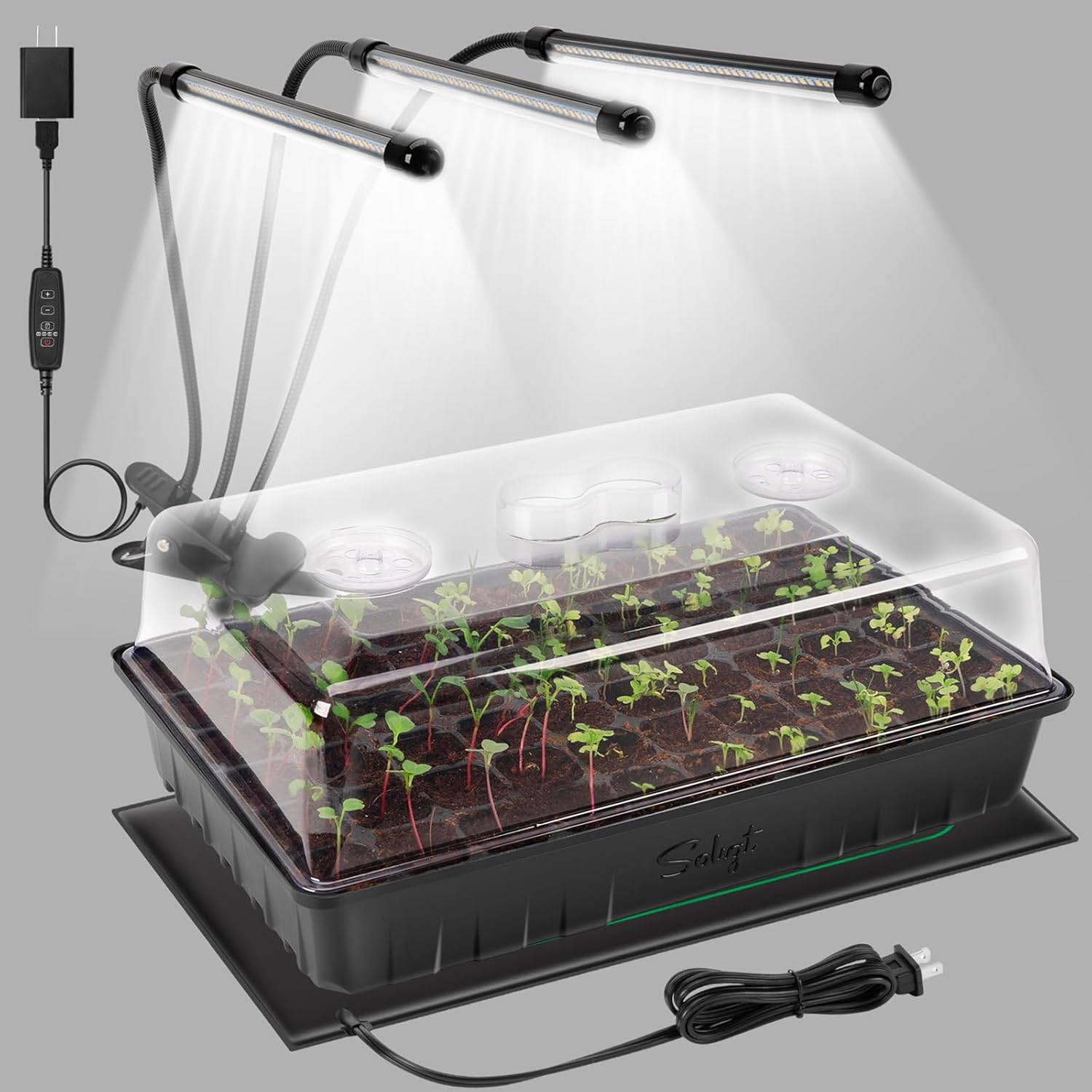
| Included Components | 1020 Seedling heat mat, 4500K grow lights, 60-cell seedling tray, humidity dome, propagation tray |
|---|---|
| Unit Count | 60 Count |
| Other Special Features of the Product | Corded |
| Mounting Type | Tabletop |
| Indoor Outdoor Usage | Indoor |
This SOLIGT kit provides a complete, beginner-friendly setup for indoor seed starting by combining a 60-cell seed tray, tall humidity dome, waterproof heat mat and a flexible full-spectrum grow light. You set seedlings in the 60-cell tray, cover with the adjustable-vent dome to hold humidity, then use the heat mat to give consistent bottom heat for faster, more even germination. The included 4500K LED light has multiple brightness levels, four timer settings and a three-head gooseneck so you can raise or angle light as seedlings grow or remove the dome and continue using the light on its clip or stand. Trays are described as heavy-duty plastic for reuse and the mat is waterproof for easy cleaning. Practical benefits are quicker, more reliable germination, reduced need for separate equipment and versatile light control for different crops. Limitations are that the kit is designed for tabletop indoor use only and the product listing lacks detailed power specs and exact light output numbers so advanced growers who need quantified PPFD or larger capacity may want a dedicated lighting solution.
Best for: Buyers who want a balanced, ready-to-use indoor seed starting system that saves time by combining heat, humidity control and a configurable grow light in one package.
Less Ideal for: Growers needing a high-capacity or commercial setup or those who require precise, measured light intensity for advanced propagation.
- Complete kit includes seed tray, humidity dome, waterproof heat mat and adjustable full-spectrum LED light
- Grow light offers 5 brightness levels and four timer options plus flexible gooseneck and clip or stand mounting
- Waterproof heat mat provides consistent bottom heat for faster, more even germination
- Tall dome with adjustable vents and drainage holes helps control humidity and root health
- Durable, reusable heavy-duty plastic trays suitable for multiple seasons
- Designed for tabletop indoor use only, not suited for larger or outdoor setups
- Light output is described by color temperature and LED count but lacks quantified PPFD or lumen figures for precision growers
Verdict: If you want a single, user-friendly indoor seed starting system that covers heat, humidity and adjustable lighting, this kit gives everything a balanced home gardener needs to get reliable seedlings.
LETPOT Smart Seed Starter Kit with 24W Full-Spectrum LED, Heating Base and App Control

| Included Components | 40-cell tray, grow sponges, 24W LED, 24W heating base, humidity dome, touch & app control |
|---|---|
| Unit Count | 40 Count |
| Material Type | Acrylonitrile Butadiene Styrene (ABS) |
| Additional Features | Weather Resistant |
| Tank Volume | 240 cubic inches |
This LETPOT seed starter is built for dependable indoor germination and steady early growth. The unit integrates a 24W full-spectrum LED panel and a 24W smart heating base so you do not need separate lights or heat mats; the light is height-adjustable and rotatable while the base maintains stable soil temperatures with day/night adjustments. Real-time soil EC and temperature readouts, visible on the display and in the app, help you monitor conditions and tweak watering or nutrient timing. The extra-tall humidity dome with vents and a condensation-capture edge keeps moisture controlled without making a mess. A 40-cell tray and grow sponges let you start many seedlings and transplant them cleanly by lifting sponges rather than disturbing roots. Touch-screen controls plus mobile app scheduling make it simple to automate growth cycles or customize settings for different crops. Expect a bit of a learning curve to dial in optimal EC values and temperatures for specific species, and the system is compact so it suits small-scale production rather than very large batches. For someone focused on consistent, repeatable germination results, this kit brings the key tools together in one package.
Best for: Growers who prioritize consistent, repeatable germination and want an integrated, data-informed indoor seed starting system they can schedule and fine-tune.
Less Ideal for: People who need to start hundreds of seedlings at once or who prefer a completely manual, low-tech approach to seed starting.
- Integrated 24W full-spectrum LED and 24W heating base remove need for separate lights or heat mats
- Built-in soil EC and temperature sensors provide real-time data for informed watering and nutrient decisions
- Adjustable humidity dome with condensation capture keeps moisture controlled and counters surface mess
- 40-cell tray plus grow sponges enable clean transplanting and support a moderate number of seedlings
- Touchscreen plus app control allow scheduling and remote adjustments for consistent automation
- Compact footprint limits throughput if you want to start very large numbers of seedlings
- Requires time and experimentation to optimize EC and temperature settings for different plant varieties
Verdict: If you want a compact, performance-focused seed starter that combines lighting, heat and real-time soil monitoring into one automated system, this kit delivers the core tools for reliable indoor germination.
Bonviee 5-Pack Seed Starter Trays with 12-LED Grow Lights

| Number of Pieces | 30 |
|---|---|
| Plant or Animal Product Type | Vegetable |
| Material Type | Polyethylene Terephthalate (PET), Polypropylene (PP) |
| Indoor Outdoor Usage | Indoor |
| Included Components | 1-to-5 USB Cable; 5 × 12-cell inserts; 5 domes; 5 light covers; saucers |
This Bonviee kit combines five compact seed trays with clear 12-cell inserts, elevated humidity domes and 12-LED full-spectrum lights built into the vented covers to simplify indoor germination. Typical use is straightforward: fill the clear inserts with seed mix, close the dome to retain moisture, and plug the included 1-to-5 USB cable into a 5V/2A adapter to run the lights for supplemental illumination on a windowsill or in a grow tent. Transparent cells make it easy to check moisture and early roots without disturbing seedlings, and drainage holes plus saucers support bottom watering and reduce overwatering. The vented domes let you increase airflow as seedlings grow, and the compact footprint fits small spaces. Limitations to note are that a power adapter and timer are not included and the lights have no built-in timer, so you may need an external adapter or timer for automated light cycles; also these are small cells suited to starting rather than long-term growth. For someone who wants a ready-to-use, space-efficient starter system, the set covers the essentials with clear, practical design choices.
Best for: Buyers who want a compact, efficient system to start many seedlings indoors at once and prefer practical features that make monitoring and moisture control easy.
Less Ideal for: Growers who need large cells for transplanting or who want an integrated timed lighting solution out of the box should consider other options.
- Includes five complete units for 60 seedlings total, useful for starting multiple varieties
- Built-in 12-LED full-spectrum lights per tray provide consistent supplemental light for indoor germination
- Clear inserts and elevated domes allow root and moisture monitoring without disturbing seedlings
- Drainage holes and saucers support bottom watering and help prevent waterlogging
- Single 1-to-5 USB cable powers all five light covers, reducing cable clutter
- No power adapter or built-in timer included so automation requires additional purchases
- Cell size is small and best for starting not long-term growing
Verdict: A space-efficient five-pack starter kit that bundles clear cells, humidity domes and built-in LED lights to get lots of seedlings reliably started indoors.
PlantaPulse 5-Pack Seed Starter Kit with Humidity Domes

| Pack quantity | 5 trays with domes |
|---|---|
| Cell count | 60 cells per tray |
| Material property | Heat-resistant, reusable |
| Includes | Humidity domes, watertight bases, plant labels, garden tool kit |
This PlantaPulse kit supplies five complete seed-starting units each made up of a 60-cell transparent tray, a watertight base, and a humidity dome with adjustable vents. It is used to start herbs, vegetables, flowers, and microgreens indoors on a windowsill or under lights and is compatible with heat mats and grow lights. The clear cells make it easy to monitor root development while bottom drainage and sealed base trays prevent mess and help avoid overwatering. Included plant labels and a small tool kit make organizing different varieties straightforward. Because the trays are designed for repeated use and tolerate the temperatures used for heating mats, this kit suits gardeners who start many seedlings each season. Limitations are that the cell size is compact, so seedlings will need transplanting to larger pots sooner for big vegetable crops, and the kit does not include grow lights or soil so you must supply those separately.
Best for: Buyers who want an affordable, high-capacity indoor seed-starting solution for growing many varieties and who plan to supply their own lights and soil.
Less Ideal for: Gardeners who need larger individual cells to grow big vegetable seedlings to transplant size without repotting or those who want an all-in-one kit with lights and potting mix included.
- Five complete seed-starting units provide high capacity for many varieties at once
- Transparent cells let you monitor root and moisture without disturbing seedlings
- Adjustable vented domes and drainage control humidity to reduce damping off
- Watertight base trays contain drips and make bottom-watering easier
- Heat-resistant construction compatible with heating mats for faster germination
- Cells are small so larger seedlings require early potting up
- Does not include grow lights or potting medium
Verdict: A budget-friendly, high-capacity starter kit that gives clear visibility and humidity control for indoor germination of many seedlings at once.
AC Infinity Humidity Dome 5×8 Seed Starter Propagation Kit

| Cell Count | 40 |
|---|---|
| Tray Thickness | 3 mm |
| Total Vents | 4 (w/ extender) |
| Plant or Animal Product Type | seed |
| Accepted Voltage Frequency | 100 to 120 Volts and 60 Hertz |
The AC Infinity Humidity Dome 5×8 is a heavy-duty seed starting kit that keeps seedlings and cuttings in a stable, humid microclimate to improve germination and rooting success. The clear 3 mm dome fits over a 40-cell seedling tray to hold moisture and light while optional height extenders and adjustable vents let you control airflow as seedlings grow. The tray is molded to drain excess water and resist leaks, so it works well with regular bottom-watering and propagation mixes. This compact kit is typically used on a bench, shelf, or inside a small grow tent; it can be paired with a heat mat or supplemental LED bars available in larger configurations. Notable strengths are the sturdy construction and simple venting system that reduce the need for constant monitoring. Limitations are that the basic model does not include a heat mat or built-in lighting, so you will need to add separate warmth or light for faster germination in cool or low-light conditions.
Best for: Gardeners who prioritize a dependable, low-maintenance propagation environment and want a robust starter tray that maintains consistent humidity for reliable germination.
Less Ideal for: Growers building a full plug-and-play system who want integrated heat or lighting or those needing larger commercial-scale propagation capacity.
- 3 mm thick clear dome for reliable humidity retention and light penetration
- Compatible height extenders and adjustable vents for staged airflow control
- 40-cell tray supports many seedlings for small-scale starting
- Durable, leak-resistant tray design suitable for repeated reuse
- Does not include heat mat or grow light in this compact kit
- Compact footprint may be too small for larger propagation projects
Verdict: Buy this if you want a sturdy, no-nonsense humidity dome and tray that consistently maintains the microclimate seedlings need for reliable germination.
Burpee SuperSeed 36-Cell Reusable Silicone Seed Starting Tray
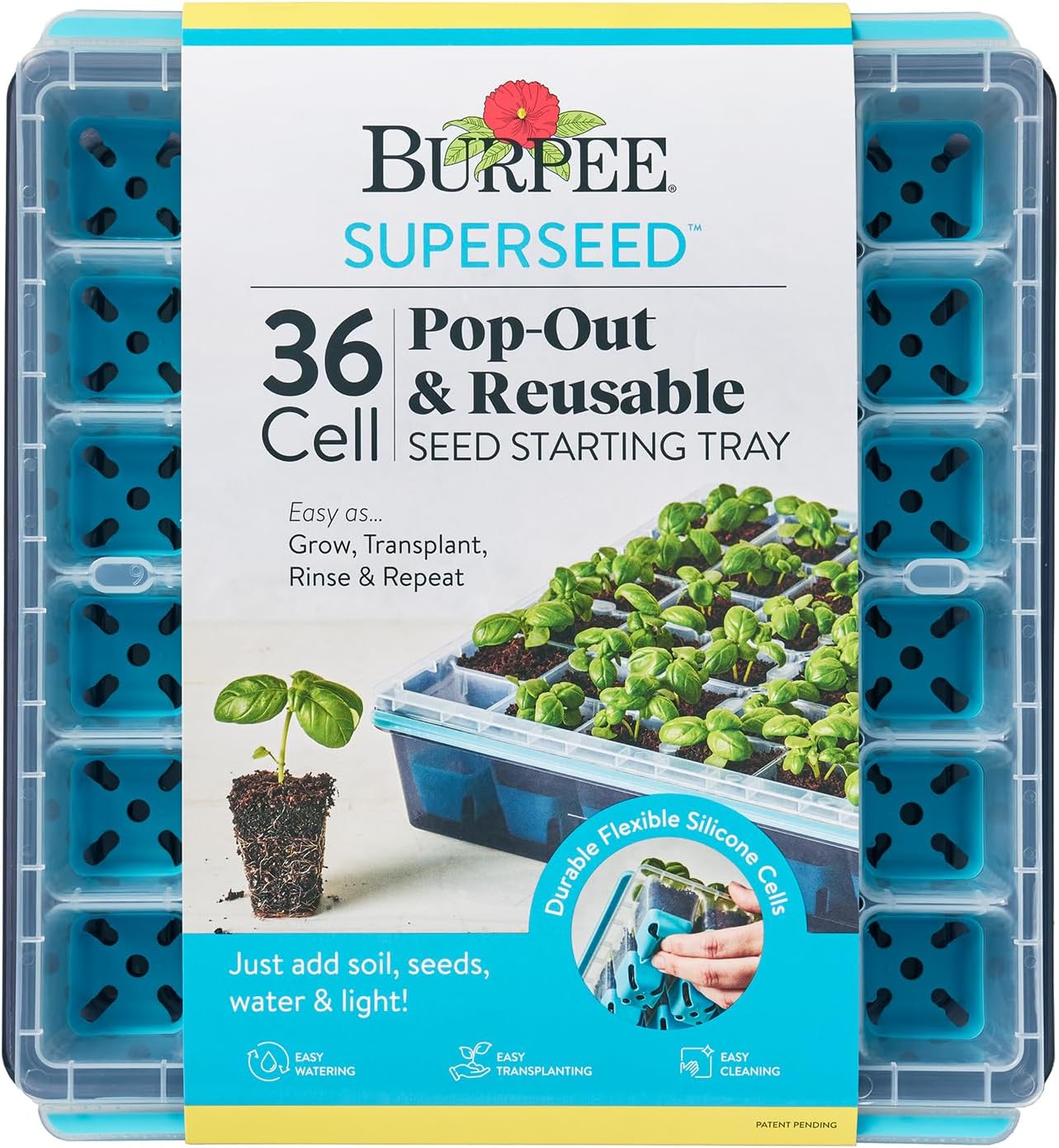
| Unit Count | 36 Count |
|---|---|
| Material Type | Silicone |
| Other Special Features of the Product | Drainage Hole, Reusable |
| Indoor Outdoor Usage | Indoor |
The Burpee SuperSeed 36-cell tray is designed to simplify indoor seed starting for herbs, flowers and vegetables. You fill each silicone cell with seed-starting mix, sow seeds, and use the raised reservoir and deep channels to manage excess water while the molded corner slots improve drainage and aeration. The soft, food-grade silicone cells flex so seedlings can be popped out with minimal root disturbance for transplanting. Labeled rows and included Plant-o-Gram make it easier to keep varieties organized. In practice the tray is lightweight, easy to lift by the side handles and dishwasher-safe on the top rack, which speeds cleanup between seasons. Limitations to note are that the tray is intended for indoor use only and the silicone material does not provide rigid support the way plastic cells do, so very top-heavy transplants may need extra handling. For gardeners focused on reliable germination and gentle transplanting, this tray streamlines the starting-to-potting workflow.
Best for: Gardeners who want a dependable, low-stress way to start multiple varieties indoors and value gentle transplanting and easy cleanup.
Less Ideal for: People who need heavy-duty outdoor trays or rigid cell structure for large transplants should consider sturdier plastic or individual pots instead.
- Flexible food-grade silicone cells allow seedlings to pop out with minimal root disturbance
- Built-in drainage slots and deep reservoir channels reduce overwatering and spillage
- 36 individually labeled cells and Plant-o-Gram help keep multiple varieties organized
- Top-rack dishwasher safe for easy cleaning and seasonal reuse
- Designed for indoor use only and not suitable as a heavy-duty outdoor planter
- Silicone cells are not rigid, which can make handling larger or top-heavy seedlings trickier
Verdict: Choose this tray if you want a reusable, silicone seed-starting system that protects roots and makes transplanting easier.
Ahopegarden Indoor Hydroponic Garden Kit — 10‑Pod LED System

| Planting pods | 10 Pods |
|---|---|
| Reservoir capacity | 3 liters |
| Lighting schedule | 16 hours on, 8 hours off |
| Mounting type | Tabletop |
| Special feature | Self Watering |
This Ahopegarden 10‑pod hydroponic system provides a compact, mostly hands‑off way to grow kitchen herbs year‑round. It combines a 3 L water reservoir with a circulation system, full‑spectrum LED light that runs on a 16‑hour timer, and adjustable light height so seedlings can be moved up as they grow. The kit includes planting baskets, sponges, growth domes, basic A&B nutrients, and a water‑level window so you can check reservoir fill at a glance. Typical use is straightforward: place seeds in the sponges, set the pods in the tray, top up water and nutrients, and let the pump and light keep conditions steady. Practical benefits are faster, cleaner growth than soil for herbs and small greens, minimal daily maintenance, and an indoor tabletop footprint suitable for kitchens. Limitations: the unit is plastic and tabletop only so it is not built for large plants or outdoor use, and you will need to replace sponges and nutrient solution over time. Serious growers may want larger or more automated models, but for steady kitchen herb production this kit is a low‑risk entry product.
Best for: A practical buyer who wants a low‑effort, dependable way to grow fresh kitchen herbs indoors without soil and without complex controls.
Less Ideal for: Gardeners who expect to grow large fruiting crops or run a high‑output microfarm should choose a larger, more heavy‑duty system instead.
- Compact tabletop footprint fits a kitchen counter or windowsill
- Includes 10 planting pods and starter components (baskets, sponges, growth domes, nutrients) for immediate setup
- Adjustable LED grow light with 16‑hour timer simplifies light scheduling
- 3‑liter reservoir with visible water‑level window makes monitoring and refills easy
- Made of painted plastic so long‑term durability is limited compared with metal constructions
- Not suited for larger plants or heavy production beyond herbs and small vegetables
Verdict: An easy, compact hydroponic kit that reliably grows kitchen herbs with minimal daily attention.
Choosing the Right Indoor Seed Starting Kit: Key Factors to Consider
Light Spectrum and Intensity
Seedlings need high-quality light to develop compact stems and healthy leaves. A kit that supplies a full spectrum LED or equivalent ensures plants receive blue and red wavelengths that support vegetative growth and early root development. Intensity matters because weak light results in leggy, stretched seedlings that are vulnerable after transplanting.
Adjustability is important because young seedlings need lights close to their tops, but you also want to raise lights as plants grow without disrupting them. Consider how the kit allows height adjustment and whether the light covers the entire tray area evenly.
Humidity Management and Venting
Consistent moisture in the germination phase speeds up and evens out germination rates. Kits with clear domes help trap humidity and warmth but need adjustable vents to prevent damping-off and mold once seedlings sprout.
Look for covers with multiple vent positions or removable sections so you can gradually reduce humidity as seedlings emerge. Good airflow around trays reduces fungal problems while retaining enough moisture for tiny roots to develop.
Tray Size and Cell Shape
Cell size affects root architecture and how easy seedlings are to transplant. Small cells work well for fast-growing annuals and herbs that tolerate close spacing, while deeper cells are better for vegetables that benefit from early root development.
Uniform, tapered cells make planting and later removal easier. Consider whether the kit includes seed-starting inserts, peat or coir pellets, or plain flats-each approach changes how you sow, water, and transplant.
Ease of Daily Care
You will be watering, inspecting, and sometimes moving trays daily during the seeding stage. Kits that make these tasks simple reduce mistakes and transplant shock. Features that help include clear domes with easy venting, trays that catch runoff, and lighting controls that do not require constant fiddling.
Also consider how simple it is to refill water reservoirs or wick systems, and whether the kit's controls are intuitive for a gardener who may not be working with seedlings every day.
Build Materials and Long-Term Durability
Garden equipment stored between seasons needs to survive repeated handling, moisture exposure, and UV from grow lights. Rigid plastic trays and domes resist cracking and are easier to sanitize between uses. Metal or well-constructed plastic light stands last longer than flimsy, flexible frames.
Durability also affects cost-effectiveness. Strong materials reduce deformation under heat and humidity and make it easier to reuse the kit year after year.
Energy Use and Heat Output
Operating a seed-starting kit indoors means considering energy use and ambient heat. LEDs are more energy-efficient and run cooler than older bulb types, which keeps small indoor spaces from overheating and reduces running costs.
Heat output also matters for germination: some seeds benefit from bottom heat mats, while others are fine with ambient warmth. Evaluate whether a kit's heat and light sources suit the seeds you plan to start and your indoor temperature conditions.
Indoor Placement and Light Timing
Where you place the kit affects seedling success more than you might expect. A north-facing windowsill will not supply the same consistent light as a dedicated grow light, so position kits where you can control light hours and intensity. Most vegetable seedlings need 12 to 16 hours of light per day once germinated.
Use a simple timer to keep daily cycles steady. That avoids erratic stretching from inconsistent light and frees you from manual on-off switching. If your indoor space is warm, start with shorter daily light to avoid overheating, then increase as needed.
- Keep lights close to seedling tops without touching to maintain compact growth.
- Use a timer for consistent photoperiods.
- Monitor ambient temperature near the trays to avoid heat stress.
Humidity Domes: When to Use Vents
Domes help seeds retain moisture during the initial germination window. Open vents once most seeds sprout to improve airflow and reduce fungal risks. Gradually increasing venting over several days helps seedlings adapt to lower humidity without shock.
For small seeds that require surface moisture, keep vents mostly closed until roots form. For larger seeds and crops that prefer drier starts, begin with partial venting and increase ventilation sooner.
- Fully closed domes for first few days for moisture-loving seeds.
- Use partial venting as cotyledons open.
- Remove domes entirely when true leaves emerge and airflow is needed.
Watering Methods That Reduce Damping-Off
Bottom watering via trays or wicking systems encourages roots to grow downward and reduces wet foliage, which helps prevent fungal problems. If you must mist, do so lightly and avoid prolonged wetness on leaves.
Allow the top of media to dry slightly between waterings once seedlings are established. Overly soggy media is the most common cause of damping-off, so choose a kit that facilitates drainage and gentle, consistent moisture delivery.
- Use bottom watering or capillary mats for best root development.
- Sanitize trays between batches to limit pathogens.
- Avoid crowded sowing to improve airflow and reduce disease.
Scaling Up: From Windowsill to Grow Rack
If you plan to start many seedlings, consider modular kits that stack or integrate into a small rack system. This lets you expand light coverage and increase capacity without cluttering living space. Look for kits with adjustable light heights and removable trays to keep seedling handling efficient.
For limited spaces, choose compact trays with deeper cells rather than large flats. That gives you room to raise many plants vertically while still providing sufficient root volume for early growth.
- Stackable systems save floor space and allow multi-tiered lighting.
- Choose deeper cells for seedlings headed to larger garden beds.
- Plan for storage between seasons when choosing size.
Sanitation and Reuse Between Seasons
Keeping trays, domes, and tools clean between uses prevents the carryover of fungal spores and pests. Use a mild bleach solution or horticultural disinfectant to sanitize plastic parts, rinse thoroughly, and allow to dry before storage.
Inspect seals and hinges on domes and repair or replace damaged parts. Proper cleaning and careful storage extend the life of a kit and keeps first-year seedlings from being undermined by last season's pathogens.
- Disassemble components for thorough cleaning.
- Dry completely before storing in a cool, dry place.
- Replace worn trays or cracked domes to avoid moisture leaks.
How We Chose the Best Indoor Seed Starting Kit
We prioritized features that actually affect seed germination and early seedling growth under typical home conditions. Key evaluation criteria included light spectrum and output for common garden vegetables and flowers, humidity and ventilation control for consistent moisture during germination, tray and cell sizing that reduces root disturbance at transplant, and materials and build quality for repeated seasons of use. We also weighed ease of use factors such as plug-and-play setup, adjustability of light height, and how easy components are to clean and store. Energy use and bulb type were considered to estimate ongoing operating cost and heat output. Exclusions: single-component items like standalone grow lights or solitary humidity domes were not included unless part of a complete kit with trays and covers. The resulting list favors kits that combine practical performance with straightforward daily handling and durability.
FAQ
What seeds do best in an indoor seed starting kit?
Many vegetables, herbs, and annual flowers start well indoors. Fast-germinating crops like brassicas, lettuces, and herbs typically do well in small cells, while tomatoes and peppers benefit from deeper cells and steady light. Seed packet directions usually indicate whether seeds prefer high humidity or drier starts.
Do I need a heat mat with a kit?
A heat mat helps warm the root zone and speeds germination for heat-loving seeds such as peppers and tomatoes. Cooler-germinating seeds like lettuce may not need a heat mat and can do fine with ambient indoor temperatures. Use a thermostat if you want precise bottom heat control.
How long should lights stay on for seedlings?
Most seedlings need 12 to 16 hours of light per day after germination. A daily timer keeps the cycle consistent. Reduce light gradually only if seedlings show signs of stress from excessive intensity or heat.
How do I prevent damping-off in seed trays?
Prevent damping-off by avoiding overwatering, ensuring good ventilation, and using clean, sterile media and sanitized trays. Bottom watering and spacing seeds properly to increase airflow also lower the risk of fungal problems.
When should I transplant seedlings from the kit to bigger pots?
Transplant when seedlings have at least one set of true leaves and a developed root system that fills the cell. Harden off seedlings gradually to outdoor conditions for several days before final transplanting to reduce shock.
Final Verdict
Choose an indoor seed starting kit that matches the scale of your planting plans and the crops you want to grow. Prioritize consistent, adjustable light and reliable humidity control because those two factors most directly affect seedling sturdiness. Consider tray depth and cell shape based on how long you will keep seedlings in the kit and whether you need to expand capacity with racks or stacked systems. By focusing on these tradeoffs-light versus space, humidity control versus airflow, and ease of cleaning versus durability-you can pick a kit that delivers healthy seedlings and fewer surprises when you move plants outside.
