

Note: This article contains affiliate links. If you click on these links and make a purchase, I may earn a small commission at no extra cost to you. This helps support my research and content. Read my full affiliate disclosure here.
If you want healthy, vigorous transplants, choosing the right seed starting kit makes a real difference in your success. A good kit controls moisture, preserves warmth, and gives seedlings consistent light so they develop strong stems and true leaves rather than stretching or rotting. This guide covers seven top shortlisted seed starting kits chosen for common garden situations. We evaluate units on warmth and humidity control, ease of use, and how well they support strong early root and stem growth. Read on to find the kit features that match your space and season.
Top Picks at a Glance
| Best Overall The best all-around choice for most situations | Patigrow 120-Cell Self-Watering Seed Starter Kit with LED Grow Light and Humidity Dome |  |
| Best Quality Built to a higher standard if you want something more solid | AC Infinity Humidity Dome Full Kit with LED Grow Lights and Seedling Heat Mat |  |
| Best Value The sweet spot between price and what you get | Patigrow 60-Cell Self-Watering Seed Starter Tray with Grow Light |  |
| Best Budget The cheapest option that still gets the job done reliably | Kimdozee 120-Cell Peat Seed Starter Trays, 12-Pack Kit |  |
| Highest Rated A top-rated pick with lots of positive feedback | AC Infinity Humidity Dome 5×8 Seed Starter Propagation Kit |  |
| Most Popular A crowd favorite that many people choose with confidence | Burpee SuperSeed 36-Cell Reusable Silicone Seed Starting Tray |  |
| Best Seller A high-volume bestseller chosen again and again | Burpee SuperSeed Extra-Large 8-Cell Windowsill Seed Starting Tray |  |
Patigrow 120-Cell Self-Watering Seed Starter Kit with LED Grow Light and Humidity Dome

| Cell count | 120 |
|---|---|
| Material | PET (BPA-free) |
| Special features | Self Watering, Grow Light Bar, Aeration |
| Included components | Humidity dome, capillary mat, LED light, seed trays |
The Patigrow 120-Cell Seed Starter Kit is a complete indoor germination system aimed at getting lots of seedlings started with minimal fuss. The kit pairs a self-watering base and capillary mats with 120-cell seed trays and humidity domes so you can water once and maintain consistent moisture through germination. Integrated LED grow light bars with adjustable brightness and a timer provide supplemental light to prevent leggy seedlings when natural light is limited. Practical extras such as ventilation ports, enlarged drainage holes and plant labels make staging and monitoring seedlings straightforward. The kit is made from BPA-free PET and includes stands, spare vents and two full tray sets so it suits larger windowsill or bench projects and sharing between two growers. Limitations to note are that this is designed for indoor seed starting only and the built-in light covers a tray-sized footprint so larger setups will need additional lighting; also the PET parts are durable but are still plastic so expect some wear over multiple seasons. For someone who wants a turnkey, tidy way to start many seedlings indoors, this kit covers the bases well.
Best for: Gardeners who want an all-in-one, low-maintenance indoor seed starting solution to raise many seedlings at once without fussing daily over water and light.
Less Ideal for: Growers who need outdoor-ready propagation or who plan to scale to greenhouse-sized production should choose modular bench systems or standalone lights instead.
- Self-watering base with capillary mat reduces need for daily watering and helps prevent overwatering
- Adjustable LED grow light bars with timer and brightness control support healthy, compact seedlings
- Includes two full tray sets, humidity domes, vents and labels so it is ready to use out of the box
- Enlarged drainage holes and ventilation allow good air circulation to reduce damping-off risk
- Designed for indoor tray-sized setups so expanding to larger bench systems requires extra lighting
- Plastic components can show wear after repeated multi-season use
Verdict: If you want a ready-to-use indoor seed starting system that combines reliable self-watering with built-in LED lighting to raise large numbers of seedlings easily, this kit is a strong, practical choice.
AC Infinity Humidity Dome Full Kit with LED Grow Lights and Seedling Heat Mat

| Indoor Outdoor Usage | Indoor |
|---|---|
| Other Special Features of the Product | Drainage Hole |
| Included Components | Humidity Dome, Grow Light Bars, Seedling Mat, Drip Trays, Height Extension Panels |
| Item Type Name | Humidity Dome |
This full kit assembles into a compact propagation station for indoor seed starting and cloning. The clear, 3 mm dome and included drip trays create a high-humidity chamber while vents and height extenders let you adjust air exchange and room for taller seedlings. A SUNCORE-style seedling heat mat with an adjustable dial delivers even bottom heat to speed germination, and built-in LED grow light bars use high-efficiency Samsung LM301H EVO diodes to strengthen stems and support early photosynthesis. Practical touches include drainage holes and removable trays for cleaning. The result is faster, more uniform germination and sturdier transplants compared with unheated, unlit trays. Limitations are that the kit is designed for indoor use only and the light coverage and tray cell count suit small to medium batches rather than large-scale commercial propagation, so you may need multiple units for heavier throughput.
Best for: Buyers who prioritize reliable, performance-driven germination and want an out-of-the-box propagation setup that speeds early growth and strengthens seedlings.
Less Ideal for: Growers who need large commercial throughput or fully outdoor propagation setups should consider larger modular systems or greenhouse solutions.
- All-in-one kit includes dome, heat mat, LED grow bars, trays, and extenders for immediate setup.
- High-efficiency Samsung LM301H EVO diodes in the light bars provide effective spectrum and intensity for seedlings.
- Adjustable heat mat dial offers steady, even bottom heat to accelerate germination.
- Clear, thick dome with vents and height extenders allows humidity control and room for growing seedlings.
- Durable drip and plant trays with drainage holes make cleanup and drainage simple.
- Designed for indoor use only so it is not suitable for outdoor propagation.
- Tray cell count and light coverage are optimized for small to medium batches rather than large-scale propagation.
Verdict: A performance-focused, ready-to-use propagation kit that accelerates germination and early growth with heat and high-efficiency LED lighting.
Patigrow 60-Cell Self-Watering Seed Starter Tray with Grow Light

| Number of Levels | 60 |
|---|---|
| Material Type | Polyethylene Terephthalate (PET) |
| Other Special Features of the Product | Aeration, Drainage Hole, Grow Light Bar, High Germination Rate, Self Watering |
| Indoor Outdoor Usage | Indoor |
This Patigrow kit is designed to simplify starting seeds indoors by combining a large 60-cell tray with a self-watering base, a humidity dome with adjustable vents, and two LED grow light strips with a timer and controller. Typical use is: set seeds in the cells, position the capillary mat in the base, add water once to the reservoir, close the dome to retain humidity, and run the LEDs on the timed cycle for consistent light. Notable features include enlarged drainage holes for healthier roots, adjustable humidity vents to match germination stages, and a detachable grow light adapter for easier placement. Practical benefits are reduced daily maintenance thanks to the self-watering system, predictable light scheduling for uniform seedlings, and a compact footprint that fits on a plant stand or tabletop. Important limitations are the kit is intended for indoor seed starting only and the PET plastic parts, while durable, may not suit gardeners preferring nonplastic materials; also the fixed 60-cell layout limits cell size flexibility for larger seedlings.
Best for: Gardeners who want a low-maintenance, all-in-one indoor seed starting solution that saves time and produces consistent, uniform seedlings for transplanting.
Less Ideal for: Growers who need adjustable cell sizes for larger starts or who prefer nonplastic alternatives for propagation should consider other options.
- Integrated self-watering base and capillary mat reduce the need for daily watering
- Included LED grow light strips with timer deliver consistent, adjustable light for seedlings
- Humidity dome with adjustable vents lets you control moisture and airflow during germination
- 60-cell tray provides space to start many varieties at once
- Enlarged drainage holes and aeration promote healthier root development
- Designed for indoor seed starting only, not for full-stage growth
- All primary structural parts are PET plastic which some gardeners may avoid
- Tray cell layout is fixed so it is less flexible for larger transplants
Verdict: A practical, low-maintenance indoor seed starting kit that pairs self-watering and timed LED lighting to produce uniform seedlings with minimal daily effort.
Kimdozee 120-Cell Peat Seed Starter Trays, 12-Pack Kit

| Material Type | Wood pulp |
|---|---|
| Number of Pieces | 12 |
| Capacity | 16 ounces |
| Plant or Animal Product Type | Vegetable, Fruit, Flower |
| Indoor Outdoor Usage | Indoor, Outdoor |
These Kimdozee peat seed starter trays are a budget-friendly kit for beginning seeds and small-scale vegetable, herb, or flower propagation. Each pack includes 12 trays that together provide 120 individual peat pots; the pots are breathable and designed to be planted directly into soil so seedlings experience less root disturbance at transplanting. The kit also includes 100 plant labels and two simple transplant tools to keep small setups organized. Made from natural wood pulp, the cells decompose in the ground and add organic matter as they break down. Practical benefits include easy separation of trays into smaller sections and built-in drainage to avoid waterlogging. Limitations are the small individual cell size, which is best suited to herbs, microgreens, or early-stage seedlings rather than large vegetables, and the disposable nature of peat means they are single use compared with durable plastic trays. Overall this is a straightforward, low-cost option for starting many small plants at once without needing extra pots or a lot of equipment.
Best for: Gardeners on a tight budget who want an all-in-one, low-fuss kit to start large numbers of herbs, flowers, or small vegetable seedlings and minimize transplant shock.
Less Ideal for: Growers who need larger cells, reusable trays, or long-term seedling staging should choose durable plastic systems or larger peat pots instead.
- Biodegradable wood pulp peat pots that can be planted directly to reduce transplant shock
- Includes 12 trays totaling 120 cells, allowing many seedlings per kit
- Comes with 100 plant labels and 2 transplant tools for organized sowing
- Drainage holes in cells help prevent waterlogging during germination
- Cells are small and suited only for early-stage seedlings or small plants
- Peat pots are single use and will not last multiple seasons
Verdict: If you need an inexpensive, ready-to-use kit to start many small seedlings and plant the pots directly into garden soil, this peat tray set delivers great value.
AC Infinity Humidity Dome 5×8 Seed Starter Propagation Kit

| Cell Count | 40 |
|---|---|
| Tray Thickness | 3 mm |
| Total Vents | 4 (w/ extender) |
| Plant or Animal Product Type | seed |
| Accepted Voltage Frequency | 100 to 120 Volts and 60 Hertz |
The AC Infinity Humidity Dome 5×8 is a heavy-duty seed starting kit that keeps seedlings and cuttings in a stable, humid microclimate to improve germination and rooting success. The clear 3 mm dome fits over a 40-cell seedling tray to hold moisture and light while optional height extenders and adjustable vents let you control airflow as seedlings grow. The tray is molded to drain excess water and resist leaks, so it works well with regular bottom-watering and propagation mixes. This compact kit is typically used on a bench, shelf, or inside a small grow tent; it can be paired with a heat mat or supplemental LED bars available in larger configurations. Notable strengths are the sturdy construction and simple venting system that reduce the need for constant monitoring. Limitations are that the basic model does not include a heat mat or built-in lighting, so you will need to add separate warmth or light for faster germination in cool or low-light conditions.
Best for: Gardeners who prioritize a dependable, low-maintenance propagation environment and want a robust starter tray that maintains consistent humidity for reliable germination.
Less Ideal for: Growers building a full plug-and-play system who want integrated heat or lighting or those needing larger commercial-scale propagation capacity.
- 3 mm thick clear dome for reliable humidity retention and light penetration
- Compatible height extenders and adjustable vents for staged airflow control
- 40-cell tray supports many seedlings for small-scale starting
- Durable, leak-resistant tray design suitable for repeated reuse
- Does not include heat mat or grow light in this compact kit
- Compact footprint may be too small for larger propagation projects
Verdict: Buy this if you want a sturdy, no-nonsense humidity dome and tray that consistently maintains the microclimate seedlings need for reliable germination.
Burpee SuperSeed 36-Cell Reusable Silicone Seed Starting Tray
| Unit Count | 36 Count |
|---|---|
| Material Type | Silicone |
| Other Special Features of the Product | Drainage Hole, Reusable |
| Indoor Outdoor Usage | Indoor |
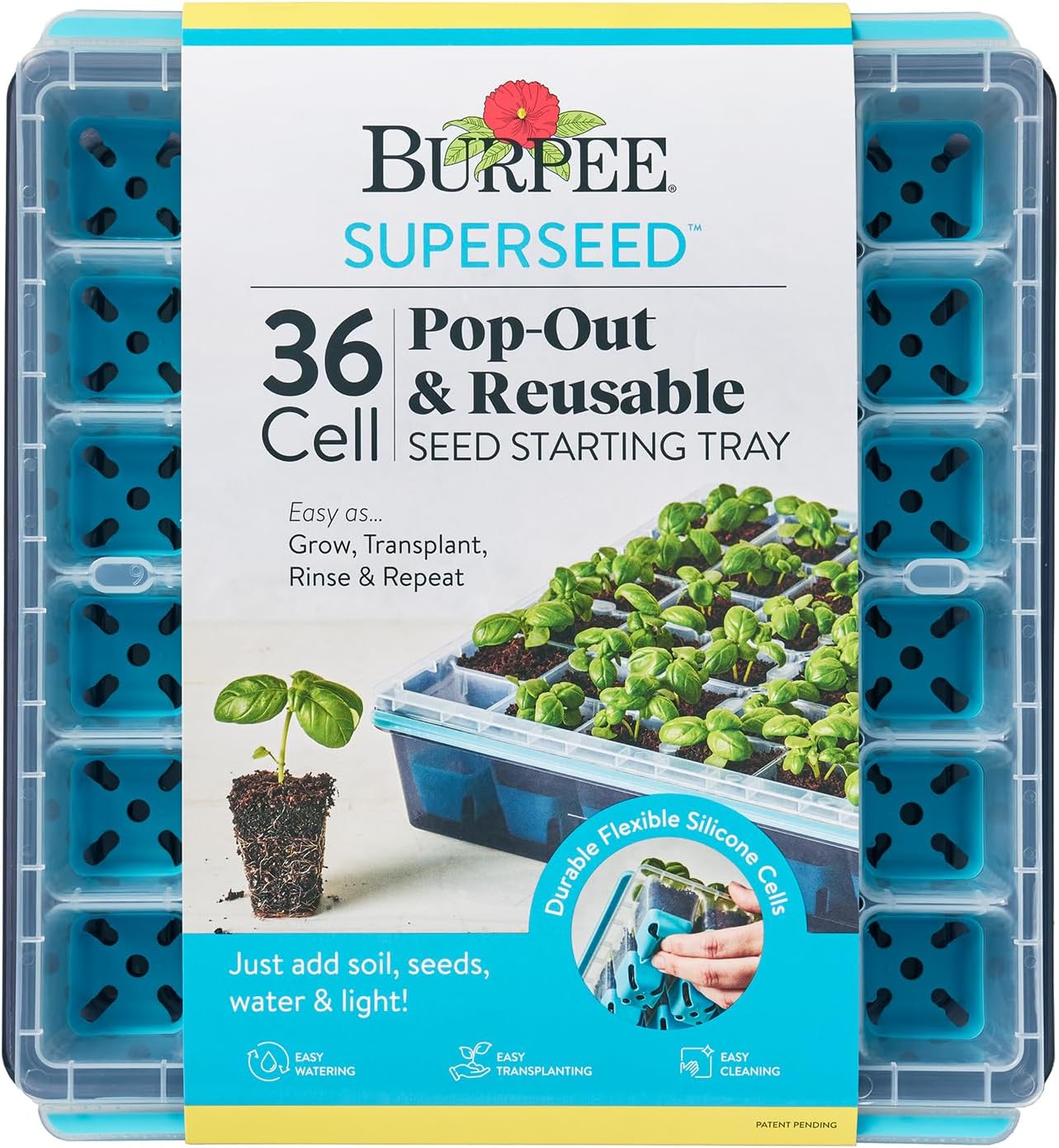
The Burpee SuperSeed 36-cell tray is designed to simplify indoor seed starting for herbs, flowers and vegetables. You fill each silicone cell with seed-starting mix, sow seeds, and use the raised reservoir and deep channels to manage excess water while the molded corner slots improve drainage and aeration. The soft, food-grade silicone cells flex so seedlings can be popped out with minimal root disturbance for transplanting. Labeled rows and included Plant-o-Gram make it easier to keep varieties organized. In practice the tray is lightweight, easy to lift by the side handles and dishwasher-safe on the top rack, which speeds cleanup between seasons. Limitations to note are that the tray is intended for indoor use only and the silicone material does not provide rigid support the way plastic cells do, so very top-heavy transplants may need extra handling. For gardeners focused on reliable germination and gentle transplanting, this tray streamlines the starting-to-potting workflow.
Best for: Gardeners who want a dependable, low-stress way to start multiple varieties indoors and value gentle transplanting and easy cleanup.
Less Ideal for: People who need heavy-duty outdoor trays or rigid cell structure for large transplants should consider sturdier plastic or individual pots instead.
- Flexible food-grade silicone cells allow seedlings to pop out with minimal root disturbance
- Built-in drainage slots and deep reservoir channels reduce overwatering and spillage
- 36 individually labeled cells and Plant-o-Gram help keep multiple varieties organized
- Top-rack dishwasher safe for easy cleaning and seasonal reuse
- Designed for indoor use only and not suitable as a heavy-duty outdoor planter
- Silicone cells are not rigid, which can make handling larger or top-heavy seedlings trickier
Verdict: Choose this tray if you want a reusable, silicone seed-starting system that protects roots and makes transplanting easier.
Burpee SuperSeed Extra-Large 8-Cell Windowsill Seed Starting Tray

| Material Type | Silicone |
|---|---|
| Unit Count | 8 Count |
| Capacity | 2.18 liters |
| Mounting Type | Window Mount |
| Indoor Outdoor Usage | Indoor |
The Burpee SuperSeed 8XL seed starting tray is a compact windowsill system for germinating herbs, flowers and vegetables. Soft food-grade silicone cells cradle seedlings and flex so you can pop young plants out with minimal root disturbance, which makes transplanting easier. The tray is built with molded corner drainage slots and deep channels that draw excess water away from the cells while a raised perimeter keeps spills contained, and side handles let you lift and pour off excess moisture without dumping seedlings. Rows are labeled for seed identification and the included Plant-o-Gram helps organize multiple varieties. Because the tray is reusable and top-shelf dishwasher safe it is low maintenance for gardeners who prefer reliable, repeatable results. The extra-large cell size gives room for deeper-rooted starts like tomatoes and peppers but also means fewer cells per tray if you want to start large numbers of small-seed varieties. Overall this is a user-friendly, risk-reducing option for indoor seed starting on a windowsill or countertop.
Best for: Buyers who want a low-stress, dependable indoor seed-starting system for windowsill or countertop use and value easy transplanting and simple maintenance.
Less Ideal for: Growers who need to start large batches of tiny-seeded plants at once or who prefer rigid plastic multi-cell flats for higher density seeding.
- Flexible food-grade silicone cells that pop out to reduce transplant shock
- Built-in drainage slots and deep watering channels to manage excess moisture
- Extra-large cells accommodate deep-rooted seedlings like tomatoes and peppers
- Top-shelf dishwasher safe and reusable for easy cleaning and seasonal storage
- Only eight extra-large cells per tray limits how many small-seed varieties you can start at once
Verdict: Choose this tray if you want a low-maintenance, windowsill-ready seed starter that protects seedlings during transplanting.
Choosing the Right Seed Starting Kit: Key Factors to Consider
Heat and Humidity Control
Consistent warmth and the ability to trap or release humidity both affect germination speed and seedling health. Many seeds need higher soil temperatures than room air to sprout; built-in heat mats or domes that retain warmth can shorten germination time and produce more even results.
Too much trapped moisture raises damping-off risk, so look for lids with adjustable vents that let you fine-tune humidity as seedlings emerge. The ability to partially open a dome to increase airflow as seedlings grow reduces fungal issues while still protecting young plants from drafts.
Cell Size and Root Development
Cell shape and volume determine how roots develop before transplanting. Deeper cells encourage stronger primary roots and reduce root coiling, which helps seedlings establish quickly once planted out. Shallow or oddly shaped cells can force roots to circle or tangle, increasing transplant shock.
Consider how many seedlings you want to start versus how big they will grow in the kit. Larger cells are better for slower-growing vegetables or for starting seedlings earlier, while smaller cells work for quick-transplant herbs or annual flowers you won't keep long in pots.
Light Compatibility and Seedling Stretch
Seedlings need bright, even light immediately after germination to develop compact stems. A kit that fits standard grow light fixtures or can be placed on a bright windowsill makes it easier to supply consistent light. Poor lighting leads to tall, weak seedlings that need more transplant care and may not survive hardening off.
Also check the clearance between tray and lid or any built-in light clips; you will often need room for seedlings to reach several inches before moving them under stronger light sources.
Drainage and Watering Control
Proper drainage prevents waterlogging and root rot. Trays that include drainage channels or separate water reservoirs let you bottom-water to encourage strong root growth without overwatering the soil surface. Conversely, trays without drainage force careful surface watering and increase the chance of soggy mix.
Evaluate whether a kit's design makes it easy to remove excess water and to monitor moisture levels. Clear lids that trap water can be opened or removed easily for drying out between waterings.
Material Durability and Reusability
Seed starting is most economical when kits can be reused year after year. Look for sturdy plastics or hardier materials that resist cracking under UV light and cleaning. Kits that take standard replacement inserts or have removable parts are easier to sanitize between seasons to prevent disease carryover.
Ease of cleaning matters because leftover soil and pathogens can persist. Smooth surfaces and removable trays cut down the time required to sterilize components before the next round of seeds.
Ease of Transplanting and Setup
How easily seedlings are removed from their cells affects root disturbance at transplant time. Kits that allow gentle popping or include biodegradable pots that can be planted directly reduce root damage. Additionally, straightforward assembly and clear drainage features make daily care less fiddly.
For beginners, a simple setup that clearly indicates when to open vents, how to add water, and when to remove the dome reduces mistakes that can cost seedlings. Consider how much time you can commit to daily checks when selecting a kit.
Best Kits for Small Indoor Spaces
If you have limited counter or shelf room, prioritize compact trays with tall but narrow cells that maximize root depth without taking much footprint. Look for kits that integrate a shallow water reservoir so you can bottom-water without frequent refills.
Stackable trays that allow you to stagger sowing dates save space and time. Kits that work with clip-on grow lights or fit beneath adjustable light rigs are especially useful for windowsill gardening or small grow shelves.
- Choose tall cells over wide cells when floor space is limited.
- Pick lids with vents so you can control humidity in a confined area.
Using Seed Starting Kits with Grow Lights
Most serious indoor starters use supplemental light. Ensure the kit provides enough vertical clearance or can be used with low-profile fixtures. A heat-retaining dome can be used during germination but should be removed or opened when seedlings receive active light to avoid overheating.
Position lights close to seedlings and raise them as plants grow rather than moving seedlings farther from the light. That keeps stems compact and reduces the need for staking later.
- Use adjustable-height light rigs to maintain 2 to 4 inches of distance from seedlings.
- Opt for kits that do not block light when lids are removed or opened.
Preparing Soil Mix and Seed Depth
A light, well-draining seed mix improves germination uniformity and reduces damping-off. Fill cells evenly and firm substrate lightly so seeds have good seed-to-soil contact without becoming compacted. Different seeds have specific depth needs, so follow packet directions and avoid burying tiny seeds too deep.
Label trays clearly to avoid confusion when sowing multiple varieties. Plant in blocks or rows within the tray so you can water and thin seedlings efficiently without disturbing nearby young plants.
- Use a sterile seed-starting mix rather than garden soil.
- Plant larger seeds deeper and tiny seeds on the surface or barely covered.
Hardening Off Seedlings Grown in Kits
Transition seedlings gradually to outdoor conditions. Start by placing trays in a sheltered spot for a few hours a day and increase exposure to wind and sun over one to two weeks. Remove domes permanently once seedlings show several true leaves and are receiving outdoor light.
Be prepared to water more frequently as the plants get used to outdoor air and sun. Hardened-off plants suffer less transplant shock and establish faster in garden beds or larger containers.
- Increase outdoor time each day, starting with a few hours and ending with overnight exposure.
- Protect tender seedlings from strong midday sun and wind during the first week.
Sanitation and Reuse Practices
Clean trays, lids, and inserts after each season with a mild bleach solution or a garden-safe disinfectant. Rinse components thoroughly and allow them to dry completely before storage or reuse. This minimizes carryover of fungal pathogens and soil-borne pests.
Store reusable kits in a cool, dry place out of UV exposure to prolong plastic life. Replace brittle or warped parts to avoid leaking or poor drainage in future sowings.
- Scrub away soil before disinfecting to ensure full contact with cleaning solution.
- Label storage containers with the last use date to track when parts might need replacement.
How We Chose the Best Seed Starting Kit
We focused on features that directly affect early seedling survival and transplant readiness. Primary evaluation criteria included humidity and heat control, which influence germination speed and damping-off risk; tray and cell design for root development and ease of transplanting; light compatibility and stability to prevent leggy growth; and construction durability for repeated seasonal use. We also considered seed-starting media compatibility and overall setup simplicity since many gardeners start seeds on limited time or in small spaces. Exclusions included single-use or disposable-only kits and items without clear options for ventilation or drainage. We prioritized kits that work well across common seed types and for a variety of indoor starting locations, from sunny windowsills to under grow lights. The result is a group of practical, repeatable options suited for gardeners seeking reliable germination and healthy seedlings.
FAQ
When should I start seeds indoors with a seed starting kit?
Start seeds based on the last expected frost date for your area and the seed packet's lead time. Many gardeners sow cool-season crops several weeks before the last frost and warm-season crops four to eight weeks ahead. Timing depends on how long seedlings need to reach transplant size.
How do I prevent damping-off in a seed starting kit?
Control moisture and airflow by using a sterile mix, avoiding overwatering, and opening vents once seeds germinate. Clean trays between uses and keep humidity high only during germination, then increase ventilation to reduce fungal growth.
Can I reuse the same soil in a seed starting kit?
Reusing the same mix can carry disease and nutrient depletion risks. It is better to use fresh sterile seed mix each season, or if reusing, thoroughly sterilize and amend the media to restore structure and nutrients.
Do I need a heat mat with my seed starting kit?
Heat mats speed germination for many seeds that prefer warmer soil. They are helpful in cool homes or early-season starts, but not strictly necessary for seeds that germinate well at ambient room temperatures.
How often should I water seedlings in a kit?
Watering frequency depends on cell size, mix, and ambient conditions. Check moisture daily and water when the top of the mix begins to dry. Bottom-watering or using a reservoir can provide even moisture without disturbing seedlings.
What size cells are best for vegetable seedlings?
Medium to deep cells work well for most vegetables because they allow robust root development before transplanting. Very small cells suit short-term use or quick-growing herbs but may require earlier transplanting to avoid root binding.
Final Verdict
Choosing the right seed starting kit comes down to matching kit features to your space and the crops you want to raise. Prioritize humidity and heat control for reliable germination, cell size that supports healthy root growth, and light compatibility to prevent leggy seedlings. Also factor in drainage and how easy the kit is to clean and reuse. Balance tradeoffs between compact kits for small spaces and larger cell systems for earlier or larger transplants. With the right combination of these features you can produce stronger seedlings, reduce transplant shock, and get a jump on the growing season.
