

Note: This article contains affiliate links. If you click on these links and make a purchase, I may earn a small commission at no extra cost to you. This helps support my research and content. Read my full affiliate disclosure here.
Spring is the time your garden wakes up and needs a predictable supply of nutrients to support early leaf-out, root development, and rapid growth. Choosing the right garden fertilizer for spring affects how quickly perennials, annuals, vegetables, and lawns green up and how resilient plants are to temperature swings and pests. This guide covers seven carefully shortlisted options suitable for typical spring feeding needs. We evaluated products across nutrient balance, release timing, and ease of application so you can pick a fertilizer that fits your planting style and soil conditions. Read on for practical buying factors and maintenance tips that matter in the first months of the season.
Top Picks at a Glance
| Best Overall The best all-around choice for most situations | Miracle-Gro Shake 'N Feed All Purpose Plant Food, 4.5 lb |  |
| Best Quality Built to a higher standard if you want something more solid | BuildASoil Organic Fertilizer for Vegetable Garden (10 lb) |  |
| Best Value The sweet spot between price and what you get | GARDENWISE 10-10-10 Slow-Release Granular Plant Fertilizer (1/2 Quart) |  |
| Best Budget The cheapest option that still gets the job done reliably | Miracle-Gro Pour & Feed Singles Ready-to-Use Plant Food |  |
| Highest Rated A top-rated pick with lots of positive feedback | Miracle-Gro Water Soluble All Purpose Plant Food, 12.5 lb |  |
| Most Popular A crowd favorite that many people choose with confidence | Miracle-Gro Water Soluble All Purpose Plant Food, 5 lb |  |
| Best Seller A high-volume bestseller chosen again and again | Scotts All Purpose Flower & Vegetable Continuous Release Plant Food, 3 lb |  |
Miracle-Gro Shake 'N Feed All Purpose Plant Food, 4.5 lb

| Item Form | Granules |
|---|---|
| Application Method | Shake onto soil and work into top 1-3 inches |
| Target Species | flowers, vegetables, herbs |
| Unit Count | 72 Ounce |
| Feeds For | up to 3 Months |
Miracle-Gro Shake 'N Feed All Purpose is a granular, continuous-release fertilizer you sprinkle onto soil and lightly work into the top inch or three before watering. It is typically used on in-ground garden beds, raised beds and established container plants to provide slow feeding across the season; the label recommends reapplying every three months. Notable features include natural ingredients that feed soil microbes, added micronutrients, and an easy shake-on application that requires no mixing. In practice this product is convenient for routine garden maintenance because one application supports steady nutrient availability without frequent dosing. For garden beds it helps promote root strength and consistent growth while reducing the need to remember weekly feedings. The main limitations are that it is a general-purpose formula rather than a crop-specific blend and that application rates must be followed to avoid overfeeding; it also provides broad coverage but not the fast boost of a water-soluble feed if plants need immediate recovery.
Best for: Gardeners who want a low-maintenance, reliable feeding method for flower and vegetable beds and containers and prefer scheduled, less frequent fertilizing over weekly applications.
Less Ideal for: Growers seeking fast corrective feeding, precise NPK ratios for fruiting crops, or specialty blends for roses or acid-loving plants should consider targeted fertilizers instead.
- Continuous-release formula feeds plants for up to three months per application
- Granular shake-on application is simple and requires no mixing
- Contains micronutrients and ingredients that support soil microbes and root health
- Suitable for both in-ground garden beds and container plants
- All-purpose formula may not match nutrient ratios for specific crops or problems
- Slower acting than water-soluble fertilizers when immediate nutrient correction is needed
Verdict: Use this granular, three-month continuous-release fertilizer when you want a simple, low-maintenance feed that keeps garden beds and containers nourished through the season.
BuildASoil Organic Fertilizer for Vegetable Garden (10 lb)

| Item Form | Granules |
|---|---|
| Specific Uses For Product | Plant Growth, Soil Conditioning |
| Mixing Ratio | 1:400 (nutrient tea); 1:12 to 1:6 (soil amendment) |
| Coverage | Full |
BuildASoil Organic Fertilizer is a hand-crafted granular blend designed to boost vegetable garden performance by improving soil fertility and feeding plants. It is typically used as a top-dress, soil amendment, or brewed into a nutrient tea using the provided mixing ratios. Notable features include a 2-4-2 NPK ratio, rock dust and calcium for mineral support, and a multi-ingredient organic formulation aimed at improving vigor and flavor. In practice you can sprinkle 1/4 to 1 cup per plant as a top dressing or mix 2 to 4 cups per cubic foot to recondition depleted soil; the product also recommends 1/4 to 1 cup per 5-gallon bucket for teas. Benefits you will see are steadier, more balanced growth in vegetable crops and improved soil conditioning over time rather than a sudden chemical push. Limitations are that precise NPK needs for specific crops like potatoes may require complementary potassium-heavy inputs at certain stages, and results depend on existing soil conditions and proper application rates rather than instant corrective action.
Best for: Gardeners who prioritize steady, low-risk soil improvement and prefer organic, multi-mineral fertilizers for home vegetable plots, including those who want a simple top-dress or tea recipe.
Less Ideal for: Growers who need aggressive, fast-acting single-nutrient feeds or those growing potatoes in intensive commercial systems that require precise, high-K formulations.
- Organic granular formula suitable for top-dressing or soil amendment.
- Balanced 2-4-2 NPK with added rock dust and calcium to support overall plant and soil health.
- Clear mixing and application guidance for nutrient tea, top dress, and soil re-amendment.
- Not specialized for high-potassium feeding that some potato growers use during tuber bulking.
- Effects are gradual and rely on repeated application and good soil management rather than immediate visible change.
- Single bag size may be bulky for very small container growers.
Verdict: A dependable organic granular fertilizer that improves soil health and supports steady vegetable growth, making it a safe choice for risk-averse potato gardeners who want gradual, long-term improvement.
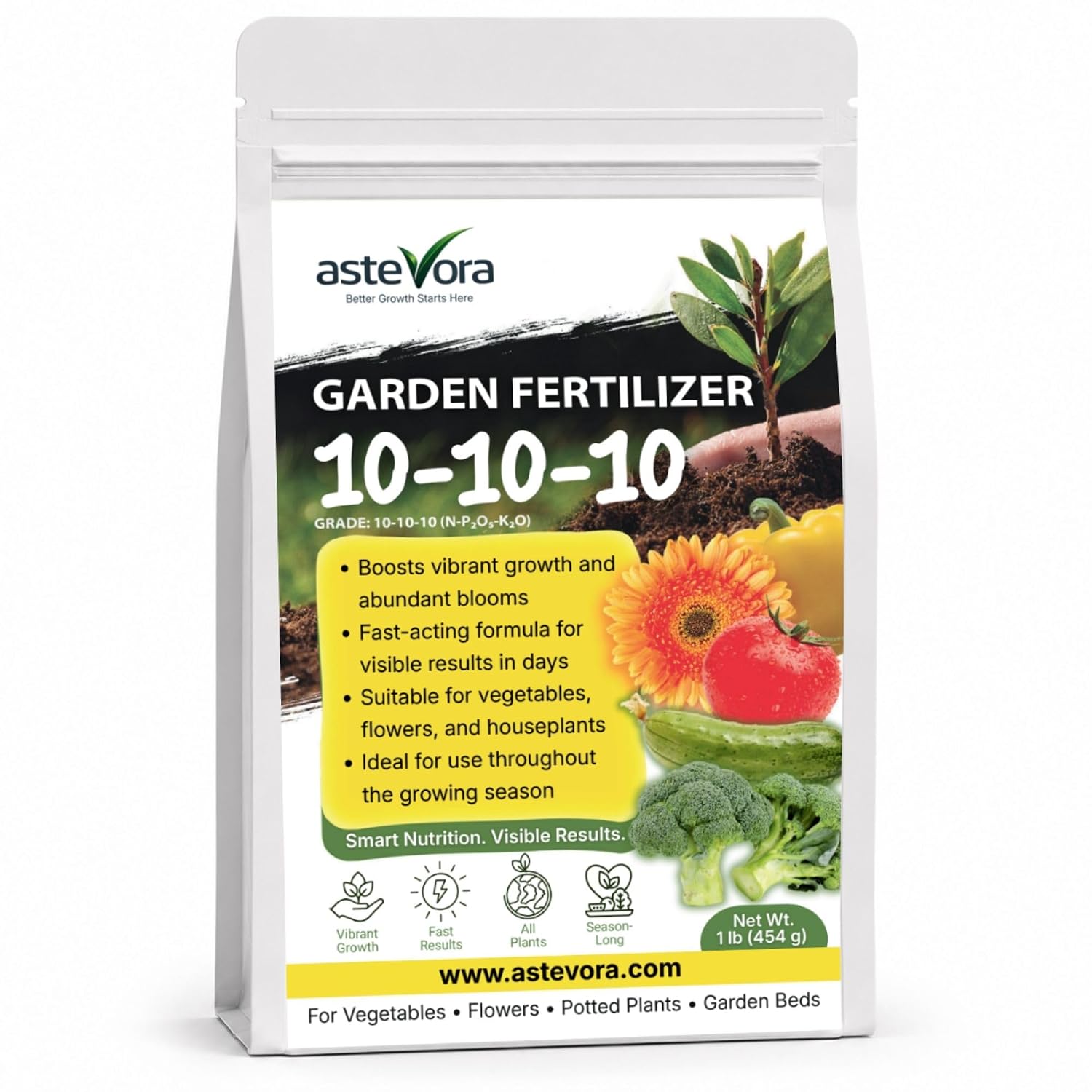
GARDENWISE 10-10-10 Slow-Release Granular Plant Fertilizer (1/2 Quart)
| Item Form | Granules |
|---|---|
| Mixing Ratio | 10-10-10 |
| Specific Uses For Product | Vegetable gardens, fruit trees, shrubs, lawns, flowers, potted plants, indoor gardening |
| Liquid Volume | 0.5 quarts |
This GARDENWISE 10-10-10 granular fertilizer is an all-purpose, slow-release plant food that supplies equal parts nitrogen, phosphorus, and potassium for up to eight weeks. You apply the fine granules evenly around the root zone and water in; directions include specific rates for vegetable beds, lawns, flowers, shrubs, and trunk-diameter-based dosing for fruit trees. The balanced N-P-K and slow-release formulation support root development, steady leaf and shoot growth, and improved stress tolerance—useful for fig trees between spring feeding cycles and as a maintenance boost during the growing season. Practical benefits include predictable feeding intervals that cut down on frequent applications and clear dosing guidance for different plant types. Limitations are that the product is a general-purpose formula rather than a fig-specific blend, so if your soil test shows particular nutrient imbalances or micronutrient needs you may need a supplemental product. Also the pack is a small consumer size, so larger orchards will need multiple bags.
Best for: Buyers who want a straightforward, low-maintenance fertilizer to support fig tree growth without fuss and who prefer predictable feeding intervals and simple dosing instructions.
Less Ideal for: Growers managing nutrient-deficient or pH-sensitive soils, or those who need large-volume supplies for multiple mature trees should consider targeted or bulk alternatives.
- Balanced 10-10-10 N-P-K supports roots, foliage, and fruiting for a wide range of plants
- Slow-release granules provide up to eight weeks of continuous feeding, reducing application frequency
- Clear, plant-specific dosing guidelines including per-inch trunk recommendations for fruit trees
- Fine granule form spreads evenly for good soil contact and easy watering-in
- Not formulated with fig-specific micronutrients or pH adjustments that some fruit growers prefer
- Small 0.5 quart/16 ounce consumer size may be insufficient for larger fig trees or multiple trees
Verdict: A convenient, balanced slow-release granular fertilizer that makes routine feeding of fig trees simple and low-effort.
Miracle-Gro Pour & Feed Singles Ready-to-Use Plant Food

| Item Form | Liquid |
|---|---|
| Application Method | Pour |
| Coverage | Medium |
| Unit Count | 2 Ounce |
| Specific Uses For Product | Plant Food |
Miracle-Gro Pour & Feed Singles are single-use, pre-measured liquid doses that you snap open and pour onto the soil of container plants, so there is no mixing, measuring, or long-term storage. Each 2-ounce single is formulated for potted plants and is intended to feed 12 to 18-inch containers every 10 to 14 days, making it convenient for quick top-ups on vegetables grown in pots. The cap-measure instructions and pour application simplify regular feeding, and the ready-to-use format reduces the chance of over- or under-dosing. Practically, these work well for growers who rotate several small vegetable containers or need an easy solution when juggling many plants. Limitations are that the singles are sized for medium pots only, so very small or very large containers may need adjusted amounts or additional applications, and the format creates more single-use packaging than bulk concentrates. For gardeners prioritizing simplicity and predictable dosing, the product streamlines weekly feeding for container vegetables, but those managing large numbers of pots may prefer a concentrated liquid or granular option for lower per-application cost and less waste.
Best for: Ideal for hobby gardeners growing a few container vegetables who want a no-fuss, predictable feeding routine and value convenience over lowest cost.
Less Ideal for: Not the best choice for producers managing many pots or those focused on minimizing packaging waste or per-application cost.
- Ready-to-use pre-measured singles eliminate mixing and measuring
- Simple pour application designed for container plants
- Labels recommend a clear 10 to 14 day feeding schedule for consistency
- Portable single doses are convenient for spot feeding or travel
- Singles are sized for 12–18 inch pots and may not match very small or very large containers
- Single-use packaging generates more waste than concentrated formulas
Verdict: An easy, no-mix feeding solution that makes consistent fertilizing of medium container vegetables fast and foolproof.
Miracle-Gro Water Soluble All Purpose Plant Food, 12.5 lb

| Item Form | Powder |
|---|---|
| Specific Uses For Product | Plant Food |
| Coverage | general purpose, suitable for various plants |
| Mixing Ratio | 1 tablespoon per gallon of water |
Miracle‑Gro Water Soluble All Purpose is a powder fertilizer designed to dissolve in water and deliver fast nutrients to indoor and outdoor plants. Gardeners mix the recommended scoop with a watering can or use a compatible garden feeder to apply directly to the soil around roots; the product gives routine feedings every 7 to 14 days outdoors or every 2 weeks for houseplants. Notable features include an NPK of 24‑8‑16 for strong vegetative growth, a quoted coverage of about 5,000 sq ft from a 12.5 lb container, and an included scoop with separate measuring ends for indoor and outdoor rates. In practice this means quick uptake for leafy growth and an easy, repeatable dosing routine for reliability across container and in‑ground Clusia specimens. Limitations are that it is a general‑purpose formula rather than a Clusia‑specific mix and frequent applications are required during the growing season, so you will need to follow the label closely to avoid overfeeding.
Best for: Buyers who want a dependable, easy‑to‑measure fertilizer to keep Clusia healthy with consistent, repeatable feedings and straightforward application routines.
Less Ideal for: Growers seeking a slow‑release or custom‑formulated Clusia fertilizer or those who prefer lower‑frequency, hands‑off feeding strategies.
- Fast‑acting water‑soluble formula for near‑instant nutrient availability
- Simple mixing ratios and included scoop make dosing consistent
- Large 12.5 lb container covers a lot of garden area for routine feedings
- Suitable for both container and in‑ground use so it works with potted Clusia and landscape plantings
- General all‑purpose NPK may not match specialized nutrient needs of Clusia at every growth stage
- Requires regular applications during the season rather than a slow‑release schedule
Verdict: A reliable, easy‑to‑mix water‑soluble fertilizer that delivers fast, consistent feedings for Clusia in both pots and landscape settings.
Miracle-Gro Water Soluble All Purpose Plant Food, 5 lb

| Item Form | Powder |
|---|---|
| Application Method | watering can |
| Target Species | all plants |
| Mixing Ratio | 24-8-16 |
| Unit Count | 80 Ounce |
This water-soluble Miracle-Gro formula is designed to give vegetables, flowers and houseplants a quick nutrient boost by dissolving in water and delivering NPK 24-8-16 straight to the root zone. It is typically mixed into a watering can or a garden feeder and applied every 7 to 14 days for outdoor vegetables or every 14 days for indoor plants. The powder format dissolves easily and starts working quickly, which is useful during the active growing season when leafy growth and fruit set matter. A single 5 lb bag covers a large area and the included scoop makes measuring straightforward. Important limitations: because it is a high-nitrogen, fast-release feed it favors quick growth and may need to be balanced with lower-nitrogen or bloom-focused fertilizers if you want more flowers or fruit quality over sheer foliage. Also it requires regular reapplication rather than providing long-term slow release, so plan for repeated treatments during the season.
Best for: Gardeners who want a reliable, quick-acting fertilizer to promote vigorous vegetable growth and who prefer products with broad use and strong customer acceptance.
Less Ideal for: Growers seeking a single application, slow-release fertilizer or those prioritizing low-nitrogen or specialty bloom/fruit formulas for flavor and flowering control.
- Fast-acting water-soluble formula that delivers nutrients quickly to roots
- All-purpose NPK 24-8-16 suitable for a wide range of vegetables and other plants
- Includes a scoop for easy measuring and mixing with a watering can or feeder
- One 5 lb bag feeds a large garden area, reducing the need for frequent purchases
- High-nitrogen formula is not a long-term slow-release feed and requires repeated applications
Verdict: A fast-acting, all-purpose water-soluble fertilizer that reliably boosts vegetable growth when applied regularly.
Scotts All Purpose Flower & Vegetable Continuous Release Plant Food, 3 lb

| Item Form | Granules |
|---|---|
| Application Method | Sprinkle on soil and rake into top 1-3 inches |
| Target Species | All Purpose Flower & Vegetable Continuous Release Plant Food |
| Unit Count | 48 Ounce |
Scotts All Purpose Flower & Vegetable Continuous Release Plant Food is a simple granular fertilizer intended for in-ground flower and vegetable gardens. You apply it by sprinkling the granules around plants, raking them into the top 1 to 3 inches of soil, and watering to start nutrient release. Formulated to feed for up to two months, it supplies steady nitrogen to support root growth and foliage and is recommended for common garden crops including peppers. The bag covers roughly 150 sq. ft., so a single 3 lb package is convenient for small beds or a few pepper plants. Key practical benefits are ease of use, predictable feeding intervals, and reduced need for frequent applications during the growing season. Limitations are that it is an all-purpose formula rather than a pepper-specific mix and its N-P-K profile is not listed on the label data here, so you may want to monitor fruiting and supplement with a bloom-boost fertilizer if you need higher phosphorus for heavy fruit set. Follow label rates to avoid overapplication near crowns.
Best for: Gardeners who want an inexpensive, low-effort fertilizer to maintain steady growth for a few jalapeno plants or a small vegetable bed without frequent feeding.
Less Ideal for: Growers who manage large vegetable plots or who need a nutrient program tailored specifically to maximize pepper fruit set and yield.
- Continuous-release granules feed plants for up to two months, reducing application frequency
- Easy application: sprinkle, rake into topsoil, and water
- Suitable for a wide range of garden plants including vegetables and peppers
- 3 lb bag covers about 150 sq. ft., practical for small gardens or container groups
- All-purpose formula may not provide the specific N-P-K balance jalapenos need for maximum fruiting
- Small bag size means frequent repurchases for larger gardens
Verdict: A budget-friendly, easy-to-use continuous-release fertilizer that keeps jalapeno plants fed for up to two months with minimal fuss.
Choosing the Right Garden Fertilizer for Spring: Key Factors to Consider
Nutrient Ratio and Plant Needs
Spring feeding should favor nutrients that support leaf and root growth rather than heavy bloom set. Look for balanced nitrogen for green-up, adequate phosphorus for root establishment, and potassium for stress tolerance. The N-P-K ratio gives a quick snapshot, but bioavailable forms matter more than numbers alone. For seedlings and transplants, lower-strength or starter formulations reduce burn risk while still promoting vigor.
Different garden areas have different needs. Lawns respond to nitrogen-heavy mixes for rapid green-up, while newly planted perennials benefit from a gentler starter formula. Soil tests can show which macro- and micronutrients are lacking so you can match the fertilizer to actual needs rather than defaulting to high-nitrogen mixes.
Release Mechanism and Timing
How a fertilizer releases nutrients determines when plants access those nutrients and for how long. Fast-release, soluble fertilizers provide an immediate boost that is useful if you need quick green-up after a slow spring, but they require more frequent reapplication and carry higher burn risk. Slow-release or controlled-release formulas give steadier feeding over weeks and reduce the chance of leaching and shock.
Consider local spring temperatures and rainfall. In cool soils, microbial-release products may remain dormant until warming, delaying feeding. For unpredictable springs with alternating warm and cold periods, a mix of immediate and slow-release action can stabilize early growth without causing nutrient surges.
Application Method and Practicality
Gardeners deploy spring fertilizer in many settings: hand-sprayed beds, broadcast over lawns, incorporated into potting mixes, or applied as side dressings. Choose a form-granular, liquid concentrate, soluble powder, or spike-that fits how you work. Liquids and soluble powders are convenient for quick foliar or root drench applications and are easy to calibrate for containers. Granular and slow-release pellets are better for low-maintenance beds and larger areas.
Also consider the tools you have. Granular spreaders help with lawns but are overkill for a few raised beds. Liquid feeders may need a hose-end applicator or bucket mixing but provide precise control for young plants.
Soil Health and Biological Impact
Spring fertilizer choice affects soil microbes and structure as much as plant tissue. High salt index fertilizers can stress beneficial organisms and roots, especially in delicate spring conditions. Organic or biologically friendly options often support microbial communities and improve long-term structure but may release nutrients more slowly.
If improving soil organic matter is a goal, choose fertilizers that complement compost and cover crop strategies rather than replace them. Consider whether the product contains additives such as wetting agents or synthetic chelates that could alter soil biology over repeated use.
Compatibility with Plant Types and Stages
Different plant groups tolerate and need different feeding approaches in spring. Annual flowers and vegetables typically benefit from regular, balanced feeding during fast early growth. Established shrubs and trees usually prefer less frequent, deep applications targeted at root zones. Seedlings and transplants are sensitive to concentration and timing, so choose formulations and dosages that avoid burning young tissue.
Match product strength and cadence to the weakest plants in your garden when applying a blanket feed. Alternatively, plan spot applications so delicate beds get gentler treatment while robust areas receive stronger doses.
Environmental and Safety Considerations
Spring rains can wash soluble nutrients into waterways, so consider runoff risk when fertilizing sloped beds or areas near drainage. Slow-release formulations and applying before light rainfall reduce immediate runoff risk. Read label directions for buffer zones near ponds or streams and avoid overapplication that contributes to nutrient pollution.
Also account for pet and child safety. Some fertilizers are formulated with additives that attract or irritate animals. Choose products with clear handling guidance and store them securely to prevent accidental exposure during active spring gardening.
Timing Your First Spring Application
Timing matters more than the exact product in many gardens. Wait until soil temperatures consistently trend above the range where root activity resumes for the plants you grow. For many temperate-region gardens that means starting light feeding when the soil is no longer frozen and daytime temperatures reach the low to mid 50s Fahrenheit.
A light early application can prevent sluggish green-up, but heavy feeding before roots are active wastes nutrients and can stress plants. Use a lower-strength feed for seedlings and newly planted transplants, and schedule a follow-up once growth is established.
- Check soil temperature with a simple probe for best timing
- Start with diluted liquid or low-rate granular feed for delicate plants
- Plan follow-up applications weekly to monthly depending on release type
Spring Fertilizer for Containers and Raised Beds
Containers warm and dry faster than in-ground beds and often need more frequent feeding in spring. Choose soluble or water-soluble fertilizers that allow you to feed modestly at each watering without salting out potting mixes. Slow-release granules mixed into potting mixes at planting can cut down on mid-season maintenance.
For raised beds with established soil, side dressing with a granular or pellet fertilizer in early spring followed by light incorporation and watering gives steady nutrient access as roots expand.
- Use lower concentration feeds on newly potted seedlings
- Top-dress mature raised beds to minimize disturbance to roots
- Flush containers occasionally to avoid salt build-up
Feeding Lawns in Early Spring
Lawns usually benefit from a nitrogen-focused feed in spring to restore green color and encourage tillering. If the lawn suffered winter damage, a balanced approach with some phosphorus to support root repair can help, but many municipal areas restrict phosphorus use unless a deficiency is documented.
Choose a product with appropriate release timing for your maintenance cadence. Fast-action fertilizers show quick green-up before an event, while slow-release blends reduce mowing demands and cut the risk of a flush of tender growth that invites pests.
- Avoid heavy nitrogen right before heat arrives to prevent stress
- Calibrate spreaders for even application
- Water lightly after application when directed to activate granules
Using Organic Vs Synthetic Options
Organic fertilizers release nutrients more slowly and often contribute to soil organic matter and microbial activity. They can be a good match for gardeners focused on long-term soil improvement and for delaying feeding until soil life becomes active. Synthetic fertilizers provide predictable nutrient concentrations and faster response, which can be useful when quick green-up is needed.
A blended strategy can work well in spring: apply an organic base to support microbiology and a light synthetic feed for immediate plant needs when warranted. Consider smell, handling, and run-off risk when choosing between these paths.
- Organic options often need warmer soil to release nutrients
- Synthetic feeds deliver predictable dosages but require careful handling
- Mixing types is acceptable if label directions are followed
Adjusting Feed Based on Soil Test Results
A simple soil test gives actionable information for spring feeding. If tests show sufficient phosphorus or potassium, prioritize nitrogen or targeted micronutrients to avoid buildup. For soils with low organic matter, use products that complement compost and mulching practices rather than substituting for them.
Tests also reveal pH imbalances that affect nutrient availability. If pH is off, correcting it can be more effective than additional fertilizer. Use test results to plan a multi-season fertility approach instead of one-off spring corrections.
- Test every 2 to 4 years for reliable trend data
- Base fertilizer choice and rate on test results, not assumptions
- Address pH or organic matter before heavy nutrient applications
How We Chose the Best Garden Fertilizer for Spring
We focused on attributes that influence how effectively a spring fertilizer supports early-season growth and longer-term soil health. Key evaluation criteria included nutrient ratio and bioavailability to gauge immediate and sustained feeding; release mechanism and timing to match spring warming; ease of application for common garden setups such as beds, containers, and lawns; and soil impact including salt index and compatibility with soil biology. We also considered formulation flexibility, such as whether a product can be diluted for seedlings or applied granularly to established beds, and practical handling factors like dust, odor, and spreader compatibility. Products were excluded if they were formulated primarily for non-garden uses, required specialized equipment uncommon to home gardeners, or offered unclear nutrient labeling that would prevent appropriate spring dosing. Our final picks reflect filters for predictable early-season nutrition, minimal harm to seedlings and soil microbes, and straightforward application across typical backyard and container gardens.
FAQ
When is the best time in spring to apply garden fertilizer?
The best time is when soil temperatures are consistently warm enough for root activity, often when daytime highs are reliably in the 50s Fahrenheit. Avoid applying heavy feeds when soil is cold or waterlogged, because uptake will be limited and risk of leaching increases.
How often should I reapply fertilizer in spring?
Reapplication frequency depends on the product. Fast-release fertilizers may need weekly to biweekly applications, while slow-release types can last several weeks to months. Match cadence to plant growth rate and the product's label directions.
Can I use the same fertilizer for containers and in-ground beds?
You can use the same fertilizer type but adjust concentration and frequency. Containers require gentler, more frequent feeding because they have limited soil volume and faster nutrient depletion. Always follow dilution guidance for container applications.
Will spring fertilizer harm new seedlings?
Highly concentrated feeds can burn seedlings. Use low-strength or starter formulations and dilute liquids for young transplants. Side-dressing established plants rather than broadcasting near seedlings reduces risk.
Should I choose organic or synthetic fertilizer for spring?
Both have merits. Organic fertilizers support soil biology and release slowly, which helps long-term structure. Synthetic fertilizers act quickly and give predictable nutrient doses. Your choice depends on whether you prioritize immediate green-up or gradual soil improvement.
How does spring rainfall affect fertilizer choice?
Heavy spring rains increase the risk of soluble nutrient runoff. Slow-release products and applying before light rain reduce immediate leaching risk. Avoid applying high-salt fertilizers on sloped sites or near water features when heavy rain is expected.
Final Verdict
Prioritize matching release timing and nutrient balance to how your garden warms and what your plants need in early growth. For quick green-up choose more immediately available nitrogen sources used at safe concentrations; for steady, lower-maintenance feeding prefer slow-release or organic options that support soil biology. Weigh application practicality, runoff risk, and plant sensitivity when deciding. Focusing on nutrient forms, release behavior, and soil test results will guide a confident spring fertilizer choice that promotes vigorous, healthy early-season growth.
