

Note: This article contains affiliate links. If you click on these links and make a purchase, I may earn a small commission at no extra cost to you. This helps support my research and content. Read my full affiliate disclosure here.
If you maintain hedges for privacy, structure, or garden form, the right fertilizer makes a noticeable difference in fullness, color, and winter hardiness. Hedge fertilizer choices vary by nutrient ratio, release type, and application method, so picking one that fits your soil, species, and maintenance rhythm helps you avoid wasted product and weak regrowth. This guide covers seven shortlisted options chosen for the tasks most hedge owners face: promoting lateral branching, building root reserves, and sustaining seasonal color. Below we outline how each candidate performs against common gardener concerns like nutrient balance and longevity, then walk through practical buying considerations so you can match a product to your hedge and schedule.
Top Picks at a Glance
| Best Overall The best all-around choice for most situations | BioAdvanced 12 Month Tree & Shrub Protect and Feed Concentrate, 32 oz |  |
| Best Quality Built to a higher standard if you want something more solid | BioAdvanced 12 Month Tree & Shrub Protect & Feed Concentrate, 64 oz |  |
| Best Value The sweet spot between price and what you get | GARDENWISE 10-10-10 Slow-Release Granular Plant Fertilizer (1/2 Quart) |  |
| Best Budget The cheapest option that still gets the job done reliably | Scotts Evergreen, Flowering Tree & Shrub Continuous Release Plant Food |  |
| Highest Rated A top-rated pick with lots of positive feedback | TPS Nutrients Liquid Bush Fertilizer, 32 fl oz |  |
| Most Popular A crowd favorite that many people choose with confidence | Miracle-Gro Tree & Shrub Plant Food Spikes, 12 Spikes |  |
| Best Seller A high-volume bestseller chosen again and again | Miracle-Gro Shake 'N Feed Flowering Trees & Shrubs Plant Food, 8 lb. |  |
BioAdvanced 12 Month Tree & Shrub Protect and Feed Concentrate, 32 oz

| Item Form | Liquid |
|---|---|
| Target Species | Adelgids, Aphids, Japanese Beetles, Whiteflies, Scale |
| Liquid Volume | 32 fluid ounces |
| Specification Met | EPA |
This BioAdvanced concentrate is designed as a one‑step soil treatment that delivers systemic insect control and slow‑release nutrition for trees and shrubs. You mix the concentrate and apply it around the root zone so the active ingredient is taken up through the roots and distributed to new growth, which removes the need for foliar spraying. Key features are year‑long protection against listed pests such as aphids, adelgids, leafminers and Japanese beetles and an incorporated slow‑release nitrogen formula that supports season‑long vitality. For hedges this means fewer insect outbreaks on emerging shoots and steady feeding to improve density and leaf color. Important limitations: it contains imidacloprid and is restricted in several states and certain counties, so check local regulations before using, and it is not a quick knockdown product for visible adult insects on contact. Best used as a preventative treatment timed to root uptake for consistent protection and improved hedge health over the growing season.
Best for: Gardeners who want a low‑maintenance, preventative solution to protect hedges and shrubs while improving vigor across a season and prefer soil‑applied systemic treatments over repeated foliar sprays.
Less Ideal for: Those needing instant contact control of active infestations or gardeners in regions where this active ingredient is restricted should choose a different product or method.
- Provides systemic, rainproof insect protection that lasts up to 12 months after a single application
- Includes slow‑release nitrogen fertilizer to support root strength and steady seasonal growth
- Applied to the soil so no foliar spraying is required
- Targets a range of common tree and shrub pests including aphids, scale, and Japanese beetles
- Contains imidacloprid and is not permitted for sale or use in several states and some counties
- Not an immediate contact spray for fast knockdown of visible adults
Verdict: Use this concentrate when you want one preventative soil application to both feed and protect hedges for up to a year.
BioAdvanced 12 Month Tree & Shrub Protect & Feed Concentrate, 64 oz

| Unit Count | 64 Fluid Ounces |
|---|---|
| Item Form | Spray |
| Target Species | Insects |
| Liquid Volume | 1 gallons |
This concentrate is designed to deliver both long‑lasting insect protection and season‑long nutrition to trees and shrubs without foliar spraying. You mix the product per directions and apply it to the soil around roots where the active ingredient is taken up and distributed throughout the plant, offering up to 12 months of protection against listed pests such as aphids, scale, emerald ash borer, and Japanese beetles. The slow‑release fertilizer component supplies steady nutrients from roots to branch tips to support growth and vitality, which is useful for hedges and specimen shrubs. The rainproof systemic action reduces the need for repeat applications and eliminates drift concerns from sprays. Limitations: contains imidacloprid and is restricted from sale in several states, and it is intended for listed insects only so it will not address diseases or nonlisted pests; proper application rates are important to avoid overuse.
Best for: Buyers who prioritize long‑term performance and low‑maintenance protection for hedges and shrubs and want a single annual treatment that combines pest control and feeding.
Less Ideal for: Gardeners who need immediate knockdown sprays for active foliar infestations, those managing disease problems, or people seeking pesticide‑free organic solutions.
- Provides systemic insect control that protects plants for up to 12 months with one application
- Includes slow‑release fertilizer to support steady growth and root health
- Soil application eliminates the need for foliar spraying and reduces drift and wash‑off
- Concentrated 64 oz size covers multiple trees or larger hedges when mixed per label
- Contains imidacloprid and is not available for sale in several states
- Targets listed insect pests only and does not treat diseases or unlisted pest problems
Verdict: Choose this concentrate if you want a one‑time annual treatment that combines systemic insect protection with slow‑release feeding to keep hedges healthy with minimal maintenance.
GARDENWISE 10-10-10 Slow-Release Granular Plant Fertilizer (1/2 Quart)
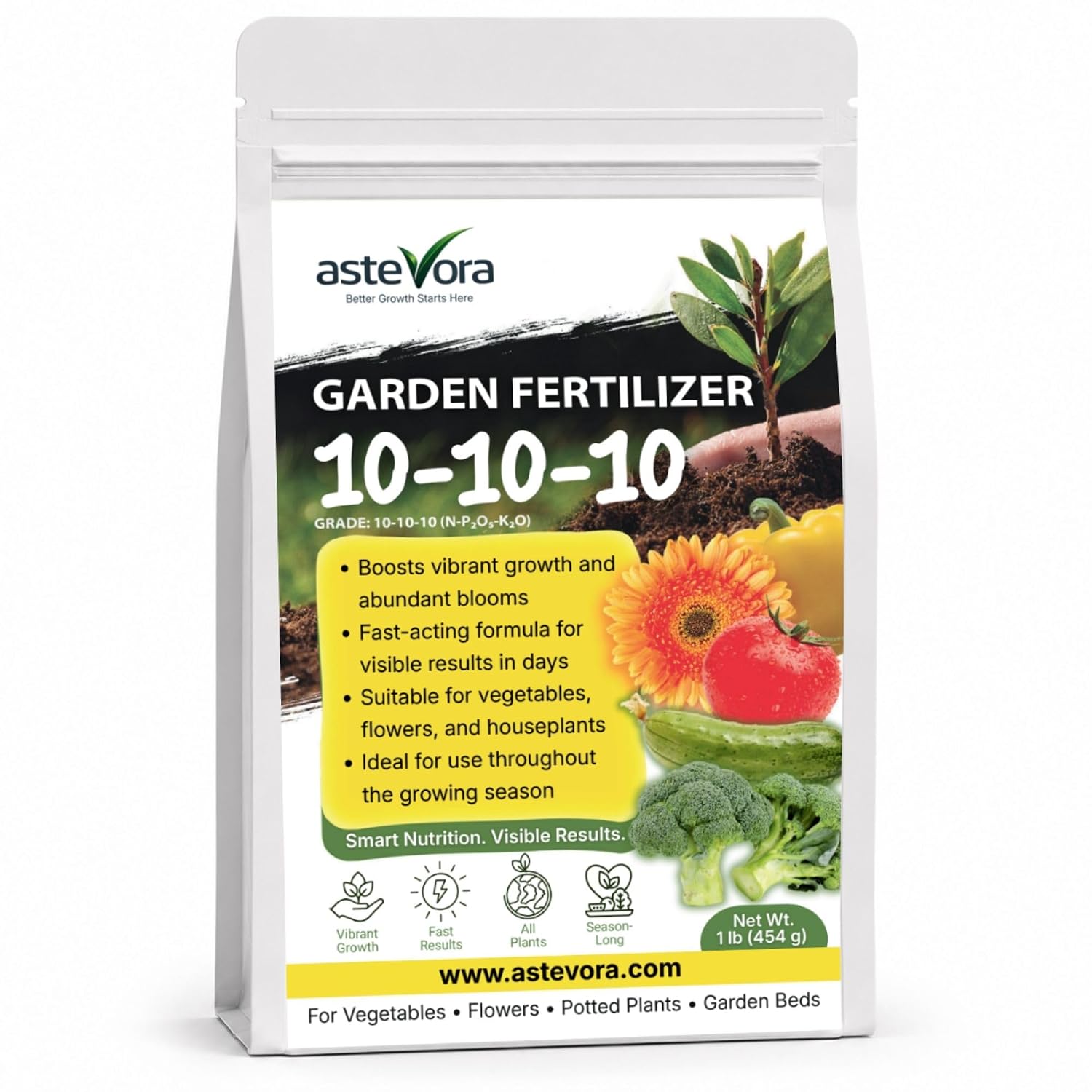
| Item Form | Granules |
|---|---|
| Mixing Ratio | 10-10-10 |
| Specific Uses For Product | Vegetable gardens, fruit trees, shrubs, lawns, flowers, potted plants, indoor gardening |
| Liquid Volume | 0.5 quarts |
This GARDENWISE 10-10-10 granular fertilizer is an all-purpose, slow-release plant food that supplies equal parts nitrogen, phosphorus, and potassium for up to eight weeks. You apply the fine granules evenly around the root zone and water in; directions include specific rates for vegetable beds, lawns, flowers, shrubs, and trunk-diameter-based dosing for fruit trees. The balanced N-P-K and slow-release formulation support root development, steady leaf and shoot growth, and improved stress tolerance—useful for fig trees between spring feeding cycles and as a maintenance boost during the growing season. Practical benefits include predictable feeding intervals that cut down on frequent applications and clear dosing guidance for different plant types. Limitations are that the product is a general-purpose formula rather than a fig-specific blend, so if your soil test shows particular nutrient imbalances or micronutrient needs you may need a supplemental product. Also the pack is a small consumer size, so larger orchards will need multiple bags.
Best for: Buyers who want a straightforward, low-maintenance fertilizer to support fig tree growth without fuss and who prefer predictable feeding intervals and simple dosing instructions.
Less Ideal for: Growers managing nutrient-deficient or pH-sensitive soils, or those who need large-volume supplies for multiple mature trees should consider targeted or bulk alternatives.
- Balanced 10-10-10 N-P-K supports roots, foliage, and fruiting for a wide range of plants
- Slow-release granules provide up to eight weeks of continuous feeding, reducing application frequency
- Clear, plant-specific dosing guidelines including per-inch trunk recommendations for fruit trees
- Fine granule form spreads evenly for good soil contact and easy watering-in
- Not formulated with fig-specific micronutrients or pH adjustments that some fruit growers prefer
- Small 0.5 quart/16 ounce consumer size may be insufficient for larger fig trees or multiple trees
Verdict: A convenient, balanced slow-release granular fertilizer that makes routine feeding of fig trees simple and low-effort.
Scotts Evergreen, Flowering Tree & Shrub Continuous Release Plant Food

| Item Form | Powder |
|---|---|
| Application Method | Apply directly to soil |
| Coverage | Medium |
| Target Species | Evergreens, dogwoods, hydrangeas, magnolias, azaleas, camellias, rhododendrons |
This Scotts continuous-release plant food is designed for established magnolias, hydrangeas, azaleas and other acid-loving trees and shrubs. You apply the powder directly to the soil under the canopy, rake it into the top 1 to 3 inches, then water to start the slow-release feeding that lasts about two months. The formulation emphasizes steady nutrient availability to encourage vigorous root growth and lush foliage without the quick spikes that can stress woody shrubs. It is straightforward to use and sized for repeated applications through the growing season every two months. Limitations are that it is a general shrub formula rather than a magnolia-specific mix and coverage is described as medium, so larger trees will require multiple bags or repeated applications to treat the whole drip line. Also it is a granular/powder form so you must measure and distribute it evenly rather than using a liquid drench for quick correction of deficiencies.
Best for: Home gardeners on a budget who want a low-effort, periodic fertilizer to maintain established magnolia trees and similar acid-loving shrubs during the growing season.
Less Ideal for: People seeking a quick corrective treatment for nutrient deficiencies or a fertilizer tailored with a magnolia-specific N‑P‑K balance for intensive bloom or fruiting goals.
- Continuous-release formula feeds for up to two months reducing application frequency
- Formulated for acid-loving trees and shrubs common to magnolia care
- Easy application: apply from bag, rake into topsoil and water in
- Promotes root growth and fuller foliage suitable for woody ornamentals
- Coverage rated as medium so larger magnolias may need additional product to treat full canopy
Verdict: A simple, budget-friendly slow-release shrub fertilizer that keeps magnolias fed with minimal effort every two months.
TPS Nutrients Liquid Bush Fertilizer, 32 fl oz

| Brand | TPS NUTRIENTS |
|---|---|
| Item Form | Liquid |
| Specific Uses For Product | Plant Growth |
| Target Species | Shrubs and Bushes |
| Unit Count | 32 Fluid Ounces |
This 32 fl oz liquid bush fertilizer from TPS Nutrients is made to be a regular feed for hedges, ornamental shrubs, and landscape bushes. It supplies a balanced nutrient mix with added calcium, magnesium, and kelp in a nitrate-based liquid for quick uptake through roots and foliage. Typical use is straightforward dosing during the growing season and applying evenly to soil or as a foliar spray for faster absorption. Practical benefits include faster visible leaf growth, denser branching that helps maintain hedge shape, and support for root health that improves winter hardiness and resilience. The liquid format makes application and mixing predictable compared with slow-release granules, but it does require a regular schedule to maintain results. There is no detailed N-P-K breakdown on the label provided here, so gardeners who need exact nutrient ratios or specialized formulations may want additional information before committing. For everyday hedge maintenance this product delivers convenient, concentrated nutrition that helps keep shrubs full and vigorous.
Best for: Gardeners who want a simple, dependable liquid feed to keep hedges and ornamental shrubs consistently full and healthy and who prefer predictable, repeatable applications.
Less Ideal for: People seeking a precise N-P-K specification for tailored nutrient management or those who prefer one-time granular slow-release fertilizers for low-maintenance feeding.
- Liquid formula allows faster nutrient uptake and easy mixing for regular feeding
- Contains added calcium, magnesium, and kelp to support root strength and overall plant vigor
- Formulated specifically for shrubs and bushes to encourage denser branching and fuller foliage
- Concentrated 32 fl oz size suitable for multiple applications across a small to medium hedge
- No explicit N-P-K ratio listed in the provided product details, so exact nutrient balance is unclear
- Requires repeated applications during the season rather than a single slow-release treatment
Verdict: A reliable liquid feed that helps hedges and ornamental shrubs develop fuller foliage and stronger roots when used as a regular maintenance fertilizer.
Miracle-Gro Tree & Shrub Plant Food Spikes, 12 Spikes

| NPK | 15-5-10 |
|---|---|
| Coverage | 12 spikes per season |
| Target Species | trees, shrubs, evergreens and acid-loving plants |
| Application Method | Place spikes around the tree's drip line |
These Miracle-Gro Tree & Shrub Plant Food Spikes are pre-measured sticks that deliver slow-release nutrition directly to the root zone of trees and shrubs. They are typically used by watering the soil around the drip line, spacing spikes around the drip line at least 3 feet apart, and driving them into the ground so they sit below the soil surface. The 15-5-10 NPK mix supplies a higher proportion of nitrogen for foliage with phosphorus and potassium to support root and overall plant health, and the package contains 12 spikes intended for seasonal feedings. Practical benefits include simple, low-effort applications for established cherry trees where precise granular spreading is inconvenient, and the spikes help localize nutrients to the root zone rather than blanket-feeding the whole bed. Limitations are that they are designed for early spring and mid-fall use only, so they do not replace a tailored feeding schedule for trees needing summer supplements, and they require firm soil for insertion which can be difficult in very compacted or rocky sites. The product is best as an easy seasonal maintenance feed rather than an intensive corrective treatment.
Best for: Gardeners who want a low-effort, dependable seasonal feed for established flowering trees and shrubs and prefer an application that targets the root zone without granular spreading.
Less Ideal for: People needing aggressive summer corrections, quick nutrient fixes, or those working on newly planted trees that require a different feeding routine.
- Slow-release formula delivers nutrients directly to the root zone
- Pre-measured spikes make application simple and low-mess
- NPK 15-5-10 supports foliage color and overall tree vigor
- Includes 12 spikes, enough for multiple small trees or one larger drip line
- Intended for two seasonal applications only and not for summer feeding needs
- Can be hard to install in very rocky or compacted soils
Verdict: A simple, targeted seasonal feeding option that makes it easy to maintain vibrant foliage on established flowering trees with minimal effort.
Miracle-Gro Shake 'N Feed Flowering Trees & Shrubs Plant Food, 8 lb.

| Item Form | Granules |
|---|---|
| Application Method | shake evenly onto the soil |
| Target Species | flowering trees, shrubs and other acid-loving plants |
| Mixing Ratio | 18:6:12 |
| Unit Count | 128 Ounce |
Miracle-Gro Shake 'N Feed Flowering Trees & Shrubs is a granular, slow-release fertilizer designed to support flowering shrubs and acid-loving plants over an extended period. You apply it by shaking the granules evenly onto the soil under the branch spread or working it into potting mix for containers, then watering to activate the nutrients. The formula lists an 18-6-12 N-P-K ratio and includes organic-derived inputs such as kelp, feather meal, bone meal and earthworm castings to help feed soil microbes and support root development. Practically, that means less frequent feeding and improved foliage and bloom quality across a season—Miracle-Gro recommends reapplying every three months. It works for both in-ground and container plantings and covers a medium area per bag. Limitations are that it is a general-purpose shrub formula tuned for acid-loving species so it is not a precision fertilizer for nutrient-deficient soils and you still need to avoid contact with trunks and foliage when applying. For best results monitor soil pH and follow labeled application rates for newly planted versus established shrubs.
Best for: Gardeners who want a low-effort, season-long feed for flowering shrubs like forsythia and prefer a product that supports soil health without frequent reapplication.
Less Ideal for: Growers who need a precise corrective fertilizer for diagnosed nutrient deficiencies or who maintain shrubs that prefer neutral to alkaline soils.
- Continuous-release granules feed plants for up to three months reducing application frequency
- Contains organic inputs like kelp and earthworm castings to support soil microbes and root health
- Clear application method for both in-ground and container plants makes it easy to use
- Higher nitrogen ratio (18-6-12) promotes lush foliage and supports flowering season-long
- Not a targeted corrective fertilizer for specific mineral deficiencies
- Designed for acid-loving plants so less suitable for neutral or alkaline-preferring shrubs
Verdict: Use this to give forsythia and other acid-loving shrubs an easy, three-month continuous feeding that boosts foliage and blooms with minimal effort.
Choosing the Right Hedge Fertilizer: Key Factors to Consider
Nutrient Balance and N-P-K Ratio
Hedges respond differently to nitrogen, phosphorus, and potassium depending on species and growth stage. Nitrogen drives leafy growth and a denser hedge, which is usually desired for screening plants, but too much can produce weak, tender shoots prone to winter damage.
Phosphorus supports root establishment, especially important for younger hedges or plants that were recently transplanted. Potassium helps overall plant vigor and resistance to stress. Look at the ratio rather than a single number and consider formulations that include modest amounts of secondary nutrients like magnesium, calcium, and sulfur because those can correct common micro-deficiencies in hedge soils.
Release Pattern and Longevity
Release pattern determines how often you need to reapply and how steady growth will be. Quick-release fertilizers give an immediate green-up and are useful for rapid recovery after pruning or pest damage, but they require more frequent applications and carry a higher risk of foliar burn if applied incorrectly.
Slow- or controlled-release products supply nutrients over weeks or months, smoothing growth and reducing the chance of surges that force soft growth. For long hedgerows or homeowners with limited maintenance time, a long-release formula often provides the best balance between convenience and steady development.
Root Development and Establishment Support
A healthy root system is critical for hedge density and drought resilience. Fertilizers that include phosphorus in appropriate amounts or that are formulated with root-stimulating additives help newly planted or recently moved shrubs set deeper, stronger roots.
Even established hedges benefit from periodic feeding that encourages carbohydrate storage in roots before winter. Consider products with moderate phosphorus for establishment phases, then shift toward nitrogen-focused maintenance blends once roots are established.
Application Method and Coverage
Hedge runs are often long and linear, so application practicality matters. Granular spreaders can speed treatment of long hedgerows, while spike or tablet forms simplify feeding single specimens. Liquids allow precise dosing and can be applied when foliar feeding is desirable.
Think about how you will deliver the fertilizer across the planting bed without disturbing roots or compacting soil. Also consider whether the product is compatible with standard spreaders or requires special equipment. Ease of clean-up and storage also affect how likely you are to follow the recommended schedule.
Salt Index and Plant Safety
Some fertilizers have a high salt content, which can desiccate root systems and damage hedge plants, particularly in sandy soils or during drought. Products labeled as low-salt or with lower soluble salt indices are preferable around sensitive species and in areas with shallow root zones.
If you have a history of leaf-tip burn or decline after feeding, switching to a lower-salt formula or using a slow-release product reduces risk. Pay attention to recommended rates and water the soil after application when labels advise doing so to move salts away from root crowns.
Timing and Seasonal Needs
The best feeding schedule depends on hedge type and local climate. Deciduous hedges benefit from feeding in early spring to support new growth, while many evergreens respond better to late spring or early summer applications that avoid late-season flushes susceptible to frost.
Consider whether you need a product that provides winter root food versus one that promotes immediate top growth. Many gardeners stagger feeds with an initial spring application and a lighter midseason treatment, using slow-release formulas to minimize the number of interventions.
Feeding Schedules for Different Hedge Types
Not all hedges need the same calendar of feeds. Fast-growing deciduous hedges often require more frequent nitrogen-rich feeding to maintain density, while slow-growing or formal evergreen hedges benefit from fewer, well-timed applications that avoid late-season tender growth.
Match your feed timing to pruning. Apply a maintenance treatment a few weeks after a hard prune to support recovery. For newly planted hedges, lighter, phosphorus-inclusive feeds at planting and at the next growing season help roots establish without forcing excessive top growth.
- Deciduous screening: early spring and midseason maintenance
- Evergreen formal hedges: late spring or early summer, avoid late fall nitrogen
- New plantings: gentle root-support feeds at planting and first spring
Granular Versus Liquid Fertilizers
Granular fertilizers are convenient for long hedgerows because they cover ground quickly and can be used with spreaders or applied by hand in a band along the root zone. They often come in slow-release formulations that reduce application frequency.
Liquid fertilizers deliver nutrients quickly and are useful for spot treatments or when you want to combine feeding with foliar sprays for micronutrient correction. Liquids require more frequent application but give you precise control over dosage.
- Granular: good for long runs and slow-release needs
- Liquid: precise control, faster uptake, useful for foliar corrections
Addressing Common Hedge Deficiencies
Yellowing between veins often indicates iron deficiency in alkaline soils and responds to targeted iron applications or foliar chelates rather than blanket N-P-K increases. Pale overall growth more commonly points to nitrogen shortage, which a maintenance feed can correct.
If you see marginal leaf burn or stunted shoots after feeding, reassess application rates and salt index. Soil testing is the most reliable way to diagnose persistent issues and tailor fertilizer choice and application rates.
- Interveinal chlorosis: check iron availability and soil pH
- General paleness: consider a nitrogen maintenance feed
- Burn or dieback after feeding: reduce rate or switch to low-salt formula
Safety Around Roots, Lawns, and Hardscapes
When applying fertilizer near paved areas or lawns, avoid overapplication that can cause runoff or scorch adjacent plants. Banding fertilizer along the root zone rather than broadcasting over hardscape reduces waste and keeps product where plant roots can use it.
Rinse spreaders and applicators after use and store products in a dry place out of reach of children and pets. Follow label watering instructions to move nutrients into the root zone and prevent surface salt buildup.
- Band applications along root zone to limit runoff
- Avoid broadcasting onto hard surfaces
- Water after application if label recommends
Combining Fertilizer With Mulch and Soil Improvement
Fertilizer is only one part of hedge health. Organic mulches moderate soil temperature, conserve moisture, and break down to supply slow-release nutrients. Combining regular mulching with targeted fertilization reduces the need for heavy feeding and improves soil structure over time.
If your soil is compacted or low in organic matter, incorporate compost or use amendments that improve porosity before relying solely on fertilizers to correct growth problems. Healthier soil makes fertilization more effective and reduces input needs.
- Use mulch to conserve moisture and slowly add nutrients
- Amend compacted soils to improve root penetration and uptake
- Pair light feeding with organic matter improvements for lasting results
How We Chose the Best Hedge Fertilizer
We focused on attributes that matter in real hedge care situations and used consistent editorial filters to narrow the field. Selection prioritized nutrient profiles that favor shrub growth patterns, release mechanisms that match common feeding schedules, and formulations suitable for a range of hedge species from evergreen screening to deciduous formal hedges. We also considered ease of application for long runs of plants, the potential for foliar burn, and whether a product supports root development as well as top growth. Excluded items included generic lawn-only fertilizers, products intended solely for container ornamentals, and mixes with documented high salt indices that can stress hedgerows. We examined label N-P-K ratios, presence of secondary nutrients like magnesium and sulfur, whether the product is slow- or quick-release, and suggested application rates per linear foot or per plant. Practical factors such as spreader compatibility, safety around children and pets, and availability of granular versus liquid forms were part of the decision framework. These criteria guided the final shortlist and align with the scoring metrics used in each product block.
FAQ
How often should I feed established hedges?
Frequency depends on product type and species. Slow-release granular formulas often only need one to two applications per growing season, while quick-release liquids may be applied every four to six weeks during active growth. Match frequency to plant response rather than a strict calendar.
Can I use lawn fertilizer on my hedges?
Some lawn fertilizers have suitable N-P-K ratios, but many are formulated for turf and may lack the secondary nutrients hedges need. Lawn products can also have higher salt indices, so choose carefully and follow label guidance when using them on woody plants.
Will fertilizing make my hedge grow too fast?
Fertilizing encourages growth, and excessive nitrogen can produce soft, tender shoots that are vulnerable to pests and frost. Use the recommended rate and consider slow-release products or lower-nitrogen blends if you want controlled, gradual thickening.
Is foliar feeding useful for hedges?
Foliar feeding can quickly correct micronutrient deficiencies such as iron or zinc because leaves absorb certain nutrients rapidly. It is not a substitute for soil-applied nutrition for long-term N-P-K needs but is a useful tool for targeted corrections.
What should I do before applying fertilizer to my hedge?
Start with a basic soil test to identify pH and nutrient levels. Adjust soil pH if needed, correct compaction or drainage issues, and apply mulch to protect roots. Follow label rates and water as recommended to move nutrients into the root zone.
Are organic fertilizers effective for hedges?
Organic fertilizers release nutrients more slowly and improve soil biology, which benefits long-term hedge health. They may not produce as rapid a green-up as synthetic quick-release products, but they reduce salt risk and build soil structure over time.
Final Verdict
Choose a hedge fertilizer that matches the growth goals for your planting: use moderate nitrogen and support roots during establishment, shifting to slower-release maintenance feeds for mature hedges. Balance nutrient ratios with the soil conditions and species needs, and prioritize release pattern and salt safety to avoid weak or damaged growth. A considered feeding plan plus good mulch and occasional soil amendment produces denser, healthier hedges with fewer interventions. Focus on the criteria described here to pick a product that fits your schedule and the hedge type rather than chasing blanket claims.
