

Note: This article contains affiliate links. If you click on these links and make a purchase, I may earn a small commission at no extra cost to you. This helps support my research and content. Read my full affiliate disclosure here.
Pineapple plants need steady, specific nutrition to produce healthy foliage and sweet fruit. The right fertilizer supports root development, maintains consistent leaf color, and encourages flowering and fruit set without burning shallow roots. This guide covers six shortlisted options chosen for pineapple growing situations, from potted patio plants to ground-planted garden crowns. We evaluated products on measurable factors such as nutrient ratios suited to bromeliads, release method, and ease of application. Read on to understand the feeding approaches that fit your planting setup and seasonality before the product summaries.
Top Picks at a Glance
| Best Overall The best all-around choice for most situations | TPS Nutrients Pineapple Fertilizer Liquid Plant Food, 8 oz |  |
| Best Quality Built to a higher standard if you want something more solid | FoxFarm Grow Big Liquid Plant Food (16 fl oz) |  |
| Best Value The sweet spot between price and what you get | Osmocote Smart-Release Plant Food Plus Outdoor & Indoor, 1 lb |  |
| Best Budget The cheapest option that still gets the job done reliably | Miracle-Gro Water Soluble All Purpose Plant Food, 1.5 lb |  |
| Highest Rated A top-rated pick with lots of positive feedback | MicroLife Palms & Tropical Granular Organic Fertilizer (4-2-4), 7 lb |  |
| Best Seller A high-volume bestseller chosen again and again | Miracle-Gro Liquid All Purpose Plant Food Concentrate, 32 oz |  |
TPS Nutrients Pineapple Fertilizer Liquid Plant Food, 8 oz

| Item Form | Liquid |
|---|---|
| Specific Uses For Product | Plant Growth |
| Coverage | Low |
| Target Species | pineapple plants, bromeliads |
| Liquid Volume | 8 fluid ounces |
This 8 oz liquid fertilizer from TPS Nutrients is made specifically for pineapple plants and similar tropical bromeliads and is intended for use during active growth and fruiting. It is a concentrated, easy-to-dilute liquid that you apply to potted or garden-grown pineapples to encourage stronger roots, fuller crowns, and better fruit development. The product is presented as low coverage, so a small bottle stretches across multiple feedings for container growers or hobbyists. Practical benefits include targeted nutrition for tropical plants and simple application during the growing season. Limitations are the small bottle size for larger plantings and the lack of detailed N-P-K numbers on the label, which makes it harder to compare precise nutrient ratios with other fertilizers. Expect to use this as a regular feed for one or a few plants rather than a bulk solution for many beds.
Best for: Gardeners growing one to a few pineapple plants or bromeliads who want a purpose-made, easy-to-use liquid feed to support fruiting and foliage growth.
Less Ideal for: Large-scale growers or those managing many plants who need a high-volume or granular fertilizer option.
- Formulated specifically for pineapple and bromeliads to support fruit and foliage development
- Concentrated liquid form that is easy to dilute and apply during active growth
- Suitable for both container and garden-grown pineapples
- Made in USA and presented for simple seasonal feeding
- Small 8 oz volume may require frequent repurchase for multiple plants
- Label does not list detailed N-P-K values for precise nutrient planning
Verdict: A convenient, pineapple-focused liquid feed that helps boost roots, leaves, and fruit for small-scale growers.
FoxFarm Grow Big Liquid Plant Food (16 fl oz)

| NPK | 6-4-4 |
|---|---|
| Form | Liquid |
| Unit Count | 16 Fluid Ounces |
| Mixing Ratio | 2 teaspoons per 1 gallon |
FoxFarm Grow Big is a 6-4-4 liquid concentrate designed to boost vegetative size and structure for vegetables, roses and houseplants. Mix at the manufacturer recommendation (2 teaspoons per gallon) and apply as part of your watering or as an early-morning foliar spray; the low pH formula helps keep micronutrients stable for reliable uptake. For tomato growers it delivers a nitrogen-forward balance that supports leafy growth and strong vines during the pre-flowering and fruit-set stages, and the pint concentrate is easy to store and measure. Notable features include quick-soluble liquid delivery and clear feeding guidance so you can feed every other watering without extensive guesswork. Limits to consider are that this is a vegetative feed rather than a bloom/fruit-specific formula, so you will want to switch to a bloom or fruit-focused fertilizer at flowering to optimize fruit development, and a pint will require careful dilution for larger vegetable beds or multiple plants. Overall it is a dependable, easy-to-use vegetative booster when you want predictable growth before tomatoes set heavy fruit.
Best for: Gardeners who prioritize consistent, predictable vegetative growth for tomato plants and want a straightforward, low-fuss feeding routine. Ideal for growers who value reliable nutrient uptake and clear instructions over experimental blends.
Less Ideal for: Growers seeking an all-in-one bloom and fruit booster or those managing large-scale tomato plantings who need bulk quantities of fertilizer.
- Concentrated liquid formula for fast nutrient uptake and easy mixing.
- Low pH formulation that helps keep micronutrients stable and available.
- Clear mixing instructions and flexible application by watering or foliar spray.
- Nitrogen-focused NPK (6-4-4) that promotes robust vegetative growth and strong vines.
- Not formulated specifically for flowering or heavy fruiting stages so a bloom/fruit fertilizer is needed later.
- Pint size may be small for larger vegetable gardens and requires frequent repurchasing.
Verdict: A dependable, easy-to-use liquid concentrate that reliably promotes vigorous vegetative growth in tomatoes during the pre-flower stages.
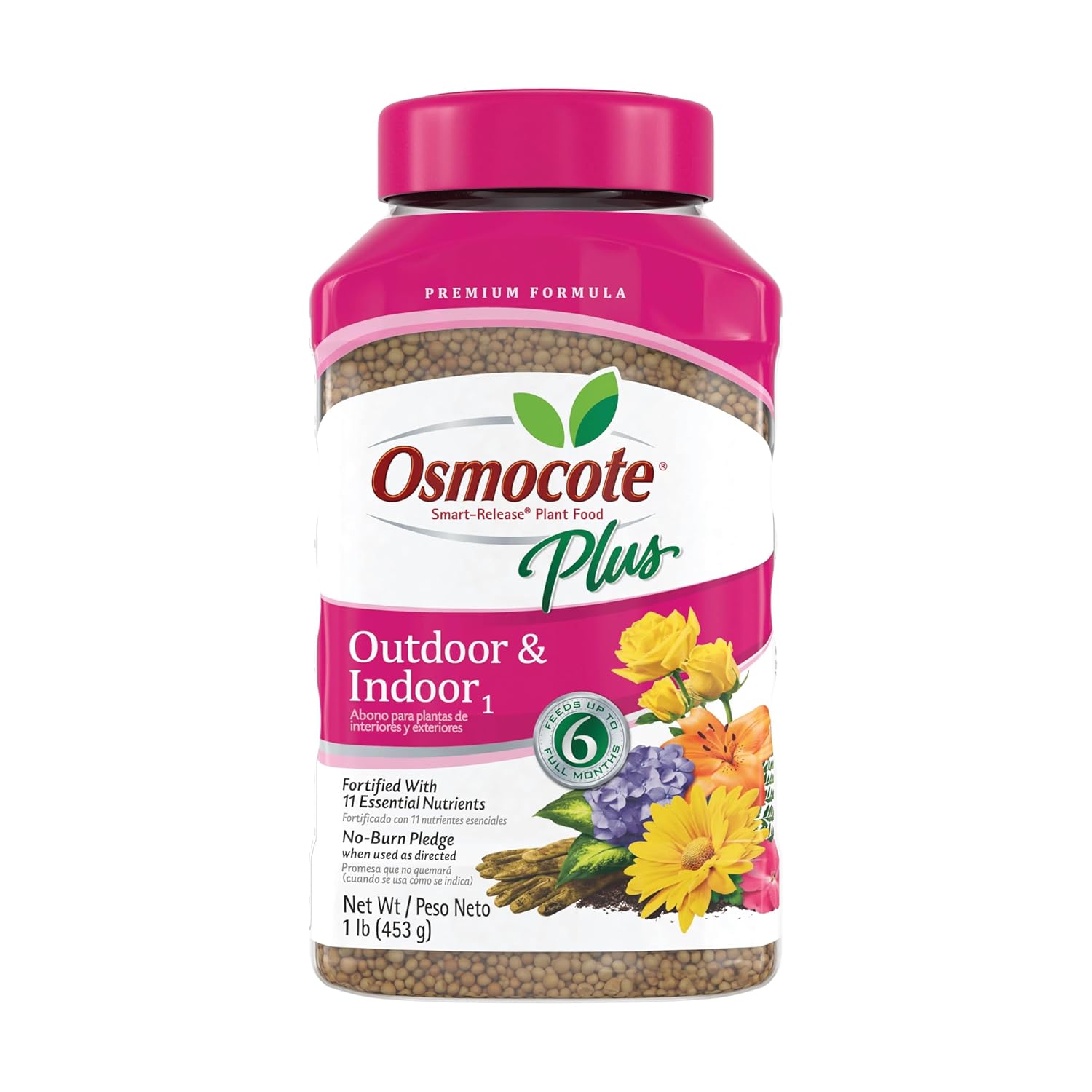
Osmocote Smart-Release Plant Food Plus Outdoor & Indoor, 1 lb
| Item Form | Granules |
|---|---|
| Specific Uses For Product | Plant Food |
| Application Method | sprinkle around the base and work into the soil |
| Unit Count | 16 Ounce |
Osmocote Smart-Release Plant Food Plus is a resin-coated granular fertilizer designed to deliver steady nutrition to a wide range of plants for up to six months from a single application. You apply it by sprinkling the recommended scoop into the top inch or so of potting mix for containers or around plants in garden beds, then watering to activate the coating. The product contains 11 essential nutrients and is formulated to release based on soil temperature, which helps reduce overfeeding and supports consistent bloom and foliage performance in hanging baskets. Its no-burn pledge makes it easy to use at the recommended rates for mixed annuals, trailing plants, and container veggies. Limitations are that coverage is modest from a 1 lb. container so frequent use on many large baskets will require buying more, and release timing still depends on temperature so plants in cool, shaded spots may receive nutrients more slowly than those in warm sun.
Best for: Gardeners who prioritize steady, low-maintenance feeding for hanging baskets and containers and want consistent bloom and foliage without frequent fertilizing.
Less Ideal for: Those who need immediate, short-term nutrient boosts or precise liquid feeding schedules for plants that demand fast correction.
- Resin-coated granules provide controlled release of nutrients for up to six months
- Formulated with 11 essential nutrients suitable for a wide variety of plants
- No-burn pledge when used as directed reduces risk of damaging roots in containers
- Simple sprinkle-and-water application works well for hanging baskets and pots
- 1 lb container covers a limited area so multiple baskets will need additional product
- Release rate depends on temperature so nutrient delivery can be slower in cool conditions
Verdict: An easy, low-maintenance slow-release fertilizer that keeps hanging baskets fed for months with minimal effort.
Miracle-Gro Water Soluble All Purpose Plant Food, 1.5 lb

| Item Form | Powder |
|---|---|
| Application Method | Watering Can |
| Target Species | For all flowers, vegetables, trees, shrubs and houseplants |
| Mixing Ratio | 24-8-16 |
Miracle-Gro Water Soluble All Purpose Plant Food is a powder concentrate you mix with water to give a quick nutrient boost to flowers, vegetables, houseplants, shrubs and trees. It is typically dissolved in a watering can or used with a compatible garden feeder to soak soil at the base of plants, delivering nitrogen-heavy nutrition that shows effects faster than granular fertilizers. Notable features include an easy scooping method for indoor and outdoor dosing, compatibility with containers and in-ground planting, and clear directions for feeding every one to two weeks. In practice this makes the product a convenient option when you want visible growth and greener foliage quickly, and the 1.5 lb container covers roughly 600 sq. ft. Important limitations are that it is a fast-release, high-nitrogen formula best used as a regular quick feed rather than a long-term slow-release solution, and it requires careful measuring to avoid overfeeding. For routine maintenance combine with good watering and follow the label to avoid nutrient imbalance.
Best for: Buyers who prefer proven, easy-to-use feeding routines and want noticeable growth quickly for a variety of garden and houseplants, guided by established usage directions and broad user experience.
Less Ideal for: Gardeners seeking a single, long-term slow-release solution or those who prefer organic or low-nitrogen fertilizers for sensitive plantings should consider alternative products.
- Water-soluble powder starts working quickly at the roots when mixed and applied
- Clear, simple dosing for indoor and outdoor use with included scoop guidance
- Suitable for a wide range of plants including vegetables, flowers, shrubs and houseplants
- Covers a large area from a small container (about 600 sq. ft. per 1.5 lb)
- Fast-release formula means benefits are short-term compared with slow-release granular fertilizers
- Requires precise measuring and regular reapplication to avoid overfeeding
Verdict: A reliable, fast-acting water-soluble plant food for gardeners who want easy, repeatable feeding and quick visible results.
MicroLife Palms & Tropical Granular Organic Fertilizer (4-2-4), 7 lb

| Item Form | Granules |
|---|---|
| Specific Uses For Product | Organic |
| Target Species | Palms, tropicals & hibiscus |
| Mixing Ratio | 1:1:1 |
This granular formula delivers steady nutrition with a 100 percent slow-release profile designed to avoid burning sensitive tropical plants. You apply it to soil around the base of new plantings and as part of annual maintenance; the slow-release granules feed over time so you do not need frequent reapplication. The product includes extra potassium, magnesium, manganese, and iron, which support strong foliage color and stress tolerance in nutrient-hungry tropicals. Its professional-grade concentration means you can expect robust, gradual growth and improved plant resilience rather than a short burst of lush but weak growth. On the downside it is a specialty palm/tropical blend so it is not tailored for every fruiting crop and directions must be followed to get the intended slow-release benefit. Also the granular form requires spreading or incorporation into soil, so it is less convenient than a liquid feed for foliar applications. For gardeners focused on steady, dependable nutrition this fertilizer simplifies seasonal feeding for tropical and hibiscus plantings.
Best for: Buyers who prioritize dependable, low-maintenance nutrition for tropical plants and want a slow, steady feeding program rather than frequent dosing.
Less Ideal for: Growers seeking a fertilizer optimized specifically for pineapple fruit production or those who prefer liquid or foliar feeds for quick correction.
- 100% slow-release granules reduce risk of fertilizer burn and provide sustained feeding
- Includes added potassium, magnesium, manganese and iron to support foliage health and stress tolerance
- Professional-strength formula suited for new plantings and annual maintenance
- Formulated specifically for palms and tropicals so nutrient balance may not match all fruiting crops
- Granular form requires soil application and is not suitable for quick foliar feeding
Verdict: Choose this slow-release tropical fertilizer when you want reliable, low-risk seasonal feeding to maintain healthy foliage and steady growth.
Miracle-Gro Liquid All Purpose Plant Food Concentrate, 32 oz

| Item Form | Liquid |
|---|---|
| Specific Uses For Product | Plant Growth, Root Development |
| Application Method | Mix with water in a watering can |
| Mixing Ratio | 1:10 (concentrate to water, estimate) |
Miracle-Gro Liquid All Purpose is a water-soluble concentrate you mix into a watering can and apply every 1 to 2 weeks to container and in-ground plants. It is formulated for general plant growth and root development and is marketed for flowers, vegetables, shrubs and houseplants, so it works as a straightforward feed for flowering bulbs like calla lilies. The bottle’s mixing guidance (cap measures for garden application and 1 teaspoon per gallon for containers) makes it easy to dose for pots or small beds. Practical benefits include fast uptake through the soil when applied as directed and compatibility with routine watering schedules. Limitations to note are that it is an all-purpose formula rather than a bloom-focused or calcium-rich fertilizer tailored specifically to calla lilies, so growers seeking targeted bloom enhancement or specialty nutrition may want a supplement. Also, frequent use at higher-than-recommended strength can risk fertilizer burn, so follow the mixing directions and schedule.
Best for: Buyers who want an affordable, easy-to-use liquid fertilizer to keep calla lilies and other flowering plants regularly fed without fuss.
Less Ideal for: Growers seeking a specialist bloom-boost or a fertilizer formulated for specific micronutrient needs should consider a targeted or bloom-specific product instead.
- Concentrated liquid mixes easily with water for quick application
- Clear dosing instructions for both garden beds and container plants
- Suitable for a wide range of plant types including flowering bulbs and houseplants
- General all-purpose formula not specifically formulated for enhancing blooms of calla lilies
Verdict: A budget-friendly, easy-to-use liquid concentrate that reliably feeds calla lilies and other common garden plants on a regular schedule.
Choosing the Right Fertilizer for Pineapple: Key Factors to Consider
Appropriate N-P-K Ratio
Pineapples respond to balanced feeding that supports both leafy growth and fruit development. An appropriate N-P-K ratio provides enough nitrogen for healthy, green leaves without encouraging excessive vegetative growth at the expense of flowering. Phosphorus supports root strength and flower initiation, which are important when you want the plant to produce a healthy fruit. Potassium helps fruit quality and overall plant vigor.
When choosing a fertilizer for pineapple, look for a stated ratio that suits the plant's stage: slightly higher nitrogen during early vegetative growth and a balanced or higher phosphorus and potassium mix as the plant approaches flowering and fruit set. Avoid extremely high nitrogen blends that can delay flowering or burn sensitive roots.
Formulation and Release Method
Fertilizers come as water-soluble powders, liquid concentrates, and slow-release granules. Water-soluble feeds deliver nutrients immediately and are useful for quick corrections or regular, light feedings in containers. Liquid concentrates offer convenience and predictable dilution for foliar or soil applications. Slow-release granules reduce application frequency and lower burn risk but depend on temperature and moisture to release nutrients.
Match the formulation to your growing situation. Containers and greenhouse plants often benefit from more frequent soluble feeding because nutrients wash out faster, while established ground plantings can use slow-release forms to maintain steady supply across the season.
Micronutrients and Trace Elements
Beyond N-P-K, pineapples need micronutrients such as iron, magnesium, manganese, and zinc for healthy leaf color and enzymatic functions. Iron deficiency shows as interveinal chlorosis on newer leaves, while magnesium shortages can affect older foliage. A fertilizer that includes these trace elements helps prevent common nutrient disorders and contributes to steady growth.
If your soil test shows specific deficiencies, prioritize a product with those elements or plan targeted foliar feeds. For container-grown pineapple, a complete mix with micronutrients is especially helpful because potting mixes can lack native trace elements.
Application Rate and Safety for Shallow Roots
Pineapple roots are relatively shallow and can be sensitive to over-fertilization. Clear label instructions and conservative recommended rates reduce the chance of root burn. Products that offer graduated dosing for container size or plant age make it easier to apply safely. Slow-release formulas or lower-concentration liquid feeds are generally safer when you cannot water frequently to flush excess salts.
Always follow recommended application intervals and consider splitting doses into smaller, more frequent feedings rather than single heavy applications. For container plants, ensure good drainage to avoid salt buildup around roots.
Feeding Schedule and Seasonality
Pineapple growth and fruiting follow seasonal patterns, and feeding should reflect that. Active vegetative growth benefits from more frequent feeding, while feeding can be reduced as the plant matures and focuses on flower and fruit development. Some growers use a maintenance schedule through cooler months and increase feeding during spring and summer when growth resumes.
Choosing a fertilizer with clear guidance on frequency and timing helps you plan feedings to coincide with growth stages. Products that provide both maintenance and bloom/fruiting recommendations allow you to adjust nutrient focus as the plant develops.
Compatibility with Potting Mixes and Soil
Different potting mixes have variable nutrient retention and pH buffering. Pineapples prefer slightly acidic to neutral pH and well-draining mixes. A fertilizer that matches the retention characteristics of your soil or potting medium prevents nutrient lockup or excess salt accumulation. For example, fast-draining mixes used in containers may require more frequent, lighter feedings than heavier soils.
Consider whether you need a fertilizer formulated for acid-loving plants or one that includes pH-stabilizing components. Also check whether the product is recommended for use in containers versus in-ground planting to avoid mismatch.
Feeding Approaches by Growing Situation
Container-grown pineapples need a different feeding rhythm than those planted in the ground. Because pots drain more quickly and have limited nutrient reserve, gardeners usually feed container plants more frequently with lower concentrations. Water-soluble or liquid feeds work well for patio containers, allowing regular, controlled doses that mimic steady soil supply.
In-ground pineapples benefit from slow-release products that supply a steady background of nutrients. Established garden plants may need less frequent intervention but do benefit from targeted boosts at key times such as just before flowering. Adjust your feeding method to match water availability and soil texture.
- Containers: frequent, low-concentration soluble feeds
- In-ground: slow-release granules or periodic concentrated feeds
- Greenhouse: controlled liquid feeding and monitoring for salt buildup
Adjusting Feed During Flowering and Fruit Development
As the plant moves from vegetative growth to flowering and fruit set, shift nutrient emphasis from nitrogen toward phosphorus and potassium to support root strength and fruit quality. Reduce heavy nitrogen applications to avoid excessive leafy growth that can divert energy away from flower development.
Timing is important: give a slightly higher phosphorus feed in the weeks leading to expected flowering and maintain steady potassium through fruit development. Keep an eye on leaf color and turgor as signs the plant is getting the right balance.
- Increase phosphorus slightly before flowering
- Maintain potassium during fruit swell
- Reduce high-nitrogen inputs during bloom
Correcting Common Nutrient Deficiencies
Yellowing between leaf veins often signals micronutrient shortages such as iron or magnesium rather than a need for more nitrogen. For interveinal chlorosis on new leaves, choose a feed that includes iron or apply a targeted chelated iron treatment. Older leaf yellowing can point to magnesium deficiency and may respond to a foliar magnesium spray or a fertilizer that lists magnesium.
Avoid blanket increases in N-P-K to correct yellowing without diagnosing the cause. Overapplication can mask the problem or create salt stress. Take a soil or substrate test when possible, and use targeted supplements when deficiencies are identified.
- Interveinal chlorosis often indicates iron deficiency
- Older leaf yellowing may be magnesium related
- Use targeted foliar feeds for quick symptom relief
Mixing and Applying Fertilizer Safely
Always dissolve water-soluble feeds at the recommended concentration and apply evenly around the root zone. For foliar sprays, use the labeled dilution and avoid applying in the heat of the day to reduce leaf scorch. When using granules, work them lightly into the top layer of soil without disturbing the crown.
Rinse measuring tools between products to avoid cross-contamination and never exceed label rates. If you are switching formulation types, flush the soil with water before applying a different product to reduce the risk of salt interaction.
- Follow label concentrations for soil and foliar use
- Apply foliar sprays during cool morning or evening
- Flush soil before switching fertilizer types
Organic Vs Synthetic Options
Organic fertilizers release nutrients more slowly and can improve soil structure and microbial activity over time. They are often gentler and reduce burn risk, which benefits shallow-rooted pineapple plants. However, they may require larger application volumes and slower correction of deficiencies.
Synthetic fertilizers offer precise N-P-K ratios and faster correction of deficiencies, useful when you need a quick response. Consider a combined approach: use organic matter and slow-release organic products for baseline nutrition and apply targeted synthetic feeds when rapid adjustment is needed.
- Organics build soil health and release nutrients slowly
- Synthetics provide precise ratios and quick corrections
- Combine approaches for baseline health plus targeted fixes
How We Chose the Best Fertilizer for Pineapple
We selected fertilizers that match the particular needs of pineapple, a bromeliad with shallow roots and long feeding cycles. Key filters included nutrient balance with an emphasis on nitrogen, phosphorus, and potassium ratios appropriate for foliage and fruiting; micronutrient content, especially iron and magnesium, which affect leaf color; and formulation type, since slow-release granules behave differently in pots than water-soluble feeds. Application practicality was another major filter. We prioritized fertilizers with clear, measured application rates for container and in-ground pineapple, easy-to-follow schedules, and options that reduce burn risk. Long-term availability and typical gardener feedback about consistency of results were considered. Exclusions: general-purpose lawn fertilizers, products lacking explicit N-P-K labeling, and unconventional amendments without clear dosing instructions were not considered. The final list favors products that offer predictable nutrient delivery, manageable application, and formulations suited to pineapple growth stages.
FAQ
How often should I feed a potted pineapple plant?
Potted pineapples typically do best with light feeding every two to four weeks during the active growing season using a dilute soluble feed. In cooler or slower growth periods, reduce frequency to every six to eight weeks or follow label maintenance recommendations.
Can I use a general houseplant fertilizer on pineapple?
General houseplant fertilizers can work in a pinch if they provide a balanced N-P-K and include micronutrients. Check dosing and reduce concentration for pineapple to avoid over-fertilizing. A product with guidance for bromeliads or acid-loving plants is preferable.
What signs indicate my pineapple needs a nutrient change?
Yellowing between veins on new leaves often points to micronutrient deficiency such as iron, while overall pale leaves and weak growth can signal low nitrogen. Brown leaf tips and poor root health can indicate salt buildup from over-fertilization. Diagnose before changing feeds.
Is foliar feeding effective for pineapples?
Foliar feeding can quickly correct micronutrient shortages and is useful for targeted treatments like iron chelates or magnesium sprays. It should complement, not replace, regular root-zone feeding because foliar feeds supply limited total nutrients.
Should I adjust fertilizer for a pineapple in a small pot?
Yes. Small pots hold less substrate and nutrients and dry out faster, so use more frequent, lower-strength applications and ensure excellent drainage. Avoid high-rate granular applications that can concentrate salts near the roots.
When should I stop feeding before harvest or propagation?
Reduce high-nitrogen feeding as the plant approaches flowering and fruit development to encourage blooming. For propagation from pups, maintain a moderate feeding schedule to promote root establishment but avoid heavy rates until the new plant shows steady growth.
Final Verdict
Choose a fertilizer for pineapple by matching nutrient ratio, formulation, and feeding schedule to your growing situation. Prioritize products that supply the right balance of N-P-K for the plant stage, include useful micronutrients, and have clear, conservative application guidance for shallow roots. Weigh the tradeoff between quick-correcting synthetic feeds and slower, soil-building organic options. Focus on safe application rates and adjust feeding through the growth cycle to encourage flowering and fruit quality. With the right approach, you can support healthy foliage, robust root systems, and better fruit outcomes.
