

Note: This article contains affiliate links. If you click on these links and make a purchase, I may earn a small commission at no extra cost to you. This helps support my research and content. Read my full affiliate disclosure here.
Choosing the right hydroponic fertilizer for houseplants changes how well foliage, blooms, and roots develop in a soil-free or low-soil setup. Indoor plants have different light, humidity, and drainage conditions than outdoor gardens, so the fertilizer must supply complete nutrition without overconcentrating salts or upsetting the root environment. This guide covers six top shortlisted options suited to houseplant needs and explains how we evaluated nutrient balance, ease of use, and compatibility with typical indoor systems. Read on to understand which product characteristics matter most for thriving indoor greens and how to match a fertilizer to your watering routine.
Top Picks at a Glance
| Best Overall The best all-around choice for most situations | General Hydroponics Flora Series 3-Part Nutrient System, 1 qt Bottles |  |
| Best Quality Built to a higher standard if you want something more solid | FoxFarm Grow Big Liquid Plant Food (16 fl oz) |  |
| Best Value The sweet spot between price and what you get | Purived All-Purpose Liquid Houseplant Fertilizer, 16 fl oz (Makes 50 Gallons) |  |
| Best Budget The cheapest option that still gets the job done reliably | Tigvio Hydroponic Nutrients A&B (800 ml) |  |
| Highest Rated A top-rated pick with lots of positive feedback | General Hydroponics FloraGro 2-1-6 Liquid Plant Food, 1 Quart |  |
| Best Seller A high-volume bestseller chosen again and again | TPS Nutrients Liquid Plant Food for AeroGarden and Hydroponics, 8 oz |  |
General Hydroponics Flora Series 3-Part Nutrient System, 1 qt Bottles
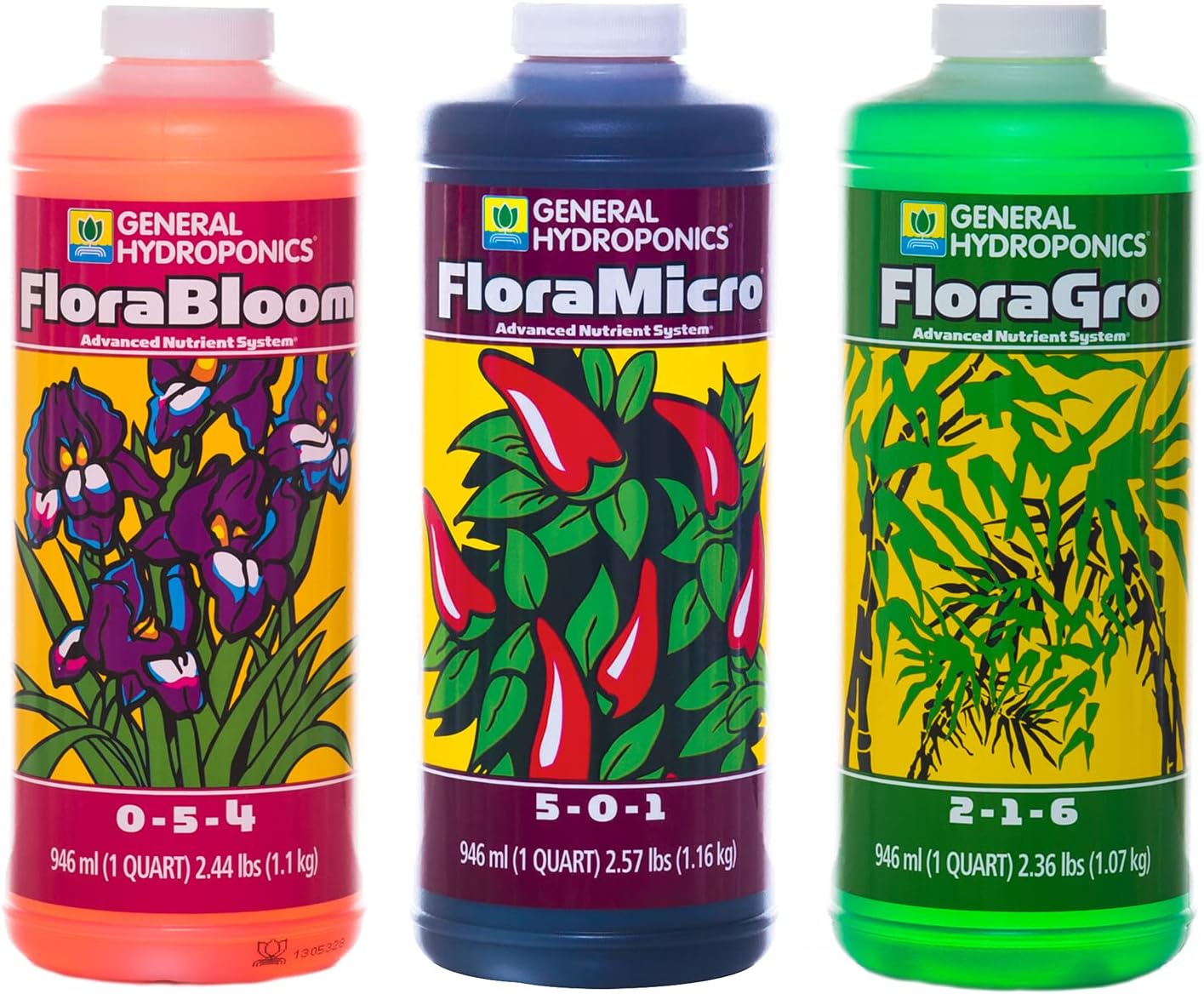
| Item Form | Liquid |
|---|---|
| Specific Uses For Product | Hydroponics |
| Included Components | FloraGro, FloraMicro, FloraBloom |
| Liquid Volume | 32 fluid ounces |
| Mixing Ratio | 1:1:1 |
The General Hydroponics Flora Series is a classic 3-part liquid nutrient system formulated to cover plants from seedling through flowering in hydroponic setups. You start with a reservoir of water and add FloraMicro first, then FloraGro and/or FloraBloom according to the growth stage and the recommended 1:1:1 mixing guidance. FloraMicro supplies nitrogen, calcium, and trace minerals, FloraGro boosts structural and vegetative growth with extra nitrogen and potassium, and FloraBloom supplies phosphorus, potassium, magnesium, and sulfur to support flowering and fruit development. The concentrate format gives you flexibility to tweak ratios for different crops or growth phases, and the 32 fl oz total volume is enough for multiple reservoir mixes. Important limitations are that you must monitor pH and EC separately and adjust quantities to your specific crop and system because the formula is not a single-solution feed for every situation. Users should also follow mixing order and dilution carefully to avoid nutrient lockup. For growers who want a proven, adjustable baseline nutrient program, Flora Series delivers practical, predictable results.
Best for: Growers who want a flexible, proven nutrient baseline for hydroponic systems and who prefer to tune feed ratios for both vegetative growth and flowering.
Less Ideal for: Beginners looking for a single-bottle, no-measure feed or growers who want a pre-mixed solution with automated dosing and monitoring built in.
- Complete three-part formula that covers macro and micronutrients for all growth stages
- Concentrated liquid bottles allow flexible ratio adjustments for different crops and growth phases
- Clear mixing order and 1:1:1 mixing guidance simplify initial setup
- Widely used, time-tested formulation with trace minerals and calcium included
- Requires separate pH and EC monitoring and adjustments for optimal results
- Not a one-step feed so it needs measuring and mixing for each reservoir
Verdict: Choose this if you want a versatile, time-tested three-part nutrient system that you can adjust across vegetative and flowering stages for hydroponic plants.
FoxFarm Grow Big Liquid Plant Food (16 fl oz)

| NPK | 6-4-4 |
|---|---|
| Form | Liquid |
| Unit Count | 16 Fluid Ounces |
| Mixing Ratio | 2 teaspoons per 1 gallon |
FoxFarm Grow Big is a 6-4-4 liquid concentrate designed to boost vegetative size and structure for vegetables, roses and houseplants. Mix at the manufacturer recommendation (2 teaspoons per gallon) and apply as part of your watering or as an early-morning foliar spray; the low pH formula helps keep micronutrients stable for reliable uptake. For tomato growers it delivers a nitrogen-forward balance that supports leafy growth and strong vines during the pre-flowering and fruit-set stages, and the pint concentrate is easy to store and measure. Notable features include quick-soluble liquid delivery and clear feeding guidance so you can feed every other watering without extensive guesswork. Limits to consider are that this is a vegetative feed rather than a bloom/fruit-specific formula, so you will want to switch to a bloom or fruit-focused fertilizer at flowering to optimize fruit development, and a pint will require careful dilution for larger vegetable beds or multiple plants. Overall it is a dependable, easy-to-use vegetative booster when you want predictable growth before tomatoes set heavy fruit.
Best for: Gardeners who prioritize consistent, predictable vegetative growth for tomato plants and want a straightforward, low-fuss feeding routine. Ideal for growers who value reliable nutrient uptake and clear instructions over experimental blends.
Less Ideal for: Growers seeking an all-in-one bloom and fruit booster or those managing large-scale tomato plantings who need bulk quantities of fertilizer.
- Concentrated liquid formula for fast nutrient uptake and easy mixing.
- Low pH formulation that helps keep micronutrients stable and available.
- Clear mixing instructions and flexible application by watering or foliar spray.
- Nitrogen-focused NPK (6-4-4) that promotes robust vegetative growth and strong vines.
- Not formulated specifically for flowering or heavy fruiting stages so a bloom/fruit fertilizer is needed later.
- Pint size may be small for larger vegetable gardens and requires frequent repurchasing.
Verdict: A dependable, easy-to-use liquid concentrate that reliably promotes vigorous vegetative growth in tomatoes during the pre-flower stages.
Purived All-Purpose Liquid Houseplant Fertilizer, 16 fl oz (Makes 50 Gallons)

| Item Form | Liquid |
|---|---|
| Application Method | soil drench, foliar feed, full & semi hydroponics |
| Target Species | Houseplants |
| Mixing Ratio | 320:1 |
Purived All-Purpose Liquid Houseplant Fertilizer is a concentrated 16 fl oz bottle that mixes 1 cap per gallon to treat up to 50 gallons of water. It is formulated for indoor potted plants and supports multiple application methods including soil drench, foliar spray, and full or semi-hydroponics, so you can use the same product whether you water, mist, or run nutrient solutions. The formula lists primary macronutrients and a range of micronutrients, which helps correct common deficiencies and supports steady growth when used at the recommended dilution. Practical benefits include an easy-to-follow mixing ratio, an odorless solution that is simple to store, and broad compatibility with different feeding routines. Important limits are that the label gives no N-P-K percentages, so precise nutrient planning for sensitive seedlings or specialty plants is not possible, and safety precautions mean you must handle and store it carefully. For new plants, start at or below the recommended dilution and observe growth before increasing frequency.
Best for: Buyers who want a versatile, no-fuss fertilizer for establishing and maintaining new houseplants and who value a single product that works across watering, misting, and basic hydroponic setups.
Less Ideal for: Growers who need exact N-P-K formulations for seedlings, specialty plants, or strict hydroponic nutrient regimens should consider a product with full nutrient breakdown and concentration details.
- Very concentrated so one bottle treats up to 50 gallons, reducing repurchase frequency
- Suitable for multiple application methods: soil drench, foliar feed, and hydroponics
- Includes a range of micronutrients in addition to primary NPK components
- Simple, clear mixing ratio (320:1) that is easy to follow
- No N-P-K ratio listed on the product information, limiting precise nutrient management
- Requires careful handling and storage due to safety warnings
Verdict: A concentrated, easy-to-use all-purpose fertilizer that covers feeding, foliar, and basic hydroponic needs for new houseplants.
Tigvio Hydroponic Nutrients A&B (800 ml)

| Item Form | Liquid |
|---|---|
| Specific Uses For Product | Plant Growth |
| Unit Count | 27.05 Fluid Ounces |
| Mixing Ratio | 1:1 (mixing); 5 ml A+B per 1 L |
Tigvio Hydroponic Nutrients A&B is a two-bottle liquid nutrient designed for routine feeding of indoor hydroponic houseplants. You mix each concentrate with water (manufacturer directions show 1:1 for initial mixing and 5 ml of combined A&B per 1 L of reservoir water) and add to an Aerogarden or any similar small hydroponic system. The formula is pH-balanced and fully water soluble so plants can take up nutrients quickly, which supports faster vegetative growth and healthier foliage in lettuces, herbs, and common houseplants. The pack includes two bottles and six additional units in the listing so you have several refill doses before needing to reorder. Important limitations are that this is a basic A&B feed with dosing instructions rather than an all-in-one tailored formula for every crop stage, so heavy fruiting or flowering plants may need complementary supplements or tighter EC monitoring. Follow safety guidance and keep the concentrate away from skin and eyes when preparing mixes.
Best for: Home growers who want an affordable, easy-to-use liquid nutrient to keep herbs, leafy greens, and common houseplants vigorous in small hydroponic systems.
Less Ideal for: Growers focused on large-scale production or heavy fruiting/flowering crops that require stage-specific formulations and precise EC control should consider specialized fertilizers.
- Two-part A and B system compatible with Aerogarden and other small hydroponic setups
- pH-balanced, fully water-soluble formula that is easy for plants to absorb
- Provides multiple refills in the included pack to stretch value
- Simple, repeatable mixing ratio makes routine feedings quick
- Not formulated as a crop-stage specific or bloom booster nutrient so extra supplements may be needed for heavy flowering or fruiting crops
Verdict: A budget-friendly, easy-to-use two-part nutrient that reliably sustains leafy houseplants and herbs in small home hydroponic systems.
General Hydroponics FloraGro 2-1-6 Liquid Plant Food, 1 Quart

| Item Form | Liquid |
|---|---|
| Specific Uses For Product | Plant Growth, Root Development, Seed Development |
| Target Species | All Plants |
| Liquid Volume | 1 quarts |
| Mixing Ratio | 2-1-6 |
General Hydroponics FloraGro 2-1-6 is a liquid concentrate formulated to promote structural and leaf growth during the vegetative phase. It is typically used as part of the FloraSeries system, mixed with FloraMicro and optionally FloraBloom, so you can tailor nutrient blends for seedlings, cuttings, or mature houseplants grown hydroponically or in containers. Notable features include a clear mixing ratio and a formulation intended for fast-growing plants and root development. In use you dilute the concentrate to the recommended strength and feed on a regular schedule; the liquid form makes dosing and solution changes straightforward. The product’s strength is its compatibility with modular nutrient programs and predictable results when combined correctly. Limitations are that it is a single formulation focused on vegetative growth, so you need complementary products for complete bloom or fruiting phases and careful attention to mixing ratios to avoid nutrient imbalances.
Best for: Growers who prioritize consistent, repeatable nutrient results for houseplants grown hydroponically or in containers and who want a reliable vegetative-stage formula to pair with established nutrient components.
Less Ideal for: Casual plant owners who want a single all-in-one fertilizer or anyone unwilling to follow a multi-part mixing regimen should consider simpler complete formulations.
- Liquid concentrate that is easy to measure and mix for hydroponic solutions
- Formulated to promote structural and foliar growth for fast-developing plants
- Designed to integrate with FloraMicro and FloraBloom for customizable feeding programs
- Clear mixing ratio provided for consistent preparation
- Specifically tuned for vegetative growth and not a complete solo fertilizer for flowering or fruiting
- Requires complementary products and careful mixing to create a full nutrient program
Verdict: A reliable liquid vegetative nutrient concentrate for growers who want predictable, modular feeding when paired with the rest of the FloraSeries.
TPS Nutrients Liquid Plant Food for AeroGarden and Hydroponics, 8 oz

| Item Form | Liquid |
|---|---|
| Specific Uses For Product | Plant Growth, Root Development |
| Target Species | Herb, Vegetable |
| Mixing Ratio | 5 mL (1 tsp) per quart of feedwater |
| Unit Count | 8 Fluid Ounces |
This 8 oz liquid plant food provides concentrated, reservoir-safe nutrition intended for AeroGarden and comparable hydroponic units. It is used by mixing the recommended 5 mL per quart of feedwater into the system reservoir on a regular feeding schedule to supply macro and micronutrients for herbs, greens, and other compact edible plants. Notable features include a liquid formulation that dissolves easily, a focus on root development, and explicit compatibility with indoor hydroponic gardens. In practice it simplifies feeding for small indoor crops because a measured teaspoon per quart is straightforward to dose and store. Important limitations are the small bottle size, which will require frequent repurchasing for larger or multiple units, and the need to follow dilution directions carefully to avoid overfeeding. Safety handling is necessary because the concentrate should be kept away from children and pets. For risk-averse growers, the product’s clear mixing ratio and hydroponic focus make predictable feeding simple, but you should track reservoir concentrations rather than guessing frequency or volume adjustments.
Best for: Buyers who want a simple, low-risk feeding routine for indoor green onions and other small edible hydroponic crops and prefer clear dosing instructions they can follow reliably.
Less Ideal for: Growers managing large hydroponic setups, outdoor beds, or those who need a detailed NPK profile for tailored nutrient programs should look for larger or fully specified concentrates.
- Designed specifically for AeroGarden and similar hydroponic systems for straightforward compatibility
- Liquid formula mixes easily for even nutrient distribution in the reservoir
- Clear mixing ratio (5 mL per quart) simplifies dosing and repeatable feeding
- Targets root development and steady growth for herbs and vegetables
- Small 8 oz bottle may not last long for multiple or larger units
- No full nutrient analysis or NPK breakdown provided on the product listing
Verdict: A compact, easy-to-dose liquid fertilizer that makes predictable feeding of indoor green onions simple and low risk.
Choosing the Right Hydroponic Fertilizer for Houseplants: Key Factors to Consider
Nutrient Profile and Macronutrient Balance
Houseplants in hydroponic setups depend entirely on the solution for nitrogen, phosphorus, and potassium. A balanced N-P-K ratio appropriate for foliage and moderate flowering helps prevent leggy growth or weak root systems. Look for fertilizers that also list secondary nutrients like calcium and magnesium; indoor water sources can be low in these elements, which are vital for cell strength and stomatal function.
Concentration matters because too high a macronutrient level raises electrical conductivity and can burn roots, particularly when light levels are low. Choose a formula that gives clear parts-per-million or EC targets for different plant stages and watering frequencies.
Micronutrients and Chelation
Micronutrients such as iron, manganese, zinc, copper, and boron are often needed in small amounts but are critical for photosynthesis and enzyme activity. In hydroponic reservoirs, micronutrients should be present in chelated forms or stable complexes to remain available at typical pH ranges for houseplants.
Unchelated minerals can precipitate or lock out at higher pH, causing deficiency symptoms even when labels claim the element is included. Prefer fertilizers that specify chelation or stable trace element sources and offer guidance on maintaining the solution pH where those elements remain available.
Dosing Flexibility and Label Clarity
Indoor gardeners range from occasional waterers to those running continuous recirculating systems. A good hydroponic fertilizer for houseplants provides dosing instructions for varied use: weekly top-ups, reservoir fills, and concentrated mixes for faster uptake. Clear guidance in teaspoons per gallon, ml per liter, or ppm targets reduces guesswork and lowers the risk of overfertilizing.
Look for labels that include dilution examples and trouble-shooting tips for common issues such as high EC, nutrient lockout, or cloudy reservoirs. Recipes for small-volume mixes are especially helpful for apartment gardeners working with a few pots.
Solubility and Impact on Reservoirs
Highly soluble fertilizers dissolve cleanly and leave minimal precipitate, reducing clogged tubing, drippers, and filters in indoor hydroponic systems. Houseplant setups often use smaller reservoirs and narrow tubing, which are more easily affected by residue buildup than large commercial systems.
Powdered or concentrated liquid formulas should specify whether they require pre-dissolving or separate-part mixing to avoid salt precipitation. Products that minimize sediment and scale are easier to maintain and reduce the time spent cleaning the system between crops.
pH Behavior and Buffering
Roots of many common houseplants prefer a slightly acidic to neutral range. A fertilizer that either buffers pH or provides clear pH adjustment instructions helps maintain nutrient availability. Some formulas temporarily lower or raise pH when first mixed, so knowing the expected pH behavior lets you plan to stabilize the reservoir before returning plants to it.
Regular pH monitoring is part of good indoor hydroponic practice. Choose fertilizers compatible with common pH adjustment methods and avoid those that cause wide pH swings without mitigation guidance.
Compatibility with Common Houseplant Systems
Houseplants are grown in many hydroponic setups: ebb-and-flow trays, wick systems, small recirculating reservoirs, and single-pot drip systems. A suitable fertilizer works across these methods without causing frequent clogging or rapid EC drift. Compatibility includes how the product performs in low-water-volume reservoirs and whether it plays well with beneficial microbes or organic additives if you use them.
If you plan to mix fertilizers with supplements like calcium-magnesium solutions or root stimulants, verify whether the fertilizer recommends sequential mixing or separate reservoirs to avoid precipitation.
Adjusting Feeding for Light and Growth Stage
Indoor light levels and plant growth stage are the main drivers of how much fertilizer an indoor plant needs. Low-light rooms warrant reduced dosing because the plant cannot process high nutrient loads and unused salts accumulate in the root zone. When light increases or you move a plant to a brighter windowsill, gradually raise concentration to match increased photosynthesis.
For young or recently repotted plants, use weaker solutions to avoid stressing new roots. During active leaf or flower development, follow the fertilizer's higher-range recommendations but continue to watch EC and leaf appearance for signs of overfeeding.
- Start at half the recommended concentration after potting or system changes
- Raise dosing gradually as growth becomes vigorous
- Lower frequency if leaves show tip burn or stunted new growth
Maintaining Reservoir Hygiene
Small indoor reservoirs require regular attention to stay productive. Change solution periodically to prevent nutrient imbalances and microbial buildup. Even with clear fertilizers, organic residues and microbes can accumulate in low-flow systems.
Perform a full reservoir clean when you see cloudiness, slimy biofilm, or a persistent drop in oxygenation. Rinse lines and filters to prevent blockages that reduce nutrient delivery.
- Top up with fresh solution and monitor EC rather than only adding water
- Schedule full reservoir changes on a predictable cadence based on system size
- Inspect emitters and tubing for scale and flush as needed
Managing Hard Water and Calcium Needs
Many indoor gardeners use municipal or well water with varying hardness. Hard water can supply calcium and magnesium, but it can also interact with fertilizer components to form scale. If your water is hard, test calcium and magnesium levels to avoid over-accumulation that causes precipitation in the reservoir.
Some hydroponic fertilizers recommend adding supplemental calcium-magnesium separately to prevent lockout. When combining additives, mix in the correct order and monitor for cloudiness that indicates incompatibility.
- Test source water hardness before establishing a feeding routine
- Consider a separate calcium-magnesium supplement if plants show tip dieback or blossom end issues
- Use filtration or softening only when necessary, as total ion reduction changes fertilizer dosing
Using Fertilizers with Beneficial Microbes
Some gardeners add beneficial microbes, mycorrhizae, or root inoculants to support root health in hydroponic houseplants. Not all fertilizers are formulated to be microbe-friendly; high salt concentrations or unbuffered pH can reduce microbial survival. If you plan to use biological additives, select fertilizers with moderate EC targets and stable pH recommendations.
Introduce microbes to a freshly mixed, cooled solution and avoid harsh oxidizers or treatments that will kill living additives. Track plant response and adjust feeding frequency to keep both nutrient supply and microbial populations healthy.
- Mix microbes separately and add to reservoir after nutrient solution is stable
- Avoid strong oxidizing agents when running biological additives
- Monitor root color and growth to assess microbe efficacy
Troubleshooting Common Indoor Deficiencies
Yellowing between veins often points to iron or magnesium deficiency, common in hydroponic houseplants when pH drifts too high. Leaf tip burn and brown edges are usually signs of salt buildup or excessive EC, whereas stunted new growth can indicate insufficient nitrogen or root stress.
Systematically check pH, EC, and water temperature before changing fertilizer brands. Small adjustments to concentration or more frequent solution changes usually correct nutrient issues without a major overhaul.
- Measure pH and EC before altering feed strength
- Flush with fresh solution if salt buildup is suspected
- Address root health and temperature as part of deficiency diagnostics
How We Chose the Best Hydroponic Fertilizer for Houseplants
We shortlisted fertilizers that deliver the specific nutrient balance and handling gardeners need for indoor hydroponic houseplants. Selection prioritized clear N-P-K labeling and complete macronutrient coverage, with attention to readily available micronutrients such as iron, magnesium, and trace elements that prevent indoor deficiencies. Ease-of-use factors included concentration and dosing guidance, compatibility with common indoor systems, and solubility to avoid clogged drippers or residue in reservoirs. Stability and salt buildup were assessed by checking recommended electrical conductivity ranges and whether the formulas are designed for repeated reservoir use. pH buffering and the presence of chelated micronutrients were another filter because indoor roots are more sensitive to pH swings. We excluded products aimed solely at large commercial crops, bloom boosters with extreme PK ratios, or fertilizers that require specialized mixing equipment not typical for houseplant setups. The criteria that mattered most were nutrient completeness, dosing clarity, reservoir compatibility, pH behavior, and ingredient transparency.
FAQ
How often should I feed houseplants with hydroponic fertilizer?
Feeding frequency depends on system type and plant growth. Many indoor setups use a diluted solution at each reservoir fill or weekly top-ups. In small containers, more frequent but lighter feedings maintain stable EC without overloading roots.
Can I use a fertilizer made for vegetables on houseplants?
Often you can, but vegetable formulas may be higher in nutrients aimed at heavy fruiting. Adjust concentration downward for common houseplants and follow lower-range dosing to avoid leggy or salt-stressed growth.
Do I need to monitor pH when using hydroponic fertilizer indoors?
Yes. pH affects nutrient availability, and indoor plants are sensitive to swings. Check pH when you mix solution and again after a few hours to ensure it stays in the recommended range for your plant group.
Will hydroponic fertilizer clog my drip emitters?
Clogging can occur with poorly soluble mixes or when combining incompatible additives. Choose highly soluble formulas and follow manufacturer mixing order to minimize precipitation. Regular flushing helps prevent blockages.
Should I use full-strength mixes for flowering houseplants?
Flowering stages often benefit from tailored nutrient ratios, but full-strength instructions designed for large crops may be too intense for indoor plants. Increase concentration gradually and monitor buds and foliage for stress.
Final Verdict
For indoor gardeners, prioritize fertilizers that offer clear dosing, complete nutrient profiles, and good solubility to keep small reservoirs stable. Balance nutrient strength with the light and growth stage of your plants, and pay attention to pH and calcium-magnesium needs to avoid common deficiencies. By focusing on dosing clarity, reservoir behavior, and compatibility with your system, you can choose a hydroponic fertilizer that supports healthy roots, vibrant foliage, and reliable indoor growth.
