

Note: This article contains affiliate links. If you click on these links and make a purchase, I may earn a small commission at no extra cost to you. This helps support my research and content. Read my full affiliate disclosure here.
Bougainvillea respond quickly to soluble nutrients, so the liquid fertilizer you choose can mean the difference between sparse flowering and a rush of color. In containers, hanging baskets, and garden beds these vines show results fast from balanced, bloom-focused feeds and correct micronutrient support. This guide shortlists six top liquid fertilizer options suited for bougainvillea and explains how we evaluated them. We focus on nutrient ratios, application method, and how each product performs in common garden situations to help you pick a reliable feeding strategy.
Top Picks at a Glance
| Best Overall The best all-around choice for most situations | Prevegenics Bougainvillea Liquid Fertilizer (32 fl. oz.) | 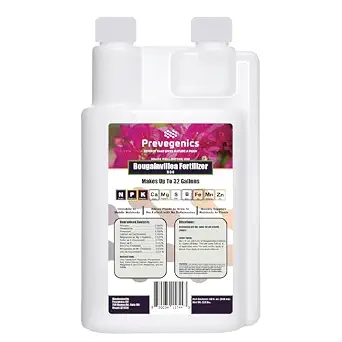 |
| Best Quality Built to a higher standard if you want something more solid | TPS Nutrients Bougainvillea Liquid Fertilizer, 1 Gallon |  |
| Best Value The sweet spot between price and what you get | TPS NUTRIENTS Bougainvillea Liquid Fertilizer, 32 oz |  |
| Best Budget The cheapest option that still gets the job done reliably | TATAWORM Organic Bougainvillea Seaweed Fertilizer (2 oz) |  |
| Highest Rated A top-rated pick with lots of positive feedback | TATAWORM Organic Bougainvillea Seaweed Fertilizer (Powder, 4 oz) | 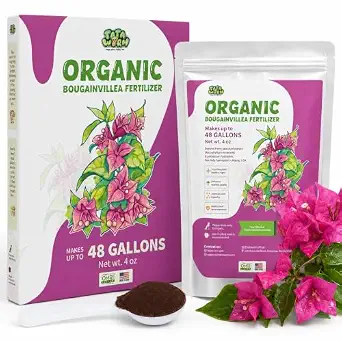 |
| Most Popular A crowd favorite that many people choose with confidence | TPS NUTRIENTS Bougainvillea Liquid Fertilizer, 8 oz |  |
Prevegenics Bougainvillea Liquid Fertilizer (32 fl. oz.)

| Item Form | Liquid |
|---|---|
| Specific Uses For Product | Plant Growth, Promoting Blooms |
| Coverage | Full |
| Target Species | Bougainvillea |
| Liquid Volume | 32 fluid ounces |
This Prevegenics liquid fertilizer is formulated specifically for bougainvillea and comes in a 32 fl. oz. bottle for regular garden use. It is a liquid concentrate intended to be applied after watering and is marketed to increase bloom count and improve bloom quality. In practice it simplifies feeding: mix or apply as directed to the soil or as a foliar feed to give plants an extra dose of nutrients aimed at flowering. Notable features include its plant-focused formulation and the brand s emphasis on microbial and nutrient balance. Practical benefits include easier bloom promotion compared with general-purpose fertilizers and straightforward directions for routine use. Important limitations are that the product description does not list an N-P-K ratio or precise ingredient percentages on the label excerpt, so advanced users who need exact nutrient analysis or custom feeding schedules may need supplemental information. Also, safety precautions mean users should avoid contact with skin and eyes and store it away from children.
Best for: For home gardeners who want a simple, bloom-focused fertilizer for bougainvillea and prefer straightforward, routine feeding with minimal fuss.
Less Ideal for: Not ideal for professional growers or users who need precise N-P-K numbers or tailored fertilizer programs for high-production settings.
- Formulated specifically for bougainvillea to encourage more and better blooms
- Liquid form makes it easy to apply after watering for regular maintenance
- 32 fl. oz. size provides multiple applications for small to medium plantings
- Brand messaging emphasizes a balanced nutrient and microbial approach
- Label information in the listing does not provide a clear N-P-K breakdown or full ingredient percentages
- Not suitable when exact nutrient dosing or professional-grade formulations are required
Verdict: If you want an easy, bloom-focused liquid fertilizer to help bougainvillea produce more and better flowers, this Prevegenics formula is a practical, low-effort choice.
TPS Nutrients Bougainvillea Liquid Fertilizer, 1 Gallon

| Item Form | Liquid |
|---|---|
| Specific Uses For Product | Plant Growth |
| Target Species | Bougainvillea |
| Liquid Volume | 128 fluid ounces |
This TPS Nutrients liquid fertilizer is designed specifically for bougainvillea and other warm‑weather flowering vines and is sold in a one‑gallon bottle for regular feedings. You mix and apply it as part of a routine for container or garden plants to encourage fuller plants, more persistent blooms, and stronger root development that improves water and nutrient uptake. As a liquid formula it absorbs quickly compared with slow‑release granules, which is useful when you want visible results in bloom intensity and fresh leaf growth. The product lists NPK ingredients and targets plant growth rather than general soil amendment, so it works best as a regular feed rather than a one‑time fix. Limitations are that the label does not provide detailed NPK ratios or fertilizing frequency on the data provided here and it is single‑purpose for bougainvillea and similar tropical flowering plants rather than a universal houseplant formula.
Best for: Gardeners who prioritize measurable performance and want a targeted liquid feed to boost bloom color and vine vigor in bougainvillea across containers, trellises, or beds.
Less Ideal for: Casual plant owners looking for an all‑purpose houseplant fertilizer or users who need a product with clearly stated NPK ratios and dosing instructions on the label.
- Formulated specifically for bougainvillea to support bracts and vine growth
- Liquid form absorbs quickly for faster visible results
- One‑gallon size reduces the need for frequent repurchase for active gardeners
- NPK is listed but exact NPK ratio is not provided in the available product details
- Information on feeding schedule and dilution rates is not included in the provided data
Verdict: Choose this liquid fertilizer when you want a targeted, fast‑acting feed to maximize bougainvillea bloom color and vine growth.
TPS NUTRIENTS Bougainvillea Liquid Fertilizer, 32 oz

| Item Form | Liquid |
|---|---|
| Specific Uses For Product | Bougainvillea |
| Liquid Volume | 32 fluid ounces |
TPS NUTRIENTS Bougainvillea Liquid Fertilizer is a ready-to-mix, 32-ounce plant food aimed at increasing bloom intensity and supporting steady vine and root development. You dilute it for routine watering or use a hose-end sprayer and follow seasonal schedules: every 1–2 weeks in spring and summer and every 2–4 weeks in fall and winter, with an optional foliar mist. The formula highlights potassium and seaweed (Ascophyllum nodosum) plus several micronutrients, which practical gardeners will recognize as helpful for flower production and overall vigor. It is suitable for potted bougainvillea as well as in-ground vines on trellises or fences. The liquid form delivers nutrients evenly and is easy to apply to multiple plants quickly, and the included directions give clear dilution rates for watering cans and sprayers. Important limits are that it requires regular reapplication to maintain results and you must avoid contact with skin and eyes when mixing and applying. For gardeners who want a targeted, easy-to-use fertilizer to encourage repeat flowering, this is a sensible choice.
Best for: Practical gardeners who want a straightforward, plant-specific liquid fertilizer to increase flowering on bougainvillea and prefer clear application instructions for routine maintenance.
Less Ideal for: People looking for a one-time slow-release solution or an all-purpose fertilizer for many plant types should consider other products better suited to low-maintenance beds or mixed-species plantings.
- Liquid formula mixes easily for watering cans or hose-end sprayers for fast coverage
- High-potassium focus and seaweed extract support stronger blooms and fuller vine growth
- Clear seasonal and dilution directions for consistent application
- Suitable for both containers and in-ground bougainvillea plantings
- Requires frequent application through the growing season to maintain effects
- Contains salts and micronutrients that require careful dosing to avoid overfeeding
Verdict: A targeted, easy-to-apply liquid fertilizer that helps bougainvillea produce bigger, more frequent blooms when used on a regular schedule.
TATAWORM Organic Bougainvillea Seaweed Fertilizer (2 oz)

| Item Form | Powder |
|---|---|
| Application Method | soil drench |
| Target Species | bougainvillea |
| Mixing Ratio | 1/4 tsp per gallon of water |
| Formula | 0-0-18 |
This concentrated seaweed powder is designed specifically for bougainvillea and mixes easily with water for regular soil-drench feedings. It supplies a high-potassium 0-0-18 formula made from North Atlantic rockweed to support bud development, richer bract color, and stronger roots while promoting stress resilience. Typical use is simple: dissolve the measured scoop in water (mixing guidance 1/4 tsp to 1/2 tsp per gallon depending on instructions) and apply every 2 to 3 weeks during the active growing season, ideally in cool hours. The product is OMRI listed and formulated without synthetic additives, so it fits organic routines and indoor or outdoor potted plants and landscape bougainvilleas. Because it is highly concentrated a small container covers many feedings, which is economical for serial applications. Limits to expect are that results take a few weeks and you must monitor plants for overfeeding or foliage yellowing; it is a targeted bloom booster rather than an all-purpose balanced fertilizer so it will not replace occasional complete nutrient management if soil tests show other deficiencies.
Best for: Buyers who want a simple, organic bloom booster to maintain abundant, colorful flowering in potted or landscape bougainvillea and who prioritize efficiency and low-fuss maintenance.
Less Ideal for: Gardeners seeking a complete all-purpose fertilizer for vegetative growth or those needing rapid correction of nutrient deficiencies identified by soil tests should consider broader-spectrum products.
- Formulated specifically for bougainvillea with a high-potassium 0-0-18 profile to encourage blooms
- Concentrated powder that mixes quickly for economical coverage (makes up to 24 gallons)
- OMRI listed organic seaweed extract sourced from Maine rockweed
- Easy application as a soil drench with included scoop and clear mixing ratio
- Gentle, natural ingredient profile safe for routine use when used as directed
- Not a full-spectrum N-P-K fertilizer so may need supplementation for leaf growth or other deficiencies
- Visible improvement can take several weeks and requires consistent application schedule
Verdict: A concentrated, organic seaweed bloom booster that efficiently supports bigger, brighter bougainvillea blooms with minimal fuss.
TATAWORM Organic Bougainvillea Seaweed Fertilizer (Powder, 4 oz)

| Item Form | Powder |
|---|---|
| Application Method | Soil Drench |
| Target Species | Bougainvillea |
| Formula | 0-0-18 |
This concentrated seaweed powder is made specifically for bougainvillea and is intended to be dissolved in water and applied as a soil drench every 2–3 weeks during active growth. Its 0-0-18 formula delivers a high potassium boost to support bud development, brighter bracts, and stronger roots while using organic Ascophyllum nodosum kelp sourced from Maine. The powder mixes quickly and the package includes a small scoop for measuring; one 4 oz container claims to make up to 48 gallons, so you get many feedings from a single unit. Because it is OMRI listed and made without synthetic additives, it fits an organic care routine and has a mild marine scent rather than chemical odor. Limitations to note are that it is a targeted bloom booster rather than an all-purpose NPK balanced fertilizer so it will not correct nitrogen deficiencies, and results depend on regular, careful application and overall cultural care; overuse or applying during stress or frost can cause problems. Follow dilution and timing instructions and monitor plant response for best results.
Best for: Buyers who prioritize consistent, predictable bloom support for potted or landscape bougainvillea and prefer organic, low-odor products to include in a regular feeding schedule.
Less Ideal for: Gardeners seeking a single, balanced fertilizer to correct general nutrient deficiencies or those who prefer granular slow-release products for low-maintenance feeding.
- High potassium 0-0-18 formula formulated to encourage more buds and brighter bracts
- Concentrated powder that mixes easily and covers many feedings (makes up to 48 gallons)
- OMRI listed organic seaweed extract sourced from Maine for gentler, natural plant support
- Designed as a bloom booster not a complete NPK fertilizer so it will not address nitrogen or phosphorus deficiencies
- Requires regular mixing and scheduled applications rather than a single slow-release application
Verdict: Choose this concentrated organic kelp powder if you want a reliable high-potassium bloom booster to keep bougainvillea flowering strongly with regular feedings.
TPS NUTRIENTS Bougainvillea Liquid Fertilizer, 8 oz

| Item Form | Liquid |
|---|---|
| Specific Uses For Product | Bougainvillea Growth |
| Coverage | Bougainvillea plants |
| Target Species | Bougainvillea |
| Liquid Volume | 8 fluid ounces |
This 8 oz liquid formula from TPS Nutrients is designed for bougainvillea and aims to boost blooming, foliage health, and root development. You use it as a water-soluble feed for potted or in-ground bougainvillea, applying per the included directions to support more abundant bracts and stronger vine growth. Notable features are its high-potassium focus for flowering, liquid form for easy mixing and even distribution, and packaging sized for hobby or small-plot use. In practice it makes feeding straightforward for container growers and gardeners training vines on trellises or fences, and the small bottle is handy for spot treatments or seasonal bloom pushes. Limitations to keep in mind are the small 8 oz volume if you manage multiple large plants and the formula being targeted to bougainvillea so it is less versatile for general-purpose fertilizing. Expect visible bloom improvement with regular, properly diluted applications but plan to buy multiple bottles for larger gardens.
Best for: Buyers who want a plant food tuned to coax bigger, brighter blooms on bougainvillea and prefer a simple liquid feed for containers or single vines.
Less Ideal for: Gardeners managing many large bougainvillea specimens or seeking a multi-purpose fertilizer for a variety of plant types should consider larger or broader-use options.
- Formulated specifically to increase flowering in bougainvillea
- Liquid concentrate for easy dilution and even application
- Supports root and foliage health in addition to blooms
- Small 8 oz bottle may require multiple purchases for several or large plants
- Product is targeted to bougainvillea and not formulated as a general-purpose fertilizer
Verdict: A compact, easy-to-use liquid feed focused on producing bigger, more vibrant bougainvillea blooms.
Choosing the Right Liquid Fertilizer for Bougainvillea: Key Factors to Consider
Nutrient Ratio and Bloom Promotion
Bougainvillea flower best when fed a formula that favors phosphorus and potassium over high nitrogen. A balanced feed that still leans toward bloom-promoting ratios helps the plant allocate energy to bract and flower production rather than excessive leafy growth.
Look for labels that show medium to low nitrogen with adequate phosphorus, or fertilizers specifically described as bloom or flowering formulations. The right ratio reduces the need for pruning to control legginess and helps produce denser floral displays.
Application Method and Frequency
Liquid fertilizers can be applied as soil drenches or foliar sprays. Soil drench provides steady root uptake and works well for containers and well-amended beds. Foliar feeding delivers nutrients quickly and can be useful when plants show early bloom deficiency signs.
Consider how often you want to feed. Concentrated formulations require less frequent applications but need careful measuring. Weak, frequent feeds are gentler in hot weather and when bougainvillea are actively flowering.
Concentration, Dilution Instructions, and Measurement
Clear dilution instructions are essential because overfeeding can burn roots or create lush vegetative growth at the expense of flowers. A product that specifies parts-per-volume, milliliters per gallon, or teaspoons per liter makes it easier to repeat correct doses.
Also note whether the product lists both maintenance and heavy-feed dilutions. That flexibility lets you adjust feeding strength through the season, using a lighter mix during establishment and a richer mix when encouraging a bloom flush.
Micronutrients and Trace Elements
Trace elements such as magnesium, iron, manganese, and boron play a supporting role in flower development and leaf health. Deficiencies can cause chlorosis or weak blooms even when primary N-P-K numbers look adequate.
Choose a liquid fertilizer that includes a broad micronutrient profile or pairs well with a separate trace-element supplement. For acidic or alkaline soils, consider whether chelated forms are listed to ensure uptake.
Compatibility With Containers and Potting Mixes
Bougainvillea are commonly grown in containers where salt buildup and drainage matter. Fertilizers that flush salts easily or recommend occasional leaching reduce risk of root damage. Also check whether the formulation is suitable for use in soilless mixes or tightly draining cactus-style blends.
If you grow bougainvillea in hanging baskets or small pots, favor lower-concentration, more frequent applications to prevent root burn and maintain steady nutrient levels.
Salt Index and Plant Sensitivity
Liquid feeds vary in soluble salt content, which affects how quickly they concentrate in the root zone. Bougainvillea tolerate some salt but can show leaf burn and reduced flowering if salts accumulate. High-salt formulations need periodic flushing and careful dosing.
If you have a tendency to underwater or use reclaimed water, choose a lower-salt option or plan regular leaching. Monitoring leaf edges and new growth for signs of salt stress helps you adjust feed strength and schedule.
Feeding Schedule By Season
Bougainvillea have a seasonal rhythm: active growth and bloom cycles require more frequent feeding than dormant periods. In spring and summer, feed every two to four weeks with a bloom-focused liquid. During peak flowering, you can alternate soil drench with a light foliar feed to maintain color intensity.
In fall and winter reduce or pause feeding when growth slows. Overfeeding during dormancy wastes nutrients and can promote soft growth that is vulnerable to cold. For container plants, a lighter maintenance feeding schedule through mild winters keeps roots healthy without encouraging late growth.
- Spring to summer: every 2-4 weeks with bloom formula
- Peak bloom: alternate soil and foliar feeding
- Dormant months: reduce frequency or stop
How To Apply Foliar Feeding Safely
Foliar feeding supplies nutrients directly to leaves but must be done correctly to avoid leaf scorch. Apply in the cooler part of the day, either early morning or late afternoon, and avoid spraying in full sun. Use a fine mist and test on a small area first if you are using a new product.
Do not exceed the recommended concentration for foliar use. Follow label guidance and rinse equipment after application to prevent residue buildup. Foliar feeding is best used as a supplement for short-term correction rather than the primary long-term feeding method.
- Spray in early morning or late afternoon
- Use fine mist and correct dilution
- Test a small area before treating the whole plant
Adjusting Feed For Container Versus In-ground
Containers dry and concentrate nutrients faster than in-ground plantings, so you should reduce concentration or increase frequency when feeding potted bougainvillea. Use well-draining mixes and flush containers periodically to avoid salt buildup.
In-ground plants have access to a larger root zone and can handle slightly stronger or less frequent applications. Still, watch local soil fertility and water practices to avoid over-application that might shift the plant from flowering to leaf growth.
- Containers: weaker mixes, more frequent feeds, periodic leaching
- In-ground: less frequent feeding, monitor soil fertility
Recognizing Feeding-Related Problems
Yellowing leaves, stunted flowers, or excessive leaf growth can be signs of incorrect feeding. Nitrogen excess often results in lush foliage with few bracts, while phosphorus deficiency can reduce bloom size and intensity.
Salt burn appears as scorched leaf edges or sudden leaf drop. If you suspect overfeeding, flush the root zone with clean water and resume with a lighter dilution. Monitoring new growth and flowering after adjustments helps you dial in the right routine.
- Nitrogen excess: lots of leaves, few blooms
- Phosphorus deficiency: smaller or fewer bracts
- Salt burn: scorched edges and leaf drop
Mixing Liquid Fertilizer With Other Garden Inputs
Be cautious when combining liquid fertilizers with pesticides, foliar sprays, or soil drenches. Some combinations can react chemically or increase leaf burn risk. Always check product labels for compatibility and perform a jar test or small area trial when mixing.
If you use beneficial microbes or mycorrhizae, apply fertilizers in cycles to avoid disrupting microbial activity. Lightweight liquid feeds usually have less impact on soil biology than heavy synthetic drenches, but temper feeding intensity to support a healthy soil ecosystem.
- Check labels for mix compatibility
- Trial small areas before broad application
- Alternate feeds to protect beneficial soil life
How We Chose the Best Liquid Fertilizer for Bougainvillea
We selected products that match the specific needs of bougainvillea: promoting abundant bract formation without encouraging weak, leggy vegetative growth. Our editorial filters emphasized nutrient formulation, especially phosphorus and potassium levels relative to nitrogen, since too much nitrogen can suppress flowering. Ease of use was important for busy gardeners, so we prioritized concentrated liquids with clear dilution instructions and options for both soil drench and foliar feeding. Compatibility with common container mixes and tolerance for a range of watering habits were assessed to reflect real-world garden conditions. We excluded granular-only fertilizers, bloom boosters that lack balanced trace elements, and products designed only for houseplants or lawns. Practical performance dimensions drove selection: nutrient balance and bloom support, application flexibility, micronutrient content, concentration and dilution clarity, and formulation stability. These are the same dimensions we used to score each product in the roundup.
FAQ
How often should I feed bougainvillea with liquid fertilizer?
Often every two to four weeks during active growth and flowering is sufficient. Frequency can be reduced in cooler months or when growth slows. Container plants typically need more frequent, lighter feedings than in-ground plants.
Can I use foliar feeding to correct nutrient deficiencies quickly?
Yes, foliar feeding delivers nutrients rapidly and can correct early deficiencies. Use it as a supplement and apply in cooler parts of the day at the recommended dilution to avoid leaf scorch.
Will a high-nitrogen liquid fertilizer help bougainvillea grow faster?
High nitrogen will promote leafy growth but often reduces flowering. For stronger blooms choose a formula with moderate nitrogen and higher phosphorus or a balanced bloom-focused mix.
How do I avoid salt buildup when using liquid feeds in containers?
Flush containers with clear water periodically to leach accumulated salts and use lower-concentration, more frequent feeds. Also choose fertilizers with lower soluble salt ratings if salt sensitivity is a concern.
Are trace elements important for bougainvillea feeding?
Yes, micronutrients like magnesium, iron, and boron support healthy flowering and leaf color. A liquid fertilizer that includes chelated trace elements or pairs with a micronutrient supplement helps prevent subtle deficiencies.
Final Verdict
Choose a liquid fertilizer that favors bloom promotion through appropriate nutrient ratios and provides clear dilution guidance for both soil and foliar use. Prioritize products with a good micronutrient profile and formulations suited to your planting situation, whether container or in-ground. Balance concentration and frequency to avoid salt buildup or excessive vegetative growth, and adjust feeding through the season to match the plant's growth cycle.
