

Note: This article contains affiliate links. If you click on these links and make a purchase, I may earn a small commission at no extra cost to you. This helps support my research and content. Read my full affiliate disclosure here.
Window boxes concentrate growing space and visual impact, so choosing the right bedding plants matters more than in a regular border. You want species that stay compact, flower reliably, and tolerate the light and watering pattern your sill receives. This guide covers seven top bedding plants chosen for window boxes, with attention to sun exposure, water needs, and maintenance habits. We'll explain how each option behaves in a real window box and the evaluation criteria used to shortlist these compact, dependable choices for small-space seasonal displays.
Top Picks at a Glance
| Best Overall The best all-around choice for most situations | jms8 Petunia Veined Mix Seeds (200) |  |
| Best Quality Built to a higher standard if you want something more solid | KVITER Rainbow Coleus Seeds — 1,600 Heirloom Coleus (Plectranthus scutellarioides) |  |
| Best Value The sweet spot between price and what you get | BuggyBeds Moss Rose (Portulaca grandiflora) Seeds — Mixed Colors, 20,000+ |  |
| Best Budget The cheapest option that still gets the job done reliably | Lobelia Erinus Riviera Series Trailing Lobelia Seeds (300 Count) |  |
| Highest Rated A top-rated pick with lots of positive feedback | Wivolibe Weeping Begonia Seeds — 300+ Non-GMO Hanging Begonia Seeds, Double Pink Blooms |  |
| Most Popular A crowd favorite that many people choose with confidence | HOME GROWN Rainbow Mix Coleus Seeds (approx. 400) |  |
| Best Seller A high-volume bestseller chosen again and again | The Three Company Lavender (2-Pack) Live Fragrant Purple Perennials in 1-Qt Pots |  |
jms8 Petunia Veined Mix Seeds (200)

| Number of Pieces | 200 |
|---|---|
| Brand Name | jms8 |
These jms8 petunia veined mix seeds offer an economical way to fill window boxes and containers with classic veined petunia flowers. With 200 seeds in the packet, the mix is suited to sowing directly into seed trays for transplanting or broadcasting into prepared beds and large planters. Petunias are valued for steady summer blooms and the veined pattern adds visual texture in mixed beds or paired with trailing foliage. The listing highlights basic care expectations for petunia culture: regular watering, good drainage, and full sun exposure, and the large seed count reduces the need to buy multiple packets when planting several boxes. Limitations are typical for petunia seed: germination and bloom timing vary, so expect thinning and selective transplanting, and flowering relies on proper deadheading and feeding. The product provides a cost-effective seed source for seasonal bedding but does not include growing instructions beyond the basic product label information.
Best for: Gardeners who want an affordable, ready supply of petunia seed to fill several window boxes or containers for seasonal color and who are comfortable starting seeds and doing basic transplanting.
Less Ideal for: Buyers who need guaranteed specific cultivars, certified germination rates, or prefer mature plugs ready to bloom immediately.
- Large quantity of 200 seeds suited for multiple window boxes and containers
- Veined petunia mix adds decorative pattern and color variation to bedding displays
- Appropriate for direct sowing or starting in trays for transplanting
- Good option for seasonal mass planting and filling gaps in mixed plantings
- No detailed growing instructions or germination rate provided
- Seed mixes can produce variable plant vigor requiring thinning and selection
Verdict: A budget-friendly 200-seed packet that makes it easy to plant multiple window boxes and containers with veined petunias for seasonal color.
KVITER Rainbow Coleus Seeds — 1,600 Heirloom Coleus (Plectranthus scutellarioides)

| Unit Count | 1600 Count |
|---|---|
| USDA Hardiness Zone | 4-10 |
| Sunlight Exposure | Partial Shade |
| Material Features | GMO Free, Heirloom |
| Moisture Needs | Regular Watering |
These KVITER Rainbow Coleus seed packets deliver a high-count mix of heirloom, non-GMO coleus seeds designed for easy container and border planting. The seeds are billed for part-shade locations and come with a step-by-step growing guide on every packet, which helps take the guesswork out of starting indoors 6–8 weeks before the last frost or sowing directly into pots and trays. Coleus produces colorful foliage rather than showy flowers and reaches about a foot tall, making it well suited to outside pots, hanging baskets, and shaded patio corners. The seeds are labeled low-maintenance and shade resistant, so once established they respond well to regular watering and occasional pinching to encourage bushier growth. Because this is a bulk 1,600-count pack, it is best for gardeners who want to fill several containers or create repeated plantings through the season. Expect germination within 7–14 days under good light; results can vary with local soil and care. The package focuses on starter guidance rather than advanced cultivation details, so experienced growers may want more specific spacing or fertilization notes.
Best for: Gardeners who prefer low-risk, easy-to-follow planting and want colorful, shade-tolerant foliage for multiple outside pots or shaded patio containers.
Less Ideal for: Buyers who only need a few plants for a single small pot or who want edible or flowering plants rather than foliage-focused coleus.
- Very large 1600-seed count is suitable for filling many pots or repeating plantings
- Heirloom, non-GMO seeds with a step-by-step growing guide on each packet
- Shade-tolerant foliage plant that performs well in part-sun/part-shade container locations
- Low-maintenance habit and responds to pinching for bushier growth
- Bulk quantity may be more than needed for casual single-pot gardeners
- Limited cultivation details on fertilizing and advanced care provided
Verdict: A risk-averse choice for filling multiple shaded pots with colorful, low-maintenance coleus foliage thanks to a large heirloom seed pack and clear growing instructions.
BuggyBeds Moss Rose (Portulaca grandiflora) Seeds — Mixed Colors, 20,000+

| Indoor Outdoor Usage | Indoor, Outdoor |
|---|---|
| Sunlight Exposure | Full Sun |
| Expected Blooming Period | Spring to Fall |
| USDA Hardiness Zone | 2-11 |
| Moisture Needs | Regular Watering |
This seed pack supplies over 20,000 Portulaca grandiflora seeds designed to establish a low-growing, colorful ground cover in full-sun mulch beds. Sow directly in spring on well-drained loam or in containers; the plants are drought-tolerant once established and attract pollinators, which helps flowering borders come alive with pinks, reds, yellows, and whites. Notable features are the large seed count for covering more area, GMO-free seed stock, and an extended bloom period from spring to fall. In practice these plants work best in hot, sunny sites and need regular but not excessive watering during establishment; they prefer lean, well-drained soil and can struggle in shade or overly rich, wet soil. Expect fast germination and a carpet-like habit that suppresses weeds, but be prepared to re-seed thin spots since moss rose is annual/perennial behavior varies by zone and plants are low-growing rather than tall focal specimens. For mulch beds this is a practical, cost-effective way to add continuous seasonal color with minimal ongoing maintenance.
Best for: Gardeners who want an economical, low-maintenance way to add continuous color to sunny mulch beds and prioritize coverage and seasonal blooms over tall structure.
Less Ideal for: Those seeking tall or focal specimen plants or gardeners with shady, waterlogged beds should consider alternative species better suited to those conditions.
- Very large seed count suitable for covering multiple small beds or filling gaps
- Attracts pollinators and provides long bloom from spring to fall
- Drought-tolerant and low-maintenance once established
- GMO-free seed stock
- Performs poorly in shade or poorly drained, overly rich soil
- Plants are low-growing ground cover and not suitable as tall specimen plants
Verdict: If you need an inexpensive, low-effort ground cover to brighten sunny mulch beds with sustained seasonal color, these moss rose seeds deliver the best value.
Lobelia Erinus Riviera Series Trailing Lobelia Seeds (300 Count)

| Season | Annual |
|---|---|
| USDA Zones | 3 – 9 |
| Bloom Season | Summer |
| Unit Count | 300 Count |
These Lobelia Riviera seeds are intended for gardeners who want continuous summer color in window boxes, hanging baskets, and containers. The packet contains 300 small seeds that are surface-sown and germinate in about 2 to 3 weeks when kept at warm temperatures. The Riviera series is compact and blooms earlier than many lobelias, producing a dense, trailing habit that fills window boxes and spills attractively over edges. They prefer full sun to partial shade and moist, well-drained soil and will perform best with regular watering in warm summers. Starting seeds indoors 10 to 12 weeks before the last frost speeds flowering; outdoors expect about two months before first blooms. Practical benefits are a large seed count for multiple boxes and the variety mix for multicolor displays. Limitations are that seeds are tiny and require careful sowing and consistent moisture, and flowering timing depends on starting method and local climate. For clear results allow close spacing and remove spent blooms to encourage more flowers.
Best for: Budget-minded gardeners who want to plant several window boxes or containers with continuous, low-growing color from seed and are willing to start seeds indoors or sow carefully outdoors.
Less Ideal for: People who need instant, mature plants or who prefer transplanting large established plugs rather than starting tiny seeds.
- Large 300-seed count covers multiple window boxes or containers
- Compact, early-blooming Riviera series produces continuous summer flowers
- Trailing habit is well suited to window boxes and hanging baskets
- Performs in full sun to partial shade so it adapts to different exposure
- Seeds are very small and require careful surface sowing and attention
- Requires consistent moisture in warm weather to avoid poor performance
Verdict: A cost-effective way to fill multiple window boxes with early, continuous trailing color when you are willing to sow and care for small seeds.
Wivolibe Weeping Begonia Seeds — 300+ Non-GMO Hanging Begonia Seeds, Double Pink Blooms

| Indoor Outdoor Usage | Indoor, Outdoor |
|---|---|
| Other Special Features of the Product | High Germination Rate, Non-GMO |
| Expected Blooming Period | Spring to Summer |
| Sunlight Exposure | Full Sun |
These Wivolibe weeping begonia seeds are aimed at gardeners who want a high-yield option for shade-friendly hanging baskets and containers. The packet contains 300 plus seeds of a non-GMO variety that produces long, trailing stems and large double blooms that continue through the summer months. Start seeds indoors 10 to 12 weeks before the last frost, press them lightly onto a moist, fine seed mix since they require light to germinate, and maintain soil temperatures around 70 to 75 F for best results. Seedlings appear in about 7 to 21 days and are transplanted after true leaves develop; the plants perform well in bright indirect light or morning sun with afternoon shade. Practical benefits include abundant seed count for multiple baskets, a long flowering period from June to October, and a cascading habit that creates instant visual impact. Expect patience during germination and more hands-on care early on compared with plug plants, and keep drainage and regular feeding in mind to avoid soggy soil and support continuous blooms.
Best for: Gardeners who prioritize high performance and long summer color in shade or partial-shade hanging baskets and who are willing to start seeds indoors and manage detailed germination conditions.
Less Ideal for: Buyers who want instant hanging displays with minimal effort or those who prefer ready-to-plant transplants rather than starting from seed.
- Large packet with 300+ seeds provides enough plants for multiple hanging baskets or replacement crops
- Non-GMO seeds with a stated high germination rate for better success from seed
- Weeping growth habit and large double blooms create strong visual impact in hanging baskets and shade locations
- Seeds require light, steady warmth and moisture to germinate which demands indoor seed-starting and more initial attention than transplants
- Bloom color is listed generally as pink but product descriptions reference multiple colors which may vary from packet to packet
Verdict: Choose these seeds when you want an economical, high-yield option to produce long-lasting, showy cascading begonias for shaded hanging baskets.
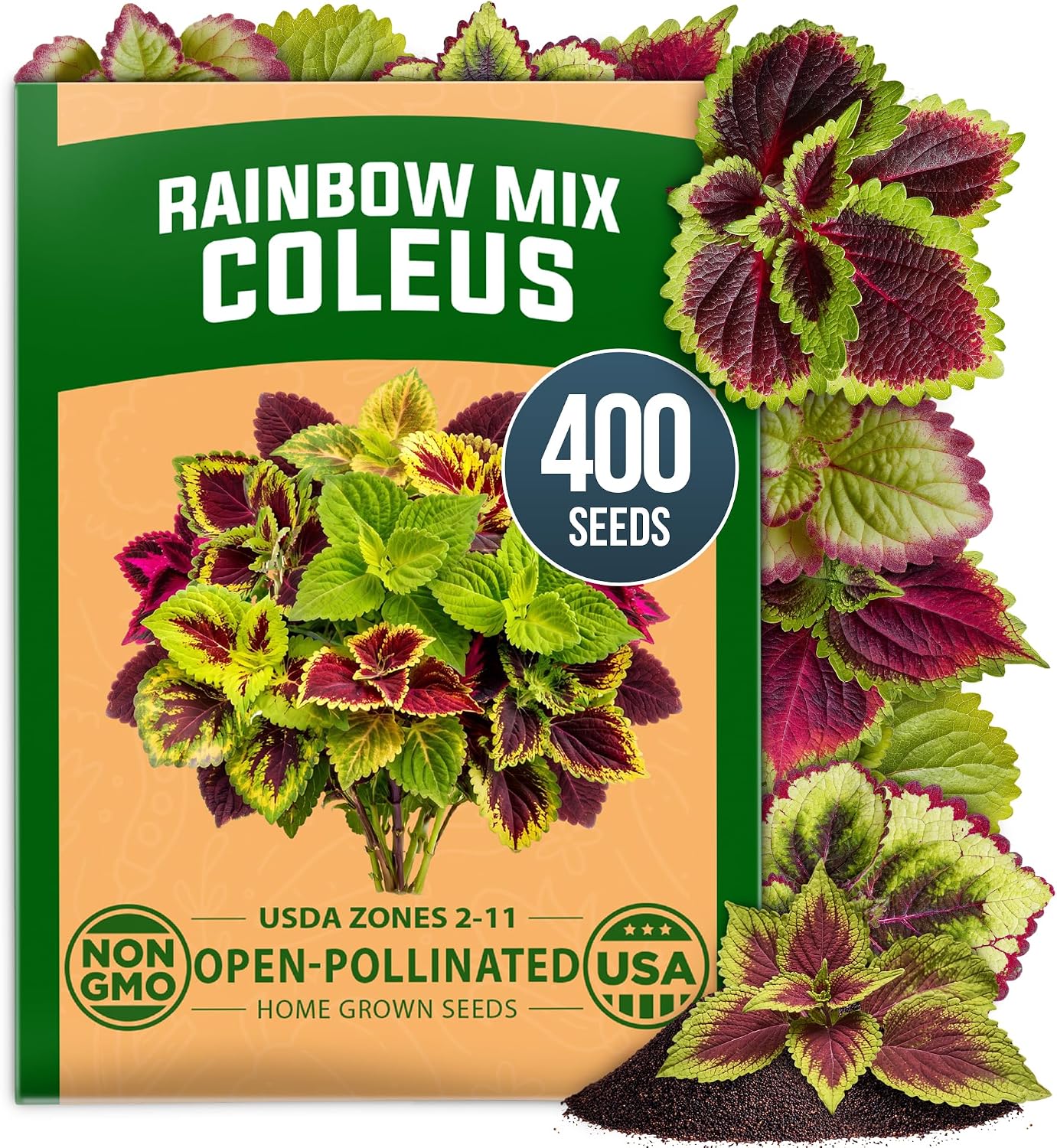
HOME GROWN Rainbow Mix Coleus Seeds (approx. 400)
| Sunlight Exposure | Part Shade to Shade |
|---|---|
| USDA Hardiness Zone | 2-11 |
| Expected Blooming Period | Spring through Frost |
| Material Features | GMO Free, Heirloom |
| Unit Count | 1 Count |
These Rainbow Mix coleus seeds produce compact, colorful foliage plants that are well suited to containers and shaded patio spots. Surface-sow the tiny seeds (do not cover), keep the medium warm and consistently moist, and seedlings typically appear in 10–14 days; pinch growing tips to encourage bushy, mounded plants. The mix is valued for season-long leaf color in shades of rose, green, bronze, cream, and scarlet, so you get visual impact without relying on flowers. Coleus grows indoors near bright north or east windows and outdoors in part shade to shade, making it a flexible choice for window boxes, mixed planters, and small pots. Important limitations are that coleus is a tender annual in most regions and needs protection from frost and prolonged drought, and it prefers warm temperatures for best germination and growth. For container gardeners who want low-maintenance, high-impact foliage, this seed mix is an easy way to produce many plants from one packet.
Best for: Gardeners who want easy-to-grow, high-impact foliage for containers and shaded patios and prefer predictable, low-fuss plants they can start from seed.
Less Ideal for: People seeking long-lived perennial landscaping or plants that tolerate full sun and drought without extra care.
- High seed count (about 400) gives many starts for containers or massing
- Open-pollinated non-GMO seeds from a mix that yields varied, colorful foliage
- Specifically suited to part shade and shade where many flowering plants struggle
- Compact, mounded habit that performs well in pots, window boxes, and mixed planters
- Tender annual in most zones and requires frost protection or indoor overwintering
- Requires consistent moisture and will suffer if soil dries out or remains waterlogged
Verdict: A high-count, non-GMO coleus seed mix that reliably produces compact, colorful foliage perfect for containers and shaded patios.
The Three Company Lavender (2-Pack) Live Fragrant Purple Perennials in 1-Qt Pots

| Sunlight Exposure | Full Sun |
|---|---|
| USDA Hardiness Zone | 5-9 |
| Moisture Needs | Low |
| Expected Blooming Period | Late Spring to Summer |
These lavender plants arrive as two 1‑quart pots of Lavandula Purple intended for outdoor planting in full sun. They are compact, mounded perennials that reach roughly 12–18 inches tall and are typically used in containers, balcony planters, or low hedge borders where their purple blooms and strong scent add visual and aromatic interest. The plants prefer well‑draining soil and low moisture once established, which makes them low‑maintenance for sunny balconies. Notable features include pollinator‑attracting flowers, deer‑deterring scent, and suitability for USDA zones 5–9, which covers many temperate climates. Because these are live plants shipped from a greenhouse, success depends on initial care during the first weeks after planting and ensuring pots have drainage. Plant size on arrival and bloom timing will vary by season, and buyers in very hot or very cold microclimates should adjust care accordingly. For small‑space gardeners wanting fragrant, drought‑tolerant color in full sun, these lavenders are a practical choice when tended promptly after delivery.
Best for: Gardeners with sunny balconies who want low‑maintenance, fragrant flowering plants that perform well in containers and attract pollinators.
Less Ideal for: People with shaded or mostly north‑facing balconies or those unwilling to water and pot the plants promptly after delivery.
- Compact habit suited to containers and balcony planters
- Fragrant purple blooms that attract pollinators
- Low water needs once established for easy care
- Shipped as live plants directly from greenhouse so you receive established starts
- Success depends on prompt transplanting and initial watering care after arrival
- Not suitable for shady balconies since it requires full sun
Verdict: A compact, fragrant lavender pair that gives sunny balconies long‑lasting color and low‑maintenance scent when planted in well‑draining containers.
Choosing the Right Bedding Plants for Window Boxes: Key Factors to Consider
Light Exposure
Window boxes experience widely different lighting depending on orientation and surrounding architecture. Full sun exposures require plants that tolerate heat and intense light, while north-facing boxes need species that bloom in partial or full shade. Assess the number of direct sun hours and choose plants whose flowering and foliage habits match those conditions. Also consider seasonal shifts: a sill that gets sun in summer may be shadier in winter, which affects cool-season displays.
Light exposure also influences watering frequency and soil choice. Brighter spots dry out faster, so pair sun-loving bedding plants with a free-draining mix and choose species that handle intermittent dryness. For shaded boxes, prioritize plants that perform with lower light and remain compact without stretching.
Container Soil Volume and Drainage
Window boxes have limited root space and often shallow soil depth, which restricts plant size and nutrient reserves. Select plants with modest root systems and avoid heavy feeders unless you plan frequent feeding. Use a lightweight, well-draining container mix to prevent waterlogging and to keep the combined weight manageable on a sill or balcony rail.
Drainage holes and a layer of coarse material or a fast-draining substrate help prevent root rot. Consider how often you can realistically refresh potting mix and choose plants that tolerate the nutrient decline that comes with long container use if you do not plan frequent repotting.
Watering Needs and Responsiveness
Because window boxes dry quickly, water needs vary more than in-ground beds. Match plant choices to how often you can water. Some bedding plants recover quickly after brief drought and rebloom strongly when watered, while others will show stress or stop flowering. Plants responsive to regular moisture are good for high-attention sites; drought-tolerant varieties are better where watering is sporadic.
Think about winter watering too. Cool-season bedding in a poorly drained box can suffer freeze-thaw root damage if the soil stays saturated. Choose species with known tolerance to the moisture regime you can maintain.
Growth Habit and Maintenance
Window boxes benefit from predictable habits: mounding, trailing, or compact upright growth each creates a different visual effect and has different spacing needs. Mounding plants fill the box without spilling; trailing plants soften edges and hide soil; upright compact species add vertical interest without overwhelming neighbors. Pick a combination that fits the box width and desired look.
Maintenance considerations include deadheading, pruning, and seasonal replacement. Some bedding plants need frequent deadheading to sustain blooms and a tidy appearance, while others are self-cleaning. Choose plants that fit your maintenance time budget to keep displays looking their best.
Seasonal Timing and Bloom Sequence
Window boxes are often staged for peak displays in specific seasons. Annual bedding plants vary in bloom time and peak performance, so plan a sequence that provides continuous interest. Early spring bloomers can be complemented by summer-flowering choices and by cool-season options for fall and mild winters. Consider how long each species typically blooms and whether it tolerates end-of-season transitions without collapsing.
A strategic mix of early, mid, and late-season performers reduces the need for complete replanting and maintains visual continuity across months.
Temperature and Microclimate Tolerance
Window boxes sit in microclimates influenced by reflected heat from walls, sheltered corners, or exposure to wind. Plants that tolerate heat stress, reflected sun, or strong winds are better choices for exposed sills. Conversely, boxes that face cold drafts or are near air-conditioning outlets need species that withstand temperature swings.
Recognize how your house materials and local climate alter the microclimate, and select bedding plants that handle those specific temperature and wind conditions to avoid premature leaf scorch, bolting, or frost damage.
Designing a Balanced Window-Box Display
A successful window-box composition typically combines three growth roles: a thriller for vertical interest, fillers for mass and color, and spillers to soften edges. For small boxes, keep one thriller modest in size and avoid tall stakes that catch wind. Choose fillers and spillers with similar light and water needs so the whole box behaves consistently.
Think in terms of scale. Select plants whose mature widths fit the box depth and length when combined. Allow small gaps for airflow; crowding increases disease risk and shortens the display's lifespan.
- Use one compact upright or small structural plant as the focal point.
- Select two to three filler species for repeated color and texture.
- Add a trailing variety to cascade over the front and hide soil.
Practical Soil and Feeding Tips
Start with a high-quality, lightweight potting mix amended with slow-release fertilizer or incorporate a controlled-release granular feed. Because window boxes have limited soil, nutrients are used up quickly, so a steady low-dose fertilizer regime helps maintain bloom without forcing excessive vegetative growth.
Top-dress with fresh mix or compost each season and consider a mid-season liquid feed for heavy bloomers. Avoid heavy garden soil which compacts and reduces drainage.
- Choose mixes labeled for containers or balcony planters.
- Incorporate a water-retentive component only for very sunny, fast-drying sites.
- Monitor for dissolved-salt buildup and flush soil occasionally.
Managing Water Wisely
Establish a consistent watering routine that matches light exposure. Morning waterings reduce afternoon stress in hot sites, while evening watering may be acceptable in cooler locations. Use a finger test or moisture meter to avoid overwatering; surface dryness does not always mean the root zone is dry.
If you travel or cannot water daily, select drought-tolerant bedding plants or add water-storing crystals and mulch on the surface to reduce evaporation. Self-watering boxes or reservoirs can also extend intervals between fill-ups.
- Water until it exits drainage holes to ensure thorough wetting.
- Reduce frequency in cool, cloudy weather to avoid root rot.
- Consider capillary mats or reservoirs for shallow boxes.
Seasonal Care and Overwintering
Most bedding plants for window boxes are treated as seasonal annuals, but some tender perennials can be used as long-term residents with protection. At season end, remove spent plants, refresh potting mix, and sanitize containers if disease was present. If you plan to keep woody or perennial species, reduce feeding and move boxes to a protected spot for winter.
Inspect for overwintering pests and clean up debris to reduce disease carryover. For cold climates, consider lifting boxes off railings and storing them in a sheltered area to prevent freeze damage to roots.
- Trim back leggy growth to encourage bushier regrowth in spring.
- Plan a mid-season refresh if flowering drops sharply.
- Sanitize containers between seasons when fungal issues occur.
Combining Colors and Textures
Color schemes in window boxes should be readable at a glance from the ground. Use a limited palette of two to three dominant colors with supporting foliage tones to avoid visual clutter. Textural contrast-broad leaves against fine foliage, matte against glossy-adds depth to a small planting.
Keep scale in mind when mixing floriferous species with those that provide architectural foliage. Repetition of a key filler species across the box ties the composition together and extends visual rhythm.
- Use repetition to create cohesion across multiple boxes.
- Pair bold flowers with subtle foliage to avoid competition.
- Consider bloom timing so color transitions are smooth.
How We Chose the Best Bedding Plants for Window Boxes
We selected plants that reliably perform in the confined soil volume and microclimate of a window box. Criteria focused on compact growth habit, flowering duration, sun and shade tolerance, drought and moisture response, and ease of seasonal maintenance. We favored species with predictable size and habit to prevent overcrowding and plants known to establish quickly after transplanting. Disease resistance and pest tolerance were considered to reduce ongoing care in a high-visibility spot. Plants requiring extreme pruning or complex feeding schedules were generally excluded in favor of lower-maintenance options that still offer long bloom times. Final selections balance season-long color and structural variety while avoiding specimens that need large root space or constant deadheading to look presentable.
FAQ
How deep should a window box be for most bedding plants?
Most bedding plants perform well in boxes that are at least 6 to 8 inches deep to allow adequate root growth. Larger species and those with bigger root systems benefit from deeper containers of 10 to 12 inches.
How often do I need to fertilize flowering bedding plants in a window box?
Container bedding usually needs light, regular feeding because nutrients are used quickly. A slow-release fertilizer at planting plus a liquid feed every 2 to 4 weeks during peak bloom is a common approach, though frequency depends on plant vigor and potting mix.
Can I mix annual and perennial bedding plants in the same box?
Yes, but choose perennials that stay compact and share similar light and water needs with the annuals. Perennials may need less feeding or different seasonal pruning, so plan maintenance accordingly.
What is the best way to keep trailing plants from dropping overexposed stems?
Train spillers gently when planting so they cascade naturally. Avoid over-fertilizing trailing plants which can encourage leggy growth. Periodic trimming of overly long stems keeps the display tidy and encourages fuller branching.
How do I prevent root-bound plants in shallow window boxes?
Choose plants with modest root systems and repot or refresh the mix annually to avoid compaction. If roots circle and fill the box, divide or replace the plant with a species better suited to confined soil volume.
Are there low-maintenance bedding options for sunny boxes?
There are drought-tolerant annuals and perennials that handle full sun with minimal watering once established. Pair these with a well-draining mix and mulching to reduce watering frequency, and select self-cleaning bloomers to lower deadheading needs.
Final Verdict
Window boxes reward careful plant choice and simple maintenance. Prioritize compact habits, matching light and water needs, and predictable bloom sequences to ensure long-lasting displays. Tradeoffs are inevitable: plants that provide nonstop blooms may need more frequent feeding and deadheading, while lower-maintenance options may offer less continuous color. Focus on the criteria that match your routine and microclimate to pick bedding plants that keep your window boxes looking their best all season.
