

Note: This article contains affiliate links. If you click on these links and make a purchase, I may earn a small commission at no extra cost to you. This helps support my research and content. Read my full affiliate disclosure here.
If you keep philodendrons, feeding with the right organic fertilizer changes how vigorously new leaves form and how well the plant resists pests and stress. Philodendrons prefer steady, moderate nutrients rather than heavy bursts of synthetic salts, so choosing a product formulated for foliage and slow release matters in everyday care. This guide collects six top organic fertilizer options suited for philodendron growing conditions and explains why each type made our shortlist. We evaluate nutrient balance, application method, and safety for roots and foliage to help you pick a feeding approach that fits your routine and potting setup.
Top Picks at a Glance
| Best Overall The best all-around choice for most situations | Grow Queen Organic Liquid Indoor Plant Food 5-5-5 with Sea Kelp, 8 oz | 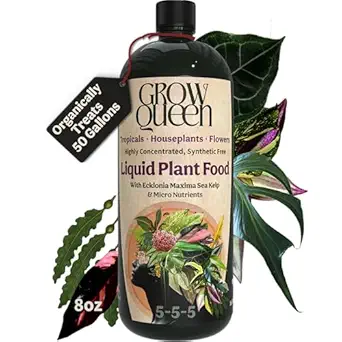 |
| Best Quality Built to a higher standard if you want something more solid | Leaves and Soul Professional Philodendron Liquid Fertilizer 3-1-2 (8 oz) |  |
| Best Value The sweet spot between price and what you get | Purived All-Purpose Liquid Houseplant Fertilizer, 16 fl oz (Makes 50 Gallons) |  |
| Best Budget The cheapest option that still gets the job done reliably | Cute Farms Organic Indoor Liquid Plant Food (8 fl oz) |  |
| Highest Rated A top-rated pick with lots of positive feedback | Gardenera Philodendron Organic Superfood Concentrate (8 oz) |  |
| Best Seller A high-volume bestseller chosen again and again | Miracle-Gro Organic Indoor Plant Food, 8 fl. oz. (2-Pack) |  |
Grow Queen Organic Liquid Indoor Plant Food 5-5-5 with Sea Kelp, 8 oz

| Item Form | Liquid |
|---|---|
| Mixing Ratio | 1:1 |
| Specific Uses For Product | Plant Growth |
| Application Method | Watering |
| Target Species | Plants |
Grow Queen's 8 oz concentrated liquid plant food is a balanced 5-5-5 organic fertilizer designed for regular use on houseplants, tropicals and container gardens. You mix one capful (about 4 ml) per gallon of water and either drench the soil or apply as a foliar mist every one to three weeks, which makes it straightforward to fold into a weekly watering routine. The formula includes Ecklonia maxima sea kelp and trace micronutrients, which help support greener foliage, stronger stems and root development without the burning risk of high-strength synthetic feeds. At the stated dilution the bottle treats up to 50 gallons so it will last a small collection for months. It is also labeled safe for aerated hydroponic systems when reservoirs are changed regularly, though it can form a film in stagnant water so fresh mixes are recommended. The product has an earthy ocean scent from real kelp and excludes perfumes and dyes, but that natural smell may bother some users. Directions are simple and the fertilizer pairs well with slow-release feeds for longer-term nutrition.
Best for: Buyers who want a simple, one-bottle solution to feed a mixed collection of houseplants regularly and prefer organic ingredients and seaweed benefits.
Less Ideal for: Growers who need precision nutrient formulas for specific flowering or high-yield vegetable crops or those who require ready-to-use sprays without mixing.
- Balanced 5-5-5 NPK suitable for general indoor plant feeding
- Concentrated formula stretches up to 50 gallons from an 8 oz bottle
- Contains sea kelp and micronutrients to promote foliage color and root strength
- Safe for regular use at recommended dilution with low burn risk
- Natural kelp scent may be noticeable indoors
- Can form a film in standing water so not ideal for non-aerated reservoirs
Verdict: A concentrated, easy-to-use organic 5-5-5 liquid fertilizer with sea kelp that provides straightforward, all-purpose nutrition for indoor plant collections.
Leaves and Soul Professional Philodendron Liquid Fertilizer 3-1-2 (8 oz)

| NPK | 3-1-2 |
|---|---|
| Form | Liquid |
| Target Species | Philodendron |
| Mixing Ratio | 1–2 tsp per 8 cups water |
| Unit Count | 8 Ounce |
Leaves and Soul Professional Philodendron Liquid is a concentrated 3-1-2 fertilizer made for steady, performance-focused feeding of philodendrons. You dilute 1–2 teaspoons per 8 cups of water and apply the solution to the potting medium every 2–4 weeks during active growth, which makes it easy to incorporate into a regular watering routine. The balanced NPK plus added micronutrients targets leafy development and root health, so expect fuller foliage and more vigorous vegetative growth when light and watering are appropriate. The liquid format mixes quickly and delivers nutrients directly to the root zone, which can produce faster visible responses than slow-release granules. Limitations to note are the small 8 oz bottle relative to frequent use on larger plants and the need to measure carefully since the concentrate must never be applied undiluted. Also results depend on overall care factors like light, humidity, and drainage, so feeding this product alone will not fix cultural problems.
Best for: Plant owners seeking consistent, results-driven feeding for philodendrons who follow a regular care routine and want a concentrated liquid they can dose precisely.
Less Ideal for: Casual owners who prefer set-and-forget slow-release feeds or those with many large specimens that need large-volume, less-frequent fertilizer solutions.
- Balanced 3-1-2 NPK formula tailored for leafy philodendron growth
- Includes micronutrients to support overall plant vigor beyond primary NPK
- Liquid concentrate mixes quickly and delivers nutrients directly to roots
- Clear dilution instructions for routine feeding every 2–4 weeks
- Small 8 oz bottle can require frequent replacement for multiple or large plants
- Must be carefully diluted before use which adds a small measurement step
Verdict: A concentrated, performance-oriented liquid feed that gives philodendrons targeted nutrients for faster foliage and root response when used regularly.
Purived All-Purpose Liquid Houseplant Fertilizer, 16 fl oz (Makes 50 Gallons)

| Item Form | Liquid |
|---|---|
| Application Method | soil drench, foliar feed, full & semi hydroponics |
| Target Species | Houseplants |
| Mixing Ratio | 320:1 |
Purived All-Purpose Liquid Houseplant Fertilizer is a concentrated 16 fl oz bottle that mixes 1 cap per gallon to treat up to 50 gallons of water. It is formulated for indoor potted plants and supports multiple application methods including soil drench, foliar spray, and full or semi-hydroponics, so you can use the same product whether you water, mist, or run nutrient solutions. The formula lists primary macronutrients and a range of micronutrients, which helps correct common deficiencies and supports steady growth when used at the recommended dilution. Practical benefits include an easy-to-follow mixing ratio, an odorless solution that is simple to store, and broad compatibility with different feeding routines. Important limits are that the label gives no N-P-K percentages, so precise nutrient planning for sensitive seedlings or specialty plants is not possible, and safety precautions mean you must handle and store it carefully. For new plants, start at or below the recommended dilution and observe growth before increasing frequency.
Best for: Buyers who want a versatile, no-fuss fertilizer for establishing and maintaining new houseplants and who value a single product that works across watering, misting, and basic hydroponic setups.
Less Ideal for: Growers who need exact N-P-K formulations for seedlings, specialty plants, or strict hydroponic nutrient regimens should consider a product with full nutrient breakdown and concentration details.
- Very concentrated so one bottle treats up to 50 gallons, reducing repurchase frequency
- Suitable for multiple application methods: soil drench, foliar feed, and hydroponics
- Includes a range of micronutrients in addition to primary NPK components
- Simple, clear mixing ratio (320:1) that is easy to follow
- No N-P-K ratio listed on the product information, limiting precise nutrient management
- Requires careful handling and storage due to safety warnings
Verdict: A concentrated, easy-to-use all-purpose fertilizer that covers feeding, foliar, and basic hydroponic needs for new houseplants.
Cute Farms Organic Indoor Liquid Plant Food (8 fl oz)

| Item Form | Liquid |
|---|---|
| Specific Uses For Product | Plant Growth, Root Development |
| Application Method | Dilute 7 pumps into 16 ounces of water |
| Target Species | Indoor Houseplants |
| Unit Count | 8 Fluid Ounces |
Cute Farms Organic Indoor Liquid Plant Food is a concentrated, pump-dispensed fertilizer made for houseplants and potted specimens like peace lilies. You dilute seven pumps into 16 ounces of water and apply to the soil; the bottle includes a locking pump to reduce spills. The formula highlights nitrogen, phosphoric, and potash to support leaf growth, root development, and stronger stems without harsh urea-based salts, so it can be used regularly at watering intervals. At 8 fluid ounces the concentrate covers small collections or occasional feeding cycles and is easy to store. Practical limits are its small bottle size for larger plant collections and a coverage claim tied to a short area measurement rather than plant count, so frequent users will need replacements sooner. The liquid form and pump make mixing fast for everyday indoor care, and the organic, vegan formulation is suited to owners who prefer milder, environmentally minded products for sensitive species like peace lilies.
Best for: Houseplant owners looking for an easy-to-use, gentle organic fertilizer for routine feeding of a few indoor plants such as peace lilies and other common houseplant species.
Less Ideal for: Enthusiasts with large collections or plant growers who need high-concentration feeds and longer-lasting supply should consider larger or more concentrated options.
- Organic, urea-free formula suitable for sensitive indoor plants
- Pump dispenser with locking feature for measured, low-mess dosing
- Specifically formulated to support leaf, root, and stem development
- Simple dilution ratio that is quick to mix into watering water
- Small 8 fl oz bottle may not last long for medium or large collections
- Coverage listed as area rather than number of plants so planning amounts is imprecise
Verdict: A mild, easy-to-dose organic concentrate that makes regular feeding of peace lilies and similar houseplants simple and low-risk.
Gardenera Philodendron Organic Superfood Concentrate (8 oz)

| Item Form | Liquid |
|---|---|
| Application Method | Water |
| Target Species | Philodendron |
| Mixing Ratio | 1:128 |
| NPK | 1-0.03-13 |
This 8 oz Gardenera Philodendron Organic Superfood Concentrate is a liquid, water-diluted plant supplement formulated to promote lush foliage and vigorous growth in Philodendron species. It mixes at 1:128 and is intended to be added to routine waterings (the product suggests about 2 tablespoons per gallon for regular feeding), delivering an NPK of 1-0.03-13 plus 18 vitamins, minerals, micro-fungi and bio-organisms. In practice it functions as a supplemental feed rather than a standalone fertilizer, so you continue normal watering and potting practices while giving plants a nutrient boost that favors foliage development. The product claims compatibility with soil and alternative media such as hydroponics and LECA, and the concentrated format makes it easy to store and dose. Limitations to expect are that results depend on correct dilution and regular use, and the high-potassium formula is targeted at foliage rather than heavy nitrogen-driven vegetative surge, so growers seeking rapid leaf-up with high nitrogen needs may want a different balance. Expect gradual improvement in leaf color and vigor rather than instant dramatic change.
Best for: Buyers who prioritize consistent, plant-specific nutrition and want an easy-to-dose organic supplement to maintain healthy Philodendron foliage through regular watering.
Less Ideal for: Growers who need a high-nitrogen feed for rapid vegetative growth or those who prefer all-in-one granular fertilizers that require less frequent dosing.
- Formulated specifically for Philodendron with an NPK aimed at foliage health.
- Concentrated liquid that is easy to store and dose for regular watering routines.
- Includes microbial additives and a broad mix of organic nutrient sources to support soil biology.
- Suitable for multiple growing media including soil, hydroponics and LECA.
- Small 8 oz bottle requires careful measurement and frequent repurchases for multiple plants.
- Very low nitrogen ratio may not suit growers wanting rapid leafy growth driven by higher nitrogen.
Verdict: A concentrated, Philodendron-focused organic liquid supplement for gardeners who want reliable, regular nutrient support to keep foliage healthy.
Miracle-Gro Organic Indoor Plant Food, 8 fl. oz. (2-Pack)

| Item Form | Liquid |
|---|---|
| Specific Uses For Product | Plant Growth |
| Target Species | Houseplants, Flowers, Vegetables, and Herbs |
| Mixing Ratio | 2:1 |
Miracle-Gro Organic Indoor Plant Food is a ready-to-use liquid fertilizer designed for indoor container plants and sold here as two 8 fl. oz. bottles. It uses a 1-0.5-1 NPK formula made from about 94% plant-based ingredients and is intended to give an immediate nutrient boost when used as directed. Application is simple: squeeze once for small pots, twice for pots over 6 inches, or mix two squeezes with a quart of water to feed while watering. The smart-dose cap reduces guesswork and helps avoid overfeeding, which is useful for cautious plant owners. Practical benefits include quick uptake by roots, compatibility with a wide range of common houseplants, and clear dosing instructions for seedlings and mature plants. Limitations are the small bottle size for larger collections and the need to follow safety guidance to keep the concentrate away from children and pets. This product works best as a routine, easy-to-use liquid feed for philodendrons and other indoor foliage where gentle, plant-based nutrition is preferred.
Best for: Plant owners who prefer an easy, low-risk organic-derived liquid feed for indoor foliage like philodendrons and want straightforward dosing that minimizes mistakes.
Less Ideal for: People managing large collections of big pots who need bulk fertilizer or those wanting fully certified organic inputs rather than plant-based ingredients.
- Mostly plant-based formula (about 94%) suitable for growers seeking organic-derived nutrition
- Smart-dose cap and simple squeeze dosing reduce the chance of over-application
- Clear mixing ratio for feeding while watering makes integration into a watering routine easy
- Formulated for a wide range of indoor plants including houseplants, vegetables, herbs, and flowers
- Two 8 fl. oz. bottles may be small for owners with many or large pots
- Label warnings require keeping concentrate away from children and pets
Verdict: A simple, plant-based liquid feed with a smart-dose cap that makes regular feeding of philodendrons safe and easy for cautious plant owners.
Choosing the Right Organic Fertilizer for Philodendron: Key Factors to Consider
Nitrogen-to-Phosphorus-to-Potassium Ratio
Philodendrons are grown primarily for foliage, so an N-P-K that leans toward moderate nitrogen is usually best. Too much nitrogen can push soft, weak growth that is more susceptible to pests, while too little slows leaf production and reduces vigor. A balanced but foliage-friendly ratio encourages steady enlargement of leaves and maintains overall plant health.
When evaluating organic fertilizers, consider how those numbers are delivered over time. Some organic sources release nitrogen gradually as microbes break them down, giving a steadier supply than fast-acting synthetic salts. This gradual release reduces the likelihood of fertilizer burn in small pots and helps maintain an even growth rhythm.
Release Rate and Feeding Frequency
How quickly nutrients become available affects both scheduling and plant safety. Liquid organics and soluble extracts provide quicker uptake for a prompt response, which is useful when you want to correct a deficiency. Slow-release formulations, coated granules, or granular organic meals feed plants over weeks to months and cut down on frequent measuring.
For container philodendrons, slow, steady nutrient delivery is often preferable because it lowers salt buildup and reduces the need to repot or flush the substrate. Consider how often you water and how active the plant is seasonally when matching release rate to your routine.
Micronutrient and Trace Element Content
Micronutrients such as iron, manganese, zinc, and boron support pigment production, leaf strength, and metabolic processes that keep philodendron leaves glossy and resilient. An organic fertilizer that includes kelp, compost, or mineral-derived trace elements can address subtle deficiencies that macronutrients alone will not fix.
Pay attention to ingredient lists and guaranteed analysis for micronutrient listings. Some blended organics include a wider spectrum of trace elements; others rely on quality potting mix and occasional supplements to meet that need. For plants showing pale new growth or uneven coloration, micronutrient presence is an important buying factor.
Salt Index and Root Safety
Container-grown philodendrons are vulnerable to salt buildup because pots have limited leaching and root zones are confined. Organic fertilizers generally have a lower soluble salt index than many synthetics, but concentrations still matter. Fertilizers with low water-soluble salt content and clear dilution instructions reduce the risk of root burn and leaf tip browning.
Also consider ingredients that could alter substrate pH or salt levels over time. Feed practices such as periodic flushing and using recommended concentrations help, but choosing a gentler, low-salt organic formula makes day-to-day care simpler and safer for sensitive plants.
Application Method and Ease of Use
How a fertilizer is applied – liquid drench, foliar spray, granular top-dress, or slow-release spike – affects convenience and efficacy. Liquid solutions are flexible and allow precise dosing, while granular or coated slow-release products require less frequent attention. Foliar feeds can be effective for quick nutrient correction but are not a substitute for root feeding.
Choose a format that matches how you already care for your philodendron. If you water infrequently, a slow-release option may be better. If you prefer weekly light feeding, a dilute liquid concentrate or soluble organic extract will integrate more smoothly into your routine.
Ingredient Transparency and Organic Source
Knowing whether nutrients come from recognizable organic sources helps with both safety and gardener confidence. Ingredients like compost, kelp, fish emulsion, feather meal, or alfalfa meal indicate biological nutrient sources that break down naturally. Ingredient lists that specify the source and percent of active elements make it easier to predict performance.
Avoid products with vague descriptors or unclear concentrations when buying for houseplants. Transparency also helps you combine fertilizers with other amendments, avoid duplicate nutrient loading, and maintain predictable substrate biology.
Matching Feed Strength to Pot Size and Soil
Smaller pots need lower concentrations because nutrients accumulate faster in limited media. For a philodendron in a 4- to 6-inch container, use diluted liquid feeds or a very gentle slow-release option. Larger containers and well-aerated mixes tolerate slightly stronger applications, but you still want to err on the conservative side compared with outdoor beds.
Consider measuring the soluble salt level if you suspect buildup. Regular light feeding is preferable to occasional heavy doses, and periodic leaching with clear water helps reset the substrate when necessary.
- Dilute liquids more for small pots
- Slow-release suits infrequent waterers
- Flush container media once per season to prevent salt buildup
When to Switch Feeding Regimes
Adjust feeding frequency and strength with growth cycles. Increase feeding slightly during the active spring and summer growth period and taper back in autumn and winter when the plant slows. Watch new leaf size, color, and internode spacing as practical signals of whether the current regime is too weak or too strong.
If you repot into fresh mix, delay heavy feeding for a few weeks to avoid combining fertilizer concentration with nutrients already present in the new substrate.
- Boost feeding in active growth
- Cut back during dormancy or slow growth
- Wait after repotting before resuming full-strength feeds
Foliar Feeding and When It Helps
Foliar feeding can deliver micronutrients fast and correct temporary deficiencies, especially when root uptake is limited by cool conditions or compacted soil. Use very dilute, plant-safe organic foliar solutions and apply in the morning to allow leaves to dry during the day.
Do not rely on foliar sprays as the only feeding method for philodendrons. They are a supplemental technique best paired with routine root-based fertilization for sustained growth.
- Use dilute solutions and morning application
- Apply foliar feeds sparingly as a supplement
- Avoid foliar feeding when temperatures are extreme
Integrating Organic Fertilizer with Repotting and Soil Amendments
When you repot, consider mixing a modest amount of slow-release organic granules into the fresh mix or top-dressing after planting. Compost or aged organic matter added to the potting mix can provide baseline nutrients and support microbial activity that helps organic fertilizers release steadily.
Avoid combining multiple concentrated amendments at once. If you add compost or manure-derived products during repotting, reduce subsequent fertilizer applications until the media stabilizes.
- Top-dress lightly after repotting
- Use compost for baseline fertility
- Space amendments to avoid nutrient spikes
Monitoring Plant Response and Adjusting
Track leaf size, color, and new growth rate as your primary indicators of fertilizer effectiveness. Pale new leaves can signal nitrogen or iron issues, while dark, floppy growth could mean excess nitrogen. Brown leaf tips often indicate salt stress or inconsistent watering rather than nutrient shortage.
Make only one feeding change at a time and allow several weeks to observe effects. Keep notes on concentrations and timing so you can replicate successful approaches or reverse adjustments that produce undesirable symptoms.
- Use visible growth cues to assess feeding
- Change one variable at a time
- Keep a simple feeding log
How We Chose the Best Organic Fertilizer for Philodendron
We shortlisted organic fertilizers that match philodendron needs and common indoor growing setups. Key filters included nutrient balance, particularly moderate nitrogen and adequate micronutrients for glossy leaves; release profile, favoring slow-release or consistently soluble formulas that reduce salt buildup; application methods that fit container growing such as liquid feeds, water-soluble granules, and gentle slow-release pellets; and ingredient transparency, giving priority to sources gardeners can identify like fish, kelp, composted manure, or plant-based meals. We also examined product safety for roots and foliage, prioritizing low burn risk and low salt index to avoid tipping sensitive potted philodendrons into stress. Practical factors such as ease of measuring and mixing, compatibility with common potting mixes and watering routines, and availability of directions for houseplant use were included. Products that lacked clear indoor-use instructions, contained high-solubility synthetic salts, or had insufficient nutrient detail were excluded. The final picks reflect a balance of feeding effectiveness, gardener convenience, and indoor plant safety.
FAQ
How often should I feed a philodendron with organic fertilizer?
It depends on the product. Slow-release organics may only need application every 3 to 6 months, while liquid organics are often applied diluted every 2 to 4 weeks during active growth. Reduce or stop feeding in winter when growth slows.
Can I use compost tea or homemade organic teas safely?
Yes, when prepared properly. Dilute compost teas and use them sparingly as a supplement. Uncontrolled homemade brews can introduce pathogens if not handled carefully, so stick to light, well-aerated preparations and use fresh solutions.
Will organic fertilizers prevent yellowing leaves?
Organic fertilizers can correct nutrient deficiencies that cause yellowing, particularly if micronutrients are included. However, yellow leaves often stem from overwatering, poor light, or root problems, so diagnose those issues before increasing feeding.
Are foliar feeds better than root feeding for philodendrons?
Foliar feeds are useful for rapid micronutrient correction but do not replace root feeding. They work best as a short-term supplement when roots cannot take up nutrients efficiently.
How do I avoid fertilizer burn with organic products?
Follow label dilution instructions, apply at the recommended frequency, and avoid concentrating product in a small pot. Periodic flushing with plain water and choosing low-salt organics reduce burn risk.
Should I change my fertilizer when repotting?
If you add fresh compost or amended soil when repotting, cut back on supplemental feeding for several weeks. If the new mix is low in nutrients, a light application of a slow-release organic or a low-strength liquid feed can help.
Final Verdict
For philodendrons, prioritize organic fertilizers that deliver moderate nitrogen, a steady release profile, and a good spectrum of micronutrients while keeping soluble salts low. Match the product format to your watering and care habits so you avoid nutrient spikes in small pots. Pay attention to plant response and adjust feeding strength and frequency rather than switching products frequently. Ultimately, choose an organic feeding approach that reduces burn risk and integrates with repotting and soil amendment plans. That way you support consistent, healthy foliage growth and spend less time correcting avoidable feeding problems.
