

Note: This article contains affiliate links. If you click on these links and make a purchase, I may earn a small commission at no extra cost to you. This helps support my research and content. Read my full affiliate disclosure here.
Picking the right organic fertilizer for succulents matters because these water-storing plants need low, steady nutrients and minimal salts to stay compact and healthy. Overfeeding or using the wrong ratio can cause leggy growth, leaf drop, or root damage in pots and landscape plantings. This guide covers seven shortlisted organic fertilizer options suited for succulents in containers and rock gardens. We evaluate each pick on nutrient balance, salt content, application method, and ease of use so you can choose a feed schedule that matches how and where you grow your succulents.
Top Picks at a Glance
| Best Overall The best all-around choice for most situations | Espoma Organic Cactus Liquid Plant Food, 8 oz (2-pack) |  |
| Best Quality Built to a higher standard if you want something more solid | Grow Queen Organic Succulent & Cactus Plant Food, 3 lb |  |
| Best Value The sweet spot between price and what you get | Grow Queen All‑In‑One Organic Succulent & Cactus Fertilizer (1 lb) |  |
| Best Budget The cheapest option that still gets the job done reliably | RAINFLOW Slow-Release Granular Fertilizer 14-13-13, 11.28 oz |  |
| Highest Rated A top-rated pick with lots of positive feedback | Cute Farms Succulent Slow Release Fertilizer Pellets (6 oz) |  |
| Most Popular A crowd favorite that many people choose with confidence | Wiggle Worm 100% Pure Organic Worm Castings Fertilizer, 30 lb |  |
| Best Seller A high-volume bestseller chosen again and again | Jobe's Organics Succulent Fertilizer Spikes, 12 Count |  |
Espoma Organic Cactus Liquid Plant Food, 8 oz (2-pack)

| Item Form | Liquid |
|---|---|
| Application Method | Watering can |
| Specific Uses For Product | Organic,Plant Food |
| Target Species | Cactus |
| Mixing Ratio | ½ cap per quart of water |
Espoma Organic Cactus! is a ready-to-mix liquid fertilizer designed for succulents, cacti and similar houseplants. You dilute 1/2 cap per quart of water and thoroughly drench the potting mix every 2 to 4 weeks, so it fits into a regular watering routine. As an organic formula it supplies essential nutrients that encourage stronger root development and new growth without relying on synthetic salts. The product ships as an 8 ounce bottle and is sold in a two-pack for continued use across multiple plants or seasons. Practical benefits include easy measuring, compatibility with indoor pots, and a formulation targeted for the low-nutrient needs of succulents and cacti. Limitations are that it is a medium-coverage liquid rather than a slow-release granular feed, so you must remember periodic applications and measure properly to avoid overfeeding smaller specimens. Also the concentration and bottle size mean heavy users will need frequent repurchase or multiple bottles for a larger collection.
Best for: Growers who prioritize visible plant performance and want an organic, easy-to-use liquid feed to accelerate root strength and new growth in cacti and succulents.
Less Ideal for: People who prefer set-and-forget feeding like slow-release spikes or who manage very large collections and need bulk concentrated fertilizers.
- Organic formula tailored for cacti and succulents to support root and new growth
- Simple dilution ratio (1/2 cap per quart) that fits into normal watering
- Sold as a two-pack so you have extra supply for multiple plants or seasons
- Liquid form gives faster uptake than granular fertilizers for quicker visible results
- Smaller 8 oz bottle size means frequent repurchasing for large collections
- Requires regular application and careful measuring since it is not slow-release
Verdict: A performance-focused organic liquid feed that quickly promotes root development and new growth in cacti and succulents when used as part of regular watering.
Grow Queen Organic Succulent & Cactus Plant Food, 3 lb
| Item Form | Powder |
|---|---|
| Specific Uses For Product | Plant Growth, Root Development, Soil Conditioning |
| Coverage | 3 lb feeds 75-150 Plants or Up To 150 Gallons of Soil for 1-3 Months |
| Target Species | All Succulents, Cacti and Bonsai |
| Mixing Ratio | 1 scoop per plant |
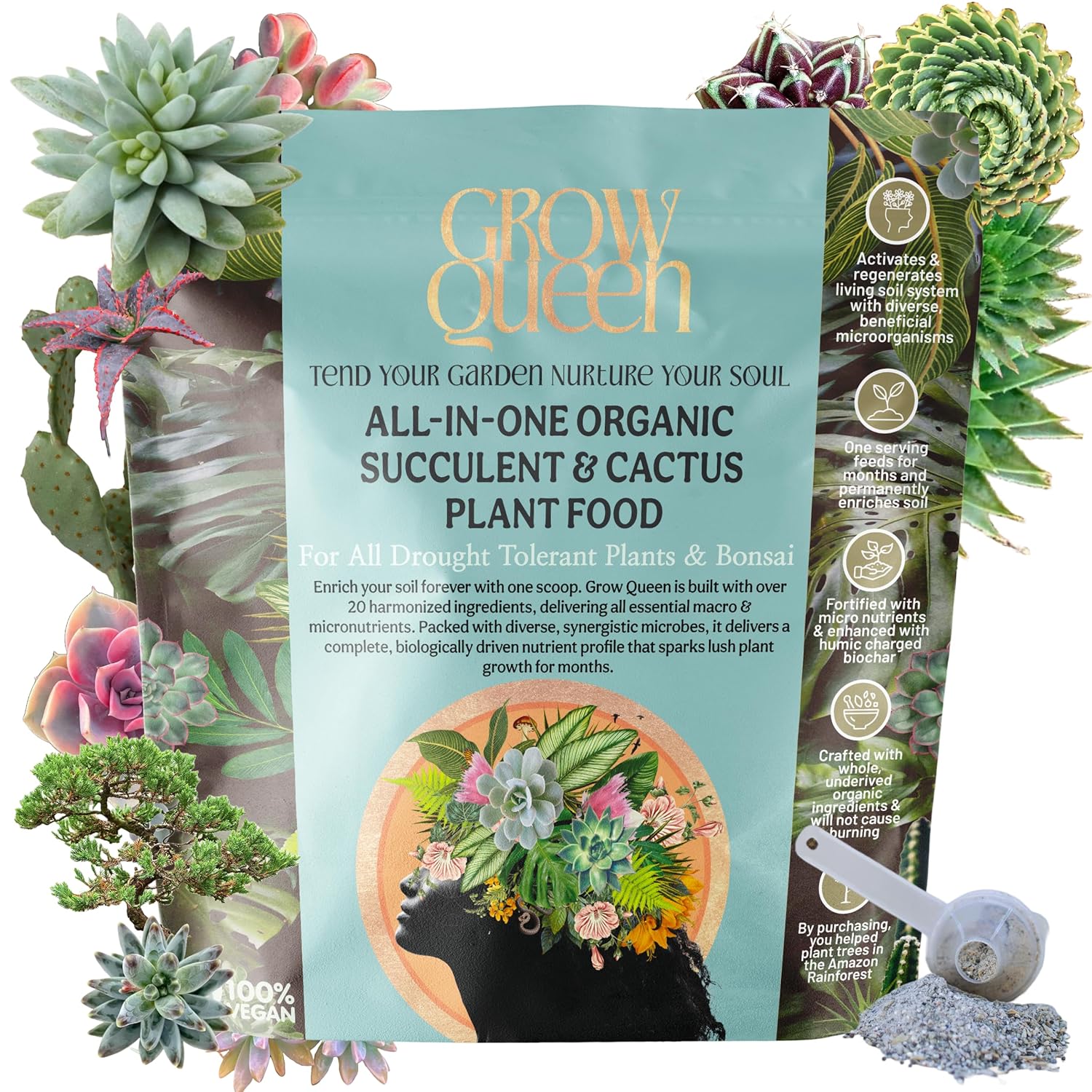
Grow Queen’s 3 lb succulent and cactus plant food is an organic, powder formula designed to feed potted succulents, cacti and bonsai with minimal fuss. It is applied as a single serving (one included scoop per plant) and delivers a mix of seed cake meals, rock phosphate, micronutrients and a live microbe pack that the maker says releases nutrition over 2 to 8 months. In practice this means one quick application per repot or seasonal feeding instead of frequent liquid feedings. The product is OMRI-listed and described as non-burning and odorless, which is useful for indoor collections and mixed-container displays. Beneficial microbes and biochar aim to improve root health and long-term soil structure, so you may see better root development and reduced transplant shock compared with straight liquid fertilizers. Limitations to note: the formula is granular/powder so it needs to be mixed into the topsoil for best aesthetics and microbial activity, and visible microbial growth can appear on the surface — harmless but possibly off-putting. Coverage claims are broad so heavier feeders may need more frequent applications.
Best for: Buyers who prioritize long-term, low-maintenance performance for indoor or patio succulent collections and want an organic product that builds soil biology rather than only supplying quick-release nutrients.
Less Ideal for: Gardeners who prefer immediate, easily measured liquid feedings or who need a product that leaves no visible residue on soil surface.
- OMRI-listed organic formula safe for indoor use
- Time-release nutrition that feeds plants for 2 to 8 months after a single application
- Includes beneficial soil microbes and biochar to support root health and soil biology
- Odorless and non-burning so it is gentle on potted succulents and indoor collections
- Visible microbial activity can look like mold on the soil surface and may require mixing in or covering
- Powder form requires manual mixing into the soil for best results
Verdict: Choose this organic, microbe-rich time-release plant food if you want low-maintenance, long-lasting nutrient and soil biology support for succulents and cacti.
Grow Queen All‑In‑One Organic Succulent & Cactus Fertilizer (1 lb)

| Item Form | Powder |
|---|---|
| Specific Uses For Product | Plant Growth, Root Development, Seed Development, Soil Conditioning |
| Application Method | Sprinkle on soil |
| Target Species | Aloe Vera, Echeveria, Jade, Sedum, Cacti, Snake Plant, Bonsai |
| Mixing Ratio | 1 Scoop Per plant |
Grow Queen All‑In‑One is a powdered, time‑release plant food designed for succulents, cacti and small bonsai. You sprinkle one 20 ml scoop per plant into the soil and the formula feeds over a 2 to 8 month period, so routine top‑ups are infrequent. The mix combines organic meals, rock phosphate, trace sulfates and a live microbe pack and is OMRI listed, vegan and described as safe for indoor use. Practically, it supports root development and soil health rather than delivering an immediate foliage boost, so it is best used at repotting or as a slow maintenance feed. Users should expect visible microbial activity on the soil surface after application; that is a sign of a living soil ecosystem but can be gently mixed in if the appearance bothers you. Because it is a dry, nonburning powder it is easy to store and applies quickly across many small pots, though it does not replace quick‑acting liquid feeds when rapid green‑up is needed.
Best for: A practical plant owner who prefers low‑maintenance, long‑lasting organic feeding for collections of succulents or bonsai and values soil health over immediate cosmetic results.
Less Ideal for: Growers who need rapid foliar feeding or frequent, measured liquid applications for fast recovery or heavy feeders should consider a liquid fertilizer instead.
- OMRI listed organic formula with diverse beneficial microbes
- Time‑release powder that feeds plants for 2–8 months per application
- Designed specifically for succulents, cacti and bonsai species
- Low‑odor, non‑burning formula safe for indoor use
- Includes a scoop for consistent dosing across many small pots
- Not a fast‑acting liquid so it will not quickly green up yellowed foliage
- Visible surface microbial growth may be unappealing to some users
Verdict: Buy this if you want a safe, OMRI‑listed slow‑release organic fertilizer that simplifies feeding and builds healthier soil for succulents and small potted plants.
RAINFLOW Slow-Release Granular Fertilizer 14-13-13, 11.28 oz
| Item Form | Granules |
|---|---|
| Application Method | Spray or Soil Application |
| Target Species | orchids, succulents, cacti, vegetables, flowering plants |
| Mixing Ratio | 14:13:13 |
| Unit Count | 11.28 Ounce |
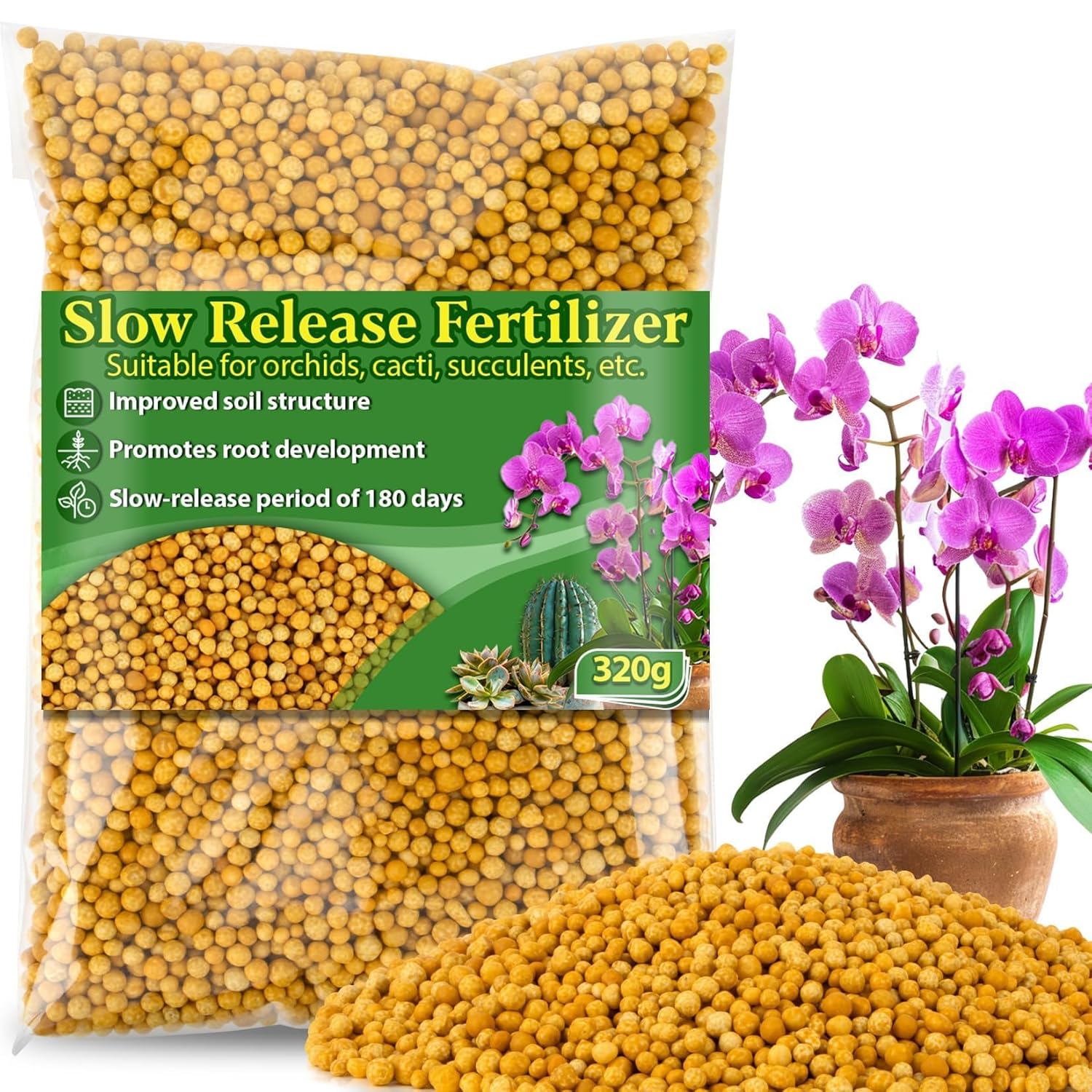
This RAINFLOW granular fertilizer is a slow-release, all-purpose plant food formulated with a balanced 14-13-13 NPK and sold in an 11.28 ounce package. It is designed to be sprinkled into soil or mixed for spray applications and claims to feed plants for up to 180 days, which reduces how often you need to reapply. Typical use cases are feeding succulents, cacti, orchids and small vegetable or flowering plants where gentle, steady nutrition is preferred. The granule form makes it easy to apply around root zones and to mix into potting media. For budget-minded gardeners, the product offers a multi-plant formula that can replace separate specialty feeds. Important limitations are the small unit size, which means a single pack will cover only a few pots or a small collection before needing replacement, and the label does not provide detailed per-plant dosing for every species so you may need to calculate rates. The formula is practical for regular maintenance feeding but may not be ideal if you need highly specific micronutrient blends or aggressive corrective fertilization.
Best for: Buyers with small succulent or mixed houseplant collections who want an affordable, low-maintenance feed that provides steady nutrition without frequent reapplication.
Less Ideal for: Gardeners with large beds, heavy-feeding vegetables, or those seeking precise micronutrient formulations should choose a larger or specialty fertilizer instead.
- Balanced 14-13-13 NPK suitable for general feeding of succulents and other common houseplants
- Slow-release granules that can feed plants for up to 180 days to reduce reapplication frequency
- Granular form usable for both soil application and mixing for spray application
- Labeled as organic plant food and positioned for indoor and outdoor use
- Small 11.28 oz unit limits coverage for larger collections or repeated use
- Mixing ratio information is minimal and specific per-plant dosing may require extra calculation
Verdict: A compact, budget-friendly slow-release fertilizer that gives small succulent collections steady, long-lasting nutrition with minimal fuss.
Cute Farms Succulent Slow Release Fertilizer Pellets (6 oz)

| Item Form | Granules |
|---|---|
| Specific Uses For Product | Plant Growth, Root Development, Soil Conditioning |
| Coverage | 2 square feet |
| Target Species | Succulents |
| Unit Count | 6 Ounce |
This slow-release pellet fertilizer is designed for succulents and other xerophytes and aims to deliver a steady supply of nutrients over several months. You measure 1/2 teaspoon per 4 inches of pot width, sprinkle the granules around the base, then water to activate the pellets; repeat every 7 to 8 months. The granule form and resealable bag make it convenient for potted succulents, terrariums, and decorative planters where liquid feeds are messy or frequent dosing is impractical. The product claims balanced nutrients to support root development, new growth, leaf color, and overall plant resilience, which matches typical needs for slow-growing succulents. Limitations are that the package is small so it covers only a few pots per application and the formula is described generically as pellets without a full nutrient analysis on the label, so growers who want exact N-P-K numbers or certified organic ingredients may need to look elsewhere. Follow the directions closely to avoid over-application in small pots.
Best for: Buyers who prioritize a low-maintenance, dependable feeding schedule for potted succulents and want a simple, measured granular option instead of frequent liquid feedings.
Less Ideal for: Growers who require precise nutrient formulations, certified organic labels, or who care for large collections that need frequent, high-volume fertilizing.
- Formulated specifically for succulents and similar drought-tolerant species
- Slow-release granules provide long-lasting feeding for 7 to 8 months per application
- Easy application with a clear measuring guideline (1/2 teaspoon per 4 inches of pot width)
- Comes in a resealable 6 oz bag that is convenient for storage and repeat use
- No detailed N-P-K breakdown or full ingredient list provided on the product information
- Small unit size limits how many pots one package can treat over multiple applications
Verdict: Choose this product if you want a simple, low-maintenance slow-release feed that keeps potted succulents nourished for several months with minimal fuss.
Wiggle Worm 100% Pure Organic Worm Castings Fertilizer, 30 lb
| Item Form | Granules |
|---|---|
| Specific Uses For Product | Soil Conditioning |
| Unit Count | 480 Ounce |
| OMRI Listed | Yes |
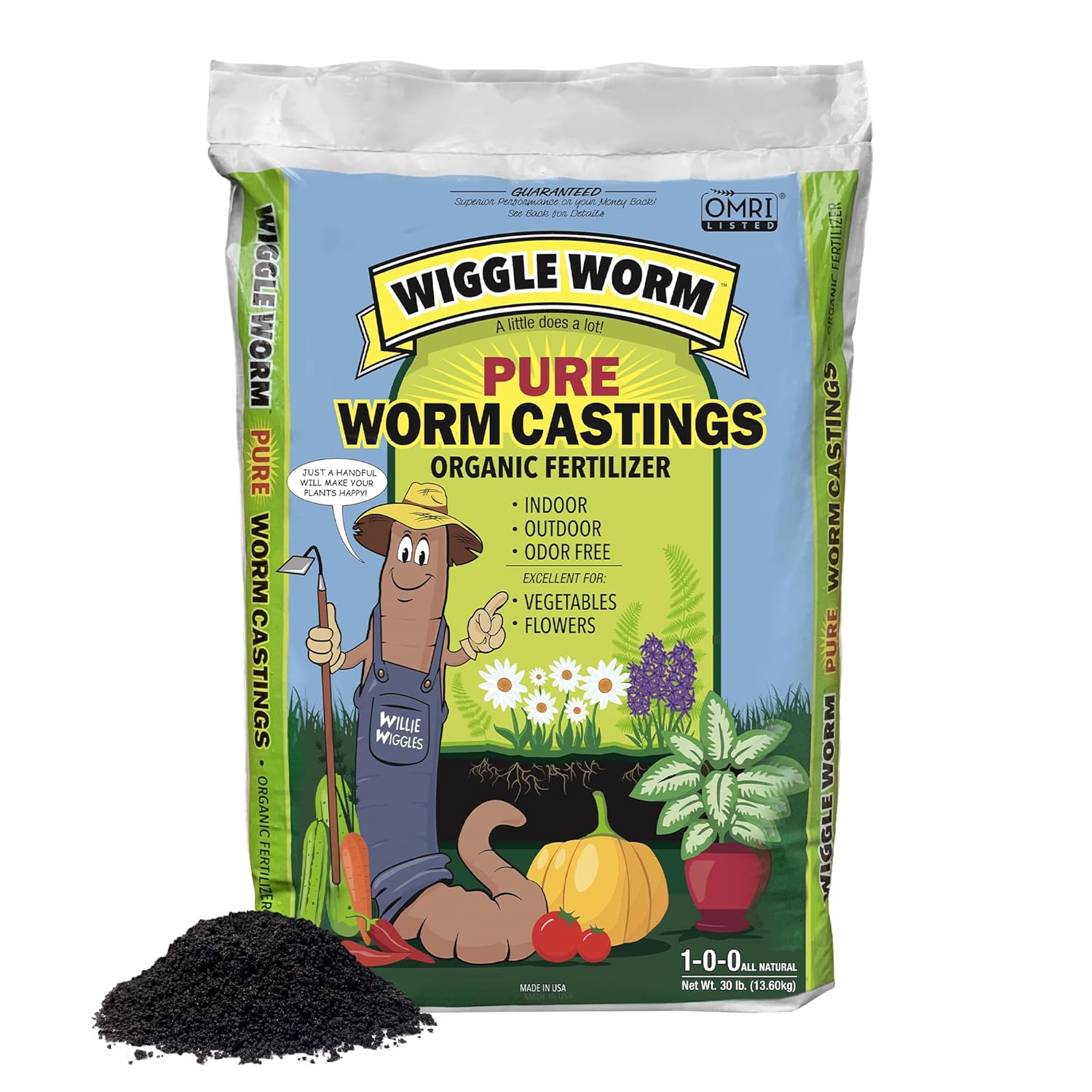
Wiggle Worm Pure Worm Castings are a straightforward organic soil amendment designed to strengthen soil biology and feed vegetable beds without risk of burning roots. Typically used as a top dressing, mixed into potting mixes, or added to planting holes, the product supplies water-soluble nutrients plus slow-release minerals and beneficial microbes that support root development and improved water retention. Notable features include OMRI listing for organic use, a screened product free of bedding and eggs, and clear application guidance for containers, raised beds, lawns, and transplanting. Practical benefits for a vegetable garden are faster nutrient uptake, better soil aeration, and reduced need for frequent synthetic feedings. The main limitations are that it is a low-NPK, gentle amendment rather than a complete, high-nitrogen fertilizer and you need to apply periodically or combine with higher-nutrient feeds for heavy-feeding crops. For gardeners focused on building long-term soil health it is a reliable, low-risk addition but expect incremental improvements rather than instant, dramatic growth spurts.
Best for: Gardeners who prioritize dependable, organic soil-building products for vegetables and want a safe, no-risk amendment to improve long-term fertility and plant health.
Less Ideal for: Growers who need a quick, high-nitrogen boost for leafy heavy feeders or those seeking a single-product, complete fertilizer solution should look elsewhere.
- OMRI listed and made from 100% screened worm castings suitable for organic vegetable gardens
- Boosts soil microbial activity and improves aeration and water retention
- Odorless and non-burning so safe for direct use around roots and in containers
- Versatile application: top dress, mix into potting soil, use in planting holes, or brew as tea
- Not a high-NPK fertilizer so may not meet immediate nutrient demands of heavy-feeding crops
Verdict: A reliably safe, OMRI-listed soil builder that steadily improves soil biology and structure for healthier vegetable gardens.
Jobe's Organics Succulent Fertilizer Spikes, 12 Count

| Unit Count | 12 Count |
|---|---|
| Item Form | Sticks |
| Application Method | Spikes |
| Mixing Ratio | 2-8-8 |
Jobe's Organics Succulent Fertilizer Spikes are pre-measured sticks that deliver organic nutrients directly at the root zone, making them a low-effort feeding option for succulents, cacti, and other container plants. You push the spikes into the potting mix around each plant and the slow-release 2-8-8 formula supplies phosphorus- and potassium-weighted nutrients that support flowering, root development, and overall vigor without repeated liquid feedings. The spikes are OMRI listed and formulated without synthetic chemicals, so they suit organic planting routines and reduce the chance of overfertilizing compared with powdered or liquid concentrates. They are intended for annual or as-needed application and avoid the mess and runoff of some other products. Limitations to note are that a 12-count pack covers only a few plants and the fixed NPK means you cannot fine-tune micronutrients or feed schedules for specific succulents that need very light feeding.
Best for: Buyers who prefer a cautious, low-maintenance organic approach to feeding a small collection of succulents or container cacti and want to avoid liquid fertilizers and guesswork.
Less Ideal for: Collectors with many pots, those who want to tailor micronutrients or frequent feeding schedules, or growers who need larger coverage per purchase.
- Pre-measured spikes deliver consistent, mess-free dosing at the roots
- OMRI-listed organic formulation without synthetic chemicals
- Slow-release 2-8-8 NPK suited to promote root strength and flowering in succulents
- Simple, low-effort application ideal for busy or inexperienced plant owners
- Small 12-count pack limits coverage for multiple pots or collections
- Fixed nutrient ratio does not allow tailoring for unusually light-feeding or specialty succulent needs
Verdict: A fuss-free organic spike that reliably feeds small succulent and cactus collections at the roots without the mess or risk of overfertilizing.
Choosing the Right Organic Fertilizer for Succulents: Key Factors to Consider
Nutrient Ratio and Concentration
Succulents generally thrive with lower nitrogen relative to phosphorus and potassium. A feed with a balanced or slightly lower nitrogen component helps maintain compact growth and strong roots rather than producing soft, leggy stems.
Concentration matters because succulents in small pots cannot tolerate heavy doses. Liquid concentrates and granular feeds will list N-P-K values and strength; gardeners should prefer lower concentrations or be prepared to dilute to recommended rates for succulents to avoid leaf burn and salt stress.
Soluble Salt Content and Risk
High soluble salt levels can accumulate in container media and damage succulent roots. Salt-sensitive species will show discoloration, marginal burn, or stunted new growth when salts build up.
Choosing products labeled low-salt, or organic sources that release nutrients slowly, reduces the need for frequent leaching. When using any fertilizer, plan for occasional flushes of water through the potting mix to remove excess salts, especially in indoor or low-rain conditions.
Form and Application Method
Fertilizers come as liquids, water-soluble powders, granules, spikes, or slow-release pellets. Liquid feeds and soluble powders give quick, controllable delivery, making them useful for light, frequent feeding in the growing season.
Granules and slow-release formats reduce application frequency but require attention to placement in containers and the potential for uneven release in very dry soils. Spikes are convenient but can supply too much in a small pot if not chosen specifically for succulents.
Organic Ingredient Source and Soil Biology
Organic sources feed the soil as well as the plant, supporting beneficial microbes that help nutrient availability over time. Materials like kelp, fish emulsion, compost extracts, and feather meal each release nutrients at different rates and bring other trace elements.
Consider how the ingredient suite fits your potting mix and watering habits. Highly biological feeds perform best when the potting medium has some organic content and when growers avoid sterilizing treatments that kill beneficial organisms.
Frequency and Longevity of Feeding
Succulents typically need feeding only during active growth phases and less often than many houseplants. Some organic feeds provide nutrients over several weeks or months, while liquids may require monthly or biweekly applications.
Match the product's longevity to your maintenance style. If you prefer low-touch care, choose longer-lasting formats; if you like close control, a mild liquid plan applied during spring and summer is easier to adjust.
Compatibility with Potting Mix and Watering Routine
Potting mixes for succulents are fast-draining and low in organic matter, which affects how fertilizer moves and persists. Some fertilizers assume a moisture-retentive soil and will release differently in gritty cactus mixes.
Also consider your watering frequency. Infrequent, deep watering means nutrient pulses are less frequent, so a slow-release product or one used at each watering may be preferable. Frequent light waterings can wash soluble nutrients away quickly.
When to Feed Succulents
Feed succulents during their active growing period, which for most species is spring through early fall. Avoid routine feeding during dormancy or stress periods such as extreme heat or cold because plants will not use the nutrients and salts can build up.
Start with a conservative schedule and increase only if you see steady, compact new growth. For potted plants, light monthly applications of a mild liquid or a single application of a low-dose slow-release product in spring often provides enough nutrition for the season.
- Begin feeding after plants show new growth.
- Skip applications during dormancy or shock.
- Flush containers occasionally to prevent salt buildup.
How to Apply Fertilizer Safely
Dilute concentrated liquids more than the label suggests for succulents, then apply evenly to the soil surface rather than onto leaves. Avoid foliar feeding unless a product specifically recommends it for succulents.
When using granules or spikes, place them away from the central crown to protect roots and prevent localized overfeeding. Water after application only as instructions advise to activate slow-release formulas without causing runoff.
- Use a low-dose approach and observe plant response.
- Water to integrate fertilizer into the medium, but avoid soaking if the species prefers dryer conditions.
Adjusting Feed by Species and Pot Size
Different succulent species show variable nutrient needs. Compact, slow-growing types need very little fertilizer, while fast-growing rosette or trailing succulents may benefit from slightly more frequent, mild feeding.
Small pots concentrate salts more quickly. Reduce dose or frequency for plants in small containers and increase flushing to keep salts in check. Larger or planted beds dilute nutrients more and can handle slightly higher application rates.
- Reduce dose for smaller pots and slow growers.
- Increase monitoring when repotting or changing soil.
Common Feeding Mistakes to Avoid
Over-application, using fertilizers designed for heavy feeders, and applying during dormancy are the most common errors. These lead to soft growth, root burn, and greater susceptibility to pests and disease.
Another mistake is not considering the watering schedule and potting mix; a fertilizer that leaches quickly may be wasted in a fast-draining mix, whereas a slow-release product may underperform in very dry conditions.
- Do not apply full-strength houseplant fertilizer to succulents.
- Match fertilizer type to your soil and watering routine.
Organic Alternatives and Homemade Options
Gardeners often use diluted compost tea, very weak fish emulsion, or kelp extracts as gentle organic feeds. These supplies add micronutrients and can help maintain soil biology without shocking plants if applied in low concentrations.
Homemade mixes should be used cautiously. Strong compost teas or undiluted manures can be too rich and salty for succulents. When trying a DIY feed, start at one quarter or less of typical strength and observe plant response over several weeks.
- Dilute homemade feeds heavily for succulents.
- Use biological feeds sparingly and on active-growth plants only.
How We Chose the Best Organic Fertilizer for Succulents
To assemble this list we focused on formulations and features that matter for succulents rather than general-purpose garden feeds. Primary evaluation criteria included nutrient ratio and concentration to avoid high nitrogen levels that promote excessive soft growth, the salt index and soluble salts testing or guidance since succulent roots are sensitive to buildup, and the form and method of application so gardeners can match feed to container, soil mix, or outdoor planting. We also assessed organic source ingredients to favor slow-release, biologically active feeds over harsh synthetic salts, and checked practical aspects such as ease of dilution, frequency recommendations, and compatibility with common succulent potting mixes. Longevity and how often reapplication is needed were considered because frequent wetting can stress succulents in poorly draining media. We excluded high-nitrogen lawn or leafy-vegetable fertilizers, heavy-manure blends that risk salt accumulation, and products intended only for seedlings or high-water-use plants. The final picks reflect products that balance low-to-moderate nutrient delivery with gentle, succulent-friendly application methods. Scoring aligned with the specific criteria above: nutrient balance, salt safety, application ease, organic composition, and longevity.
FAQ
How often should I fertilize potted succulents?
Usually feed potted succulents during the growing season only. Many gardeners use a light liquid feed every 3 to 6 weeks or apply a low-dose slow-release product once in spring.
Can too much organic fertilizer burn succulent roots?
Yes. Even organic materials can raise soluble salts or create nutrient concentrations that damage roots. Always dilute feeds and reduce frequency for plants in small pots.
Is kelp or seaweed extract good for succulents?
Kelp provides trace minerals and hormones that support root health and stress tolerance. It is most useful as a supplemental foliar or soil drench at low strength rather than as a sole nutrient source.
Do outdoor succulent beds need the same feeding as containers?
Not always. Outdoor beds usually have more buffering capacity and can receive less frequent feeding. Adjust applications based on soil quality, rainfall, and observed plant vigor.
Should I flush my pots after fertilizing?
Occasional flushing with free-draining water helps remove excess salts, especially in containers. Do this when you notice salt buildup or after several feed cycles in a season.
Final Verdict
Prioritize low-concentration, slow-release, or mild liquid organic feeds for succulents to encourage steady, compact growth without salt stress. Match the fertilizer form and strength to pot size, species growth rate, and your watering routine to avoid common problems like leggy growth and root burn. Focus on gentle nutrient balance, minimal soluble salts, and a feeding rhythm that aligns with active growth. That approach makes it easy to choose a suitable organic fertilizer for succulents and maintain healthy plants with minimal fuss.
