

Note: This article contains affiliate links. If you click on these links and make a purchase, I may earn a small commission at no extra cost to you. This helps support my research and content. Read my full affiliate disclosure here.
If you want a reliable, fast-acting organic feed for vegetables, ornamentals, containers, or established beds, choosing the right organic fish emulsion fertilizer matters. It supplies readily available nitrogen and trace elements that stimulate leafy growth and feed soil microbes without synthetic chemicals. The best options vary by nutrient concentration, recommended dilution, and how strongly they smell, so picking a product that fits your garden routine and tolerance is important. This guide shortlists the top options for home gardeners and evaluates each against practical criteria like nutrient balance and ease of application. Read on to see which choices match your growing situation and maintenance preferences.
Top Picks at a Glance
| Best Overall The best all-around choice for most situations | Neptune's Harvest Fish & Seaweed Liquid Fertilizer (2-3-1) 1 Gallon |  |
| Best Quality Built to a higher standard if you want something more solid | GS Plant Foods Liquid Fish Fertilizer (1 Gallon) | 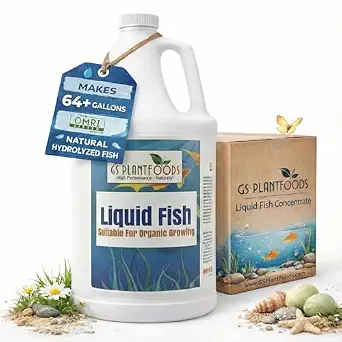 |
| Best Value The sweet spot between price and what you get | ferti-lome Fish Emulsion Fertilizer, 5-1-1, 16 oz |  |
| Best Budget The cheapest option that still gets the job done reliably | VPG Fish Emulsion Liquid Fertilizer, 16 fl oz |  |
| Highest Rated A top-rated pick with lots of positive feedback | Neptune's Harvest Hydrolyzed Fish + Tomato & Veg Liquid Fertilizer (2‑pack, Quarts) |  |
| Most Popular A crowd favorite that many people choose with confidence | Neptune's Harvest Fish & Seaweed Liquid Fertilizer (2-3-1) 36 oz |  |
| Best Seller A high-volume bestseller chosen again and again | Alaska Fish Fertilizer for Plants, OMRI Listed 5-1-1 (Liquid) |  |
Neptune's Harvest Fish & Seaweed Liquid Fertilizer (2-3-1) 1 Gallon

| Item Form | Liquid |
|---|---|
| Specific Uses For Product | Plant Growth, Root Development, Seed Development, Soil Conditioning |
| Coverage | Medium |
| Mixing Ratio | 1 ounce per gallon |
| Unit Count | 128 Fluid Ounces |
Neptune's Harvest Fish & Seaweed is a concentrated liquid fertilizer that combines hydrolyzed fish with seaweed to provide a balanced, readily available nutrient boost for garden and houseplants. It is typically diluted (manufacturer mixing ratio 1 ounce per gallon) and applied as a soil drench or foliar feed every one to three weeks depending on the plant and setting. Notable features include an all-purpose 2-3-1 NPK profile, organic ingredients that feed soil biology, and suitability for vegetables, ornamentals, trees and lawns. In practice the product supports greener foliage, stronger roots and improved flowering or fruit quality when used regularly, and the seaweed component can help plants better tolerate stress. The concentrate is easy to store and measures out for many applications, but it does require careful dilution and can have a noticeable fish odor during application. This fertilizer is best for gardeners who want an organic, broad-use feed that improves both plant growth and soil health rather than a quick chemical fix.
Best for: Gardeners seeking a single organic fertilizer they can use across vegetables, ornamentals and indoor plants who value soil health and consistent seasonal feeding.
Less Ideal for: Buyers who need a scentless product or who prefer fast-acting synthetic fertilizers for one-off quick greening.
- Organic concentrate combining hydrolyzed fish and seaweed for a balanced nutrient source
- Useful for many planting situations including vegetables, flowers, trees, lawns and houseplants
- Feeds soil microbes and can improve soil structure and long-term fertility
- Simple dilution and flexible application as soil drench or foliar feed
- Noticeable fish odor during mixing and application
- Requires regular, careful dilution which adds a small time cost
Verdict: A versatile organic fish-and-seaweed concentrate that reliably feeds plants and improves soil health across garden and indoor uses.
GS Plant Foods Liquid Fish Fertilizer (1 Gallon)

| Item Form | Liquid |
|---|---|
| Specific Uses For Product | Plant Growth, Root Development |
| Application Method | watering can, sprayer, or hose-end applicator |
| Mixing Ratio | 1:32 |
GS Plant Foods Liquid Fish Fertilizer is a concentrated, hydrolyzed fish emulsion designed for routine feeding of gardens, container plants, and landscape beds. It supplies a 2-3-1 balance of nitrogen, phosphorus, and potassium plus organic compounds that help soil biology and steady plant nutrition across the season. You mix at the recommended 1:32 ratio (about 4 oz per gallon) and apply with a watering can, sprayer, or hose-end applicator, which makes it easy to use on everything from vegetables and herbs to shrubs and houseplants. The product is OMRI-listed for organic growing and made in the USA, so it fits gardeners who prefer organic inputs. Because it is a liquid concentrate, it works quickly compared with dry fertilizers, but it does require regular applications and careful mixing to avoid smell and potential foliar spotting if overapplied. This gallon size balances economy and convenience for small to medium gardens, though users who want an odorless or synthetic option may look elsewhere.
Best for: Gardeners who prioritize straightforward, organic feeding and want a flexible concentrate that works across vegetables, ornamentals, containers, and beds while supporting soil life.
Less Ideal for: Users seeking a completely odor-free fertilizer or those who prefer slow-release granular products that require less frequent application.
- OMRI-listed for organic production, suitable for certified organic gardens
- Concentrated hydrolyzed fish formula (2-3-1) that supports balanced nutrition and soil biology
- Flexible application methods: watering can, sprayer, or hose-end applicator
- Made in the USA by a dedicated plant-food manufacturer
- Strong natural fish odor typical of fish emulsions
- Requires regular mixing and repeated applications to maintain results
Verdict: A reliable OMRI-listed fish emulsion concentrate that gives practical, organic nutrition for a wide range of garden plants when you want flexible, repeatable liquid feeding.
ferti-lome Fish Emulsion Fertilizer, 5-1-1, 16 oz

| Item Form | Liquid |
|---|---|
| Specific Uses For Product | Plant Growth |
| Target Species | Plants, Fruits, Vegetables, Ornamentals, Shade Trees |
| Mixing Ratio | Plants: 1:128 or 2:128; Trees: 4:128 |
This ferti-lome fish emulsion is a straightforward, concentrated 5-1-1 liquid fertilizer intended to boost foliage color and root vigor for houseplants, vegetables, ornamentals, and trees. You mix the product with water (typical ratios: 1 to 2 tablespoons per gallon for plants, 4 tablespoons per gallon for trees) and apply by watering, foliar spray, or any convenient method, so it fits into existing feeding routines. The liquid format delivers soluble nitrogen and trace nutrients quickly, which is useful when plants need a rapid green-up or support during active growth. Because it is a fish-derived product it offers a more natural nutrient release compared with synthetic straight nitrogen sources. Limitations are smell and short-term persistence typical of fish fertilizers, and a 16 oz bottle is modest for large gardens or frequent applications, so multiple bottles or larger sizes may be needed for extended use.
Best for: Buyers who want a practical, natural feed to quickly green up and support actively growing indoor or outdoor plants and prefer a product that integrates easily into existing watering routines.
Less Ideal for: People managing very large vegetable beds or orchards who need bulk fertilizers or long-interval granular feeding should consider larger-volume or slow-release alternatives.
- Concentrated 5-1-1 formula supplies quick-acting nitrogen and balanced nutrients
- Liquid form mixes easily and can be applied by watering or foliar spray
- Appropriate for a wide range of plants including houseplants, vegetables, ornamentals and trees
- Small 16 oz bottle may require frequent replacement for larger gardens
- Typical fish-emulsion odor during and shortly after application
Verdict: A compact, easy-to-use fish emulsion that delivers fast-acting, natural nitrogen for gardeners who want a simple, effective feed for foliage and active growth.
VPG Fish Emulsion Liquid Fertilizer, 16 fl oz

| Item Form | Liquid |
|---|---|
| Liquid Volume | 16 fluid ounces |
| Mixing Ratio | 1:4 |
| Total Nitrogen | 5% |
VPG Fish Emulsion is a simple, concentrated liquid fertilizer designed for general plant feeding across houseplants, vegetables, ornamentals and trees. You dilute the 16 fl oz concentrate at the listed 1:4 ratio and apply it to soil or potting mixes as a source of quick-acting nitrogen and minor nutrients. The formula lists 5% nitrogen with small amounts of phosphate and potassium, so it promotes leafy growth and can revive nitrogen-deficient plants quickly. In practical use it is easy to mix and apply, and the liquid form lets you feed transplants and container plants without disturbing roots. It is not a complete all-in-one fertilizer for flowering or fruit set because phosphorus and potassium are low, so you may want to supplement for bloom or fruit production. Expect typical fish-emulsion odor and the need to store the bottle tightly between uses. For gardeners looking for a straightforward organic-feeling boost to green growth, this bottle is convenient and effective; for targeted bloom feeding choose a product higher in phosphate and potash.
Best for: Budget-minded gardeners who want an affordable, easy-to-use liquid fertilizer to boost foliage and revive nitrogen-poor potted plants and garden beds.
Less Ideal for: Growers seeking a single product to maximize flowering or fruit production without supplemental feeding should consider a higher-phosphorus formulation instead.
- Concentrated 16 fl oz bottle that dilutes for multiple feedings
- Simple liquid formula with 5% nitrogen to promote leafy growth
- Clear 1:4 mixing ratio makes preparation straightforward
- Suitable for a wide range of plants including houseplants, vegetables and ornamentals
- Low phosphate and potash make it less effective as a sole bloom or fruiting fertilizer
- Typical fish-emulsion smell may be strong indoors
Verdict: A cost-conscious, easy-to-use liquid fertilizer that reliably boosts leafy growth across a wide range of plants.
Neptune's Harvest Hydrolyzed Fish + Tomato & Veg Liquid Fertilizer (2‑pack, Quarts)

| Item Form | Liquid |
|---|---|
| Application Method | foliar spray, soil application |
| Target Species | Vegetables |
| Mixing Ratio | 1:1 |
This two‑quart set pairs Neptune’s Harvest Hydrolyzed Fish fertilizer with its Tomato & Veg formula to provide a steady organic nutrient source for vegetable gardens. The fish hydrolysate delivers a broad mix of amino acids, proteins, and micronutrients preserved by a cold process so plants get biologically available material without the heavy fishy odor common to some products. The Tomato & Veg concentrate adds seaweed, molasses, yucca and humic acids to support root development and leafy growth during the active season. Use either as a soil drench around root zones or as a foliar spray for quicker uptake, mixing per the label’s 1:1 guidance for concentrated applications or diluted for regular feedings. Practical benefits include OMRI certification for organic use and versatile application across containers and in-ground beds. Limitations are typical of organic concentrates: you will need to follow mixing rates, reapply regularly through the season, and expect slower, cumulative results compared with synthetic quick‑release fertilizers.
Best for: Gardeners who prioritize dependable, organic nutrition for vegetable beds and container vegetables and who prefer products with transparent, sustainably sourced ingredients.
Less Ideal for: People seeking instant, high‑N quick greening from synthetic feeds or users who want a no‑maintenance, once‑per‑season solution.
- Organic formulas suitable for certified organic gardens
- Includes both a nutrient‑dense hydrolyzed fish concentrate and a complementary tomato/vegetable feed
- Can be applied as foliar spray or soil drench for flexible use
- OMRI certified and made from sustainably sourced North Atlantic fish
- Requires regular reapplication to maintain nutrient levels over a season
- Concentrated liquid requires careful mixing to avoid overfeeding
Verdict: A reliable organic two‑product feed that delivers steady, plant‑available nutrients for vegetable gardeners focused on sustainable, repeatable feeding.
Neptune's Harvest Fish & Seaweed Liquid Fertilizer (2-3-1) 36 oz

| Item Form | Liquid |
|---|---|
| Mixing Ratio | 2:3 |
| Specific Uses For Product | Plant Growth |
| Liquid Volume | 946 ml |
Neptune's Harvest Fish & Seaweed Liquid Fertilizer is a concentrated organic plant food that mixes with water for use as a soil drench or foliar feed. It is typically diluted (manufacturer directions give roughly 1 fl oz per gallon for outdoor use and 1 tablespoon per gallon for houseplants) and applied every 1 to 3 weeks depending on the crop. The formula combines hydrolyzed fish and seaweed to deliver nitrogen, micronutrients, and seaweed-derived growth compounds in a plant-ready form, which helps green growth, flowering color, and vegetable flavor. Because it is a liquid concentrate it is easy to measure and applies evenly, and regular use can improve soil biology and structure over time. Limitations are that it is low in phosphorus and potassium relative to some specialty bloom or fruit formulas and it has an odor typical of fish-based fertilizers that some users may find strong. This product suits gardeners who want an effective, organic regular feed that supports both potted houseplants and garden beds.
Best for: Gardeners seeking a reliable, organic everyday fertilizer that simplifies feeding for a mixture of houseplants, vegetables, flowers and shrubs and who value soil health as well as plant vigor.
Less Ideal for: Growers who need a high-phosphorus bloom booster or a fertilizer formulated specifically for fruit set or lawns should look for a targeted specialty product instead.
- Organic concentrate blending hydrolyzed fish and seaweed for plant-ready nutrients
- Versatile application as soil drench or foliar feed for indoor and outdoor plants
- Supports soil biology and structure with regular use
- Easy-to-measure mixing ratios for routine feeding
- Has a strong fish odor that some users may find unpleasant
- Lower phosphorus and potassium compared with specialized bloom or fruit formulas
Verdict: A dependable organic liquid concentrate that provides balanced, plant-ready nutrients and improves soil health for routine feeding of mixed garden and houseplants.
Alaska Fish Fertilizer for Plants, OMRI Listed 5-1-1 (Liquid)

| Item Form | Liquid |
|---|---|
| Specific Uses For Product | Indoor, Outdoor |
| Application Method | Mix with water and apply to plants |
| Coverage | 1000 square feet |
| Mixing Ratio | 5:1:1 |
Alaska Fish Fertilizer is a concentrated liquid fish emulsion with a 5-1-1 NPK designed to feed vegetables, flowers, shrubs, trees and container plants without burning them. You mix the emulsion with water (manufacturer mixing ratio listed) and apply every few weeks during the growing season to supply steady nitrogen along with small amounts of phosphate and potash. It is OMRI listed, so it fits organic vegetable and edible gardens, and the fish-based nutrients also support soil microbes for improved soil biology. Practical benefits include easy mixing and application, broad suitability for indoor and outdoor use, and a formula that is gentle enough for seedlings and mature plants alike. Limitations are that its nutrient profile is skewed toward nitrogen so it is not a balanced replacement for fertilizers formulated for bloom or root development, and you will need to follow dilution instructions to avoid odor and overapplication. Coverage claims are broad, so heavier-feeding crops may need supplemental feeding or more frequent applications.
Best for: Gardeners who prioritize reliable plant growth and organic inputs and want a straightforward, repeatable liquid feed for vegetables, ornamentals, and containers.
Less Ideal for: Growers seeking a bloom-boosting or high-phosphorus formulation as a one-product solution should consider a specialized flowering fertilizer instead.
- OMRI listed for organic use
- Gentle 5-1-1 formula that feeds without burning seedlings or mature plants
- Liquid concentrate mixes with water for simple, controlled application
- Supports soil microbial activity in addition to supplying plant nutrients
- High relative nitrogen makes it less ideal as a sole fertilizer for flowering or fruiting stages
- Fish emulsion can produce noticeable odor during and after application
Verdict: A dependable, OMRI-listed liquid fish emulsion that delivers steady, plant-safe nitrogen feeding for organic vegetable and ornamental gardens.
Choosing the Right Organic Fish Emulsion Fertilizer: Key Factors to Consider
Nutrient Concentration and N-P-K Ratio
The total nutrient concentration and the N-P-K ratio determine how much nitrogen, phosphorus, and potassium the fertilizer supplies per application. Fish emulsion products can range from low-strength formulations intended for frequent light feeding to concentrated solutions that require careful dilution. Knowing the N-P-K helps you match a fertilizer to plant needs; leafy vegetables typically respond to higher nitrogen, while flowering and fruiting crops benefit from a balanced or slightly higher phosphorus and potassium content. Overapplication of high-nitrogen feeds can lead to lush foliage at the expense of flowers or fruit and may increase pest pressure.
Always compare labeled nutrient content and follow recommended dilution rates. If the label lacks clear N-P-K values, plan for conservative feeding and monitor plants closely for signs of nutrient excess or deficiency.
Application Method and Dilution Clarity
How a product is applied affects its usefulness across garden tasks. Some fish emulsion fertilizers are formulated for soil drench only, while others explicitly support foliar spraying. Clear dilution instructions and dosing measures make it easier to feed potted plants, hanging baskets, and seedlings without risk of burn. Concentrates that list both tablespoons per gallon and teaspoons per liter are more adaptable for gardeners using different tools.
Consider whether the formula mixes cleanly, foams, or clogs sprayers. If you plan foliar feeding, choose a product that recommends safe foliar dilution and provides guidance on spray timing. Ease of measuring and consistent mixing improves accuracy and prevents overfeeding delicate seedlings or container plants.
Odor and Handling
Fish emulsion is inherently odorous, but some formulations have reduced smell or include masking agents. Odor intensity matters if you use fertilizer near living spaces, on balconies, or with close neighbors. Strong-smelling products may also attract wildlife if applied outdoors.
Look for clarity on recommended handling precautions and ventilation. Consider storage packaging that minimizes spills and contains odors, such as tightly sealing caps or secondary sealed containers. If odor is a major concern, a milder-smelling product may trade off some concentration for better usability in small or enclosed spaces.
Compatibility with Containers and Soil Types
Containers and potting mixes have limited nutrient holding capacity and can accumulate salts more quickly than in-ground soil. Fertilizers labeled safe for containers or with lower concentration recommendations are preferable for potted plants. For heavy clay or compacted soils, look for products that support microbial life rather than only supplying soluble nutrients, since improved biological activity helps nutrient cycling and root health.
Consider how often you can realistically feed container plants versus in-ground plantings. Products that allow flexible dosing and gentle weekly applications are typically a better match for containers and seedlings.
Stability, Shelf Life, and Storage
Liquid organic fertilizers can separate, settle, or degrade if not stabilized or stored correctly. A stable formulation that resuspends easily and includes storage guidance reduces waste and keeps dosing consistent over time. Shelf life information and recommended storage temperatures help gardeners avoid spoilage, especially if buying larger containers.
Also consider packaging that protects the product from light and makes pouring simple. Clear labeling about refrigeration requirements, maximum time after opening, and signs of spoilage will help you avoid applying an ineffective or smelly product.
Environmental and Regulatory Considerations
Because fish emulsion is a biologically derived product, runoff, odor, and sourcing practices can affect the broader environment. Choose products with guidance on avoiding runoff into storm drains or waterways to minimize impacts on aquatic life. Check whether the product lists organic certifications or explains sourcing if that matters to you.
Also follow local guidance about fertilizing near water bodies or during rainy seasons. Responsible application timing and correct dosing reduce the chance of nutrient pollution and help maintain neighbor relations.
When to Use Fish Emulsion in Your Garden
Fish emulsion is best used as a quick nitrogen boost and microbial stimulant. Apply it during active vegetative growth, such as when leafy crops are developing or ornamentals need green-up after pruning.
It is also useful for feeding container plants and transplants because nutrients are immediately available. Avoid heavy applications late in the season when plants are shifting toward dormancy or when excessive nitrogen could delay flowering or fruit set.
- Use during spring and early summer for leafy crops
- Apply lightly to containers every 1 to 2 weeks per label guidance
- Avoid heavy late-season feeding on flowering and fruiting plants
Safe Foliar Feeding Practices
Foliar application can provide a rapid nutrient pick-me-up, especially when soil uptake is limited. Use a fine spray and apply in the cooler parts of the day to reduce leaf burn and improve absorption.
Test a small area before broad application to check for sensitivity, and avoid spraying during intense sun or high temperatures. Rinse sprayer thoroughly after use to prevent buildup and clogging.
- Spray in morning or evening for best uptake
- Perform a spot test on a few leaves first
- Clean sprayer components to prevent residue buildup
Mixing and Storing Concentrates
Always follow label directions when diluting concentrates. Measure carefully and stir or shake the mixture until uniform. Prepare only the volume you need for a single application when possible to reduce storage of diluted solution.
Store unopened concentrates in a cool, dark place and keep containers sealed. Note any recommendations for refrigeration or maximum time after opening. If separation occurs, resuspend the product before measuring.
- Measure with consistent tools to avoid overdosing
- Mix thoroughly before pouring into sprayers
- Store sealed and away from direct sunlight
Minimizing Odor Impact
To reduce how much smell reaches living areas, apply fish emulsion on windy days or when you can be away from the treated area until the odor dissipates. Applying at lower concentrations can reduce immediate odor while still delivering beneficial nutrients over time.
Consider small-capacity packaging if you are sensitive to smell, and avoid applying on balconies or patios when neighbors are nearby.
- Apply on breezy days or when you will be away
- Use lower concentrations for sensitive locations
- Keep containers tightly closed between uses
Combining Fish Emulsion with Other Organic Inputs
Fish emulsion works well as part of a broader organic fertility plan. Use it alongside compost teas, well-rotted compost, and slow-release organic granules to provide both quick and longer-term nutrient availability. Stagger applications so plants receive steady nutrition rather than large pulses.
Avoid mixing concentrates with incompatible amendments unless label guidance confirms compatibility. When in doubt, apply different products on separate days to prevent chemical or biological interactions in the spray tank.
- Alternate fish emulsion with slow-release organics for balanced feeding
- Do not tank-mix unless labels permit
- Use compost to build long-term soil health while using fish emulsion for quick uptake
How We Chose the Best Organic Fish Emulsion Fertilizer
We focused on attributes that determine how fish emulsion behaves in real gardens and how easy it is to use regularly. Primary evaluation criteria included nutrient concentration and N-P-K balance, because nitrogen drive and available nutrients determine feeding frequency and plant response. We checked recommended dilution rates and application methods to judge dosing clarity and adaptability across containers, raised beds, and in-ground plantings. Odor and volatilization were assessed since strong smells can limit backyard use and affect household comfort. Container and spray compatibility mattered for foliar feeding and potted plants. Lastly we considered formulation stability and shelf life to avoid issues with separation or spoilage. We excluded products that rely on synthetic additives or that are clearly intended for large-scale commercial application rather than home gardening. We also filtered out concentrates with opaque dosing instructions or no clear N-P-K labeling. The final shortlist contains options that balance usable nutrient information, manageable odor, clear application guidance, and packaging suitable for home gardeners. These criteria align with the scoring metrics used for each product entry.
FAQ
How often should I feed my vegetable garden with fish emulsion?
Frequency depends on concentration and plant type. Many gardeners apply a diluted fish emulsion every one to two weeks during active growth, while more concentrated products are used less often. Follow label dilution guidance and watch plants for signs of overfertilizing such as overly lush foliage or reduced flowering.
Will fish emulsion burn seedlings or young plants?
Undiluted or overly strong solutions can stress delicate seedlings. Use weaker dilutions for transplants and seedlings and consider spot-testing. If you notice leaf scorch or wilting after application, flush the soil lightly with water and reduce concentration on future feeds.
Does fish emulsion attract pests or wildlife?
Some formulations can attract wildlife or insects because of their odor. Applying in the morning on days with some breeze, using lower concentrations, and avoiding spills can reduce attraction. Secure storage also helps avoid attracting pests to your supply.
Can I use fish emulsion on flowering and fruiting plants?
Yes, but balance is important. Use moderate rates and consider alternating with a fertilizer that supplies more phosphorus and potassium if you want to emphasize bloom and fruit set. Heavy nitrogen feeds late in the season can delay or reduce flowering.
How should I store fish emulsion to keep it usable?
Store unopened concentrate in a cool, dark place and keep the cap tightly closed. Some products recommend refrigeration after opening; follow label instructions. If a concentrate separates, shake or stir to resuspend before measuring.
Is fish emulsion safe to use in edible gardens?
Fish emulsion is an accepted organic input and is commonly used on edible crops. Rinse vegetables if you applied a foliar spray near harvest and follow intervals on the product label if one is provided. Using it as part of an integrated fertility plan supports plant growth without synthetic inputs.
Final Verdict
When choosing an organic fish emulsion fertilizer, prioritize clear N-P-K labeling, straightforward dilution instructions, and a formulation that matches where and how you garden. Tradeoffs typically involve concentration versus odor and application frequency versus convenience. For small-space or container gardeners, milder concentrations and clear container-safe guidance are more important. For in-ground beds, a slightly stronger product used at appropriate intervals can give quick green-up while you build longer-term fertility with compost and other organics. Focus on the specific needs of your crops and your tolerance for handling odor, and you will be able to pick a product that supports steady growth and healthier soil.
