

Note: This article contains affiliate links. If you click on these links and make a purchase, I may earn a small commission at no extra cost to you. This helps support my research and content. Read my full affiliate disclosure here.
Choosing the right pond fertilizer matters because aquatic plants respond differently than garden beds and a wrong feed can trigger algae or oxygen dips. Whether you maintain marginal plants, floating species, or a planted shallow shelf, the fertilizer you choose affects plant vigor, bloom, and the pond ecosystem. This guide covers our seven shortlisted pond fertilizers that perform well in outdoor ponds and water gardens. We evaluate each option for nutrient ratios, release method, and ease of application so you can pick a product that supports plant growth while keeping water quality stable. Read on for practical notes on applying fertilizers, timing treatments, and matching products to planting situations.
Top Picks at a Glance
| Best Overall The best all-around choice for most situations | BioLogic Perfect Pond Plus Granular Pond Fertilizer, 5 lb |  |
| Best Quality Built to a higher standard if you want something more solid | BioLogic Perfect Pond Plus Granular Pond Fertilizer, 25 lb |  |
| Best Value The sweet spot between price and what you get | Plantabbs PondTabbs Aquatic Plant Fertilizer Tablets, 300 ct |  |
| Best Budget The cheapest option that still gets the job done reliably | PondBloom Pond Fertilizer Tablets (20-count) |  |
| Highest Rated A top-rated pick with lots of positive feedback | Plantabbs PondTabbs Plus 10-14-8 Pond Fertilizer Tablets (300 ct) |  |
| Most Popular A crowd favorite that many people choose with confidence | CrystalClear Thrive Aquatic Plant Fertilizer Tablets (200 count) |  |
| Best Seller A high-volume bestseller chosen again and again | PondBuilder PondTabbs water-soluble aquatic plant fertilizer, 20 tablets |  |
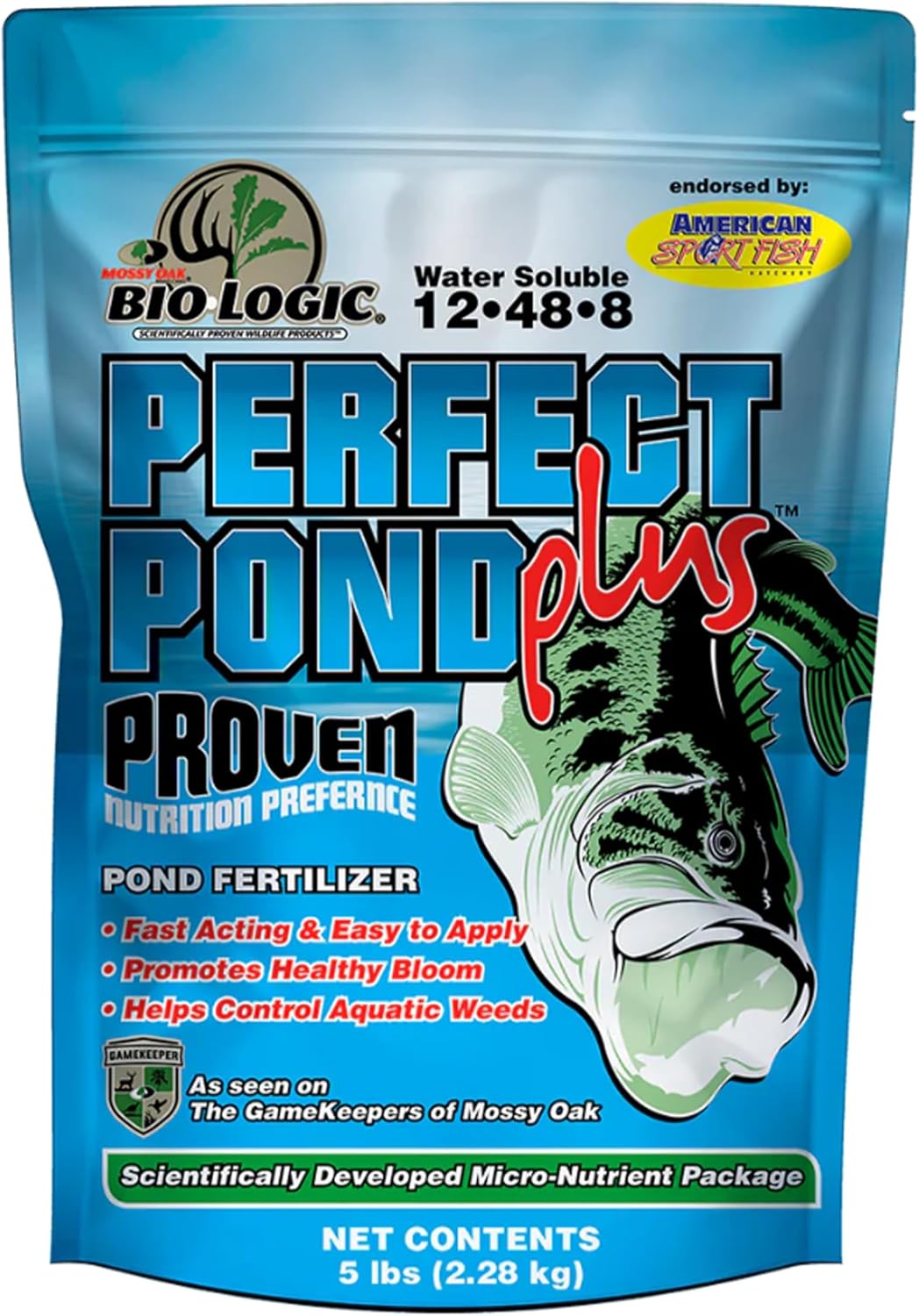
BioLogic Perfect Pond Plus Granular Pond Fertilizer, 5 lb
| Unit Count | 5 Pounds |
|---|---|
| Item Form | Granules |
| Target Species | Fish |
| NPK | 12-48-8 |
BioLogic Perfect Pond Plus is a granular, water-soluble fertilizer designed specifically for ponds and fish habitat. It is broadcast by hand at a recommended base rate of 5 pounds per surface acre and dissolves in the upper two feet of the water column, making it practical for spring through fall use. The formula emphasizes a high phosphorus content with an NPK of 12-48-8 plus micronutrients to promote an optimum bloom that supports aquatic plant growth and improves forage for fish. The granule form is easier to handle than liquid concentrates and the directions include a clear application schedule for early season treatment and follow-up intervals. Expect faster visible results in nutrient-poor ponds, but users must follow rates carefully to avoid excessive blooms and monitor water quality. The bag can absorb moisture in storage and may clump, though breaking lumps restores usability. This product is best when used as part of a pond management plan rather than as a standalone remedy for severe water-quality problems.
Best for: Gardeners and pond owners who want an easy, fast-acting fertilizer to encourage a healthy spring and summer bloom and improve fish forage in small to medium ponds.
Less Ideal for: People managing eutrophic or heavily nutrient-loaded water bodies or those who need a treatment focused on algae control rather than stimulated plant growth.
- Formulated specifically for ponds with a high-phosphorus NPK (12-48-8) to encourage productive blooms
- Water-soluble granules dissolve in the upper two feet for fast availability to plants and microorganisms
- Simple broadcast application with a clear dosing schedule starting in late winter or early spring
- Granular form is easier to store and apply than heavy liquid fertilizers
- High phosphorus formulation can promote excessive algal blooms if overapplied or used in nutrient-rich ponds
- Bag may absorb moisture and clump in storage, requiring breakup before use
Verdict: A straightforward, granule pond fertilizer that delivers a high-phosphorus nutrient boost to jump-start plant and forage production in managed ponds.
BioLogic Perfect Pond Plus Granular Pond Fertilizer, 25 lb

| Item Form | Granules |
|---|---|
| Included Components | 5 pound bag of granular fertilizer |
| Item Type Name | Biologic Perfect Pond Plus Fertilizer |
| Target Species | Fish |
BioLogic Perfect Pond Plus is a granular, water-soluble pond fertilizer intended for broadcast application to encourage a controlled bloom and supply micronutrients to ponds. It is typically applied by hand at a base rate of 5 lb per surface acre starting in early spring, with repeat applications on a two- to three-week schedule through the growing season. The formula dissolves in the upper two feet of the water column and carries a high middle nutrient value aimed at stimulating primary productivity while supporting aquatic plant growth. Practical benefits include easy handling compared with liquid fertilizers, predictable dosing instructions, and a fast-acting mix developed for fish pond use. Important limitations are that it is designed for use across the whole pond surface rather than spot treatment, so it is not suitable for localized problem patches, and careful timing and dosing are needed to avoid overfeeding the system. Store the bag dry since the granules can cake from moisture, and break up any lumps before use.
Best for: Buyers who prioritize measurable performance and predictable pond productivity, and who will follow a seasonal broadcast schedule to boost algal bloom and overall pond nutrition.
Less Ideal for: People needing spot treatments for isolated weed or algae patches or those who prefer liquid concentrates or meter-fed dosing systems.
- Water-soluble granular formula dissolves in the upper two feet of the water column for rapid availability
- Clear, research-backed dosing schedule (5 lb per surface acre with repeat applications) simplifies seasonal use
- Granular form is easier to store and apply by broadcast than heavy liquids
- Includes micronutrient package formulated for pond ecosystems to support fish health and plant growth
- Formulation is for whole-pond broadcast use and cannot target small localized weed patches
- Granules may absorb moisture and cake in storage requiring pre-use breakup
Verdict: Choose this if you want a fast-acting, easy-to-apply granular fertilizer that delivers predictable, performance-focused pond nutrition across the whole surface.
Plantabbs PondTabbs Aquatic Plant Fertilizer Tablets, 300 ct

| Item Form | Tablets |
|---|---|
| Specific Uses For Product | outdoor |
| Target Species | aquatic plants |
| Mixing Ratio | 1 tablet per 1 gallon of soil |
| Liquid Volume | 300 liters |
PondTabbs are compact fertilizer tablets designed specifically for pond and aquatic plants such as water lilies. You insert a tablet into the soil near the plant crown and nutrients begin to release within minutes, supplying a balanced 10-14-8 N-P-K dose. The product is intended for monthly feeding during the growing season and for heavier feeding every two weeks once water temperatures exceed 72°F. In practice the tablets make routine maintenance simple: you can dose individual plants without measuring liquids, and the tablet form reduces mess and overapplication. The 300-tablet pack is well suited for large plantings or long-term stocking. Important limitations are that the instructions assume a soil-based planting zone (one tablet per gallon of soil) so using these in marginally planted pots or floating baskets may require judgment, and frequent application in warm water increases labor. The manufacturer states the formulation is safe for fish and will not promote algae when used as directed, but users should still monitor water quality after repeated applications.
Best for: Buyers who want a straightforward, low-mess way to feed individual water lilies and other planted pond species on a predictable schedule and who value long-lasting stock on hand.
Less Ideal for: People managing purely floating plants without soil or very small container plantings where tablet placement and dosing are impractical.
- Formulated specifically for aquatic plants with a balanced 10-14-8 N-P-K analysis
- Tablet form delivers measured, low-mess dosing to individual plants
- Large 300-count supply reduces refill frequency for multi-plant ponds
- Quick nutrient release within minutes after insertion
- Directions are tied to soil volume so use in pots or non-soil setups needs adjustment
- Frequent applications at higher temperatures increase maintenance time
Verdict: A simple, measured tablet fertilizer that makes feeding water lilies easy and keeps you stocked for many seasons.
PondBloom Pond Fertilizer Tablets (20-count)

| Item Form | Tablets |
|---|---|
| Specific Uses For Product | Plant Growth, Root Development |
| Application Method | Push into soil |
| Target Species | Aquatic Plants |
PondBloom Pond Fertilizer Tablets are slow-release root tabs made for water lilies, lotus and other rooted aquatic plants. You push a tablet into pond soil near the plant crown and the tablet gradually supplies nitrogen, phosphorus, potassium and micronutrients to support root development, greener foliage and bigger blooms. The root-zone delivery reduces nutrient loss to the water column so you are less likely to cause clouding or short-lived nutrient spikes compared with liquid feeds. These tablets are easy to use for koi ponds, decorative water gardens and container ponds and can help plants look fuller and support clearer water over time. On the downside the product is a single-purpose root tab so it does not replace routine pond maintenance or broad-spectrum water treatments, and you must place tablets individually which takes time for larger plantings. For budget-focused gardeners this offers a straightforward, low-effort way to keep lilies and marginal plants fed without frequent applications.
Best for: Gardeners who want an easy, low-maintenance way to feed water lilies and other rooted pond plants and prefer targeted, root-zone nutrition over frequent liquid applications.
Less Ideal for: People managing very large ponds or extensive plantings who need bulk, automated feeding solutions or who expect a single product to address algae and overall water chemistry.
- Slow-release root delivery that limits nutrient loss to the pond water
- Formulated for aquatic plants including water lilies and lotus
- Simple application: push tablet into soil near roots
- Includes micronutrients as well as NPK to support blooms and root growth
- Requires placing tablets individually so it can be time-consuming for many plants
- Not a substitute for routine pond water care or algae management
Verdict: An affordable, easy-to-use slow-release root tab that reliably boosts water lily and pond plant growth with minimal impact on pond water.
Plantabbs PondTabbs Plus 10-14-8 Pond Fertilizer Tablets (300 ct)

| Item Form | Tablets |
|---|---|
| Specific Uses For Product | outdoor |
| Coverage | Medium |
| Target Species | Fish |
| Mixing Ratio | 10:14:8 |
Plantabbs PondTabbs Plus delivers a convenient, reliability-oriented approach to feeding water lilies and other pond plants. The product comes as pre-measured 4.25 gram tablets with an N-P-K analysis of 10-14-8, so you drop a tablet into the mud or root zone rather than mixing liquid feeds. The inclusion of humates helps mobilize nutrients and encourage microbial activity, which can improve bloom size and tuber strength over time. For routine pond maintenance you can apply tablets to individual crowns or containers according to species and growth stage, making it easy to control per-plant dosing across a small or medium pond. Safety guidance and clear mixing/application ratios are provided, and the tablet form reduces mess and guesswork. Limitations are that tablets must be placed near roots for best effect so you need access to plant crowns, and dosing frequency must match your specific water lily variety and pond conditions rather than being a one-size-fits-all schedule. This is a practical, low-fuss fertilizer for gardeners who value consistent, measurable feeding for aquatic plants.
Best for: Gardeners who want a dependable, low-fuss fertilizer for established water lilies and other rooted pond plants and who prefer consistent, measured applications over mixing liquids.
Less Ideal for: People who need rapid corrective feeds for visible leaf symptoms or who primarily maintain marginal plants that cannot be accessed at the root zone.
- Pre-measured 4.25 g tablets simplify dosing and reduce mess.
- N-P-K 10-14-8 formula targets bloom and root development for flowering pond plants.
- Added humates promote nutrient availability and beneficial microbial activity.
- Large 300-count supply reduces purchase frequency for regular pond maintenance.
- Requires placing tablets at the root zone, which can be awkward for deep or hard-to-reach plantings.
- Not a liquid foliar feed so it will not correct immediate nutrient deficiencies in leaves quickly.
Verdict: A reliable, easy-to-use tablet fertilizer that provides measured, long-term feeding and improved nutrient uptake for water lilies and other pond plants.
CrystalClear Thrive Aquatic Plant Fertilizer Tablets (200 count)

| Fertilizer analysis (N-P-K) | 10-14-8 |
|---|---|
| Form | Tablets |
| Target species | aquatic plants |
| Unit count | 200 Count |
CrystalClear Thrive is a tablet-style fertilizer made specifically for container and potted aquatic plants such as water lilies and lotus. You push individual tablets into the planting media near the crown and reapply every 2–4 weeks when water temperatures exceed about 75°F. Each tablet delivers a 10-14-8 N-P-K balance plus trace micronutrients to encourage root development, fuller foliage, and larger blooms. The tablet format makes dosing straightforward for multiple containers and larger ponds where you need repeatable, measured feedings. Practical benefits include an easy application that keeps fertilizer in the soil rather than dissolved in the pond water and a formulation that is labeled safe for fish and common aquatic life when directions are followed. Limitations are that the product is intended for use in planted soil or media rather than broadcast into open water and that feeding guidance is temperature dependent, so it is less useful in cooler seasons or climates where water rarely reaches the recommended temperature for application.
Best for: Buyers who want a low-effort, reliable way to feed potted water lilies and lotus across a season and who prioritize predictable dosing and fish-safe formulations.
Less Ideal for: Not a good choice for ponds relying on submerged oxygenators that do not use planting media or for gardeners in cool climates where water temperatures rarely reach the recommended level.
- Tablet form gives simple, repeatable dosing for individual pots and lilies
- Balanced 10-14-8 N-P-K formula plus trace micronutrients to support blooms and root growth
- Labelled safe for fish and common pond animals when used as directed
- Large 200‑tablet count suitable for season-long feeding of multiple plants
- Designed for placement into planting media so not suitable for fertilizing submerged plants by dissolving in open water
- Requires water temperatures above about 75°F for recommended feeding schedule
Verdict: If you want an easy, fish-safe tablet fertilizer that reliably promotes bigger blooms in potted water lilies and lotus, this 200‑tablet pack delivers season-long, measured feedings.
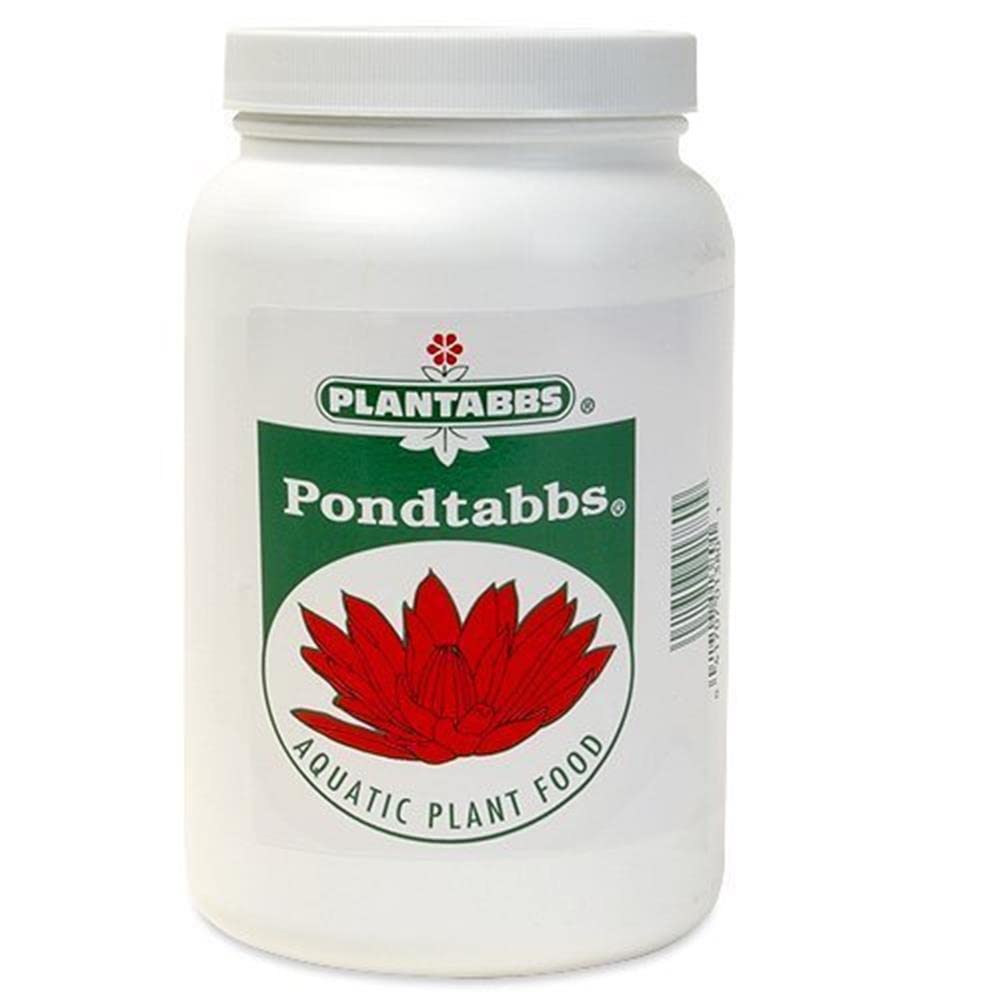
PondBuilder PondTabbs water-soluble aquatic plant fertilizer, 20 tablets
| Item Form | Tablets |
|---|---|
| Specific Uses For Product | Maintaining aquatic plant health in ponds, safe for fish, not promoting algae growth |
| Coverage | Medium |
| Mixing Ratio | 1:1 |
PondTabbs are concentrated, water-soluble tablets designed specifically for feeding aquatic and marginal pond plants. You push a tablet into the soil around the plant crown and nutrients begin releasing within minutes, making them useful for potted bog plants, water lilies, and other planted areas in ornamental ponds. The product emphasizes controlled nitrogen release combined with rapid nutrient availability so plants get both steady and quick food. Directions recommend one tablet per gallon of soil monthly during the growing season and increasing to every two weeks when water temperature exceeds 72°F, which makes scheduling straightforward. Notably the manufacturer states the formula is safe for fish and will not encourage algae growth when used as directed. The main limitations are that dosing is specified by soil volume rather than by plant size, so some trial and error may be needed for mixed plantings, and tablets require manual insertion into the substrate which is harder in deep or muddy beds. For routine pond maintenance this is a low-effort, targeted way to keep aquatic plants healthy without introducing soluble liquid fertilizers into the water column.
Best for: Buyers who want a simple, low-risk way to maintain healthy pond plants and prefer targeted, repeatable dosing rather than broadcasting liquid fertilizers.
Less Ideal for: Not the best choice for large naturalized ponds with inaccessible roots or for users who need tablet-free, automated dosing systems.
- Formulated for aquatic plants with fast nutrient release for quick uptake
- Water-soluble tablets allow targeted application directly into plant substrate
- Manufacturer states it is safe for fish and does not promote algae growth when used as directed
- Simple feeding schedule tied to soil volume and water temperature makes routine care easy
- Dosing by gallons of soil can be imprecise for mixed-size plantings
- Requires physically inserting tablets into substrate which can be awkward in deep or muddy ponds
Verdict: PondTabbs offer a low-effort, fish-safe tablet fertilizer that feeds pond plants quickly and predictably without encouraging algae when used as directed.
Choosing the Right Pond Fertilizer: Key Factors to Consider
Nutrient Ratio and Formulation
The balance of nitrogen, phosphorus, and potassium matters in ponds because aquatic plants often need phosphorus and micronutrients in different proportions than terrestrial plants. A formulation with a modest nitrogen level and adequate phosphorus supports flowering and root development in marginal and bog plants without overstimulating filamentous algae.
Also pay attention to included micronutrients such as iron and trace metals that influence leaf color and vigor. Slow-release or bonded nutrient forms are preferable because they reduce the immediate soluble nutrient load in the water column, lowering the chance of algae blooms after application.
Release Method and Timing
How the fertilizer releases nutrients changes both effectiveness and ecological risk. Tablets, spikes, and coated granules that sit in plant soil or on the pond shelf deliver nutrients gradually to roots. Quick-release powders or soluble liquids enter the water immediately and can be absorbed fast but also feed algae quickly if overdosed.
Consider the season and plant growth stage when timing applications. Early spring applications support new growth, while midseason feeds can boost blooms. Slow-release formats allow less frequent dosing and are often safer in warm weather when algae are active.
Application Format and Ease of Use
Fertilizers designed for aquatic use come as tablets, spikes, granules, or liquids. Tablets and spikes are convenient for potted or marginal plants because you can place them near roots and avoid dispersal. Granules can work in shallow shelves but may need careful placement to prevent washout. Liquids can be easy to dose for large areas but require precise measurement to avoid overfeeding.
Clear labeling with dosing per container size, per plant, or per surface area simplifies repeat applications. Gardeners should favor formats that match how their plants are contained-containerized, in-ground marginal shelves, or fully submerged plantings.
Impact on Water Quality and Algae Risk
Any fertilizer introduced to a pond has the potential to increase dissolved nutrients that algae and plankton can use. Products that minimize soluble phosphorus and employ slow-release technologies reduce sudden nutrient spikes. Avoid formulations that are highly soluble unless you have a robust filtration system and a stable biological balance.
Also consider oxygen demand after application. Rapid algal growth or decomposition from sudden nutrient loads can reduce oxygen and stress fish and invertebrates. Choose approaches that limit nutrient clouding of the water column and target roots rather than broadcast feeding.
Suitability for Specific Pond Plant Types
Different aquatic plants take up nutrients differently. Marginal and bog plants often absorb more via roots and benefit from soil-placed tablets. Floating plants and fully submerged species take more nutrients from the water column and may respond better to diluted liquid feeds when appropriate. Select a product whose delivery method fits the plant types you grow.
Also check if a fertilizer supplies micronutrients important to common pond species. For example, iron and manganese can prevent yellowing in certain lily and marginal plants. Match formulation strengths to plant needs to avoid waste and water quality problems.
Environmental Safety and Label Guidance
Labels that specify aquatic use and safe application rates are essential. The product should include clear instructions for dosing frequency, maximum seasonal application amounts, and placement guidance to keep nutrients in root zones rather than free in the water. Products with slower release or lower soluble phosphorus are generally more pond-friendly.
Also consider packaging integrity. Moisture-resistant containers and individually wrapped tablets reduce contamination and dosing mistakes. Proper labeling that warns against over-application and describes precautions around fish and invertebrates shows the manufacturer considered pond ecology.
When to Feed Pond Plants
Apply fertilizer when plants are actively growing, typically from spring green-up through early fall. Avoid heavy feeding during very hot weather or when the pond is experiencing algal blooms because added nutrients can worsen water clarity and oxygen levels.
For marginal and bog plants place slow-release tablets at planting or at the start of the growth season. Repeat according to the product label, usually every six to twelve weeks for coated tablets. For seasonal blooms a midseason boost timed before peak flowering can enhance blooms without excessive late-season nutrient carryover.
- Start feeding after sustained water temperatures rise and plants show new growth.
- Reduce or stop feeding during peak summer heat if algae are present.
- Follow label intervals rather than making small extra applications.
Application Techniques for Different Plantings
Containerized and potted aquatic plants benefit most from tablets or spikes pressed into the planting medium close to the roots. This keeps nutrients local and minimizes release into open water.
Shallow shelves and in-ground marginal beds take well to coated granules placed under substrate or to tablet placement in planting pockets. Avoid scattering uncoated granules across the pond margin where rain or circulation can move them into the water column.
- Use a planting stick or trowel to create a pocket for tablets in dense soils.
- Rinse hands after handling concentrated formulations and follow safety guidance on the label.
Balancing Fertilizer Use With Pond Maintenance
Fertilizer is only one part of pond health. Regular debris removal, skimming of detritus, and management of nutrient sources such as runoff will reduce the need for heavy fertilization. Biological filtration and a healthy population of submerged plants help keep nutrient cycles in balance.
If algae increase after fertilization, reduce application frequency, check for external nutrient inputs, and consider mechanical removal of filamentous mats. In many cases adjusting timing and switching to a slower-release format prevents repeat problems.
- Monitor water clarity and plant vigor after each application period.
- Combine sensible feeding with routine mechanical and biological maintenance.
Storing and Handling Pond Fertilizer
Store pond fertilizers in a cool, dry place away from moisture and direct sunlight. Keep containers sealed to avoid clumping and accidental spills that can lead to concentrated runoff when raining.
Handle tablets and spikes with gloves if recommended, and keep fertilizers out of reach of children and pets. Dispose of empty packaging per local guidelines and avoid rinsing containers near the pond.
- Label containers with purchase date and intended use to avoid confusion with garden fertilizers.
- Use moisture-proof packaging or resealable containers to extend shelf life.
Adjusting Feeding for Seasonal Changes
Scale back feeding in late fall as plant growth declines and dormancy approaches. Excess nutrients in colder months are more likely to remain available for algae and decomposers without benefiting plants.
Resume a conservative feeding schedule in spring as plants break dormancy. Observe early-season growth to fine-tune how much fertilizer your pond ecosystem needs rather than strictly following a calendar schedule.
- Avoid applying before freeze-thaw cycles that could mobilize nutrients.
- Use smaller, more frequent doses during transitional periods to avoid spikes.
How We Chose the Best Pond Fertilizer
We focused on factors that matter to pond gardeners rather than general lawn or vegetable fertilizer features. Evaluation prioritized nutrient formulation specificity for aquatic plants, predictable nutrient release, and delivery forms suited to water use such as tablets, spikes, or slow-release granules. We also considered ecological safety features including low soluble phosphorus or controlled-release coatings that reduce immediate nutrient spikes. Ease of dosing and suitability across common pond plant types was important for practical backyard use. Durability and packaging that resists moisture and contamination in wet conditions were assessed, as were instructions and clarity for safe application rates. Excluded products included general-purpose lawn or crop fertilizers not labeled for aquatic use and concentrated liquid fertilizers without clear aquatic dosing guidance. Our filters kept only formulations and formats intended for pond margins, bog shelves, and containerized aquatic plants. The criteria used reflect how these fertilizers will behave in standing water, their risk of boosting algae, and how simple they are to apply correctly.
FAQ
How often should I fertilize pond plants?
Frequency depends on the product format and plant type. Slow-release tablets often need application every six to twelve weeks, while liquid feeds can be applied more frequently at lower doses. Always follow label directions and reduce feeding if algae appear.
Can pond fertilizer harm fish?
Fertilizer itself is not directly toxic at recommended rates, but excessive nutrient additions can feed algae and bacteria that reduce oxygen levels and stress fish. Use formulations designed for aquatic use and avoid over-application near fish-heavy ponds.
Is phosphorus safe to use in ponds?
Phosphorus helps flowering aquatic plants but is also a primary driver of algae growth. Choose products with controlled phosphorus release or lower soluble phosphorus if algae are a concern, and apply directly to root zones when possible.
Which fertilizer format is best for lily and marginal plants?
Tablets and spikes placed into the planting medium are usually best because they deliver nutrients near roots and limit dispersion into open water, reducing the chance of feeding algae compared with broadcast soluble feeds.
Will liquid fertilizers work for submerged plants?
Submerged plants can take up nutrients from the water column, so diluted liquid feeds applied at correct rates can be effective. Use caution with dosing and prefer products labeled for aquatic use to avoid sudden nutrient spikes.
Final Verdict
When selecting pond fertilizer prioritize formats and formulations that deliver nutrients to roots and minimize soluble nutrient spikes in the water column. Match the product to your planting style, whether containerized marginals, bog shelves, or submerged beds, and favor slow-release options where algae risk is high. Balance feeding with routine pond maintenance and monitor water clarity after applications. By focusing on nutrient ratios, release control, and clear label guidance you can support healthy pond plants while protecting overall water quality.
