

Note: This article contains affiliate links. If you click on these links and make a purchase, I may earn a small commission at no extra cost to you. This helps support my research and content. Read my full affiliate disclosure here.
If you have brushy patches, saplings, or persistent woody stems returning each season, choosing the right herbicide for woody weeds changes how much work you do by hand. The correct product and application method can kill established stems, reduce resprouting, and limit damage to nearby ornamentals and desirable trees. This guide covers our shortlisted top picks for woody weed control and explains the practical differences you will notice in the yard, from speed of dieback to stump treatment performance. We evaluate effectiveness, treated-area safety, and ease of use so you can pick the option that fits your site and management plan.
Top Picks at a Glance
| Best Overall The best all-around choice for most situations | ALLIGARE Triclopyr 3 Herbicide, 2.5-gallon |  |
| Best Quality Built to a higher standard if you want something more solid | Crossbow Herbicide 2.5 Gallon |  |
| Best Value The sweet spot between price and what you get | RM43 Concentrated Extended Control Weed Killer (1 gallon) |  |
| Best Budget The cheapest option that still gets the job done reliably | Bonide Stump-Out Stump & Vine Killer, 8 oz with Applicator | 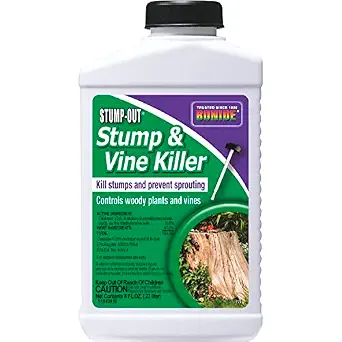 |
| Highest Rated A top-rated pick with lots of positive feedback | Corteva Agriscience Remedy Herbicide |  |
| Most Popular A crowd favorite that many people choose with confidence | ALLIGARE Triclopyr 4 EC Selective Herbicide (1 Quart) |  |
ALLIGARE Triclopyr 3 Herbicide, 2.5-gallon

| Unit Count | 320 Fluid Ounces |
|---|---|
| Item Form | Liquid |
| Coverage | Broad-spectrum |
| Active Ingredients | triclopyr |
This 2.5-gallon ALLIGARE triclopyr product is a professional-strength liquid herbicide designed to tackle woody plants, vines, and broadleaf weeds over large areas. It is typically mixed into spray solution (manufacturer notes 1–3 gallons per 100 gallons for broad applications and directions such as 2 oz per gallon for some uses) and applied with standard spray equipment for vegetation management in forests, wetlands, ponds, ditches, and industrial non-crop sites. Key features are a broad-spectrum formulation and tank-mix compatibility so you can customize treatments for stubborn or mixed-species infestations. In practice the concentrate lets you treat extensive acreage without frequent container changes, and the triclopyr active ingredient is effective on woody stems and perennial broadleaf species that glyphosate alone may not control. Important limitations are that this is intended for non-crop and industrial uses so careful attention to label directions, application timing, and site restrictions is required, and protective equipment and calibration of spray gear are necessary to avoid off-target damage to desirable vegetation and water bodies.
Best for: Buyers managing large non-crop, industrial, or forested areas who need an effective woody-plant and broadleaf control solution and who follow label directions and safety protocols.
Less Ideal for: Home gardeners treating small lawns, gardens, or crop areas or anyone unwilling to use protective equipment and follow regulatory application rules should choose a different, more targeted product.
- Concentrated 2.5-gallon container suitable for treating large areas without frequent refills
- Active ingredient triclopyr targets woody plants, vines, and perennial broadleaf weeds effectively
- Broad-spectrum formulation and tank-mix compatibility allow tailored control of mixed infestations
- Can be applied year-round in appropriate non-crop and industrial settings
- Formulation is for professional or licensed use and requires strict adherence to label directions and safety gear
- Not intended for general lawn or crop use and may harm desirable plants or aquatic ecosystems if misapplied
Verdict: Choose this concentrated triclopyr herbicide when you need a professional-grade solution to remove woody plants, vines, and persistent broadleaf weeds across large non-crop or industrial sites.
Crossbow Herbicide 2.5 Gallon

| Unit Count | 320 Fluid Ounces |
|---|---|
| Liquid Volume | 2.5 gallons |
| Coverage | 2.5 acres |
| Item Form | Spray |
| Active Ingredients | triclopyr |
Crossbow is a concentrate designed for foliar and dormant applications to control woody plants and brush such as blackberries and poison oak plus many annual and perennial broadleaf weeds. It is used with hand-held or tractor-mounted sprayers and covers up to 2.5 acres from the 2.5 gallon container, making it suitable for large parcels, fence rows, roadsides and non-crop areas. The active ingredient triclopyr targets broadleaf and woody species while sparing grasses, so it is useful where you need to remove brush without killing pasture or turf grasses. Practical benefits include rainfast performance within two hours and no grazing restrictions except for lactating dairy animals, which simplifies post-application site use. Important limitations are that it requires proper spray equipment and handling precautions to avoid skin or eye contact and it is not intended for use where grazing dairy animals are lactating; it also does not target grasses or grasslike weeds. Follow label directions closely for timing and application method to get reliable control.
Best for: Buyers who need a high-performance herbicide to remove woody brush and broadleaf weeds across large non-crop areas and who are prepared to use proper spray equipment and follow label safety directions.
Less Ideal for: Home gardeners with small yards who prefer ready-to-use solutions or anyone needing grass-specific weed control should consider simpler or grass-targeted products.
- Effective on woody plants and many broadleaf weeds including brush and vines
- Formulated to spare grasses, so useful in pastures and turf-adjacent areas
- Covers up to 2.5 acres from the 2.5 gallon container for large-area treatments
- Rainfast within two hours, reducing loss from unexpected showers
- Requires appropriate sprayer equipment and careful handling for safe and effective application
- Not suitable for controlling grass or grasslike weeds
Verdict: Choose Crossbow when you need a results-driven herbicide to reliably kill woody plants and broadleaf weeds over large non-crop areas while leaving grasses intact.
RM43 Concentrated Extended Control Weed Killer (1 gallon)

| Unit Count | 128 Fluid Ounces |
|---|---|
| Item Form | Spray |
| Coverage | 17297 square feet |
| Active Ingredients | glyphosate |
RM43 is a concentrated glyphosate‑based weed killer blended for broad, long‑lasting vegetation control on noncrop areas. You mix it with water and apply through a sprayer to drive down perennial weeds, fence lines, gravel areas, and other places where you want no plant growth. The formula pairs glyphosate with a second herbicide and a surfactant so it kills to the root and claims prevention of new growth for up to a year while becoming rainfast in about two hours. A single gallon treats a large area, making it suitable for larger properties or professional use. Important practical limits are safety and site restrictions: it must not be used near desirable plants or crops and requires cautious handling to avoid drift and contact with skin and eyes. For routine spot treatments it is concentrated enough that careful measuring is needed, and it is intended only for areas where total vegetation removal is acceptable.
Best for: Buyers who need a powerful, long‑lasting solution for clearing and keeping large nonplant areas free of vegetation, including property managers and professional landscapers focused on durable results.
Less Ideal for: Gardeners who need selective weed control around ornamentals or vegetable beds or those who want an organic or low‑toxicity option should choose a different product.
- Concentrated one‑gallon formula treats large areas, reducing trips to refill
- Combination of glyphosate and a second herbicide for deeper, longer control
- Rainfast in about two hours so results are less affected by light rainfall
- Designed for total vegetation control and claims up to 12 months of prevention
- Not selective so will kill desirable plants and must be applied only to noncrop areas
- Requires careful mixing and handling because of strong active ingredients
Verdict: Choose RM43 when you need a concentrated, professional‑strength herbicide that kills to the root and provides long‑term vegetation control on noncrop areas.
Bonide Stump-Out Stump & Vine Killer, 8 oz with Applicator

| Unit Count | 8 Ounce |
|---|---|
| Item Form | Spray |
| Coverage | Stumps, woody plants, vines, broadleaf weeds |
| Liquid Volume | 8 fluid ounces |
| Active Ingredients | 3,5,6-Tricloro-2-Pyridinyloxyacetic Acid |
Bonide Stump-Out is a concentrated herbicide designed for targeted stump and vine control around homes and walkways. It is typically used undiluted on freshly cut stumps or as a foliar spray on woody vines and broadleaf weeds; the included brush applicator helps apply the product directly to the cut surface to prevent resprouting. The active ingredient listed is a pyridinyloxyacetic acid derivative, and the formula is intended to work within one to six weeks depending on the plant. Practical benefits include focused application that reduces drift onto turf, a small 8 ounce size that is easy to store, and compatibility with hose-end or tank sprayers for foliar work. Important limitations are that it must be applied according to label directions for safety and effectiveness, it is a specialized product for woody plants rather than a general lawn weed killer, and multiple applications or physical stump removal may still be necessary for large or well-established stumps.
Best for: Buyers who want a focused, proven solution to stop stump sprouting and eliminate woody vines around yards and structures and who prioritize products with established user feedback and clear instructions.
Less Ideal for: Homeowners seeking a general yard or turf weed control product or those who need large-volume treatments for extensive properties should consider broader-coverage herbicides or professional services.
- Targeted brush applicator for direct application to stumps and cut surfaces
- Effective on woody plants, vines and broadleaf weeds when used as directed
- Works relatively quickly with visible results in 1–6 weeks
- Can be applied undiluted for stump treatment or via hose/tank sprayer for foliar use
- Small 8 oz volume may require multiple purchases for many or large stumps
- Specialized formulation not intended as a broad-spectrum lawn herbicide
Verdict: Choose this product when you need a targeted, easy-to-apply stump and vine killer that prevents resprouting with minimal off-target spray.
Corteva Agriscience Remedy Herbicide

| Manufacturer | Corteva Agriscience |
|---|---|
| Part Number | Remedy |
| Coverage | 1 acre |
Corteva Remedy is a targeted herbicide designed for controlling woody plants and broadleaf weeds on rangeland, permanent grass pastures, CRP acres, fence rows, and non-irrigation ditch banks. It is typically mixed and applied with standard ground equipment by land managers, ranchers, or contractors to treat large areas up to the labeled coverage. Notable features include professional-grade formulation and one-acre coverage per unit as stated by the manufacturer, plus labeled directions for specific noncropland uses. In practice Remedy delivers effective broadleaf and woody plant control when applied according to label directions, and the product's concentrated form reduces the number of trips required to treat a field. Important limitations are that it is intended for noncropland settings only and requires protective equipment during application, so it is not suitable for casual home-garden use and needs someone comfortable with herbicide handling and compliance with label restrictions.
Best for: Buyers who need a reliable, professional herbicide for managing weeds and woody plants across pasture, rangeland, or conservation acres and who follow labeled application practices.
Less Ideal for: Casual gardeners, homeowners, or anyone seeking a multipurpose home garden weed killer or a product for irrigated turf should look for consumer-labeled alternatives.
- Professional-strength formulation for woody plant and broadleaf weed control
- Labeled for large-area uses such as rangeland, pastures, and CRP acres
- Concentrated product covers one acre per unit as indicated by manufacturer
- Clear label directions for the specified noncropland applications
- Not formulated or labeled for general home or ornamental garden use
- Requires use of protective equipment and familiarity with herbicide handling
Verdict: Choose Remedy when you need a dependable, professional-strength herbicide for managing woody plants and broadleaf weeds on pasture and rangeland.
ALLIGARE Triclopyr 4 EC Selective Herbicide (1 Quart)

| Unit Count | 32 Fluid Ounces |
|---|---|
| Item Form | Liquid |
| Coverage | Pastures, rangelands, rights-of-way, lawns, golf courses, sod farms, industrial properties, ditches |
| Active Ingredients | Triclopyr |
ALLIGARE Triclopyr 4 EC is a concentrated liquid herbicide used to target woody plants, broadleaf weeds, and brush in large outdoor areas. It is typically mixed into a spray tank at recommended rates (about 3.2 to 6.4 oz per gallon) with a penetrant and applied to foliage or cut stems to achieve systemic control. Notable features include an ester formulation that improves leaf and bark absorption and compatibility with many tank-mix partners, which lets you customize treatments for stubborn species. In practice it is effective for restoring pastures, clearing rights-of-way, and reducing invasive broadleaf growth while leaving grasses largely unharmed when used as directed. Important limitations are that it is a professional-strength chemical requiring careful PPE and adherence to safety and application instructions, it can harm non-target broadleaf plants if drift or overspray occurs, and restrictions apply in some states and situations. For spot treatments or large-area brush control it is a dependable option when handled responsibly.
Best for: Gardeners or land managers who need a reliable, selective herbicide to control woody and broadleaf invasives across pastures, rangelands, or larger outdoor areas and who follow safety procedures for concentrated chemicals.
Less Ideal for: Casual home gardeners with small ornamental beds or indoor herb gardens seeking a gentle, non-chemical solution should consider mechanical removal or lower-strength spot treatments instead.
- Targets woody plants, broadleaf weeds, and brush for effective control of invasive species
- Ester formulation promotes absorption through leaves and bark for systemic action
- Tank-mix compatible so you can combine with other herbicides or adjuvants
- Suitable for a wide range of large outdoor sites including pastures, rangelands, and rights-of-way
- Professional-strength concentrate that requires protective clothing and careful mixing
- Can damage non-target broadleaf plants if it contacts desirable species
- Not suitable for use where restrictions or local regulations prohibit triclopyr products
Verdict: Choose ALLIGARE Triclopyr 4 EC when you need a professional-strength, tank-mix compatible herbicide to reliably remove woody and broadleaf invasives across large outdoor areas.
Choosing the Right Herbicide for Woody Weeds: Key Factors to Consider
Mode of Action and Systemic Activity
Mode of action matters for woody plants because simply burning foliage rarely stops a root system. Systemic translocation is needed to move herbicide from leaves or treated stumps into roots and crowns so resprouting is minimized. Some formulations are absorbed through bark or foliage and travel downward, while contact-only products give quick browning but little long-term control.
Understanding whether a product works via foliar uptake, bark absorption, or cut-stump translocation helps you choose the correct application method. That in turn affects how many treatments you will need and whether follow-up cutting or reapplication is likely.
Application Method Flexibility
Different situations call for different application techniques. Basal bark treatments coat the lower trunk and can control small saplings without cutting. Cut-stump methods apply herbicide directly to exposed cambium after cutting, concentrating active ingredient where it can move into the root. Directed foliar sprays work on exposed leaves but require coverage of the entire crown for consistent uptake.
Products that can be used in multiple ways give you options for sensitive settings like near ornamental beds or where trees should be preserved. Consider how easy it is to apply the product in tight spaces, on steep banks, or around desirable plants.
Persistence and Soil Mobility
Persistence in plant tissues and soil mobility influence both control duration and environmental risk. Long-residual products can prevent resprouting but may also move in soil or groundwater in certain conditions. Shorter-residual systemic options may require follow-up but reduce persistence risk.
Match persistence to your site: near shallow-rooted ornamentals or water features, choose lower soil mobility. For remote areas with isolated brush, a longer-lasting systemic may reduce retreatment frequency.
Non-target Plant Safety and Drift Potential
Many woody-plant herbicides are active at low concentrations, so drift, vapor, or splatter can harm nearby desirable plants. Look at volatility, recommended buffer distances, and whether the product requires agitation or adjuvants that increase drift risk. Weather at application also matters; still, cool days with low wind reduce off-target movement.
If you work near gardens, hedgerows, or young trees, choose products and application methods designed to limit drift and avoid broadcast spraying unless isolation is possible.
Label Restrictions and Personal Safety
Legal and safety instructions on the label determine who can use a product and how. Read protective clothing recommendations, re-entry intervals, and any restrictions near water. Some formulations require gloves, eye protection, or respirators for certain application methods.
Label restrictions also note plant groups or sites where use is prohibited. Following label guidance protects you and avoids unintended damage to non-target vegetation or animals.
Cost of Ongoing Management
Think beyond the purchase price to the labor and frequency of retreatment. A formulation that gives longer control on established roots may cost more up front but saves time and repeat applications. Conversely, using a less persistent product might be cheaper initially but require annual follow-up.
Factor in the area you need to treat and the accessibility of regrowth. If you are managing large acreages of brush, durability and application efficiency become more important than for an isolated sapling near a driveway.
When to Use Basal Bark Versus Cut‑Stump Treatments
Basal bark and cut-stump are two of the most effective targeted methods for woody stems. Basal bark treatment is best for small to medium-diameter trunks where you can coat the lower 12 to 18 inches of bark; it penetrates the bark and moves to the roots without cutting. Cut-stump application is ideal when you want immediate removal of the stem and to apply herbicide directly to the exposed wood and cambium.
Choose basal bark when stems are living and accessible for bark coating but you want to avoid creating a stump. Choose cut-stump if you need to remove the aboveground material now and prevent re-sprouting from the remaining root system.
- Basal bark works well for multi-stemmed shrubs and saplings with thin bark
- Cut-stump concentrates active ingredient and reduces the amount needed for each plant
- Both methods reduce drift risk compared with broadcast foliar spraying
Timing and Weather Considerations for Effective Uptake
Apply systemic treatments when plants are actively transporting sugars, typically in spring and late summer to early fall, depending on species and climate. In temperate zones, late summer into early autumn is often best because translocation from leaves into roots is still active and tops are not yet senescing.
Avoid application during drought stress or when plants are frozen, as uptake is reduced. Also apply on calm days to limit drift and follow label guidance on temperature ranges and precipitation windows.
- Target active growth periods for best systemic movement
- Avoid windy, very hot, or droughty conditions
- Respect rainfast periods after application listed on the label
Protecting Nearby Trees, Shrubs, and Water Features
When treating woody weeds near desirable plants or water, use targeted methods and physically shield non-target vegetation. Wrap foliage or use splash guards when applying cut-stump or basal bark treatments to prevent run-off onto roots of nearby plants.
For sites near ponds or streams, choose products with low aquatic toxicity and follow buffer-zone instructions. If in doubt, use hand-cutting plus directed cut-stump application rather than broadcast spraying to minimize contamination risk.
- Use drop cloths or shields when spraying near ornamentals
- Maintain recommended buffer zones around water
- Consider mechanical removal plus targeted herbicide to limit off-site movement
Managing Resprouts and Follow-Up Treatments
Even with systemic products, some species will resprout from deep roots or lignotubers. Monitor treated plants in the growing season following application and expect to retreat if new shoots emerge. Fast-acting products may show quick dieback but still require follow-up to control surviving root systems.
Plan a monitoring schedule based on species biology. For heavy resprouters, combine mechanical removal with a follow-up basal or stump application to the new shoots when they reach a size suitable for effective uptake.
- Inspect treated areas monthly during the first growing season
- Treat new shoots when they reach recommended size for the method
- Record what worked to refine timing and approach in future seasons
Safe Mixing, Application Tools, and Personal Protective Equipment
Proper mixing and the right application tools reduce waste and exposure. Use dedicated sprayers or small paintbrushes for basal bark and cut-stump work to control dose and avoid overapplication. Keep a calibrated measuring device for mixing concentrates and always follow label dilution rates.
Wear the protective equipment listed on the label, which may include gloves, eye protection, and long sleeves. Clean tools away from sensitive areas and dispose of rinsate according to local regulations to avoid environmental contamination.
- Calibrate sprayers before treatment to ensure correct coverage
- Use brushes for precise cut-stump and basal bark applications
- Store and clean equipment in a well-ventilated area away from water
How We Chose the Best Herbicide for Woody Weeds
We focused on products and formulations that are effective against established woody plants and common brushy invaders. Evaluation emphasized modes of action that deliver systemic activity into roots and crowns, because quick foliar scorch often fails to prevent resprouting. Products that enable targeted applications such as cut-stump, basal bark, or directed foliar spraying were preferred, since these approaches reduce collateral damage in mixed plantings. We also considered worker and bystander safety, including scent, volatility, and recommended protective equipment, because realistic garden use must protect people and desirable plants. We excluded broad-use lawn-only herbicides and treatments designed only for annual weeds or turf-safe ornamental mixes, since they do not provide reliable control of woody stems. Other exclusion filters removed products with restricted-use designations that limit homeowner applicability. Final selections balanced efficacy on common woody species, flexibility of application method, and clear label guidance for safe use. These evaluation points align with the scoring criteria used throughout the guide.
FAQ
Can I use general garden herbicides on woody saplings?
Many general garden or lawn herbicides are formulated for annual weeds and may not translocate effectively into woody roots. For reliable control of saplings and brush, choose products or application methods specifically labeled for woody plants such as basal bark or cut-stump treatments.
How long after treatment will I see dieback?
Visible dieback can range from a few days to several weeks depending on species and method. Foliar contact products often cause rapid browning, while systemic treatments that move into roots may take longer before stunting or mortality becomes obvious.
Is it safe to use woody-plant herbicides near vegetable gardens?
Exercise caution around vegetable beds. Use targeted methods and physical shielding to prevent drift and avoid products with high soil mobility near shallow-rooted vegetables. When in doubt, use mechanical removal or spot-treat well away from garden plots.
Will cut-stump treatment harm nearby trees?
Cut-stump application applied directly to the exposed wood minimizes off-target movement, so it is one of the safer methods near desirable trees. Prevent splash or run-off onto roots or trunks of nearby plants and follow label instructions for dilution and application to avoid damage.
How many treatments are usually required for persistent brush?
Persistent or deeply rooted species often require at least one targeted treatment plus monitoring and occasional follow-up applications. Frequency depends on species, initial stem size, and whether you paired herbicide use with mechanical removal.
What personal protective equipment should I use?
Follow label recommendations closely. At minimum this often includes chemical-resistant gloves and eye protection for most woody-plant application methods. Some concentrated formulations or spray applications may require long sleeves or respirators.
Final Verdict
Choosing the right herbicide for woody weeds is about matching the product and method to the plant biology and the site. Prioritize systemic activity and application methods that target the cambium or root system when you need durable control, and favor low-drift, low-mobility options where desirable plants or water features are nearby. Balance persistence against environmental risk and plan for monitoring and retreatment on stubborn species. With a clear application plan and proper safety measures, you can reduce regrowth and limit the need for repeated intensive labor.
