

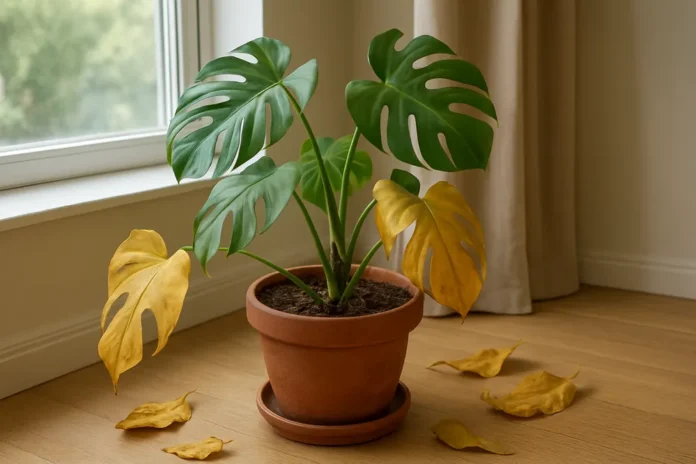
A Monstera usually loses leaves because of watering stress, low light, temperature shock, pests, or normal aging of older foliage. Sudden leaf drop often points to a recent change in care or growing conditions.
Seeing a Monstera drop foliage can be alarming, especially if the plant looked healthy just a week ago. In many cases, leaves falling from a Monstera are a stress response to changes in watering, light, temperature, or root health rather than a sign that the plant is beyond saving.
The reason for leaves falling off often becomes clearer when you look at which leaves are dropping and what they looked like beforehand. A few older bottom leaves may be part of the plant's normal life cycle, while several leaves dropping at once usually signal a care issue that needs attention.
The good news is that Monsteras are resilient houseplants. Once you match the symptoms to the likely cause, most leaf drop problems can be corrected before the plant declines further.
What Leaf Drop Looks Like on a Monstera
Leaf drop on a Monstera can happen in a few different ways. Sometimes a leaf turns yellow first, then releases from the stem. In other cases, the leaf stays partly green but wilts, folds, or browns before falling. A plant that drops one older lower leaf every so often may be behaving normally. A plant that suddenly drops multiple leaves, especially newer ones, is telling you something in its environment has changed.
- Older bottom leaves yellowing and dropping one at a time often suggest normal aging or low light.
- Soft yellow leaves that fall quickly often point to overwatering or root trouble.
- Crispy brown-edged leaves that drop can indicate underwatering, dry air, or heat stress.
- Leaves with spots, stippling, or webbing before they fall may suggest pest activity.
- Sudden leaf loss after moving the plant can be caused by transplant shock or environmental stress.
Normal Aging Vs a Real Problem
Not every dropped leaf means your Monstera is unhealthy. As the plant matures, it naturally redirects energy toward new growth. Older leaves near the base eventually yellow, weaken, and fall off. This is usually a slow process and does not affect the whole plant at once.
A real problem is more likely when leaf loss speeds up, affects several leaves at once, or includes younger foliage. If the stem looks weak, the soil stays wet for long periods, or the plant has recently been moved, repotted, or exposed to drafts, you are probably dealing with stress rather than natural aging.
Signs the Leaf Drop Is Probably Normal
- Only one or two of the oldest leaves are affected
- New leaves are still emerging normally
- The rest of the plant looks firm and healthy
- There is no major discoloration on younger growth
Signs the Leaf Drop Needs Attention
- Several leaves are dropping within a short time
- Newer leaves are yellowing or collapsing
- The potting mix smells sour or stays soggy
- Leaf drop started after a move, repot, or temperature swing
Overwatering Is One of the Most Common Causes
For indoor Monsteras, overwatering is one of the most common reasons leaves fall off. This does not always mean you water too often on the calendar. It can also mean the potting mix stays wet too long because the pot is too large, drainage is poor, the room is dim, or the soil is too dense.
When roots sit in overly wet soil, they struggle to take in oxygen. That stress can lead to yellow leaves, limp stems, blackened roots, and eventually leaf drop. The plant may look thirsty and droopy even though the soil is wet, which often causes well-meaning gardeners to water again and worsen the problem.
Signs Your Monstera Is Too Wet
- Leaves turn yellow before dropping
- Soil feels wet several inches down days after watering
- The pot feels heavy for a long time
- Stems or petioles feel soft instead of firm
- The soil smells musty or sour
- Roots appear brown, mushy, or stringy when inspected
If overwatering is the cause, recovery depends on drying conditions and improving the root zone. Severely damaged roots can no longer support the top growth, so the plant sheds leaves to reduce demand.
Underwatering Can Also Trigger Leaf Loss
Although Monsteras dislike soggy soil, they also do poorly when kept too dry for too long. Repeated drought stress makes leaves curl, crisp, yellow at the edges, or develop dry brown patches. If the plant becomes dehydrated enough, it may sacrifice older leaves first.
Underwatering is especially common in homes with warm indoor air, bright windows, or very porous potting mixes. A root-bound Monstera can dry out faster than expected because there is less soil left to hold moisture.
Clues That Dryness Is the Issue
- Leaves feel thin, limp, or papery
- Leaf edges brown and crisp before dropping
- Soil pulls away from the sides of the pot
- The pot feels very light soon after watering
- The plant perks up noticeably after a deep watering
A Monstera that cycles between bone dry and soaking wet can lose leaves from both extremes. Consistency matters more than a fixed weekly schedule.
Low Light Weakens Leaves Over Time
Monsteras tolerate moderate indoor light, but they do not thrive in deep shade. If a plant is too far from a bright window, it may not produce enough energy to support all of its foliage. Older leaves often yellow and drop first, and new growth may become smaller or less split.
Low light also slows how quickly the soil dries. That means a plant in dim conditions can show a combination of light stress and overwatering stress at the same time. This is a common reason a Monstera declines slowly through fall and winter.
Common Low-light Symptoms
- Leggy growth with long gaps between leaves
- Small new leaves with fewer fenestrations
- Leaning strongly toward a window
- Gradual yellowing and dropping of lower leaves
- Potting mix staying wet much longer than before
Temperature Stress and Drafts Can Cause Sudden Leaf Drop
Monsteras prefer stable indoor conditions. Cold drafts from windows, blasts from air conditioners, heating vents, or a sudden move outdoors can shock the plant and trigger leaf loss. Even brief exposure to cold temperatures can damage tropical foliage.
Heat stress can be a factor too, especially if the plant is near a heater, receives harsh afternoon sun through glass, or dries out rapidly. Environmental shock often causes a sudden change, with multiple leaves drooping or yellowing within days.
- Cold stress often causes limp, darkened, or water-soaked tissue.
- Hot, dry stress more often causes curling, crisping, and browning.
- Repeated drafts can weaken leaves enough that they eventually yellow and fall.
Root Problems and Repotting Stress
If your Monstera started losing leaves after repotting, root disturbance may be part of the problem. Even healthy repotting can temporarily stress a plant if roots were broken, the pot size changed dramatically, or the new mix holds moisture differently than the old one.
A severely root-bound Monstera can also drop leaves because the roots can no longer absorb enough water and nutrients efficiently. On the other hand, moving a small root system into a much larger pot can leave too much wet soil around the roots and increase the risk of rot.
Root-related Warning Signs
- The plant wilts even when soil moisture seems adequate
- Roots circle densely around the pot interior
- Water runs straight through a very root-bound pot
- Leaf drop began shortly after repotting
- New growth stalls after a container change
Pests and Disease Can Make Leaves Fall
Houseplant pests feed on sap and weaken foliage, which can lead to yellowing and leaf drop over time. Spider mites, thrips, mealybugs, and scale are the most common culprits on indoor Monsteras. A stressed or dusty plant is often more vulnerable.
Fungal and bacterial issues are less common than watering problems, but they can happen when leaves stay wet, airflow is poor, or roots remain soggy. Disease-related leaf loss is more likely when you see spots, black lesions, or mushy tissue along with yellowing.
Pest Clues to Watch For
- Fine webbing or pale speckling from spider mites
- Silvery scarring or distorted leaves from thrips
- Cottony white clusters from mealybugs
- Sticky residue or bumps on stems from scale
Pests rarely cause a single leaf to fall without other symptoms. If leaves are dropping and also look stippled, sticky, or distorted, pest pressure should move high on your list of possible causes.
Nutrient Issues and Poor Potting Mix
A Monstera kept in the same potting mix for years can begin to struggle as the mix breaks down. Old soil compacts, drains poorly, and holds less air around the roots. Nutrients may also become depleted, especially during active growth.
True nutrient deficiency is usually a slower problem than watering stress, but it can contribute to leaf yellowing and drop. Pale leaves, weak growth, and a general loss of vigor may show up when the plant has not been fed during spring and summer or when root conditions prevent nutrient uptake.
- Compacted mix can mimic overwatering by suffocating roots.
- Nutrient-poor soil usually causes gradual yellowing rather than sudden leaf drop.
- An imbalanced fertilizer routine can stress roots if salts build up in the pot.
How to Narrow Down the Cause Quickly
Instead of guessing, use the pattern of symptoms to narrow the problem. Start with the simplest questions: Which leaves are dropping, what do they look like before they fall, and what changed recently? The answer is often in that timeline.
- Look at leaf age. Older lower leaves suggest normal aging, low light, or chronic watering issues.
- Feel the soil. Wet soil with yellow leaves points in a different direction than dry soil with crispy leaves.
- Think back two to three weeks. Moves, repotting, missed watering, drafts, and new sun exposure often trigger delayed symptoms.
- Inspect stems and leaf undersides. Pests and soft rot usually leave visible clues.
- Check the pot and root zone. Drainage problems explain many indoor Monstera declines.
How to Help a Monstera Stop Losing Leaves
Once you identify the likely cause, give the plant stable conditions and avoid making too many changes at once. Monsteras recover best when you correct the main stressor and then let the plant settle.
Basic Recovery Steps
- Water only when the top couple of inches of the mix feel dry, adjusting for season and light level.
- Keep the plant in bright, indirect light near a well-lit window.
- Use a chunky, well-draining houseplant mix in a pot with drainage holes.
- Protect the plant from cold drafts, heaters, and abrupt temperature swings.
- Remove badly damaged leaves so the plant can focus energy on healthy growth.
- Inspect for pests weekly until the plant stabilizes.
If root rot is suspected, the plant may need to be removed from the pot so mushy roots can be trimmed and the plant reset into fresh, airy mix. If the issue is chronic dryness, a thorough watering followed by a more consistent routine is often enough to stop further decline.
How to Prevent Future Leaf Drop
Prevention comes down to consistency. Monsteras do best when light, watering, and temperature stay fairly steady. They are forgiving plants, but repeated stress cycles eventually show up as yellow leaves, smaller growth, and foliage loss.
- Match watering frequency to the season instead of following a strict calendar.
- Rotate the plant occasionally so growth stays balanced.
- Repot when roots become crowded, but avoid oversized pots.
- Feed lightly during active spring and summer growth.
- Wipe leaves clean so they can photosynthesize efficiently and are easier to inspect for pests.
- Keep the plant where nighttime temperatures stay comfortably warm.
FAQ
Is It Normal for a Monstera to Lose Lower Leaves?
Yes. An older lower leaf can yellow and drop as the plant matures, especially if the rest of the Monstera is healthy and still producing new growth.
Will Dropped Monstera Leaves Grow Back?
A leaf that has fallen will not reattach or regrow in the same spot. However, a healthy Monstera can produce new leaves from active growth points on the stem.
Can Overwatering Cause Healthy Green Leaves to Fall Off?
Yes. Overwatering can damage roots before leaves show major discoloration, so a leaf may drop while still partly green if the root stress is severe enough.
Why Is My Monstera Losing Leaves After Repotting?
Repotting can cause temporary stress if roots were disturbed, the new mix stays wetter than the old one, or the plant was moved into a much larger container. Mild leaf drop after repotting is not unusual, but ongoing decline suggests root or watering issues.
Can Low Humidity Make Monstera Leaves Fall Off?
Low humidity alone is less likely to cause major leaf drop than watering or light problems, but very dry air can contribute to browning, curling, and stress that weakens the plant over time.
How Often Should I Water a Monstera to Prevent Leaf Drop?
There is no fixed schedule that works in every home. Water when the top portion of the potting mix has dried, and expect to water less often in winter or in lower light.
Should I Cut Off Yellow Leaves That Are About to Fall?
Yes, you can remove yellow leaves once they are mostly spent. Clean removal improves appearance and helps you monitor whether the plant is still actively declining.
Need the right fix fast? Read our guide to the best Monstera soils, moisture meters, and pest treatments so you can stop leaf drop and get new growth sooner.
