

Note: This article contains affiliate links. If you click on these links and make a purchase, I may earn a small commission at no extra cost to you. This helps support my research and content. Read my full affiliate disclosure here.
Tomato growers face fast-moving fungal problems that can ruin a whole season if not treated promptly. Choosing an organic fungicide for tomatoes matters because you are protecting edible fruit, preserving beneficial insects, and managing repeated applications over weeks. This guide shortlists the top organic options for typical tomato problems and explains how we evaluated them on disease control, plant safety, and application practicality. Use the quick evaluation notes to match a product to your garden situation, whether you have container patio plants, a backyard row, or a small greenhouse.
Top Picks at a Glance
| Best Overall The best all-around choice for most situations | Bonide Captain Jack's Tomato & Vegetable 3-in-1 Ready-to-Use Spray, 32 oz |  |
| Best Quality Built to a higher standard if you want something more solid | Garden Safe Fungicide3 with Neem Oil, Ready-to-Use, 1 gal |  |
| Best Value The sweet spot between price and what you get | Bonide Captain Jack's Copper Fungicide Ready-to-Use Spray, 32 oz (Pack of 2) |  |
| Most Popular A crowd favorite that many people choose with confidence | Bonide Captain Jack's Liquid Copper Fungicide Ready-to-Use, 32 oz |  |
| Best Seller A high-volume bestseller chosen again and again | Bonide Captain Jack's Neem Oil Ready-to-Use Spray, 128 oz |  |
Bonide Captain Jack's Tomato & Vegetable 3-in-1 Ready-to-Use Spray, 32 oz
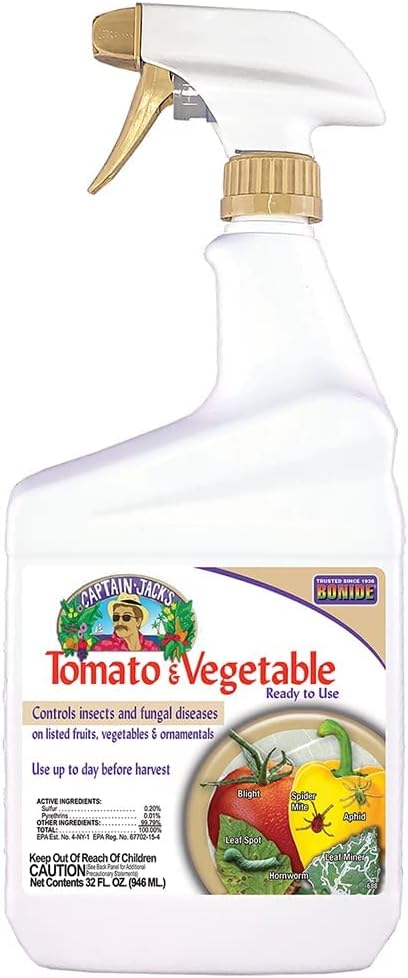
| Unit Count | 32 Ounce |
|---|---|
| Active Ingredients | sulfur |
| Item Type Name | Tomato & Vegetable 3-in-1 Ready-To-Use |
| Special Features | organic |
Bonide Captain Jack's Tomato & Vegetable Ready-to-Use is a 32 oz spray formulated to control common insect pests and a range of fungal diseases on tomatoes and other garden plants. It is used as a contact spray applied to foliage and new growth with a trigger nozzle that makes spot or whole-plant coverage straightforward. The product lists sulfur as an active ingredient and claims control of aphids, spider mites, caterpillars and more while also suppressing problems like powdery mildew, leaf spot and blight when applied preventively. Practical benefits include the convenience of a pre-mixed bottle, suitability for many listed vegetables and ornamentals, and a broad target list that lets one treat mixed beds without swapping products. Limitations are that it works by contact so thorough coverage is required and it is intended for preventive or early-season use rather than curing severe established infections. Users who need systemic control or highly targeted biological products may prefer an alternative formula.
Best for: Gardeners who want a simple, all-in-one spray to prevent and manage common insect pests and early fungal problems on tomatoes and mixed vegetable beds.
Less Ideal for: Growers seeking systemic fungicides, targeted biological controls, or solutions for severe, established diseases should consider other products.
- Ready-to-use bottle with trigger nozzle for quick application
- Controls a broad range of common garden insects and several fungal diseases
- Suitable for use on tomatoes, many vegetables and ornamentals
- Contains sulfur, a long-established option for organic-compatible fungal control
- Contact-only action requires thorough coverage and repeat applications for good control
- Not formulated for systemic action so it will not cure deep or established infections
Verdict: Pick this ready-to-use spray if you want a convenient, broad-spectrum preventive product to manage common tomato pests and early fungal issues.
Garden Safe Fungicide3 with Neem Oil, Ready-to-Use, 1 gal

| Item Form | Spray |
|---|---|
| Target Species | Fungus |
| Liquid Volume | 128 fluid ounces |
| Active Ingredients | Neem Oil Extract |
Garden Safe Fungicide3 with Neem Oil is a one-gallon, ready-to-use spray formulated for organic home gardening that combats fungal diseases and common pests. In practice you spray foliage for full coverage at the first sign of disease or as a preventative, timing applications for early morning or late evening to reduce leaf burn from the oil base. The product lists neem oil extract as the active ingredient and claims control of black spot, rust and powdery mildew while also suppressing aphids, whiteflies and spider mites by targeting eggs, larvae and adults. For tomato growers this means a single treatment can address both early fungal issues and accompanying insect pressure without mixing concentrates. The 1 gallon size is convenient for treating multiple plants over a season, but because it is oil-based you must avoid heat of day and follow label directions to prevent phytotoxicity on sensitive varieties. Also the ready-to-use format limits dilution control for very small containers or spot treatments compared with concentrates.
Best for: Tomato growers who prioritize strong, organic disease and pest control delivered in a convenient, farm-scale ready-to-use format and who plan scheduled foliar applications.
Less Ideal for: Growers needing precise dilution control for seedlings, very small containers, or who prefer non-oil contact products for heat-sensitive varieties.
- Combines fungicide, insecticide and miticide actions in one ready-to-use spray
- Contains neem oil extract, a broadly accepted ingredient for organic gardening
- Large 1 gallon volume suitable for treating multiple tomato plants and surrounding foliage
- Kills eggs, larvae and adults so it helps interrupt pest life cycles
- Oil-based formula can cause leaf burn if applied in hot sun or to heat-sensitive cultivars
- Ready-to-use product prevents custom dilution for very small or delicate applications
Verdict: If you want a single organic spray that treats common tomato fungal diseases and insect pests without mixing concentrates, this ready-to-use neem oil formula is a practical, high-coverage solution.
Bonide Captain Jack's Copper Fungicide Ready-to-Use Spray, 32 oz (Pack of 2)

| Item Form | Liquid |
|---|---|
| Liquid Volume | 32 fluid ounces |
| Active Ingredients | Copper Octanoate |
Bonide Captain Jack’s Copper Fungicide is a ready-to-use copper octanoate spray designed to prevent and control a broad range of fungal diseases on edible and ornamental plants. For tomato growers it is applied by shaking and spraying foliage and fruit surfaces, and can be used up to the day of harvest, which makes it practical for late-season disease management. The pack of two 16 oz trigger-spray bottles (sold as 32 oz total) saves time compared with mixing concentrates and lets you treat multiple plants or beds without fuss. The active copper ingredient is accepted for organic production and works on blight, black spot, powdery mildew and similar problems. Note that like other contact copper sprays it must thoroughly coat affected surfaces to be effective and repeated applications may be needed during wet weather. Also avoid overuse to limit copper buildup in soil and follow label directions for safe, legal use on food crops.
Best for: Gardeners who prioritize practical, low-fuss disease control for tomato beds and want an organic-approved, ready-to-spray solution they can use through harvest.
Less Ideal for: Growers who prefer systemic fungicides, want a single long-lasting application, or who need to avoid adding any copper to their soil should consider alternative disease-management strategies.
- Ready-to-use trigger spray requires no measuring or dilution
- Approved for organic gardening and usable up to day of harvest
- Effective against a wide range of common foliar diseases on tomatoes and other edibles
- Pack of two bottles provides extra coverage for larger plantings or repeat applications
- As a contact copper product it requires thorough coverage and frequent reapplication in rainy conditions
- Repeated seasonal use can contribute to soil copper accumulation if not managed
Verdict: A convenient, organic-ready copper spray that lets tomato growers quickly treat and protect plants through harvest without mixing concentrates.
Bonide Captain Jack's Liquid Copper Fungicide Ready-to-Use, 32 oz

| Item Form | Spray |
|---|---|
| Unit Count | 32 Ounce |
| Active Ingredients | copper |
Bonide Captain Jack’s Liquid Copper Fungicide is a trigger-spray, ready-to-use copper treatment designed to control common fungal diseases such as black spot, powdery mildew, blight and peach leaf curl. It is applied by shaking and thoroughly spraying tops and undersides of leaves every 7 to 10 days or as needed, and the label allows application up to the day of harvest on listed edible plants. The product’s copper active ingredient makes it broadly effective against many foliar diseases and the convenient spray bottle removes the need to mix concentrates. Practical benefits include organic approval for many uses and clear directions for repeat treatments, which helps with consistent disease management. Important limitations are that it is a contact-style copper spray rather than a systemic cure, so thorough coverage and repeated applications are required for control, and care must be taken to follow label directions to avoid phytotoxicity on sensitive varieties.
Best for: Gardeners who prioritize established, proven solutions and want an organic-approved spray that controls common foliar diseases on roses and other plants with minimal setup.
Less Ideal for: Growers looking for a systemic fungicide or a single-application cure for long-term prevention should consider alternatives with systemic activity.
- Ready-to-use trigger spray for easy application without measuring or mixing
- Approved for organic gardening and label allows use up to day of harvest on listed edibles
- Effective copper active ingredient against a wide range of foliar fungal diseases including black spot
- Clear instructions for treatment interval make follow-up applications straightforward
- Contact-action copper requires thorough coverage and repeat sprays rather than a one-time systemic fix
- Potential for phytotoxicity on some sensitive plants if label directions are not followed
Verdict: A ready-to-use, organic-approved copper spray that provides reliable contact control of black spot and other foliar diseases when applied thoroughly and on schedule.
Bonide Captain Jack's Neem Oil Ready-to-Use Spray, 128 oz

| Unit Count | 128 Fluid Ounces |
|---|---|
| Item Form | Ready-To-Use |
| Target Species | Insects |
| Active Ingredients | Clarified Hydrophobic Extract Of Neem Oil |
Bonide Captain Jack's Neem Oil comes as a large ready-to-use spray designed to protect a wide range of plants from insects, mites, and common fungal diseases. In practice you shake the bottle, attach the nozzle and spray foliage until runoff, repeating every 7 to 14 days or at first sign of pests or disease. The active ingredient is a clarified hydrophobic extract of neem oil, which controls eggs through adults for pests like aphids, whiteflies and spider mites while also helping prevent powdery mildew, rust and botrytis. Because it is labeled for organic gardening and can be used on vegetables up to harvest, it fits into integrated pest management plans for tomato growers who prefer low-toxicity options. The large 128 fl oz size covers many plants but is bulky to store and heavier to handle when full. Users should follow label directions, avoid application in hot midday sun, and test on a small area if plants are sensitive. For gardeners prioritizing safe, broad-spectrum control that aligns with organic practices, this product provides practical, repeatable protection for tomato plants and other garden crops.
Best for: Gardeners who prioritize low-toxicity, organic-approved solutions and want a single product to protect tomato plants from common pests and fungal issues without complicated mixing.
Less Ideal for: People with very small container gardens or those who prefer concentrated formulations to control exact application volumes should consider smaller bottles or concentrate options instead.
- Ready-to-use formulation requires no mixing and comes with a spray nozzle for immediate application
- Approved for organic gardening and labeled safe to use up to the day of harvest
- Controls multiple pest life stages and targets insects, mites, and fungal diseases
- Large 128 fl oz volume covers many plants and reduces the need for frequent repurchasing
- Large, heavy bottle can be awkward to handle and store when full
- Ready-to-use format limits ability to dilute for very small jobs, which may waste product
Verdict: A large ready-to-use, organic-approved neem spray that gives tomato growers broad-spectrum, low-toxicity control of pests and common fungal diseases.
Choosing the Right Organic Fungicide for Tomatoes: Key Factors to Consider
Target Pathogen Coverage
Different organic fungicides work against different groups of pathogens. Some materials are better for fungal leaf spots and powdery mildew while others give reasonable suppression of late blight. Knowing which diseases are most likely in your locale affects choice.
If you need protection primarily against early blight or septoria, prioritize products with labeled efficacy for those leaf spot fungi. For regions prone to late blight, look for materials and application schedules that can reduce spore loads and slow disease progress. A single spray rarely covers every pathogen, so plan integrated use with cultural controls.
Crop Safety and Phytotoxicity Risk
Tomatoes can show sensitivity to some organic actives if applied in hot sun or at high rates. Crop safety covers both direct damage to foliage or fruit and the required preharvest intervals that affect when you can pick produce after application.
Read label guidance on temperature and timing, and avoid spraying during midday heat. Some organic materials can cause brief discoloration or leaf burn under stressful conditions, so matching product concentration and timing to plant condition reduces risk.
Application Practicality and Compatibility
Ease of measuring, mixing, and applying matters when you will spray repeatedly through a season. Ready-to-use sprays remove measuring steps, while concentrates are more economical for larger plots but need accurate dilution.
Consider spray equipment compatibility, tank-mix restrictions, and whether the product requires surfactants. Products that clog nozzles or need specialized agitation increase labor and can lead to inconsistent coverage, which reduces effectiveness.
Impact on Beneficials and Soil Health
Organic fungicides vary in their toxicity to pollinators, predatory insects, and soil microorganisms. Minimizing harm to beneficial organisms preserves natural pest control and supports long-term garden health.
Choose products with low toxicity profiles and apply when pollinators are not active, such as early morning or late evening. Avoid repeated blanket sprays that can disrupt beneficial fungal and bacterial communities in potting mixes or garden beds.
Residual Effect and Reapplication Interval
Residual protection determines how often you need to reapply during wet or disease-prone periods. Short-residual contact materials need more frequent sprays, while systemic or longer-residual options reduce labor but may have other tradeoffs.
Frequent reapplications increase chances of missed coverage and labor costs. Balance desired protection length with risk of phytotoxicity and label limits on application frequency.
Organic Certification and Label Claims
If you garden to organic standards, confirm that a fungicide's active ingredients are allowed under your certification or personal practice. Labels and third-party listings can clarify permitted uses on food crops.
Certification status also indicates manufacturing and formulation practices. Even among allowed materials, follow label directions strictly to remain compliant with organic program rules and to ensure safe produce for consumption.
Common Tomato Fungal Problems and When to Act
Tomatoes commonly suffer from early blight, septoria leaf spot, powdery mildew, and occasionally late blight. Early detection is critical. Watch lower leaves first for small brown spots with concentric rings, and remove heavily infected foliage to reduce inoculum.
Act when disease appears rather than waiting until it spreads. Cultural measures such as good air circulation, mulching to prevent soil splash, and staking or caging to keep foliage off the ground reduce disease pressure and improve spray coverage when you apply treatments.
- Inspect plants weekly during warm, wet weather.
- Remove and dispose of heavily infected leaves; do not compost them if late blight is suspected.
- Space and prune plants to improve airflow and drying time.
Timing and Spray Schedules for Best Results
Timing sprays to match weather and disease cycles improves control. Most contact organic fungicides work best when applied preventatively or at the first sign of disease because they block spore germination rather than cure established infections.
During prolonged wet periods, shorten reapplication intervals according to label directions. Conversely, avoid unnecessary sprays during long dry spells.
- Start preventive programs at first true-leaf stage or when conditions favor disease.
- Reapply after heavy rain if using contact materials with short residual protection.
- Avoid spraying in direct midday sun to reduce leaf burn risk.
Application Techniques to Maximize Coverage
Good coverage is essential for efficacy. Aim to coat both upper and lower leaf surfaces because many tomato pathogens infect from the underside of leaves. Use a sprayer that produces a fine but not misty spray to avoid drift while reaching leaf axils.
Calibrate your sprayer to deliver consistent output and check nozzle condition before each use. Avoid overapplication; follow label rates for concentration and volume per area.
- Rotate nozzle types if you change from row crops to dense tomato canopies.
- Maintain spray equipment to prevent clogging from natural-material suspensions.
- Wear appropriate protective gear as indicated on the product label.
Integrating Cultural Controls With Organic Sprays
Organic sprays are most effective when combined with cultural controls such as resistant varieties, crop rotation, sanitation, and proper irrigation. Surface wetness duration is a major driver of fungal infection, so drip irrigation or targeted watering reduces foliage wetness compared with overhead sprinkling.
Sanitation is especially important: remove volunteer tomatoes and solanaceous weeds that can harbor pathogens between seasons. Rotate tomato plantings when possible to break disease cycles.
- Prefer drip irrigation and water at the base of plants.
- Mulch to reduce soil splash but remove infected mulch promptly.
- Practice seasonal crop rotation away from solanaceous plants.
Safe Handling and Harvest Considerations
Follow label preharvest intervals and reentry statements to ensure residue levels are acceptable for harvested fruit. Many organic materials have short or no harvest restrictions, but label directions vary and must be followed.
Wash harvested tomatoes before eating, and avoid spraying close to harvest when possible. Record application dates so you can track reentry and harvest windows throughout the season.
- Keep a log of application dates, rates, and environmental conditions.
- Store used spray containers according to local guidelines.
- Avoid harvesting immediately after a spray even when labels allow short intervals to reduce residue on hands and surfaces.
How We Chose the Best Organic Fungicide for Tomatoes
We focused on attributes that matter to gardeners using organic sprays on edible tomatoes. Key evaluation criteria included documented disease efficacy against common tomato pathogens, crop safety and phytotoxicity risk on fruit and foliage, label allowances for use on tomatoes and reentry intervals, ease of mixing and applying in home garden equipment, and environmental impact including effects on pollinators and soil biology. We prioritized formulations that are explicitly labeled for use on tomatoes and that report control against early blight, late blight, septoria, or powdery mildew. We excluded broad-spectrum chemical fungicides and products without clear tomato labeling. We also filtered out materials with complicated tank-mix limitations or long withholding periods that make them impractical for frequent home-garden use. The scoring metrics below reflect those editorial filters and guided which products made the shortlist.
FAQ
Can I use organic fungicides on tomatoes that are already fruiting?
Often you can, but it depends on the product label. Many organic actives are labeled for use on fruiting tomatoes with short or no preharvest interval, but some require a waiting period before harvest. Check the label for harvest intervals and avoid spraying directly on ripening fruit when possible.
How often should I reapply an organic fungicide during wet weather?
Reapplication intervals vary by product and residual duration. Contact materials usually need repeating every 7 to 14 days or after heavy rain. Follow label directions and shorten intervals when conditions favor rapid disease spread.
Will organic treatments harm beneficial insects in my garden?
Some organic fungicides have low toxicity to pollinators and predators, but others can still cause harm if applied during pollinator activity. Apply in early morning or late evening and avoid blanket sprays when beneficial insect populations are active.
Can I tank-mix organic fungicides with fertilizers or insecticides?
Tank-mixing depends on label allowances and product compatibility. Some combinations are safe, while others cause phytotoxicity or reduced efficacy. Conduct a small jar test and consult each product label before mixing.
Are there application methods that reduce the chance of tomato leaf burn?
Yes. Apply in cooler parts of the day, avoid direct midday sun, follow recommended dilution rates, and do not exceed label concentrations. Avoid spraying when plants are water-stressed or under heat stress.
Final Verdict
Choose an organic fungicide for tomatoes based on the specific pathogens you face, how often you can spray, and how tolerant your plants are to contact materials. Prioritize products with clear tomato labeling, low phytotoxicity risk, and manageable reapplication schedules. Combine sprays with cultural practices such as proper watering, spacing, and sanitation to reduce disease pressure and extend the effectiveness of treatments.
