

Note: This article contains affiliate links. If you click on these links and make a purchase, I may earn a small commission at no extra cost to you. This helps support my research and content. Read my full affiliate disclosure here.
Roses are rewarding but vulnerable plants, and the right organic fungicide can mean the difference between a few healthy blooms and a season of repeated disease cycles. You want treatments that stop common fungal problems while keeping beneficial insects, pollinators, and soil life safe. This guide examines seven shortlisted organic fungicides for roses that are appropriate for home and small-scale rosaries. We evaluated products for how well they control common rose diseases, how gentle they are on plants and the garden ecosystem, and how easy they are to apply. Read on for performance-minded descriptions and the practical factors that will help you pick the best option for your planting situation.
Top Picks at a Glance
| Best Overall The best all-around choice for most situations | Bonide Revitalize Biofungicide Concentrate, 16 oz |  |
| Best Quality Built to a higher standard if you want something more solid | Bonide Captain Jack Copper Fungicide 16 oz Concentrate |  |
| Best Value The sweet spot between price and what you get | Bonide Copper Fungicide Ready-to-Use Spray or Dust, 16 oz |  |
| Best Budget The cheapest option that still gets the job done reliably | Garden Safe Fungicide3 with Neem Oil, Ready‑to‑Use Spray (32 oz) |  |
| Highest Rated A top-rated pick with lots of positive feedback | Bonide Captain Jack's Rose Rx 4-in-1 Insect & Disease Control, 16 oz Concentrate |  |
| Most Popular A crowd favorite that many people choose with confidence | Bonide Captain Jack's Liquid Copper Fungicide Ready-to-Use, 32 oz |  |
| Best Seller A high-volume bestseller chosen again and again | Bonide Captain Jack's NeemMax Concentrated Cold Pressed Neem Oil, 16 oz |  |
Bonide Revitalize Biofungicide Concentrate, 16 oz

| Unit Count | 16 Ounce |
|---|---|
| Item Form | Spray |
| Target Species | Disease |
| Included Components | Bonide Revitalize Bio Fungicide Concentrate, 16 oz |
Bonide Revitalize is an organic-approved concentrate that stimulates plant immune responses to control blights, powdery mildew, black spot and other fungal issues on roses and many other ornamentals and edibles. You mix the 16 oz concentrate with water to make a spray or soil drench, then apply with a hand pump sprayer or similar equipment for top-to-bottom coverage. Because it uses a beneficial bacterium rather than a synthetic chemical, it can be used up to the day of harvest and fits into organic gardening routines. Practical benefits for rose care include prevention and curative action against common rose diseases and the option to treat both foliage and soil to reduce recurring outbreaks. Limitations are that it requires correct mixing and thorough coverage to be effective and that biological products can act more slowly than fast-acting synthetic fungicides, so consistent applications are important for high-pressure disease situations.
Best for: Gardeners who want an organic, biology-based fungicide for routine prevention and treatment of common rose diseases and prefer products that fit into integrated organic care plans.
Less Ideal for: People needing an immediate knockdown of severe fungal outbreaks or those who prefer single-application synthetic chemicals for rapid symptom suppression.
- Uses Bacillus amyloliquefaciens, an organic-approved biological active ingredient
- Can be applied as foliar spray or soil drench for flexible disease control strategies
- Suitable for use on roses, vegetables, ornamentals and houseplants including up to day of harvest
- Concentrate makes a large volume of spray when mixed according to label
- Requires correct mixing and thorough coverage to achieve reliable results
- Acts more gradually than many synthetic fungicides, so repeated applications may be needed
Verdict: A trusted organic biofungicide that gives gardeners a flexible, plant-safe way to prevent and manage common rose fungal diseases.
Bonide Captain Jack Copper Fungicide 16 oz Concentrate

| Unit Count | 16 Ounce |
|---|---|
| Item Form | Liquid |
| Target Species | Fungus |
| Active Ingredients | Copper Octanoate (Copper Soap) |
Bonide Captain Jack Copper Fungicide is a liquid concentrate designed to prevent and treat a broad range of fungal diseases on vegetables, fruits, ornamentals, and turf. Mixed with water per label directions, it is sprayed onto plant surfaces, including tops and undersides of leaves, and can be applied up to the day of harvest, which makes it practical for food crops like tomatoes. The active ingredient copper octanoate provides contact protection against powdery mildew, blight, black spot, rust, peach leaf curl and similar diseases. Application is straightforward and repeatable every 7 to 10 days as needed, and the product is cleared for use in organic gardening. Limitations to consider are that copper is a contact fungicide so it does not systemically move through the plant and works best as a preventative or early-treatment tool rather than curing severe systemic infections. Users should follow safety directions and avoid overuse to reduce copper buildup in soil.
Best for: Gardeners looking for a performance-focused, organic-approved fungicide to include in a preventative disease program for tomatoes and other edibles.
Less Ideal for: Growers seeking a systemic treatment for already advanced internal infections or those who prefer non-copper chemistries to avoid soil accumulation.
- Approved for organic gardening and can be used up to the day of harvest
- Controls a wide range of common diseases affecting tomatoes such as blight and powdery mildew
- Concentrated liquid formula mixes with water for spray application
- Repeatable 7–10 day application schedule makes preventative programs easy to maintain
- Acts as a contact fungicide and does not move systemically within the plant
- Repeated use can contribute to copper accumulation in soil if not managed
Verdict: Use this organic-approved copper concentrate when you want an effective, easy-to-apply preventative spray to protect tomatoes from common fungal diseases.
Bonide Copper Fungicide Ready-to-Use Spray or Dust, 16 oz

| Unit Count | 16 Ounce |
|---|---|
| Item Form | Spray |
| Target Species | Plants |
| Special Features | organic |
Bonide Copper Fungicide is a ready-to-use spray or dust that provides broad control of common fungal diseases such as powdery mildew, black spot, rust and peach leaf curl on roses and other garden plants. Apply as a dust directly to affected tissues or mix with water for spray application using a hose-end or tank sprayer. The active copper ingredient acts as a modern Bordeaux-style protectant, so it is best used preventively or at first sign of disease to limit spread. Its approval for organic gardening and ability to be used up to the day of harvest make it a practical choice for edible beds and ornamentals. Important practical limitations are that copper products provide contact protection rather than systemic cure and require regular reapplication after rain or heavy irrigation. Users should follow label directions for timing and rates to avoid potential buildup with repeated use.
Best for: Gardeners who prioritize practical, organic disease control for roses and want a simple product that can be used both as a dust and a spray.
Less Ideal for: Growers seeking a systemic fungicide or a one-time curative treatment for deep-seated infections should consider other options.
- Ready-to-use format can be applied as a dust or mixed into a spray for flexible application
- Contains copper active ingredient that controls a wide range of common rose diseases
- Approved for organic gardening and can be used on edibles up to day of harvest
- Compatible with hose-end and tank sprayers for quick coverage of shrubs and beds
- Provides contact protection only and will not systemically cure established infections
- Requires repeated applications and can wash off after heavy rain
Verdict: A practical, organic-ready copper fungicide that gives reliable preventive control of common rose diseases in an easy-to-use spray or dust.
Garden Safe Fungicide3 with Neem Oil, Ready‑to‑Use Spray (32 oz)

| Item Form | Spray |
|---|---|
| Target Species | Fungus |
| Liquid Volume | 32 fluid ounces |
| Active Ingredients | Neem Oil Extract |
Garden Safe Fungicide3 with Neem Oil is a ready-to-use spray that combines fungicidal, insecticidal and miticidal action for use on houseplants, ornamentals and edible garden plants. You spray for full coverage of leaves and stems, preferably in the early morning or late evening to reduce the chance of leaf burn from the oil base. The active clarified neem oil extract helps control common fungal problems such as black spot, rust and powdery mildew while also targeting soft-bodied pests like aphids, whiteflies and spider mites at egg, larval and adult stages. For houseplant use it is convenient because it needs no mixing and can be applied as a preventative or at first signs of disease or infestation. Limitations to keep in mind are that oil-based sprays can cause phytotoxicity on sensitive foliage if applied in hot sun or too frequently, and this product is a broad botanical rather than a fast-acting synthetic, so pests may take longer to clear. Follow label directions carefully for dilution and reapplication intervals when treating indoor plants.
Best for: For plant owners who prioritize a dependable, low-prep treatment that controls both fungal diseases and common soft-bodied pests on houseplants and nearby ornamentals.
Less Ideal for: Not the best choice for growers wanting an immediate knockdown chemical for severe infestations or for those who prefer non-oil contact products for very sensitive foliage.
- Three-in-one action: fungicide, insecticide and miticide in one ready-to-use spray.
- Contains clarified neem oil extract, a botanical active ingredient suitable for organic gardening.
- Ready-to-use spray form requires no mixing and is easy to apply to houseplants and containerized ornamentals.
- Targets multiple life stages of pests including eggs and larvae, improving control over repeat infestations.
- Oil-based formula can cause leaf burn if applied in direct sun or at the wrong time of day.
- Not a fast-acting contact poison for all pests so multiple applications may be required for heavy infestations.
Verdict: Choose this ready-to-use neem oil spray when you want a reliable, multi-purpose botanical solution to prevent and manage common fungal diseases and soft-bodied pests on houseplants.
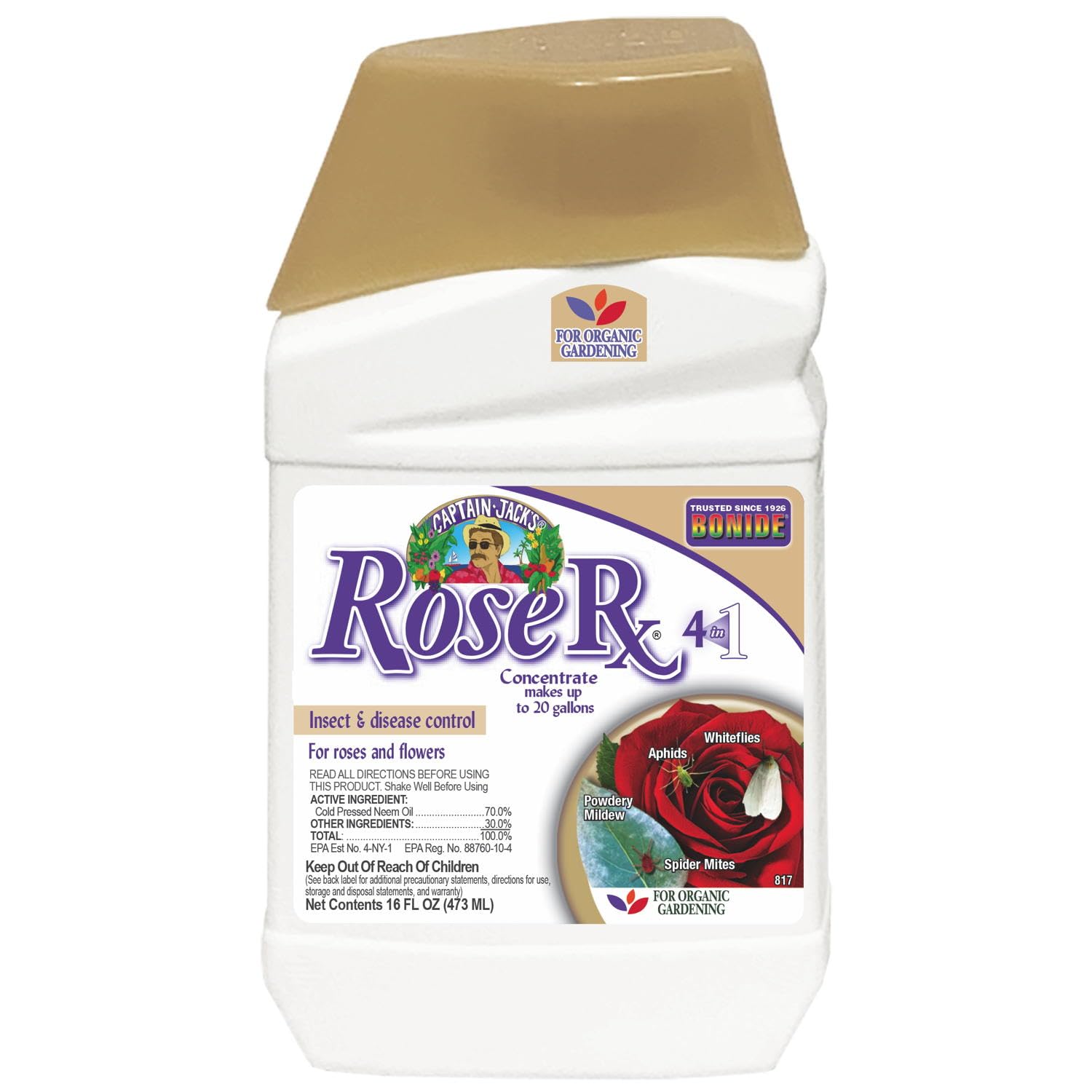
Bonide Captain Jack's Rose Rx 4-in-1 Insect & Disease Control, 16 oz Concentrate
| Item Form | Liquid Concentrate |
|---|---|
| Target Species | Insects |
| Liquid Volume | 16 |
| Active Ingredients | Cold Pressed Neem Oil |
Bonide Captain Jack's Rose Rx is a 16 oz concentrate based on cold-pressed neem oil formulated to protect roses from a wide range of pests and fungal diseases. You mix the concentrate with water and apply it as a foliar spray or soil drench; when used as directed a bottle can cover a substantial area because it makes up to 20 gallons of finished spray. The product is presented as a multi-purpose biological option that kills insects at egg, larval and adult stages and also helps prevent common fungal problems such as powdery mildew, black spot and blight. It is approved for organic gardening and can be applied up to the day of harvest for edible plants, which makes it practical for mixed ornamental and edible beds. Expect regular reapplications for prevention or control—label guidance suggests reapplying every 7 to 14 days depending on the issue—and limit use to recommended rates. Overall, Rose Rx is a straightforward, plant-based choice for growers who want an integrated pest and disease control product backed by clear label directions.
Best for: Buyers who prioritize a reliable, plant-based treatment to prevent and manage common rose pests and fungal diseases while maintaining organic-friendly practices.
Less Ideal for: Gardeners who need a fast-acting synthetic systemic chemical for severe, established infestations or who prefer one-time long-lasting treatments.
- Multi-action formula: acts as insecticide, fungicide, miticide and nematicide in one product
- Plant-based cold-pressed neem oil approved for organic gardening and safe to use up to harvest
- Concentrate mixes into up to 20 gallons of spray, extending coverage per bottle
- Controls pests at multiple life stages including eggs, larvae and adults
- Requires frequent reapplication for ongoing prevention or active infestations
- Effectiveness depends on thorough coverage and timing; heavy infestations may need complementary controls
Verdict: A dependable organic-friendly neem oil concentrate that combines insect and disease control for roses and mixed gardens.
Bonide Captain Jack's Liquid Copper Fungicide Ready-to-Use, 32 oz

| Unit Count | 32 Ounce |
|---|---|
| Item Form | Spray |
| Active Ingredients | copper |
Bonide Captain Jack’s Liquid Copper Fungicide is a trigger-spray, ready-to-use copper solution designed to prevent and treat common fungal diseases on fruits, vegetables, nuts, herbs and ornamentals. It is applied by shaking the bottle and thoroughly spraying tops and undersides of leaves, with repeat applications every 7 to 10 days or as needed. The product is labeled for organic gardening and can be used up to the day of harvest, making it practical for vegetable beds and fruit trees where residue concerns matter. Notable features include its broad-spectrum activity against powdery mildew, leaf spot, blight and peach leaf curl, and the convenience of a pre-mixed spray bottle that removes measuring or mixing. Limitations are inherent to copper products: it treats fungal problems but does not replace cultural controls like good airflow and sanitation, and overuse of copper can accumulate in soil so following label directions is important. As a ready-to-use option, it is best for gardeners who want a simple, approved solution for recurring fungal issues without handling concentrates.
Best for: Gardeners who prioritize proven, labeled products and want an easy-to-use organic-approved fungicide for edible beds and ornamentals based on real-world effectiveness and peer recommendations.
Less Ideal for: Gardeners seeking an all-in-one pest control product or those who prefer to avoid any copper-based treatments should look at non-copper alternatives or integrated disease-management approaches.
- Ready-to-use trigger spray requires no mixing or measuring
- Approved for organic gardening and can be applied up to day of harvest
- Effective against a broad range of common fungal diseases
- Convenient repeat-application interval (7–10 days) for ongoing control
- Contains copper which can build up in soil with excessive use
- Does not address non-fungal problems like insects or bacterial diseases
Verdict: A convenient, ready-to-use copper fungicide for gardeners who want an effective organic-approved spray to manage common fungal diseases.
Bonide Captain Jack's NeemMax Concentrated Cold Pressed Neem Oil, 16 oz

| Item Form | Concentrate |
|---|---|
| Target Species | Multi-Purpose |
| Liquid Volume | 16 fluid ounces |
| Active Ingredients | Cold Pressed Neem |
Bonide Captain Jack's NeemMax is a concentrated neem oil designed for gardeners who want a single, plant-based product to tackle insects, fungal diseases, mites, and nematodes. Supplied as a concentrate, it is mixed into water and applied as a foliar spray for pests and diseases or as a soil drench to reduce nematode pressure. The formula includes a built-in surfactant so it disperses evenly and does not require adding dish soap. In practice NeemMax treats eggs through adults, helps prevent powdery mildew and botrytis, and can be used across ornamentals, vegetables, herbs and houseplants. Practical benefits include organic-compatible active ingredient, multi-target control, and flexibility of spray or drench applications. Limitations are that it must be mixed correctly and applied according to label directions, repeat treatments are typically needed for heavy infestations, and it is less selective than some insecticidal soaps so care around beneficial insects is advisable.
Best for: Gardeners who prioritize a practical, all-purpose organic treatment and want one concentrated product to manage multiple pest and disease problems across ornamentals and edibles.
Less Ideal for: Those seeking a single-application, fast-acting synthetic pesticide or growers who need products that spare beneficial insects in integrated pest management programs.
- Concentrated cold-pressed neem provides broad-spectrum botanical control of insects, fungi, mites, and nematodes.
- Built-in surfactant improves dispersal so it mixes and sprays evenly without adding soap.
- Can be applied as spray or soil drench for above- and below-ground pest control.
- Suitable for use on a wide range of plants including vegetables, ornamentals, and houseplants.
- Requires correct mixing and regular reapplication for effective control in heavy infestations.
- Non-selective action can impact beneficial insects if applied indiscriminately.
Verdict: Buy this if you want a single concentrated, cold-pressed neem product that handles insects, fungi, mites, and nematodes for organic gardening.
Choosing the Right Organic Fungicide for Roses: Key Factors to Consider
Disease Coverage
Different fungal problems respond to different active ingredients. Some organic options work best on powdery mildew, while others are better for black spot or rust. Knowing which diseases are most common in your roses helps you prioritize treatments that target those pathogens.
If you have mixed disease pressure, choose a fungicide with a broader spectrum or plan a rotation of complementary actives to avoid leaving gaps in protection. Pay attention to whether the product is labeled specifically for roses, and whether it lists the pathogens you see in your garden.
Plant Safety and Phytotoxic Risk
Organic does not automatically mean nonburning. Some botanical extracts and oils can cause leaf scorch if applied in hot sun, at high concentrations, or to stressed plants. Check label cautions about temperature, humidity, and dilution rates before treating.
Test-spraying a small area and waiting 48 hours is a practical step to spot any sensitivity. Also consider timing applications around bloom to avoid damage to open flowers and to reduce exposure to pollinators.
Mode of Action and Residual Protection
Contact products coat plant surfaces and must reach the pathogen directly; they often require more frequent reapplication and thorough coverage. Systemic or translaminar agents move into tissue and can protect new growth for a longer window, but truly systemic options are limited in organic-approved lists.
Understand how long a product remains active after rain and how frequently the label recommends reapplication. Longer residual activity reduces labor and missed sprays but may be less available among strictly organic choices.
Application Practicality
Consider how easy the product is to measure, mix, and spray. Concentrates that need precise dilution demand appropriate measuring tools, while ready-to-use sprays save time but can be more expensive per treatment. Spray droplet size, nozzle compatibility, and tank-mix directions also affect how evenly you can cover canes and undersides of leaves.
For larger plantings, look for concentrates with spray-on compatibility and clear instructions for backpack or pump sprayers. For small patios or specimen roses, a hose-end or small ready-to-spray bottle may be more convenient.
Pollinator and Beneficial Organism Safety
Roses attract pollinators and beneficial insects that help control other pests. Choose products with lower toxicity to bees and predatory insects, and follow label timing to avoid spraying during peak pollinator activity. Many organic fungicides have short residual toxicity periods, but application timing still matters.
If you rely on beneficial mites or predatory insects for pest control, avoid broad-spectrum materials that can knock back those populations. Buffer flowering plants and remove open blooms where possible before spraying.
Environmental Persistence and Soil Impact
Some organic actives break down quickly, while others can persist on foliage or in soil. Consider where runoff might travel and whether a product could affect nearby water features or aquatic life. Biodegradable options reduce long-term accumulation but may require stricter application schedules.
If composting pruned materials from treated roses, check label guidance to ensure residues will not adversely affect compost microbes or later garden uses.
Common Rose Fungal Diseases and When to Treat
Recognizing the disease before spraying saves time and reduces unnecessary treatments. Powdery mildew shows as white, powdery growth on new shoots. Black spot appears as round black lesions on leaves followed by yellowing and drop. Rust produces orange pustules on the undersides of foliage.
Treat preventive or at the first sign of disease depending on the product. Some fungicides are best used as protectants applied on a schedule through the season. Others are effective as curatives if applied early in an outbreak.
- Preventive sprays are scheduled treatments to protect new growth.
- Curative sprays should be applied at early disease signs for best results.
- Cultural controls like pruning for airflow complement any chemical treatment.
Timing Applications to Protect Pollinators
Always plan sprays for times when pollinators are least active, such as early morning or late evening. Avoid applying during full bloom if possible, or mask open flowers before spraying. Many organic fungicides have short-lived residues, but exposure during bloom increases risk.
Read label intervals for reentry and pollinator protection to coordinate application with watering, mowing, or other garden activity that might disturb treated surfaces.
- Spray when temperatures are cooler to reduce phytotoxicity risk.
- Avoid spraying if rain is expected within a few hours unless the product is rainfast.
Cultural Practices That Reduce Fungicide Needs
Good cultural care reduces disease pressure and the number of sprays needed. Proper spacing and pruning improve airflow and speed leaf drying. Removing fallen, diseased leaves and disposing of heavily infected canes lowers local inoculum.
Watering at soil level instead of overhead reduces leaf wetness periods that favor fungal spread. Mulching can prevent soil-splash of spores, but keep mulch away from canes to avoid crown moisture issues.
- Space plants for airflow and prune crowded canes.
- Remove and destroy heavily infected leaves and shoots promptly.
- Water in the morning and avoid overhead irrigation when possible.
Tank Mixing and Integrating With Other Treatments
Some organic fungicides can be tank-mixed with insecticidal soaps or biologicals, but always follow label compatibility instructions and perform a jar test for physical mixing. Avoid mixing products with conflicting pH or surfactants that cause phytotoxicity.
When using multiple products in rotation, vary modes of action to reduce the chance of pathogen resistance. Keep a simple spray log so you know what was applied and when, which helps manage reapplication windows and avoid accidental mixtures.
- Do a small compatibility test before mixing full spray volumes.
- Space products in a rotation by active-ingredient class when possible.
How Weather and Microclimate Change Efficacy
High humidity and prolonged leaf wetness increase fungal activity and can reduce the effective interval between sprays. In humid microclimates you may need shorter application intervals or a stronger emphasis on cultural controls.
Sun exposure affects phytotoxic risk for sensitive botanicals. Hot, sunny periods increase the chance of leaf burn with oil-based or concentrated botanical sprays, so adjust timing accordingly.
- Shorten spray intervals in wet seasons and extend them in dry periods.
- Avoid applying oils or high-concentration sprays during heat waves.
How We Chose the Best Organic Fungicide for Roses
We focused on attributes that matter in real rose care, not marketing. Selection began by filtering for organically acceptable active ingredients and formulations labeled for use on roses. We excluded products that lack clear application rates for roses, have restricted-use statuses, or require equipment beyond typical home-gardener capabilities. The core evaluation criteria were disease control spectrum, phytotoxicity and plant safety, application ease and frequency, contact versus systemic activity, and compatibility with integrated pest management practices. We also considered residual activity and rainfastness because frequent reapplications affect labor and spray timing. For ecological impact we checked label guidance on pollinator exposure and off-target effects. Products that only claimed general disease suppression without specific fungal targets or that required commercial licensing were excluded. The remaining candidates were compared across the criteria above to create a practical short list suited to diverse rose gardens.
FAQ
How often should I spray roses with an organic fungicide?
Frequency depends on the product and disease pressure. Many contact organic options require weekly to biweekly applications during active disease periods. Products with longer residual activity may stretch intervals, while humid conditions often necessitate more frequent sprays.
Can I use organic fungicides while roses are in bloom?
You can but take precautions. Avoid spraying during peak pollinator activity and try to shield open flowers. Some labels advise against treating open blossoms, so check the product instructions and time applications for early morning or late evening.
Will organic fungicides prevent all rose diseases?
No single product prevents every fungal issue. Some actives work better on powdery mildew, others on black spot or rust. Combining good cultural practices with targeted treatments and rotating modes of action gives the best overall control.
Are organic fungicides safe for beneficial insects and soil life?
Many organic fungicides have lower toxicity to beneficials than synthetic broad-spectrum fungicides, but risk varies by active ingredient and timing. Applying when pollinators are inactive and avoiding sprays on open flowers reduces exposure to beneficial insects.
What should I do with heavily infected leaves and canes?
Remove and destroy heavily infected material rather than composting it in place. Cleaning up fallen leaves and pruning out diseased canes reduces the local source of spores and helps fungicide programs be more effective.
Can I rotate organic fungicides to prevent resistance?
Yes. Rotate products with different modes of action and avoid repeated use of the same active ingredient. Where labeled, alternate contact and translaminar or systemic options to reduce selection pressure on fungal populations.
Final Verdict
Choose an organic fungicide based on the specific fungi you face, the safety profile for roses and beneficials, and how the product fits your application routine. Expect tradeoffs between contact sprays that require frequent reapplication and longer-acting options that may be limited among organic choices. Prioritize good cultural practices to lower disease pressure and use fungicides as one part of an integrated plan. With attention to timing, plant sensitivity, and pollinator safety, you can keep roses blooming with minimal disruption to the rest of the garden.
