

Note: This article contains affiliate links. If you click on these links and make a purchase, I may earn a small commission at no extra cost to you. This helps support my research and content. Read my full affiliate disclosure here.
A neat edge makes a lawn look finished and keeps turf from invading flower beds. Mowable garden edging is designed so you can run your mower right over the boundary without damaging the blade or tearing up the bed. Choosing the right edging affects how clean your cuts look, how often you have to repair or replace the strip, and whether you can use a standard rotary mower or need special equipment. This guide covers five shortlisted, top-rated mowable garden edgings that suit common yard sizes and planting styles. We evaluate durability, mower tolerance, installation effort, and maintenance to help you pick the edging that will hold up under regular mowing and seasonal wear. Read on for the factors we weighed and practical advice for installing and caring for a mowable edge.
Top Picks at a Glance
| Best Overall The best all-around choice for most situations | shsyue 33 ft Extra-Tall 4 in Flexible Garden Edging Kit with Stakes |  |
| Best Quality Built to a higher standard if you want something more solid | STIRLINGEAR 33 ft Powder-Coated Galvanized Steel Landscape Edging (10-Pack) |  |
| Best Value The sweet spot between price and what you get | Gardzen 40-Foot x 3-Inch Flexible Plastic Landscape Edging with 40 Spikes |  |
| Best Budget The cheapest option that still gets the job done reliably | BLLREMIPSUR 2" x 16' Flexible Plastic Lawn Edging with 15 Securing Pegs |  |
| Highest Rated A top-rated pick with lots of positive feedback | AUDEMAR Metal Modular Lawn Edging, 30-Pack (9 ft total) |  |
shsyue 33 ft Extra-Tall 4 in Flexible Garden Edging Kit with Stakes
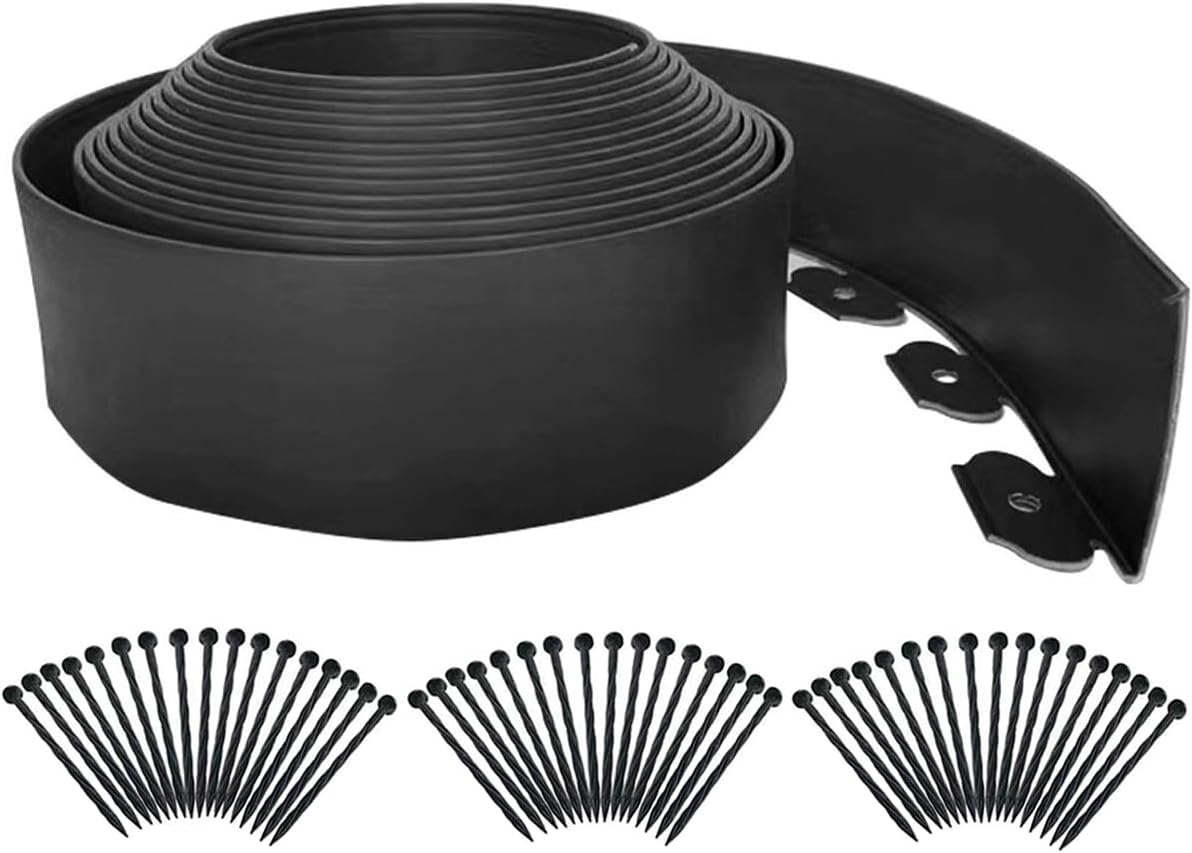
| Material Type | High Density Polyethylene (HDPE) |
|---|---|
| Length | 33 ft |
| Height | 4 in |
| Includes | Spiral stakes |
This shsyue garden edging kit is a simple, no-dig solution for defining lawn and planting beds where a mowable edge is desired. The kit uses flexible high-density polyethylene strips that can be bent to follow curves or terraces, then secured with included spiral-style stakes driven into the soil. It is typically used to create a tidy separation between lawn and mulch or flowerbeds, keep mulch contained, and make mowing along the border easier. The 4-inch height is tall enough to hold materials while still allowing a mower or trimmer to pass close by, and the polyethylene material resists rot and most weathering. Installation is straightforward for one person and can be trimmed to length with a utility knife. Important limitations are that the plastic is flexible rather than rigid, so very heavy soil loads or repeated impacts from string trimmers can cause movement over time, and very rocky ground may make stake installation difficult. For routine lawn edges and decorative beds this is an affordable, low-maintenance option.
Best for: Gardeners who want a low-effort, tidy mowable edge for lawns and flowerbeds and value quick installation and flexibility over a permanent metal border.
Less Ideal for: Homeowners seeking a heavy-duty, permanent edging solution for high-traffic areas or properties with very rocky ground should consider rigid metal or concrete alternatives.
- Flexible HDPE strips bend to follow curves and slopes for custom layouts
- 4 inch height contains mulch and creates a mowable edge for trimmers and mowers
- Includes spiral nylon stakes that resist rust and are reusable
- No-dig installation makes setup quick for a single person
- Can be cut to exact lengths for small or irregular beds
- Not as rigid as metal edging so can shift under heavy impact or concentrated soil pressure
- Spiral stakes may be hard to install in very rocky or compacted soils
Verdict: A flexible, easy-to-install plastic edging that creates a neat, mowable border for typical lawns and beds.
STIRLINGEAR 33 ft Powder-Coated Galvanized Steel Landscape Edging (10-Pack)

| Total length | 33 ft (10-pack) |
|---|---|
| Material Type | Powder-Coated Galvanized Steel |
| Stake count | 11 stakes included |
| Finish | Black powder coat |
This 10-pack landscape edging kit provides a durable, low-profile solution for defining flower beds, paths, and lawn borders. Each 40-inch panel is made from powder-coated galvanized steel and installs with hammer-in stakes, so you can create a neat edge quickly without excavating long trenches. The kit includes 11 stakes for anchoring and a black finish that blends into planting beds. In practice the metal is stiff enough to hold a clean line against turf and light soil movement yet flexible enough to be cut and eased around gentle curves. The powder coating and galvanization help resist rust in typical garden conditions, making this a good long-term option for a risk-averse gardener who wants minimal maintenance. Keep in mind the panels are low profile, so they do not provide a tall barrier against creeping roots or heavy mulch; very thick turf or aggressive runners may still cross the line. Installation requires a hammer and occasional trimming at corners, but no special tools are needed.
Best for: Home gardeners who want a low-maintenance, long-lasting edging solution that installs quickly and keeps flower beds tidy with minimal ongoing fuss.
Less Ideal for: Gardeners needing a high barrier against invasive roots or a tall edging for steep grade changes should consider taller or buried edging systems instead.
- Durable galvanized steel with powder coating for rust resistance
- Hammer-in stake design enables fast installation without deep digging
- Low-profile panels create a neat, professional-looking border
- Flexible enough to cut and shape around gentle curves
- Includes stakes so kit is ready to anchor after layout
- Low profile does not block aggressive runners or heavy mulch movement
- May require trimming and shaping for tight corners or complex curves
Verdict: A fuss-free, rust-resistant steel edging kit that gives risk-averse gardeners a quick, durable way to create clean flower-bed borders.
Gardzen 40-Foot x 3-Inch Flexible Plastic Landscape Edging with 40 Spikes

| Length | 40-Foot |
|---|---|
| Height | 3-Inch |
| Material Type | Plastic |
| Number of Spikes | 40 |
This Gardzen landscape edging kit provides a simple, low-profile boundary for flower beds, pathways, and lawns. The 3-inch tall flexible strips are designed to stake into the soil without trenching, so you can create curves or straight runs quickly using the included 40 spikes. The weather-resistant plastic holds mulch and pebbles in place and is low maintenance compared with metal or concrete edging. It is easy to cut to length with basic tools and sits low enough that most rotary mowers can pass over it, making regular lawn care straightforward. Limitations are that the plastic is not as rigid as metal for heavy-duty containment and very soft soil may require extra spikes for a secure hold; sharp impacts or repeated mower strikes can eventually loosen sections. For routine garden borders and mower-friendly edges where quick installation and low upkeep matter, this kit is a practical choice.
Best for: Gardeners who want a quick, low-effort way to create clean, mowable borders and prioritize easy installation and low maintenance.
Less Ideal for: People needing very heavy-duty or permanent edging for steep grade control or high-impact areas should consider metal or concrete alternatives.
- No-dig installation with included spikes speeds installation and avoids trenching
- Flexible material allows smooth curves around beds and pathways
- Low-profile 3-inch height keeps edging mower-accessible for routine lawn maintenance
- Weather-resistant plastic resists rot and requires minimal upkeep
- Less rigid than metal edging so it can flex under heavy soil pressure or strong impacts
- May need extra anchors in very soft or sandy soils to stay firmly in place
Verdict: A fast, no-dig solution for creating mowable, low-maintenance garden borders.
BLLREMIPSUR 2" x 16' Flexible Plastic Lawn Edging with 15 Securing Pegs

| Material Type | Polyethylene (PE) |
|---|---|
| Length | 5 m (16.4 feet) |
| Number of Spikes | 15 |
This flexible lawn edging is a budget-friendly way to create tidy borders around flower beds, lawns, and trees. The 16.4 foot polyethylene strip can be bent to follow curves or cut to length, and the included 15 plastic spikes hold the edging in place with simple push-in installation. Because it is lightweight plastic it is easy for one person to position and adjust, making it useful for weekend projects and seasonal bed shaping. The material is described as weather resistant, so it will resist basic exposure to rain and sun, but it is not a heavy-duty metal edging and may shift over time in very soft soil or under heavy lawn equipment. Installation requires no special tools beyond a mallet for the spikes, and the flexible profile allows clean curbs for lawn-to-bed transitions. If you want a low-cost, temporary, or adjustable edging solution that improves garden appearance without pro installation, this product fits that need well.
Best for: Gardeners looking for an inexpensive, easy-to-install edging solution to neaten beds and define borders without professional help or heavy tools.
Less Ideal for: Those wanting a permanent, heavy-duty edging solution for high-traffic lawns or commercial landscapes should consider metal or concrete alternatives.
- Flexible strip bends to follow curved, round, or straight borders for versatile layouts
- Includes 15 securing pegs for tool-free anchoring into typical garden soil
- Can be cut to exact length for custom beds and quick installation by one person
- Made from polyethylene described as weather resistant for basic outdoor durability
- Lightweight plastic construction is less durable than metal edging and can shift in very soft soil
Verdict: A low-cost, flexible edging strip that makes fast, tool-light borders for home gardens and curved beds.
AUDEMAR Metal Modular Lawn Edging, 30-Pack (9 ft total)

| Number of Packs | 30 |
|---|---|
| Number of Items | 30 |
| Unit Count | 30 Count |
| Material Type | Alloy Steel |
This AUDEMAR modular metal edging is a steel panel system sold as 30 pieces that link together to form about 9 meters of continuous border. It is designed for DIY installation with simple stake attachments so you can lay out straight or curved lines without digging. The alloy steel construction and anti-UV finish make it more durable than plastic or wood edging and resistant to common impacts from trimmers and light mower contact. Because the panels lock together, the line stays stable and looks intentional around flower beds, paths, and patio edges. Installation is straightforward with a hammer and the included stakes, and individual panels are easy to remove or reconfigure if you change the layout later. Limitations are that the panels are a shallow height, so they work best as visual borders rather than containing heavy mulch or preventing root intrusion, and metal will show scratches or surface wear over time in high-traffic areas.
Best for: Gardeners who prioritize a long-lasting, low-maintenance border that stays stable once installed and who want a product they can fit and reconfigure themselves without professional help.
Less Ideal for: People needing deep containment for heavy mulch, high soil retention, or a completely maintenance-free invisible barrier should consider taller or different materials.
- Alloy steel construction and anti-UV finish for long-term durability compared with plastic edging
- Modular interlocking panels allow flexible straight or curved layouts
- Includes stakes for tool-only installation without digging
- Low-maintenance surface resists rot and basic mower or trimmer contact
- Shallow panel height limits its usefulness for holding deep mulch or heavy soil containment
- Metal surface can scratch or show wear in very high-traffic or abrasive conditions
Verdict: Choose this modular steel edging when you want a dependable, reconfigurable border that outlasts plastic and gives a neat professional look to beds and paths.
Choosing the Right Mowable Garden Edging: Key Factors to Consider
Material and Corrosion Resistance
The material determines how the edging stands up to mower strikes, foot traffic, and weather. Metal edging can be very thin and sharp but may corrode over time unless treated or made of stainless materials. Plastic and composite options resist rust and can flex under impact, but cheaper plastics can crack from freeze-thaw cycles or UV exposure.
Consider whether the product has a protective coating or is manufactured from UV-stabilized polymers. In wetter climates, corrosion resistance is especially important because repeated wet-dry cycles accelerate deterioration. Choosing a material that matches your climate and mower habits reduces repair frequency and keeps the lawnline tidy.
Height and Profile Compatibility
Edge height and bevel profile determine whether blades will grind against the edging or glide over it. Low-profile edges let the mower deck pass with minimal lift, while taller or blunt profiles can snag blades or tear turf. Some edges are designed to be buried so only a slim lip remains above soil, which is ideal for frequent mowing.
Measure your mower deck clearance before choosing an edging profile. A slight taper or rounded top is preferable for mower tolerance because it reduces direct blade impact. Matching the edge profile to your mower and grass height prevents uneven cuts and reduces stress on both the edging and the machine.
Installation Method and Required Tools
Installation affects how long the edge will stay put and how disruptive the process is to existing beds. Some edgings stake into place with simple spikes, making them fast to set but potentially less secure in loose soils. Other systems require trenching and anchoring, which take more time but yield a firmer, longer-lasting edge.
Think about soil type, slope, and whether you want to retain a natural soil barrier beneath the edge. Tools required can range from a mallet and screwdriver to a trenching spade or socket wrench. Choose a method you can complete with available tools and time, or that you are willing to hire out if necessary.
Soil and Climate Stability
Soil movement from freeze-thaw cycles, heavy clay shrinkage, or root growth can push edging out of alignment. In colder regions, frost heave can lift poorly anchored edging, while sandy or loose soils may allow gradual leaning. Some edging systems include wider anchors or buried footings to resist these forces.
Assess your site's soil behavior across seasons. If you experience significant heaving or erosion, select edging designed with long anchors or the ability to be backfilled and compacted. Proper site prep-grading and compacting the trench or anchoring zone-reduces the chance of future readjustment.
Compatibility With Lawn Care Routines
Edging should work with the way you maintain the lawn. If you use a heavy rotary mower, the edging needs a shape and strength that tolerates blade and wheel contact. If you routinely use a string trimmer at the bed edge, consider whether the edging will be dented or shredded by repeated string strikes. Some systems intentionally create a clean mowing pass and reduce the need for frequent trimming.
Consider how often you mow, whether you use mechanical edging tools, and how much time you spend on seasonal bed maintenance. Choosing edging that complements your routine can save labor and prevent premature damage.
Aesthetics and Planting Interaction
While functionality is primary for mowable edging, appearance matters for visible borders. Smooth, low lips create subtle lines for ornamental beds, while visible caps or decorative tops can complement formal designs. Also evaluate how the edging interacts with nearby plants: shallow-rooted species may be affected by trenching, and some edging can block runners or root spread.
If you have mixed perennial beds or groundcovers, account for how the edge will influence plant growth patterns. In many cases a minimal-profile edge preserves planting flow while maintaining a neat lawnline.
Preparing the Bed Before Installing Mowable Edging
Start by mowing the lawn and clearing any debris from the proposed border. Mark the line with a garden hose or string so you get a smooth curve or straight run as desired. Removing turf along the line to create a shallow trench helps seats the edging flush with the surface and reduces gaps where grass can creep beneath.
If the soil is compacted or uneven, loosen and level the trench bottom so the edging sits true. For slopes, step the bed or place anchors on the downhill side to resist sliding. Proper preparation is the most important step to avoid recurrent maintenance.
- Mark the line with hose or string for consistent layout
- Mow and clear debris before any digging
- Dig a uniform trench depth so the top of the edge sits at the intended height
- Compact the trench base where possible to reduce future settling
Tools and Fasteners You Will Need
Common installations use a small set of hand tools: a trenching spade, mallet, level, and heavy-duty gloves. Metal edging often requires a rubber mallet to seat spikes or anchors without deforming the top edge. Composite or plastic edges may include interlocking sections that snap together and need only a flat bar and mallet to align.
For long runs consider a tamper or mechanical compactor to firm the backfill. When working with anchored systems, a pry bar and level help align sections prior to final tightening.
- Trenching spade or half-moon edger
- Rubber mallet and carpenter's level
- Anchors or spikes supplied with the edging
- Work gloves and eye protection
Common Installation Mistakes and How to Avoid Them
Setting the edging too high is a frequent error that leads to frequent blade strikes and turf tearing. Aim for the smallest possible exposed lip consistent with your mower clearance. Conversely, burying the edge too deep defeats the purpose of a clean mower pass and can trap water against bed plants.
Another mistake is failing to properly secure the ends and joints. Loose joints let sections separate after freeze-thaw cycles or under mower impacts. Make sure anchors are driven to their full depth and overlaps are tight. Finally, neglecting to compact backfill will allow soil to settle and create gaps where grass can wedge in.
- Avoid excessive above-ground height to reduce mower contact
- Anchor all joints and end pieces securely
- Compact backfill to minimize settling
- Check alignment after the first few mows and adjust if needed
Seasonal Care and Maintenance Tips
Inspect edging in spring for any heave or separation that may have occurred during winter. Re-seat any sections that have shifted and tighten anchors if possible. For metal edges, treat any exposed rust early with a wire brush and repaint or apply a rust-inhibiting coating to extend life.
Adjust mowing height and technique during wet periods to avoid lifting sod against the edge, and trim any encroaching roots or runners that push over the border. Periodic checks after heavy storms or freeze-thaw cycles prevent small issues from becoming large repairs.
- Check anchors and joints each spring
- Scrub and treat rust spots on metal edging
- Trim plant runners to prevent undermining the edge
- Re-compact soil after heavy rain or freeze-thaw events
Designing Curves and Corners for a Natural Look
Soft curves look most natural, but sharp corners can be necessary in smaller beds. For gradual curves, use short edging sections and overlap slightly so the edge follows the arc. For corners, plan a firm anchor system and consider installing a hidden post at the angle to keep the adjoining sections aligned.
Test-fit sections before final anchoring so you can adjust spacing and angle. A well-laid curve reduces mowing hassles and gives a professional finished appearance to beds.
- Use shorter sections for tighter radii
- Pre-fit before anchoring to ensure smooth transitions
- Install hidden posts at acute corners for added strength
How We Chose the Best Mowable Garden Edging
We focused on attributes that determine how well an edging performs when the lawn mower is regularly passed over it. Primary evaluation criteria included material durability against blades and weather, edge profile and height compatibility with common mower decks, ease and speed of installation, resistance to shifting and heaving through freeze-thaw cycles, and maintenance needs like rust prevention or resealing. We also looked at how easily the edging allows clean mulching and trimming along the bed and whether it interferes with irrigation or plant roots. Products were excluded if they required proprietary tools to install, were intended only for decorative, non-mowable use, or lacked clear specifications about height and gauge. We prioritized options with clear real-world installation notes and materials that tolerate repeated mower strikes. The listed picks reflect practical tradeoffs gardeners face: a balance of longevity, minimal ongoing work, and mower-friendly profiles that let you keep a crisp lawnline season after season.
FAQ
Can I run my mower directly over mowable edging without damaging the blade?
Often yes, if the edging is low-profile and rated for mower contact. Edging with a rounded or tapered top reduces direct blade strikes. Always confirm the edge height relative to your mower deck and inspect after the first few passes.
How deep should mowable edging be buried?
Typically the trench depth should leave only a slim lip above soil level, often an inch or two, depending on the edging profile. The buried portion should be deep enough to hold anchors and resist shifting but not so deep that it impedes plant roots.
Will mowable edging stop grass runners from invading beds?
It helps reduce invasion when installed with a buried lip and compacted backfill, but persistent runners may still find gaps. Regular trimming and occasional re-seating of the edging will improve its effectiveness against aggressive groundcovers.
Is metal edging better than plastic for longevity?
It depends on conditions. Metal can be very durable against physical wear but may corrode in wet climates unless protected. High-quality composite or reinforced plastic resists rust and UV but can be more prone to crack in cold climates. Consider your local weather and maintenance willingness.
How do I repair edging that has shifted after winter?
Remove the affected section, re-compact the trench base, and re-seat the edging, driving anchors fully to design depth. Backfill and compact around the edge to reduce future movement, and inspect nearby sections for similar issues.
Final Verdict
Choose mowable edging that matches your mower clearance, soil conditions, and maintenance habits. Prioritize a profile that minimizes blade impact and a material suited to your climate to reduce repair and replacement needs. Strong anchors and proper trench prep prevent most problems with shifting or heaving. Balance aesthetics with practical durability: a low, unobtrusive lip often gives the best mowing performance while a sturdier anchored system pays off for long runs and unstable soils. With the right edging and simple seasonal checks, you can keep a crisp lawnline with minimal ongoing work.
