

Note: This article contains affiliate links. If you click on these links and make a purchase, I may earn a small commission at no extra cost to you. This helps support my research and content. Read my full affiliate disclosure here.
Choosing the right steel garden edging matters because it sets the boundary between beds, lawn, and hardscape while shaping how water and mulch behave in your landscape. The right edging keeps grass from creeping into beds, creates crisp lines for mowing, and stands up to seasonal soil movement and moisture. This guide covers seven shortlisted steel garden edging options suited to a range of site conditions and installation skills. We evaluate each pick on factors gardeners care about, including corrosion resistance, installation method, and the ability to hold a clean profile over time. Read on to understand the practical tradeoffs so you can pick edging that fits your yard and maintenance preferences.
Top Picks at a Glance
| Best Overall The best all-around choice for most situations | STIRLINGEAR 33 ft Cor-Ten Steel Landscape Edging (10-Pack) with Stakes |  |
| Best Quality Built to a higher standard if you want something more solid | Edge Right COR‑TEN Steel Hammer‑In Landscape Edging, 48-inch Strips (5-Pack) |  |
| Best Value The sweet spot between price and what you get | LAVEVE Corrugated Galvanized Steel Garden Edging, 6" x 40 ft |  |
| Best Budget The cheapest option that still gets the job done reliably | MTART Corrugated Metal Garden Edging, 6"×40ft (Black) |  |
| Highest Rated A top-rated pick with lots of positive feedback | AUDEMAR Metal Modular Lawn Edging, 30-Pack (9 ft total) |  |
| Most Popular A crowd favorite that many people choose with confidence | STIRLINGEAR 33 ft Powder-Coated Galvanized Steel Landscape Edging (10-Pack) |  |
| Best Seller A high-volume bestseller chosen again and again | STIRLINGEAR 6-Pack 40" Cor-Ten Steel Landscape Edging (6" H) |  |
STIRLINGEAR 33 ft Cor-Ten Steel Landscape Edging (10-Pack) with Stakes

| Material | Corten weathering steel |
|---|---|
| Total length | 33 ft (10-pack) |
| Strip length | 40 in per strip |
| Visible height | 2 in visible above ground |
| Included stakes | 11 heavy-duty stakes |
This Cor-Ten steel edging kit provides a durable, low-profile solution for defining garden beds, walkways, and lawn borders. Each pack includes ten 40-inch metal edging strips and 11 hammer-in stakes that sink into the soil for secure anchoring, with about 2 inches visible above ground to create a clean border line. The Cor-Ten weathering steel forms a rust patina over time, so you get a natural finish that requires no painting and blends with most landscape styles. The strips are bendable for gentle curves and can be trimmed to fit custom layouts, making installation straightforward for typical yard projects. Because the system uses individual strips and stakes, it is easy to install without heavy equipment but does require repetitive placement of stakes for long runs. The product is well suited to homeowners seeking a long-lasting, attractive edge, though very hard ground or repeated heavy impacts may need extra anchoring or professional installation.
Best for: Homeowners who want a durable, low-maintenance metal edging that looks natural and can be shaped to both straight and gently curved garden layouts.
Less Ideal for: People needing a temporary or moveable edging solution or those who prefer a taller, more decorative aboveground border.
- Cor-Ten weathering steel forms a protective rust patina so no painting or coating is required
- Included heavy-duty stakes provide stable anchoring for seasonal changes
- Bendable strips can be trimmed for curves or custom layouts
- Low visible profile gives a clean, professional edge above the soil
- Installation requires repetitive staking and manual trimming for long runs
- May need extra anchoring or tools in very compacted or rocky soil
Verdict: Choose this Cor-Ten steel edging if you want a long-lasting, low-maintenance metal border that weathers to a natural rust finish and can be shaped to most yard layouts.
Edge Right COR‑TEN Steel Hammer‑In Landscape Edging, 48-inch Strips (5-Pack)

| Material Type | COR-TEN Steel |
|---|---|
| Number of Items | 5 |
| Unit Count | 5 Count |
| Product Style | Heavy Duty |
This Edge Right COR‑TEN steel hammer‑in edging is built for long service and professional-looking borders. Each pack includes five 48‑inch strips with angled teeth along the bottom so you set the edge in place by tapping it with a hammer or mallet; optional clamps secure adjoining pieces. The COR‑TEN material is stiff enough to resist repeated contact from trimmers and foot traffic yet thin enough to bend into curves if you need to shape beds. Over time the steel forms a rust patina that blends into natural landscapes and eliminates the need for paint or coatings. Installation is fast for experienced DIYers and landscapers but does require tapping into soil and occasional use of an edger or shovel to loosen compacted ground. Because it is bare weathering steel it will develop surface rust by design and can have sharp edges during handling, so gloves and caution are recommended. For anyone who wants a permanent, low‑profile barrier that holds mulch and stops grass encroachment, this is a workhorse solution.
Best for: Buyers who prioritize long‑term, high‑performance edging for frequent garden use and want a permanent, low‑maintenance barrier that withstands landscaper tools and traffic.
Less Ideal for: Those who need a temporary or easily removable edging solution or who prefer non‑rusting finishes for a clean, unweathered look.
- Durable COR‑TEN steel construction designed to last and develop a protective patina.
- Hammer‑in teeth make installation fast without specialized tools.
- Stiff enough to withstand weed trimmer hits and foot traffic.
- Flexible enough to form gentle curves for custom layouts.
- Low visual profile that contains mulch and prevents grass encroachment.
- Forms a rust patina by design which may transfer to hands or nearby surfaces during installation.
- Requires physical hammering into soil which can be difficult in very compacted ground.
Verdict: Choose this Edge Right COR‑TEN edging when you want permanent, professional‑grade borders that tolerate heavy use and improve in appearance with age.
LAVEVE Corrugated Galvanized Steel Garden Edging, 6" x 40 ft

| Material Type | Metal |
|---|---|
| Item Highlight | Galvanized Steel Garden Border |
| Color | Black |
| Number of Packs | 1 |
This LAVEVE corrugated metal garden edging is a heavy-duty border solution intended to make clean, durable edges around beds and paths. The galvanized steel construction with a weather-resistant finish and 3D corrugated profile increases rigidity while still allowing the strip to be bent to follow curves. Installation is typical: dig a shallow trench, set the edging, then backfill and compact; the U-shaped rolled hems protect hands and pets and a rubber hammer is recommended to avoid distortion. In practice the product performs as a long-lasting barrier against soil creep and grass intrusion and gives a neat, low-profile look to most landscapes. It is available in multiple heights and lengths and can be cut to fit irregular runs, but heavier gauge metal may require two people to shape on tight curves and a saw for cutting. While sturdy, the finish may eventually show surface wear in very abrasive soils, so sites with continuous wet contact should be monitored for long-term appearance changes.
Best for: Buyers who want a durable, long-lasting edging solution that creates tidy, low-profile borders and who prioritize structural strength and longevity over easy one-person shaping.
Less Ideal for: If you need a very lightweight, temporary, or decorative-only edging or plan very frequent reconfiguration, a more flexible or modular plastic option is a better fit.
- Galvanized steel construction for greater strength and weather resistance
- Corrugated roll-formed profile adds stiffness and impact resistance
- U-shaped rolled hems provide smoother, safer edges for family and pets
- Flexible enough to bend into curves and can be cut to fit custom layouts
- Thicker metal can be harder to bend on tight curves and may need two people to install
- May show surface wear over many seasons in persistently wet or abrasive soils
Verdict: Choose this LAVEVE galvanized corrugated edging when you need a sturdy, weather-resistant metal border that holds shape and keeps soil and grass neatly contained.
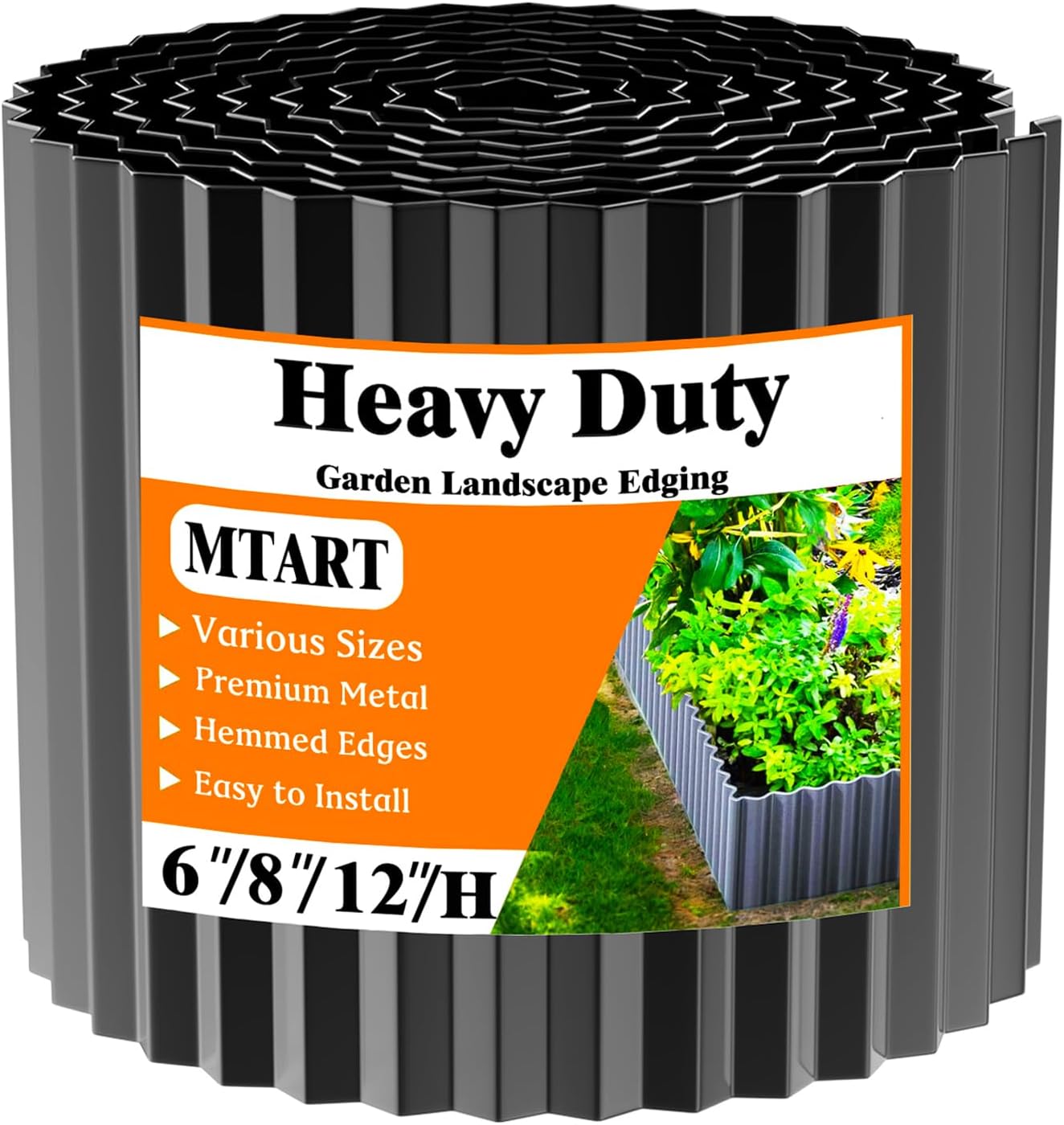
MTART Corrugated Metal Garden Edging, 6"×40ft (Black)
| Material Type | Metal |
|---|---|
| Product Style | 6"×40Ft |
| Color | Black |
| Number of Packs | 1 |
This MTART corrugated metal garden edging is a long continuous strip meant to form a clean, low-profile border around beds and paths. Made from galvanized metal with a corrugated profile, it resists weather and provides a firm edge that helps keep mulch and soil contained while preventing grass encroachment. The hemmed edges improve safety during handling and installation, and the material is flexible enough to bend into gentle curves for simple landscape shapes. Typical use is staking or fastening the edging along a trench to create a neat separation between turf and planting areas. Practical benefits include durable rust resistance, a contemporary corrugated look that complements modern yards, and a long 40-foot length that covers substantial runs without many seams. Important limitations are its low 6-inch height, which is not suitable for steep berms or very deep root barriers, and the need for gloves and basic tools to cut and shape the metal cleanly. Very intricate tight-radius curves may be harder to achieve than with softer materials.
Best for: Practical homeowners and DIY gardeners who want a durable, modern-looking steel edge that covers long runs on a budget and is easy to install for standard beds and pathways.
Less Ideal for: Landscapers needing tall or heavy-duty root barrier edging or users who need tight-radius, highly decorative edging solutions.
- Galvanized metal construction for strong weather and rust resistance
- Corrugated profile offers added stiffness and a modern aesthetic
- Hemmed edges reduce sharpness and improve handling safety
- Long 40-foot length minimizes joints for continuous runs
- Only 6 inches tall so it will not contain very deep soil or large roots
- Requires cutting and fastening tools and protective gloves to install properly
Verdict: Choose this corrugated galvanized metal edging when you want a durable, long 40-foot steel border that gives a modern look and strong weather resistance at an affordable price.
AUDEMAR Metal Modular Lawn Edging, 30-Pack (9 ft total)

| Number of Packs | 30 |
|---|---|
| Number of Items | 30 |
| Unit Count | 30 Count |
| Material Type | Alloy Steel |
This AUDEMAR modular metal edging is a steel panel system sold as 30 pieces that link together to form about 9 meters of continuous border. It is designed for DIY installation with simple stake attachments so you can lay out straight or curved lines without digging. The alloy steel construction and anti-UV finish make it more durable than plastic or wood edging and resistant to common impacts from trimmers and light mower contact. Because the panels lock together, the line stays stable and looks intentional around flower beds, paths, and patio edges. Installation is straightforward with a hammer and the included stakes, and individual panels are easy to remove or reconfigure if you change the layout later. Limitations are that the panels are a shallow height, so they work best as visual borders rather than containing heavy mulch or preventing root intrusion, and metal will show scratches or surface wear over time in high-traffic areas.
Best for: Gardeners who prioritize a long-lasting, low-maintenance border that stays stable once installed and who want a product they can fit and reconfigure themselves without professional help.
Less Ideal for: People needing deep containment for heavy mulch, high soil retention, or a completely maintenance-free invisible barrier should consider taller or different materials.
- Alloy steel construction and anti-UV finish for long-term durability compared with plastic edging
- Modular interlocking panels allow flexible straight or curved layouts
- Includes stakes for tool-only installation without digging
- Low-maintenance surface resists rot and basic mower or trimmer contact
- Shallow panel height limits its usefulness for holding deep mulch or heavy soil containment
- Metal surface can scratch or show wear in very high-traffic or abrasive conditions
Verdict: Choose this modular steel edging when you want a dependable, reconfigurable border that outlasts plastic and gives a neat professional look to beds and paths.
STIRLINGEAR 33 ft Powder-Coated Galvanized Steel Landscape Edging (10-Pack)

| Total length | 33 ft (10-pack) |
|---|---|
| Material Type | Powder-Coated Galvanized Steel |
| Stake count | 11 stakes included |
| Finish | Black powder coat |
This 10-pack landscape edging kit provides a durable, low-profile solution for defining flower beds, paths, and lawn borders. Each 40-inch panel is made from powder-coated galvanized steel and installs with hammer-in stakes, so you can create a neat edge quickly without excavating long trenches. The kit includes 11 stakes for anchoring and a black finish that blends into planting beds. In practice the metal is stiff enough to hold a clean line against turf and light soil movement yet flexible enough to be cut and eased around gentle curves. The powder coating and galvanization help resist rust in typical garden conditions, making this a good long-term option for a risk-averse gardener who wants minimal maintenance. Keep in mind the panels are low profile, so they do not provide a tall barrier against creeping roots or heavy mulch; very thick turf or aggressive runners may still cross the line. Installation requires a hammer and occasional trimming at corners, but no special tools are needed.
Best for: Home gardeners who want a low-maintenance, long-lasting edging solution that installs quickly and keeps flower beds tidy with minimal ongoing fuss.
Less Ideal for: Gardeners needing a high barrier against invasive roots or a tall edging for steep grade changes should consider taller or buried edging systems instead.
- Durable galvanized steel with powder coating for rust resistance
- Hammer-in stake design enables fast installation without deep digging
- Low-profile panels create a neat, professional-looking border
- Flexible enough to cut and shape around gentle curves
- Includes stakes so kit is ready to anchor after layout
- Low profile does not block aggressive runners or heavy mulch movement
- May require trimming and shaping for tight corners or complex curves
Verdict: A fuss-free, rust-resistant steel edging kit that gives risk-averse gardeners a quick, durable way to create clean flower-bed borders.
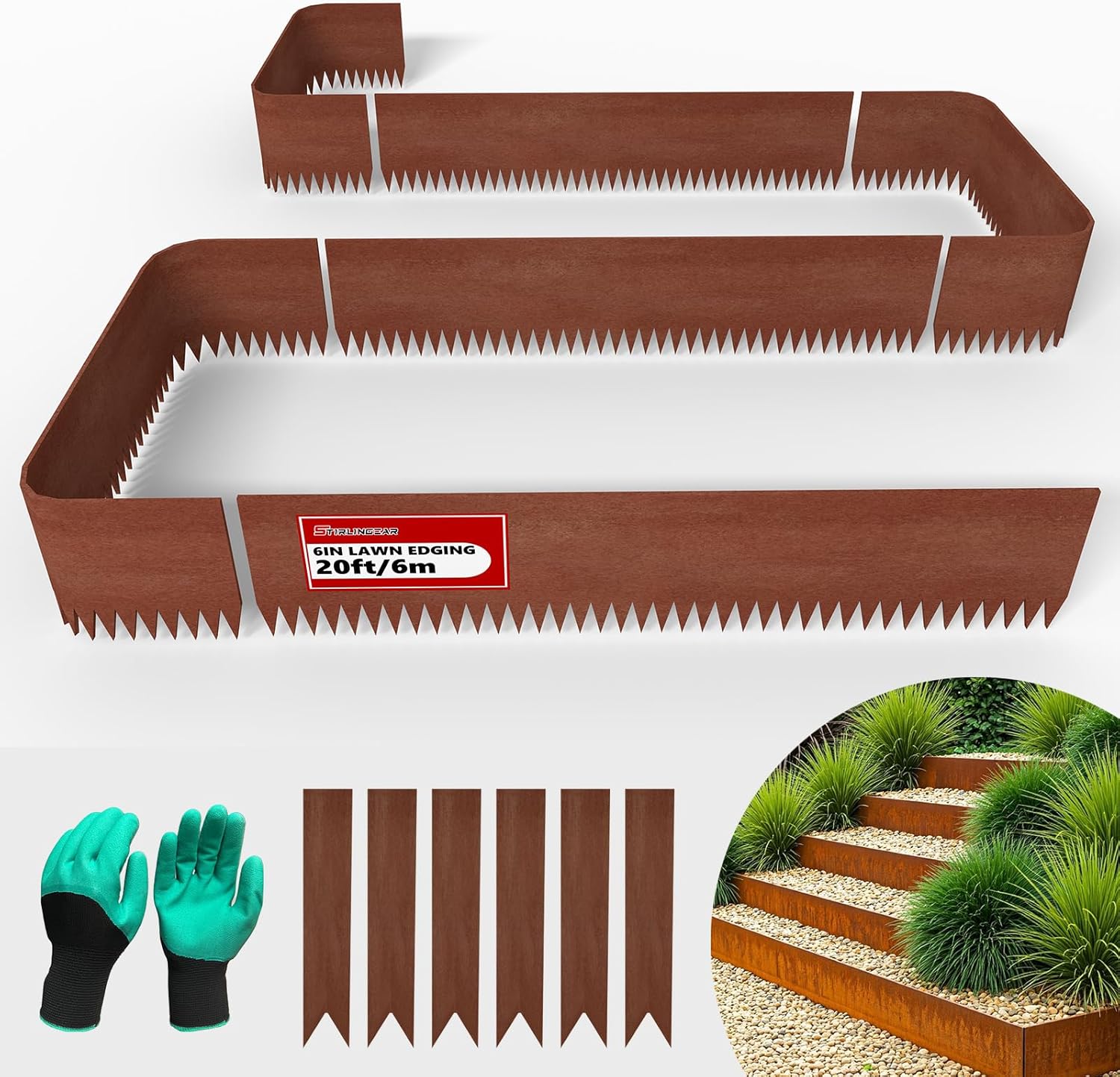
STIRLINGEAR 6-Pack 40" Cor-Ten Steel Landscape Edging (6" H)
| Number of Items | 6 |
|---|---|
| Unit Count | 6 Count |
| Material Type | Metal |
This 6-pack Cor-Ten steel edging from STIRLINGEAR is a straightforward solution for defining garden beds and pathways with a natural rusted aesthetic. Each 40-inch panel connects to the next with a seam-reducing system and is installed by hammering the supplied stakes and connectors into place, so no special tools or heavy fabrication are required. The Cor-Ten material intentionally develops a protective rust patina that both looks rustic and resists further corrosion, making it low-maintenance once installed. The panels are described as flexible enough to form gentle curves, which helps when outlining beds or edging around pavers. Expect neat, continuous lines thanks to the connection system, but note the finish is a weathered rust look rather than a painted color, and the panels are relatively thin so very heavy-duty applications like retaining high soil loads are not their intended use. For routine yard edging and decorative borders this kit balances appearance, ease of installation, and long-term durability for homeowners who prefer a classic steel look.
Best for: Homeowners who want a low-maintenance, visually authentic steel edge for flowerbeds and pathways and who value ease of installation and a classic rusted look.
Less Ideal for: People needing painted or decorative colored edging or those building heavy-duty retaining edges that must hold back large volumes of soil.
- Cor-Ten steel forms a protective rust patina for long-term weather resistance
- Seamless connection system produces continuous, tidy borders
- Includes stakes and connectors for tool-light, mostly hammer-in installation
- Flexible panels allow shaping around gentle curves and beds
- Rusted finish is intentional and cannot be changed to a painted look
- Not designed to retain large soil loads or heavy structural landscaping
Verdict: Choose this Cor-Ten steel 6-pack if you want easy-to-install, long-lasting rust-finish edging that creates clean, professional-looking borders with minimal upkeep.
Choosing the Right Steel Garden Edging: Key Factors to Consider
Coating and Corrosion Protection
How steel is protected against rust determines how long edging will retain its appearance and structural integrity. Galvanized or weathering steel surfaces behave differently: some use hot-dip galvanizing for long-term rust resistance, while corten-style weathering steel forms a protective patina that slows further corrosion.
Think about local climate and soil moisture. In consistently wet or coastal sites, stronger coatings matter more. If you prefer a patinaed look over time, choose steels that intentionally weather rather than those with painted finishes that may chip and expose raw metal.
Gauge and Structural Stiffness
Thicker steel gauges resist bending when struck by mowers or when backfilled against heavy soils. Gauge affects how well an edge keeps a straight line and how cleanly it defines turf versus planting areas. Thicker edging also better holds its profile in soft ground or where foot traffic is present.
If you want crisp, machine-mowable edges with minimal ongoing reshaping, lean toward heavier gauges. For decorative outlines or small raised beds where flexibility is needed, lighter gauges can be easier to manipulate but may require more frequent maintenance.
Height and Edge Profile
Edge height determines how much of the border protrudes above ground and how well it contains mulch or soil. Low profiles are less visible and easier to mow over, while taller profiles keep deeper mulch and soil in place and can help create visual definition in mixed-height plantings.
Consider mower blade height and the thickness of your mulch. Pick a profile that gives you the containment you need without creating a tripping hazard or obstructing routine lawn care.
Anchoring and Fastening System
How edging attaches to the ground influences how well it resists heaving from frost, being pushed by soil, or being jarred by garden tools. Some systems use separate heavy stakes that pierce the steel and drive deep into the soil; others have integrated spike slots or continuous lip systems.
Choose an anchoring approach that matches your soil type. Loose, sandy soils need deeper or more frequent anchors, while dense clay will hold shorter spikes better. Also consider whether you want removable sections for seasonal adjustments.
Flexibility for Curves Versus Straight Runs
Different steel edging styles handle curves differently. Strips designed to flex can form sweeping beds and irregular shapes without visible gaps, while rigid sections are best for long straight lines and formal borders.
Plan your bed layout before choosing. If you expect to create serpentine garden beds or frequent redesigns, flexible edging will save time and reduce seam work. For run-lengths longer than a few dozen feet, stiffer profiles often yield a cleaner long run.
Installation and Long-Term Maintenance
Some steel edging requires trenching and backfilling for a permanent look, while other styles are surface-mounted for a faster install. Consider how much digging you want to do and whether you will want to remove or reposition edging later.
Also think about maintenance tasks such as re-anchoring, treating exposed cuts that may rust, and clearing soil build-up. A product that is easier to install is often easier to adjust over time, but permanent installs usually give a neater, more stable result.
Preparing the Bed and Layout
Measure and mark the intended border with string and stakes before you buy or install edging. A clear layout helps you choose the correct lengths and the number of anchors, and it minimizes cutting on site.
For tight curves, sketch the radius and plan for shorter edging segments. For long straight runs, plan joins so they fall behind plants or under mulch where possible.
- Use spray paint, sand, or a garden hose to visualize curves.
- Account for overlap or connectors specified by the edging style.
Tools and Materials You Will Need
Typical installation requires a mallet or sledge, a measuring tape, gloves, and a heavy-duty cutting method for steel such as an angle grinder with a metal cut-off wheel or a reciprocating saw with a metal blade. A small trenching shovel or half-moon edger helps seat low-profile systems.
Invest in steel-cutting equipment suited to the gauge you plan to work with; thin steel can be cut with hand tools while thicker gauge edging will need power tools for clean ends and accurate joins.
- Mallet or rubber hammer for tapping stakes.
- Angle grinder or metal saw for cutting thicker steel.
- Shovel, stakes, and string for layout and trenching.
Cutting, Joining, and Protecting Cut Edges
When you cut steel edging, bare metal at the cut will be more prone to rust unless treated. After cutting, clean burrs and apply a corrosion-inhibiting brush-on treatment or primer to exposed areas if your product does not come pre-coated for cuts.
Plan joins where they will be anchored or buried and use appropriate fasteners or overlap systems recommended for the edging style. Properly executed joins reduce the chance of shifting and maintain a continuous visual line.
- Deburr edges with a file before treating cut surfaces.
- Overlap or use manufacturer-recommended connectors for a stable seam.
Installing Edging in Different Soil Types
Sandy or loose soils require deeper or more frequent anchors to resist lateral movement. Driving stakes past a denser sublayer helps secure the edge. In compacted clay, shorter anchors can be sufficient but may need corrosion protection in wet seasons.
In rocky soils, choose edging with a mounting lip you can fasten to shallow rocks or use concrete footings at anchor points. For sloped sites, step the edging or follow the contour tightly to avoid soil slumping.
- Add backfill material and compact it behind the edge to improve holding power.
- On slopes, anchor more frequently and check for soil wash after heavy rain.
Maintaining Steel Edging Over Time
Periodically inspect stakes and seams, especially after winter freeze-thaw cycles. Re-driving or replacing anchors may be needed to maintain a straight line. Remove accumulated soil against the edge to prevent burying the profile and inviting rot in adjacent organic mulches.
Touch up cut areas or scratches with a rust-inhibiting paint or solution to extend life. If the edging is designed to develop a weathered patina, expect some surface changes but watch for accelerated corrosion in damaged areas.
- Recheck alignment each spring and after major storms.
- Treat exposed metal and replace compromised anchors promptly.
How We Chose the Best Steel Garden Edging
We prioritized criteria that matter in everyday garden use for steel edging: corrosion resistance under outdoor exposure, edge rigidity and shape retention, ease and flexibility of installation for curved or straight runs, and long-term soil and frost movement performance. We also considered available heights and thicknesses to match common bed depths and mower clearance, plus compatibility with fasteners or stakes for secure anchoring. Our shortlist excluded non-steel materials and ornate landscape features that do not provide the linear border performance typical gardeners expect from steel edging. We ignored prototypes and products lacking clear specification for thickness or coating. Evaluation emphasized measurable attributes such as steel gauge, coating type, stake system, and recommended installation technique. The resulting list favors options that balance rust protection, installation time, and the ability to hold a consistent edge across seasons. We also noted which styles work best for curves versus long straight runs and which require more frequent upkeep. These editorial filters were applied consistently across all candidates to produce practical, usable recommendations.
FAQ
How deep should I set steel garden edging?
Depth depends on profile and function. For containment and mower clearance, set at least half the edge height plus extra for anchoring. In frost-prone regions, drive anchors deeper to reduce heaving.
Can steel edging be bent to make curves?
Many steel edging types can flex for shallow curves, but tighter radii may need short segments or more flexible profiles. Thicker, heavier gauges hold shape better for straight runs but are harder to bend.
What finish lasts longest in wet or coastal gardens?
Heavier galvanizing or weathering steel with appropriate specification tends to resist coastal corrosion better than thin painted finishes. Still, exposed cut edges need extra protection regardless of coating.
Will steel edging rust and stain nearby materials?
Rust can occur where coating is damaged or cut edges are exposed, and runoff may leave faint staining on light-colored paving. Properly treated cuts and periodic maintenance reduce staining risk.
Is it better to trench and bury edging or surface-mount it?
Trenching gives a cleaner, more permanent look and helps anchor the edge, while surface mounting is faster and reversible. Choose trenching for long-term formal borders and surface mounting for temporary or seasonal layouts.
How often should I check and re-anchor steel edging?
Inspect edges annually and after extreme weather. In freeze-thaw areas or loose soils, check anchors each spring and tighten or replace them as needed to maintain a straight line.
Final Verdict
Steel garden edging is a durable way to create clean bed lines, but pick the profile, gauge, and coating that match your climate, soil, and garden style. Prioritize corrosion protection and an anchoring system that suits your soil to reduce maintenance and avoid heaving. Decide up front whether you want a flexible system for curves or a stiff profile for long straight runs, and plan for proper cutting and edge treatment. With the right tradeoffs, steel edging can provide tidy borders and years of low-maintenance performance.
