

Note: This article contains affiliate links. If you click on these links and make a purchase, I may earn a small commission at no extra cost to you. This helps support my research and content. Read my full affiliate disclosure here.
Picking the right soil for a raised bed changes how well vegetables establish roots, retain moisture, and access nutrients across the season. You want a mix that drains enough to avoid waterlogged roots but holds moisture and nutrients so you do not water every day. This guide covers six shortlisted vegetable garden soil mixes suited for raised beds and explains the practical tradeoffs gardeners face. We evaluated each mix for structure, fertility, and how it behaves in a real raised bed environment. Read on to understand the criteria we used and what to expect from different soil approaches before you fill your beds.
Top Picks at a Glance
| Best Overall The best all-around choice for most situations | Vermont Compost Company Raised Bed Mix — Organic Potting Soil for Vegetables (20 Qt) |  |
| Best Quality Built to a higher standard if you want something more solid | BuildASoil Light Garden Soil — 1 cu ft Organic Potting & Raised Bed Mix |  |
| Best Budget The cheapest option that still gets the job done reliably | Espoma Organic Vegetable & Flower Garden Soil Mix, 1 cu ft |  |
| Highest Rated A top-rated pick with lots of positive feedback | E.B. Stone Organics Raised Bed & Potting Mix, 2 cu ft |  |
| Most Popular A crowd favorite that many people choose with confidence | Espoma Organic Raised Bed Mix (1.5 cu ft) |  |
| Best Seller A high-volume bestseller chosen again and again | FoxFarm Raised Bed Planting Mix, 1.5 cu ft |  |
Vermont Compost Company Raised Bed Mix — Organic Potting Soil for Vegetables (20 Qt)

| Brand | Vermont Compost Company |
|---|---|
| Volume | 20 quarts |
| Style Name | Garden,Peat Moss,Potting,Soil Mix |
This raised bed mix is designed specifically for use in raised beds, large containers, and elevated planters where you want fertile, loose soil that supports vegetable growth. The blend contains mature compost plus peat moss, coconut coir, vermiculite and mineral aggregates to hold moisture while keeping the mix airy so roots avoid compaction. It also includes organic nutrients such as blood meal, bone meal and kelp meal to feed plants through the season, which reduces the need for immediate supplemental fertilizing. Expect easier transplanting and stronger root development compared with plain garden soil, and good water retention without waterlogging thanks to the added drainage components. The bag is a single 20-quart unit, so plan on multiple bags for full beds or deep fills. Note that the product contains peat and nutrient amendments that may require caution for allergy-prone users and that one bag covers a limited volume, so larger raised beds will need several bags or a bulk alternative.
Best for: Gardeners who want a ready-to-use, nutrient-rich organic mix for growing cucumbers and other vegetables in raised beds and prefer a product that promotes easy root establishment and steady moisture.
Less Ideal for: People building large commercial beds or seeking bulk landscape soils should consider bulk compost or commercial topsoil instead of small retail bags.
- Formulated with mature compost and organic amendments to supply plant-available nutrients.
- Loose, non-compacting texture that promotes strong root development.
- Blend balances moisture retention and drainage for raised bed vegetables.
- Includes multiple organic inputs (peat, coir, vermiculite, minerals) to improve soil structure over time.
- Sold in 20-quart bags so covering a full raised bed requires buying several bags.
- Contains peat moss which some gardeners avoid for sustainability reasons.
Verdict: Choose this compost-rich raised bed mix when you want an out-of-the-bag organic growing medium that helps cucumbers establish strong roots and access steady nutrients.
BuildASoil Light Garden Soil — 1 cu ft Organic Potting & Raised Bed Mix

| Volume | 1 cubic feet |
|---|---|
| Item Weight | 30 pounds |
| Style Name | Potting Soil Mix |
BuildASoil Light Garden Soil is a ready-to-use organic mix designed for raised beds, containers, and indoor plants where consistent, performance-driven results matter. The blend is high in worm castings and compost, which feeds soil biology and encourages strong root development for vegetables, herbs, and flowers. Its loamy texture balances aeration, drainage, and moisture retention so seedlings and transplants establish quickly without waterlogging. The manufacturer emphasizes certified organic inputs and a low-sodium formulation, which reduces salt stress and helps sensitive crops like tomatoes and herbs. In practice the bag is easy to work with and mixes well into existing beds or containers, and lab-tested consistency means predictable results across batches. Important limitations are that this is a 1 cubic foot bag so larger beds require multiple bags and the product can contain dust and natural organisms, so basic handling precautions are recommended. For growers focused on reliably healthy roots and biologically active soil in raised beds, this mix delivers a clear performance advantage.
Best for: Growers who prioritize consistent, biologically active soil for raised beds or containers and want an organic, lab-tested mix that promotes rapid root establishment.
Less Ideal for: People building large-scale beds on a tight budget or those who prefer a bulk topsoil delivery should consider bulk blends rather than multiple small bags.
- High in worm castings and compost to feed microbial life and support strong root growth
- Loamy texture that balances aeration, drainage, and moisture retention for transplants and containers
- Made with certified organic inputs and no synthetic additives for ingredient transparency
- Low-sodium formula to reduce salt stress on sensitive vegetables and herbs
- Supplied in 1 cubic foot bags, requiring many bags for large raised beds
- May produce dust and can contain natural organisms so it needs careful handling
Verdict: Choose this mix when you want an organic, worm-casting–rich soil that reliably builds healthy roots and predictable performance in raised beds and containers.
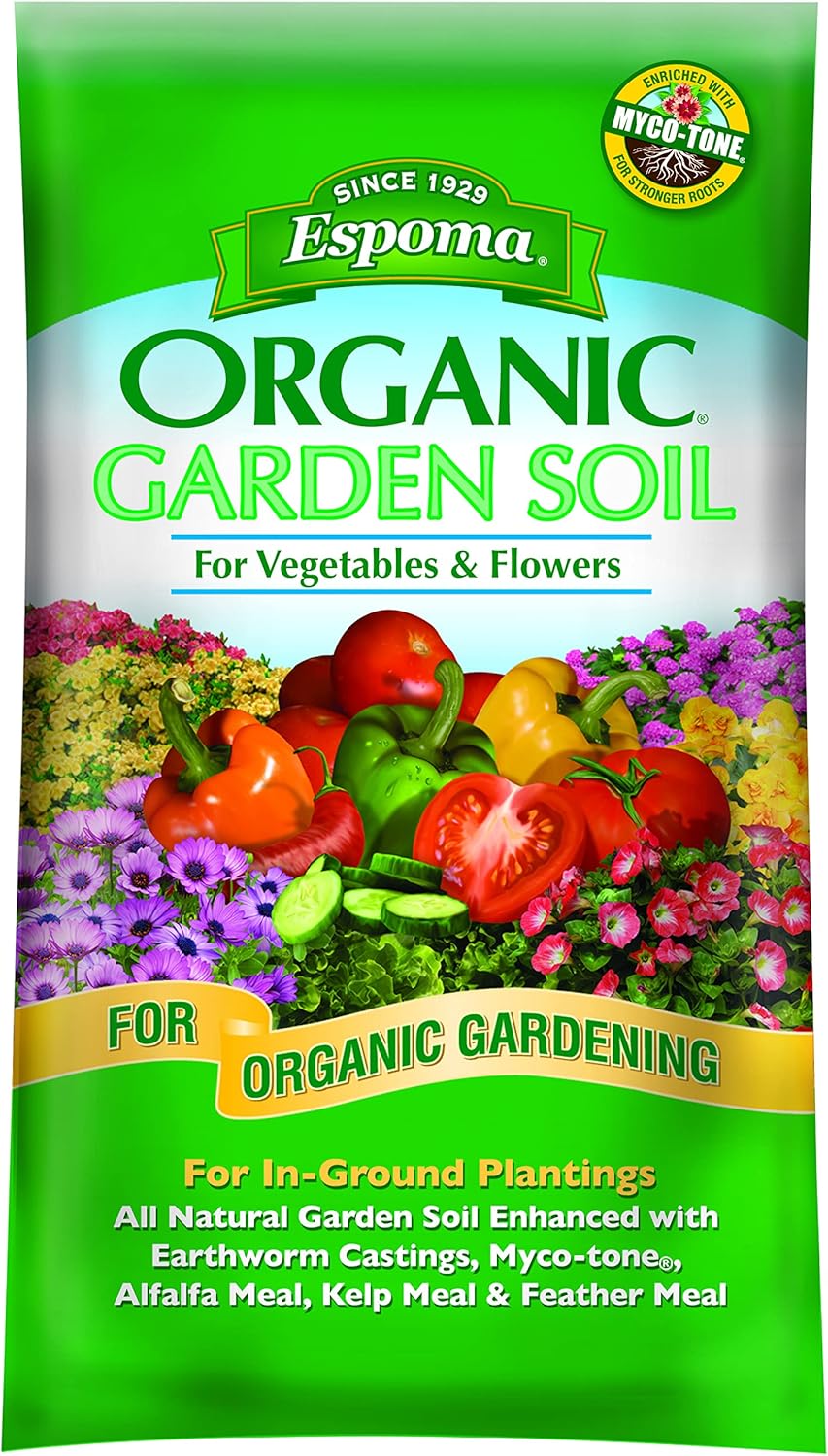
Espoma Organic Vegetable & Flower Garden Soil Mix, 1 cu ft
| Volume | 1 cubic feet |
|---|---|
| Style Name | Peat Moss |
| Unit Count | 1536 Ounce |
Espoma Organic Vegetable & Flower Garden Soil is a 1 cubic foot, peat-based planting mix designed to be blended into native garden soil at planting or transplanting. It contains Canadian sphagnum peat moss, earthworm castings, alfalfa meal, kelp meal, feather meal, limestone for pH adjustment, and a mycorrhizal blend to help root establishment. In practice you work a few inches of this mix into planting holes or rows to loosen dense soil, add organic matter, and give young squash transplants a nutrient-rich root zone. The organic amendments supply slow-release nutrients and biological activity that support early growth, while the mycorrhizae improve water and nutrient uptake. Limitations to note are the peat-heavy base, which dries faster than compost-rich mixes and may require more frequent watering, and the small 1 cu ft bag size that means multiple bags are needed for larger beds. For gardeners who prefer organic inputs and want an easy-to-use planting mix to boost transplant success, this product is straightforward and effective.
Best for: Gardeners who prioritize organic inputs and want a convenient planting mix to boost transplant success for vegetables like squash in established beds.
Less Ideal for: Large-scale landscapers or gardeners needing bulk soil amendments for entire raised beds who prefer compost-rich mixes or peat-free alternatives.
- Formulated with organic amendments like earthworm castings, alfalfa meal, kelp meal, and feather meal for slow-release nutrients
- Contains a mycorrhizal blend to support root establishment and improved nutrient uptake
- pH adjusted with limestone to better suit common garden plants
- Ready-to-use planting mix that blends easily with native soil when transplanting
- Peat-heavy base can dry out faster than compost-rich mixes, increasing watering frequency
- Small 1 cubic foot bag requires many bags for larger squash beds
Verdict: A compact, organic planting mix that makes transplanting squash easier by giving young roots nutrient-rich, biologically active soil.
E.B. Stone Organics Raised Bed & Potting Mix, 2 cu ft

| Brand | E.B. Stone Organics |
|---|---|
| Volume | 2 cubic feet |
This 2 cubic foot bag of E.B. Stone Organics Raised Bed & Potting Mix is a ready-to-use, organic garden soil designed for raised beds, large containers, and vegetable planting. The blend combines compost, coir, pumice, earthworm castings, and mycorrhizae to create a loose, living medium that drains well while retaining moisture and nutrients. Use it straight from the bag to fill beds or top up planters, or mix it into native soil to improve structure and fertility. Notable features are the inclusion of biological amendments like castings and mycorrhizae and the coarse components that help aeration and drainage for vegetable roots. Practical benefits include a lower need for immediate fertilizer thanks to compost content and easier transplanting and root development due to the friable texture. Limitations are typical for organic mixes: nutrient levels will vary naturally so occasional feeding may be needed for heavy-feeding crops, and a 2 cu ft bag is best for patching or small beds rather than filling very large raised beds without multiple bags.
Best for: Buyers who prioritize a dependable, organic base soil for raised beds and container vegetable gardens and want a low-maintenance, biologically active mix to promote steady plant growth.
Less Ideal for: Gardeners who need a nutrient-rich, ready-to-harvest solution without any supplemental feeding or those filling very large commercial beds in a single purchase.
- Formulated specifically for raised beds and large containers
- Contains compost and earthworm castings to support soil biology
- Includes coir and pumice for balanced moisture retention and drainage
- Contains mycorrhizae to help root establishment and nutrient uptake
- 2 cubic feet per bag may require multiple bags for larger beds
- Organic nutrient levels are variable so supplemental fertilizing can be necessary
Verdict: A dependable, biologically rich ready-to-use soil blend that simplifies establishing productive raised beds and container vegetable gardens.
Espoma Organic Raised Bed Mix (1.5 cu ft)

| Brand | Espoma |
|---|---|
| Volume | 1.5 cubic feet |
| Unit Count | 1 Count |
| Intended Use | Raised beds and outdoor containers |
Espoma Organic Raised Bed Mix is a prepared potting-style soil intended to fill new raised beds or refresh existing ones for vegetables and herbs. It combines natural ingredients such as earthworm castings, alfalfa meal, kelp meal and feather meal plus a proprietary mycorrhizal blend, so it brings organic nutrients and beneficial fungi to freshly planted strawberries without additional mixing. Typical use is to fill the bed to planting depth, firm lightly, and transplant strawberry runners or seedlings directly into the medium. The ready-to-use nature saves time compared with blending compost, topsoil and amendments, and the inclusion of slow-release organic meals supports early season growth. Because it is a bagged mix designed for raised beds and containers it is lightweight and convenient to handle in small batches. Limitations are that a single 1.5 cubic foot bag covers only a small area, so larger beds require many bags, and it is not a long-term replacement for periodic top-dressing with compost as plants deplete nutrients over the season.
Best for: Gardeners who want a convenient, organic soil to quickly fill or refresh small raised beds for strawberries and prefer an out-of-the-bag solution that includes natural amendments and beneficial fungi.
Less Ideal for: Those building large or deep beds who want to create a custom soil blend from bulk components or need a single large-volume product to fill many beds.
- Ready-to-use mix saves time versus blending components yourself
- Contains organic amendments (earthworm castings, alfalfa, kelp, feather meal) for nutrient support
- Includes endo and ecto mycorrhizae to improve root establishment and nutrient uptake
- Small 1.5 cubic foot volume means multiple bags are needed for full raised beds
- Not a permanent soil solution; will need supplemental compost or fertility over a season
Verdict: A convenient organic ready-mix that jump-starts strawberry beds with built-in amendments and mycorrhizae for gardeners who value time savings and organic inputs.
FoxFarm Raised Bed Planting Mix, 1.5 cu ft

| Brand Name | FoxFarm |
|---|---|
| Volume | 1.5 cubic feet |
| Style Name | Raised Bed |
| Ingredients | Aged forest products, sphagnum peat moss, earthworm castings, oyster shell, dolomite lime |
This FoxFarm Raised Bed Planting Mix is a premixed soil blend intended for filling raised beds and containers without additional amendments. It mixes aged forest products and sphagnum peat moss for moisture retention and aeration, with earthworm castings, oyster shell, and dolomite lime supplying slow-release nutrients and pH buffering. Typical use is simple: fill your raised bed or pot, plant seedlings or transplants, and water; the mix is designed to hold moisture while still draining to avoid waterlogging. The clear benefits are convenience and a balanced starting environment for vegetables and herbs, which can reduce the need for immediate fertilizing and heavy soil amendments. Limitations include the small 1.5 cubic foot bag size for larger beds and the presence of peat which may concern gardeners favoring peat-free or fully organic-certified media. Also, heavier-feeding crops may still require supplemental fertilization later in the season.
Best for: Gardeners who want a convenient, plant-ready soil that gives vegetable beds and containers a balanced, nutrient-holding foundation without extra mixing or complex preparation.
Less Ideal for: Large-scale growers or those filling full-size raised beds who need bulk soil or prefer peat-free mixes should look for bigger-volume or alternative formulations.
- Ready-to-use blend eliminates mixing and speeds planting
- Formulated for raised beds and containers to balance moisture retention and drainage
- Includes earthworm castings and oyster shell for slow-release nutrients and mineral support
- Contains dolomite lime to help stabilize pH for many vegetable crops
- Small 1.5 cu ft bag requires multiple bags for typical raised beds
- Contains sphagnum peat moss, which some gardeners avoid for environmental reasons
Verdict: Buy this if you want a convenient, nutrient-rich, ready-to-use soil that jumpstarts raised bed vegetable and container gardens.
Choosing the Right Vegetable Garden Soil for Raised Bed: Key Factors to Consider
Texture and Drainage Behavior
Soil texture determines how quickly water moves through a raised bed and how easily roots can access oxygen. A mix that is too fine will hold water and risk root rot, while a very coarse mix will drain too rapidly and leave plants thirsty. In raised beds you generally want a loamy, friable texture that balances sand, silt, and organic fines so moisture moves but the bed still holds useful water between irrigations.
Texture also affects root penetration and seedbed firmness. Seedlings need a slightly finer surface for germination, while established vegetable roots benefit from an open crumb that resists compaction as you work and water the bed.
Nutrient Content and Release Pattern
Look at the balance between immediately available nutrients and slow-release organic sources. A mix with high starter fertility gives transplants a boost, but excessive soluble nutrients can burn young roots or force repeated flushes of vegetative growth at the expense of fruiting. Organic nutrient sources release over weeks to months and better support long-season crops.
Consider whether additional fertilizer will be applied and how often. For built-up raised beds planned as low-maintenance, choose a mix with moderate, sustained nutrient availability to avoid constant feeding.
Water Retention Versus Evaporation
Raised beds have more exposed surface area and can dry faster than in-ground beds. Water retention properties matter for irrigation frequency and plant stress. Materials like compost and coconut coir increase water-holding capacity, while sand and pumice improve drainage but reduce retention.
Also consider evaporation from the bed surface and the local climate. In warm, windy sites prioritize mixes that retain moisture without becoming waterlogged. In cool, wet climates favor quicker-draining mixes to prevent saturated roots.
Organic Matter Quality and Biological Activity
Good organic matter feeds soil life, improves structure, and releases nutrients slowly. High-quality, mature compost supports microbes and earthworms that help cycle nutrients and keep structure open. Immature or unstable organic matter can tie up nitrogen as it breaks down and create short-term deficits for plants.
For edible beds, prefer mixes with well-aged compost or stable organic amendments rather than raw manures or fresh plant waste. Biological activity also affects disease suppression and nutrient availability across the season.
Structure Longevity and Compaction Resistance
Over a single season a raised bed will settle and a soil mix that collapses quickly forces frequent top-ups. Stability depends on the right mix of mineral particles and organic fibers that resist compaction while still allowing root growth. Repeated watering, foot traffic near bed edges, and freeze-thaw cycles can all compress poor mixes.
Choose a mix formulated to hold a loose, crumbly structure for multiple seasons, or plan for annual top-dressing if the mix is known to compress. Consider how easy it is to re-fluff or amend the bed in place.
pH and Salt Levels
Vegetables generally prefer a mildly acidic to neutral pH range. Soil mixes vary in pH and residual salt content depending on feedstocks and any added fertilizers. High soluble salts can harm seedlings and salt-sensitive crops, especially in container-like raised beds where leaching is limited.
If you garden with sensitive crops or use frequent liquid feeds, pick a mix with a balanced pH and low initial soluble salt readings, or plan to leach and test the soil early in the season.
Preparing a New Raised Bed
Before you add soil, plan drainage and height. Raised beds over compacted or clay subsoil benefit from a gravel or coarse-textured base layer to encourage downward movement of excess water. For most backyard beds, a 12 to 18 inch soil depth is sufficient for most vegetables but taller-rooted crops need deeper fill.
When filling, mix in a coarse amendment like horticultural grit or pumice if the chosen soil feels heavy. Lightly water and let the bed settle for a week before planting to identify any low spots that need topping up.
- Check bed level and edges for drainage flow.
- Fill in lifts if using heavy bags to avoid excessive compaction.
- Let the bed settle and then re-check depth before planting.
Seasonal Management and Top-Dressing
Raised beds will need periodic top-dressing of compost or light soil to replace settled material and replenish organic matter. Add a 1 to 2 inch layer of well-aged compost in spring or after major harvests and work it lightly into the surface.
Mulching helps retain moisture and suppress weeds. Apply an organic mulch after beds have warmed and seedlings are established to reduce evaporation and moderate soil temperatures.
- Top-dress with compost annually to maintain fertility.
- Use mulches to reduce watering frequency and temperature stress.
Addressing Drainage Problems
If beds stay soggy after rain, improve drainage by loosening the topsoil and incorporating coarse amendments. In persistent cases, consider raising bed sides or adding subsurface drains to move excess water away from root zones.
Avoid overcompacting the soil when working beds wet. Wait for a drier window to dig or aerate, and use broadforks rather than heavy tilling to preserve structure.
- Add grit or pumice to improve percolation.
- Avoid working beds when saturated to prevent long-term compaction.
Choosing Amendments for Specific Crops
Some crops benefit from slightly different soil conditions. Root vegetables prefer looser, sandier pockets to prevent forked roots. Brassicas benefit from higher nitrogen availability during leaf development, while fruiting crops like tomatoes need steady phosphorus and potassium throughout the season.
Adjust amendments to crop groups rather than reworking the whole bed mid-season. Localized side-dressing and tailored feeding are often more efficient.
- Create sandier zones for carrots and beets.
- Plan targeted feeding for heavy-feeding crops rather than blanket applications.
Testing Soil and Monitoring Plant Response
A simple soil test early in the season gives pH and basic nutrient information so you can correct imbalances before planting. Monitor plant vigor and leaf color; yellowing that does not respond to foliar feeding often signals a root or soil issue rather than a foliar disease.
Keep a seasonal record of irrigation frequency, amendments added, and crop yields to help refine soil choices in subsequent years.
- Test pH and soluble salts if plants show unexplained stress.
- Track irrigation and amendment history to spot long-term trends.
How We Chose the Best Vegetable Garden Soil for Raised Bed
We focused on attributes that determine how a soil mix performs in raised bed vegetable production. Primary evaluation criteria included texture and drainage behavior to ensure reliable root aeration, nutrient content and release pattern to support steady vegetable growth, water retention capacity so irrigation needs match typical backyard schedules, and long-term structure stability so beds do not compact or collapse over a season. We also considered organic matter content because it feeds beneficial biology and improves moisture cycling, and ease of handling when filling or topping up beds. Products were excluded if their formulations were aimed at lawns, potted ornamentals, or heavy industrial landscaping rather than edible raised beds. We filtered out mixes with unverified claims about nutrients or those that relied solely on one component like pure compost with no mineral fillers. Our selection favored balanced blends that reflect how soils actually behave in a raised bed: holding enough moisture without becoming anaerobic, supplying nutrients without immediate burnout, and keeping a stable crumb structure over time.
FAQ
How deep should I fill a raised bed with vegetable garden soil?
Most vegetables do well in 12 to 18 inches of soil. Shallow-rooted greens can thrive in shallower beds, while root crops and large perennials need deeper fill. Aim for at least a foot of good-quality mix for general vegetable beds.
Can I just use compost to fill a raised bed?
Using only compost will provide fertility but often creates a mix that compacts, drains poorly, or ties up nitrogen as it decomposes. It is better to blend compost with mineral components to create a loamy, stable structure suited to vegetables.
How often should I amend raised bed soil during the season?
Light top-dressing with compost once a year is usually sufficient for maintenance. Heavy-feeding crops may need targeted side-dressing during the season. Avoid major soil rebuilds unless the existing mix is heavily compacted or depleted.
What is the best way to prevent waterlogging in raised beds?
Ensure good initial drainage by choosing a permeable mix and avoiding excessive fine silt. Incorporate coarse amendments if the mix holds too much water and avoid compacting the bed when it is wet. In poorly drained sites, raise the bed height or add subsurface drainage.
Should I test the soil in a new raised bed?
Yes. A basic test for pH and soluble salts helps confirm that the mix suits your crops and that there are no high salt levels from compost or amendments. Testing early lets you adjust pH or leach salts before planting.
How do mulch and soil mix interact in a raised bed?
Mulch reduces evaporation and moderates soil temperature, which changes how frequently you need to irrigate. Over time mulch breaks down and contributes organic matter, so account for that when planning annual top-dressing to avoid nutrient imbalances.
Final Verdict
Choose a raised bed soil that balances drainage, water retention, and steady nutrient supply for the types of vegetables you grow. Prioritize a stable texture and quality organic matter so beds hold structure and feed beneficial biology across the season. Tradeoffs are inevitable: mixes that retain more moisture need less watering but require attention to oxygen levels, while very free-draining mixes reduce waterlogging risk but increase irrigation frequency. Decide based on your climate, irrigation habits, and crop mix, and plan for annual top-dressing to maintain fertility and structure. With the right soil approach you will spend less time troubleshooting and more time harvesting healthy vegetables.
