

Note: This article contains affiliate links. If you click on these links and make a purchase, I may earn a small commission at no extra cost to you. This helps support my research and content. Read my full affiliate disclosure here.
A well-chosen trellis shapes how honeysuckle grows, blooms, and fits into your garden. Honeysuckle is a fast-growing, twining vine that benefits from firm, well-spaced support to encourage heavy flowering and prevent wind damage or sagging. This guide shortlists six top trellis designs suitable for honeysuckle in varied settings, from small patios to full garden fences. We evaluated candidates for material longevity, structure and spacing for twining vines, installation flexibility, and maintenance needs. Below you will find practical notes on how different trellis styles behave with honeysuckle and which features matter most when you choose a support system.
Top Picks at a Glance
| Best Overall The best all-around choice for most situations | LeJoy Garden 6.3 ft Metal Obelisk Trellis |  |
| Best Quality Built to a higher standard if you want something more solid | ROOLLYA 6.3 ft Metal Garden Obelisk Trellis for Climbing Plants |  |
| Best Value The sweet spot between price and what you get | MQHUAYU 2-Pack 6 ft Garden Obelisk Trellis for Climbing Plants (4-Tier) |  |
| Best Budget The cheapest option that still gets the job done reliably | Daneried Metal Spiral Plant Trellis, 73-inch Expandable |  |
| Most Popular A crowd favorite that many people choose with confidence | Adorox Metal Garden Arch Trellis, Powder-Coated Black |  |
| Best Seller A high-volume bestseller chosen again and again | Anothera 6ft Adjustable Round Garden Obelisk Trellis with Decorative Bird Topper |  |
LeJoy Garden 6.3 ft Metal Obelisk Trellis

| Material Type | Metal |
|---|---|
| Finish Type | Epoxy Coated |
| Item Highlight | Upgraded 16mm Thick Steel Tubes |
| Size | Large |
This LeJoy Garden obelisk is a straightforward, performance-focused plant support built from metal tubing with an epoxy finish. At 6.3 feet tall it gives vines, roses, clematis and even indeterminate tomatoes room to climb vertically, and the round, four-stake base design helps keep the frame stable once plants begin to weigh it down. Assembly is simple: tubes arrive pre-drilled which speeds setup, and the epoxy coating gives basic weather resistance against rust. The 16 mm thick tubes and nearly 5 lb weight make it heavier and more rigid than many lightweight decorative trellises, so it stays put in garden beds and large pots. Expect some sharp edges during assembly so wear gloves, and note that while the finish resists weathering it is not stainless steel so long-term coastal exposure may still cause corrosion. The trellis works best as a structural support rather than a decorative instant topiary, and it is easy to decorate with lights or garland for events.
Best for: Gardeners who prioritize durable, functional supports for heavy or prolific climbers and want a tall, no-nonsense frame that stays upright in beds and large containers.
Less Ideal for: Buyers seeking a lightweight decorative piece for small indoor pots or those who need stainless steel corrosion resistance for coastal locations should look elsewhere.
- Tall 6.3 ft height provides ample vertical space for large climbers and indeterminate tomatoes
- Thicker 16 mm metal tubing and 4.9 lb mass offer greater rigidity and stability than flimsy wire trellises
- Epoxy coating adds basic rust resistance for outdoor use
- Pre-drilled tubes simplify and speed assembly
- Not stainless steel so may eventually corrode in very wet or salty environments
- Sharp edges reported during assembly require careful handling
Verdict: Choose this obelisk when you need a tall, heavier-duty metal trellis that keeps vigorous climbers and tomato vines supported season after season.
ROOLLYA 6.3 ft Metal Garden Obelisk Trellis for Climbing Plants

| Material | Steel tubing |
|---|---|
| Tube diameter | 16 mm |
| Finish Type | Unfinished |
| Size | large |
This ROOLLYA obelisk trellis is a performance-focused metal support for vigorous climbers like honeysuckle. Built from 16 mm thick steel tubing with an epoxy coating and a pointed base, it resists bending and pushes into soil for a secure anchor. The height adjusts to three settings (35, 57, 75 inches) so you can match the structure to plant growth and keep vines off the ground to improve air flow and light exposure. Assembly is straightforward because the tubes come pre-cut and pre-drilled, and the round, classic shape gives multiple attachment points for training stems. Practical benefits include strong load capacity for heavy flowering vines and year-round outdoor durability from the weather-resistant finish. Limitations are that it is a single freestanding unit so large or very aggressive climbers will eventually need multiple units or a stronger permanent structure, and the copper finish is unfinished so it may patina over time if you prefer a stable painted look.
Best for: Gardeners who need a sturdy, performance-oriented support for medium to heavy flowering vines and want an easy-to-install freestanding trellis to train honeysuckle upright.
Less Ideal for: Those wanting a long-term, continuous support for very large or landscape-scale climbers should consider permanent trellises or multiple supports instead.
- 16 mm thick steel tubing offers strong resistance to bending under heavy vines
- Adjustable height with three settings accommodates different stages of plant growth
- Epoxy-coated metal and pointed base provide weather resistance and stable soil anchoring
- Pre-cut, pre-drilled tubes speed up assembly and make installation easier
- Single freestanding obelisk may be undersized for very aggressive or large climbing plants
- Finish is unfinished copper which will naturally patina rather than retain a fresh painted look
Verdict: Choose this heavy-duty, adjustable metal obelisk when you want a compact, high-strength support that keeps honeysuckle vines upright and well-exposed to light.
MQHUAYU 2-Pack 6 ft Garden Obelisk Trellis for Climbing Plants (4-Tier)

| Number of Packs | 2 |
|---|---|
| Material Type | Metal, Plastic |
| Finish Type | Powder Coated |
| Size | 6 FT |
This 2-pack of MQHUAYU obelisk trellises is designed to give climbing roses and other vining ornamentals vertical structure without taking much ground space. Each tower assembles without tools from PVC-coated iron poles and 4-way connectors, and the removable tiers let you raise the height as plants grow up to about 6 feet. The powder-coated finish and plastic-coated metal resist rust and are gentle on stems, so the frames can stay in place through a season and look tidy on a patio or in a small bed. They are lightweight enough for one person to set up and disassemble for winter storage, and the four-legged base can be pushed into soil for added anchoring. The trade-offs are that the slender poles are not as rigid as heavy-gauge steel, so very large or heavily laden climbing roses may need extra tying or a sturdier support nearby, and the product relies on correct assembly and deep insertion of the lower poles for stability in wind.
Best for: Gardeners who want a space-efficient, easy-to-install support for climbing roses on small patios, balconies, or compact beds and prefer adaptable supports they can adjust as plants grow.
Less Ideal for: Growers with large, heavy-flowering rose varieties or exposed, windy sites where a beefier, permanently anchored support is required.
- Adjustable four-tier design lets you increase height as roses grow up to 6 feet
- PVC-coated iron with powder-coated finish offers rust resistance and plant-friendly contact
- Tool-free assembly and lightweight panels make setup and seasonal storage simple
- Two-trellis pack covers multiple plants or creates matched supports for a pair of roses
- Slim poles are less rigid than heavy-gauge supports and may need extra tying for very heavy blooms or wind
- Stability depends on inserting lower poles deep into soil which may be difficult in rocky or compacted beds
Verdict: Buy this if you need an affordable, rust-resistant, adjustable trellis pair that saves ground space and is quick to set up for training climbing roses.
Daneried Metal Spiral Plant Trellis, 73-inch Expandable

| Material Type | Metal |
|---|---|
| Finish Type | Powder Coated |
| Item Type Name | Garden Trellis |
| Size | 1 pcs |
This Daneried spiral trellis is a simple, no-tools support for honeysuckle and other climbing plants. The metal spiral expands quickly and locks at the base with a buckle so vines have continuous vertical support; when collapsed it stores flat to save space. Powder-coated steel construction gives it rust resistance suitable for outdoor exposure through rain and sun, and the narrow 12-inch diameter profile fits close to plant stems to encourage upward growth. Because it is lightweight and easy to move, you can reposition it as the plant develops or use several to create layered support. The main limits are that it is a single-piece spiral rather than a freestanding frame, so very heavy or aggressively twining vines may need multiple units or additional anchoring, and it does not provide wide horizontal trellis coverage for a large shrub. For gardeners on a budget who want a compact, durable stake for honeysuckle, this trellis offers a practical, low-fuss option.
Best for: Gardeners looking for an inexpensive, low-maintenance support for individual honeysuckle vines who prioritize easy setup and compact storage.
Less Ideal for: Those needing wide-area coverage or support for large, heavy climbing shrubs should choose a larger frame or multiple trellises.
- Tool-free expandable spiral design for fast setup
- Powder-coated steel resists rust for outdoor durability
- Collapses flat for compact storage
- Narrow profile supports stems closely to encourage vertical growth
- Not wide enough alone for spreading or very heavy climbing shrubs
Verdict: A compact, rust-resistant spiral trellis that gives budget-minded gardeners fast, tool-free support for individual honeysuckle vines.
Adorox Metal Garden Arch Trellis, Powder-Coated Black
| Material Type | Metal |
|---|---|
| Finish Type | Powder Coated |
| Shape | Single Arch |
| Size | Standard |
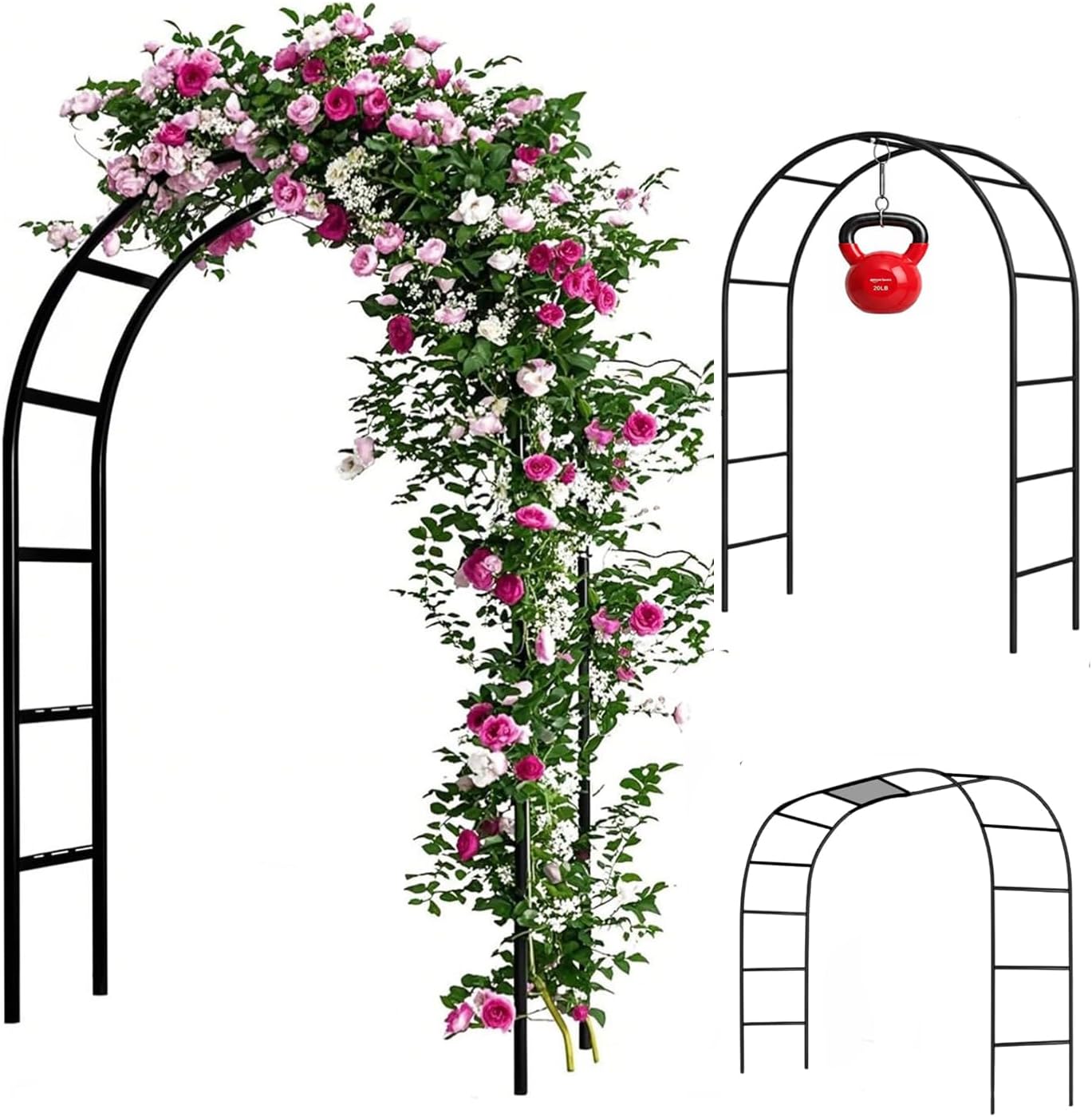
This Adorox garden arch is a straightforward metal arbor that gives climbing roses, clematis, vines, or seasonal decorations a neat vertical framework. It arrives as sectional metal pieces with a powder-coated finish and assembles in simple steps to create a single arched entrance or focal point for a walkway, garden bed, or event backdrop. The open-frame design lets plants weave through the bars and provides height without blocking sightlines, while the powder coating helps resist rust in typical outdoor conditions. Because it is relatively lightweight and sectional, it is easy for two people to position and plant around, and it is also simple to dress with string lights or fabric for celebrations. Expect to secure it into the ground or use anchors before loading with heavy mature vines, since the slim metal sections will perform best when planted with lighter to moderate climbers rather than very heavy, established growth. Assembly is convenient but may require basic tools and a second person to steady the arch while tightening connections.
Best for: Buyers who want an attractive, easy-to-install arch to add vertical interest and support for climbing plants or seasonal decor, and who prefer a straightforward product with visible user feedback to inform the choice.
Less Ideal for: Gardeners seeking a heavy-duty permanent arbor to bear large mature vines or climbing shrubs should look for a sturdier, commercial-grade structure with integrated anchoring.
- Simple sectional design that is easy to assemble and position
- Powder-coated metal finish improves resistance to outdoor corrosion
- Open-arch framework allows vines and flowers to weave naturally and creates visual height
- Lightweight enough for two people to handle and decorative enough for events or pathways
- Relatively lightweight construction needs anchoring before supporting heavy, mature vines
- No built-in ground stakes or heavy bases included for long-term high-wind stability
Verdict: A lightweight, powder-coated metal arch that quickly creates a decorative entry or plant support for garden paths and small to moderate climbers.
Anothera 6ft Adjustable Round Garden Obelisk Trellis with Decorative Bird Topper

| Material Type | Metal, Plastic |
|---|---|
| Item Type Name | Garden Trellis |
| Item Highlight | Plastic-Coated Rustproof Steel Core, Decorative Bird Topper |
This Anothera obelisk is a simple, tool-free trellis aimed at supporting honeysuckle and other light to medium climbers. It assembles by rotating and stacking hollow steel pipes so you can start with a low profile and extend it to about 6 feet as vines grow. The steel core is plastic coated for added rust and UV resistance and the rounded footprint is narrow enough to fit in pots or raised beds. Long ground stakes and a reinforced base give extra stability in ordinary garden soils, and the decorative bird topper makes it an attractive focal point. Expect gentle support rather than heavy structural backing; the manufacturer notes it is best for lighter vines and recommends additional support for very heavy plants. The lightweight construction makes it easy to move and store but means it can shift in very windy spots unless anchored deeply. For someone who wants a low-effort, attractive support for honeysuckle or clematis in a pot or border, this trellis provides an easy-to-use, rust-resistant option.
Best for: Gardeners who want a low-effort, attractive support for honeysuckle or similar light to medium vines in pots or borders and prefer a rust-resistant, adjustable solution.
Less Ideal for: Growers who need heavy-duty structural support for large woody climbers or who plan to leave plants unsupported in very exposed, windy sites.
- Adjustable, stackable design lets you raise height as plants grow
- Plastic-coated steel frame resists rust and UV for outdoor use
- Narrow round base fits pots and raised beds
- Tool-free assembly for quick setup
- Long ground stakes improve stability in typical garden soil
- Lightweight build may need extra anchoring in very windy conditions
- Not intended as sole support for very heavy or woody climbers
Verdict: A rust-resistant, adjustable obelisk that gives reliable, low-effort support and visual appeal for honeysuckle and other light to medium climbing plants.
Choosing the Right Trellis for Honeysuckle: Key Factors to Consider
Material Durability and Weather Resistance
The material determines how long a trellis will stand up to outdoor conditions. Metal options that are powder-coated or galvanized resist rust and keep structural integrity where rain, salt air, or humidity are common. Untreated wood can rot where soil splash or wet winters are frequent, while rot-resistant woods and composite materials last longer but may need occasional sealing.
Durability affects how often you must replace or repair a trellis and influences how heavy a mature honeysuckle vine it can safely carry. Choose materials suited to your local climate to avoid premature failure and to keep the vine supported through heavy flowering seasons.
Grid Spacing and Twining Support
Honeysuckle climbs by twining its stems around supports, so grid spacing and the shape of members matter. Narrow spacing gives many contact points for stems to wrap and hold, which helps prevent slippage and encourages upward growth. Larger open squares or widely spaced verticals can leave young vines with few gripping points, requiring manual tying until they mature.
The thickness and texture of the slats or wires also matter. Rougher or slightly textured surfaces let stems grip more easily. If you want fast coverage, select a trellis with closer spacing or plan to provide temporary ties until the vine establishes itself.
Structural Stability and Load Capacity
A mature honeysuckle can become heavy and wind-resistant loads can stress a trellis. Look for designs with strong frames, cross-bracing, or anchoring options so the structure does not lean or sag as the vine thickens. Free-standing trellises should have deep stakes or wide feet to resist tipping. Wall-mounted trellises need secure fixings and a stable backing surface.
Stability affects plant health because a shifting support can bruise stems, break branches, or pull roots if the trellis moves in strong wind. It also influences how long the trellis will stay square and effective without frequent tightening or repairs.
Installation Options and Versatility
Different gardens require different installation approaches. Some trellises are designed to be mounted directly on a wall or fence, others are free-standing or attach to posts, and some can be used as privacy screens. Consider where the honeysuckle will start-against masonry, on a wooden fence, or in a container-and choose a trellis compatible with that site.
Ease of installation matters if you plan to move the trellis seasonally. Lighter, modular systems are easier to reposition but might trade off some stability. Prepare for the hardware and tools needed to secure the trellis in your chosen location.
Maintenance Requirements and Longevity
All trellises need some upkeep. Metal trellises can develop rust spots over time and may need repainting or touch-up coating. Wooden trellises can require sanding and sealing to prevent rot and insect damage. Inspect fastenings and connections annually and tighten or replace as needed to keep the structure square.
Think about accessibility for maintenance. A trellis that is easy to access will allow you to prune honeysuckle properly and to repair the support before small problems become large ones.
Aesthetics and Garden Integration
The visual style of a trellis shapes how honeysuckle presents in the garden. Lattice panels give a classic look and can support dense flowering, while minimalist wire frames create a lighter, modern appearance and let blossoms take center stage. Consider how the trellis color and profile will complement nearby plants, hardscaping, and the home exterior.
Aesthetics also affect wildlife interactions. Open designs allow easier access for pollinators and birds, while very dense structures can create sheltered spots for nesting. Choose a style that fits both your visual goals and local wildlife considerations.
Best Trellis Shapes for Honeysuckle Habits
Honeysuckle twines naturally and prefers supports it can wrap around. Vertical panels with narrow slats or grid lattice provide the consistent contact points that twining stems need. Arbors and arch trellises work well when you want the vine to cascade and form a flowering canopy, while flat panels are better when you need coverage against a wall or fence.
Consider whether you want the vine to climb straight up or to spread laterally. Tall, narrow trellises focus growth upward and save horizontal space. Wider panels or fences let honeysuckle ramble and can create dense screens when fully established.
- Lattice panels for dense coverage and many contact points
- Arch and arbor forms for overhead blooms and passageways
- Wire frames for minimal visual impact and flexible placement
Mounting Anchors and Preparing the Site
Secure anchoring prevents lean and protects the plant. For wall mounting, use appropriate anchors for the wall material and keep fixings aligned to prevent twisting as the vine grows. For free-standing trellises, set posts deep enough or use ground spikes to resist uplift and tipping.
Prepare the planting area so stems can reach the trellis without rubbing against rough surfaces. If you plan to train young shoots, position the trellis within easy reach and clear surrounding vegetation that could compete for light or tangle with the vine.
- Use masonry anchors for brick or concrete walls
- Drive posts below frost line when possible for stable free-standing supports
- Clear a two-foot radius around the base to reduce competition and improve airflow
Training and Pruning Tips for Trellised Honeysuckle
Initial training makes a big difference. Tie young stems loosely to the trellis at intervals until they begin to twine on their own. Use soft garden twine or strips of cloth to avoid girdling the stems. Direct shoots to the desired direction early to prevent crossing and overcrowding.
Prune after flowering to shape the plant and to remove dead or weak wood. Thinning opens the center, improves air circulation, and reduces disease risk. Regular light pruning keeps the vine within the bounds of the trellis and can encourage more blooms the next season.
- Tie stems loosely and check ties annually
- Prune after peak flowering for best shape and health
- Remove any shoots that rub against rough supports to prevent bark damage
Using Trellises in Containers and Small Spaces
Container-grown honeysuckle needs a trellis that balances support with stability. Choose a trellis that can be anchored into the potting mix with stakes or that has a weighted base to prevent tipping. Compact lattice or lightweight wire frames work well in patio planters and allow you to move the plant to optimize light.
In small spaces, vertical growth is the most efficient. Select narrow panels or slim obelisks to give the vine height without consuming floor space. Monitor watering closely because containers dry faster and heavier growth on a trellis can increase water demand.
- Use deep containers to accommodate roots and stabilize the trellis
- Select trellises with a stake-in design for secure container anchoring
- Place containers near walls for added wind protection
Seasonal Care and Winter Considerations
Protecting both vine and trellis through winter extends the life of the support. In climates with heavy snow or ice, periodically clear accumulations from lattices and arch tops to prevent collapse under weight. For delicate or decorative trellises, consider temporary removal and storage if winter weather is severe.
Inspect for signs of frost damage and repair or replace compromised fixings before spring growth. If the trellis is made of untreated wood, a fall sealing will reduce water uptake and reduce the chance of spring rot.
- Clear heavy snow promptly to avoid structural stress
- Store lightweight trellises indoors if they are at risk of winter damage
- Perform a spring inspection of fastenings and supports
How We Chose the Best Trellis for Honeysuckle
We selected the six trellises by focusing on attributes that directly affect how honeysuckle performs over seasons. Key evaluation criteria included material durability to resist rot and rust in humid or rainy climates, structure and grid spacing to accommodate twining stems, overall rigidity to prevent sagging under heavy growth, and installation options for mounting on walls, fences, or free-standing positions. We also considered maintenance needs such as repainting or tightening, and whether the design protects plants from abrasion or constriction as stems thicken. Products that relied on flimsy connectors, thin wire grids with large unsupported spans, or materials known to degrade rapidly outdoors were excluded. We prioritized trellises that offer predictable long-term performance and simple user adjustments. Practical gardener concerns governed selection, including ease of installing trellises in varied soil or wall conditions and how the structure affects bloom exposure and airflow around the vine.
FAQ
What trellis height is best for honeysuckle?
Honeysuckle does well on trellises between 6 and 8 feet for most varieties because it likes to climb high and display blooms. In smaller spaces you can train it on shorter structures, but expect more lateral growth and the need for more frequent pruning.
Can honeysuckle climb on wire mesh or do I need wooden lattice?
Wire mesh with closely spaced horizontal and vertical members is suitable because twining stems find plenty of contact points. Wooden lattice also works well and often provides a more decorative look. Choose a mesh or lattice with smaller openings for faster, more secure climbing.
How soon will honeysuckle attach to a new trellis?
Young honeysuckle can take several weeks to a few months to begin twining reliably around supports. Providing loose ties early speeds attachment and encourages the vine to grow where you want it. Once established, attachment becomes faster and more secure each season.
Is it better to train honeysuckle up a trellis or let it sprawl?
Training honeysuckle up a trellis directs growth and concentrates flowers where you want them, making pruning and maintenance easier. Letting the vine sprawl can create informal groundcover or screens but may reduce airflow and make pruning more difficult.
How do I prevent a trellis from tipping under a heavy honeysuckle?
Use a trellis with deep-set posts, a wide base, or a heavy anchor system. For freestanding units, drive posts deeper into the ground or fix them to anchored posts. In containers, choose a trellis designed to insert deeply into the soil or one with a weighted base to resist tipping.
Will honeysuckle damage a wooden fence if trained on it?
Honeysuckle can put stress on fencing over time if the vine becomes very heavy or if stems grow behind boards. Use a freestanding trellis slightly offset from the fence or install a lightweight panel attached to the fence to keep direct contact minimal and allow air circulation.
Final Verdict
Choose a trellis that matches your site, climate, and how you want honeysuckle to display. Prioritize durable materials and a grid spacing that gives twining stems frequent contact points. Ensure the structure is stable enough to carry the mature vine and easy to maintain so you can prune and inspect annually. A clear tradeoff exists between lightweight, movable trellises and heavy-duty permanent structures. If long-term low maintenance is your goal, favor sturdy, weather-resistant materials and secure anchoring. If flexibility and portability matter more, choose lighter, modular systems and plan for more seasonal adjustment.
