

Note: This article contains affiliate links. If you click on these links and make a purchase, I may earn a small commission at no extra cost to you. This helps support my research and content. Read my full affiliate disclosure here.
If wildlife is digging, nibbling, or trampling plants, the right animal repeller for gardens can reduce damage without trapping or harming animals. You want a solution that fits your yard size, stands up to weather, and targets the specific pests you see most often. This guide looks at seven top options shortlisted for real garden use, focusing on coverage, durability, and ease of placement. Below we outline practical strengths and tradeoffs that matter in outdoor settings and explain the evaluation criteria used to pick each repeller. Read on to find the best match for your garden's layout and pest challenges.
Top Picks at a Glance
| Best Overall The best all-around choice for most situations | G-Jyuncyou Solar Ultrasonic Animal Repeller (2-Pack) |  |
| Best Quality Built to a higher standard if you want something more solid | PHIMINNEX Solar Ultrasonic Animal Repeller with LED Strobe (AR902) |  |
| Best Value The sweet spot between price and what you get | CKCOEO Solar Ultrasonic Animal Repellent with Motion Sensor and Strobe Light |  |
| Best Budget The cheapest option that still gets the job done reliably | Roypet Solar Motion-Activated Ultrasonic Animal Repellent |  |
| Highest Rated A top-rated pick with lots of positive feedback | Peepst Solar-Powered 360° Ultrasonic Animal Repeller (AR52) |  |
| Most Popular A crowd favorite that many people choose with confidence | CKCOEO Solar Ultrasonic Outdoor Animal Repellent, 2-Pack |  |
| Best Seller A high-volume bestseller chosen again and again | Orbit Yard Enforcer Motion-Activated Sprinkler |  |
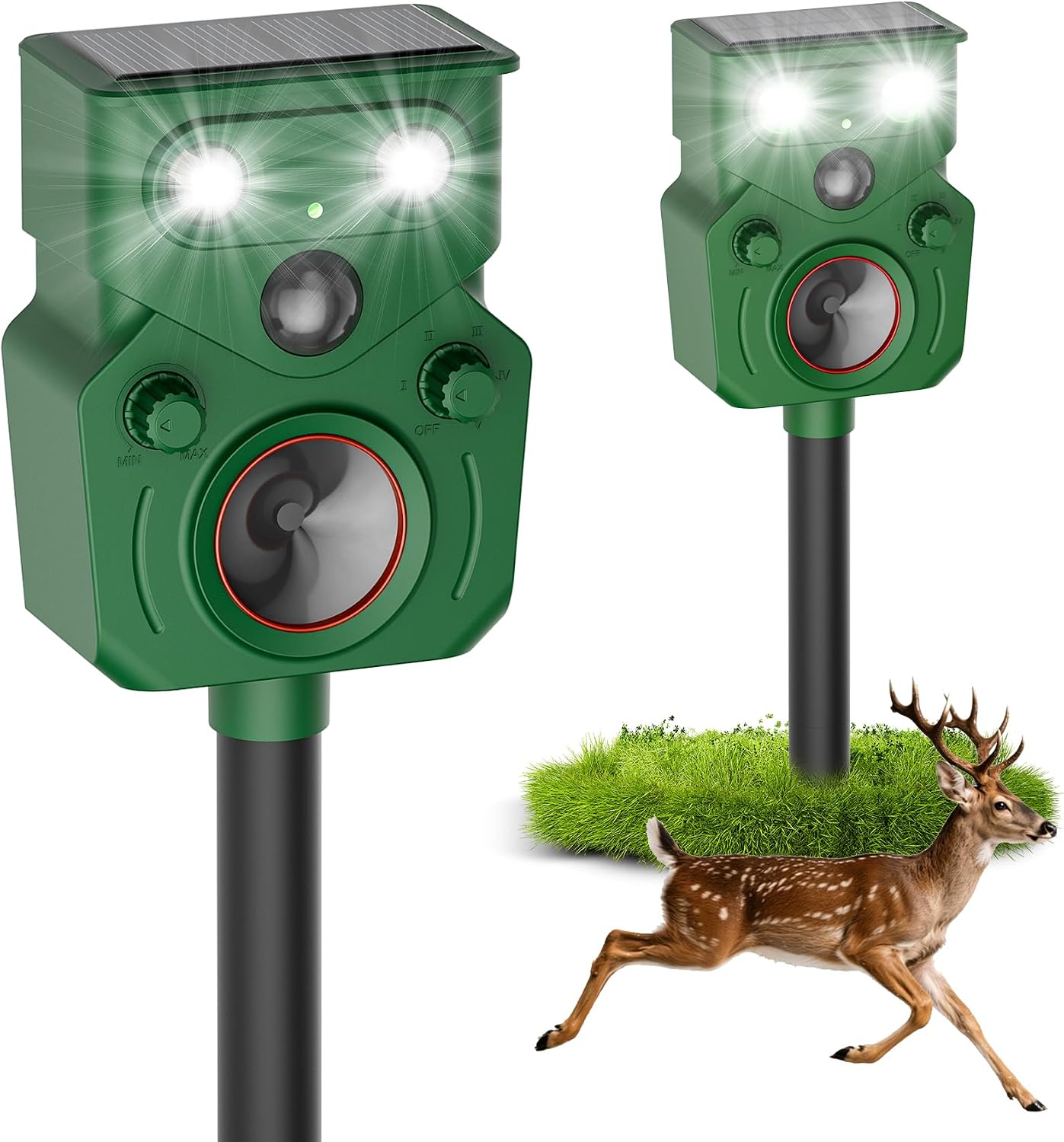
G-Jyuncyou Solar Ultrasonic Animal Repeller (2-Pack)
| Power Source | Solar Powered |
|---|---|
| IP Rating | IP65 |
| Frequency Range | 18–45 kHz |
| Charging | Solar and USB charging option |
This two-pack of G-Jyuncyou solar ultrasonic repellers combines PIR motion detection, adjustable ultrasonic frequency and strobe lighting to protect yards, orchards, and gardens from deer, raccoons, coyotes and similar animals. Install by staking into the ground or hanging; the PIR sensor triggers ultrasonic pulses (18–45 kHz depending on mode) and flashing LEDs when animals enter the detection zone. There are five modes including sweep, high-frequency, full cycle and strobe-only, plus separate knobs for sensitivity and frequency so you can tune coverage for different animals and distances. Solar panels recharge during the day and a USB port lets you top up the internal battery when sunlight is limited. The unit is IP65 rated, built from ABS plastic, and intended for continuous outdoor use. Important limitations are that ultrasonic effectiveness varies by species and environment and requires correct placement and angle; sound does not physically harm animals and results are not instant in every situation. The device is best used as part of a layered approach to deer control rather than a guaranteed single solution.
Best for: Buyers who prioritize a low-maintenance, weatherproof deterrent they can rely on for continuous outdoor protection and who want the ability to fine-tune detection and frequency settings.
Less Ideal for: Those seeking an immediate, guaranteed elimination of large herd deer or users who prefer physical exclusion methods only should consider alternative or additional solutions.
- Adjustable frequency and sensitivity knobs let you target different animals and tune detection range.
- Dual charging via solar panel plus USB ensures power even in cloudy weather or winter.
- IP65 waterproof rating and ABS construction for outdoor durability.
- Multiple working modes including strobe-only and full-cycle provide flexible deterrent patterns.
- Ultrasonic effectiveness depends on species, landscape and placement so results can vary.
- No detailed coverage radius provided, so planning exact placement requires trial and error.
Verdict: A weatherproof, adjustable solar-powered repeller that provides reliable, low-maintenance deterrence when used as part of a broader deer-control strategy.
PHIMINNEX Solar Ultrasonic Animal Repeller with LED Strobe (AR902)

| Power Source | Solar Powered |
|---|---|
| Number of Pieces | 1 |
| IP Rating | IP65/IP66 (weather resistant) |
| Detection Range | Up to 33 feet |
| Frequency Range | 13.5 kHz–45.5 kHz |
The PHIMINNEX AR902 combines ultrasonic sound, variable alarm tones, and a bright LED strobe to discourage animals such as squirrels, raccoons, rabbits, and stray cats from entering gardens and lawns. It mounts in soil or on a wall and runs off an integrated solar panel with USB backup charging, so placement in sunlit locations provides continuous operation and cloudy days can be covered by a USB recharge. The unit offers multiple frequency bands and five operating modes plus adjustable volume to reduce habituation and let you fine-tune intensity for the target pest and nearby people. A PIR motion sensor covers a wide detection angle and claims up to roughly 33 feet of range, making it suitable for protecting planting beds, compost areas, and small yards. Build materials are weather resistant and rated for outdoor use. Important limitations: effectiveness varies by species and local food incentives so results may take weeks and are not guaranteed, and nearby pets that are sensitive to high frequencies may require repositioning or frequency changes.
Best for: Gardeners and property owners who want a low-maintenance, tech-driven deterrent and prioritize measurable performance against small to medium wildlife in planting areas.
Less Ideal for: People who need an instant, guaranteed solution for heavy infestations or those who cannot relocate sensitive pets away from the device’s coverage area.
- Solar panel plus USB backup reduces downtime and avoids wiring
- Multiple frequency bands and five modes help prevent animal habituation
- Adjustable volume allows reducing disturbance to neighbors or household pets
- PIR motion sensor with wide detection angle for automatic activation
- IP65/66-level weather resistance suitable for outdoor exposure
- Effectiveness depends on animal behavior and may require 2–4 weeks to see results
- Ultrasonic output may affect sensitive pets if placed too close
Verdict: For yards where long-term, adjustable ultrasonic deterrence matters, this solar-powered unit delivers flexible modes and weatherproof operation to reduce squirrel and other small-animal visits.
CKCOEO Solar Ultrasonic Animal Repellent with Motion Sensor and Strobe Light

| Power source | Solar |
|---|---|
| Detection angle | 150 degrees |
| Detection range | 25-30 ft |
| Waterproof rating | IP65 |
This solar ultrasonic repellent combines a PIR motion sensor, high-frequency sound pulses, and a flashing strobe to keep small mammals out of gardens and yards. Install it on a stake about 9 to 10 inches above the ground or hang it on a fence facing animal paths; when the sensor detects movement within about 25 to 30 feet and 150 degrees, the unit emits ultrasonic bursts and a bright LED flash for immediate deterrence and then returns to standby. The built-in solar panel charges the internal battery so the device runs after dark without wiring, and the IP65 ABS housing tolerates rain and sprinklers for year-round outdoor use. Practical benefits include easy, tool-free setup, chemical-free operation, and coverage that targets a wide range of species. Limitations to note are the need for good sun exposure to maintain charge, an advertised adjustment period of a few weeks for persistent animals, and the typical line-of-sight requirement of ultrasonic devices which reduces effectiveness around dense vegetation or obstructed approaches.
Best for: Gardeners and yard owners who want a low-maintenance, chemical-free deterrent that can be set-and-forgotten to reduce small mammal damage around beds and lawns.
Less Ideal for: People with shaded sites that get little direct sun or those who need immediate, guaranteed removal of persistent animals in heavily obstructed areas.
- Solar-powered with on-board charging so it runs at night without external power
- PIR motion sensor covers up to about 150 degrees and 25–30 feet for triggered activation
- IP65-rated ABS housing protects electronics from rain and outdoor conditions
- Dual-action deterrent using ultrasonic pulses plus flashing LED to startle animals
- Performance depends on direct sunlight for reliable charging and runtime
- Ultrasonic effectiveness is reduced by obstacles and may take weeks for animals to adapt or leave
Verdict: A hands-off, solar-powered ultrasonic repeller that gives practical, weatherproof protection against squirrels and other small pests for sun-exposed gardens.
Roypet Solar Motion-Activated Ultrasonic Animal Repellent

| Power Source | Solar Powered |
|---|---|
| Material Type | Acrylonitrile Butadiene Styrene (ABS) |
| Number of Pieces | 1 |
| Unit Count | 4 Count |
This Roypet unit uses a motion sensor to trigger an ultrasonic sweep that discourages a wide range of animals from entering lawn and garden areas. It is solar powered and housed in waterproof ABS plastic, so it can run outdoors without wiring and tolerates typical weather. Setup is simple: twist the stake into soil and position the panel in sun, making it a low-effort option for seasonal pest control. The device claims sonic and vibration modes that may also help with burrowing pests like moles and gophers, and its ultrasonic output is inaudible to people and most pets. Limitations to expect are uneven effectiveness across species and environments and potential reduced performance in low-light conditions if the solar charge is insufficient. This is best viewed as a maintenance-level deterrent rather than a guaranteed exclusion solution for persistent or food-motivated wildlife.
Best for: Buyers who want an inexpensive, low-effort deterrent to reduce casual visits from common yard pests and prefer a plug-free, solar solution for general garden protection.
Less Ideal for: People dealing with heavy, persistent infestations or who need a guaranteed exclusion method should consider professional services or mechanical barriers instead.
- Solar powered for cordless operation and no ongoing electricity cost
- Motion-activated only runs when needed to conserve power
- Weatherproof ABS construction suits outdoor placement
- Simple stake installation requires no tools
- Effectiveness varies by species and local conditions and is not guaranteed for determined animals
- Relies on sunlight for charging so performance can drop in shaded or cloudy locations
Verdict: A budget-friendly, solar motion-activated ultrasonic repellent that offers simple, tool-free installation for light to moderate yard pest deterrence.
Peepst Solar-Powered 360° Ultrasonic Animal Repeller (AR52)

| Power Source | Solar Powered with Type-C USB backup |
|---|---|
| Waterproof Rating | IP65 |
| Number of Pieces | 1 |
The Peepst AR52 is a solar-powered outdoor deterrent designed to keep deer, cats, raccoons, skunks, rabbits and similar animals away from lawns and gardens. It mounts on a stake or wall and uses three PIR sensors, ultrasonic speakers and flashing LEDs arranged in a three-sided housing to provide near 360-degree coverage. The unit offers five adjustable modes that vary ultrasonic frequency and flash patterns to reduce animal habituation, and a Type-C USB port provides backup charging when sunlight is limited. Built to IP65 standards with ABS construction, it is intended for season-round outdoor placement and a full charge is advertised to last about 25 to 30 days. Practical benefits include hands-off operation once positioned, a non-toxic approach safe around people and pets, and multiple modes for different target animals. Limitations to expect are reliance on line-of-sight sensor coverage (vegetation or obstructions can create blind spots) and the usual variability in effectiveness against persistent or habituated wildlife, meaning results can vary by species and local conditions.
Best for: Buyers who prioritize a low-maintenance, weatherproof deterrent that runs primarily on solar power and provides adjustable settings to reduce animal habituation in residential yards.
Less Ideal for: Users needing guaranteed removal of persistent or burrowing pests or those who require coverage through dense vegetation or complex landscape features.
- 360-degree detection with three PIR sensors and multiple ultrasonic speakers for broad coverage
- Five adjustable modes to change frequency and flash patterns and reduce animal adaptation
- Dual power: solar charging with Type-C USB backup for continued operation on cloudy days
- IP65 waterproof ABS build suitable for year-round outdoor installation
- Non-toxic, non-trapping deterrent safe for families and pets when used as directed
- Effectiveness can vary with species, local habituation, and placement; not guaranteed to stop every animal
- Coverage depends on clear line of sight so dense vegetation or obstacles can reduce performance
Verdict: Choose the Peepst AR52 if you want a durable, low-maintenance solar ultrasonic repeller with 360-degree detection and adjustable modes for general yard protection.
CKCOEO Solar Ultrasonic Outdoor Animal Repellent, 2-Pack

| Unit Count | 2 Count |
|---|---|
| Detection Angle | 150° |
| Detection Range | 25-30 ft |
| Waterproof Rating | IP65 |
This 2-pack of solar ultrasonic repellents uses a PIR motion sensor to trigger high-frequency sound pulses and a flashing strobe light to discourage animals from entering gardens and lawns. Install one where animals enter a bed or pathway about 9 to 10 inches above ground or hang it on a fence; when motion is detected within roughly 25 to 30 feet and 150 degrees, the unit emits ultrasonic bursts and a strobe for about 15 seconds before returning to standby. Practical benefits include solar charging for continuous day-to-night operation, IP65 waterproof ABS housing for outdoor durability, and simple tool-free setup that most users complete in minutes. For performance-minded buyers the sensor coverage and dual-action stimulus give a stronger active deterrent than passive methods like barriers. Limitations to expect are a required initial charge period in direct sun, a recommended adjustment period of a few weeks before animals consistently avoid the area, and the possibility that very determined or habituated animals may eventually become less responsive without repositioning or adding units to cover entry points.
Best for: Buyers who prioritize active, low-maintenance pest control and want a performance-focused, weatherproof solution to reduce cat and small wildlife activity in garden beds and yards without chemicals.
Less Ideal for: People who need immediate results overnight or who lack reliable sun exposure for charging should consider hardwired or battery-backed options instead.
- Solar-powered with built-in charging for continuous day-to-night operation
- Dual-action deterrent combining ultrasonic pulses and flashing strobe light
- Wide PIR detection angle up to 150 degrees and 25–30 foot range
- IP65 waterproof ABS construction suitable for outdoor exposure
- Tool-free installation with stake or hanging options for flexible placement
- Requires direct sun for initial charging and consistent solar performance
- May take 2–4 weeks to reach full effectiveness as animals learn to avoid it
- Ultrasonic stimulus may be less effective on habituated or determined animals
Verdict: A performance-focused, weatherproof solar repellent that delivers active ultrasonic plus strobe deterrence for long-term reduction of cats and small wildlife in outdoor gardens.
Orbit Yard Enforcer Motion-Activated Sprinkler

| Maximum Pressure | 100 psi |
|---|---|
| Maximum Flow Rate | 0.5 gpm |
| Material Type | Plastic, Zinc |
| Manufacturer Warranty Description | 3 year |
The Orbit Yard Enforcer is a motion-activated sprinkler designed to discourage animals from entering lawns and garden beds by delivering short bursts of water when it senses heat and movement. Installation is straightforward using the included metal step spike and the unit is weather-resistant for outdoor use. You can adjust detection range up to 40 feet, set a 120-degree field of view, and choose Day, Night, or Always-On modes to match when animals are most active. Spray duration is adjustable for 3 to 10 seconds and there is a separate 30-minute manual watering cycle for quick spot watering. Practical benefits include humane animal deterrence without chemicals, flexible coverage for different yard layouts, and a simple manual watering option. Limitations to consider are that detection can vary with animal size, placement, and weather conditions and the device relies on a hose connection and water pressure for effectiveness, so it is less suitable in very low-pressure systems or for covering extremely large areas continuously.
Best for: Homeowners who want a humane, low-maintenance way to deter cats and other small animals from flower beds and lawns while retaining the option for occasional spot watering.
Less Ideal for: People who need continuous coverage of very large properties or who lack reliable water pressure should consider other solutions.
- Adjustable detection range up to 40 ft and 120° field of view for targeted coverage
- Multiple operation modes (Day, Night, Always-On) to match animal activity patterns
- Adjustable spray duration and 30-minute manual watering cycle for spot watering
- Includes metal step spike and weather-resistant construction for easy outdoor installation
- Detection performance varies with animal size, placement, and environmental conditions
- Depends on hose connection and sufficient water pressure to be effective
Verdict: Choose the Yard Enforcer if you want a humane, adjustable motion-activated sprinkler that deters cats and other small animals while also offering convenient spot-watering.
Choosing the Right Animal Repeller for Gardens: Key Factors to Consider
Coverage Area
Know the square footage or radius a repeller is rated to protect and compare that to the area you need covered. Devices with wide coverage reduce the number of units required for lawns and larger plots, while narrow-radius units work well for raised beds, compost piles, or specific entry points.
Coverage specifications are often given as a radius or square footage. Real-world effectiveness depends on obstacles like hedges, walls, and plantings that block sound or motion sensors. Position units to minimize blind spots and consider overlap where animals can move around coverage gaps.
Deterrent Method
Different repellers use sound, ultrasonic pulses, flashing lights, scent, or motion-activated sprinklers. Sonic and ultrasonic units can be effective for many mammals and birds but may vary by species and can be less reliable in windy conditions.
Motion-activated water sprayers offer an immediate, harmless response that conditions animals to avoid an area. Visual deterrents such as reflective surfaces or predator decoys can work short term but often require movement or periodic repositioning to stay effective.
Weather Resistance and Durability
Outdoor electronics need seals, UV-resistant housings, and robust mounting options to survive rain, sun, and temperature swings. Check ingress protection or water-resistance claims and look for corrosion-resistant stakes or mounts.
A unit that fails after a single season ends up costing more time and effort than a slightly pricier durable model. Materials that tolerate sun exposure also reduce fading and mechanical brittleness over time.
Power Source and Runtime
Consider whether you have access to mains power or need battery, solar, or rechargeable options. Battery-powered units are flexible for placement but require periodic replacement or recharging. Solar units can offer continuous operation in sunny spots but perform poorly in heavy shade.
Runtime also depends on activity patterns. Motion-triggered devices conserve energy by activating only when animals pass by. Evaluate standby power draw and charging behavior for continuous deterrence through active seasons.
Ease of Placement and Use
Gardeners benefit from repellers that are quick to install, adjustable, and portable. Stake-mounted or clamp designs let you move devices between beds without tools, while fixed mounts may offer more stability but less flexibility.
User controls that allow sensitivity adjustment and scheduling help tune devices to avoid false triggers from wind or small non-target animals. Clear instructions and simple indicator lights save time during setup.
Non-target Safety and Garden Compatibility
A suitable garden repeller should deter problem animals while minimizing disturbance to birds, pollinators, and beneficial wildlife. Ultrasonic ranges and motion-activation distance influence which animals are affected; choose settings that reach target pests but not low-flying pollinators near flowers.
Also consider whether the method could damage delicate plants or lawn areas. For example, high-pressure water sprays or heavy vibration could disturb shallow-rooted seedlings, so adjust placement accordingly.
Matching Repeller Type to the Pest
Identify the animals causing the damage before choosing a deterrent. Small mammals like rabbits and squirrels often respond to visual cues and slight water sprays, while nocturnal mammals such as raccoons and foxes may need motion-activated sound or sprinkler systems to break foraging habits.
Bird problems call for different tactics, including reflective surfaces, netting, or specific sonic patterns. Understanding the target helps avoid expensive trial and error and lets you pick a device whose method aligns with animal behavior.
- Rabbits: low-to-the-ground motion sensors and visual barriers work well.
- Deer: wide-area deterrents and scent-based options are often required.
- Raccoons and foxes: motion-activated water or sonic devices interrupt night visits.
- Birds: reflective or physical exclusion measures are usually most reliable.
Placement Tips for Best Coverage
Place units where animals enter or travel through rather than in the center of a bed. Paths, fence lines, and low hedges are common entry corridors. Mount at the height recommended for the target species so sensors and emitters operate in the animal's detection zone.
Avoid placing repellers directly behind dense shrubs or tall flowers that block signals. For multi-unit setups, stagger heights and angles to reduce dead zones and ensure overlapping fields of detection without creating redundant coverage.
- Face sensors toward expected approach paths, not away from them.
- Elevate ultrasonic units for bird deterrence, lower them for ground mammals.
- Check coverage after dusk or dawn when many animals are active.
Maintaining Outdoor Repellers
Regular maintenance extends life and effectiveness. Clean lenses, speaker grills, and motion sensors of dirt, cobwebs, and plant debris to avoid false triggers or blocked emissions. Inspect seals and mounts each season and tighten stakes or fasteners that loosen with frost or heavy rain.
For battery or solar models, check charge status after prolonged cloudy periods and replace batteries before the active season if runtime is noticeably reduced. Store sensitive units indoors during winter if freezing temperatures or heavy snowfall could compromise housings.
- Wipe sensors monthly during active months.
- Test motion activation occasionally to verify range.
- Replace weak batteries before peak pest season.
Combining Deterrents for Long-Term Control
No single method is foolproof. Combining physical barriers, habitat modification, and a repeller often yields the best long-term results. For example, pairing a motion-activated sprinkler with low fencing and removing attractants like fallen fruit reduces the chance animals return and adapt.
Rotate visual decoys or change device placement periodically to avoid habituation. Treat the repeller as one component in an integrated approach rather than a standalone fix.
- Use exclusion netting around high-value plants.
- Remove food sources and tighten compost lids.
- Alternate deterrent locations every few weeks to prevent learning.
Legal and Ethical Considerations
Check local wildlife regulations and best-practice guidance before deploying deterrents. Some species are protected and require non-harmful exclusion methods rather than lethal controls. Choose humane approaches that focus on discouraging presence without causing injury.
Consider neighbors and pets when using audible deterrents. Adjust volume and activation times to avoid disturbing nearby households while still addressing garden damage.
- Avoid methods prohibited by local ordinances.
- Prefer non-lethal, conditioned deterrents when possible.
- Test volume and timing to balance effectiveness and neighborhood impact.
How We Chose the Best Animal Repeller for Gardens
We prioritized features that matter in active outdoor gardens where animal pressure is intermittent but persistent. Key evaluation criteria included coverage area, to judge how much of a yard or bed a device can protect; deterrent method, since sonic, motion-activated, visual, and scent approaches behave differently around plants and pathways; weather resistance, because units must tolerate rain and sun without frequent replacement; power options and runtime, to match locations with or without nearby outlets; ease of setup and placement, so gardeners can deploy devices without tools or complex calibration; and garden safety, to ensure deterrents do not harm plants, beneficial wildlife, or people. We excluded indoor-only models and units designed primarily for livestock enclosures, focusing on products sized and specified for ornamental beds, vegetable plots, patios, and small lawns. We also filtered out devices that require complex wiring or specialized installation that most home gardeners would not tackle. The final shortlist reflects practicality in typical garden conditions and reliable specification claims about coverage and durability.
FAQ
Will ultrasonic repellers bother my pets or wildlife I want to keep?
It often depends on frequency and proximity. Dogs and cats can hear ultrasonic sounds differently than humans and may react if placed very close. Place units away from pet activity areas and use motion-activated settings to reduce constant exposure to non-target animals.
How long does it take for an animal repeller to work?
Effectiveness can appear within a few days for responsive animals, but some species take longer to learn to avoid an area. Expect a few weeks of conditioned avoidance in many cases and monitor for habituation so you can change placement if needed.
Are motion-activated sprinklers safe for plants and seedlings?
Usually yes, but high-pressure or overly frequent sprays could disturb shallow-rooted seedlings. Position sprinklers to target animal paths rather than directly over tender transplants and reduce sensitivity to avoid repeated triggering from vegetation movement.
Do solar-powered repellers work in shaded gardens?
Solar models perform best in spots with regular sun exposure. In heavy shade their charging is limited and runtime may be reduced. Consider rechargeable battery or mains-powered options for consistently shaded locations.
Can animals become used to a repeller over time?
Animals can habituate to static, predictable stimuli. Rotating device positions, changing deterrent modes when available, and combining tactics helps maintain long-term effectiveness.
Final Verdict
Prioritize the deterrent method and coverage that match the species and the size of the area you need to protect. Durable construction and appropriate power options reduce maintenance and downtime, while careful placement and occasional repositioning limit habituation. Treat a repeller as one tool in an integrated strategy: combine it with exclusion and habitat changes for the most reliable, humane protection.
