

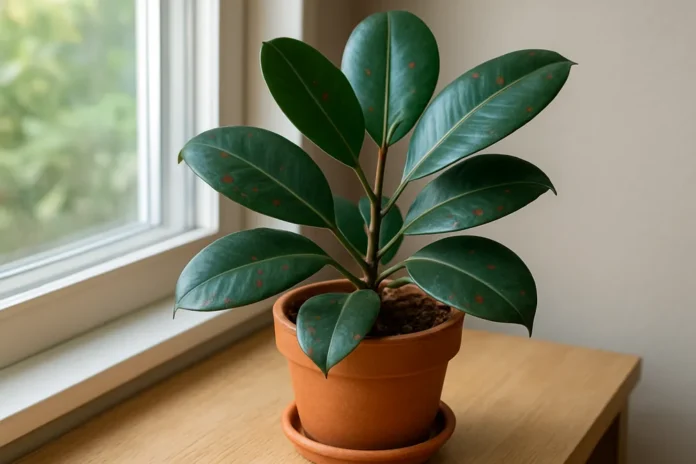
Rubber plant leaves usually develop red spots from stress, most often inconsistent watering, edema, excess sun, pests, or a leaf spot disease. The exact cause depends on whether the spots look dry, raised, water-soaked, spreading, or concentrated on older leaves.
Seeing rubber plant leaves with red spots can be unsettling, especially on a plant that usually looks so glossy and sturdy. In my experience, this symptom is often less mysterious than it first appears. Rubber plants tend to show stress in their leaves early, and the color, texture, and placement of the spots can tell you a lot.
Sometimes the issue is simple, like a watering pattern that swings between too dry and too wet. Other times, red or reddish-brown spotting can come from sun stress, edema, pests, or a fungal or bacterial leaf problem. The good news is that most cases are manageable once you match the symptom pattern to the right cause.
If your rubber plant red spots are new, focus on the newest changes rather than old damage. Existing spots often stay visible even after the plant recovers, so the real sign of progress is healthy new growth.
What Red Spots Usually Mean on a Rubber Plant
Red spots are not a single diagnosis. On rubber plants, they usually fall into a few broad categories: physical stress in the leaf tissue, moisture imbalance, pest feeding damage, or infection. The plant's thick leaves hold moisture well, which is helpful, but it also means they can react strongly when conditions swing too fast.
I start by looking at the spots themselves. Are they tiny and scattered like freckles, larger and blotchy, dry and crisp, or dark and water-soaked? Are they mostly on older leaves near the bottom, or on newer growth near the top? A red spot with a tan center points me in a different direction than a purplish spot that looks raised or corky.
- Small, rust-red or brownish specks can suggest edema or mild leaf stress
- Bleached areas with red or bronze tint often point to too much direct sun
- Spots with yellow halos or wet-looking tissue can indicate leaf spot disease
- Fine stippling, scarring, or patchy discoloration may come from pests such as spider mites or thrips
- Damage limited to older leaves often connects to watering inconsistency or normal leaf aging plus stress
When I diagnose rubber plants, I pay more attention to the pattern across several leaves than to one dramatic leaf. A single marked leaf can be old damage, but the same spotting repeated on new leaves usually means the problem is still active.
Watering Issues and Edema Are Common Culprits
How Inconsistent Moisture Creates Red Spotting
One of the most common reasons I see red or reddish-brown spots on rubber plants is uneven watering. If the potting mix stays soggy for too long, the roots struggle to regulate water uptake. If the plant then takes up more water than the leaves can release, cells may rupture and leave tiny discolored spots. If the soil gets bone dry and then gets drenched, the plant can react in a similar stop-and-start way.
This condition is often called edema. On rubber plants, edema can look like small corky, reddish, tan, or brown spots, sometimes on the undersides first. They may feel slightly raised or rougher than the surrounding leaf tissue. The spots are cosmetic once they happen, but they are a clue that the watering rhythm needs to become steadier.
Signs the Problem Is Moisture Imbalance
- Spots appear after a period of overwatering or after heavy watering into very dry soil
- Older leaves show more spotting than new leaves
- The pot feels wet for many days in a row
- Leaves may also droop, yellow, or feel softer than usual
- The spotting does not spread leaf-to-leaf like a contagious disease
If this sounds like your plant, let the top portion of the potting mix dry before watering again, rather than keeping the soil constantly damp. Rubber plants like consistent moisture, but they do not like wet feet. A pot with good drainage and a chunky indoor mix makes a big difference here.
I have better results judging rubber plants by soil feel than by a calendar. If the top 1 to 2 inches are dry and the pot feels noticeably lighter, that is usually a better watering signal than a fixed weekly routine.
Too Much Direct Sun Can Leave Red, Bronze, or Burnt Patches
Rubber plants like bright light, but harsh direct sun, especially through a hot west or south-facing window, can scorch their leaves. Sun stress does not always show up as simple brown burns at first. It can start as red, bronze, or reddish-brown spotting and blotching, especially on leaves suddenly exposed to stronger light.
This often happens after moving a rubber plant outdoors, placing it right against hot glass, or shifting it from a lower-light room into intense sun without a gradual adjustment period. The damaged areas may later turn tan or brown and feel dry or papery.
- Spots are mostly on the side facing the window or strongest light
- Larger patches form rather than tiny evenly scattered dots
- The tissue feels dry, thin, or crisp
- Recently moved plants are more likely to show this pattern
Move the plant back a little from the glass or filter the light with a sheer curtain. Bright, indirect light is ideal for most indoor rubber plants. Damaged leaves will not fully clear, but the plant should stop producing new spots once the exposure is corrected.
Pests Can Create Red Speckling and Scarred Patches
Spider Mites and Thrips Are the Usual Suspects
Pests are another important possibility, especially if the spots are tiny, numerous, and paired with dull-looking leaves. Spider mites and thrips both feed by damaging leaf tissue, which can leave stippling, bronzing, red specks, or irregular scarred areas. Because rubber plant leaves are thick and shiny, early pest damage can look subtle until you inspect closely.
Spider mites are more likely in dry indoor air and often leave fine webbing, especially along the midrib or where leaves meet stems. Thrips may leave silvery scarring, black specks of waste, and distorted new growth. Scale insects are less likely to make red spots directly, but heavy feeding can weaken the plant and contribute to general leaf discoloration.
Clues That Point Toward Pests
- Very fine speckling over broad areas of the leaf
- A faded, dusty, or bronzed look instead of sharply defined round spots
- Tiny moving insects on the undersides of leaves
- Webbing, black flecks, or deformed new growth
- Nearby houseplants showing similar symptoms
If you suspect pests, isolate the plant from others right away. Wipe both sides of the leaves, inspect the undersides and the stem joints, and repeat treatment as needed rather than assuming one spray will solve the problem. Rubber plants have large leaves, so a careful physical cleaning is often just as helpful as the product you choose.
Leaf Spot Diseases Are Less Common but Worth Ruling Out
Fungal and bacterial leaf spot problems can also produce red, reddish-brown, purple-brown, or dark spots on rubber plants. These are more likely when airflow is poor, leaves stay wet for long periods, or the plant is already stressed by overwatering. The spots may start small and then enlarge, sometimes developing darker borders or yellow halos.
Disease spotting often looks more defined than edema or pest stippling. Instead of many tiny rough freckles, you may see discrete lesions that spread over time. In bacterial cases, the tissue can look water-soaked before turning darker. In fungal cases, spots may dry out in the center and become brittle.
- Spots increase in size over days or weeks
- A yellow ring forms around the affected area
- The tissue looks wet, soft, or sunken before drying
- Leaves were misted often or crowded with poor airflow
- The plant sits in cool, damp conditions
Remove badly affected leaves with clean pruners, avoid wetting the foliage, and improve air circulation around the plant. Water the soil directly and empty saucers so the roots are not sitting in standing water. If the spotting continues to spread quickly even after conditions improve, a houseplant-safe fungicidal product may help with fungal issues, though it will not fix bacterial infections the same way.
True leaf spot problems usually keep changing shape. If a red spot looks exactly the same two weeks later, I lean more toward old physical damage or edema than an active disease.
Cold Shock, Low Humidity, and Physical Injury Can Also Mark the Leaves
Not every red spot comes from watering or pathogens. Rubber plants dislike sudden chills, cold drafts, and abrupt environmental changes. A leaf pressed against a cold window, exposed to an air conditioner vent, or brushed repeatedly during moving can develop localized damage that later turns reddish or brownish.
Low humidity alone usually causes dry edges and general stress more than red spots, but when dry air combines with inconsistent watering or spider mites, spotting can become more obvious. Newly unfurling leaves are especially sensitive. They may scar more easily than mature leaves if humidity is very low or if the plant is handled while the leaves are still soft.
- Damage appears on the outermost leaves exposed to windows, vents, or traffic
- Spots are irregular and do not spread in a disease-like way
- Newer leaves may emerge marked after a sudden environmental shift
- The plant otherwise looks healthy and continues normal growth
Stabilizing the environment is the fix here. Keep the plant away from drafts, avoid cold-night contact with window glass, and do not crowd it into harsh airflow. If humidity is extremely low, a small humidifier nearby is more reliable than occasional misting.
How to Tell Which Cause Is Most Likely
When several causes seem possible, narrow them down by asking a few practical questions. What changed recently? Did you repot, move the plant, water more often, or start placing it in stronger sun? Most rubber plant leaf problems become easier to solve when you trace them back to a recent shift in care or environment.
- Look at where the spots are. Top leaves near bright light suggest sun stress. Lower older leaves suggest moisture imbalance or normal aging with stress.
- Check texture. Dry, crisp tissue points more toward sun or physical damage. Corky bumps suggest edema. Wet-looking spots suggest disease.
- Inspect undersides of leaves for pests, webbing, black specks, or tiny moving insects.
- Think about watering history over the last month, not just the last watering.
- Watch whether new growth emerges clean. That tells you faster than waiting for old leaves to improve.
If you still are not sure, correct the most likely cultural issue first: steady watering, bright indirect light, and good airflow. Those changes help in a large share of cases and also make it easier to see whether pests or disease are truly involved.
What to Do Now to Help Your Rubber Plant Recover
Once a leaf has red spots, the marked tissue usually stays marked. Recovery means stopping new damage, not erasing old spots. That is why the goal is to improve conditions and monitor fresh leaves for cleaner growth.
- Adjust watering so the soil is neither constantly wet nor repeatedly bone dry
- Make sure the pot has drainage holes and the mix drains well
- Give the plant bright, indirect light instead of harsh midday or late-afternoon sun
- Inspect for pests weekly until you are sure they are gone
- Remove severely damaged leaves if they are numerous, infected, or dragging down the plant's appearance
- Avoid misting leaves if disease is suspected
- Hold off on heavy fertilizing until the plant is growing steadily again
If root issues are part of the problem, you may also notice yellowing, leaf drop, or a sour smell from the potting mix. In that case, repotting into fresh, airy soil may be worth considering, especially if the current mix is dense and slow to dry. Just do not stack too many changes at once unless the plant is clearly declining fast.
I try to change one major variable at a time unless roots are rotting. If you repot, move the plant, fertilize, and spray all in the same week, it becomes much harder to tell what actually helped or hurt.
When Red Spots Are Not a Serious Problem
A few isolated red spots on an otherwise vigorous rubber plant are not always a crisis. Older leaves naturally accumulate cosmetic wear over time, especially in homes where light, temperature, and watering are not perfectly stable. If the plant is putting out healthy new leaves and the spots are not spreading, you may be looking at old minor damage rather than an active problem.
That said, it is still worth checking the basics. Rubber plants are forgiving, but they are also honest about stress. Small spot patterns often appear before bigger symptoms like leaf drop or root decline, so catching the issue early gives you the best chance of easy recovery.
FAQ
Can Red Spots on Rubber Plant Leaves Go Away?
Usually no. The damaged tissue normally stays marked, even after the plant is healthy again. What you want to see is that new leaves come in clean and existing spots stop spreading.
Should I Cut Off Leaves with Red Spots?
Only if the leaves are badly damaged, infected, or unattractive enough that you want to remove them. If a leaf is still mostly green and working for the plant, it can stay.
Are Red Spots on a Rubber Plant Caused by Overwatering?
They can be. Overwatering and uneven moisture are very common causes, especially when the spots are small, corky, or concentrated on older leaves. But pests, sunburn, and disease can cause similar symptoms.
Do Rubber Plants Get Fungal Leaf Spot Indoors?
Yes, though it is less common than watering stress. It is more likely when leaves stay wet, air circulation is poor, and the potting mix remains overly damp.
Can Too Much Sun Make Rubber Plant Leaves Turn Red?
Yes. Strong direct sun can create red, bronze, or reddish-brown patches before the tissue dries and turns tan or brown. This is especially common after a sudden move into brighter light.
How Do I Know if Pests Are Causing the Spots?
Look for fine stippling, bronzing, webbing, black specks, silvery scarring, or tiny insects on the undersides of leaves. Pest damage usually looks more speckled or scraped than round and isolated.
Should I Mist a Rubber Plant with Red Spots?
Not if disease is a possibility. Misting can keep leaves wet longer and may worsen fungal or bacterial spotting. If humidity needs help, a humidifier is the better choice.
Want the right fix faster? Read our rubber plant care and treatment guides to choose the best soil, pest controls, and watering setup for healthier leaves.
