

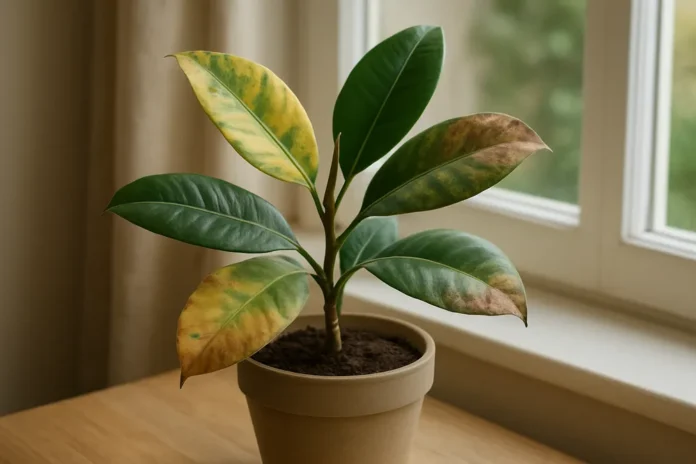
Rubber plant leaves usually become discolored because of stress from improper watering, too much direct sun, low light, temperature swings, nutrient imbalance, or pests. The exact color and pattern often point to the main cause.
When a rubber plant starts showing strange leaf colors, it is usually reacting to stress rather than developing a mysterious disease out of nowhere. Leaves may turn yellow, brown, pale, red-tinted, spotted, or patchy, and each pattern tells you something slightly different about what the plant has been dealing with.
I have found that discolored leaves are easiest to diagnose when you stop looking at the plant as a whole and start looking at the pattern. Are older leaves changing first, or brand-new ones? Is the damage crispy, soft, blotchy, faded, or concentrated on the side facing a window? Those details matter much more than the color alone.
What Discoloration Is Normal and What Is Not
Not every color change means your rubber plant is in trouble. Older bottom leaves naturally yellow and drop as the plant grows, especially if it is adjusting to a new home or pushing fresh top growth. New leaves on many rubber plants can also emerge with bronze, reddish, or pinkish tones before deepening into their mature color.
What is not normal is a spreading pattern of discoloration, multiple leaves changing at once, blackening, bleached patches, or browning that keeps advancing after conditions stay the same. If several leaves are affected and the problem is getting worse, the plant is signaling ongoing stress.
- Usually normal: one occasional older leaf turning yellow and dropping
- Usually normal: reddish or bronze tint on unfolding new leaves
- Usually a problem: many leaves yellowing together
- Usually a problem: tan, white, or faded patches on sun-exposed foliage
- Usually a problem: black, mushy, or water-soaked areas
- Usually a problem: widespread stippling, spotting, or sticky residue
What the Color Pattern Usually Means
Yellow Leaves
Yellowing is most often tied to watering problems. Overwatering is the most common cause, especially when the soil stays wet for long stretches and the yellow leaves feel soft before they drop. Underwatering can also yellow leaves, but those leaves often look limp, dry at the edges, or curl a bit as the potting mix pulls away from the sides of the pot.
Brown Edges or Brown Tips
Brown edges usually point to dryness, inconsistent watering, salt buildup from fertilizer, or very dry indoor air. If the brown tissue is crisp, think dehydration first. If the browning follows a period of heavy feeding, fertilizer salts may be scorching the roots and showing up at the leaf margins.
Tan, White, or Faded Patches
Bleached-looking patches are classic sunscald. Rubber plants like bright light, but a plant that goes straight from moderate indoor light to harsh afternoon sun can develop pale or papery areas where the tissue was burned. These damaged spots do not turn green again.
Dark Brown or Black Areas
Black or very dark patches often suggest cold injury, rot related to soggy roots, or a bacterial or fungal issue when paired with water-soaked spots. If the plant was near a drafty winter window, exterior door, or air conditioner vent, temperature shock is a strong possibility.
Pale Green Leaves or Washed-out Color
A rubber plant that loses its rich deep color may be getting too little light or lacking nutrients. Low light tends to produce dull foliage and slower growth overall. Nutrient deficiency, especially in old potting mix, can make the whole plant look less saturated and vigorous.
When I am diagnosing a rubber plant, I look at which leaves changed first before anything else. Older lower leaves usually point me toward watering or nutrition, while damage on the most exposed upper leaves makes me suspect sun, heat, or cold stress much faster.
Watering Problems Are the Most Common Cause
If I had to bet on one reason for rubber plant leaf discoloration, I would start with watering. These plants like to dry slightly between waterings, but they do not want to stay bone dry for long periods or sit in a heavy, constantly wet mix. Both extremes can disrupt root function, and when roots struggle, leaves lose color fast.
Signs of Overwatering
- Several leaves turn yellow at once
- Leaves may drop while still partly green or yellow
- Soil feels wet days after watering
- The pot feels heavy for a long time
- There may be a sour smell from the potting mix
- Lower stems or roots may become soft if rot is setting in
Signs of Underwatering
- Brown crispy edges or tips
- Curling or drooping leaves
- Dry compacted soil that shrinks away from the pot sides
- Leaf drop after the plant stays dry too long
- The plant perks up noticeably after a deep watering
The fix is not to water on a rigid calendar. Water when the top couple of inches of the mix feel dry, then water thoroughly until excess drains out. Empty saucers so the roots are not left standing in water. If the mix stays soggy for too long, move the plant into a chunkier, faster-draining potting blend and make sure the container has drainage holes.
If you are torn between overwatering and underwatering, lift the pot right after a full watering and again when it is ready for the next drink. That weight difference becomes one of the quickest ways to judge moisture without guessing from the surface alone.
Light Stress Can Bleach or Dull the Foliage
Rubber plants do best in bright, indirect light, and discoloration often shows up when the light level is too intense or too weak. Too much direct sun causes leaf bleaching, tan scorch marks, and a washed-out look on the side facing the window. Too little light leads to faded color, slower growth, and a plant that gradually looks less glossy and robust.
A sudden change matters more than the exact direction of the window. A plant that spent months in filtered light can burn quickly if moved outdoors or placed in strong afternoon sun. On the other hand, a plant kept far from a window may not have enough light to support its dark, saturated foliage.
- Best indoor placement is near a bright window with filtered light
- East windows are usually gentle and reliable
- South or west windows often need a sheer curtain if the sun is intense
- Rotate the plant every few weeks for more even growth and color
- Acclimate slowly if moving it to brighter conditions
Temperature Swings and Low Humidity Can Leave Marks
Rubber plants are tropical, so they dislike cold drafts, sharp temperature drops, and dry blasts from heating or cooling vents. Cold damage can show up as dark patches, limp leaves, sudden leaf drop, or general discoloration after a chilly night near glass. Heat stress and dry air more often lead to crispy tips, browned edges, and leaves that lose their lush appearance.
Most homes are fine for rubber plants, but winter placement is where trouble starts. If leaves touch a cold pane, sit near a frequently opened door, or face hot dry furnace air, the plant may respond with blotchy or browned foliage even when watering seems correct.
- Keep the plant away from freezing windows in winter
- Avoid direct airflow from HVAC vents
- Aim for steady room temperatures rather than big day-to-night swings
- Increase humidity modestly if the air is extremely dry, especially during heating season
Nutrient Issues and Salt Buildup Can Mimic Other Problems
A rubber plant that has lived in the same pot for a long time may start showing pale foliage, slow growth, and general loss of color because the potting mix is depleted. At the same time, too much fertilizer can create browning at the edges and tips, sometimes looking a lot like underwatering. That is why feeding history matters when you diagnose discoloration.
If you have not fertilized in many months during active growth, the plant may benefit from a balanced houseplant fertilizer used at a light rate. If you fertilize often, especially without flushing the pot thoroughly, salt accumulation may be the bigger problem. White crust on the soil surface or pot rim is a common clue.
- Pale overall color can suggest nutrient depletion
- Brown tips after frequent feeding can suggest fertilizer burn
- White residue on soil or pot edges often signals salt buildup
- Repotting into fresh mix can solve both compaction and nutrient exhaustion
I see many gardeners respond to yellowing by adding fertilizer immediately, but that can make a root problem worse. If the soil is staying wet or the roots are stressed, more fertilizer rarely fixes the color and can deepen the damage.
Pests and Disease Can Cause Spots, Stippling, and Patchy Color
Rubber plants are fairly sturdy, but spider mites, scale, mealybugs, and occasionally fungal or bacterial leaf spot can all lead to discoloration. Pest damage often looks different from basic watering stress. Instead of a whole leaf yellowing evenly, you may see tiny pale specks, mottling, sticky residue, fine webbing, or raised bumps along stems and leaf undersides.
Clues That Point to Pests
- Fine stippling or dusty-looking leaves, often from spider mites
- Sticky honeydew on leaves or nearby surfaces
- Cottony clusters from mealybugs
- Brown shell-like bumps from scale insects
- Distorted new growth along with discoloration
Clues That Point to Leaf Spot or Rot-related Disease
- Dark spots with yellow halos
- Water-soaked lesions that spread
- Discoloration that worsens when leaves stay wet
- Soft tissue combined with persistently soggy soil
If pests are involved, isolate the plant and wipe leaves carefully, especially the undersides. Repeated treatment with insecticidal soap or horticultural oil is often enough for light infestations. For leaf spot issues, improve air circulation, avoid wetting foliage late in the day, and remove badly damaged leaves if the problem is spreading.
How to Narrow Down the Real Cause Fast
Because several problems can create similar colors, it helps to work through a short set of observations instead of guessing from one symptom. Start with the soil moisture, then look at light exposure, then inspect leaves closely for pests. Finally, think about any recent change in location, temperature, fertilizer, or potting mix.
- Check whether the soil is soggy, evenly moist, or bone dry below the surface.
- Look at which leaves are affected first: old lower leaves, exposed outer leaves, or new growth.
- Notice whether the damage is crisp, soft, bleached, speckled, or haloed.
- Inspect leaf undersides and stems for webs, bumps, cottony masses, or sticky residue.
- Think back over the last two to four weeks for any move, repot, draft, feeding, or missed watering.
Usually one cause rises to the top once you compare the pattern with the plant's recent conditions. The biggest mistake is changing everything at once. If you move the plant, repot it, fertilize it, and alter watering in the same weekend, you will not know what actually solved the problem.
How to Help Your Rubber Plant Recover
Recovery depends on correcting the stress and then watching the new growth. Damaged leaf tissue often stays discolored permanently, especially if it was burned, browned, or blackened. What you want to see is that future leaves emerge healthy and existing leaves stop getting worse.
- Adjust watering so the mix dries slightly between deep waterings
- Place the plant in bright, indirect light
- Protect it from cold drafts and hot vents
- Flush excess fertilizer salts if you have been feeding heavily
- Repot if the soil is compacted, sour-smelling, or drains poorly
- Treat pests consistently rather than just once
- Prune off badly damaged leaves only after the plant is stable
Be patient after you make a correction. Rubber plants do not always rebound overnight, but they usually respond well once conditions are steady. I prefer to judge progress by the next round of leaves rather than by expecting old damage to reverse.
FAQ
Should I Remove Discolored Rubber Plant Leaves?
If a leaf is mostly damaged, yellow, or brown, you can remove it with clean pruners. If it is only lightly marked and still functioning, I usually leave it until the plant has recovered and is pushing healthy new growth.
Can Discolored Rubber Plant Leaves Turn Green Again?
Usually no. Burned, browned, bleached, or heavily yellowed tissue rarely returns to normal color. The better sign is that new leaves come in healthy and the discoloration stops spreading.
Why Are Only the Bottom Leaves on My Rubber Plant Turning Yellow?
A single older bottom leaf yellowing now and then can be normal aging. If several lower leaves yellow together, overwatering, low light, or depleted potting mix are more likely causes.
Why Does My Rubber Plant Have Brown Spots Instead of Full Yellow Leaves?
Brown spots can come from sunburn, cold damage, inconsistent watering, pests, or leaf spot disease. The texture helps narrow it down, because crisp dry spots often point to scorch or dryness, while soft dark spots suggest rot or disease.
Can Tap Water Cause Rubber Plant Leaf Discoloration?
It can in some homes, especially if the water is very hard or leaves mineral deposits over time. Mineral and salt buildup may contribute to brown tips or dull foliage, particularly when combined with frequent fertilizing.
How Long Does It Take a Rubber Plant to Recover After I Fix the Problem?
You may see the plant stabilize within a couple of weeks, but noticeable recovery usually shows up in new growth over the next month or two. Older damaged leaves often remain marked even after conditions improve.
Does Misting Help with Brown Edges on Rubber Plant Leaves?
Misting offers only short-lived humidity and usually does not solve the root issue if watering is inconsistent. It is more effective to improve watering habits, avoid hot or cold drafts, and raise humidity in a more consistent way if the air is extremely dry.
Still not sure what your rubber plant needs next? Read our guide to the best indoor plant moisture meters, potting mixes, and pest treatments so you can fix discoloration with the right tools the first time.
