

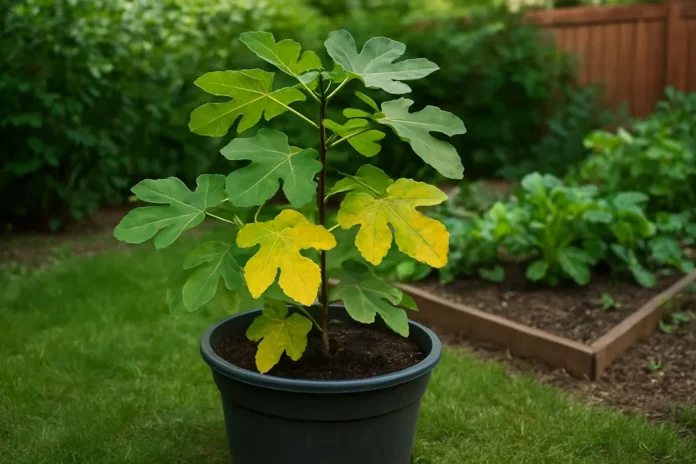
Fig tree leaves usually turn yellow because of watering stress, nutrient deficiencies, root trouble, pests, or normal seasonal leaf drop. The most common cause is roots staying too wet or swinging between too dry and too wet.
Few things make a fig grower nervous faster than fig tree leaves turning yellow. Figs are vigorous plants when they are happy, so when the foliage starts fading from rich green to pale yellow, it is usually a sign that something in the plant's routine has shifted.
In my experience, yellow leaves on figs are often caused by moisture problems first, then nutrition, then environmental stress. The good news is that figs usually give you other clues besides color, like soft leaves, crispy edges, dropped fruit, visible pests, or yellowing that starts on older leaves versus newer ones.
If you can read those clues, you can usually tell whether your fig tree is dealing with too much water, too little feeding, cramped roots, transplant stress, or a perfectly normal seasonal slowdown.
What Yellow Fig Leaves Usually Mean
Yellowing leaves are a symptom, not a diagnosis by themselves. With figs, the pattern matters. A few older leaves yellowing near the end of the season is often normal. Widespread yellow leaves during active growth usually point to stress. If leaves are yellow and limp, think waterlogged roots. If they are yellow and dry at the edges, think drought or salt buildup. If the veins stay green while the tissue between them turns yellow, nutrient imbalance rises on the list.
- Older lower leaves yellowing first can suggest normal aging, nitrogen shortage, or inconsistent watering.
- New growth yellowing first can point to iron deficiency, root stress, or alkaline soil conditions.
- Yellow leaves with brown crispy margins often suggest underwatering, heat stress, or fertilizer burn.
- Yellow leaves that feel soft or droop may indicate overwatering or poor drainage.
- Yellowing plus leaf drop after moving a fig can be transplant or location shock.
When I diagnose a yellowing fig, I look at the newest leaves first. If the fresh growth is still green and strong, the plant often has a manageable stress issue. If the newest leaves are the palest ones, I start thinking about root function, soil pH, or a more serious nutrient lockout.
Overwatering and Poor Drainage Are the Most Common Causes
The most common reason fig leaves turn yellow is that the roots are staying too wet. Figs like regular moisture, but they do not like sitting in soggy soil for long. When roots lose oxygen, they cannot take up nutrients properly, and the leaves often respond by yellowing and dropping.
This is especially common in containers without enough drainage, in heavy clay soil, or after a rainy stretch combined with frequent watering. Sometimes gardeners see yellow leaves and water even more, which makes the problem worse.
- Leaves turn pale yellow across much of the plant
- Foliage looks limp even though the soil feels wet
- Leaves may drop while still soft, not crisp
- Growth slows down or stalls
- Soil smells sour or stays wet for several days
If your fig is in a pot, make sure excess water drains freely and the potting mix is loose enough to breathe. If it is in the ground, compacted soil or a low spot can keep roots too wet even if you are not watering heavily.
I do not judge watering by the surface alone. For potted figs, I check a couple inches down and also lift the pot to feel its weight. A pot that is still heavy a day or two after watering often tells you more than the top layer of soil.
Underwatering Can Cause Yellowing Too
Figs can handle some dryness, but prolonged drought stress can also turn leaves yellow. This tends to happen during hot weather, in fast-draining sandy soil, or in containers that dry out quickly. A thirsty fig may sacrifice older leaves to protect newer growth.
Unlike overwatered figs, underwatered figs often have leaves that feel papery or develop brown, crispy edges. Fruit may shrivel or drop early, and the soil usually pulls away from the sides of the container when it gets very dry.
- Yellowing starts on older leaves first
- Leaf edges brown and crisp
- Soil is dry several inches down
- Container soil shrinks and dries quickly
- New growth is small or wilts in afternoon heat
A fig that swings back and forth between very dry and very wet can yellow even more than one that is simply a little dry. Those moisture swings stress the roots and interfere with nutrient uptake.
Nutrient Deficiencies and Nutrient Lockout
If watering looks reasonable, nutrition is the next place to look. Figs are not extreme feeders, but they do need balanced nutrients to keep foliage green. Nitrogen deficiency often shows up as overall yellowing on older leaves because nitrogen is mobile in the plant. Iron deficiency, by contrast, usually shows up on newer leaves first, especially when the veins stay greener than the rest of the leaf.
Common Nutrient-related Yellowing Patterns
- Nitrogen deficiency: older leaves fade evenly to light green or yellow
- Iron deficiency: young leaves yellow between green veins
- Magnesium deficiency: older leaves yellow between veins first
- Potassium shortage: yellowing may come with scorched leaf edges
Sometimes the issue is not a lack of fertilizer but nutrient lockout. If the soil is too alkaline, roots may struggle to take up iron and other micronutrients even when they are present. This is a common reason figs in containers or problem soils develop interveinal chlorosis, where the veins remain darker green.
Too much fertilizer can also trigger yellowing. Excess salts damage roots, and damaged roots cannot feed the plant properly. That can lead to yellow leaves, burned tips, or weak growth that looks confusingly similar to deficiency.
A fig that is pale all over does not always need more fertilizer. I have seen more than one yellow fig improve after correcting drainage, not after feeding. When roots are stressed, adding fertilizer can pile on another problem instead of fixing the first one.
Rootbound Pots, Transplant Shock, and Root Damage
Container figs often yellow because they have outgrown their pots. When roots circle densely around the container, they dry out faster, absorb nutrients less efficiently, and become more vulnerable to temperature swings. The result can be yellow leaves, reduced vigor, and smaller new growth.
Transplant shock can cause similar symptoms. If you recently repotted or planted your fig in the ground, some yellowing is not unusual while the roots reestablish. Root damage from rough handling, poor drainage after transplanting, or planting too deeply can make the yellowing worse.
- Roots circling tightly inside the pot
- Water runs straight through or dries out unusually fast
- Growth stalls after repotting
- Leaves yellow and drop soon after moving the plant
- The plant feels loose in the soil because roots have not anchored well
A healthy repot into a slightly larger container with fresh mix often helps a fig recover, but a jump into an oversized pot can keep soil wet too long. Figs generally do best with a gradual increase in pot size.
Pests and Diseases That Trigger Yellow Leaves
Several pests can cause yellowing by feeding on sap and weakening the leaves. Spider mites, scale, aphids, and whiteflies are the usual suspects, especially on potted figs or plants growing in sheltered, hot locations. Pest damage often comes with stippling, sticky residue, distorted growth, or tiny insects on the undersides of leaves.
Disease is less often the main reason for yellow leaves than watering or nutrition, but root rot can absolutely do it. In wet soils, fungal root problems reduce the plant's ability to take up water and nutrients, leading to general yellowing, wilt, and leaf drop. Leaf spot diseases may also create yellow halos around brown lesions.
Clues That Pests or Disease Are Involved
- Fine webbing or speckled leaves from spider mites
- Sticky honeydew or sooty mold from sap-feeding insects
- Raised bumps on stems or leaves from scale
- Spots, blotches, or yellow halos around lesions
- Persistent yellowing despite reasonable watering and feeding
If you suspect pests, inspect both the upper and lower leaf surfaces, stems, and the junctions where leaves attach. Small infestations are far easier to handle early than after the plant is badly weakened.
Seasonal Change and Natural Leaf Drop
Not every yellow leaf is a problem. Figs are deciduous, which means they naturally yellow and drop leaves as they head into dormancy. In many parts of the U.S., that starts in late summer through fall depending on climate, daylight, and temperature.
Seasonal yellowing usually happens fairly evenly and is tied to cooler nights and shorter days. The tree may otherwise look healthy, with mature stems and no signs of mushy roots, pests, or distorted foliage. Indoor figs or figs moved between outdoors and indoors may also shed some leaves while adjusting to lower light.
- Yellowing appears late in the growing season
- Leaf drop increases as temperatures cool
- The tree is not actively pushing much new growth
- There are no obvious signs of rot or pests
- The pattern is broad and seasonal, not patchy and sudden
How to Narrow Down the Real Cause
Because yellow leaves can come from several issues, it helps to rule things out in a simple order. Start with moisture and roots, then consider nutrition, then look for pests, and finally factor in season and recent changes like repotting or moving the plant.
Questions That Help Identify the Problem
- Is the soil staying wet too long, or drying out too fast?
- Are the oldest leaves yellowing first, or the newest leaves?
- Do the leaves feel soft, or crisp at the edges?
- Have you fertilized recently, or not at all this season?
- Did the fig get repotted, transplanted, or moved to a new spot?
- Do you see insects, webbing, sticky residue, spots, or stem bumps?
- Is it simply the normal time of year for the tree to slow down?
Those answers usually point you in the right direction quickly. If the plant is in a container, diagnosing is often easier because you can inspect the root zone and better control watering. In-ground figs can take a little longer because weather and soil structure play a bigger role.
What to Do for a Yellowing Fig Tree
The fix depends on the cause, but the goal is always the same: restore normal root function and steady growth. Figs usually recover well once conditions improve, though the yellow leaves already damaged may still drop.
If Overwatering Is the Issue
- Cut back watering until the soil has partly dried
- Improve drainage with a better container mix or site correction
- Empty saucers so roots are not sitting in runoff
- Check for root rot if the soil smells sour or the plant keeps declining
If Underwatering Is the Issue
- Water deeply so moisture reaches the full root zone
- Water on a consistent schedule based on soil dryness, not the calendar alone
- Mulch in-ground figs to slow evaporation
- Use a container size and soil mix that do not dry out too fast
If Nutrients Are Lacking or Locked Out
- Apply a balanced fertilizer at the proper rate during active growth
- Consider a micronutrient product if new leaves show interveinal chlorosis
- Test soil or potting mix pH if iron deficiency keeps returning
- Flush container soil if fertilizer salts may have built up
If Pests Are Involved
- Rinse foliage to knock down light infestations
- Use insecticidal soap or horticultural oil as labeled
- Repeat treatments as needed because eggs often hatch later
- Isolate a potted fig from other plants until the issue is controlled
If the Tree Is Going Dormant
- Let the tree shed naturally
- Reduce watering as growth slows
- Hold off on heavy feeding late in the season
- Resume normal care when spring growth returns
Change one thing at a time when possible. If you repot, fertilize heavily, and change watering all in the same week, it becomes much harder to tell what actually helped or harmed the fig.
How to Prevent Yellow Leaves in the Future
Prevention mostly comes down to consistency. Figs are tough plants, but they respond best when watering, drainage, feeding, and root space are kept steady. Most recurring yellowing problems start when the plant is bouncing between extremes.
- Use well-draining soil and containers with drainage holes
- Water deeply, then let the top layer dry before watering again
- Feed moderately during active growth instead of in big sporadic doses
- Repot before the plant becomes severely rootbound
- Inspect leaves regularly for mites, scale, and other sap feeders
- Avoid planting figs in poorly drained low spots
- Expect some yellowing and leaf drop as dormancy approaches
A fig that gets bright light, even moisture, and decent root conditions usually stays attractive for most of the growing season. Once you learn your tree's rhythm, yellow leaves become much easier to interpret and much less alarming.
FAQ
Should I Remove Yellow Leaves From My Fig Tree?
If the leaves are fully yellow and come off easily, you can remove them. If they are only partly yellow, I usually leave them until the tree finishes using what it can from that leaf, unless disease spots are present.
Can a Fig Tree Recover After Losing Yellow Leaves?
Yes. Figs often recover well once the underlying issue is corrected. The damaged leaves may still drop, but healthy new growth is the best sign that the plant is bouncing back.
Do Yellow Fig Leaves Always Mean Overwatering?
No. Overwatering is common, but drought, nutrient deficiency, transplant stress, pests, rootbound conditions, and seasonal dormancy can all cause yellow leaves too.
Why Are My Potted Fig Tree Leaves Turning Yellow Faster than My In-ground Fig?
Container figs dry out faster, become rootbound sooner, and are more vulnerable to drainage problems and fertilizer salt buildup. Those rapid swings make yellowing more common in pots.
Can Too Much Fertilizer Make Fig Leaves Yellow?
Yes. Excess fertilizer can burn roots and create salt stress, which reduces nutrient uptake and leads to yellow leaves, browning edges, or weak growth.
Is It Normal for Fig Leaves to Turn Yellow in Fall?
Yes. Fig trees are deciduous, so yellowing and leaf drop in fall are usually part of the normal dormancy cycle, especially as nights cool and daylight shortens.
Need the right fix fast? Read our guide to the best fertilizers, soils, and pest treatments for fig trees so you can choose products that actually solve yellowing problems.
