

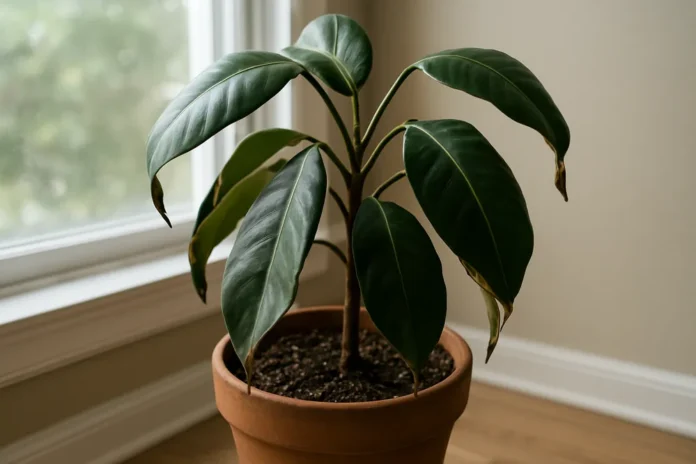
Rubber plant leaves usually wilt because the roots are stressed by too much water, too little water, or sudden environmental changes. Low light, temperature shock, pests, and compacted soil can also make the leaves droop.
A rubber plant with wilting leaves can look dramatic fast. One day the foliage is upright and glossy, and the next it seems limp, tired, or slightly folded. The good news is that wilting is often an early stress signal rather than a lost cause.
In my experience, rubber plants are fairly tough, but they dislike inconsistency. When leaves wilt, I usually start by thinking about root conditions first, then light, then recent changes like moving the plant, repotting, blasting air conditioning, or a missed watering. Rubber plant leaves wilting is a symptom, not the real problem, so the fix depends on what triggered the stress.
What Wilting Looks Like on a Rubber Plant
Wilting on a rubber plant does not always mean the leaves are dry. Sometimes the leaves hang downward but still feel thick and heavy. Other times they become softer, curl slightly, or lose their usual firm posture. You may also notice stems leaning more than usual or lower leaves drooping before upper growth does.
The exact look matters because it can point you in the right direction. Limp leaves with dry soil often suggest thirst. Drooping leaves with wet soil often suggest root stress from overwatering. If the plant wilted soon after a move, cold draft, or repotting, environmental shock is often part of the story.
When I diagnose a wilting rubber plant, I compare older leaves to the newest ones first. If the whole plant looks equally limp, I think root or watering trouble. If only a few older leaves are sagging while new growth looks decent, I suspect a milder stress or normal adjustment.
Overwatering Is the Most Common Cause
Many houseplant owners assume wilt means the plant needs more water, but with rubber plants the opposite is often true. When soil stays wet too long, the roots cannot access enough oxygen. As stressed roots begin to decline, the leaves lose tension and droop even though the pot is still moist.
This happens most often when a plant sits in a decorative cachepot without drainage, grows in dense potting mix, or is watered on a schedule instead of by need. In cooler months, the same watering routine that worked in summer can suddenly become too much.
- Soil feels wet several days after watering
- Leaves droop but do not feel crisp or papery
- Lower leaves may yellow before dropping
- The pot feels heavy for a long time
- You notice a sour or swampy smell from the soil
If overwatering is the issue, let the upper part of the mix dry before watering again, and make sure excess water can drain away freely. If the plant has been sitting soggy for a while, check the roots. Healthy roots are firm and pale. Rotten roots are brown, mushy, or easily pull apart.
Underwatering Can Make Leaves Collapse Quickly
Rubber plants also wilt when they become too dry. This kind of droop can happen surprisingly fast, especially if the plant is rootbound, in a warm bright room, or near a heat source. When the root ball dries out too much, the plant cannot move enough moisture into the leaves, so they soften and hang.
Unlike overwatered plants, underwatered rubber plants often feel lighter in the pot and the soil may pull away from the pot edge. Leaves may curl inward a bit, and the overall plant can look thirsty rather than heavy and limp.
- Soil is dry several inches down
- The pot feels very light when lifted
- Leaves droop and may feel thinner than usual
- Leaf edges can brown if dryness repeats
- Water runs straight through because the mix has become hydrophobic
If the root ball is very dry, rehydrate it thoroughly instead of giving a small splash. Water until the entire mix is moistened and excess drains out. In severe cases, watering in stages or bottom watering can help dry soil absorb moisture again.
I do not judge watering by the calendar with rubber plants. I stick a finger into the mix, check the pot weight, and water deeply only when the top layer has dried and the plant actually needs it.
Root Problems After Repotting or in Poor Soil
Wilting can show up after repotting even when you did everything reasonably well. A rubber plant may droop for a short time as it adjusts to disturbed roots, a new container size, or a different soil texture. Mild transplant stress usually improves within a week or two if the plant is kept stable.
More serious trouble happens when the plant is put into a pot that is too large, or into a mix that stays dense and airless. Too much extra soil around a modest root system holds moisture longer than the plant can use it. That often leads to the same oxygen-starved conditions that cause overwatering symptoms.
Rubber plants prefer a loose, well-draining mix that still holds some moisture. A good indoor blend often includes potting soil plus bark, perlite, pumice, or another chunky amendment. The goal is to keep roots evenly moist but never smothered.
- Wilting began soon after repotting
- Soil stays damp much longer than it used to
- Roots circle densely at the pot edge or bottom
- The plant rocks loosely because roots are not established
- Drainage holes are blocked or absent
Low Light Weakens Leaf Posture Over Time
Rubber plants tolerate moderate indoor light, but they do best in bright indirect light. In a dim corner, they often stop using water efficiently and grow more slowly. Leaves can begin to droop because the plant lacks the energy to maintain strong, sturdy growth.
Low light wilting usually develops gradually rather than overnight. You may also notice wider spacing between leaves, slower growth, smaller new leaves, or a plant leaning hard toward the nearest window. If the soil also stays wet too long, low light may be making an overwatering problem worse.
Moving the plant closer to a bright window often helps, especially east or south exposure filtered by a sheer curtain if midday sun is intense. Rubber plants can take some direct sun indoors, but a sudden jump from shade to harsh sun can scorch leaves, so increase light gradually.
Temperature Stress and Drafts Can Trigger Drooping
Rubber plants like steady warmth. Cold windows, winter drafts, air conditioner blasts, and heat vents can all make leaves wilt or sag. Even if the root system is healthy, sudden temperature swings can interfere with normal water movement through the plant.
I see this often when a plant sits close to an exterior door or right against chilly glass at night. The leaves may droop without obvious yellowing at first, and the plant can look fine again during warmer parts of the day, which makes the problem easy to miss.
- Wilting started after a cold snap or heat wave
- The plant sits near vents, drafty windows, or frequently opened doors
- Leaf damage appears mostly on the exposed side
- Newer leaves look stressed after a room change or transport home
Keep your rubber plant away from direct heating and cooling airflow, and try to maintain indoor temperatures in a comfortable household range. Consistency matters more than chasing a perfect number.
Pests Can Sap Moisture and Make Leaves Go Limp
Although watering is the first thing to check, pests can also cause wilting. Spider mites, scale, mealybugs, and thrips feed on plant tissues and can weaken leaves over time. A badly infested rubber plant may lose shine, develop stippling or sticky residue, and start to droop.
Spider mites are especially common in dry indoor air. They often hide on leaf undersides, and early webbing can be so fine you only notice it in bright light. Scale insects can look like little bumps on stems or along leaf veins, while mealybugs leave cottony clusters in crevices.
If pests are behind the wilting, improving care alone will not fully solve it. Isolate the plant, inspect both sides of the leaves, and treat according to the pest involved. For many common indoor pests, repeated cleaning plus insecticidal soap or horticultural oil works better than one heavy treatment.
A pest-stressed rubber plant often looks dull before it looks seriously wilted. When the leaves lose that thick glossy look and start drooping at the same time, I always inspect the undersides and stems before assuming it is only a watering issue.
How to Tell Which Cause Is Most Likely
Because several problems can produce the same droopy look, it helps to use a quick process of elimination. Start with the soil, then think about roots, then recent environmental changes. The goal is to avoid making the classic mistake of watering a plant that is already suffering from wet roots.
- Feel the soil 2 to 3 inches down and check the pot weight.
- Make sure the pot has unobstructed drainage holes.
- Review the last two weeks of care, including watering, moving, repotting, and temperature changes.
- Look for yellowing, browning, pests, or a bad smell from the potting mix.
- If symptoms are severe and the soil is staying wet, inspect the roots.
One symptom on its own rarely tells the whole story. Drooping plus yellow leaves plus soggy soil points one way. Drooping plus bone-dry mix plus curled leaf edges points another way. The pattern matters more than any single leaf.
What to Do Next Without Making It Worse
Once you identify the most likely cause, make the smallest effective correction first. If the plant is dry, water thoroughly. If it is soaked, let it dry and improve drainage. If it is in low light, move it into brighter indirect light. If drafts are the issue, relocate it to a more stable spot.
Avoid piling on multiple treatments all at once unless the problem is obvious, like root rot or pests. Fertilizing a stressed rubber plant, for example, rarely helps immediately and can irritate already damaged roots. Pruning wilted leaves is also usually unnecessary unless they are badly damaged or starting to yellow and die.
After correcting the issue, watch the newest growth and the overall firmness of the plant over the next couple of weeks. Existing leaves may not spring back perfectly if they were stressed for too long, but the plant should stop declining and start holding itself more confidently.
How to Prevent Wilting in the Future
Prevention comes down to consistency. Rubber plants like bright light, a pot with drainage, a chunky well-aerated mix, and watering that responds to the soil rather than the calendar. They do not need fussy care, but they do appreciate stable conditions.
- Water deeply, then wait until the top portion of the soil dries before watering again
- Use a container with drainage holes
- Keep the plant in bright indirect light or gentle direct morning sun
- Rotate it occasionally for even growth
- Protect it from cold drafts and hot vents
- Inspect leaves regularly for pests, especially in winter indoor air
- Repot only when needed and avoid oversized containers
A healthy rubber plant usually tells you what it likes. Once you find the right spot and rhythm, the leaves should stay upright, thick, and glossy for most of the year.
FAQ
Can Wilted Rubber Plant Leaves Recover?
Yes, they often can if you correct the underlying stress early enough. Mildly wilted leaves may firm up again, but leaves that were severely damaged can stay floppy, scarred, or eventually drop.
Should I Water My Rubber Plant as Soon as I See Drooping Leaves?
No. Check the soil first. Drooping can be caused by both underwatering and overwatering, and adding water to an already soggy pot can make the problem much worse.
How Often Should I Water a Rubber Plant Indoors?
There is no perfect schedule because light, season, pot size, and soil all affect drying time. Most indoor rubber plants do best when watered only after the top layer of soil has dried.
Can Low Humidity Make Rubber Plant Leaves Wilt?
Low humidity alone does not usually cause dramatic wilting, but it can add stress and make leaves look less robust. It also encourages spider mites, which can contribute to drooping.
Why Is My Rubber Plant Drooping After Repotting?
A little drooping after repotting is often transplant shock from disturbed roots or a change in soil moisture. If the drooping keeps getting worse, check whether the new pot is too large or the mix is staying too wet.
Do Rubber Plants Wilt From Too Much Sun?
They can if moved abruptly into intense direct sun. More often, too much sun causes scorch, faded patches, or crisping, but heat and rapid drying can also lead to temporary wilting.
Should I Remove Wilted Leaves From My Rubber Plant?
Leave them on if they are still mostly green. The plant can still use them while it recovers. Remove leaves only if they are badly damaged, yellowing, or dead.
Need the right fix fast? Read our guide to the best houseplant soil mixes, moisture meters, and pest treatments so your rubber plant can recover with fewer setbacks.
