

Note: This article contains affiliate links. If you click on these links and make a purchase, I may earn a small commission at no extra cost to you. This helps support my research and content. Read my full affiliate disclosure here.
A carpenter ant problem demands a targeted response because these insects can damage wood and create hidden galleries inside walls and structures. Choosing the right carpenter ant trap affects how quickly you reduce worker numbers, where you can safely place bait inside a home, and how effectively the colony and queen are impacted. This guide summarizes the top shortlisted options for indoor and perimeter baiting and explains the practical tradeoffs gardeners and homeowners should expect. We evaluated traps for bait formulation, placement flexibility, and ease of use so you can match a solution to your infestation pattern. Read on to see the criteria we used and the factors to weigh before deploying traps in and around a building.
Top Picks at a Glance
| Best Overall The best all-around choice for most situations | Advion Ant Gel Station Insecticide, Ready-to-Use Gel Bait (9 Stations) |  |
| Best Quality Built to a higher standard if you want something more solid | BASF Advance Granular Carpenter Ant Bait, 8 oz |  |
| Best Value The sweet spot between price and what you get | ROUTADE 48-Pack Slow-Acting Ant Gel Bait Stations |  |
| Highest Rated A top-rated pick with lots of positive feedback | ROUTADE 48-Pack Slow-Acting Ant Gel Bait Stations |  |
| Most Popular A crowd favorite that many people choose with confidence | TERRO Liquid Ant Killer Bait Stations, 12-Pack (T300B) |  |
| Best Seller A high-volume bestseller chosen again and again | TERRO Liquid Ant Bait Stations, 18 Count (3 Pack) |  |
Advion Ant Gel Station Insecticide, Ready-to-Use Gel Bait (9 Stations)

| Included Components | 9 stations |
|---|---|
| Item Form | Gel |
| Target Species | Insects |
| Manufacturer | Syngenta |
The Advion Ant Gel Station is a pre-filled, no-mess bait delivery system that uses indoxacarb gel to attract and kill a wide range of ant species, including carpenter ants. Use is simple: remove the top tab, squeeze the gel capsule inside the tamper-resistant station, and place stations near active trails or entry points. For homeowners it offers targeted control because foraging workers carry the active ingredient into the nest, promoting horizontal transfer and helping reduce the entire colony rather than only visible workers. The station design keeps the gel contained to limit accidental contact and the gel formulation is attractive to many ant species, which often produces noticeable reductions in activity within days. Limitations to expect are that heavy rain or very wet locations will reduce effectiveness outdoors and multiple placements or repeated applications may be needed for large or well-established colonies. The product is best used as part of an integrated approach that includes locating nest sites and sealing entry points.
Best for: Homeowners or property managers seeking a practical, easy-to-deploy solution to reduce carpenter ant activity and address infestations without professional equipment.
Less Ideal for: People needing immediate elimination of large outdoor nests or who require non-chemical mechanical control methods should look to alternative or supplemental options.
- Ready-to-use, no-mess gel stations for quick deployment
- Indoxacarb active ingredient enables horizontal transfer for colony-level control
- Suitable for indoor and outdoor placement for flexible use
- Attractive gel formulation that reduces visible ant activity within days
- Effectiveness can be reduced in very wet outdoor locations
- May require multiple stations and repeat placements for large or established colonies
Verdict: A simple, ready-to-use gel station that delivers effective colony-level control for homeowners wanting a practical, low-effort solution against carpenter ants.
BASF Advance Granular Carpenter Ant Bait, 8 oz

| Item Form | Granules |
|---|---|
| Target Species | Ants |
| Active Ingredients | Abamectin 0.011% |
This granular bait is formulated to be picked up by large worker ants and carried back to the nest, using a delayed-action active ingredient to interrupt the colony rather than just killing scouts. It is applied as loose granules around ant activity areas outside the home or in voids and entry points indoors where allowed. Notable features include a proprietary attractant blend and larger grit size that make it easier for many large ant species to pick up and transport, plus the active ingredient abamectin at a low concentration for delayed mortality. Practical benefits are targeted colony control, flexible indoor or outdoor use, and a product form that works for species that do not accept liquid baits well. Important limitations are the need to follow label safety directions carefully because it is toxic to people, pets, fish, and wildlife, and that results depend on proper placement and ants accepting the bait which can vary by species and season.
Best for: Gardeners or homeowners who want a targeted bait solution to tackle established carpenter ant colonies and prefer a ready-to-use granular product they can place around likely foraging routes.
Less Ideal for: People seeking nonchemical or pet-safe control methods or those who need a universal instant-kill solution for all ant species should consider alternative approaches.
- Granular formulation with larger grit that many large ants can pick up and transport to the colony
- Contains abamectin with delayed action to allow bait sharing and colony-level control
- Labeled for indoor and outdoor application for flexible placement
- Ready-to-use bottle that requires no mixing or special equipment
- Contains an active ingredient hazardous to people, pets, fish, and wildlife so careful placement and label compliance are required
- Effectiveness depends on ants accepting the bait which can vary by species, season, and local food preferences
Verdict: Choose this granular bait when you need a ready-to-use, colony-targeting solution for large carpenter ants that foragers will carry back to the nest.
ROUTADE 48-Pack Slow-Acting Ant Gel Bait Stations

| Package quantity | 48 pack |
|---|---|
| Intended use | Indoor and outdoor |
| Target pests | Carpenter ants and common household ants |
| Formulation type | Slow‑acting gel bait |
These bait stations use a slow‑acting gel that worker ants carry back to the nest, which helps remove queens and hidden colony members rather than only killing foragers. The product comes as 48 prefilled, tamper‑resistant stations with adhesive tabs so you can stick them along baseboards, cabinets, patios, and entry points without messy application or drilling. That bulk count makes it practical to place multiple stations in every problem area and to rotate replacements over a season. The formulation is presented as effective against carpenter ants and several common species, and the station design reduces spills and keeps bait contained. Limitations are that species sensitivity can vary so a single gel type may not attract every ant population equally, and because the approach relies on bait transfer it can take days to weeks to fully clear heavy infestations. For someone treating a whole house or repeated hotspots the ready‑to‑use stations and large quantity are convenient, but heavy structural infestations may still require a professional inspection or complementary measures.
Best for: Buyers who want a practical, low‑mess solution to manage multiple ant hotspots across a home or property and prefer bulk, ready‑to‑use placements over spot treatments.
Less Ideal for: People facing an active, large structural carpenter ant infestation that needs rapid removal and structural repairs should consider a professional pest control service or targeted treatments instead.
- Slow‑acting gel formulation designed to be carried back to the nest for colony‑level control
- 48 prefilled stations provide enough coverage for whole‑house placement and regular replacement
- Tamper‑resistant, contained stations reduce mess and accidental contact
- Adhesive mounting tabs allow secure placement on floors, walls, or baseboards
- Attraction can vary by ant species so effectiveness is not guaranteed for every infestation
- Colony elimination can take days to weeks because bait relies on social transfer to reach the queen
Verdict: If you want a convenient, low‑mess bulk solution to treat multiple ant problem areas and reduce colony recurrence, this 48‑pack of slow‑acting gel stations is a practical choice.
ROUTADE 48-Pack Slow-Acting Ant Gel Bait Stations
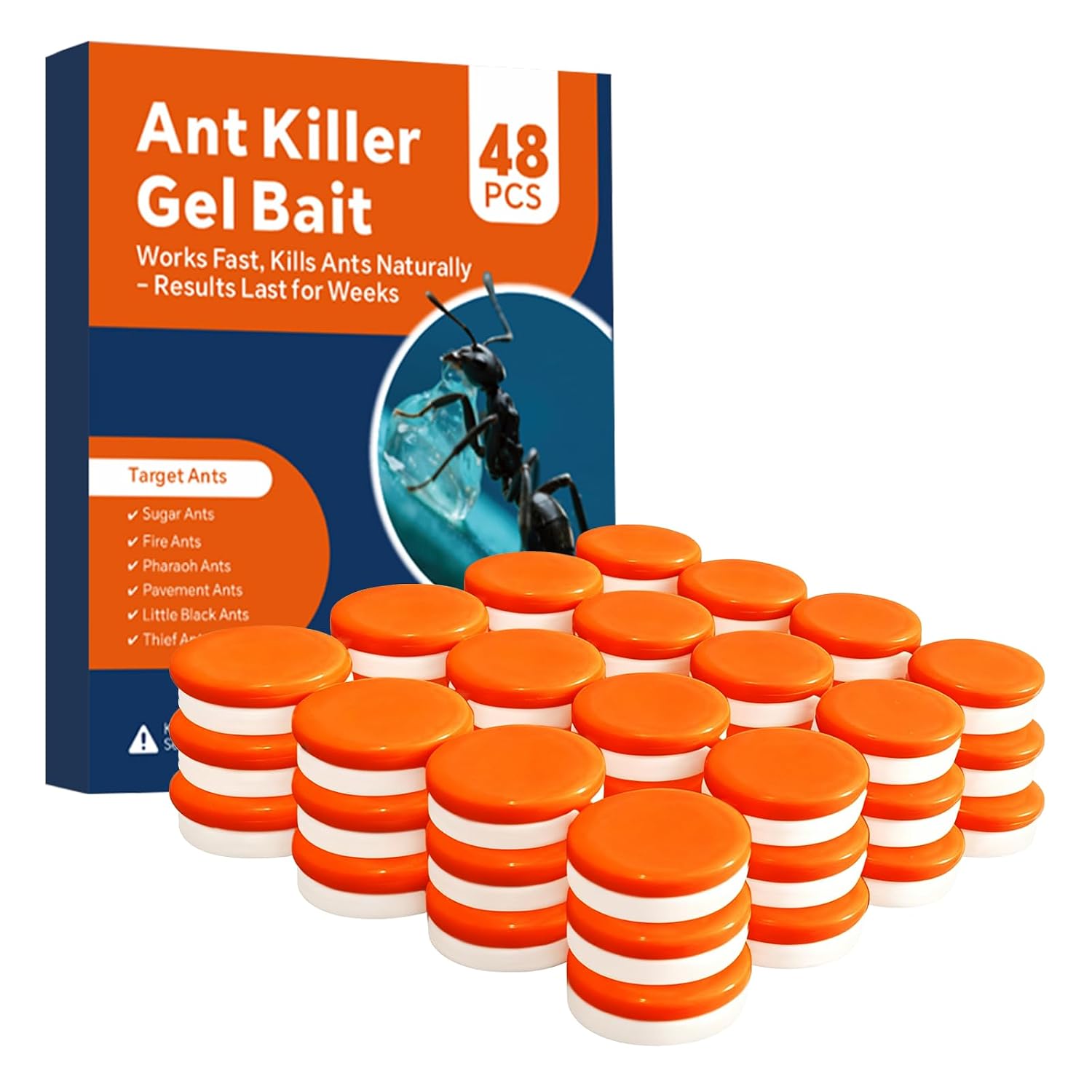
| Unit Count | 48 Count |
|---|---|
| Item Form | Gel |
| Target Species | Ants |
| Included Components | Ant gel bait |
This 48-pack of ROUTADE slow-acting ant gel bait stations is built for systematic, long-term ant control in and around the kitchen. Each station contains a gel formula that worker ants consume and carry back to the nest, which helps reduce the entire colony rather than only visible foragers. The product is supplied in ready-to-use stations with adhesive tape so you can place them along baseboards, in cabinets, near sinks, and on entry thresholds without messy sprays or frequent repositioning. The large pack lets you deploy multiple stations in high-traffic areas and replace them over time for continuous coverage. Because the formula is slow-acting, it is effective against a range of common household species including carpenter ants and sugar ants, but it requires several days to weeks to knock down a colony and will not give instant removal of visible ants. Also the stations are small and contain gel rather than a tamper-resistant hard block, so keep them away from children and pets. For someone wanting a low-maintenance, colony-focused approach to kitchen ant problems, this kit makes it easy to set and forget while the bait works.
Best for: Homeowners who prioritize reliable, long-term elimination of ant colonies in kitchens and want a low-maintenance bait they can deploy across multiple hotspots.
Less Ideal for: People who need an immediate knockdown of visible ants or who require childproof solid bait stations should consider alternatives.
- Slow-acting gel designed for worker ants to carry bait back to the nest for colony-level control
- Ready-to-use bait stations with adhesive for easy placement along baseboards and in cabinets
- 48-count pack provides broad coverage around a kitchen and enough replacements for extended use
- Versatile for indoor and outdoor placement to block entry points and high-traffic ant routes
- Slow-acting formula takes days to weeks to eliminate a colony so visible results are not immediate
- Gel in small stations may require careful placement to keep away from children and pets
Verdict: A practical, deploy-and-forget gel bait kit for reliable colony-level control of kitchen ant infestations.
TERRO Liquid Ant Killer Bait Stations, 12-Pack (T300B)

| Unit Count | 12 Count |
|---|---|
| Item Form | Liquid |
| Target Species | Insects |
| Active Ingredients | Sodium Tetraborate Decahydrate (Borax), 5.40% |
Terro Liquid Ant Killer bait stations are prefilled, single-use traps designed for indoor control of common sugar-loving ants. You place the small stations along baseboards, in corners, under appliances, or on countertops where you see ant activity. Worker ants are drawn to the sweet liquid, feed on it, and take it back to the nest so the borax-based active ingredient can eliminate the colony over days to weeks. The product is easy to use with no mixing or setup and the 12-pack gives coverage for several rooms. Because the bait is contained inside a low-profile plastic station, it reduces incidental contact risk compared with loose sprays or powders and lasts for weeks while ants continue to visit. Limitations are that the formula targets sugar-preferring species so very protein- or grease-attracted ants may ignore it, and control can take 2 to 4 weeks for larger infestations. Also stations should be placed away from pets and children despite the contained design since the bait contains borax.
Best for: Homeowners who prioritize an easy, low-hassle indoor solution and want a bait that works at the colony level with minimal hands-on pest handling.
Less Ideal for: People who need immediate knockdown of ants or who have pets or children that frequently access treated areas and cannot reliably keep them away from placed stations.
- Ready-to-use stations require no mixing or setup
- Designed to be carried back to the nest for colony-level control
- Low-profile enclosed bait reduces messy exposure compared with loose liquids or sprays
- 12 stations provide coverage for multiple rooms or hotspots
- Formulation is sugar-based so less effective on ants that prefer protein or grease
- Control can take 2–4 weeks for large or established colonies
Verdict: A simple, low-contact indoor bait system that reliably reduces sugar-loving ant infestations by getting worker ants to carry borax back to the colony.
TERRO Liquid Ant Bait Stations, 18 Count (3 Pack)

| Unit Count | 18 Count |
|---|---|
| Item Form | Liquid |
| Target Species | Insects |
| Active Ingredients | Sodium Tetraborate Decahydrate (Borax) |
| Specification Met | EPA |
TERRO Liquid Ant Bait Stations are compact, ready-to-use traps that use a sweet liquid bait containing borax to attract foraging ants and carry the poison back to the colony. Typical use is placing the small stations along baseboards, in corners, behind appliances, or on counters where you see ant trails; no mixing or setup is required beyond opening the tab. The kit includes 18 bait stations (three packs of six) and the liquid formula is kept from drying by the sealed station design so it stays attractive for extended periods. Practical benefits include quick visible reduction in worker ants within a few days and the potential to eliminate the colony if placements are maintained until the bait is gone. Limitations: it is for indoor use only and works on ants that take sweet baits, so species that prefer greasy or protein foods may be less affected; results can take up to two to four weeks for full control and you should remove competing food sources for best results.
Best for: Homeowners or renters who want a low-effort, evidence-backed way to target kitchen ant trails and remove colonies without sprays, and who prefer products with a strong track record and social proof.
Less Ideal for: People needing immediate knockdown of visible ants or those dealing with species that avoid sweet baits should consider fast-acting sprays or alternative bait types instead.
- Ready-to-use stations require no mixing or tools
- Sealed liquid design resists drying so bait remains attractive over time
- Attracts worker ants that share bait, which can eliminate the colony
- Includes multiple stations for widespread placement around a kitchen
- Indoor-only product not formulated for outdoor use
- Relies on ants accepting a sweet bait so may be less effective on non-sugar-seeking species
Verdict: A ready-to-use, proven liquid bait kit that targets kitchen ant trails and can eliminate colonies with minimal effort.
Choosing the Right Carpenter Ant Trap: Key Factors to Consider
Bait Formulation and Attractiveness
Bait chemistry determines whether foraging workers will accept the food and carry it back to the nest. Protein-based baits tend to work when colonies forage on protein sources, while sugar- or oil-based baits appeal when carbohydrate foraging is dominant.
Understanding local foraging patterns helps you choose a trap that matches what ants are already collecting. A highly attractive bait increases the chance of worker-mediated transfer to brood and the queen, which is essential for long-term reduction rather than only killing visible foragers.
Placement Strategy
Where you put traps is as important as which trap you buy. Carpenter ants often forage along trails that run from a nest inside wood to outside food sources. Placing traps along these trails, near entry points, around windows and vents, and beside visible wood damage increases interception rates.
Avoid placing baits directly on exposed soil where rain or mulch will displace them. For indoor placements, use locations out of reach of pets and children and close to ant activity but not directly inside structural cavities where condensation or dust can reduce bait life.
Safety Around People and Pets
Traps used inside houses must securely contain bait to prevent accidental access by children, pets, or non-target wildlife. Tamper-resistant housings, compartmentalized bait reservoirs, and clear labeling matter when traps are used in living spaces or play areas.
Consider whether the bait is an ingestible toxicant that requires extra caution and whether the trap design prevents spillage if knocked over. For households with high pet activity, choose devices that lock or anchor to surfaces to reduce accidental contact.
Durability and Weather Resistance
When using traps outdoors or in semi-exposed crawlspaces, look for housings and bait matrices that tolerate moisture, heat, and UV exposure. Waterlogged or degraded bait loses attractiveness and can fail to control foraging ants.
Durable traps allow longer monitoring intervals and reduce the need to replace bait frequently during a control campaign. Conversely, fragile traps may break or vent bait to non-target areas, lowering effectiveness and increasing cleanup needs.
Monitoring and Maintenance Needs
Effective control is an iterative process of placement, monitoring, and rebaiting. Choose traps that make it easy to check worker activity and replenish bait without disturbing surrounding areas.
Some traps offer clear windows or removable cartridges for quick inspection. Regular checks every few days to a week reveal whether placement is intercepting traffic and whether additional stations are needed along a trail.
Environmental Compatibility
If traps will be used near vegetable beds, ornamental plantings, or water features, select bait types and containment systems that minimize drift and runoff. Low-volatility baits and sealed reservoirs reduce the chance of contaminating soil or nearby plants.
Also consider the timing of placement relative to rainfall and irrigation to avoid bait dispersion. Choosing a trap with a secure housing helps keep bait where it will attract ants and not leach into planting media.
How Carpenter Ant Behavior Affects Trap Success
Carpenter ants do not eat wood but create galleries to nest in it. Foraging workers leave scent trails and tend to follow established routes between nests and food sources. Traps are most effective when placed to intercept those routes rather than scattered randomly across a yard.
- Watch for sawdust, rustling in walls, or piles of frass near baseboards as signs of nearby nesting.
- Follow ant trails at dusk or dawn when activity is highest to identify high-traffic locations for traps.
- Maintain a record of which stations attract workers to refine placement over a two- to three-week period.
Indoor Versus Outdoor Placement Considerations
Indoor placements prioritize safety and concealment: keep stations along baseboards, inside closets, and near plumbing chases where ants enter. Avoid placing bait in areas of high humidity like shower stalls where moisture will degrade the formulation. Outdoor placements focus on intercepting foragers before they reach the structure. Place stations near foundation junctions, under soffits, and beside known ant trails. Protect outdoor traps from direct rain and sun using shaded, anchored housings.
- Indoors: prioritize tamper resistance and proximity to visible activity.
- Outdoors: use weather-resistant housings and position under eaves or behind trim.
Timing and Seasonal Strategy
Carpenter ant activity peaks in warm months, and late spring to early summer is often when scouts locate new food sources. Deploy traps early in the foraging season to reduce colony growth and to prevent new satellite nests from establishing. In colder months ants may be less active but nests remain. Continue monitoring because late-season placement can still intercept workers moving between overwintering sites and foraging zones.
- Start baiting when foraging is first observed and continue monitoring for several weeks.
- Increase station density near active windows and doors during peak activity.
Combining Traps With Non-Bait Tactics
Traps are a targeted method for reducing worker numbers and transferring toxicant into the colony, but they are most effective when combined with basic sanitation and habitat modification. Remove accessible food sources, trim vegetation away from siding, and repair moisture problems that can encourage nesting. Sealing entry points and replacing damaged wood will not immediately kill ants but will reduce future reinfestation risk when combined with an effective trapping campaign.
- Keep firewood and lumber stored away from structures.
- Fix leaks and reduce wood-to-soil contact around foundations.
How We Chose the Best Carpenter Ant Trap
We prioritized criteria that reflect how traps perform in real infestation scenarios and how easy they are for a typical homeowner to deploy. Key evaluation dimensions included bait attractiveness and persistence because a trapped worker must ingest or carry bait back to the colony for meaningful control. We assessed placement flexibility to confirm traps can be used indoors, along foundations, in crawlspaces, and near wood-structure hotspots without creating hazards. Durability and weather resistance were examined for products intended for outdoor perimeter placement. We also looked at safety features such as tamper-resistant housings and secure bait containment for households with children or pets. Ease of use was judged by how simple traps are to set, maintain, and monitor during a multiweek control effort. Finally, we considered environmental compatibility where nonvolatile or low-drift baits are preferred for sensitive planting areas. We excluded products that are purely mechanical barriers or general-purpose sticky traps that do not deliver ingestible bait. We also filtered out options lacking clear instructions for placement relative to wood damage. The resulting shortlist reflects traps that balance attractant potency, safe deployment, and realistic field durability.
FAQ
How long does it take for a trap to reduce visible carpenter ant activity?
It often takes several days to a few weeks to see a reduction in visible workers because bait must be collected and shared within the colony. Speed depends on bait attractiveness, colony size, and how many foragers contact the trap.
Can traps be used safely around pets and children?
Many traps are designed with tamper-resistant housings that reduce accidental access. Even so, place stations out of reach, use locked or anchored units when possible, and follow all label guidance regarding toxicant containment.
Should I bait inside or outside first?
Start where you see activity. If most foragers are inside, begin with indoor stations in protected locations. If trails originate outside or wood damage is external, treat perimeter areas to intercept workers before they enter the structure.
Do traps eliminate the queen and the entire colony?
Traps aim to deliver slow-acting bait back to the nest so workers can spread it to brood and the queen. Success depends on bait transfer within the colony and complete exposure. Large or multiple nests may require sustained trapping and monitoring.
How often should I check and rebait stations?
Check stations every few days to a week during active periods. Refill or replace bait when it is depleted, soiled, or wet. Frequent checks let you adjust placement based on where ants are feeding.
Final Verdict
Choosing among carpenter ant traps means balancing bait type, placement options, and safety needs for your home and garden. Prioritize a bait formulation that matches local foraging behavior, a housing design that keeps bait secure around people and pets, and durability for the typical exposure where you will place stations. Accept that effective control requires monitoring and some maintenance. Use traps as part of a broader plan that includes sanitation and habitat modification to reduce the chance of reinfestation and to protect structural wood over the long term.
