

Note: This article contains affiliate links. If you click on these links and make a purchase, I may earn a small commission at no extra cost to you. This helps support my research and content. Read my full affiliate disclosure here.
A well-chosen worm compost bin turns kitchen scraps into rich worm castings with minimal space and effort. Whether you have a small patio, balcony, or a corner of the yard, the right bin manages moisture, aeration, and harvesting so you get steady compost without smells or pests. This guide covers six carefully shortlisted worm compost bins suited to home and small-plot gardeners. We evaluated practical factors gardeners care about, including moisture control, bedding capacity, ease of harvesting, pest resistance, and durability. Read on to find a bin that fits your space and composting routine, plus expert tips for setup and ongoing care.
Top Picks at a Glance
| Best Overall The best all-around choice for most situations | VermiHut Classic 5-Tray Worm Composter Bin |  |
| Best Quality Built to a higher standard if you want something more solid | VermiHut Plus 5-Tray Worm Composter |  |
| Best Value The sweet spot between price and what you get | Blütezeit 5-Tray Worm Compost Bin (50L) with Starter Kit |  |
| Best Budget The cheapest option that still gets the job done reliably | TOP XIAN 2-Pack Inground Worm Composter (8L) |  |
| Highest Rated A top-rated pick with lots of positive feedback | Nova Microdermabrasion 72.5L 5-Layer Stackable Worm Farm Compost Bin |  |
| Most Popular A crowd favorite that many people choose with confidence | Worm Factory 360 4-Tray Worm Composting System (Black) |  |
VermiHut Classic 5-Tray Worm Composter Bin
| Capacity | 50 liters |
|---|---|
| Material Type | High Density Polyethylene (HDPE) |
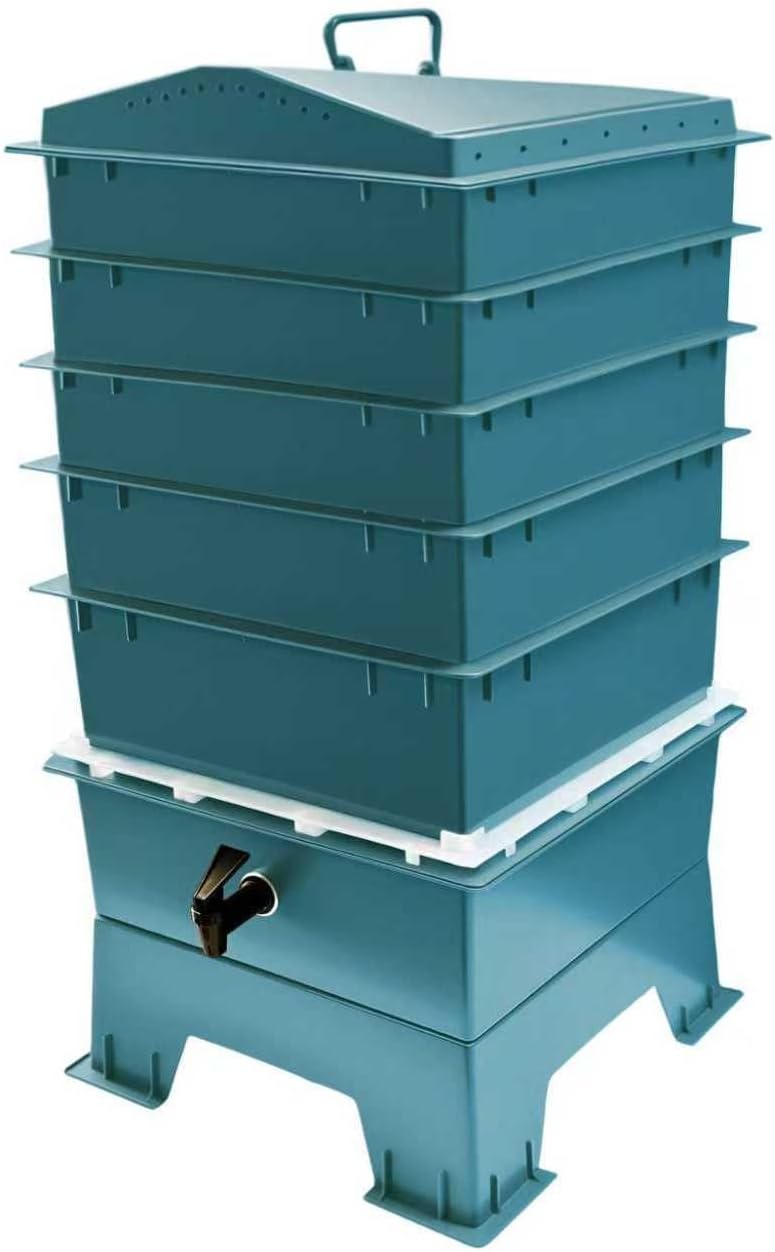
The VermiHut Classic 5-Tray is a compact, continuous-flow worm composter built to turn household food scraps into usable castings and liquid fertilizer with minimal fuss. You load a working tray with bedding, composting worms and food waste, and as the worms finish a tray they migrate up into the tray above, leaving nutrient-rich castings behind. The stackable design keeps the footprint small while providing good air circulation and a vented dome lid to help control moisture. A free worm-saver tray reduces the chance of worms falling into the liquid collection area, and the unit is made from sturdy HDPE for outdoor durability. In practice it is easy to maintain and well suited to typical family kitchen waste volumes, and the system is advertised as essentially odorless when managed correctly. Limitations are that capacity is moderate at 50 liters so very large households will need more frequent harvesting or a larger system, and it requires some setup with proper bedding and worm management to reach the claimed efficiency.
Best for: Buyers who want a low-maintenance, space-efficient worm composter to turn everyday kitchen scraps into garden fertilizer and who prefer a continuous harvesting system.
Less Ideal for: People who generate large volumes of food waste daily or who want a zero-maintenance solution that requires no learning about worm care.
- Stackable 5-tray design keeps footprint small while allowing continuous harvesting
- Vented dome lid and tray design provide airflow and moisture control for a healthy worm environment
- Included worm-saver tray and liquid collection reduce maintenance issues and make harvesting easier
- Made from durable high density polyethylene suitable for indoor or outdoor placement
- 50 liter capacity is modest and may be insufficient for very large households
- Requires correct bedding and active worm management to achieve odorless, efficient composting
Verdict: A compact, well-ventilated 5-tray worm bin that delivers continuous harvesting of worm castings for home gardeners who want efficient, low-footprint composting.
VermiHut Plus 5-Tray Worm Composter

| Capacity | 5 pounds |
|---|---|
| Number of Items | 5 |
| Material Type | High Density Polyethylene (HDPE) |
The VermiHut Plus 5-Tray Worm Composter is a stacked, continuous-flow worm bin built to turn household food waste into usable compost without taking much floor space. You set bedding and worms in the top tray, add scraps, and as worms migrate upward the lower trays fill with finished castings you can harvest. The unit includes a V-Board and coconut mat to help balance airflow and moisture, a worm-saver tray to keep creatures out of the liquid collection area, and raised base feet designed to discourage ants. Designed for both indoor and outdoor placement, it supports a reported processing rate of roughly 1 pound of food waste per pound of worms per day and a system capacity appropriate for typical family use. Practical benefits include compact footprint, relatively low odor when managed properly, and straightforward tray-by-tray harvesting. Limitations are that it requires regular attention to moisture and feeding to avoid smells, an initial investment in worms and bedding, and the 5 pound listed capacity relates to a typical daily processing estimate rather than unlimited throughput.
Best for: Buyers who want a high-performing, continuous vermicompost system to convert regular household food waste into usable castings with minimal space impact and predictable output.
Less Ideal for: People who want a completely maintenance-free solution or need to process large volumes of food waste for commercial use should consider larger or different composting systems.
- Stacked tray design enables continuous harvesting without disturbing active worms
- V-Board and coconut mat help regulate moisture and airflow for healthier composting
- Worm-saver tray and raised base reduce risk of worms falling into leachate and deter ants
- Compact footprint suitable for kitchens, garages, patios or small outdoor spaces
- Processing capacity is finite and tied to worm population so large households may need multiple systems or more frequent maintenance
- Requires routine moisture and feeding management to prevent odors and slowdown
Verdict: Choose the VermiHut Plus 5-tray if you want a compact, high-performance home worm composter that supports continuous harvesting and reliable moisture control.
Blütezeit 5-Tray Worm Compost Bin (50L) with Starter Kit

| Capacity | 50 liters |
|---|---|
| Material Type | Polypropylene (PP) |
| Included Components | 5-tray bin, turning fork, shovel, soil meter, non-woven fabric, coco-coir brick, spigot |
The Blütezeit 5-tray worm compost bin is a stackable vermicomposter that turns kitchen scraps into worm castings and liquid fertilizer without taking much floor space. You assemble trays, add bedding and worms, then feed the top tray while castings accumulate below; when a tray fills you move it aside and start the next level. Notable features include molded ventilation holes in each tray for airflow, a bottom spigot for collecting worm tea, and an included starter kit with a turning fork, shovel, soil meter, coco-coir brick and non-woven liner to simplify setup and moisture control. The polypropylene construction is lightweight and weather resistant for use on a balcony or in a garage, and the 50 liter capacity gives room for steady household food waste. Limitations: plastic trays can warp under heavy heat or rough handling, and this system still requires regular moisture and bedding management and periodic harvesting of castings. Worms are not included, so budget for starter worms separately.
Best for: Buyers who want a compact, organized system to turn household food scraps into usable compost and liquid fertilizer with minimal footprint and practical, ready-to-use accessories.
Less Ideal for: People who want a completely hands-off composting solution or who need a heavy-duty commercial system for large volumes of garden waste.
- Stackable five-tray design supports continuous feeding and easy harvesting
- Built-in ventilation holes and included soil meter help maintain proper airflow and moisture
- Bottom spigot lets you collect liquid fertilizer without disturbing the bin
- Comes with starter tools and liners for quick setup and maintenance
- Durable polypropylene resists outdoor moisture and is easy to clean
- Worms are not included
- Plastic trays can be susceptible to warping if exposed to high heat or heavy impact
- Requires regular attention to moisture, bedding and tray rotation to avoid problems
Verdict: A compact, ready-to-use five-tray worm compost bin that streamlines household vermicomposting with practical tools and a built-in spigot for easy liquid fertilizer collection.
TOP XIAN 2-Pack Inground Worm Composter (8L)

| Capacity | 8 liters |
|---|---|
| Material Type | Polypropylene (PP) |
| Number of Items | 2 |
These two compact inground worm composters are built for simple, low-effort vermicomposting in small gardens or raised beds. Each cylinder is made from polypropylene and has a removable lid plus 360 degree ventilation holes to keep the bedding aerated and reduce odors. Typical use is to dig a hole, set a bin in the ground, add bedding and food scraps, then let worms process the material into nutrient-rich compost within a few months. Shipping two identical bins lets you run one actively while the other rests, which helps maintain a continuous supply of finished castings. The small 8 liter capacity keeps the system tidy and suitable for kitchen scraps from a household but means you will need frequent feeding or multiple units for larger volumes. The lightweight plastic is weather-resistant but not insulated, so activity will slow in cold climates. Worms are not included, and the design relies on being buried, so it is best used where digging is possible and pets or heavy disturbance are unlikely.
Best for: Buyers who want an inexpensive, low-maintenance way to recycle kitchen and yard scraps into usable compost for small gardens and are comfortable burying a unit in their beds.
Less Ideal for: Those who need high-capacity composting, want an indoor or aboveground system, or cannot dig into soil should consider other solutions.
- Two-bin set supports continuous composting by alternating active and resting bins
- Durable polypropylene construction resists outdoor moisture and rot
- Removable lid and 360 degree ventilation promote airflow and help control odors
- Compact size fits easily into garden beds or small yards
- Small 8 liter capacity requires frequent emptying or multiple units for larger households
- Not insulated so composting slows in cold weather
Verdict: A budget-friendly two-pack inground worm composter that gives small-plot gardeners an easy, continuous way to produce homemade castings.
Nova Microdermabrasion 72.5L 5-Layer Stackable Worm Farm Compost Bin

| Capacity | 72.5 Liters |
|---|---|
| Number of Trays | 5 stackable trays + liquid collection base |
| Material Type | Polypropylene (PP) |
This 72.5L stackable worm farm is a complete starter system for small-scale vermicomposting in apartments, balconies, garages or patios. It uses five perforated trays stacked over a leak-proof collection base so worms can migrate upward into fresh food while finished castings remain separated below. The kit arrives with a spigot for harvesting nutrient-rich worm tea, a scraper for collecting castings, a coco coir block and a moisture meter to help keep conditions balanced. Tool-free assembly and multi-side ventilation simplify setup and help control odors, and the BPA-free polypropylene construction is weather-resistant for year-round outdoor or indoor use. For a reliability-focused buyer this unit’s simple, durable design and included accessories reduce guesswork and ongoing purchases. Limitations are its relatively compact capacity for larger gardens and the lightweight plastic may need protection from extreme sun or pets over many seasons.
Best for: Buyers who want a dependable, low-effort vermicompost system for kitchen scraps and small gardens and prefer an all-in-one kit that minimizes setup and accessory shopping.
Less Ideal for: Not a good fit for gardeners who need high-volume outdoor composting or commercial-scale worm farms; those users should choose larger or heavy-duty systems.
- Stackable five-tray design separates finished castings and makes harvesting straightforward
- Included spigot and leak-proof base let you collect liquid fertilizer without mess
- Comes with starter accessories (coco coir, moisture meter, scraper) so you can begin composting immediately
- Tool-free assembly and multi-side ventilation reduce odors and simplify maintenance
- Capacity is modest for users with large volumes of yard waste
- Plastic construction can degrade faster than metal if left in intense sun for years
Verdict: A reliable, ready-to-use five-layer worm composter that makes beginning vermicomposting easy and low-maintenance.
Worm Factory 360 4-Tray Worm Composting System (Black)

| Material Type | Plastic |
|---|---|
| Capacity | 1 liters |
| Model Number | WF360 Black |
| Manufacturer | Nature's Footprint, Inc. |
| Manufacturer Warranty Description | 20 year limited warranty on parts and workmanship |
The Worm Factory 360 is a four-tray vermicomposting system designed for indoor or sheltered outdoor use that converts kitchen scraps, paper, and cardboard into finished compost and liquid fertilizer. You set up the bottom tray with bedding and worms, add food waste to the top tray, and as worms process material they migrate upward leaving usable compost below while excess moisture drains to a spigot. Notable features include expandable trays (up to six), a nested tray design for easy harvesting, and a built-in spigot for collecting compost tea. The hard plastic construction and simple assembly make it space-efficient and long lasting for regular home use, and the manufacturer recommends keeping it in a 40 to 80°F range for best worm health. Limitations to consider are the temperature sensitivity of worms, the need to balance food scraps and fiber to avoid problems, and that this system requires routine maintenance to manage moisture and harvest cycles rather than being a set-and-forget solution.
Best for: Buyers who want a proven, compact vermicompost system they can manage regularly to recycle kitchen waste into plant-friendly compost and liquid fertilizer with visible results.
Less Ideal for: People seeking a fully hands-off composting solution or those who cannot keep the unit in a stable temperature range year round.
- Stackable tray design makes harvesting finished compost straightforward
- Expandable from 4 to 6 trays to match household composting volume
- Built-in spigot collects liquid fertilizer for easy use on plants
- Durable plastic construction intended for long-term indoor use
- Requires temperature control between 40 and 80°F for worm health
- Needs regular attention to moisture, bedding balance, and harvesting
Verdict: A reliable, space-saving worm bin for gardeners who want an effective, manageable way to turn kitchen scraps into rich compost and liquid fertilizer.
Choosing the Right Worm Compost Bin: Key Factors to Consider
Moisture Management and Drainage
Worm compost bins need to stay damp but not wet. Excess liquid, known as leachate, can create anaerobic conditions that smell and harm worms. Look for designs with a drain tray, built-in spigot, or internal channels that allow you to remove excess moisture without disturbing worms.
Proper moisture control affects how often you need to monitor the bin and whether you must add dry bedding like shredded paper or cardboard. In warm, humid climates you may need more drainage capacity; in dry, cooler spaces you will want a bin that retains moisture. Consider how easy it is to access and empty any liquid collection point when choosing a system.
Harvesting Accessibility
Regularly removing finished castings is the point of vermicomposting, so harvesting should be straightforward. Bins with stackable trays, removable screens, or simple bottom-harvest access let you collect castings without upheaving the entire colony.
Difficulty in harvesting leads many gardeners to avoid using the finished compost, which defeats the purpose. Evaluate whether the design allows gentle separation of worms from castings and whether tools or extra steps are needed to extract finished material in a low-mess way.
Bedding and Tray Capacity
Capacity determines how much kitchen waste a bin can absorb before you must empty or expand it. Small-capacity bins work well for one or two people but fill quickly for larger households. Multi-tray systems let you add feeding trays while earlier trays finish composting, which helps create a continuous workflow.
Think about the space you have and how frequently you want to tend the bin. Overfilling a bin stresses worms and creates anaerobic hotspots. Larger or modular capacity is valuable if you plan to scale up your composting or gift castings to neighbors and plants.
Aeration and Airflow
Worms need oxygen to thrive, and aerobic decomposition keeps odors down. Bins that include ventilation holes, breathable lids, or internal baffles promote airflow while still keeping pests out. Designs that trap heat with poor ventilation can become anaerobic quickly, especially in warm weather.
Consider where you will place the bin; indoors or in a sheltered porch favors smaller, quieter vents, while outdoor bins may benefit from larger passive airflow. The balance between airflow and pest exclusion is important-too much open space invites pests, too little invites anaerobic breakdown.
Pest Resistance and Physical Protection
Flies, ants, and rodents are common challenges for home vermicomposting. Features that reduce attraction and access help maintain a healthy worm population: tight-fitting lids, shallow feeding trays that limit exposed food, and physical barriers such as raised feet or smooth exterior sides that rodents cannot easily grip.
Additionally, choices of bin color, placement, and how you bury fresh scraps in bedding all influence pest pressure. A well-designed bin minimizes maintenance time spent addressing pests and reduces the chance of catastrophic colony losses.
Getting Started: Where to Put a Worm Compost Bin
Placement affects temperature, odor control, and access. For indoor setups, choose a location with stable temperatures out of direct sunlight and near a floor drain or sink for periodic liquid disposal. Outdoors, a shaded, sheltered spot near the house or under a porch keeps temperatures moderate and slows water saturation from heavy rain.
A consistent feeding schedule reduces disturbances and keeps the colony stable. Avoid placing the bin where curious pets or children can tip it over. If you plan to winter outdoors, select a model with insulating capacity or plan to bring it inside when temperatures drop well below the species' comfort range.
- Indoor placement: kitchen pantry, garage shelf, or mudroom
- Outdoor placement: shaded porch, under eaves, or inside a ventilated shed
- Avoid direct sun and locations prone to flooding or heavy runoff
Feeding Routine and What to Feed
Feed small amounts frequently rather than dumping a large pile of scraps. Chop or puree tougher items to speed consumption. Maintain a balance of green waste and carbon-rich bedding-shredded paper, cardboard, and dry leaves are good bedding materials.
Avoid citrus peels in large amounts, oily or salty foods, and meat or dairy which attract pests. If a bin begins to smell, cut back on feeding and add dry bedding to reestablish balance.
- Good feedstocks: fruit and vegetable scraps, coffee grounds, crushed eggshells
- Bedding options: shredded cardboard, paper, coconut coir, dry leaves
- Avoid: meat, dairy, oily foods, large citrus loads
Troubleshooting Common Problems
Smell, excess moisture, and slow feeding are common issues new vermicomposters face. Foul odors usually indicate anaerobic conditions from too much moisture or overfeeding. Fix this by removing wet material, increasing drainage, and adding dry bedding.
If worms are trying to escape, check for high acidity, heat, or pest invasion. Slow breakdown often responds to smaller feed pieces, increased aeration, or adding a handful of finished castings to inoculate microbes. Regular inspection and small corrective steps prevent minor issues from becoming catastrophic.
- Odors: reduce moisture, add bedding, reduce feeding
- Escaping worms: check temperature, pH, and pests
- Slow processing: chop scraps, increase airflow, add microbial starter
Seasonal Care and Temperature Management
Temperature affects worm activity. In warm months keep the bin shaded and monitor moisture as decomposition speeds up. In cold months, worm metabolism slows and feeding should be reduced; insulated bins or moving the system indoors helps maintain activity.
If outdoor temperatures regularly exceed comfort ranges, consider partial indoor placement or situating the bin in a cooler microclimate. Likewise, protect the bin from heavy rain and frost, and adjust feeding rates to seasonal metabolic changes.
- Summer: monitor moisture and ventilation closely
- Winter: reduce feeding, insulate or move indoors if possible
- Protect from heavy rain and direct sun
How We Chose the Best Worm Compost Bin
We focused on features that determine success in home-scale vermicomposting. Key evaluation criteria included moisture and drainage design, because excess liquid leads to odors and worm stress; harvesting accessibility, since regular removal of castings should be simple and low-mess; and bedding and tray capacity, which affects how much kitchen waste a bin can handle before needing attention. We also assessed aeration and airflow features that keep aerobic conditions, materials and build quality for weather resistance and longevity, and pest-control design to limit flies, rodents, and ants. Products excluded from the shortlist were systems that require extensive DIY assembly not suitable for most beginning gardeners, bins sized only for large commercial setups, or units lacking basic pest defenses. The chosen bins strike a balance between user-friendliness and functional design, favoring straightforward maintenance, predictable moisture management, and clear harvesting methods over gimmicks that add complexity. These filters align with the scoring metrics used in our per-product breakdowns and reflect common failure points gardeners report when starting with worm composting.
FAQ
How often should I feed a worm compost bin?
It depends on bin size and how many worms you have. Small household bins usually do well with small daily or every-other-day additions, while larger or multi-tray systems can be fed weekly. Feed until the worms can process it within a few weeks to avoid buildup.
Can I keep a worm compost bin indoors?
Yes. Indoor bins are common and work well if you control odors and moisture. Place the bin in a cool, ventilated spot away from direct sun and use trays or a drip pan to manage any liquid.
What bedding should I use for a worm bin?
Shredded paper, cardboard, coconut coir, and dry leaves are common bedding choices. Bedding provides carbon, retains moisture, and gives worms a place to live. Avoid glossy paper and large compacted bundles that reduce airflow.
Why are my worms trying to leave the bin?
Worms escape when conditions are unfavorable: excess moisture, low oxygen, high acidity, heat, or pests. Check drainage, reduce feeding, add dry bedding, and inspect for ants or other pests. Correcting these issues usually brings worms back.
How do I harvest finished worm castings without losing worms?
Use a multi-tray system or surface-feeding method: stop feeding the finished tray and add fresh scraps to a new tray above. After a few weeks most worms migrate upward. For single bins, use light separation or manual sorting in small batches to minimize disturbance.
Final Verdict
Choose a worm compost bin that matches your available space and how much kitchen waste you produce. Prioritize reliable moisture management and an accessible harvesting method; these two factors determine whether the system stays low-maintenance and productive. Expect to trade capacity for convenience-smaller bins are easier to handle but need more frequent attention, while multi-tray setups give continuous output with slightly more upfront complexity. Focus on realistic placement, a steady feeding routine, and routine checks for moisture and pests. With the right bin and simple care, vermicomposting reliably produces nutrient-rich castings that boost container plants and garden beds.
