

Note: This article contains affiliate links. If you click on these links and make a purchase, I may earn a small commission at no extra cost to you. This helps support my research and content. Read my full affiliate disclosure here.
Snake plants are forgiving, but the wrong potting soil can trap moisture, invite rot, and stunt growth. Picking the right potting soil for snake plants matters because these succulents need a mix that drains quickly, holds just enough moisture between infrequent waterings, and supplies steady nutrients without compacting. This guide covers seven top potting soils shortlisted for snake plants and explains the practical tradeoffs you should expect in a real home, patio, or office setting. We'll evaluate mixes for drainage, aeration, nutrient retention, and longevity so you can choose a soil that suits your container and watering style.
Top Picks at a Glance
| Best Overall The best all-around choice for most situations | Leaves & Soul Snake Plant Potting Soil, Ready-to-Use 2.2 Quart |  |
| Best Quality Built to a higher standard if you want something more solid | rePotme Snake Plant Houseplant Potting Soil Mix (8 Quarts) |  |
| Best Value The sweet spot between price and what you get | Leaves & Soul Snake Plant Potting Soil, 8.2 Quarts |  |
| Best Budget The cheapest option that still gets the job done reliably | Doter Premium Snake Plant Potting Mix, 1 qt |  |
| Highest Rated A top-rated pick with lots of positive feedback | Gardenera Snake Plant Potting Mix, 1 Quart |  |
| Most Popular A crowd favorite that many people choose with confidence | Perfect Plants Snake Plant Soil, 4 qt Coco Coir & Bark Potting Mix |  |
| Best Seller A high-volume bestseller chosen again and again | Perfect Plants Snake Plant Soil, 8 qt Coco Coir Potting Mix |  |
Leaves & Soul Snake Plant Potting Soil, Ready-to-Use 2.2 Quart

| Brand Name | Leaves and Soul |
|---|---|
| Volume | 2.2 quarts |
| Style Name | Snake Plant Soil (2.2 Quarts) |
| Made in | USA |
Leaves & Soul Snake Plant Potting Soil is a small, ready-to-use 2.2 quart mix designed to improve drainage and root health for Dracaena trifasciata and similar houseplants. The formula blends peat moss, coco coir, perlite, and dolomite to create a loose, airy medium that helps excess water move away from the root zone while retaining enough moisture for normal uptake. In practice it is used straight from the bag for repotting, divisions, or topping up containers; the resealable bag makes storage convenient between projects. For indoor growers this mix simplifies watering decisions and lowers the risk of root rot thanks to its fast-draining profile and improved aeration. It is intended for pots with drainage and works with terracotta or plastic planters, though drying speed will vary by container and room conditions. The mix supports fertilizer efficiency but does not replace proper feeding routines. The main limitation is the small bag size, which is best for one or two repottings or small to medium containers rather than multiple large pots.
Best for: Indoor plant owners who want a simple, reliable potting mix that promotes drainage and healthy roots for snake plants without mixing additives themselves.
Less Ideal for: Gardeners repotting many large plants or working on full-shelf nursery production who need bulk quantities or larger bags.
- Fast-draining blend reduces risk of overwatering and root rot
- Contains peat moss, coco coir and perlite for balanced moisture retention and aeration
- Ready-to-use formulation requires no additional amendment
- Resealable bag for convenient storage between projects
- Small 2.2 quart bag is limited for multiple or large repotting jobs
Verdict: A compact, ready-made fast-draining potting mix that simplifies repotting and reduces watering worries for home snake-plant growers.
rePotme Snake Plant Houseplant Potting Soil Mix (8 Quarts)

| Brand Name | rePotme |
|---|---|
| Item Type Name | Potting Soil |
| Unit Count | 96 Ounce |
| Volume | 8 quarts |
| Style Name | Houseplant,Potting Soil Mix |
This rePotme potting soil is a fresh, hand‑blended houseplant mix intended to give indoor plants good drainage and balanced moisture retention. It is packaged in a resealable pouch and made in small batches in the USA, which helps keep the mix consistent and relatively dust‑free compared with bulk garden soil. Typical use is repotting or top‑dressing snake plants and other common houseplants that need a well‑draining, airy medium; the brand recommends it for everything from pothos and philodendron to snake plant and fiddle leaf fig. Practical benefits include consistent particle blend for quicker root establishment, convenience of an 8 quart resealable bag, and a formula designed by an indoor‑plant specialist. Limits to consider are the bag size for larger repots or multiple plants and the usual need to pair potting mix with drainage‑friendly pots and careful watering for drought‑tolerant species like snake plant. Also the bag can create dust so take basic precautions when filling pots.
Best for: Buyers who want a reliable, specialist indoor potting mix that promotes fast root establishment and consistent performance for snake plants and other houseplants.
Less Ideal for: Gardeners who need large volumes of soil for many plants or outdoor beds should choose bulk potting soil options instead.
- Hand‑blended in small batches for consistent texture and quality
- Formulated for indoor houseplants to balance drainage and moisture retention
- Resealable pouch preserves freshness between uses
- Suitable for a wide range of common houseplants including snake plant
- 8 quart bag may be small for multiple or large repotting jobs
- Can produce dust when pouring so protective mask or careful handling is advised
Verdict: A fresh, small‑batch potting mix designed to give snake plants and other houseplants reliable drainage and consistent rooting in a convenient resealable bag.
Leaves & Soul Snake Plant Potting Soil, 8.2 Quarts

| Brand Name | Leaves and Soul |
|---|---|
| Style Name | Snake Plant Soil (8.2 Quarts) |
| Volume | 8.2 quarts |
Leaves & Soul Snake Plant Potting Soil is a ready-to-use mix designed to repot and maintain indoor snake plants by improving drainage and root aeration. It is typically used when repotting a recently purchased plant, dividing pups, or refreshing the root zone of established specimens. The blend of peat moss and coco coir holds enough moisture for normal root uptake while perlite and the lightweight structure promote quick excess-water movement and oxygen around roots. Dolomite helps buffer the mix. Practical benefits include reduced risk of prolonged root wetness that leads to rot, easier watering adjustments in terracotta or glazed pots, and resealable packaging that keeps unused soil tidy between projects. Important limitations are that it is a potting medium rather than a complete fertilizer so feeding should follow the instructions on any plant food used, and performance will still depend on correct pot drainage, watering habits, and light conditions. For larger repotting tasks you may need multiple bags depending on container size.
Best for: A practical indoor plant owner who wants a reliable, ready-made potting medium to reduce overwatering problems when repotting snake plants and similar drought-tolerant houseplants.
Less Ideal for: Growers looking for an all-in-one fertilized soil or those repotting very large outdoor beds should consider other mixes or larger quantities.
- Ready-to-use blend tailored to snake plants so no mixing required
- Fast-draining structure with perlite to reduce risk of root rot
- Peat moss and coco coir balance moisture retention without compaction
- Comes in a resealable bag for convenient storage between uses
- Made in USA and available in an 8.2 quart size suitable for multiple repots
- Does not include built-in slow-release fertilizer so separate feeding may be needed
- Volume may be insufficient for very large pots or multiple big plants without buying extra bags
Verdict: If you want a no-fuss, fast-draining potting mix that helps prevent root rot and supports healthy snake plant roots, this ready-to-use 8.2 quart blend is an efficient choice.
Doter Premium Snake Plant Potting Mix, 1 qt

| Brand Name | Doter |
|---|---|
| Unit Count | 32 Ounce |
| Item Type Name | Garden soil |
| Volume | 1 quarts |
| Manufacturer | Doter |
This 1 quart Doter potting mix is blended specifically for snake plants and other low-water houseplants. The mix is described as well draining yet moisture retentive, so it should reduce the risk of root rot while still holding enough water between infrequent waterings. Because it comes ready to use, you can top up small pots or repot young snake plants without measuring ingredients. Notable features mentioned include a nutrient-rich organic component and good aeration for root health, which helps promote sturdier growth and fuller foliage. The small package makes it convenient for trialing different soils or for owners with a few pots, but the 1 qt volume means frequent repurchasing for larger collections or full repots. Also follow the safety note to wet the soil before handling to limit dust. For buyers wanting a budget-friendly, plant-specific option to keep snake plants healthy, this mix is straightforward and easy to use, though it is best suited to small-scale use rather than bulk repotting projects.
Best for: Buyers who want an inexpensive, plant-specific potting mix for a few snake plants or for testing a new soil blend before buying larger quantities.
Less Ideal for: Collectors with many or large snake plants who need bulk soil for full repots should choose larger bags or commercial bulk mixes instead.
- Formulated for snake plants with a balance of drainage and moisture retention
- Ready-to-use 1 qt bag simplifies topping up or small repots
- Contains organic nutrients to support root development and foliage health
- Small pack good for trying the mix before committing to larger quantities
- Only a 1 quart volume so not practical for repotting many or large plants
- No detailed ingredient list or exact composition percentages provided
Verdict: A simple, small-format potting mix tailored to snake plants that lets budget-minded owners refresh a few pots without mixing their own soil.
Gardenera Snake Plant Potting Mix, 1 Quart

| Brand Name | Gardenera |
|---|---|
| Unit Count | 32 Ounce |
| Volume | 1 quarts |
| Style Name | Snake Plant Potting Mix |
This 1-quart Gardenera mix is a ready-to-use soil blend made specifically for snake plants, formulated from peat moss, perlite, lime, and earthworm castings. It is typically used for potting or repotting Sansevieria varieties and aims to prevent waterlogged roots by providing fast drainage and good aeration. The added perlite and worm castings support quicker root establishment and steady nutrient availability, which helps plants recover after repotting and encourages healthy, upright growth. Because it is sold in a small pre-mixed bag, it is convenient for single repots or for trialing new plants without measuring components. Important limitations are the small 1-quart volume, which means you may need multiple bags for larger pots or collections, and the safety note about dust and skin irritation that calls for basic precautions when handling. For gardeners who want a purpose-built, organic-friendly mix that reduces common overwatering issues in snake plants, this is a dependable option.
Best for: Buyers who prioritize a reliable, purpose-made soil that reduces overwatering risks for snake plants and who want a hassle-free premix for single repots or small collections.
Less Ideal for: Gardners needing large volumes for several or very large containers or those who prefer to custom-blend their own potting mixes from bulk components.
- Formulated specifically for snake plants with peat moss, perlite, lime, and worm castings
- High perlite content improves drainage and aeration to prevent root rot
- Pre-mixed and ready to use for easy potting or repotting
- Organic-friendly ingredients suitable for organic growing practices
- Small 1-quart bag may require multiple packages for larger pots or several plants
- Contains fine dust that can irritate skin or lungs if handled without precautions
Verdict: Choose this pre-mixed Gardenera soil when you want a ready-made, well-draining substrate that helps snake plants establish roots and avoid waterlogged conditions.
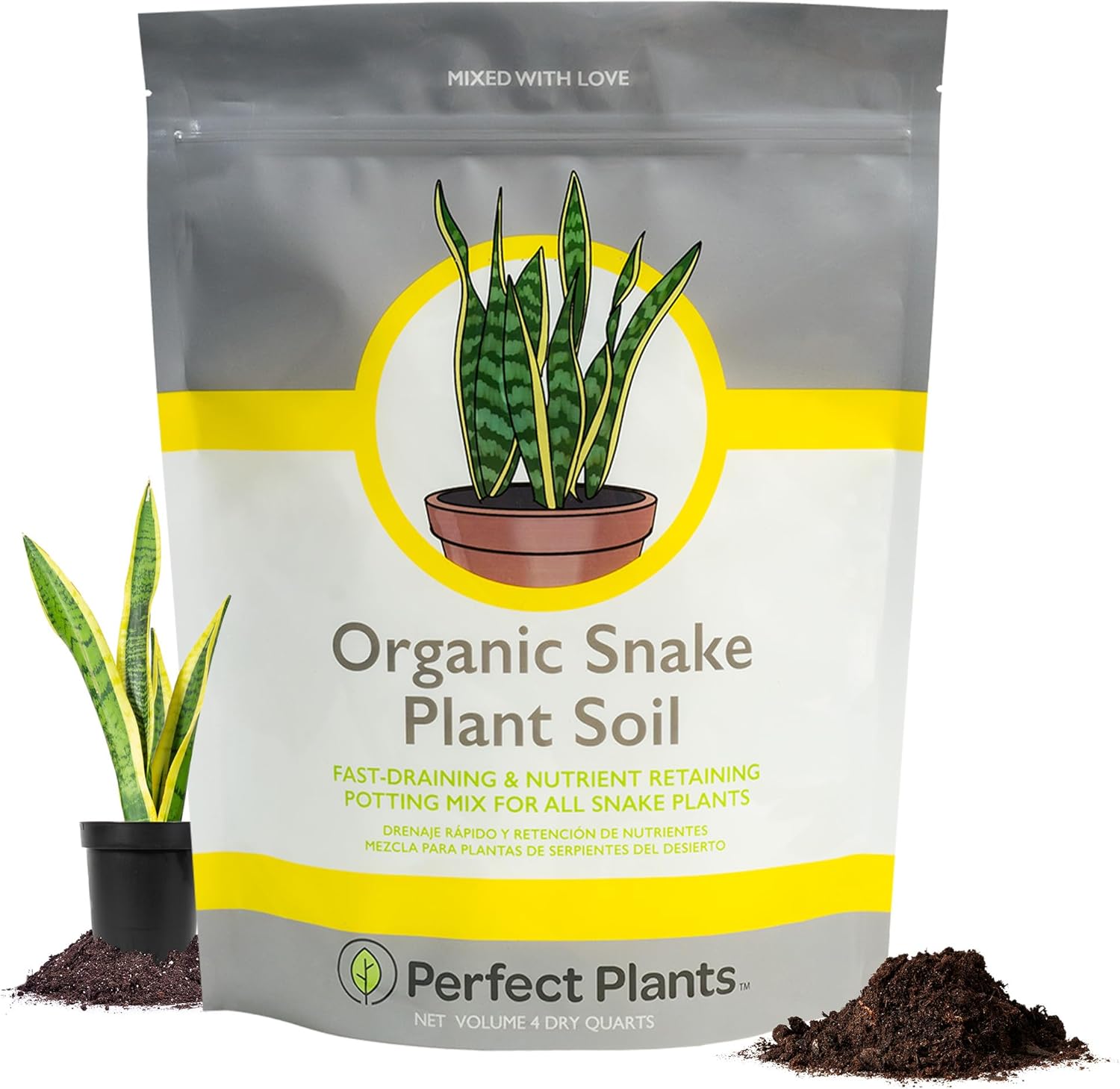
Perfect Plants Snake Plant Soil, 4 qt Coco Coir & Bark Potting Mix
| Unit Count | 1 Count |
|---|---|
| Item Type Name | Snake Plant Soil 4qt. |
| Item Highlight | Pine bark, perlite and sand blend; drains fast |
| Brand Name | PERFECT PLANTS |
Perfect Plants Snake Plant Soil is a ready-to-use 4 quart mix designed to give Sansevieria varieties a drier, more aerated root environment. It is typically used when repotting or topping up containers for snake plants such as Laurentii, Black Coral, and Cylindrica. The blend of coconut coir and pine bark chips retains some moisture while perlite and sand improve drainage so water moves through quickly and reduces risk of root rot. The bagged mix contains no added slow-release fertilizer, which suits growers who prefer to control feeding separately. Packaged in a resealable bag, it is convenient for small houseplant collections and avoids mess during potting. Limitations are the small 4 qt volume for larger plants and that you must add fertilizer for ongoing nutrition; the texture also may break down over time compared with specialty bark-only mixes. For buyers prioritizing consistent, plant-appropriate drainage and simple repotting, this mix provides a practical, low-fuss option.
Best for: Buyers who want a low-maintenance, drainage-focused mix for repotting individual snake plants and who prefer proven ingredient blends over experimental mixes.
Less Ideal for: Growers replacing soil for many large plants at once or those who want an all-in-one fertilized potting mix should consider larger bags or mixes with added nutrients.
- Formulated specifically for snake plants to promote fast drainage and reduce root rot risk
- All-natural components (coconut coir, pine bark chips, perlite, sand) suitable for indoor use
- No added slow-release fertilizer lets you control feeding schedules
- Resealable packaging makes small-scale repotting and storage tidy
- Small 4 quart bag may not be enough for multiple or large plants
- No built-in fertilizer means you must plan a separate feeding routine
Verdict: A simple, drainage-first mix that makes repotting snake plants quick and lowers root-rot risk while letting you control feeding.
Perfect Plants Snake Plant Soil, 8 qt Coco Coir Potting Mix

| Item Highlight | All-natural pine bark, perlite and sand for indoor Sansevieria, drains quickly and resists compaction, no added fertilizer |
|---|---|
| Volume | 8 quarts |
| Unit Count | 1 Count |
| Style Name | Tropical |
This snake plant soil is a ready-to-use potting mix designed to keep Sansevieria roots healthy by improving drainage and aeration. Gardeners use it for repotting and top-ups in indoor containers and outdoor pots; the blend of coconut coir, pine bark chips, perlite, and sand helps water move through quickly so roots are not waterlogged. The bag is resealable and comes in a family-made formulation without added slow-release fertilizer, which lets you control feeding separately. Practical benefits include less risk of root rot, easier handling during repotting because the mix resists compaction, and compatibility with a wide range of snake plant varieties. Important limitations are that it contains no nutrients, so you will need to provide fertilizer for long-term growth, and the 8-quart size is best for small to medium pots rather than large containers or multiple plants.
Best for: Buyers who prioritize low-risk, reliable soil that prevents overwatering and want a simple, ready-made mix for repotting single or a few snake plants.
Less Ideal for: Growers who want an all-in-one fertilized potting mix or those repotting many large plants who need bulk soil volumes.
- Formulated for quick drainage to reduce risk of overwatering
- Includes coarse components (pine bark, perlite, sand) that resist compaction
- Made with all-natural materials and no added slow-release fertilizer for feeding control
- Resealable bag suitable for intermittent repotting jobs
- No added fertilizer so additional feeding is required for long-term vigor
- 8-quart volume may be insufficient for multiple large pots
Verdict: Choose this mix if you want a dependable, fast-draining potting medium that lowers the risk of root rot while you control fertilization.
Choosing the Right Potting Soil for Snake Plants: Key Factors to Consider
Drainage and Runoff
Snake plants need a potting medium that sheds excess water quickly. Poor drainage holds water around the rhizomes and roots, which leads to anaerobic conditions and root rot. When assessing mixes, look for visible coarse ingredients such as coarse sand, perlite, pumice, or grit that create continuous pore spaces for water to move through.
Good drainage also depends on container choice and pot hole size, but the soil itself should not swell into a dense mass after repeated waterings. A soil that permits a clear runoff path after watering reduces the chance of lingering saturation and lets you water more confidently.
Aeration and Particle Size
Aeration is how much air the root zone contains between waterings. Coarser particles and a mix of sizes prevent fine particles from filling gaps and smothering roots. A well-aerated mix encourages shallow fibrous root formation and keeps rhizomes healthy.
Evaluate particle size by touch and sight: mixes with visible pieces of pumice, perlite, or poultry grit generally provide better air pockets than peat-only blends. Overly fine material can compact quickly, so choose mixes designed for succulents or container plants rather than generic potting mixes that often include high levels of fine bark dust or peat fines.
Moisture Retention Balance
Snake plants prefer a moderate moisture hold that allows the top layer to dry between waterings but does not desiccate roots completely. Too much retention leads to constant wetness, while too little forces very frequent watering and stress.
Look for mixes that blend moisture-retentive components like coco coir or a small proportion of composted bark with fast-draining materials. The goal is a buffer that supplies moisture for several days under typical indoor conditions without creating a persistently soggy environment.
Nutrient Stability and Slow Feeding
Snake plants are low feeders, so a potting soil that supplies steady, moderate nutrients is ideal. Fast-release fertilizers can push excess foliage growth and demand more frequent watering and repotting. Slow-release nutrients or a balanced base of organic matter provide gentle feeding over months.
Consider mixes with stabilized organic components or built-in slow-release pellets designed for container use. This reduces the need for frequent fertilizer applications while keeping plants healthy through typical indoor light and watering patterns.
Resistance to Compaction and Longevity
A soil that maintains structure over time saves repotting work and prevents root suffocation as containers settle. Components that break down quickly turn into finer particles that reduce drainage and aeration.
Prefer mixes that include durable inorganic elements such as pumice, expanded clay, or coarse sand. These materials hold pore space longer than pure bark or peat blends and help the potting medium retain its character for a full growing season or more.
pH and Salt Management
Soil pH affects nutrient availability and root health. Snake plants tolerate a range of pH levels but perform best in slightly acidic to neutral mixes. High soluble salt concentrations from over-fertilized or reclaimed soils can burn roots and cause leaf tip browning.
Choose potting soil formulated for container plants with balanced pH and low soluble salts. If using amendments or fertilizers, water thoroughly to flush excess salts periodically, especially in small pots where salts concentrate faster.
Tailoring Mixes to Pot Size and Container Material
Container size and material change how quickly soil dries. Small pots and porous terracotta lose moisture faster, so they benefit from a slightly higher moisture retention in the mix. Large ceramic or plastic pots retain moisture longer and pair better with coarser, faster-draining blends.
Adjust the proportion of coarse amendments by roughly 10 to 20 percent depending on pot volume. For very small decorative pots, increase the fine fraction so roots can access moisture. For deep or wide planters, add more pumice or grit to keep the lower profile from staying wet.
- Small terracotta pots: add modest moisture-holding components.
- Large plastic pots: use coarser mix to prevent waterlogging.
- Shallow dishes: prioritize drainage and minimal organic fines.
Mixing Your Own Potting Medium
Making a custom mix lets you tune drainage and nutrition. A common starting point is two parts general potting medium, one part coarse inorganic (pumice or coarse perlite), and one part well-rotted bark or coco coir for modest water retention.
When blending, keep particle sizes visibly different so gaps remain. Avoid adding too much fine compost, which can increase water retention and compaction. Test your mix by watering and observing how quickly excess runs through and how long the top inch takes to dry.
- Sample recipe: 2 potting soil : 1 pumice : 1 coco coir
- Adjust coarse fraction for larger pots or humid locations
- Sterilize or bake garden-sourced components before use
Watering Practices With Succulent-Like Mixes
With fast-draining soils, watering technique matters. Water thoroughly until runoff appears, then allow the top 1 to 2 inches to dry before watering again. This encourages roots to explore the pot and prevents constant saturation.
Reduce frequency in lower light or cooler indoor conditions. Always check the soil moisture at root depth rather than relying solely on surface dryness. In winter, water sparingly because plant growth slows and soils take longer to dry.
- Water until runoff, then wait for top layer to dry
- Check moisture at root depth with a finger or probe
- Cut back watering in low light and winter months
Refreshing and Repotting Soils
Over time even durable mixes lose structure and build up salts. For active, fast-growing specimens, plan to refresh the top third of soil or repot every 12 to 24 months. When repotting, inspect roots for rot or crowding and replace compacted medium with a fresher, coarser blend.
If you prefer not to repot often, incorporate more long-lasting inorganic materials at the outset. Removing old media that has broken down restores drainage and reduces disease risk.
- Top-dress annually and replace the top third of soil when needed
- Full repot every 1 to 2 years for young or fast-growing plants
- Increase inorganic fraction to lengthen time between repots
Common Troubles and Soil-Related Symptoms
Yellowing leaves, soft rhizomes, and mushy roots usually indicate excess moisture or poor drainage. If these appear, check the soil for compaction and consider repotting into a coarser, drier mix.
Slow growth with crisp leaf edges can point to a mix that drains too quickly or has very low nutrient content. In that case, slightly increase the organic fraction or use a mild slow-release feed matched to indoor plants.
- Mushy roots = overwatering or compacted soil
- Slow growth = low nutrients or overly fast-draining mix
- Leaf tip browning = salt buildup; flush soil to reduce salts
How We Chose the Best Potting Soil for Snake Plants
We focused on attributes that directly affect how snake plants perform in containers rather than abstract claims. Evaluation prioritized drainability and aeration because restricted oxygen at the roots is the main cause of rot in snake plants. We also looked at moisture retention balance to ensure mixes do not dry out too quickly while still allowing brief wet-dry cycles. Particle size and texture were assessed since coarse components reduce compaction and support healthy root structure. Nutrient stability and slow-release feeding were considered to limit frequent fertilizing for low-maintenance growers. Longevity and resistance to break-down were included to favor mixes that do not compress into dense soil after a few waterings. We excluded mixes formulated for heavy-feeding or water-loving tropicals, as well as plain garden soil not designed for containers. The final list reflects these filters and highlights options that suit common container sizes and indoor light conditions.
FAQ
Can I use regular indoor potting soil for snake plants?
Often indoor potting soil is too fine and retains more moisture than snake plants prefer. If using a standard mix, amend it with coarse perlite, pumice, or grit to improve drainage and aeration.
How often should I repot snake plants because of soil breakdown?
Usually every 12 to 24 months for young or actively growing plants. If the soil becomes dense or drainage slows noticeably, refresh or replace the medium sooner.
Is sand a good amendment for improving drainage?
Coarse sand can improve drainage when used in the right proportion, but very fine sand may compact and reduce aeration. Use coarse builder's sand or grit rather than play sand.
Do snake plants need fertilizer in potting soil?
They are light feeders and do well with occasional low-dose fertilizer or a mix that contains slow-release nutrients. Over-fertilizing can stress roots and increase watering needs.
How can I tell if my potting soil has too much salt buildup?
White crust on the soil surface, brown leaf tips, or a sharp salty smell are signs of salt accumulation. Flush the pot thoroughly with water to leach salts and consider replacing some of the soil.
Should I use organic-only mixes for indoor snake plants?
Organic mixes provide gentle nutrients but can retain more moisture. If you prefer organic, blend in inorganic components like pumice or coarse perlite to maintain drainage and prevent compaction.
Final Verdict
Choosing the right potting soil for snake plants means prioritizing drainage and aeration while retaining enough moisture to bridge infrequent waterings. Balance coarse inorganic elements with a modest organic fraction to supply steady nutrients without creating a soggy root zone. Consider your pot size and indoor conditions when picking or mixing soil, and plan simple refreshes every year or two to maintain structure. With these tradeoffs understood, you can select a mix that keeps snake plants healthy with minimal fuss.
