

Note: This article contains affiliate links. If you click on these links and make a purchase, I may earn a small commission at no extra cost to you. This helps support my research and content. Read my full affiliate disclosure here.
Picking the right potting soil for a ZZ plant matters more than many gardeners expect. These slow-growing, drought-tolerant houseplants are forgiving, but they are prone to root rot in mixes that hold too much water or stay cold at the root crown. You want a soil that drains reliably yet retains a small reserve of moisture between waterings and maintains a neutral-to-slightly-acid pH. This guide shortlists seven top potting soils suited for ZZ plant growing conditions. We focus on mixes that balance drainage, aeration, and gentle nutrient retention, and we evaluate them by how they perform in everyday indoor care scenarios. Read on to understand the criteria we used and the factors that most affect ZZ plant health before the product list below.
Top Picks at a Glance
| Best Overall The best all-around choice for most situations | Grow Queen Craft Houseplant Potting Mix, 2 Quart |  |
| Best Quality Built to a higher standard if you want something more solid | Rosy Soil Organic Houseplant Potting Mix, Peat-Free, 4 Quart |  |
| Best Value The sweet spot between price and what you get | Soil Sunrise Aroid Potting Soil Mix (8 Quarts) |  |
| Best Budget The cheapest option that still gets the job done reliably | Gardenera ZZ Plant Potting Mix — 1 Quart |  |
| Highest Rated A top-rated pick with lots of positive feedback | Miracle-Gro Indoor Potting Mix for All Plants, 6 qt., 2-Pack |  |
| Most Popular A crowd favorite that many people choose with confidence | Back to the Roots Organic Indoor Potting Mix, 6 Quart |  |
| Best Seller A high-volume bestseller chosen again and again | Back to the Roots Premium Organic Potting Mix, 6 Quart |  |
Grow Queen Craft Houseplant Potting Mix, 2 Quart

| Unit Count | 64 Ounce |
|---|---|
| Item Type Name | Potting Mix |
| Volume | 2 quarts |
| Ingredients | Douglas Fir Bark, Lava Rock, Pumice, Coco Coir, Organic Worm Castings, Charged Biochar |
This Grow Queen craft houseplant mix is a chunky, peat-free potting soil made for repotting and ongoing care of indoor plants like peace lily. The blend uses Douglas fir bark, lava rock and pumice to create permanent air pockets so the mix drains quickly and resists compaction, which helps prevent root rot while still allowing the soil to dry evenly between waterings. It arrives slightly moist and ready to use, which makes repotting new plants or rooting cuttings faster and less messy. Organic worm castings and charged biochar supply steady micronutrients and help retain water and nutrients at the root zone without synthetic fertilizer burn. The formula excludes peat and perlite and is designed to stay structured for multiple seasons, so you repot less often. Note that the bag is small at 2 quarts, so you will need larger sizes for bigger plants or multiple repots and should confirm quantity before starting a project.
Best for: Buyers who want a low-maintenance, sustainable indoor potting mix that prevents soggy roots and feeds plants gradually while minimizing repotting frequency.
Less Ideal for: People who need large volumes of soil for many plants or very large containers should choose bigger bag sizes or bulk potting mix alternatives.
- Chunky mix with bark, lava rock and pumice for lasting aeration and fast drainage
- Contains organic worm castings and charged biochar for slow-release nutrition and improved moisture retention at roots
- Peat-free and perlite-free formula reduces compaction and uses renewable ingredients
- Arrives pre-moistened and ready to use for immediate repotting or rooting cuttings
- Small 2 quart bag may not be enough for larger peace lilies or multiple plants
Verdict: A sustainable, chunky houseplant mix that keeps peace lilies healthy by combining fast drainage with bioactive nutrition.
Rosy Soil Organic Houseplant Potting Mix, Peat-Free, 4 Quart

| Unit Count | 128 Ounce |
|---|---|
| Style Name | Houseplant |
| Ingredients | Biochar, Bark Fines, Compost, Worm Castings, Mycorrhizae |
| Volume | 4 quarts |
Rosy Soil Houseplant Potting Mix is an organic, peat-free potting medium designed to boost root health and keep containers well drained. It combines biochar, worm castings, mycorrhizal fungi and compost in a chunky texture that resists compaction, so pots stay aerated and water moves through instead of pooling. You would use this as a straight potting mix for tropical houseplants or blend it into existing soil when repotting; the manufacturer says 4 quarts fills two to three medium pots. The inclusion of mycorrhizae and beneficial microbes supports stronger root establishment and better nutrient uptake, which is useful if you are prioritizing vigorous growth. Practical benefits include reduced need for frequent repotting because biochar holds structure, and improved foliage health from the added micronutrients in worm castings. Limitations are the small bag size for larger shrubs or multiple jasmines and the need to monitor water for plants that prefer very dry conditions, since organic components still retain some moisture. Always wear gloves when handling and follow safety guidance to avoid inhaling dust.
Best for: A grower focused on maximizing root performance and steady vegetative growth who wants a ready-to-use, organic peat-free mix for container-grown tropicals and flowering houseplants.
Less Ideal for: Not the best choice for someone planting large outdoor jasmine beds or managing many plants on a tight budget who needs bulk soil; also avoid if you need an ultra-sandy, cactus-specific mix.
- Peat-free organic formula with biochar and worm castings for lasting structure and micronutrients
- Contains mycorrhizal fungi and beneficial microbes to improve root colonization and nutrient uptake
- Chunky, well-draining texture reduces compaction and helps prevent root rot
- Resealable bag and stable biochar mean mix stays usable longer between repots
- Small 4 quart volume may be insufficient for multiple plants or large pots
- Not formulated specifically for very dry-loving plants so some adjustment to watering may be needed
Verdict: Choose this mix if you want an organic, peat-free potting soil that promotes stronger roots and reliable drainage for container-grown jasmine and other tropical houseplants.
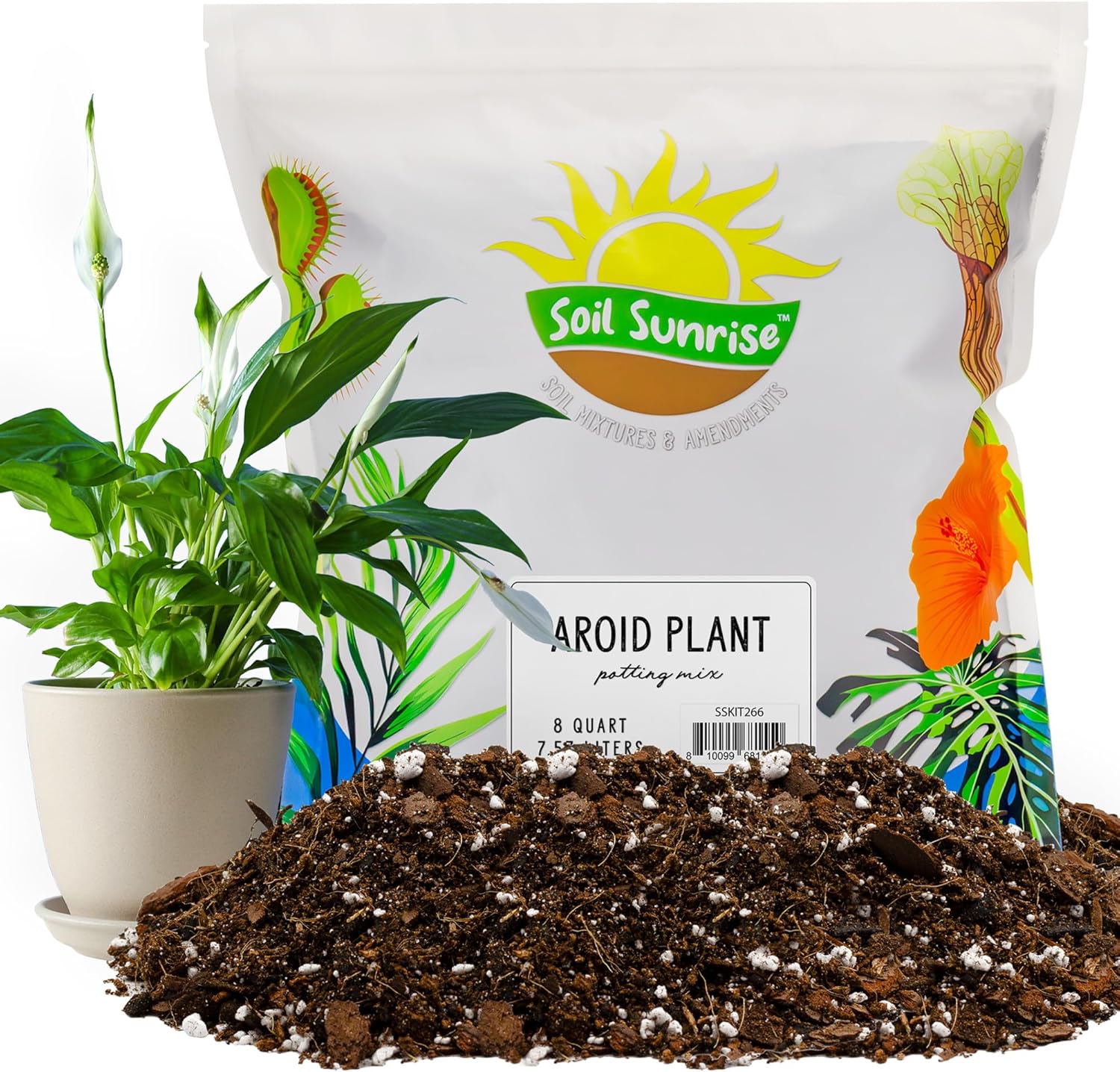
Soil Sunrise Aroid Potting Soil Mix (8 Quarts)
| Volume | 8 quarts |
|---|---|
| Ingredients | Coco coir, bark, perlite, worm casting, charcoal |
| Unit Count | 1 Count |
This 8-quart Soil Sunrise aroid mix is designed specifically for jungle-type houseplants like golden pothos and other Araceae. The blend of coco coir, pine bark, perlite, worm castings, and horticultural charcoal creates a light, chunky texture that promotes fast drainage while holding enough moisture for steady root growth. In practice it is useful for repotting store plants into a more breathable medium or refreshing the top layer of older pots. Notable features include organic amendments for nutrition, perlite and bark for aeration to reduce root rot risk, and charcoal to help with moisture regulation and odor control. The bag states it will fill a large 12-inch planter, so a single pack suits one or two typical pothos repots. Limitations are the small volume for multi-plant households and the absence of added slow-release fertilizer, so you will need to plan feedings after repotting for vigorous growth.
Best for: Balanced houseplant owners who want a ready-made, all-natural mix that mimics jungle soils for healthy pothos root development and easier repotting.
Less Ideal for: People who need large quantities for many plants or who want a potting mix with built-in slow-release fertilizer.
- Aroid-specific blend with coco coir, pine bark, perlite and charcoal for matching pothos root needs
- Includes worm castings to provide natural, gentle nutrients
- Light, chunky texture improves aeration and reduces chance of root rot
- Suitable for both young and mature plants and fits a 12-inch pot
- 8-quart bag is modest volume if you need to repot many plants
- No added fertilizer means you must supplement nutrients after repotting
Verdict: A purpose-made, all-natural aroid mix that gives golden pothos the drainage and airy texture they need for healthier roots and easier repotting.
Gardenera ZZ Plant Potting Mix — 1 Quart

| Brand Name | Gardenera |
|---|---|
| Unit Count | 1 Count |
| Item Type Name | ZZ Plant Potting Mix |
| Volume | 1 quarts |
This Gardenera ZZ Plant Potting Mix is formulated for the needs of Zamioculcas zamiifolia and is intended for repotting or top-dressing house ZZ plants. The blend of Canadian peat moss and sand helps hold enough moisture without staying soggy, while perlite and charcoal improve aeration and reduce the risk of root rot. Worm castings add organic nutrients to support steady growth and healthier foliage. In practice the 1 quart size makes it easy to refresh small pots or mix with an existing all-purpose soil for better structure. Important limitations are the small volume — one quart only covers a few small repots — and the peat component, which some buyers avoid for sustainability reasons. Safety guidance notes to avoid inhaling dust and to handle with gloves if you have sensitive skin. For growers wanting a ready-made, ZZ-focused medium in small quantities, this mix saves the time of assembling ingredients yourself.
Best for: Plant owners who want a purpose-made mix for small ZZ plants or who prefer buying a ready blend to tweak potting conditions quickly.
Less Ideal for: Those repotting medium to large ZZ plants or outfitting many pots at once who need larger quantities or a bulk commercial soil alternative.
- Formulated for ZZ plants with a mix that balances moisture retention and drainage
- Includes worm castings for organic nutrient boost
- Perlite and sand improve aeration to help prevent root rot
- Charcoal can help absorb impurities and reduce odors
- Small 1 quart volume requires multiple purchases for larger plants or many pots
- Contains peat moss, which some buyers avoid for environmental reasons
Verdict: A ready-to-use, ZZ-focused mix that gives small houseplants better moisture balance and root aeration without the work of blending your own soil.
Miracle-Gro Indoor Potting Mix for All Plants, 6 qt., 2-Pack

| Number of Packs | 2 |
|---|---|
| Unit Count | 400.58 Ounce |
| Item Highlight | Feeds for up to 6 Months |
| Ingredients | Sphagnum Peat Moss, Coir, Perlite, Fertilizer, Wetting Agent |
This Miracle-Gro indoor potting mix is formulated as an all-purpose soil for indoor container plants and is sold in a two-pack of 6‑quart bags. It combines sphagnum peat moss, coconut coir, and perlite to create a lightweight, well-draining mix that holds moisture yet releases it to roots, which helps tropical houseplants like a Dragon Tree avoid waterlogged roots. The bagged mix includes a slow-release fertilizer meant to feed plants for up to six months so you do not need to amend immediately after potting. Notably the formula excludes bark and compost, which can reduce habitats for fungus gnats — useful when repotting indoor specimens. Use is straightforward: fill a pot with drainage, set the plant, backfill with mix, and water. Limitations are that the fertilizer schedule is fixed to the included feed and heavy feeders may need additional fertilizing after several months, and serious growers who want a custom cactus or orchid-style mix will find the texture too fine. For routine repotting of Dragon Trees and similar tropical houseplants this mix is convenient and consistent.
Best for: Buyers who want a reliable, low-effort potting mix for repotting tropical houseplants like Dragon Trees and prefer a product with built-in feeding and pest-reduction features.
Less Ideal for: Specialist growers who need custom texture blends for succulents, orchids, or aggressive feeders should choose purpose-formulated mixes or amend this product accordingly.
- Balanced blend of peat moss, coir, and perlite for good moisture retention and drainage
- Includes slow-release fertilizer that feeds up to six months for low-maintenance care
- Bark- and compost-free formula reduces places for fungus gnats to breed
- Ready-to-use bag makes repotting quick with no mixing required
- Fertilizer is fixed for about six months so additional feeding may be necessary for heavy feeders
- Texture may be too fine for plants that prefer very fast-draining or chunky mixes
Verdict: A convenient, low-maintenance indoor potting mix that keeps Dragon Trees healthy with good drainage and up to six months of built-in feeding.
Back to the Roots Organic Indoor Potting Mix, 6 Quart

| Unit Count | 192 Fluid Ounces |
|---|---|
| Item Type Name | Indoor Potting Mix 6qt |
| Item Highlight | Peat-free, 100% organic, made in the USA |
| Ingredients | Coconut Coir, Yucca, Mycorrhizae, Perlite, Horticultural Sand |
This Back to the Roots indoor potting mix is a ready-to-use, 6-quart blend designed for common houseplants such as pothos, monstera and ferns. It combines coconut coir, yucca extract, mycorrhizae, perlite and horticultural sand to improve moisture retention, drainage and root development without peat. In practice it feels light and friable, so it is easy to pot seedlings or repot mature plants and it reduces compaction that can suffocate roots. The added mycorrhizae helps young roots establish and take up nutrients more efficiently while yucca extract helps the mix hold water between waterings, which is convenient for forgetful or busy plant owners. Because it is peat-free and made in the USA, it is a more sustainable choice versus traditional peat-based mixes. Limitations are the small 6-quart size, which means frequent repurchasing for larger collections, and the bag does not include fertilizer so you will need to feed plants separately as they grow.
Best for: Buyers who prioritize low-risk, easy-care houseplant solutions and want an organic, ready-to-use potting mix that reduces watering hassles and supports healthy root growth.
Less Ideal for: Not ideal for gardeners who need large-volume soil for many pots or for those expecting a mix that includes built-in fertilizer for long-term feeding.
- Peat-free organic formula that reduces environmental impact
- Yucca extract improves moisture retention between waterings
- Contains mycorrhizae to support root development and nutrient uptake
- Light, well-draining texture suitable for repotting seedlings and houseplants
- Small 6-quart volume may require frequent repurchasing for larger plant collections
- Does not include fertilizer so additional feeding is necessary
Verdict: A compact, peat-free potting mix that simplifies indoor plant care by holding moisture and boosting root establishment.
Back to the Roots Premium Organic Potting Mix, 6 Quart

| Unit Count | 192 Fluid Ounces |
|---|---|
| Volume | 6 quarts |
| Item Highlight | Peat-free potting soil for outdoor plants, indoor plants, vegetables, herbs and flowers |
| Made in | USA |
Back to the Roots Premium Organic Potting Mix is a small-batch, all-purpose soil designed for indoor and outdoor container plants, including flowers, herbs, and vegetables. The 6 quart bag contains a peat-free blend made from upcycled plant matter and wood fines, with added organic plant food, yucca extract to help retain and regulate moisture, and dolomitic limestone to stabilize pH. In practice this mix is easy to use straight from the bag for potting annuals and bedding plants or for refreshing topsoil in containers. Its light, well-draining texture helps roots establish without becoming waterlogged while still holding enough moisture for frequent flowering plants. Because it is organic and made in the USA, it suits growers who want a lower-carbon-footprint option. Limitations are the small bag size for larger projects and that very heavy feeders or long-term container plantings may need periodic fertilization or larger volumes of soil to maintain vigor.
Best for: Buyers who want a safe, organic, ready-to-use potting mix for potted flowers and small container gardens and prefer products with predictable performance and lower environmental impact.
Less Ideal for: Gardeners planning large-scale repotting, heavy-feeding perennials, or long-term container plantings that require bulk soil or extended nutrient release.
- Peat-free organic formula made from upcycled plant matter and wood fines
- Includes yucca extract for improved moisture retention and control
- Dolomitic limestone added to help balance soil pH for flowering plants
- Light, well-draining texture suitable for container-grown flowers and annuals
- Small 6 quart bag is not economical for large pots or multiple containers
- Does not include slow-release fertilizer strong enough for long-term heavy feeders
Verdict: A reliable, peat-free organic potting mix that delivers predictable moisture control and pH balance for potted flowers and small container gardens.
Choosing the Right Potting Soil for Zz Plant: Key Factors to Consider
Drainage and Percolation
ZZ plants are highly sensitive to standing moisture around their rhizomes and roots. A potting mix that drains rapidly prevents water from pooling and reduces fungal pressure. Look for coarse components such as perlite, pumice, or coarse sand that create channels for excess water to flow away from the root ball.
Drainage also affects how often you water. Faster-draining mixes usually require a bit more frequent watering but drastically lower the chance of root rot. In practical terms, mixes with visible aggregate or a loose, open texture are safer for ZZ plants than heavy, fine-textured soils.
Aeration and Particle Structure
Root oxygenation is critical for ZZ plant health because roots adapted to intermittent moisture need air pockets to function. A mix with a range of particle sizes-larger grit for aeration and smaller organic pieces for root contact-helps roots spread and avoids compaction.
Over time indoor soils can settle; starting with a porous structure slows that process. Consider how the mix will behave in smaller pots versus larger containers: tiny pots need less large aggregate, while bigger containers benefit from coarser structure to keep deep layers from becoming anaerobic.
Moisture Retention Balance
ZZ plants prefer a medium that retains a modest reserve of moisture without staying soggy. Too much peat or coir can trap water and keep the root crown cold and wet, while no organic matter can leave the plant thirsty between waterings. A balanced mix contains some fibrous organic material to supply a slow-release moisture reserve and enough mineral components to shed surplus water quickly.
This balance influences watering cadence and the plant's visible signals. With a well-balanced mix you will water on a predictable schedule based on pot size and indoor conditions rather than constantly reacting to wetness problems.
pH and Nutrient Stability
ZZ plants do well in neutral to slightly acidic media. Soil pH influences nutrient availability, especially iron and manganese, which affect foliage color over time. A potting mix that holds a stable pH helps the plant access nutrients without frequent corrective measures.
Nutrient stability also means organic components release food slowly. Avoid mixes with heavy, ready-to-release fertilizers built in at high concentrations because ZZ plants need only light feeding. Prefer mixes that allow you to control fertilization rather than forcing a heavy regimen.
Texture and Ease of Repotting
Repotting ZZ plants is often necessary but can stress the plant if the soil binds tightly around the rhizomes. A crumbly, loose texture allows you to tease roots apart gently and position the rhizome at the proper depth. It also makes dividing or removing dead roots less damaging.
A mix that resists compaction will stay workable for longer, reducing the frequency of full repotting. Consider how the mix handles when damp: it should hold together enough to form a root ball without turning into a heavy, sticky mass.
Salt Buildup and Long-Term Maintenance
Indoor container soils can accumulate soluble salts from tap water and fertilizers. For ZZ plants, moderate salt buildup can cause leaf tipping and stress. Choose mixes that drain well and allow occasional flushing, and avoid media that trap salts near the root surface.
Long-term maintenance practices matter: using dilute fertilizers, periodic leaching, and refreshing the top few inches of soil every couple of years reduces buildup and keeps the medium hospitable for the plant.
Right Mixes for Different Pot Types
Plastic, ceramic, and unglazed terracotta pots interact with soil moisture differently. Unglazed terracotta wicks moisture from the soil and can help prevent overwatering in mixes with moderate retention. In contrast, plastic pots hold moisture longer, so you may prefer a coarser mix with extra pumice or perlite when using plastic containers.
Consider pot drainage hole size and saucer use. Small drainage holes can slow percolation, making a faster-draining mix more important. When using a decorative cachepot without drainage, always pot inside a draining nursery container and monitor moisture closely.
- Terracotta pairs well with mixes that have modest organic content because the pot itself helps dry the surface.
- Plastic pots benefit from added mineral grit to speed water movement.
- Always ensure a drainage hole or use a double-potting approach for non-draining containers.
Adjusting Mix for Seasonal Changes
Indoor conditions vary with season: lower light and cooler temperatures in winter slow plant growth and water uptake. In cooler months reduce watering frequency and avoid repotting unless necessary. A slightly coarser mix helps the soil dry between reduced waterings.
In warmer, brighter months the plant will consume water more quickly. You can add a small portion of well-draining organic material to increase moisture-holding capacity slightly without risking sogginess, but do not change the mix composition drastically without repotting.
- Decrease watering in fall and winter when growth slows.
- Use a slightly faster-draining mix for warm, humid homes.
- Top-dress with a thin layer of fresh mix during active growth rather than full repotting.
How to Repot a ZZ Plant Without Damaging Rhizomes
Repot when roots are visible at the drainage hole or the plant has clearly outgrown its container. Gently remove the root ball and inspect the rhizomes. Use a well-draining potting mix and position the rhizome so the top is just at or slightly below the soil line to avoid crown rot.
Prune only obviously dead or mushy roots and avoid aggressive trimming. Backfill with a porous mix, and water lightly to settle the soil. Resume normal care once the plant shows new growth or recovers its turgor.
- Choose a pot only one size larger to avoid excess moisture retention in too-large containers.
- Work with dryish-to-slightly-moist soil for easier root separation.
- Leave a small air gap at the top to allow watering without overflow.
Monitoring Moisture Without a Probe
You can judge soil moisture with simple tactile tests. Stick your finger an inch or two into the mix; if the top layer is dry but the next inch feels slightly moist, you can wait to water. Lift the pot to gauge weight as a quick indicator: light pots usually need water, heavy ones do not.
Observe the plant as well: ZZ plants will show drooping when severely underwater and yellowing or soft stems when overwatered. Using these cues with an understanding of the mix you use helps you maintain the proper wet-dry cycle.
- Finger test is often more reliable than schedule-based watering.
- Keep a consistent watering ritual and note pot weight changes.
- Watch foliage for early signs of stress rather than relying solely on calendars.
Organic Vs Inorganic Components for Indoor Soil
Organic components like bark fines, composted coir, or aged bark provide slow nutrient release and a modest moisture reserve. Inorganic bits such as pumice, perlite, and coarse sand create structure and help prevent compaction. A balanced indoor potting mix combines both to suit ZZ plants.
Overly organic mixes can compact and hold water too long. Conversely, purely inorganic blends may demand more frequent feeding. Aim for a hybrid that reduces rot risk while giving you control over fertilization.
- Use organic matter sparingly to avoid waterlogging.
- Include pumice or perlite for lasting porosity.
- Top-dress with compost or slow-release fertilizer if nutrient levels seem low.
How We Chose the Best Potting Soil for Zz Plant
We selected candidate potting soils based on traits that matter for ZZ plants in typical indoor environments. Editorial filters prioritized mixes with proven drainage structure, such as coarse aggregates or perlite content; modest organic material that provides slow-release nutrition without holding excessive moisture; and neutral-to-slightly-acid pH ranges compatible with Zamioculcas zamiifolia. We also considered particle size and porosity because compacted fine soils increase rot risk. Practical handling was a factor: ease of repotting, crumbly texture that roots can penetrate, and how the mix performs in common pot types and sizes. We looked for mixes that support root aeration and temperature stability at the root zone. Long-term feeding behavior was another filter: soils that require predictable, low-frequency fertilizing are preferable for ZZ plants. Exclusions: fully water-retaining mixes, straight garden soils, and media formulated solely for succulents with almost zero organic content were excluded unless they balanced moisture reserve and drainage. We focused on mixes suitable for indoor containers, not outdoor beds. The resulting picks meet the concrete dimensions listed above and align with the scoring criteria used throughout the article.
FAQ
How often should I water a ZZ plant in a well-draining potting mix?
It depends on pot size and indoor conditions but typically every 2 to 4 weeks. Let the top 1 to 2 inches of the mix dry between waterings and reduce frequency in cooler, lower-light months.
Can I mix my own potting soil for a ZZ plant?
Yes, many gardeners make a custom mix combining standard potting soil with perlite or pumice and a small amount of coarse bark. Aim for a balance that drains quickly while keeping a light moisture reserve.
Is peat-free potting soil okay for ZZ plants?
Peat-free mixes can work well if they include materials that retain some moisture, such as coir or fine composted bark. The most important factor is that the mix does not retain excessive water and remains well-aerated.
Should I use succulent soil for my ZZ plant?
Succulent mixes are a possibility because they drain well, but many are very low in organic matter and may require more frequent feeding. If you use a succulent mix, consider adding a small portion of organic material to supply gentle nutrients.
How can I tell if my soil is causing root rot?
Symptoms include soft, blackened rhizomes, mushy roots, yellowing foliage, and a foul smell from the root ball. If you suspect root rot, remove the plant, inspect roots, trim away rotten tissue, and repot into a fresh, fast-draining mix.
Does potting soil pH matter for ZZ plants?
Yes. ZZ plants prefer neutral to slightly acidic conditions. Extreme alkalinity or acidity can limit nutrient uptake and affect leaf color. Most commercial indoor mixes fall into an acceptable range, but you can test and adjust if needed.
Final Verdict
Choose a potting soil that prioritizes drainage and aeration while holding a modest moisture reserve. For ZZ plants, the tradeoff favors mixes that reduce standing water risk but still provide enough organic matter for slow, steady growth. Pay attention to pot type and seasonal changes, and repot into a porous mix when necessary. Focus on Drainage & Percolation, Aeration & Porosity, and a stable pH when making your selection. That approach will minimize rot risk and simplify care, helping you keep ZZ plants healthy with predictable watering and minimal fuss.
