

Note: This article contains affiliate links. If you click on these links and make a purchase, I may earn a small commission at no extra cost to you. This helps support my research and content. Read my full affiliate disclosure here.
Picking the right outdoor compost makes the difference between a tidy backyard and a productive source of garden-ready soil. The right bin or system speeds decomposition, keeps pests and odors down, and stores moisture so you actually get usable compost instead of a smelly mess. This guide looks at seven shortlisted outdoor compost solutions that perform well in typical yards and small-scale vegetable or flower gardens. We evaluated each option for capacity, aeration, durability, and ease of harvest so you can match a system to your composting habits and garden size. Read on to find an outdoor compost approach that fits your space and how you manage yard and kitchen waste.
Top Picks at a Glance
| Best Overall The best all-around choice for most situations | FCMP Outdoor 37-Gallon Dual-Chamber Tumbling Composter |  |
| Best Quality Built to a higher standard if you want something more solid | Miracle-Gro Dual Chamber Compost Tumbler (2 × 18.5 gal) |  |
| Best Value The sweet spot between price and what you get | Nazhura Dual-Chamber 43 Gallon Compost Tumbler Bin |  |
| Highest Rated A top-rated pick with lots of positive feedback | JupiterForce 53 Gallon Dual-Chamber Compost Tumbler with Steel Frame |  |
| Most Popular A crowd favorite that many people choose with confidence | VIVOSUN Outdoor Tumbling Composter Dual-Chamber 43 Gallon |  |
| Best Seller A high-volume bestseller chosen again and again | GEOBIN Backyard Compost Bin, Expandable Outdoor Composter |  |
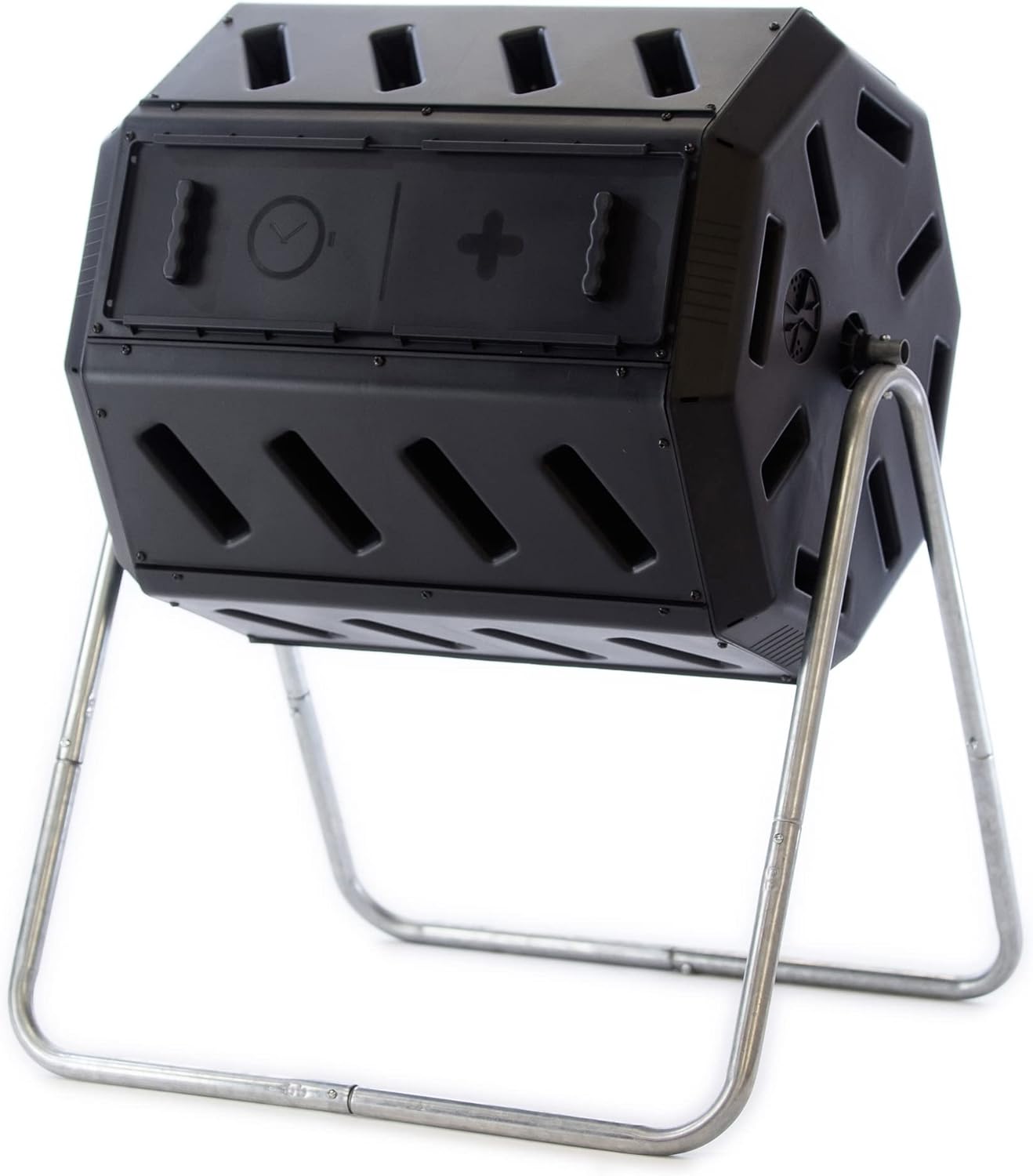
FCMP Outdoor 37-Gallon Dual-Chamber Tumbling Composter
| Capacity | 37 gallons |
|---|---|
| Material Type | Polypropylene (PP) |
| Item Type Name | Tumbling Composter |
| Chambers | Dual |
The FCMP Outdoor 37-Gallon Dual-Chamber Tumbling Composter is a user-friendly rotating bin that lets you process kitchen scraps and yard waste without turning a pile by hand. Its two chambers let you fill one side while the other finishes curing so you can maintain a steady supply of finished compost. The molded fins and ergonomic handholds make tumbling simple, and built-in aeration holes help oxygenate the load for faster decomposition. The drum is made from UV-inhibited, BPA-free polypropylene recycled plastic and sits in a powder-coated steel frame intended to resist corrosion outdoors. In practice this composter is simple to use for small to medium gardens: add balanced “greens” and “browns,” tumble a few times every few days, and remove finished material through the access door. Limitations to note are the 37-gallon capacity, which may be small for very large yards, and that composting speed still depends on feedstock balance and ambient temperature, so you will not get instant results in cool climates.
Best for: Gardeners who want a low-maintenance, continuous composting solution for small to medium yards and value easy tumbling and regular access to finished compost.
Less Ideal for: People with very large properties, commercial gardens, or those who need high-volume composting fast should consider larger or stationary systems instead.
- Dual-chamber design supports continuous composting so one side can cure while you add fresh material to the other
- Ergonomic deep fins and handholds make the barrel easy to rotate without heavy lifting
- Aeration holes and internal fins improve airflow and help break up clumps for faster decomposition
- Constructed from UV-inhibited, BPA-free polypropylene with a corrosion-resistant steel frame for outdoor durability
- 37-gallon capacity may be limiting for very large gardens or heavy yard waste producers
- Performance depends on proper feedstock balance and warm conditions, so it is slower in cool climates
Verdict: Choose this composter if you want an easy-to-use dual-chamber tumbler that delivers continuous, low-effort composting for a small to medium backyard.
Miracle-Gro Dual Chamber Compost Tumbler (2 × 18.5 gal)

| Capacity | 37 gallons |
|---|---|
| Material Type | Alloy Steel |
This dual-chamber Miracle-Gro compost tumbler is built for gardeners who want a continuous, fast-working source of compost without manual turning. You load one 18.5-gallon chamber while the other cures, then rotate the drum every few days to maintain aeration and even moisture. The unit pairs UV-protected, food-grade plastic chambers with a galvanized steel base and side-locking mechanisms to keep pests out and support year-round use. In practice it simplifies composting for beds and containers by reducing manual labor and shortening breakdown time to roughly 4 to 6 weeks under good conditions. The hexagonal drum and sliding doors make loading and removing material straightforward, though the combined 37-gallon capacity is best for small to medium gardens rather than large-scale or heavy-duty yard waste. Assembly and placement on a level spot matter for easy turning, and it will need periodic attention to balance green and brown inputs and moisture for best performance.
Best for: Gardeners who prioritize fast, reliable compost production and want a low-effort system to produce a steady supply of finished compost for vegetable beds and flower borders.
Less Ideal for: Those who generate large volumes of yard waste, want a low-cost stationary pile, or need an industrial-scale solution should look for larger-capacity or commercial composting systems.
- Dual-chamber design lets you compost continuously by loading one side while the other cures
- UV-protected, food-grade plastic and galvanized steel base resist weathering for year-round use
- Rotating tumbler speeds aeration and decomposition so finished compost can form in about 4–6 weeks
- Side-locking doors and tight seals help keep pests out and simplify loading and unloading
- 37-gallon total capacity is modest and may be too small for large yards or heavy yard waste
- Requires a level, stable base and occasional monitoring of moisture and material balance for best results
Verdict: This tumbler is the best pick for gardeners who want a fast, continuous supply of high-quality compost with minimal manual turning.
Nazhura Dual-Chamber 43 Gallon Compost Tumbler Bin

| Capacity | 43 gallons |
|---|---|
| Material Type | Plastic and Galvanized Steel |
| Manufacturer Warranty Description | 1 Year |
The Nazhura dual-chamber compost tumbler is a practical outdoor bin that speeds up backyard composting by combining insulated rotating chambers with internal mixing when turned. You load kitchen scraps and yard waste into either chamber, let material heat and break down, then rotate the tumbler occasionally to aerate and mix the pile; one chamber can be active while the other finishes so you can compost continuously. Notable features include the side-by-side dual chambers for staggered batches, a slide-open access door for easy removal of finished compost, and construction using plastic with galvanized steel supports for weather resistance. In practice the unit makes managing smaller household volumes straightforward and keeps material off the ground to reduce pests and mess. Limitations are its 43 gallon capacity, which suits small to medium households but may require more frequent emptying for heavy gardeners, and the plastic body means very hot internal temperatures are harder to maintain than in larger insulated systems. Assembly and periodic turning are required to get the fastest results.
Best for: Gardeners who want a tidy, space-efficient way to turn household scraps into usable compost on an ongoing schedule and who value ease of use and continuous batches.
Less Ideal for: People with very large yards, frequent high-volume green waste, or those who need professional-scale hot composting results should consider larger or purpose-built insulated systems instead.
- Dual-chamber design allows continuous composting by loading one side while the other finishes
- Rotating tumbler and internal mixing accelerate decomposition compared with static bins
- Slide-open access door makes removing finished compost quick and tidy
- Plastic body with galvanized steel support resists outdoor weathering and reduces direct contact with pests
- 43 gallon capacity may be small for large yards or heavy kitchen waste producers
- Plastic construction limits maximum internal heat compared with larger insulated or insulated-metal systems
Verdict: A compact, easy-to-use dual-chamber tumbler that lets practical gardeners run continuous small-batch composting with minimal mess and effort.
JupiterForce 53 Gallon Dual-Chamber Compost Tumbler with Steel Frame

| Capacity | 53 gallons |
|---|---|
| Material Type | Polypropylene (PP) |
| Model Number | JF90 |
This JupiterForce 53 gallon dual-chamber compost tumbler is built for steady, no-nonsense backyard composting. The two separate chambers let you keep one side maturing while you add fresh scraps to the other, so you can maintain a continuous supply of finished compost. The barrel rotates 360 degrees on a powder-coated steel frame, which makes mixing easier and reduces manual turning; sliding vents and internal mixing fins help aerate material and reduce clumps and odors. Panels are polypropylene, which resists weathering, and the package includes gloves and basic installation tools to get the unit working quickly. Practical benefits are straightforward: larger capacity for medium to large gardens, easier maintenance thanks to tumbling action, and the ability to run composting in two stages. Limitations are the reliance on manual rotation for active mixing and that the plastic panels mean extreme heat or impact could shorten lifespan compared with all-metal tumblers. You should also plan space for the footprint and routine turning to keep the process efficient.
Best for: Home gardeners who prioritize reliable, ongoing compost production and want a low-effort system to process kitchen scraps and yard waste for beds and vegetable patches.
Less Ideal for: People who need a very compact or indoor solution or who want a fully maintenance-free, automated composting system.
- Dual chambers allow continuous composting cycles without interrupting processing
- 360° rotating barrel simplifies turning and mixing compared with manual fork turning
- Sliding air vents and internal fins improve aeration and help control odors
- Powder-coated steel frame gives stable support and weather resistance
- Includes gloves and installation tools for quicker setup
- Polypropylene panels are less impact- and heat-resistant than all-metal constructions
- Requires regular manual rotation to keep composting efficiently
Verdict: A dependable dual-chamber tumbler that keeps composting continuous for gardeners who need steady, hands-on backyard compost production.
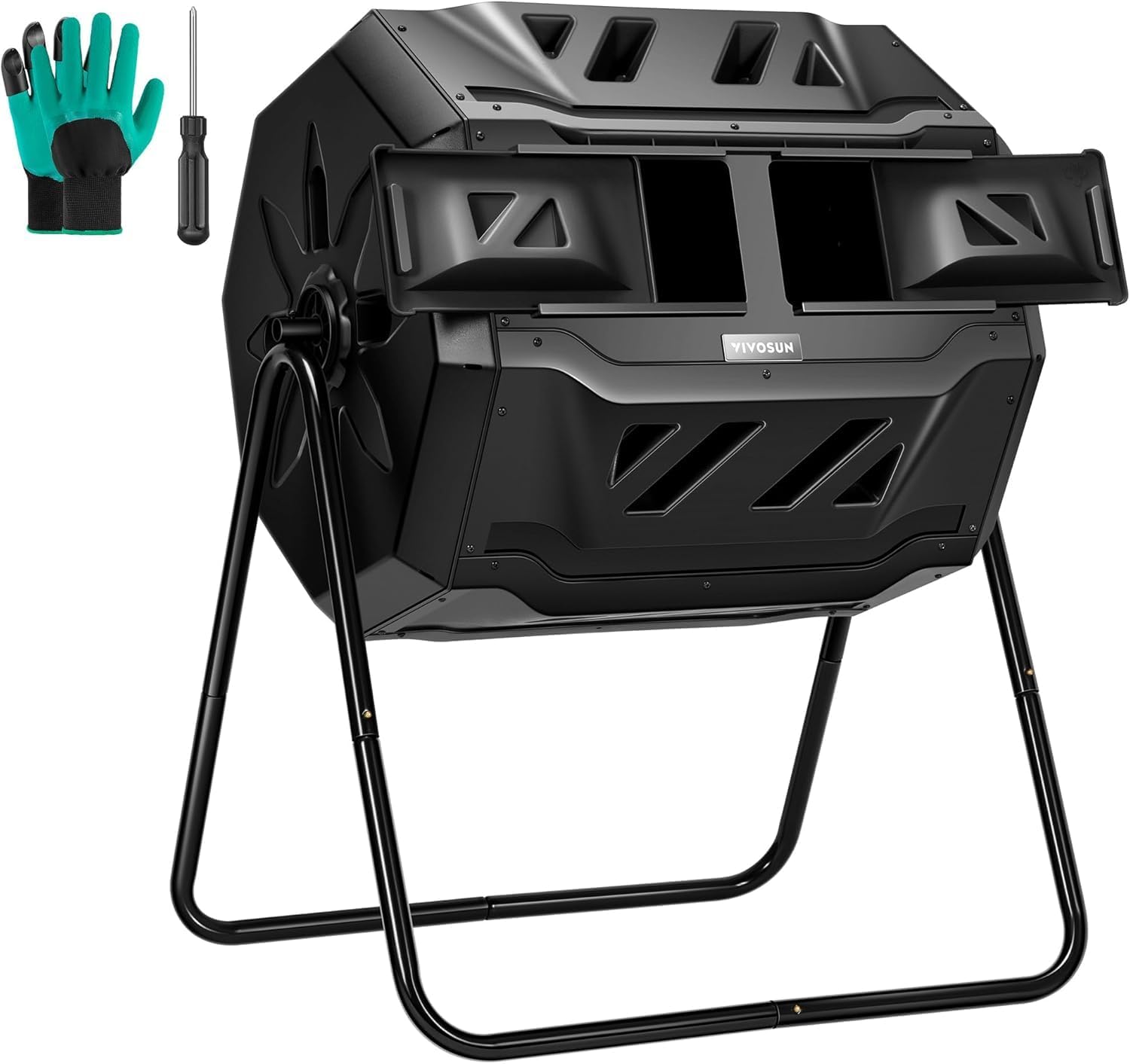
VIVOSUN Outdoor Tumbling Composter Dual-Chamber 43 Gallon
| Capacity | 43 gallons |
|---|---|
| Material Type | galvanized steel |
This VIVOSUN tumbling composter is a dual-chamber 43 gallon barrel that lets you keep one side curing while you add fresh scraps to the other, which supports a steady supply of finished compost. It rotates a full 360 degrees on an octagonal drum with internal fins, so you mix and aerate material by turning the barrel instead of digging. The body pairs a galvanized steel frame with a polypropylene drum for corrosion resistance and outdoor durability. Built-in air vents and the tumbling action help oxygenate piles and break clumps for faster fermentation, and the included garden gloves and plastic digging claws are handy extras for handling greens and browns. Assembly and periodic turning are required to keep the process moving, and its 43 gallon capacity is best for small to medium gardens rather than large properties. The metal frame makes it heavier than some plastic-only models, so you should place it where you intend to keep it rather than move it frequently.
Best for: Home gardeners who want continuous batches of finished compost without hand-turning and who value a durable outdoor unit backed by many user reviews.
Less Ideal for: People needing very high-capacity commercial-scale composting or those who need an ultra-light, portable tumbler to move around frequently.
- Dual chambers let you add new waste to one side while the other side finishes composting
- 360 degree tumbling with internal fins mixes and aerates without manual digging
- Galvanized steel frame plus PP plastic drum resists corrosion and outdoor weathering
- Built-in air vents improve oxygen flow to speed decomposition
- 43 gallon capacity may be too small for large yards or heavy kitchen waste producers
- Heavier metal-framed design is less convenient to relocate frequently
Verdict: Choose this dual-chamber tumbling composter if you want a durable, easy-to-turn outdoor unit that delivers a steady stream of finished compost for small to medium gardens.
GEOBIN Backyard Compost Bin, Expandable Outdoor Composter

| Capacity | 216 gallons |
|---|---|
| Material Type | Plastic |
The GEOBIN backyard compost bin is a cylindrical, breathable plastic composter built for straightforward yard and kitchen waste recycling. It ships as a flat panel kit with closure keys so one person can assemble and expand it to increase capacity; the design emphasizes airflow through the perforated sides to speed breakdown and reduce odors. In everyday use it holds large amounts of leaves, grass clippings, and food scraps and can be moved or reconfigured as composting needs change. Notable features include a large stated capacity, tool-free assembly, and a lightweight, weather-resistant plastic that resists rot. Practical benefits are low maintenance, ease of turning and layering, and a low-cost way to produce garden-ready compost. Important limitations are that the unit is a simple open-top cylinder without a locking lid or insulated walls, so it will not retain heat like enclosed tumblers and may require occasional pest-proofing in areas with rodents.
Best for: Buyers who want a low-cost, low-effort way to compost large amounts of yard and kitchen waste and prefer a straightforward product that is easy to assemble and maintain.
Less Ideal for: People who need a compact, insulated system that reaches high temperatures for rapid hot composting or those who require a fully pest-proof, locked unit.
- High capacity expandable design accommodates large volumes of yard waste
- Perforated sides provide good ventilation to help aerobic decomposition
- Lightweight plastic is weather-resistant and easy to move or reassemble
- Tool-free assembly with closure keys makes setup quick for one person
- Open cylindrical design offers limited insulation so it will not heat up like enclosed composters
- No integrated secure lid or pest barrier, which can require extra measures in wildlife-prone areas
Verdict: Choose the GEOBIN if you want an inexpensive, easy-to-assemble outdoor composter that handles large volumes with good ventilation.
Choosing the Right Outdoor Compost: Key Factors to Consider
Turnover Rate and Composting Speed
How quickly a system converts raw materials into usable compost determines how often you must add new waste and whether the pile will be a nuisance. Faster turnover reduces the amount of yard space tied up by active compost and lowers the risk of partial breakdown that attracts pests.
Turnover rate depends on airflow, the ability to mix or turn the pile, and how well the system holds heat. Systems that allow periodic mixing or tumbling and that trap heat without becoming waterlogged will produce finished compost in months rather than years. Consider how often you can physically tend the pile; an ideal system speeds decomposition while matching the effort you will actually put in.
Aeration and Oxygen Access
Oxygen is essential for aerobic decomposition and for keeping odors low. Compost setups with built-in vents, tumblers, or simple turning access let air reach the material and keep microbial activity healthy.
Poorly aerated systems often become anaerobic, producing foul smells and slowing breakdown. When evaluating outdoor compost options, check how easy it is to introduce oxygen: can you turn the contents with a tool, rotate the drum, or rely on passive vertical airflow? Good aeration design reduces maintenance and improves final compost quality.
Capacity and Fit for Your Garden
Capacity matters because a bin that is too small fills quickly and forces you to start new piles that cannot mature. A unit that is too large may be unnecessary and take up precious yard space. Match the system size to the amount of kitchen scraps, yard trimmings, and seasonal leaves you generate.
Also consider footprint and shape. Tall, narrow systems can hold heat well and take less ground area, while wide, open bins are easier to manage with a pitchfork. Location options matter too: you may need a compact solution for a small patio or a larger bin for a suburban yard.
Durability and Weather Resistance
Outdoor compost systems face sun, rain, freeze-thaw cycles, and burrowing animals. Materials that resist rot, rust, and UV damage will last longer and require less replacement. Look for corrosion-resistant metals, UV-stabilized plastics, or well-seasoned wood that has been treated for outdoor use.
Durability also affects how well the system preserves internal conditions. A collapsing or cracked container loses heat and allows excess water or pests in, which slows decomposition. Choose a design that stands up to your local climate and seasonal extremes.
Ease of Harvest and Use
You will use finished compost only if you can access it easily. Systems with removable bases, bottom doors, or tilting drums simplify harvesting and reduce the temptation to leave partially decomposed material in place.
Consider how you will load, turn, and remove material. If harvesting requires heavy lifting, awkward tools, or disassembly, you may avoid it and let usable humus sit unused. Accessibility also matters for seasonal use when frozen conditions can complicate emptying the bin.
Pest Control and Odor Management
Compost that attracts rodents, raccoons, or flies creates maintenance headaches and neighborhood friction. Designs that seal well, bury kitchen scraps within carbon material, or provide pest-proof lids help prevent unwanted visitors. Odor management ties to aeration and moisture balance, so systems that keep materials aerated and allow excess water to drain will emit fewer smells.
Evaluate how the structure prevents small animals from accessing food scraps and whether vents or screens are provided to keep insects out while maintaining airflow. Good pest and odor control reduces ongoing upkeep and makes outdoor composting viable in tighter living situations.
Choosing a Location and Preparing the Site
Select a location that balances convenience with good composting conditions. A partially shaded spot protects the pile from intense sun that can dry it out and from heavy rain that can waterlog the contents. Place bins on soil or a gravel pad to allow drainage and access for soil organisms that speed breakdown.
Keep the bin within easy reach of your kitchen or garden so you use it regularly, but avoid placing it against a building wall where moisture and pests could become a problem. If you expect to turn the pile frequently, leave enough space to maneuver a fork or grab a tumbler handle.
- Prefer a level area with good drainage.
- Avoid low spots that collect runoff.
- Allow clearance for maintenance and harvest access.
Managing Moisture and Carbon-to-Nitrogen Balance
Moisture control and the right mix of green and brown materials are fundamental to steady composting. Aim for a damp sponge feel: too wet and oxygen is excluded, too dry and microbes slow down. Add dry leaves, straw, or shredded paper to soak up excess moisture from kitchen scraps.
Layer greens and browns and chop large items to increase surface area. If a system traps too much rain, add drainage or a cover to prevent saturation. Periodic turning redistributes moisture and exposes dry pockets to damp material.
- Use coarse browns to improve airflow.
- Shred bulky materials to accelerate breakdown.
- Monitor moisture after heavy rain or watering.
Simple Maintenance Routines That Save Time
Establish a weekly or biweekly routine for adding material and turning the pile. Small, regular efforts keep decomposition active and reduce the work required at harvest time. A regular schedule also ensures you do not let partially decomposed waste accumulate.
Keep a small stash of dry carbon near the bin for quick balancing. Inspect the pile for odors, excessive wetness, or signs of pests and adjust aeration or coverage as needed.
- Turn or tumble contents to reintroduce oxygen.
- Add browns when adding many kitchen scraps.
- Harvest finished compost from the bottom or access door.
Compost Uses and When to Apply Finished Humus
Finished compost improves soil structure, nutrient retention, and water-holding capacity. Use it as a topdressing for established beds, incorporate it into planting mixes, or work it into new garden beds to jump-start biological activity.
Know when material is finished: it should be dark, crumbly, and earthy-smelling with no recognizable food scraps. If some shards of woody material remain, screen or age the compost further before application.
- Topdress around shrubs and vegetables in spring or fall.
- Mix into planting holes for transplants.
- Use screened compost for seed-starting mixes.
Winter Strategies for Outdoor Compost
Composting activity slows as temperatures fall, but you can maintain a workable system through winter. Insulate bins with straw bales or add larger volumes of fresh material in late fall to keep internal heat. In colder climates, a closed tumbler or well-insulated bin retains warmth and continues to process material at a slower rate.
Plan for harvesting before deep freezes make access difficult. If your system will be idle for months, close vents to reduce moisture intrusion and protect the pile from excessive rain or snow.
- Add bulk material before the cold to maintain heat.
- Use insulated covers in frigid regions.
- Avoid opening frozen compost when possible to preserve heat.
How We Chose the Best Outdoor Compost
We focused on attributes that matter for real outdoor composting rather than marketing claims. Capacity and turnover rate were primary filters because a compost system must hold enough material for your household and allow it to break down in a useful timeframe. Aeration and mixing options were assessed next, since oxygen access controls decomposition speed and odor. Durable materials and weather resistance were required to survive seasons without frequent replacement. Ease of harvesting and accessing finished compost was included because many systems lock usable humus away behind awkward lids or removable panels. Pest resistance and odor control features were checked for gardeners in suburban and urban settings where critters and neighbors matter. We excluded indoor-only tumblers, worm-only vermicomposters designed for kitchens, and novelty items that do not scale to routine yard waste. Our shortlist emphasizes practical garden performance: capacity and turnover, aeration, durability, access for harvest, and pest and moisture management aligned with the scoring metrics below.
FAQ
How often should I turn an outdoor compost pile?
Turn frequency depends on system type and goals. For faster turnover use a tumbler or turn a bin every one to two weeks. For slower, low-effort systems, turning monthly or less often is usually acceptable.
Can I compost meat or dairy outdoors?
Meat and dairy are best avoided in simple outdoor piles because they attract pests and slow aerobic decomposition. If you must compost these items, use a sealed, high-heat system designed for them or bury them well within a hot pile.
How do I know when compost is finished?
Finished compost is dark brown, crumbly, and has an earthy smell. You should not be able to identify original food scraps or most plant material. A short screening will remove remaining coarse fragments if needed.
Will a compost bin attract rodents to my yard?
Some bins can attract rodents if food scraps are left exposed. Choose pest-resistant designs, bury kitchen scraps under browns, and avoid leaving meat or fatty foods in open systems to reduce the chance of attracting animals.
Is a tumbler faster than a stationary bin?
Tumblers can speed decomposition because they make turning simple and improve aeration, but effectiveness also depends on proper feedstock balance and sufficient volume. Small tumblers may not hold enough material to maintain heat, which can limit speed.
How much compost will I get from a season of yard and kitchen waste?
Yield varies by household size and gardening activity. Expect a fraction of the input mass as finished humus because moisture loss and decomposition reduce volume. Planning for capacity that exceeds your immediate needs avoids frequent overflow.
Final Verdict
Match the compost system to how much organic material you produce and how much time you will commit to turning and maintenance. Prioritize adequate capacity, good aeration, and pest-resistant access so the system produces dark, crumbly humus instead of a wet, smelly pile. Remember that tradeoffs exist: faster systems often require more active turning, while low-effort bins may take longer to yield finished compost. Choose the approach that balances effort and output for your garden and stick to simple routines to get the best results.
