

Note: This article contains affiliate links. If you click on these links and make a purchase, I may earn a small commission at no extra cost to you. This helps support my research and content. Read my full affiliate disclosure here.
Concrete is one of the hardest-working surfaces in the yard, and it also shows dirt, oil, algae, and rust more readily than softer materials. Choosing the right pressure washer detergent for concrete matters because detergents change how well stains release, how quickly you can work, and whether the cleaner etches or discolors the slab. This guide spotlights six top-performing pressure washer detergents for concrete shortlisted for real-world cleaning tasks. We explain the performance and safety tradeoffs that matter to homeowners and maintenance crews, and we summarize the evaluation criteria used to choose these options. Read on to see which detergent properties match your cleaning needs before the product reviews below.
Top Picks at a Glance
| Best Overall The best all-around choice for most situations | Simple Green Oxy Solve Concrete & Driveway Cleaner, 128 fl oz |  |
| Best Quality Built to a higher standard if you want something more solid | Kärcher Multi-Purpose Pressure Washer Detergent, Highly Concentrated |  |
| Best Value The sweet spot between price and what you get | Krud Kutter Concrete & Driveway Pressure Washer Concentrate, 1 Gallon |  |
| Best Budget The cheapest option that still gets the job done reliably | Home Armor Outdoor Cleaner Concentrate (1 gal) |  |
| Highest Rated A top-rated pick with lots of positive feedback | ECOLAB Concrete and Driveway Degreaser Concentrate, 1 Gal |  |
| Most Popular A crowd favorite that many people choose with confidence | Simple Green Oxy Solve Total Outdoor Cleaner Concentrate (1 gal) |  |
Simple Green Oxy Solve Concrete & Driveway Cleaner, 128 fl oz

| Volume | 128 fl oz |
|---|---|
| Material Feature | Biodegradable |
| Directions | Pressure wash or mix 1:20 for hand cleaning |
| Manufacturer | AmazonUs/SUJR9 |
Simple Green Oxy Solve is a large-format, peroxide-powered cleaner made for concrete, driveways, patios and other masonry. It is applied through a pressure washer siphon tube or mixed for hand-scrubbing; the label advises wetting the surface, applying at low pressure, letting it dwell for 3–5 minutes, then rinsing at high pressure. The formula tackles oil, grease, rust and tire marks without relying on harsh bleach-based chemistry and is biodegradable. Practical benefits include a dedicated 128 fl oz bottle that supplies multiple jobs and clear, step-by-step directions for both pressure-wash and bucket use. Important limitations are that runoff can affect some asphalt sealers and that pressure washing may strip oxidized paint or weathered finishes, so testing a small area first is recommended. You should also plan to rinse nearby plants after contact and follow dilution guidance for safe, effective cleaning.
Best for: Buyers who want a ready-to-use concrete cleaner that works with a pressure washer or by hand and who prioritize effective stain removal with a gentler peroxide formula.
Less Ideal for: People seeking a product specifically for sealed asphalt driveways or for delicate painted surfaces without testing first should consider alternatives.
- Formulated for concrete and masonry stains including oil, grease and rust
- Designed for pressure washer siphon use or diluted bucket cleaning for versatility
- Peroxide-based, biodegradable formula that avoids harsh bleach chemistry
- Large 128 fl oz volume suitable for multiple cleaning sessions
- Clear directions for dwell time and rinse steps that simplify use
- May discolor or lift oxidized paint and some asphalt sealers if not tested first
- Requires rinsing of plants and surrounding landscaping after contact
Verdict: Choose this if you want a peroxide-based, pressure-washer-ready cleaner that removes oil and rust from concrete without harsh bleach chemistry.
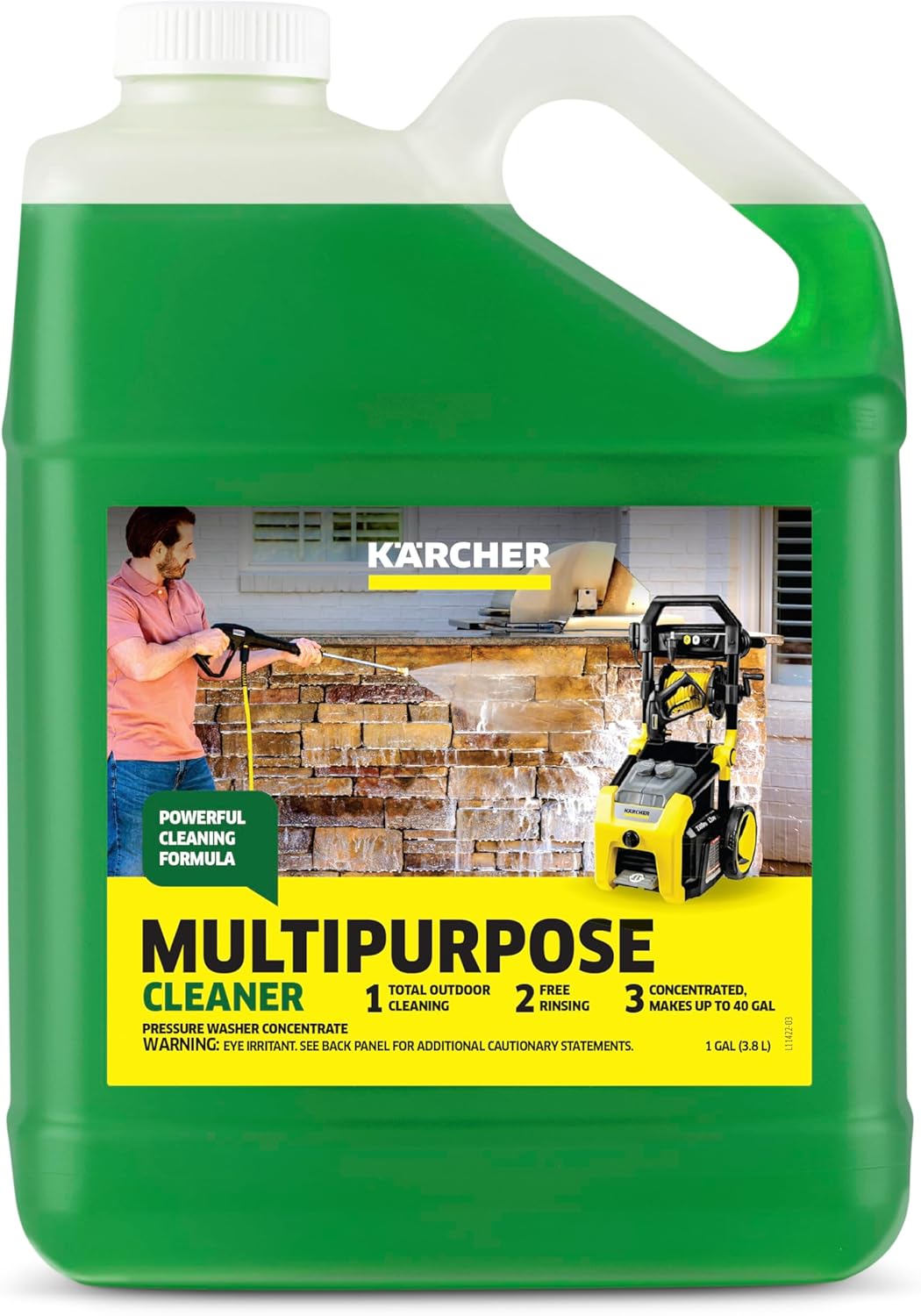
Kärcher Multi-Purpose Pressure Washer Detergent, Highly Concentrated
| Manufacturer | Karcher |
|---|---|
| Volume | 1 Gallon |
| Concentration | Highly Concentrated |
| Compatibility | Kärcher and other brands |
This Kärcher multi-purpose pressure washer detergent is a highly concentrated liquid designed to stretch a gallon into many gallons of ready-to-use cleaner for outdoor surfaces. You dilute the concentrate according to the label and apply it through a pressure washer or foam cannon, or use it manually for spot cleaning. It is formulated to speed cleaning of concrete, decks, siding, patio furniture, vehicles and more, so you remove grime and stains with less scrubbing. Notable features include universal compatibility with consumer gas and electric washers and concentrated yield that makes it cost-effective for frequent use. Practical benefits are faster cleaning times and improved soil removal compared with plain water, plus clear dilution guidance for different tasks. Limitations are that it is a general-purpose formula rather than a specialist product for delicate finishes or heavy industrial grease, and you must follow dilution and rinsing instructions to avoid residue or surface damage.
Best for: Buyers who prioritize cleaning performance and economy for routine home outdoor jobs and want a single detergent that handles driveways, decks, siding and vehicles.
Less Ideal for: Specialty users who need a dedicated degreaser, paint-safe vehicle shampoo, or formulations for sensitive surfaces should consider dedicated cleaners instead.
- Highly concentrated formula stretches a single gallon into many gallons of ready-to-use detergent
- Compatible with Kärcher and most consumer gas and electric pressure washers including foam cannons
- Suitable for a wide range of outdoor surfaces including concrete, decks, siding, vehicles and patio furniture
- Makes cleaning faster and reduces manual scrubbing by boosting the pressure washer's cleaning power
- General-purpose formula is not optimized for very delicate paint finishes or specialized stain removal
- Requires correct dilution and rinsing to avoid residue on some surfaces
Verdict: Choose this concentrated Kärcher detergent if you want a single high‑yield formula that improves cleaning speed and performance across common home outdoor jobs.
Krud Kutter Concrete & Driveway Pressure Washer Concentrate, 1 Gallon

| Coverage | Up to 5,800 square feet |
|---|---|
| Dilution | 1 gallon makes up to 20 gallons solution |
| Surface compatibility | Concrete, brick, masonry, asphalt, patios, sidewalks, garage floors |
| Use directions | Apply, let sit 3–5 minutes, then rinse with pressure washer |
This Krud Kutter concentrate is designed to be diluted and used with a pressure washer to remove heavy oil and grease stains from driveways, sidewalks, patios, garage floors, and other masonry surfaces. The formula includes an Oil Grabber additive that helps penetrate and dissolve stubborn stains without scrubbing; you apply the solution, let it sit 3 to 5 minutes, then rinse with a pressure washer. One gallon dilutes to make up to 20 gallons of working solution and claims coverage up to 5,800 square feet, which makes it practical for larger residential or small commercial jobs. The product is bleach free and biodegradable when used as directed, and the manufacturer notes it is safe for surrounding plants when rinsed properly. Important limitations are that it should not be used on wood, painted, sealed, or stained surfaces and you must avoid letting the product dry on the surface for best results. For toughest stains you may still need repeat applications or light agitation in small areas.
Best for: Homeowners or maintenance contractors who need an efficient, concentrated pressure-washer detergent to clean large areas of concrete, driveways, and masonry without extensive scrubbing and who prioritize coverage and ease of use.
Less Ideal for: People who need a cleaner for wood, painted, sealed, or stained surfaces or those who prefer a ready-to-use product rather than a concentrate.
- Concentrated formula dilutes up to 20 gallons, allowing large-area coverage up to 5,800 sq ft
- Specifically formulated to penetrate and dissolve oil and grease stains with an Oil Grabber additive
- Bleach-free and described as biodegradable and safe for nearby plants when used as directed
- No scrubbing required when used with a pressure washer, saving time on large jobs
- Not safe for wood, painted, sealed, or stained surfaces
- Must be rinsed thoroughly and not allowed to dry on the surface, which requires attention during use
- Severe or deeply set stains may require repeat treatments or spot agitation
Verdict: A concentrated, bleach-free pressure washer detergent that maximizes coverage and removes tough oil and grease from large concrete and masonry surfaces with minimal scrubbing.
Home Armor Outdoor Cleaner Concentrate (1 gal)

| Volume | 1 gal |
|---|---|
| Active ingredient | Sodium hypochlorite |
| Intended surfaces | Brick, wood, concrete, vinyl |
| Application method | Attach hose or pressure-wash wand; spray, wait 10 minutes, rinse |
Home Armor Outdoor Cleaner Concentrate is a one-gallon sodium hypochlorite formula designed to blast away mildew, mold, algae and general grime from brick, concrete, vinyl and older wood. It is applied by attaching a hose or compatible pressure-wash wand to the bottle, selecting a clean setting, spraying the surface, letting it dwell about 10 minutes, then rinsing thoroughly. For concrete use the product brightens and lifts biological staining quickly, so visible improvement is common after a single application. Notable features include a concentrated formula intended for heavy-duty outdoor stains and a simple rinse-and-dwell process that avoids scrubbing. Important limitations: avoid use on fresh cedar or redwood, metal, fabrics or plants and test an inconspicuous area first because oxidation or contact can cause discoloration; it will not remove pigmented wood stains or sealers. The cleaner is practical for routine maintenance or spot treatment on driveways, sidewalks and patios but requires care around vegetation and sensitive surfaces.
Best for: Buyers who need a budget-friendly, strong cleaner for periodic heavy-duty cleaning of concrete driveways, sidewalks and patios and who are comfortable taking basic safety precautions around plants and sensitive materials.
Less Ideal for: People who need a non-bleach or plant-safe cleaner, who frequently clean fresh-cut or painted wood, or who prefer products safe for fabrics and nearby landscaping.
- Concentrated sodium hypochlorite formula removes mildew, mold, algae and grime effectively on outdoor hard surfaces.
- Designed for easy spray application with hose or pressure-wash wand and a simple spray, dwell, rinse routine.
- Works quickly to brighten and lift biological stains on concrete and other masonry.
- Suitable for a range of common exterior materials such as concrete, brick, vinyl and older wood when used as directed.
- Contains bleach (sodium hypochlorite) so it can damage plants, fabrics and some surfaces if not rinsed or masked properly.
Verdict: A cost-conscious, powerful bleach-based concentrate that quickly lifts mildew and algae from concrete and other hard exterior surfaces when used with a hose or pressure-wash wand.
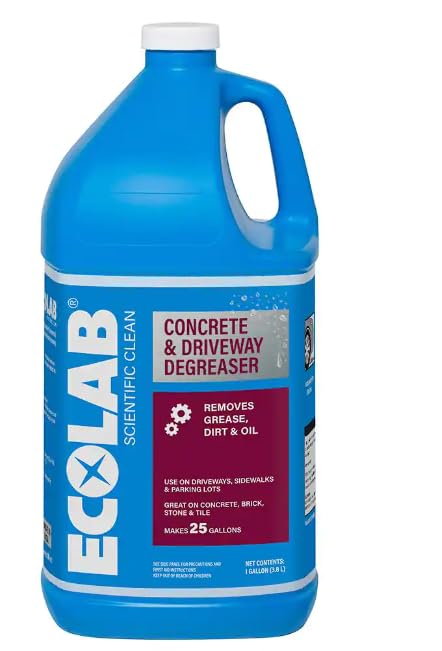
ECOLAB Concrete and Driveway Degreaser Concentrate, 1 Gal
| Manufacturer | ECOLAB |
|---|---|
| Item Weight | 10.39 pounds |
| Date First Available | July 20, 2023 |
This ECOLAB 1-gallon degreaser concentrate is designed for use with pressure washers to dissolve grease, oil stains, and surface buildup on concrete, driveways, brick, and tile. As a concentrate it is mixed with water and applied through a pressure washer detergent tank or downstream injector, letting the active formula penetrate and lift soils before rinsing. The notable strengths are its commercial-grade formulation from a reputable maker and the gallon volume, which should cover multiple cleaning sessions for typical driveways. Practical benefits include faster stain removal compared with plain water and less scrubbing for stubborn greasy spots. Important limitations are that the listing gives limited usage instructions and no dilution ratios, so you should follow product labeling from the manufacturer or test a small area first; it is also a chemical product that requires appropriate PPE and care around plants and painted surfaces. For regular maintenance of concrete and heavy-duty degreasing tasks this concentrate is a practical, reliability-minded choice when used correctly.
Best for: Homeowners or maintenance pros who prioritize a dependable, commercial-strength detergent for routine or heavy-duty concrete cleaning with a pressure washer.
Less Ideal for: Casual users who want a ready-to-use cleaner without mixing or those cleaning delicate surfaces where a milder formula is needed.
- Commercial-grade concentrate suited for heavy grease and buildup
- One-gallon volume covers multiple pressure-washing jobs
- Formulated for concrete, brick, and tile surfaces
- Product listing lacks explicit dilution ratios and detailed usage instructions
- Requires careful handling and PPE to protect surrounding plants and finishes
Verdict: Choose this ECOLAB concentrate when you need a reliable, commercial-strength detergent to tackle grease and heavy buildup on concrete with a pressure washer.
Simple Green Oxy Solve Total Outdoor Cleaner Concentrate (1 gal)

| Item model number | 8541813566 |
|---|---|
| Ingredients | Water, Ethoxylated Alcohol, Hydrogen Peroxide, Tetrasodium Glutamate Diacetate, Surfactant Blend, Citric Acid |
| Directions | Mix 1 part with 20 parts water for hand cleaning; follow pressure washer reservoir instructions |
| Coverage | Covers up to 6,400 sq. ft. per bottle |
Simple Green Oxy Solve is a peroxide-powered concentrate designed to remove dirt, mildew, and organic stains from decks, siding, driveways and patios using either a pressure washer or hand cleaning. For pressure-washing you add it to the soap reservoir or siphon tube, wet the surface, apply at low pressure, let it dwell 3 to 5 minutes, then rinse at high pressure. The formula is EPA Safer Choice certified and uses hydrogen peroxide rather than strong alkalis, which makes it safer around children and pets when used as directed. It claims broad surface compatibility including wood, vinyl, concrete, brick and composite and covers large areas per bottle, making it a cost-effective option for seasonal maintenance or pre-sale cleaning. Important limits are following dilution and dwell-time instructions exactly and avoiding direct contact with plants and clothing; it is not a bleach replacement for deep-set stains and will be less aggressive on oil or paint-based marks than stronger chemical cleaners.
Best for: Buyers who prioritize safer, family-friendly cleaning and want a versatile detergent that works with a pressure washer for routine outdoor maintenance and seasonal deep cleans.
Less Ideal for: Professionals or users needing a heavy-duty solvent cleaner for oil, grease or paint removal should choose a specialized product instead.
- Peroxide-based formula certified Safer Choice for milder, less toxic cleaning than strong bleaches
- Works with pressure washers and hand-scrubbing, with clear dilution and application instructions
- Suitable for a wide range of outdoor surfaces including wood, concrete, vinyl, brick and composite
- Concentrated bottle covers large areas so one purchase can handle whole-yard seasonal cleaning
- Not designed to remove oil stains or baked-on paint as effectively as stronger solvent-based cleaners
- Requires correct dilution and dwell time to be effective, adding a small setup step for casual users
Verdict: Choose this peroxide-based concentrate if you want a Safer Choice certified, multi-surface pressure-washer detergent that cleans large outdoor areas while minimizing harsh chemicals.
Choosing the Right Pressure Washer Detergent for Concrete: Key Factors to Consider
Cleaning Chemistry and pH Balance
Concrete responds differently to alkaline and neutral cleaners. Alkaline detergents break down oils, greases, and many organic stains more effectively because they saponify fats and lift hydrocarbons from porous cement. However, excessively high pH and prolonged contact can etch or lighten concrete, especially on decorative or colored finishes.
Look for formulas that state a pH range and recommend dilution ratios for different soils. Mildly alkaline products often work well for routine cleaning, while stronger alkaline or caustic mixes are reserved for heavy oil and grease when used with short dwell times and immediate rinsing.
Foaming, Cling, and Dwell Time
How long a detergent stays in contact with the soil affects cleaning results. Foaming agents help cleaners cling to vertical or slightly sloped concrete so surfactants can penetrate grime rather than run off. Longer dwell times improve stain lift but raise the risk of surface alteration and streaking if the product is too aggressive.
Choose a detergent with controlled foaming and clear guidance on safe dwell times for concrete. For flat driveways and garage aprons, products that cling without pooling let you work methodically with a surface cleaner or nozzle pattern.
Dilution Ratio and Concentrate Strength
Concentrates offer cost efficiency but require correct dilution. A product with flexible dilution ratios gives you options: strong mixes for industrial stains and mild mixes for regular maintenance. However, too concentrated a mix increases chemical exposure and surface risk.
Confirm that the detergent labels include dilution instructions for both hand-application and downstream injector use. If you plan frequent use or contractor-scale jobs, a higher-concentrate formula that still provides reliable lower-ratio mixes is often preferable.
Compatibility With Pressure Washer Systems
Not every pressure washer setup handles all detergents the same. Some cleaners are formulated for downstream injection systems, while others can be used through a soap nozzle or applied by pump sprayer. Viscosity, presence of solids, and foaming behavior all affect injector performance and spray patterns.
Pick detergents that explicitly list compatible application methods. If you rely on a surface cleaner attachment, confirm the detergent rinses cleanly and does not leave slippery residues that reduce traction.
Effectiveness on Specific Concrete Stains
Different stains demand different chemistry. Oil and grease benefit from surfactants and emulsifiers that break hydrocarbons apart. Rust stains often need chelating agents or specialized rust removers. Algae and mildew respond to biocides and oxidizing agents, but those treatments can alter concrete color or harm nearby plants if not used correctly.
When choosing, match the detergent's strengths to the most common stains you encounter. If your driveway has recurring oil spots, prioritize heavy-duty degreasing action. For shaded walkways with biological growth, favor algicidal or oxygen-based cleaners with clear plant-safety instructions.
Surface Finish and Decorative Treatments
Decorative concrete, stamped patterns, and colored or sealed surfaces are more vulnerable to visual change from strong detergents and aggressive agitation. Sealers can be stripped or dulled by harsh chemistry, and colored concrete can fade if cleaners are left to soak.
If your concrete has a decorative finish or is recently sealed, choose a detergent labeled safe for sealed or colored concrete and test it on an inconspicuous patch first. For sealed surfaces, milder detergents and lower-pressure cleaning often preserve the finish better than brute-force chemical action.
Preparing Concrete Before Detergent Application
Start by clearing loose debris and sweeping the surface. Use a stiff broom or leaf blower to remove grit and dry soil so the detergent can target bound contaminants like oil and mildew rather than simply flushing dirt around.
If oil puddles or heavy staining exists, scrape or absorb thick deposits with a putty knife and oil-absorbent pads before applying detergent. Pre-treat concentrated spots with a small volume of diluted cleaner and a stiff brush to loosen embedded material before pressure-washing.
- Wet surrounding vegetation and cover delicate plantings if using stronger chemistry
- Mark drainage points to avoid run-off into storm drains or garden beds
- Test the detergent on a small, hidden area to check for color change or efflorescence
Application Methods and Best Practices
Choose the application method that fits your equipment: downstream injector, low-pressure soap nozzle, or hand pump sprayer for spot work. For large flat areas, using a downstream injector with a surface cleaner reduces streaking and speeds coverage.
Apply detergent in bands and allow the product to dwell within the recommended time. Do not let cleaning solution dry on the concrete. Rinse in the opposite direction of application to avoid pushing soil into uncleaned areas.
- Use overlap technique when spraying to ensure even distribution
- Work from the top of a slope downhill to prevent recontamination
- Rinse with a fan nozzle at moderate pressure to remove residues without etching
Rinsing, Neutralizing, and Environmental Safety
Rinsing thoroughly is essential to prevent residue, which can attract dirt or create slippery surfaces. Some alkaline detergents benefit from a mild acidic rinse or neutralizer when instructed by the product label to restore surface pH.
Be mindful of where rinse water runs. Avoid directing mix or rinse into landscaping, storm drains, or watercourses. Use absorbent berms or containment when working near planted areas and follow label guidance on plant safety.
- Contain and collect runoff when possible, especially with chelating agents or strong oxidizers
- Follow local regulations for disposal of wastewater containing chemical cleaners
- Rinse tools and attachments promptly after use to prevent buildup
Maintenance Schedules and Stain Prevention
Regular, light cleanings reduce the need for harsh chemicals. For driveways and walks, an annual power wash plus spot treatments for oil or rust keeps concrete looking good without repeated heavy-duty chemistry.
Address fuel leaks and vehicle drips promptly. Applying a small mat or absorbent pad under parked cars can prevent recurring oil stains and reduce the frequency of deep cleans.
- Seal repaired or new concrete after cleaning and proper curing to reduce future staining
- Use degreasing spot treatments soon after spills to improve long-term outcomes
- Consider alkaline cleaners for seasonal deep cleans and milder products for routine maintenance
How We Chose the Best Pressure Washer Detergent for Concrete
We prioritized detergents formulated specifically for concrete and similar masonry because those products balance stronger alkaline cleaning action with additives that reduce etching and residue. Our selection criteria focused on measurable cleaning performance in common concrete problems: oil and grease removal, organic staining such as algae and mildew, rust staining, and accumulation of dirt and embedded particulates. We also considered surface safety, including pH range and manufacturer guidance for dilution and dwell time to minimize surface damage. Practical use factors were included: dilution flexibility for light versus heavy soils, foaming and cling characteristics that affect dwell time, ease of rinsing, and compatibility with common pressure washer accessories like downstream injectors and surface cleaners. Packaging and concentrate strength were reviewed to ensure options work for single-home jobs and for frequent contractor use. We excluded general-purpose detergents made exclusively for painted or plastic surfaces and any product without clear concrete-safe instructions. Products that lacked usage guidance for downstream application or that required specialized equipment were also filtered out. The result is a list of concrete-focused detergents that are safe to use with typical pressure-washer setups and cover a range of cleaning intensities.
FAQ
Can I use household cleaners like dish soap on concrete with a pressure washer?
Household dish soaps are mild surfactants and can help lift light dirt but are not formulated for embedded oil, rust, or heavy mildew on concrete. They may foam a lot and leave residue, so for tough concrete stains a purpose-made detergent is usually more effective and rinses cleaner.
Will pressure washer detergent harm nearby plants or grass?
Some detergents contain alkaline agents or biocides that can harm plants if runoff reaches roots. Many concrete detergents provide dilution and safety instructions; wetting plants and using barriers helps protect vegetation. Rinse water containment is recommended for strong formulas.
How do I know if a detergent is safe for sealed or colored concrete?
Look for explicit labeling stating suitability for sealed or colored concrete and follow manufacturer dilution and dwell-time guidance. Always test a diluted sample in an inconspicuous spot to confirm there is no color change or sealer stripping.
Can I apply detergent with a downstream injector on any pressure washer?
Downstream injectors work on many machines but are designed for use on the low-pressure side after the pump. Check your washer's user manual and the detergent instructions; very viscous formulas or thick gels can clog some injectors and may require a soap nozzle or hand sprayer.
How long should I let detergent sit on concrete before rinsing?
Recommended dwell times vary by formula and stain severity but usually range from a couple of minutes up to 10 minutes. Avoid letting cleaners dry on the surface. Follow the product label for safe maximum dwell time to prevent surface alteration.
Do detergents remove oil stains permanently or just temporarily?
Detergents can lift and remove many oil deposits, especially if treated early and agitated. Deep-set or old oil that has penetrated porous concrete may require repeated treatments or mechanical surface removal to fully eliminate staining.
Final Verdict
Prioritize matching detergent chemistry to the stains you most frequently face: strong alkaline and emulsifying formulas for grease, chelators for rust, and oxygen-based or biocidal treatments for biological growth. Balance cleaning strength with surface safety by following dilution and dwell-time instructions and testing on an inconspicuous area first. For routine maintenance, lean toward milder mixes and regular cleaning intervals; reserve concentrated or aggressive solutions for periodic heavy-duty jobs. With careful selection and correct application, a concrete-specific pressure washer detergent will cut cleaning time and protect the surface finish. Focus on the factors outlined above to choose a product that fits your equipment, the stains you tackle, and the level of care your concrete needs.
