

Note: This article contains affiliate links. If you click on these links and make a purchase, I may earn a small commission at no extra cost to you. This helps support my research and content. Read my full affiliate disclosure here.
Gardenias need more from a container than just something to hold soil. You want a planter that keeps roots cool, drains reliably, and resists cracking or staining in sun and rain. The right planter also helps you manage watering and acidity, both critical for healthy gardenia growth. This guide shortlists six top planters for gardenia suited to patio, porch, or small-yard planting. We evaluated options based on drainage, material, root volume, and winter durability so you can pick a container that supports strong bloom production and easier care. Read on for practical guidance before you choose a pot for your gardenia.
Top Picks at a Glance
| Best Overall The best all-around choice for most situations | Garden Elements 'Happy' Large Glazed Plastic Planter (15") |  |
| Best Quality Built to a higher standard if you want something more solid | Christopher Knight Home Armis Round Lightweight Concrete Planter with Drainage |  |
| Best Value The sweet spot between price and what you get | Fielda 8/10/12 Inch Self-Watering Plastic Planter Set (3-Pack) with Tray |  |
| Best Budget The cheapest option that still gets the job done reliably | Lifemaster 6-inch Plastic Plant Pots with Drainage and Saucers, 3-Pack |  |
| Highest Rated A top-rated pick with lots of positive feedback | KOL Vintage Black Wide-Mouth Urn Planters, 2-Pack (15" Dia.) |  |
| Most Popular A crowd favorite that many people choose with confidence | Root & Vessel Majestic Full Depth Cylinder Pot, 12-Inch, Glossy White |  |
Garden Elements 'Happy' Large Glazed Plastic Planter (15")

| Material Type | Plastic |
|---|---|
| Other Special Features of the Product | Drainage Hole, Indoor or outdoor use, UV fade resistant |
| Finish Types | Brushed |
| Mounting Type | Floor Standing |
| Size | Large |
The Garden Elements 'Happy' large planter looks like glazed pottery while avoiding the weight and fragility of ceramic. It is a tall, round plastic pot with a glossy brushed finish, pre-drilled drainage holes, and UV fade resistance so it can sit on a sunny patio or sheltered garden spot. Typical use is as a floor-standing container for medium to large potted shrubs or flowering specimens such as gardenias; the wide 15" opening gives room for root growth and the lightweight construction makes it easy to reposition for seasonal light or protection. Practical benefits include easy cleaning with a hose, lower risk of breakage compared with ceramic, and enough volume to let gardenias establish without frequent repotting. Important limitations are that plastic offers less insulating mass than ceramic or clay, so potted gardenias may need extra winter protection in cold climates and slower soil temperature buffering in hot weather. The planter’s stylish finish mimics pottery but will not have the same tactile weight or perceived premium feel as real glazed clay.
Best for: Gardeners who want a low-maintenance, attractive planter that is easy to move and works reliably for larger container-grown gardenias on patios, balconies, or sheltered outdoor spots.
Less Ideal for: Gardeners seeking a heavy, traditional ceramic or terracotta look with natural thermal mass for winter protection should consider clay or stone alternatives.
- Glazed brushed finish gives a pottery look without ceramic weight or fragility
- Pre-drilled drainage holes support healthy roots and prevent waterlogging
- UV fade resistant plastic suitable for year-round outdoor exposure
- Lightweight for easy moving and seasonal repositioning
- Easy to clean with a hose or damp cloth
- Plastic construction provides less thermal insulation than ceramic or terracotta, which can affect root temperature control
Verdict: A lightweight, weather-resistant planter that delivers a glazed pottery look and easy one-person handling ideal for growing gardenias in containers.
Christopher Knight Home Armis Round Lightweight Concrete Planter with Drainage

| Material Type | Concrete |
|---|---|
| Other Special Features of the Product | Drainage Hole, Lightweight |
| Mounting Type | Floor Standing |
| Indoor Outdoor Usage | Indoor, Outdoor |
| Included Components | Saucer, Plant Stand |
This Armis round planter is a medium, faux-stone concrete urn built to display flowering shrubs and ornamentals in patios, porches, or sheltered garden spots. Made from lightweight concrete it gives the appearance of a heavy stone urn while being easier to move when planting or repositioning. The included saucer and plant stand and the integrated drainage hole with stopper make it straightforward to plant gardenias or other moisture-sensitive shrubs and control watering. The floral relief and antique white finish provide a decorative backdrop that complements white or pink gardenia blooms. Because it is a single-piece, floor-standing planter there is no assembly required, but the faux-stone concrete will still add significant mass compared with plastic pots and may need two people to lift when filled with soil and a mature plant. It is weather resistant for outdoor use but, like most concrete planters, could show surface wear over many seasons in very cold climates. For growers prioritizing a sturdy, attractive container that supports good drainage for gardenias, this planter balances look and function well.
Best for: Gardeners who want a sturdy, attractive container that supports proper drainage for potted gardenias and who value a classic urn look without the weight of natural stone.
Less Ideal for: People who need ultra-lightweight, portable containers for frequent moving or those in very cold climates who prefer frost-proof plastic or glazed ceramic alternatives.
- Realistic faux-stone finish and floral relief enhance plant presentation
- Lightweight concrete construction is easier to move than traditional stone
- Built-in drainage hole with stopper helps prevent overwatering
- Includes saucer and plant stand so it is ready to use out of the box
- Heavier than plastic pots once filled, may require two people to move when planted
- Concrete surface can develop wear or discoloration over long exposure to freeze-thaw conditions
Verdict: A decorative, drainage-ready faux-stone concrete planter that gives gardenias a supportive, attractive home without the heft of real stone.
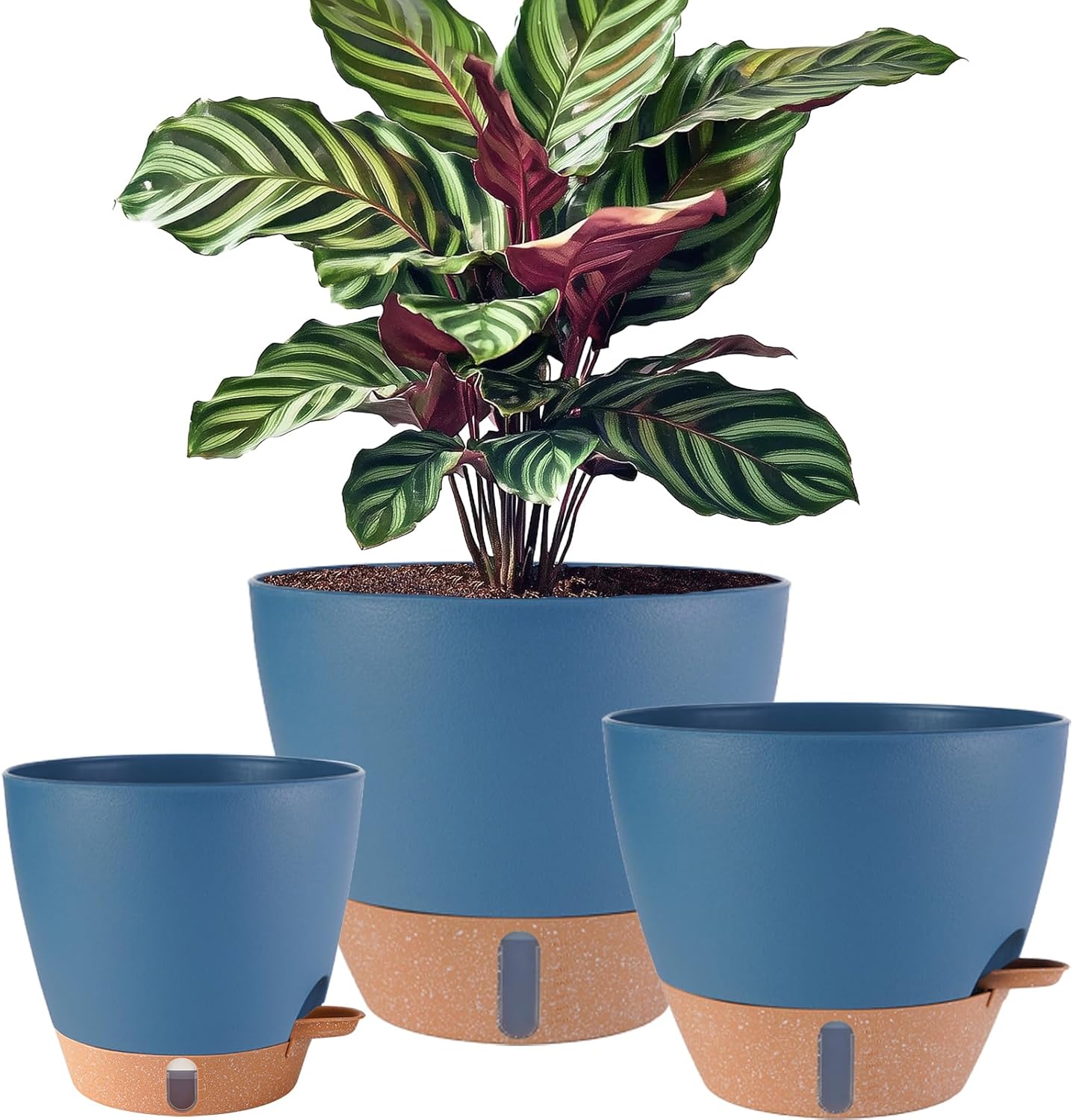
Fielda 8/10/12 Inch Self-Watering Plastic Planter Set (3-Pack) with Tray
| Material Type | Plastic |
|---|---|
| Included Components | Tray |
| Indoor Outdoor Usage | Indoor, Outdoor |
| Other Special Features of the Product | Breathable, Drainage Hole, Portable, Self Watering |
These Fielda planters are a practical option for shade-loving flowers and foliage because their self-watering reservoir and visible water-level window help maintain consistent moisture without daily attention. Each set includes 8-, 10-, and 12-inch pots with removable trays and a cotton-wick system that draws water from the bottom reservoir into the soil, which reduces the risk of over- or under-watering in low-light conditions where soil dries slowly. The pots are made from thick, weather-resistant plastic that resists cracking and fading for outdoor use on a shaded patio, and multiple drainage holes plus an airflow gap aim to keep roots healthy. Typical use is potting a nursery container into the planter, filling the reservoir, and checking the window periodically rather than watering from the top. Limitations to note are the reduced usable planting depth because of the reservoir and that the system still requires occasional monitoring and cleaning to prevent residue buildup in the tray. For gardeners who prefer a low-maintenance approach, these planters simplify moisture management for shade plants but are not a zero-maintenance substitute for routine checks.
Best for: Buyers who want low-maintenance planters for shade-tolerant flowers and houseplants and prefer predictable, monitored watering rather than frequent top-watering.
Less Ideal for: Gardeners wanting the deepest possible root space for large shrubs or trees or those who prefer traditional soil-only pots without a built-in reservoir.
- Built-in self-watering reservoir with cotton-wick system for steady moisture
- Transparent water-level window for easy monitoring without moving the pot
- Durable, thick plastic construction suitable for indoor and sheltered outdoor use
- Removable tray and multiple drainage holes simplify cleaning and prevent waterlogging
- Reservoir reduces usable planting depth, which limits larger root balls
- Requires occasional tray cleaning and monitoring to prevent residue buildup
Verdict: If you want a low-effort, reliable way to keep shade-loving plants evenly moist, this self-watering 3-pack makes plant care simpler and more predictable.
Lifemaster 6-inch Plastic Plant Pots with Drainage and Saucers, 3-Pack

| Material | PP plastic |
|---|---|
| Thickness | 2.85 mm |
| Volume | 1.6 liters |
| Pack quantity | 3 |
These 6-inch Lifemaster pots are basic, budget-friendly planters designed for small to medium houseplants and herbs. Each pot includes multiple bottom drainage holes to prevent waterlogged soil and a removable saucer to catch runoff, which makes them convenient for windowsills and tabletops. Made from 2.85 mm thick polypropylene, the pots feel sturdy for routine watering and repotting and are lightweight enough to move around easily. The 1.6 liter volume fits seedlings, small gardenias temporarily, or herbs before they need a larger container. Because they are stackable and minimally styled, they work well when you need several uniform pots without spending much. Limitations are the small size and basic plastic finish, so plants that need deep root space or a decorative container may outgrow these quickly and they lack the breathability of terracotta.
Best for: Buyers looking for inexpensive, no-frills pots to start seedlings, grow herbs, or temporarily house small ornamentals who prioritize value and practicality.
Less Ideal for: Gardeners seeking long-term containers for mature gardenias, decorative planters for display, or pots that improve soil aeration should consider larger or different-material options.
- Multiple bottom drainage holes reduce risk of overwatering.
- Includes fitted saucers to catch excess water and soil.
- Durable 2.85 mm polypropylene construction that withstands regular use.
- Compact 6-inch size is stackable and easy to move or store.
- 1.6 liter capacity is small and will require repotting for larger or fast-growing plants.
- Plastic finish is utilitarian and not as breathable or decorative as clay alternatives.
Verdict: A practical, low-cost 3-pack of sturdy 6-inch pots that keeps small plants healthy with built-in drainage and saucers.
KOL Vintage Black Wide-Mouth Urn Planters, 2-Pack (15" Dia.)

| Capacity | 15 gallons |
|---|---|
| Number of Pieces | 2 |
| Material Type | 60%PP+ 40%PE |
| Other Special Features of the Product | Drainage Hole, Lightweight, Portable |
| Indoor Outdoor Usage | Indoor, Outdoor |
These KOL urn-style planters are a practical two-pack for gardeners who want a classic look without heavy ceramic. The wide 15" opening and 15-gallon capacity make them easy to pot up with shade-loving perennials or mixed plantings, and the pre-drilled drainage hole with a removable rubber plug gives straightforward moisture control whether you use them on a shady porch or inside. Constructed from a polypropylene/polyethylene blend, they feel light to move yet retain a sturdy shape and a matte finish that masks dirt and wear. Because they are plastic they will not crack like clay in cool, damp shade and are simple to clean. Limitations are that they lack the thermal mass of ceramic for root temperature buffering and the finish is a molded matte rather than a high-end stone look, so they suit practical rather than premium decorative schemes. Overall they work well as reliable, low-maintenance containers for shade gardens where durability and ease of handling matter most.
Best for: Gardeners who prioritize durable, low-maintenance containers for shaded porches, patios, or indoor spots and want easy-to-move planters that handle regular watering without cracking.
Less Ideal for: Buyers seeking heavy, decorative stone or ceramic planters for high-end visual impact or those who need significant root-zone thermal mass should consider alternatives.
- Wide 15" opening and 15 gallon capacity accommodates larger shade plants or mixed arrangements
- Pre-drilled drainage hole with removable plug simplifies watering and prevents overwatering
- Lightweight plastic blend makes the pots easy to move and resistant to cracking in damp, cool conditions
- Matte finish hides soil splashes and keeps a low-key, classic appearance
- Plastic construction provides less thermal buffering than ceramic or stone
- Finish is molded plastic rather than a textured premium material
Verdict: A practical, durable two-pack of lightweight urn planters that makes planting and watering shade-friendly specimens easy and low maintenance.
Root & Vessel Majestic Full Depth Cylinder Pot, 12-Inch, Glossy White

| Capacity | 18.85 liters |
|---|---|
| Material Type | Plastic |
| Finish Types | Glossy Finish |
| Other Special Features of the Product | Drainage Hole, Lightweight, Rust Resistant, UV Resistant, Weather Resistant |
| Indoor Outdoor Usage | Indoor, Outdoor |
The Root & Vessel Majestic Full Depth Cylinder Pot is a simple, modern plastic planter intended for everyday container gardening. It provides a deep planting profile that supports root development and includes a removable snap-on tray so you can protect indoor surfaces or expose drainage holes when using it outdoors. The glossy finish gives a clean, contemporary look while the polypropylene construction keeps the pot lightweight and weather resistant for season-to-season use. Practical benefits include easy repositioning on plant stands or shelves, low maintenance compared with ceramic, and recyclable BPA-free material. Limitations are that it is a basic plastic pot without insulating mass, so soil in hot or cold climates will change temperature more quickly than in heavier pots, and very large plants may need additional support or a larger container. For planting, add a drainage layer or remove the tray outdoors to avoid overwatering and follow species-specific potting advice for best results.
Best for: Buyers who prioritize a practical, low-maintenance planter that looks modern and is easy to move and care for, and who value products with many user reviews for reassurance.
Less Ideal for: Those seeking heavy, decorative ceramic planters that provide thermal mass for temperature stability or collectors wanting handcrafted finishes.
- Deep planting depth supports stronger root growth
- Built-in snap-on tray protects indoor surfaces and can be removed to expose drainage
- Lightweight and easy to move for repositioning or seasonal changes
- Durable, weather and UV resistant plastic suitable for indoor or outdoor use
- Plastic construction offers less thermal insulation than ceramic or terracotta pots
Verdict: A durable, lightweight full-depth planter that combines easy indoor protection with outdoor drainage for reliable everyday container gardening.
Choosing the Right Planter for Gardenia: Key Factors to Consider
Drainage and Overflow Management
Gardenias are sensitive to waterlogged soil, so the planter must let excess water escape quickly. Look for containers with multiple drainage holes or an integrated saucer system that allows overflow without re-saturating the root ball. Good drainage reduces the risk of root rot and helps oxygen reach feeder roots, which supports healthy flowering.
Consider whether the planter design allows you to add a layer of gravel or a drainage mesh without blocking outlets. Some planters include removable plugs or built-in reservoirs; understand how those features change routine watering and whether they suit your watering habits.
Root Volume and Pot Size
Gardenias need enough soil volume to develop a stable root system that supplies moisture and nutrients through heavy bloom periods. Choose a pot wide and deep enough for the recommended mature size of your variety, allowing at least several inches of extra root room beyond the current root ball. Too-small containers force frequent watering and can stunt flowering.
Bigger pots also buffer temperature swings and reduce the frequency of repotting. However, very large containers increase weight and make winter protection more difficult, so balance size with your ability to move or shelter the planter.
Container Material and Durability
Material affects how the planter handles weather and how it interacts with soil chemistry. Unglazed terracotta breathes well but dries faster and can crack in freeze-thaw cycles. Glazed ceramics hold moisture and look polished but may be heavier and brittle. Plastic and resin are lightweight and resist frost but can degrade under UV exposure over years.
Think about where the planter will sit: full sun, a covered porch, or a cold patio. Choose materials that resist cracking, fading, or flaking in those conditions and that will not leach harmful compounds into acidic gardenia soil.
Thermal Performance and Root Protection
Soil temperature affects root activity and bloom set. Planters that insulate roots against midday heat and winter cold help maintain steady growth. Materials with greater thermal mass, like thick ceramic or stone, moderate temperature swings, while thin-walled pots heat and cool quickly.
If you live in an area with hot summers or harsh winters, plan for insulation or using a double-pot system to protect roots. Consider whether the planter design allows for adding insulating wraps or moving the pot into a sheltered spot when extremes arrive.
Weight, Mobility, and Placement
A planter's weight influences where you can place it and how easily you can move the plant for seasonal needs. Heavy pots provide stability for top-heavy shrubs but can be difficult to relocate for winter protection or to follow sunlight. Lightweight containers are easier to rearrange but may tip in wind unless they have a low center of gravity or are anchored.
Think about who will move the planter and how often. Choose a pot with handles, consider pot rollers or casters, and plan placement that minimizes the need for frequent moving while giving the plant appropriate light and shelter.
Soil Access and Maintenance
Ease of soil replacement, root pruning, and cleaning matters because gardenias prefer slightly acidic, consistently fresh potting mix. Planters that allow you to remove the root ball or access the interior for soil refreshes make long-term care simpler. Smooth interior surfaces and removable inner liners speed cleaning and reduce pest carryover between seasons.
Also consider how easy it is to top-dress and amend soil in the pot. Narrow rims or awkward shapes can make routine feeding and repotting more cumbersome, increasing the likelihood of skipping necessary maintenance.
Matching Planter Size to Gardenia Variety
Different gardenia varieties vary in mature height and root spread, so match the planter volume to the plant you own. Compact patio types can thrive in smaller, shallower pots, while larger shrub varieties need deeper, wider containers to support root growth and heavy bloom sets.
If you are unsure of the variety, choose a slightly larger pot than the current root ball to allow a season or two of growth. Plan for root pruning or repotting at intervals if you prefer to keep plants in decorative pots that are smaller than ideal.
- Aim for at least a 2- to 3-inch increase in root space beyond the nursery container when repotting.
- Wider pots are often better than taller, narrow ones because gardenia roots spread laterally.
- Use nursery pots or temporary inner liners for easier seasonal soil refreshes.
Placement Considerations for Potted Gardenias
Placement affects light, humidity, and temperature around the plant. Gardenias prefer bright, indirect light or morning sun with afternoon shade. Position planters where they get filtered sun or morning rays but are protected from harsh afternoon heat.
Sheltered locations reduce wind stress and help maintain humidity. If you must place a planter in a windy spot, choose a heavier container or secure the pot to prevent tipping during storms.
- Avoid full midday sun in hot climates to prevent scorched foliage.
- Group planters together to create a humid microclimate.
- Elevate pots slightly off hard surfaces to improve drainage and air circulation.
Winter Care and Protecting Roots in Containers
Potted gardenias are more exposed to cold than those planted in the ground, so winter protection is essential in colder climates. Options include moving containers to a sheltered spot, grouping pots together, insulating the exterior with bubble wrap or horticultural fleece, or burying the pot in the ground when practical.
If a planter is too large to move, add insulating mulch to the top of the soil and wrap the pot to reduce freeze-thaw damage. Ensure drainage remains open so meltwater does not refreeze around roots.
- Use lighter watering in winter to avoid waterlogged soil.
- Elevate pots slightly to prevent standing water that can freeze.
- Check root health in spring and repot if roots are circling or bound.
Aesthetics That Support Horticulture
A planter should complement the plant and your space while still meeting horticultural needs. Consider finishes and colors that reflect heat if the pot sits in sun; light-colored glazes reflect more heat while dark finishes absorb it. Texture and form can enhance the plant display without compromising function.
Balance looks with practical features like drainage, removable liners, and access for soil amendments. Choosing a pot you like makes you more likely to maintain the plant properly.
- Select finishes that resist flaking and staining from regular watering.
- Pick shapes that allow for easy watering and feeding.
- Consider a consistent look across grouped planters for visual cohesion.
Using Liners, Saucers, and Double-Potting
Liners and double-potting are useful strategies. A removable plastic liner lets you manage soil and moisture more easily while the outer decorative pot protects roots from temperature extremes. Saucers catch runoff but should be emptied to avoid standing water that invites root problems.
Double-potting also creates an insulating air gap that helps moderate soil temperature. Ensure the liner has adequate drainage or that you adapt your watering practices to the system.
- Choose liners sized to allow an insulating space between inner and outer pots.
- Use saucers only when you can check and empty standing water regularly.
- Label liner contents and planting dates for easy seasonal care.
How We Chose the Best Planter for Gardenia
We focused on container characteristics that matter most for growing gardenias in pots. Key evaluation criteria included drainage performance to avoid root rot, container material and weather resistance to handle sun and cold, root volume capacity to support mature root systems, and weight and portability for moving plants to favorable microclimates. We also considered how materials affect soil temperature and moisture retention, whether the planter allows top-dressing or soil replacement, and how easy the container is to clean or sterilize between uses. Aesthetic fit for common garden settings was noted but secondary to plant health factors. Products were excluded if they lacked drainage provisions, were clearly undersized for a mature gardenia, or used materials that commonly flake or leach in garden conditions. We prioritized planters that balance durable construction with horticultural function rather than purely decorative pieces.
FAQ
What is the best size planter for a mature gardenia?
A mature gardenia usually needs a pot that provides several inches of extra root room beyond the current root ball. A wider container is often preferable to a deeper one since gardenia roots spread laterally. Choose a size that balances root volume with your ability to move or protect the pot.
Do gardenias need special soil in a planter?
Yes. Gardenias do best in well-draining, slightly acidic potting mixes with good organic matter. Mixes formulated for acid-loving plants or azaleas work well. Maintain consistent moisture without letting the soil become waterlogged.
Can I use terracotta pots for gardenias?
Terracotta breathes and helps prevent overwatering but dries faster and can crack in freeze-thaw conditions. In warmer climates or on covered porches, terracotta is a good choice. In cold areas, consider glazed, frost-resistant materials or use liners and insulation.
How often should I repot a potted gardenia?
Repotting is typically needed every 2 to 3 years or when roots begin to circle or emerge from drainage holes. Use repotting as an opportunity to refresh soil and check root health. Avoid oversizing the new pot excessively, which can delay root establishment.
Should I use a saucer under my gardenia planter?
A saucer can protect surfaces from drainage but should not hold standing water. Empty saucers after watering to prevent roots from sitting in water. If you need the planter elevated, use pot feet to improve airflow and drainage.
Final Verdict
When choosing a planter for gardenia, prioritize drainage, appropriate root volume, and materials suited to your climate. Those three decisions most directly affect soil moisture control, root health, and bloom reliability. Consider weight and mobility based on whether you will move pots seasonally, and plan for winter protection in colder areas. Balance horticultural needs with the look you want in your outdoor space. A well-chosen planter reduces maintenance and supports fuller blooming, so focus on the container features that help you manage water, temperature, and soil access with confidence.
