

Note: This article contains affiliate links. If you click on these links and make a purchase, I may earn a small commission at no extra cost to you. This helps support my research and content. Read my full affiliate disclosure here.
If you want vigorous, productive green bean vines, the right trellis makes a big difference in yield and harvest ease. Vining beans climb quickly and need stable support to keep pods off the soil, improve air circulation, and make picking faster. This guide covers five shortlisted trellises for green beans that perform well in home gardens, patios, and small plots. We evaluated stability, ease of setup, maintenance needs, and how each design affects trellis longevity and plant health. Read on to see which styles suit your space and growing approach, then check the product list for the specific builds.
Top Picks at a Glance
| Best Overall The best all-around choice for most situations | Gardener's Supply Company Extra-Tall Expandable Pea Trellis | 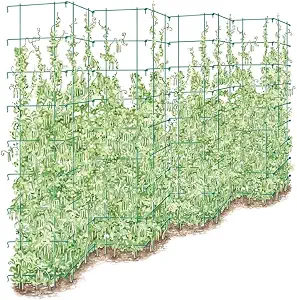 |
| Best Quality Built to a higher standard if you want something more solid | ANPHSIN 2-Pack Heavy-Duty A-Frame Metal Trellis for Raised Garden Beds |  |
| Best Budget The cheapest option that still gets the job done reliably | Alabzphsia A‑Frame Garden Trellis with Netting (47 x 16 inch) |  |
| Highest Rated A top-rated pick with lots of positive feedback | Gardgue 4 ft Willow Teepee Trellis for Climbing Plants |  |
| Best Seller A high-volume bestseller chosen again and again | Generic Heavy-Duty A-Frame Cucumber Trellis, 2-Pack (Galvanized Steel) |  |
Gardener's Supply Company Extra-Tall Expandable Pea Trellis

| Material Type | steel |
|---|---|
| Finish Type | Powder Coated |
| Item Highlight | 9'-3" L x 64" H Installed for Outdoor Plants |
This expandable pea trellis is a practical solution for growers who need a sturdy, long support for vining crops. It consists of eight hinged steel panels with large 8-inch grids that zig-zag along a row and push into the soil, giving a nearly 9.5-foot run at about 64 inches high when deployed. The powder-coated steel frame holds heavy vines upright better than flimsy netting or twine, and the hinged design lets you extend or fold it for storage without tools. Typical use is running the trellis along a planting row for peas, beans, cucumbers, or climbing tomatoes and adding end stakes in windy sites. Benefits include durability for multiple seasons, easy no-tool setup, and large grid openings that let vines thread naturally. Limitations to consider are its fixed height and grid spacing, which may be taller or wider than needed for very compact varieties, and the need to push the panels into soil or anchor them securely in soft or rocky ground.
Best for: Growers who prioritize reliable, reusable plant support and need a long, sturdy trellis to maximize yield from row-planted peas and other vining vegetables.
Less Ideal for: Those with very small raised beds, container growers with limited vertical space, or gardeners wanting adjustable-height or fine-mesh support for delicate seedlings should consider other options.
- Powder-coated steel construction for season-to-season durability
- Expandable hinged panels create a continuous 9'-8" run for long rows
- Large 8-inch grid openings let vines climb without extra twine
- Folds flat for compact off-season storage and requires no tools to set up
- Fixed height and grid spacing may not suit very compact pea varieties
- Requires pushing panels into the ground or adding end stakes for secure anchoring
Verdict: Choose this trellis when you need a durable, expandable steel support that gives a long, high-running structure for productive pea rows.
ANPHSIN 2-Pack Heavy-Duty A-Frame Metal Trellis for Raised Garden Beds

| Material Type | Iron |
|---|---|
| Finish Type | Powder Coated |
| Wire Diameter | 4.5mm |
| Number of Packs | 2 |
This 2-pack A-frame trellis is built to give reliable vertical support for pole beans and other vining vegetables in raised beds. Each kit includes four panels that connect quickly without tools to form a stable A-frame that inserts into the soil with ground-piercing legs. The 4.5 mm iron wire and welded construction provide noticeable stiffness, so the structure holds heavy vines and larger fruit like squash or melons without sagging. The 4×7 inch grid spacing gives vines plenty to grab onto while allowing airflow and light penetration to reduce disease risk. A green powder-coated finish protects the metal from rust and outdoor exposure, and the panels fold flat for compact off-season storage. The trellis is primarily designed for in-ground or raised-bed installation, so if you need a freestanding or decorative indoor solution you will want a different style. Also the ground legs are effective for stability but require careful placement in rocky or compacted soil to get a secure anchor.
Best for: Gardeners who prioritize a durable, no-fuss support for heavy-climbing vegetables in raised beds and want a long-lasting, weather-resistant solution that sets up quickly.
Less Ideal for: People who need a freestanding, decorative, or indoor trellis or who cannot drive ground legs into their planting area should consider alternate styles.
- Thick 4.5 mm iron wire and welded panels provide strong load-bearing support for heavy vines.
- A-frame design maximizes vertical growing space in raised beds and improves airflow and light exposure.
- Powder-coated finish resists rust and weathering for multi-season outdoor use.
- Foldable panels connect without tools and store flat to save space.
- Includes multiple panels and fasteners so two complete trellises are ready out of the box.
- Ground-piercing legs require sufficiently soft or worked soil and can be difficult to install in rocky or compacted beds.
- Not intended as a decorative indoor or freestanding portable trellis without soil anchoring.
Verdict: A sturdy, weather-resistant A-frame trellis that reliably supports heavy pole beans and other climbing vegetables in raised beds.
Alabzphsia A‑Frame Garden Trellis with Netting (47 x 16 inch)

| Material Type | Metal |
|---|---|
| Finish Type | Powder Coated |
| Shape | A-Frame Rectangular |
| Size | 47x16inch |
This Alabzphsia A-frame trellis is a budget-friendly support system for cucumbers, peas, beans and similar climbing vegetables. It arrives as a kit of metal stakes, tee and cross connectors, A-frame joints and a bird/netting panel so you can build a freestanding A-shaped support over a raised bed or row. The powder-coated hollow steel resists rust and the included net gives plants plenty of footholds to climb, while the equal-tee and cross pieces add structure that helps keep vines upright. Assembly is straightforward and configurable thanks to the connectors, so you can shorten or extend the run to fit different bed widths. Because the components are lightweight the trellis is easy to move and store, but that also means it is less rigid in strong winds and may need extra anchoring for heavy crops. For gardeners on a tight budget who want a simple, no-frills climbing support, this kit covers the essentials with clear practical benefits and a small footprint.
Best for: Gardeners looking for an affordable, easy-to-assemble trellis to support cucumbers and other climbing vegetables in raised beds or small rows who prioritize low cost and simple setup.
Less Ideal for: Growers who need a heavy-duty, permanent structure for large, weighty vines or who expect frequent high winds in their location.
- Includes netting and a full set of connectors for immediate assembly
- Powder-coated hollow steel resists rust and outdoor wear
- A-frame design improves air flow and sunlight exposure for climbing vegetables
- Lightweight components are easy to position and store
- Lightweight build can feel flimsy and may need extra anchoring in windy conditions
- Not as rigid as heavier welded trellises for very heavy fruiting vines
Verdict: A low-cost, easy-to-build A-frame trellis that supplies basic support and netting for cucumbers and other climbing vegetables in raised beds.
Gardgue 4 ft Willow Teepee Trellis for Climbing Plants

| Material Type | Willow Wood |
|---|---|
| Finish Type | Unfinished |
| Size | 4FT |
| Item Dimensions W x H | 6"W x 48"H |
The Gardgue 4 ft willow teepee is a lightweight, natural-looking support designed to guide beans and other light climbers upward in small beds or large containers. It unfolds into a triangular cone with a crisscross lattice that gives vines multiple attachment points and can be pushed directly into soil or placed over young plants. Made from willow wood and unfinished for a rustic appearance, it is easy to set up, reuse season after season, and store flat when not in use. Practical benefits include vertical space savings in crowded rows or raised beds and an attractive, unobtrusive garden accent. Important limitations are its light-duty construction and susceptibility to extreme weather, so it should not be relied on to hold heavy yields or brace against strong winds without additional stakes or ties. Expect routine replacement over multiple seasons if left exposed to wet, freezing, or very windy conditions.
Best for: Gardeners who prioritize a simple, reliable plant support that is easy to install and store and who grow light climbers like green beans in raised beds or containers.
Less Ideal for: Growers who need heavy-duty, long-lasting supports for large vigorous vines or who garden in very windy, storm-prone sites without the ability to add extra anchoring.
- Natural willow construction blends with garden beds and looks decorative
- Cone-shaped lattice gives multiple climbing points for bean vines and other light climbers
- Folds flat for compact seasonal storage and is simple to set up
- Lightweight so it can be placed into pots, raised beds, or moved around easily
- Designed for light-duty use and not intended to support heavy fruit loads or vigorous vines
- Willow is vulnerable to prolonged exposure to extreme weather and may need replacement over time
Verdict: A simple, easy-to-use willow teepee that reliably supports light climbers like green beans while folding flat for seasonal storage.
Generic Heavy-Duty A-Frame Cucumber Trellis, 2-Pack (Galvanized Steel)

| Material Type | Metal |
|---|---|
| Finish Type | galvanized steel |
| Number of Packs | 2 |
| Shape | A-shape, Rectangular |
This two-pack of galvanized-steel A-frame trellises is designed to give quick, sturdy vertical support for cucumbers, peas, beans and similar vining vegetables. The panels arrive ready to use with no assembly required and connect together with supplied springs and twist ties so you can make a wider span by pairing units. The metal grid and galvanized finish resist rust for outdoor use and the A-frame shape provides stable support for fruiting vines while allowing airflow and easier harvesting. Practical benefits include quick setup straight out of the box, compact folding for off-season storage, and compatibility with raised beds or small plots. Important limitations are the modest height and single-panel width per unit, which means very heavy gourds or large pumpkins may need additional bracing or multiple units chained together; the panels also have sharp edges so careful handling and secure anchoring in windy sites are necessary. If you want a simple, low-maintenance way to add vertical space for common garden vines, these trellises do the job with minimal fuss.
Best for: For gardeners who prefer low-effort, reliable support for common climbing vegetables and want something ready to install without tools or complex setup.
Less Ideal for: Not the best choice for growers of very large melons or pumpkins who need extra height and heavy-duty bracing, or for landscapers seeking decorative trellis styles.
- No assembly required so units are usable straight from the box
- Galvanized steel grid offers rust resistance for outdoor seasons
- A-frame design gives stable, breathable support for climbing vegetables
- Includes connectors and ties to join panels for wider coverage
- Folds flat for compact storage when not in use
- Height and single-panel width limit support for very large or heavy fruiting vines
- Edges can be sharp and require careful handling during installation
Verdict: A simple, no-assembly galvanized-steel trellis pair that quickly adds durable vertical support for everyday vining vegetables.
Choosing the Right Trellis for Green Beans: Key Factors to Consider
Structural Stability
Green bean vines can become surprisingly heavy when laden with foliage and pods, so a trellis must resist bending and tipping. Stability depends on stake thickness, anchoring method, and overall geometry. Freestanding frames should have broad bases or ground anchors to prevent blowover, while wall-mounted or fence-mounted systems need secure fastenings and corrosion-resistant hardware.
Siting matters: place the trellis into firm, well-packed soil or use weighted bases on patios. Consider wind exposure in your garden; a more open lattice reduces wind load but still needs a rigid frame. If you expect strong storms, choose designs that allow lowering or quick detachment to protect both plants and structure.
Climbing Surface and Spacing
The surface the vines climb on-netting, twine, wires, or rigid slats-affects how quickly and securely plants will attach. Close spacing gives more points for tendrils to catch but can reduce airflow. Wide spacing makes harvesting easier but may require training vines to the supports early in the season.
Think about the growth habit of your bean variety. Pole beans with long tendrils do well on vertical mesh or twine ladders, while bushier or less-vining types may need shorter, denser supports. Mesh size and line thickness also influence how easily pods are visible and accessible during harvest.
Ease of Setup and Adjustability
Gardeners often value trellises that are quick to install and adapt to changing garden layouts. Simple stake-and-net setups can be erected in minutes and shifted between beds, while wired or framed trellises may take more time but provide greater longevity. Look for modular pieces that can be extended or shortened to match row lengths or container widths.
Adjustability also matters for seasonal tasks: being able to lower the trellis for planting, rotate it for winter storage, or tighten sagging lines will keep the system functional over multiple seasons. Tools required for installation should be common garden basics, not specialized equipment.
Material Durability and Weather Resistance
Materials used in the frame and climbing surface determine how long a trellis lasts and how much maintenance it needs. Wood is attractive and sturdy but can rot or need treatment in wet regions. Metal frames are long-lasting but choose rust-resistant coatings or stainless options for wet climates. Synthetic nets and twine vary in UV resistance; low-cost plastics may degrade mid-season under strong sun.
Consider replacing or reinforcing parts that wear out, and evaluate how easy it is to source repair pieces. Durable materials reduce long-term work and waste, especially if you plan to reuse the trellis each year.
Accessibility for Plant Care and Harvest
A good trellis makes pruning, pest checks, and pod picking easier. Open designs let you reach pods without untangling vines, while tighter lattices can hide pods and slow harvest. The height of the trellis should match your comfort for standing harvest versus ladders. For container gardeners, a lower or slanted trellis may be simpler.
Also factor in how the trellis affects airflow and light penetration. Better circulation reduces disease risk, and accessible configuration reduces stress during repeated harvests over the season.
Storage and Off-Season Handling
Most gardeners only need trellises for the growing season, so storage size and handling matter. Lightweight or collapsible trellises pack down for sheds and closets. Rigid, one-piece frames may require more storage space and can be harder to move once dirty or weathered.
Think about how you will clean and dry the trellis before storage to prevent mold or rust. Also consider whether components are reusable year after year or disposable, as that affects both cost and environmental footprint.
Trellis Shapes and How They Affect Vining Beans
Trellis geometry changes vine behavior and harvest mechanics. Vertical A-frame or tepee shapes encourage upward growth and concentrate pods at reachable heights, while flat vertical screens maximize bed wall area for dense row plantings. Arched or tunnel forms create walk-through harvest aisles but may require more material and stronger anchoring.
Choosing the right shape depends on bed width, the number of plants, and how you prefer to harvest. Narrow beds benefit from single vertical planes; wider plots can use double-sided or tunnel structures to increase yield per square foot.
- Vertical screens are space-efficient for narrow beds
- A-frames give easy access from both sides
- Arches create comfortable pick-through corridors but need solid anchors
Training Beans Early Improves Climbing Success
Young bean seedlings sometimes need help finding the trellis. Gently guiding stems toward supports during the first few weeks and loosely tying long runners can speed attachment and prevent tangling. Train vines upward rather than letting them sprawl at the base to reduce pest and disease pressure.
Regular checks during the establishment phase make a big difference in how well the plants use the trellis. Tending early pays off with cleaner vines and a more manageable harvest later.
- Guide new vines toward support when 4 to 6 inches tall
- Use soft ties or figure-eight loops to avoid stem damage
- Retie or reposition vines if they start crossing and tangling
Container and Patio Considerations
Growing green beans in containers has different support needs than in-ground beds. Container trellises require either weighted bases or secure attachment to the pot because rootballs do not provide the same counterweight as open soil. Compact, collapsible trellises that clip onto edges work well for small spaces.
Choose climbing surfaces that let you reach pods without stepping onto containers or using tall ladders. Removable panels or modular netting simplify storage and replanting between seasons.
- Use weighted or bolt-on bases for patio pots
- Shorter trellises are often more practical in containers
- Modular nets make seasonal removal and reinstallation easier
Seasonal Care and Longevity Tips
To extend a trellis life, remove plant debris at season end, let materials dry fully before storage, and inspect for rust, splinters, or frayed twine. Apply touch-up coatings to metal frames and re-treat wood if you plan long-term use. Replace worn netting early to avoid mid-season failures.
Consider storing small hardware in labeled bags so reassembly next season is quick. Regular care reduces surprises during peak harvest and keeps vines healthier year to year.
- Clean and dry components before storage
- Inspect and repair weak points in late fall
- Store modular parts in a dry, ventilated space
Designing Trellis Layouts for Maximum Yield
Spacing trellises at the right intervals allows vines to get adequate light and airflow while enabling efficient use of garden space. For rows, set trellis planes perpendicular to prevailing winds when possible to reduce wind load and speed drying after rain. Staggered trellises can create microclimates that extend harvest windows.
Plan paths and access when laying out trellises so you can harvest without stepping onto beds. Good layout thinking reduces plant damage and makes regular maintenance tasks straightforward.
- Leave harvesting paths at comfortable widths
- Orient trellises to balance sun exposure and wind protection
- Stagger supports to avoid dense shade pockets
How We Chose the Best Trellis for Green Beans
We evaluated trellises for green beans using practical, garden-focused filters that reflect how these supports perform over a full growing season. Primary criteria included structural stability under loaded vines and wind, ease of installation and seasonal storage, and the material resistance to moisture and UV exposure. We also considered mesh or spacing pattern because that affects how easily vines can climb and how accessible pods are for harvesting. Maintenance needs such as cleaning, retensioning lines, or repainting were weighed alongside modularity and adaptability for different bed sizes or patio containers. Exclusions included decorative-only screens that lack adequate load capacity and experimental DIY designs without consistent durability. The final selection prioritizes durable designs that balance support, plant access, and low seasonal upkeep.
FAQ
What height is best for a trellis for green beans?
Most gardeners use trellises between 6 and 8 feet tall for pole beans, which gives vines plenty of room to climb without needing ladders. Shorter trellises work for space-limited sites or containers, but expect slightly lower yields if vines are constrained.
Can I reuse the same trellis year after year?
Often you can reuse a trellis for multiple seasons if you clean, dry, and repair it after harvest. Replace frayed twine or severely corroded parts to avoid mid-season failures. Some lightweight materials may need replacement more frequently in strong sun or wet climates.
Is netting or twine better for green beans?
Both work well. Netting gives many attachment points and can be easier for untrained vines to catch, while twine ladders are cheap, light, and simple to tighten. Choose UV-resistant netting and durable twine to reduce seasonal replacement.
How far apart should trellises be placed in a row?
Spacing depends on plant vigor and bed width, but leaving 3 to 6 feet between trellis planes is common for pole beans to allow light and airflow. In tighter beds, place trellises closer and thin plants to reduce overcrowding.
Can I lower or collapse a trellis during storms?
Yes. Many gardeners design trellises to fold or be quickly detached so plants and supports avoid wind damage. If your trellis is permanent and in a windy spot, add stronger anchors or choose an open lattice that reduces wind load.
Final Verdict
Choose a trellis that balances stability, climbing surface, and access for your garden layout. For in-ground rows, prioritize rigid frames or well-anchored netting to hold heavy vines. For containers and patios, favor lighter, weighted, or clamp-on designs that are easy to move and store. Remember the tradeoffs: denser supports give more attachment points but can reduce airflow, while open designs need better anchoring. Focusing on the key criteria outlined here will help you pick a trellis that keeps vines healthy and makes harvesting easier season after season.
