

Note: This article contains affiliate links. If you click on these links and make a purchase, I may earn a small commission at no extra cost to you. This helps support my research and content. Read my full affiliate disclosure here.
Choosing the right flower bed weed barrier makes a big difference in how much time you spend pulling weeds and how healthy your flowers stay. The right material sits under your mulch, lets water through, and blocks light so weeds struggle to sprout while your plants get the moisture and air their roots need. This guide covers six shortlisted options that work well across beds, borders, and foundation plantings. We evaluated each choice on practical garden criteria so you can pick a barrier that fits your soil, plants, and maintenance habits. Read on for what mattered in our selection and the decisive factors to consider.
Top Picks at a Glance
| Best Overall The best all-around choice for most situations | Happybuy 6 ft x 300 ft Heavy-Duty Weed Barrier Landscape Fabric |  |
| Best Quality Built to a higher standard if you want something more solid | Super Geotextile Heavy Duty 5 oz Weed Barrier Fabric, 3 x 100 ft |  |
| Best Value The sweet spot between price and what you get | EXTRAEASY 3 ft x 300 ft Heavy-Duty Woven Weed Barrier Fabric (3.2 oz) |  |
| Best Budget The cheapest option that still gets the job done reliably | HANWRAPS 3.3 ft x 13 ft Heavy-Duty Weed Barrier Fabric (3.2 oz) |  |
| Highest Rated A top-rated pick with lots of positive feedback | DeWitt Earthmat Woven Landscape Fabric, 4 x 100 ft |  |
| Most Popular A crowd favorite that many people choose with confidence | LAVEVE Heavy Duty Weed Barrier Landscape Fabric, 4 ft x 100 ft (two 4×50 ft rolls) |  |
Happybuy 6 ft x 300 ft Heavy-Duty Weed Barrier Landscape Fabric
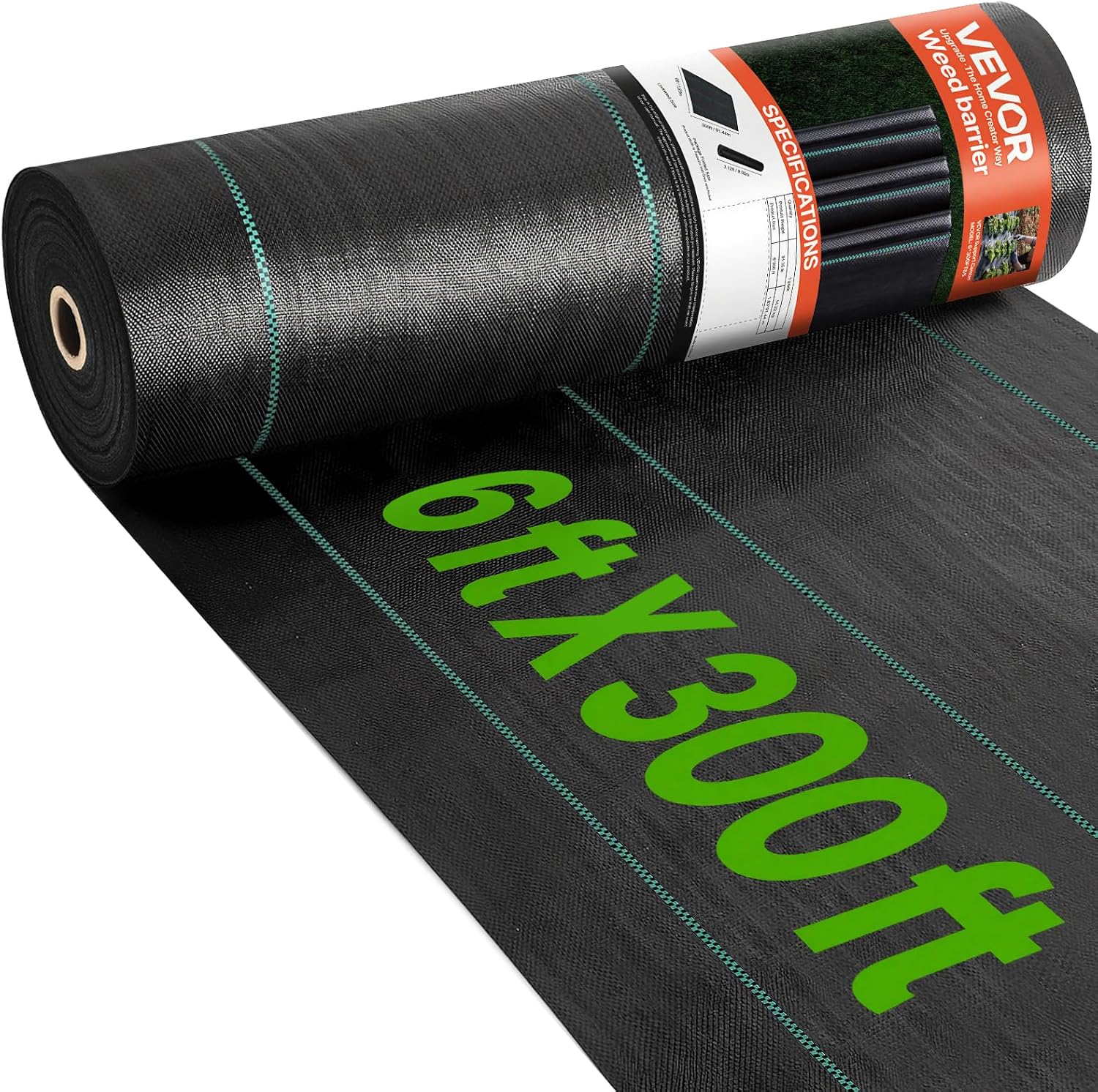
| Material | Polypropylene fabric |
|---|---|
| Size | 6 ft x 300 ft |
| Weight (fabric density) | 2.4 oz (density 12) |
This Happybuy landscape fabric is a heavy-duty woven polypropylene weed barrier sold as a 6 by 300 foot roll that covers roughly 1800 square feet when unrolled. It is used as an underlayer for beds, paths, driveways, and around plantings to suppress weeds while letting water and air reach the soil. Notable features include a tear-resistant woven construction, green guide lines for cutting and layout, and a breathable design that helps retain soil moisture without puddling. In practice the fabric is easy to cut and position and works well under mulch, gravel, or pavers; staples or landscape pins (not included) are recommended to keep edges secure. Limitations are that the black fabric will eventually show wear in high-traffic areas and persistent perennial weeds can grow through seams or holes, so occasional maintenance and careful overlap are needed. Also the roll is bulky to handle solo, so two people make installation faster on larger areas.
Best for: Gardeners or homeowners who want a practical, durable fabric to reduce routine weeding across medium to large beds and hardscape underlayers and who value easy installation and long coverage.
Less Ideal for: People needing a decorative surface finish as this is a functional underlayer rather than a visible landscape material and those with very small container or indoor plantings where a roll this large is impractical.
- Large coverage area reduces number of seams for medium to large beds
- Woven polypropylene construction offers tear resistance and weatherproofing
- Permeable design lets water and air through to protect soil health
- Printed guide lines make cutting and aligning plants easier
- Bulky roll can be awkward for one person to unroll and position
- Not a permanent barrier against aggressive perennial weeds that can exploit gaps or edges
Verdict: Choose this heavy-duty 6×300 ft woven polypropylene fabric when you need broad, breathable weed suppression that is easy to cut and lay for medium to large garden projects.
Super Geotextile Heavy Duty 5 oz Weed Barrier Fabric, 3 x 100 ft

| Material | Woven polypropylene with needle-punched layer |
|---|---|
| Weight | 5 oz |
| Length | 100 ft |
| Width | 3 ft |
This Super Geotextile 5 oz weed barrier is a thick, dual-layer landscape fabric built for long-term weed control in beds, raised planters, and under mulch or gravel. The fabric combines a woven polypropylene layer for tear resistance with a needle-punched layer that helps filter soil and retain moisture, so water and nutrients still reach plant roots. It is UV stabilized and marketed as dimensionally stable, which makes it suitable for multi-year installations where you want fewer replacements. Installation is straightforward: roll out, cut to fit beds, and secure with landscape staples before covering with mulch or decorative stone. The practical benefits are durability, reduced maintenance, and reduced weed growth without impeding irrigation. Limitations are that it is a physical barrier that can complicate future planting or deep cultivation in the covered area and that very persistent weeds with strong roots may still find gaps at edges or seams. Also it does not replace proper bed preparation or edging to prevent encroachment from surrounding turf.
Best for: Practical gardeners who want a long-lasting, no-nonsense barrier for flower beds, raised beds, or mulched landscapes and prioritize fewer replacements and lower ongoing maintenance costs.
Less Ideal for: People who frequently change planting layouts, dig beds regularly, or prefer organic no-barrier mulching methods should consider more flexible alternatives.
- True 5 oz dual-layer construction offers heavier, more durable fabric than lighter consumer options
- Woven layer provides tear resistance while needle-punched layer aids water filtration and moisture retention
- UV stabilized for long-term outdoor exposure and dimensionally stable for multi-year use
- Sold in a large 3 x 100 ft roll which reduces seams and installation time for bigger projects
- Permanent installation can make future planting or deep soil work more difficult
- May require careful edge treatment to stop aggressive weeds from bypassing the fabric
Verdict: Choose this heavy 5 oz fabric when you want a durable, long-lasting weed barrier that minimizes replacements for larger garden and landscape projects.
EXTRAEASY 3 ft x 300 ft Heavy-Duty Woven Weed Barrier Fabric (3.2 oz)

| Material | Woven PP |
|---|---|
| Weight | 3.2oz |
| Coverage | 3 ft x 300 ft (900 sq. ft.) |
This EXTRAEASY woven weed barrier is a no-nonsense option for covering large flower beds and landscape areas. The 3.2 oz woven polypropylene construction resists tearing and stands up to mulch, foot traffic, and typical outdoor exposure, so it can serve as a multi-year underlayer when covered. It blocks most sunlight to inhibit weed germination while still permitting water, air, and nutrients to reach the soil, which helps planted beds stay healthy. Installation is straightforward: roll it out, cut to shape, overlap seams, and secure with staples; it works well around trees, raised beds, and irrigation lines. Because it is heavy duty, it requires basic tools to position and may be overkill for very small or decorative beds where a thinner fabric would be easier to handle. Also note that woven fabrics can eventually allow fine weed seeds to settle on top of the material if not covered with mulch or gravel. For gardeners who want a durable, low-maintenance base layer for flower beds, this fabric reduces ongoing weeding and extends the time between maintenance sessions.
Best for: Gardeners who prioritize efficient, long-lasting weed suppression across multiple or large flower beds and want to reduce routine maintenance with a durable underlayer.
Less Ideal for: Those planting many small, densely planted or ornamental beds where frequent soil access or delicate planting is required; also not the best choice for gardeners who prefer biodegradable options.
- Heavy-duty 3.2 oz woven polypropylene resists tearing and holds up under mulch and foot traffic
- Allows water, air, and nutrients to pass through while blocking most sunlight to suppress weeds
- Large 3 ft x 300 ft roll covers extensive area, reducing installation time for big beds
- Straightforward lay-and-pin installation that integrates around trees, raised beds, and irrigation
- Thicker material can be cumbersome to cut and position for small or intricate planting areas
- Woven fabric can allow fine seeds and debris to accumulate on top if not covered with mulch or gravel
Verdict: Choose this heavy-duty woven fabric when you need a durable, water-permeable weed barrier to cut maintenance across large flower beds.
HANWRAPS 3.3 ft x 13 ft Heavy-Duty Weed Barrier Fabric (3.2 oz)

| Material | Polypropylene |
|---|---|
| Fabric weight | 3.2 oz |
| Size | 3.3 ft x 13 ft |
| Manufacturer | HANWRAPS |
HANWRAPS weed barrier fabric is a budget-friendly woven polypropylene cloth sold in a 3.3 ft by 13 ft roll intended for garden beds, pathways, and light landscaping. It is a 3.2 oz heavy-duty fabric with a high-density weave that resists tearing and holds up to sun and cold exposure, yet remains permeable so water and air reach the soil. Typical use is to lay the fabric over prepared soil, cut to shape, secure with pins, and cover with mulch or gravel to suppress weeds while retaining soil moisture. The material is easy to cut for custom beds and can be butted or overlapped to cover larger areas. Practical benefits include simple installation, decent durability for seasonal projects, and versatility for small home gardens or underlayment tasks. Limitations are the single-roll size that may require several pieces for larger beds and that woven polypropylene will eventually degrade under prolonged UV exposure, so it is better for medium-term rather than permanent installations.
Best for: A gardener on a budget who needs an affordable, easy-to-install weed barrier for small to medium beds, pathways, or under mulch and gravel.
Less Ideal for: People planning permanent, heavy-traffic installations or covering large areas who prefer industrial-grade geotextiles designed for long-term civil projects.
- High-density woven polypropylene offers good tear resistance for routine garden use
- Permeable weave lets water and air reach roots while reducing weed growth
- Easy to cut and splice for custom bed shapes and modular coverage
- Single 3.3 ft x 13 ft roll is small for larger landscapes so multiple rolls may be needed
- Woven polypropylene will slowly break down with long-term UV exposure and heavy wear
Verdict: A cost-conscious, easy-to-cut woven fabric that reliably suppresses weeds and retains soil moisture for small to medium garden projects.
DeWitt Earthmat Woven Landscape Fabric, 4 x 100 ft

| Material | Woven polypropylene |
|---|---|
| Fabric weight | 3.2 oz |
| Permeability | Allows water and dissolved nutrients through |
| Roll size | 4 x 100 ft |
The DeWitt Earthmat is a heavy-duty woven landscape fabric intended for long-term weed suppression in beds, paths, and driveways. Made from 3.2 oz woven polypropylene it resists tearing and has high tensile strength so it tolerates foot traffic, wheelbarrows, and repeated outdoor exposure. The fabric is permeable, so rain and dissolved nutrients pass to the soil while sunlight is blocked to inhibit weed growth. It comes as a 4 by 100 foot roll that you cut with ordinary shears to fit around flower beds, tree rings, and irregular edges. That roll size suits large landscaping jobs and long driveways and the woven construction typically lays flat and stays in place when pinned. Limitations are that it must be overlapped and secured properly to prevent weeds at seams, and like most woven fabrics it will slow but not eliminate deeply rooted perennial weeds without additional prep or herbicide treatment.
Best for: Gardeners and property owners who prioritize a long-lasting, low-maintenance barrier to reduce weeding on large beds, paths, or driveways and who plan to install a durable, professional-feeling solution.
Less Ideal for: Those looking for a temporary or decorative groundcover solution or gardeners who prefer organic/no-fabric methods for weed control may prefer alternatives.
- Woven 3.2 oz polypropylene construction for strong tear resistance and durability
- Permeable design allows water and nutrients to reach roots while blocking light to weeds
- Large 4 x 100 ft roll covers extensive areas without many seams
- Cuts easily with ordinary shears for clean installation around irregular edges
- Requires proper overlap and anchoring to prevent weed growth at seams or edges
Verdict: Choose this heavy-duty woven fabric when you need a durable, long-lasting weed barrier that tolerates foot traffic and large landscaping projects.
LAVEVE Heavy Duty Weed Barrier Landscape Fabric, 4 ft x 100 ft (two 4×50 ft rolls)

| Material | Polypropylene |
|---|---|
| Permeability | Breathable, allows water and air flow |
| UV resistance | Resistant to sun exposure |
| Package | Two rolls totaling 4 ft x 100 ft |
This LAVEVE landscape fabric is a heavy-duty woven polypropylene ground cover intended to suppress weeds while letting moisture and air reach the soil. It ships as two 4 ft x 50 ft rolls (total 4 ft x 100 ft) with printed guide lines that make cutting and alignment straightforward. In practice it is laid over prepared beds, cut for plantings, and secured with U-shaped pegs; the fabric’s permeability helps reduce erosion and allows irrigation to penetrate. The material is UV-resistant and built for typical garden uses such as flower beds, vegetable plots, gravel paths, and sidewalks. Because it is a woven polypropylene, it is sturdier than thin nonwoven mats and stands up to foot traffic when covered with mulch or gravel. Limitations to expect are that surface-seeded weeds or seeds blown onto mulch can still germinate on top, and long-term burial or heavy soil compaction can reduce effectiveness; occasional maintenance and proper installation around plants are required to keep beds weed-free.
Best for: Gardeners who want a durable, breathable ground cover to reduce routine weeding and tidy beds across medium-length runs of pathway or planting area, and who value a product with solid usage feedback.
Less Ideal for: People seeking a permanent, maintenance-free solution or those who prefer chemical weed control methods; also not the best choice for beds where frequent deep digging or planting changes are required.
- Woven polypropylene construction provides durable, tear-resistant coverage
- Permeable design allows water and air to reach soil, reducing erosion
- Printed guide lines make measuring and cutting easier during installation
- Suitable for multiple applications including beds, paths, and under gravel
- Comes as two rolls totaling 4 ft x 100 ft for extended coverage
- Does not prevent weeds that germinate in mulch or on top of the fabric
- Requires proper securing and occasional maintenance to stay effective
Verdict: A sturdy, breathable woven fabric that gives reliable, easy-to-install weed suppression for medium garden beds and paths backed by strong user approval.
Choosing the Right Flower Bed Weed Barrier: Key Factors to Consider
Weed Suppression Effectiveness
A barrier's primary job is to stop weed seeds and runners from reaching light and soil. Tight-woven fabrics and thick mats block light better and reduce germination, while looser weaves let small seeds through. For beds with persistent perennial weeds, look for materials rated for long-term suppression and that can be overlapped or sealed at edges.
How you anchor and cover the barrier also matters. Exposed edges invite weed growth and can let wind lift lighter fabrics. Combining a good barrier with an adequate layer of mulch improves suppression and gives you a cleaner surface.
Permeability and Drainage
Water must move through the barrier so rainfall and irrigation reach plant roots. Permeable fabrics allow water and air to pass while preventing soil compaction. Materials advertised as water-permeable vary widely in actual flow rate, so consider your garden's drainage: heavy clay needs higher permeability to avoid puddling while sandy soils tolerate lower flow.
In wet climates choose a barrier with reliable drainage ratings and test a small area. Poorly draining barriers can cause root stress, disease, or turf-like conditions beneath the fabric.
Durability and UV Resistance
Sunlight, foot traffic, and gardening tools wear barriers down over time. UV-stabilized materials last longer when left exposed at edges or under thin mulch. Thicker woven fabrics and rubberized mats resist tearing when you push a shovel through or step on a bed edge.
Consider expected lifespan versus maintenance: some biodegradable options break down after a season or two, which is fine if you plan to refresh beds frequently. For permanent plantings choose materials rated for several years of outdoor exposure.
Ease of Installation and Maintenance
A good barrier should be straightforward to cut, shape, and secure around existing plants and irregular bed lines. Some materials are rigid and hard to work with, while flexible fabrics conform to contours and are easier to staple or pin. Fastening systems and compatibility with standard garden staples reduce installation time.
Maintenance includes weeding along edges, repairing tears, and resetting pins after freeze-thaw cycles. Pick a material that matches your willingness to perform these tasks and reduces long-term upkeep rather than increasing it.
Plant Compatibility and Root Health
Barriers affect root expansion and how easily you can add or divide perennials. Some fabrics restrict lateral root growth or complicate transplanting. If you frequently divide plants, choose a barrier that can be cut and removed in sections without disturbing large areas of the bed.
Also consider whether the material holds heat; dark, non-breathable fabrics can raise soil temperatures in containers or shallow beds and stress sensitive roots during hot spells.
Environmental and Long-Term Impact
Materials range from woven polypropylene to biodegradable fiber mats. Non-biodegradable plastics can fragment over time and leave residues in soil, while biodegradable options reduce long-term waste but may break down sooner than you want. Factor in disposal, future bed renovation, and whether you prefer a low-plastic garden approach.
Think about how often you will replace the barrier and whether you need a product that can be composted or recycled at end of life.
Installation Tips for Lasting Coverage
Start with a clean bed by removing existing weeds and large roots before laying the barrier. Smooth the soil surface and rake it level so the material makes full contact and does not form pockets where weeds can establish.
Overlap edges by at least 6 inches and secure with landscape staples every 12 to 18 inches along seams and borders. Cut X-shaped slits for planting or use a small hand fork to open holes, and fold fabric back gently when inserting plants to avoid gaps that let weeds in.
- Use more staples near walkways and exposed edges.
- Cover the barrier with at least 2 to 3 inches of organic mulch to protect from UV and improve appearance.
- Check and re-staple after heavy storms or freeze-thaw cycles.
Using Barriers with Established Perennials
When retrofitting a barrier into an existing bed, work in sections rather than trying to cover everything at once. Temporarily lift plants, lay the fabric, and replace the plants with soil and mulch flush to the crown.
For clumping perennials, cut a small cross or circle in the fabric and wrap edges around the crown rather than forcing the barrier under roots. This reduces transplant shock and lets the barrier sit snugly.
- Avoid burying crowns too deeply when replacing soil.
- Label planted divisions so future maintenance is simpler.
Mulch Pairings and Aesthetic Considerations
Mulch improves the look of a bed and protects the barrier from UV. Coarser bark and shredded hardwood hide fabric lines better than very fine mulches that settle into the weave. Color choice affects heat retention; lighter mulches reflect heat while darker mulches retain warmth.
If appearance is a priority, choose a barrier with a muted color or add a wider mulch border to hide edges. Decorative groundcovers planted at the edge can further conceal material and reduce exposed fabric.
- Refresh mulch annually to maintain coverage and weed suppression.
- Use decorative edging to prevent mulch migration and reveal less fabric.
Seasonal Care and Long-Term Management
Inspect barriers in spring and fall for tears, lifted edges, or areas where weeds are poking through. Prompt repairs prevent larger infestations and make long-term control easier.
When renovating beds, remove or cut out sections of non-biodegradable fabric before turning soil. For biodegradable options plan replacements on a schedule so coverage never lapses.
- Keep a roll of staples and a utility knife with your garden tools for quick fixes.
- Plan renovation work for dry weather when fabric handles more predictably.
Environmental Tradeoffs and Sustainable Choices
If minimizing plastic is a priority, fiber-based biodegradable mats offer a lower-waste option, though they may need replacing every season or two. Conversely, durable polypropylene fabrics reduce replacement frequency but contribute to plastic in the garden long-term.
Consider sourcing recyclable materials, and avoid burying small plastic fragments in beds planned for edible plantings or future soil amendments.
- Match product lifespan to garden maintenance cadence to avoid unnecessary replacements.
- Compostable options are best for temporal projects or annualized beds.
How We Chose the Best Flower Bed Weed Barrier
We focused on attributes that matter in real flower beds rather than lab specs. Key evaluation criteria included weed suppression effectiveness, permeability and drainage, durability and UV resistance, ease of installation and maintenance, compatibility with different mulch and planting approaches, and environmental impact such as biodegradability or plastic content. We tested how fabrics and mats behave when cut around existing plants, how they handle heavy rains and surface mulch, and whether they tear or shift over a season. Products were excluded if they lacked clear material or permeability information, were unsuitable for planting between perennials, or showed consistent user reports of poor drainage or rapid degradation. We prioritized options that balance long-term weed control with good water flow and root health. The scoring labels reflect these dimensions so gardeners can weigh the tradeoffs relevant to their beds.
FAQ
Will a weed barrier stop all types of weeds?
Barriers block many surface-germinating seeds and slow runner spread, but deep-rooted perennials and weeds that spread by rhizomes may still penetrate or grow around edges. Good installation and mulch improve control, but no barrier is an absolute eradicator.
Can I plant directly through weed fabric when installing new plants?
Yes. Cut an X or circle at the planting spot and fold the fabric back to place the plant, then secure and cover with mulch. Take care to avoid creating gaps that allow light to reach the soil surface.
How long do flower bed weed barriers typically last?
Lifespan varies widely by material and exposure. UV-stabilized woven fabrics can last several years, while biodegradable fiber mats break down in one to three seasons. Climate, mulch coverage, and foot traffic all affect longevity.
Will a barrier interfere with watering or soil health?
Permeable barriers let water and air reach roots, so they usually do not harm soil health if chosen appropriately. Poorly draining or non-permeable materials can cause puddling and root stress, so pick a barrier rated for permeability suited to your soil.
How should I manage the barrier when dividing or transplanting perennials?
Work in small sections and cut the fabric as needed to lift clumps. Replace plants into the prepared holes and secure the fabric around stems to minimize exposed soil. For frequent dividing, choose a material that is easy to cut and remove.
Are biodegradable barriers a good choice for long-term beds?
Biodegradable options reduce plastic waste but usually break down faster than synthetic materials. They are a good choice for seasonal beds or where you plan regular soil turnover, but may not provide the multi-year suppression some gardeners want.
Final Verdict
Select a flower bed weed barrier based on the balance you need between suppression, drainage, and longevity. Prioritize permeability and proper installation to protect root health, and choose durability level to match how often you will renovate beds. Gardeners who want lower maintenance should lean toward longer-lasting, UV-stabilized fabrics and a thicker mulch layer; those focused on sustainability may accept more frequent replacement with biodegradable mats. Use the evaluation criteria to match a barrier to your soil, climate, and planting habits so you get reliable control without harming the plants you want to keep.
