

Note: This article contains affiliate links. If you click on these links and make a purchase, I may earn a small commission at no extra cost to you. This helps support my research and content. Read my full affiliate disclosure here.
A 20-inch bar chainsaw sits between backyard light duty saws and heavy professional rigs, giving you enough reach for mid-size trees and comfortable control for routine property work. Choosing the right 20-inch bar model matters because bar length, engine or motor torque, and chain quality change how quickly and safely you can fell trees, limbing, and buck firewood. This guide covers the top shortlisted 20-inch bar chainsaws for common homeowner and small-acreage tasks. We evaluated each option against practical yard use considerations like cutting performance, bar and chain durability, user comfort, and maintenance needs so you can pick the saw that fits how you work outdoors. Read on for the evaluation criteria and detailed buying factors that should guide your decision.
Top Picks at a Glance
| Best Overall The best all-around choice for most situations | Getell 63cc Gas Chainsaw with Two 20" Bars and Chains |  |
| Best Quality Built to a higher standard if you want something more solid | PROYAMA 68CC Gas Chainsaw with 20" and 24" Bars |  |
| Best Value The sweet spot between price and what you get | WOIZAO 58cc Gas-Powered Chainsaw with Quick-Switch Dual Bars (18/20 in) |  |
| Best Budget The cheapest option that still gets the job done reliably | GARWINNER 62cc Gas Chainsaw with 20-Inch Bar |  |
| Highest Rated A top-rated pick with lots of positive feedback | Husqvarna 450 Rancher 20" Gas Chainsaw (50.2 cc, 3.2 HP) |  |
| Most Popular A crowd favorite that many people choose with confidence | VEVOR 62cc Gas-Powered Chainsaw, 20-inch Guide Bar |  |
Getell 63cc Gas Chainsaw with Two 20" Bars and Chains

| Power Source | Gas Powered |
|---|---|
| Horsepower | 3.5 hp |
| Chain Speed | 8500RPM |
| Chain Length | 20 inches |
The Getell 63cc gas chainsaw is a ready-to-run 2-cycle saw built for heavier yard and property work. Its 3.5 hp engine reaches up to 8500 RPM, giving it the power to fell medium trees and cut firewood; the included second 20" bar and chain acts as an onsite backup to reduce downtime. Typical use is storm cleanup, limb removal, and preparing rounds for splitting where longer bar reach helps. Notable features you will use day to day include an automatic oiler to keep the bar lubricated, an anti-vibration handle to reduce arm fatigue during long sessions, a quick-start recoil for easier pull starts, and a fast-acting chain brake for safety. Practical benefits are strong cutting performance and a full out-of-the-box kit that includes spare chains and a basic tool set. Expect trade-offs common to gas saws: it requires fuel mixing, periodic tuneups, and produces noise and exhaust, and at roughly 14 pounds it is heavier than small homeowner electric models which can matter during extended overhead cutting.
Best for: A buyer who needs a capable, mains-independent saw for regular property work and firewood cutting and values having spare bars and chains on hand to keep working.
Less Ideal for: Not the best choice for light-duty users who prefer low-noise, low-maintenance electric or battery saws or for frequent indoor/close-quarters trimming.
- Powerful 63cc 2-cycle engine with 3.5 hp for demanding cuts
- Comes with two 20-inch bars and spare chains to reduce downtime
- Automatic oiler maintains bar lubrication during use
- Anti-vibration handle and anti-slip grip improve comfort on long jobs
- Quick-start recoil and included tool kit make it ready to use out of the box
- Gas engine requires fuel mixing, regular maintenance, and produces noise and exhaust
- Heavier than compact electric or battery models which can increase user fatigue
Verdict: Choose this saw if you want a beefy 20-inch gas chainsaw with spare bar and chain included so you can tackle demanding property and firewood jobs without interruption.
PROYAMA 68CC Gas Chainsaw with 20" and 24" Bars

| Power Source | Gas Powered |
|---|---|
| Horsepower | 4.5 hp |
| Chain Length | 24 inches |
The PROYAMA 68CC is a gas-powered chainsaw built to tackle demanding outdoor work like tree felling, storm cleanup, and firewood processing. Its 4.5 hp 2-cycle engine combined with supplied 20" and 24" bars gives plenty of cutting reach for large logs and thick trunks. The magnesium alloy chain brake and case improve impact resistance while keeping the unit relatively light for a high-displacement saw. Practical features include an easy-start system, automatic oiler, quick-release air filter and an anti-vibration handle that reduce operator fatigue during extended use. The design emphasizes durability and lower maintenance for regular jobsite use, but buyers should expect the usual gas-saw requirements such as periodic tune-ups, mixed fuel handling, and louder operation compared with electric models. For someone prioritizing raw cutting power and versatility on larger trees or commercial tasks, this chainsaw delivers strong performance, though it demands basic mechanical familiarity and routine servicing to stay reliable.
Best for: Buyers who need a powerful, low-maintenance-capable saw for commercial or serious homeowner tasks and who prioritize cutting performance over convenience of electric models.
Less Ideal for: Casual users who want a quiet, low-inspection tool for occasional light pruning or those unwilling to perform routine engine maintenance.
- High power 68cc 2-cycle engine (4.5 hp) suitable for heavy-duty cutting
- Includes both 20" and 24" bars for versatile cutting lengths
- Magnesium alloy chain brake and case for improved durability and impact resistance
- Easy-start system, automatic oiler, and quick-release air filter for convenient operation and maintenance
- Requires gas mixing and regular mechanical maintenance typical of large two-cycle engines
- Louder and heavier than comparable electric models which can affect comfort and noise-sensitive sites
Verdict: A robust, high-power gas chainsaw that gives professionals and serious users the bar length options and durability needed for heavy tree work.
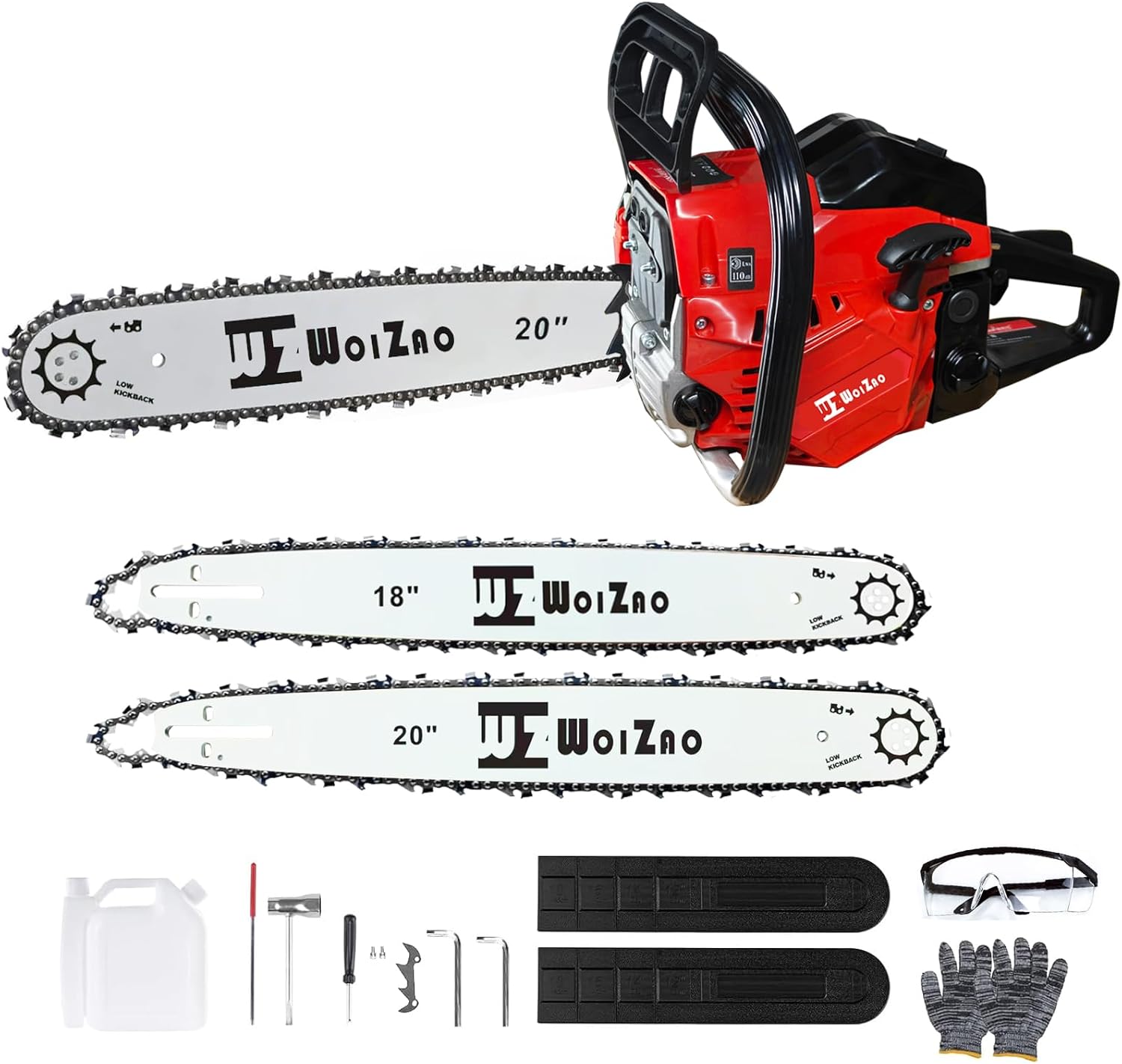
WOIZAO 58cc Gas-Powered Chainsaw with Quick-Switch Dual Bars (18/20 in)
| Power Source | Gas Powered |
|---|---|
| Horsepower | 3.4 hp |
| Chain Speed | 10,500 rpm |
| Chain Length | 20 inches |
This WOIZAO 58cc gas chainsaw is built for yard work and occasional logging where one tool must handle both trimming and heavier cuts. The 3.4 hp two-stroke engine drives a low-kickback chain at high rpm for aggressive cutting, and the quick-switch dual-bar system lets you swap between an 18-inch bar for detail work and a 20-inch bar for felling or larger firewood without buying a second saw. The saw includes an automatic oiler and anti-vibration design to reduce wear and user fatigue during longer sessions, plus a chain brake for added safety. Practical benefits are straightforward: strong cutting power, flexibility for multiple tasks, and onboard features that reduce maintenance and improve comfort. Expect typical gas-saw trade-offs such as the need for fuel and oil mixing, louder operation, and routine tuneups; this is not a zero-maintenance tool. The instructions note simple starting steps if the engine stalls, so some familiarity with small engines helps. For someone who wants a single, capable 20-inch-capable saw for woodcutting and occasional heavier work, this is a sensible choice.
Best for: A homeowner or small-acreage owner who needs one reliable gas saw that can switch between precise trimming and heavier 20-inch cuts and prefers value and utility over low-noise convenience.
Less Ideal for: People who want near-silent, low-maintenance cutting for small urban yards or those unwilling to perform engine maintenance should consider electric or battery alternatives.
- Powerful 58cc engine with 3.4 hp for efficient cutting of firewood and small trees
- Quick-switch dual-bar system lets you use 18-inch or 20-inch bars for different tasks
- Automatic oiling extends bar and chain life and reduces manual maintenance
- Anti-vibration design and chain brake improve user comfort and safety
- Requires regular gas/oil mixing, tuneups, and combustion engine maintenance
- Louder and heavier than battery or electric chainsaws, so less suited to noise-sensitive neighborhoods
Verdict: Choose this WOIZAO if you want a single, powerful 20-inch-capable gas chainsaw that neatly converts to an 18-inch setup for more precise work.
GARWINNER 62cc Gas Chainsaw with 20-Inch Bar

| Power Source | Gas Powered |
|---|---|
| Horsepower | 3.26 |
| Model Number | 62CC Green |
This GARWINNER 62cc gas chainsaw is a budget-focused 20-inch option aimed at homeowners and small‑scale landowners who need a capable saw for felling medium trees, cutting firewood, and clearing limbs. It uses a two-stroke, 3.26HP engine and an automatic oil-injection system to keep the chain lubricated during extended cuts. Safety features include dual throttle switches that must be pressed together to run and a brake baffle for emergency stopping. The package emphasizes a sharp, wear-resistant saw chain and a comfort handle to reduce fatigue during longer sessions. Expect real-world benefits like strong cutting power for its class and lower specific fuel consumption compared with older engines. Limitations are typical for value gas saws: it is heavier than small consumer models, may require setup and periodic tuning, and oil residue near the clutch area is noted during operation. Replacement parts and warranty support are offered, but buyers should be comfortable with basic chainsaw maintenance and tuning to keep performance optimal.
Best for: Best for budget-minded homeowners or small acreage owners who need a powerful, no-frills 20-inch saw for occasional felling and firewood work and who are comfortable doing basic maintenance.
Less Ideal for: Not a good fit for users who want low-noise, low-maintenance electric or battery chainsaws or who need a lightweight saw for very frequent handheld work.
- High 3.26 HP two-stroke engine suitable for felling and firewood cutting
- Automatic chain oiling reduces manual lubrication and prolongs chain life
- Safety-minded controls with dual throttle switches and an emergency brake baffle
- Sharpened, wear-resistant chain and ergonomic handle for sustained cutting comfort
- Requires routine tuning and maintenance common to gas two-stroke engines
- Heavier than small consumer electric or battery models which may tire some users
Verdict: If you want a capable, low-cost 20-inch gas chainsaw that delivers strong cutting power for homeowner timber and firewood tasks, this GARWINNER 62cc model is a practical pick.
Husqvarna 450 Rancher 20" Gas Chainsaw (50.2 cc, 3.2 HP)

| Power Source | Gas Powered |
|---|---|
| Horsepower | 3.2 hp |
| Chain Length | 20 inches |
The Husqvarna 450 Rancher is a workhorse gas chainsaw aimed at users who need reliable power for pruning, yard cleanup, and firewood cutting. It pairs a 50.2-cc X-Torq two-stroke engine with a 20-inch bar to deliver strong cutting performance and steady torque under load. Practical features include Smart Start and an air purge for easier, quicker startups and an Air Injection centrifugal pre-cleaning system that reduces debris reaching the air filter to help engine longevity. LowVib technology, an ergonomic rear handle and soft inlay improve comfort during extended use, and an inertia-activated chain brake adds a safety layer against kickback. Expect robust power and professional handling, but also the usual maintenance needs of a gas saw such as fuel mixing, routine filter and spark plug service, and higher noise and emissions compared with battery models. For buyers wanting consistent heavy-duty cutting and proven engine performance, this model is a solid choice; for very light occasional jobs, it may be more saw than necessary.
Best for: Experienced homeowners and semi-pro users who prioritize sustained cutting power and durability for frequent tree work, firewood cutting, and heavy yard cleanup.
Less Ideal for: Casual users with only occasional light trimming needs or those who prefer low-noise, low-maintenance battery tools.
- Powerful 50.2-cc X-Torq engine delivers strong cutting performance for heavy tasks
- Smart Start and air purge make starting quicker and less finicky
- Air Injection centrifugal system reduces debris in the air filter for longer service intervals
- Ergonomic design with LowVib and soft inlay improves comfort during extended use
- Requires regular gas and two-stroke oil mixing and routine maintenance inherent to gas engines
- Heavier and louder than cordless electric alternatives
Verdict: Choose the Husqvarna 450 Rancher when you need a durable, high‑power gas chainsaw for frequent heavy cutting tasks.
VEVOR 62cc Gas-Powered Chainsaw, 20-inch Guide Bar

| Engine displacement | 62CC |
|---|---|
| Horsepower | 3.8 hp |
| Chain pitch | 0.325 in |
| Chain links | 76 links |
| Fuel tank capacity | 550 ml |
The VEVOR 62cc gas-powered chainsaw is built to tackle medium to large jobs like felling small trees, cutting firewood, and heavy pruning. Its 3.8 hp two-stroke engine and 20-inch guide bar can cut logs up to about 18 inches in diameter, and a high-revving 12,000 rpm top speed helps it chew through dense wood. The saw includes practical touches such as a longer pull rope and cold/hot start settings to help with starting in varied temperatures, an emergency stop lever, and a corrosion-resistant 45# steel guide bar with a 0.325-inch pitch chain (76 links). The PA6 composite body and separate fuel and chain-oil tanks aim to reduce leaks and withstand outdoor conditions. Expect a substantial tool weight and the usual maintenance demands of a gas saw: you will need proper fuel mixing, routine chain tensioning, sharpening, and periodic engine tuneups. Also plan for noise, vibration, and protective gear when operating. For buyers who prioritize power and cut capacity, this VEVOR delivers straightforward performance, but it requires the typical hands-on upkeep of a 2-stroke gas machine.
Best for: Buyers who need brute cutting power for frequent medium-to-large tree work and accept hands-on maintenance and safety protocols to keep a gas saw performing reliably.
Less Ideal for: Casual gardeners, those who prefer low-maintenance tools, or users who need a quiet, vibration-minimized option should consider electric or battery alternatives instead.
- High cutting capacity with a 20-inch guide bar suitable for logs up to about 18 inches in diameter
- Strong 62cc two-stroke engine rated at 3.8 hp for demanding yard and light-logging tasks
- Cold and hot start options plus an extended pull rope to improve starting reliability in different conditions
- Separate chain oil tank and chain adjuster for on-the-job lubrication and easy tensioning
- Emergency stop and guard design to help limit flying debris and improve operator safety
- Requires regular gas/oil mixing, carburetor adjustments, chain sharpening, and general 2-stroke maintenance
- Relatively heavy and produces typical gas-saw noise and vibration which mandate PPE during use
Verdict: If you want a powerful 20-inch gas chainsaw that handles large-diameter cuts and you are prepared for routine 2-stroke upkeep, this VEVOR is a work-oriented choice.
Choosing the Right 20-Inch Bar Chainsaw: Key Factors to Consider
Cutting Power Relative to Job Size
Cutting power determines how quickly a 20-inch bar chainsaw will move through different wood species and diameters. For mid-size property work you will encounter both softwoods and harder hardwoods; a saw with insufficient torque will bog down on dense sections and increase operator fatigue.
Think about the typical diameter of trees and rounds you will cut. If you plan to fell multiple 12-18 inch trees or process larger rounds for firewood, prioritize higher torque and steady throttle response. Power also affects the need for repeated passes and the stress placed on the chain and bar, which in turn affects long-term maintenance needs.
Bar and Chain Construction
Bar material, thickness, and groove quality influence chain stability, wear patterns, and the frequency of bar replacement. A well-made 20-inch bar resists bending under load and sheds sawdust and debris efficiently to keep the chain seating correctly.
Chain design matters too: cutter configuration, rivet quality, and drive-link fit all impact cutting speed and how often you must sharpen or replace the chain. For regular firewood and property tasks, choose combinations that balance aggressive cutting with durability so you get predictable service life between maintenance intervals.
Ergonomics and Vibration Control
How a saw feels in your hands affects both safety and how long you can work comfortably. Vibration-absorbing handles, balanced weight distribution, and an intuitive control layout reduce fatigue during limbing and bucking sessions.
Excessive vibration not only tires the operator faster but can speed up wear on fasteners and cause loosening of components. Test or review handle shape, front and rear grip spacing, and throttle placement to ensure comfortable, secure handling for the typical tasks you will perform.
Maintenance and Sharpening Practicality
Routine maintenance drives the long-term ownership experience. Easy-to-access tensioners, clear chain adjustment windows, simple air-filter removal, and user-serviceable spark plugs or brush access simplify field servicing and minimize workshop time.
Also consider how easy it is to sharpen the chain: standard file guides, chain pitch compatibility, and availability of replacement chains make upkeep practical. If a saw demands specialized tools or complex disassembly for basic tasks, it will cost you more time over the life of the tool.
Fueling, Runtime, and Starting Behavior
For gas models, starting reliability and predictable choke behavior affect how quickly you can get to work, especially in cold or dusty conditions. For battery models, realistic runtime at cutting load and recharge options determine how many hours you can operate without interruption.
Consider how often you cut and whether you need quick refueling or extra batteries on hand. A saw with marginal runtime or finicky starting increases downtime and can interrupt chainsaw work during critical windows such as storm cleanup or firewood season.
Safety Features and Accessory Compatibility
Built-in safety features like effective chain brakes, throttle lockouts, and low-kickback chain geometry reduce the chance of accidents during common tasks. Ease of engaging and inspecting safety systems is important when you are working alone on remote property sections.
Also evaluate compatibility with common accessories such as replacement bars and chains, felling wedges, and protective guards. A chainsaw that fits widely available parts and accessories keeps ongoing ownership simple and cost-effective.
When a 20-Inch Bar Makes Sense
A 20-inch bar is a versatile length for homeowners and small-acreage stewards who need reach for mid-size trunks without the bulk of professional long bars. It clears larger-diameter rounds in fewer passes than shorter bars, which is helpful when cutting firewood or removing storm-damaged branches.
Use this size when you want a balance of reach and control: it is long enough to crosscut 18- to 24-inch logs in many cases, while still being manageable for limbing and low felling tasks. If most of your work is small saplings and pruning, a shorter bar may be easier; if you are regularly bucking large timber, consider longer professional options.
- Good for mid-size trees and larger limbs
- Balances cutting reach and operator control
- Reduces number of passes for larger rounds
Gas Versus Battery Considerations for 20-Inch Bars
Gas-powered 20-inch bar saws typically deliver higher continuous torque for extended heavy cutting, which is useful for processing lots of firewood or tackling dense hardwoods. They require routine fuel and carburetor attention, and their weight distribution often differs from battery models.
Battery-powered saws offer quieter operation, easier starting, and lower routine maintenance. For a 20-inch bar, battery models must have sufficient battery capacity and motor cooling to sustain run times at cutting load. If you favor low maintenance and shorter jobs with occasional heavy cuts, modern battery systems can be a practical choice.
- Gas: higher continuous torque, more maintenance
- Battery: quieter, easier starting, watch runtime
- Match fuel type to typical job lengths and cadence
Chain Maintenance and Sharpening Tips
Keeping the chain sharp is the single most important field habit affecting cutting speed and safety. A sharp chain cuts smoothly with less force and reduces kickback risk. Carry a round file sized to your chain pitch and a basic filing guide when you are working away from the shop.
Monitor chain tension as the bar warms up; a loose chain can come off and a too-tight chain wears sprockets prematurely. Learn to inspect cutter depth gauges and file or replace the chain when cutting slows despite correct technique.
- Carry a correct-size round file and guide
- Check tension after initial cuts and periodically
- Replace chain before severe wear damages the bar
Transport, Storage, and Bar Protection
A 20-inch bar requires proper transport and storage to protect the bar nose and maintain chain alignment. Use a rigid scabbard or bar cover for transport in trucks or trailers and secure the saw to prevent shifting that could damage the chain or bar tip.
Store the saw clean and dry with light oil on the chain if it will sit for extended periods. For winter storage, drain fuel on gas models or remove batteries on electric saws, and keep replacement chains and sharpening tools organized in a maintenance kit.
- Use a rigid scabbard for transport
- Lightly oil chain for long-term storage
- Secure saw during transport to prevent damage
Practical Safety Habits for Mid-Size Work
Always wear eye and hearing protection, chainsaw chaps, and a secure helmet when felling or bucking. Inspect the work area for escape routes, overhead hazards, and bystanders before starting a cut. For mid-size trees, plan cuts to control fall direction and use wedges as needed to prevent pinching.
Practice safe cutting technique: stand to the side of the bar path, keep a firm two-handed grip, and avoid cutting with the bar tip to reduce kickback risk. Regularly test the chain brake and never attempt adjustments while the engine or motor is running.
- Wear PPE: eye, ear, chaps, helmet
- Clear work area and plan escape route
- Avoid tip contact and test chain brake regularly
How We Chose the Best 20-Inch Bar Chainsaw
We focused selection on features that affect real-world cutting and ownership on mid-size properties. Primary evaluation criteria included cutting power and torque to measure how effectively the saw moves through hardwood and larger-diameter logs; bar and chain durability to reflect wear resistance and replacement frequency; vibration and ergonomics to indicate daily handling comfort during prolonged limbing or bucking; and maintenance accessibility, covering routine tasks such as chain tensioning, sharpening, air filter access, and spark plug or brush replacement. We also considered starting reliability and fuel or battery efficiency because dependable starting and reasonable runtime reduce downtime in the yard. Exclusions included saws with bars significantly shorter or longer than 20 inches, lawn-and-garden trimmers, and specialized felling rigs outside the mid-size homeowner scope. The final shortlist balances practical cutting capability with owner-friendly serviceability and durability for typical property and firewood work.
FAQ
Is a 20-inch bar too long for typical homeowner jobs?
A 20-inch bar is often a good middle ground for homeowners who cut mid-size trees and firewood. It may be more than needed for light pruning but offers fewer passes on larger rounds. Consider your typical log diameters and handling ability when deciding.
How often should I sharpen the chain on a 20-inch bar?
Sharpening frequency depends on wood type and dirt exposure, but many users file after several hours of cutting or whenever the saw starts to smoke or requires more force. Keeping a file and guide on hand lets you address dullness in the field.
Can battery-powered saws handle a 20-inch bar for heavy cutting?
Modern high-capacity battery saws can handle many 20-inch bar tasks, especially for intermittent cutting. Runtime and continuous torque at load are the limiting factors, so check realistic runtime figures and plan for spare batteries if you expect long sessions.
What maintenance items should I carry in the field?
Bring a round file and guide sized to your chain, a spare chain or quick links, a small wrench set for tensioning and spark plug access, and protective gloves. For gas saws carry extra fuel mix and a basic funnel.
How do I reduce kickback risk with a 20-inch bar?
Use low-kickback chains, maintain sharp cutters, avoid engaging the bar tip, and keep a solid two-handed grip. Proper cutting technique and an effective chain brake are the best defenses against kickback.
Final Verdict
A 20-inch bar chainsaw is a versatile choice for homeowners and small-acreage managers who need extra reach without the complexity of professional long bars. Prioritize cutting torque and a durable bar and chain if you process larger rounds frequently, or favor ergonomic and low-maintenance features if you plan shorter, intermittent jobs. Balance runtime or fuel considerations with maintenance accessibility and safety features to match how you work. With those tradeoffs clear, pick the saw that aligns with your cutting volume, surface conditions, and comfort so you can get safe, efficient work done on your property.
