

Note: This article contains affiliate links. If you click on these links and make a purchase, I may earn a small commission at no extra cost to you. This helps support my research and content. Read my full affiliate disclosure here.
A scoop garden shovel makes moving soil, compost, mulch, and potting mix faster and less messy than a flat spade or garden trowel. For planting beds, raised planters, and container gardens you will appreciate a tool that carries more material per scoop and sheds soil cleanly. The right shovel reduces the number of trips, limits back strain, and gives neater results when filling pots or topping beds. This guide shortlists the top options for common garden tasks across beds, borders, and containers. We evaluated capacity, handle ergonomics, and durability so you can pick a shovel suited to how you actually work in the garden. Read on to see the practical tradeoffs that matter for everyday use.
Top Picks at a Glance
| Best Overall The best all-around choice for most situations | Garden Guru Stainless Steel Heavy-Duty Garden Trowel |  |
| Best Quality Built to a higher standard if you want something more solid | Garden Works Original Soil Scoop, 18-Gauge Stainless Steel with Wood Handle |  |
| Best Value The sweet spot between price and what you get | Berry&Bird Loose Soil Scoop — Stainless Steel Garden Scoop with Ash Wood Handle |  |
| Best Budget The cheapest option that still gets the job done reliably | Mimeile Plastic Garden Hand Trowel 3‑Pack |  |
| Highest Rated A top-rated pick with lots of positive feedback | GARDEN WEASEL Oversized Potting Scoop |  |
| Most Popular A crowd favorite that many people choose with confidence | Fiskars FiberComp Soil Scoop (hand shovel) |  |
Garden Guru Stainless Steel Heavy-Duty Garden Trowel

| Blade Length | 5.5 inches |
|---|---|
| Material Type | Stainless Steel |
| Grip Type | Ergonomic |
This Garden Guru stainless steel trowel is built for regular garden use and heavier outdoor tasks where a durable scooping blade matters. The polished stainless steel blade is wide and concave, which makes scooping soil, potting mix, and fertilizer straightforward, while the thick construction resists bending when digging into compacted ground. The all-stainless design and rust-resistant finish reduce corrosion worries and simplify cleanup. The handle is shaped with a thumb rest and finger grooves for a more comfortable grip during repeated use, so longer planting or transplanting sessions feel less fatiguing. It is compact enough for raised beds and container work but strong enough for tougher soil or small digging jobs beyond the garden. The main limitations are its single-piece stainless-steel handle, which gives less cushioning than a padded grip, and the compact size that is not intended for large-scale excavation. For gardeners who want a reliable, low-maintenance hand scoop that performs across common tasks, this trowel delivers solid performance.
Best for: Gardeners who want a durable, low-maintenance hand scoop for regular planting, transplanting, and potting where blade strength and corrosion resistance matter most.
Less Ideal for: People who need cushioned grips for extended use or those tackling large-scale digging and heavy excavation should choose a bulkier shovel or a tool with a padded handle instead.
- Wide, concave stainless steel blade suited for efficient scooping and transplanting
- Thick, rust-resistant blade construction offers strength for tougher soil
- Ergonomic handle with thumb rest and finger grooves reduces hand fatigue
- All-stainless design is easy to clean and resistant to corrosion
- Handle is stainless steel without padded cushioning, so it can feel hard during long use
- Compact hand trowel size limits efficiency for large digging tasks
Verdict: A tough, rust-resistant stainless steel trowel that excels at scooping and transplanting for gardeners who want a dependable everyday hand tool.
Garden Works Original Soil Scoop, 18-Gauge Stainless Steel with Wood Handle

| Material Type | Stainless Steel |
|---|---|
| Blade Material | Stainless Steel |
| Handle Material | Wood |
| Gauge | 18 |
The Garden Works Original Soil Scoop is a compact, performance-focused hand tool built for precise transplanting, seed furrows, and soil transfer. Its 18-gauge stainless steel blade holds a tight scooped profile so you can lift and place soil with minimal spillage, while serrated edges let you slice through roots and compacted soil without disturbing nearby plants. The solid wood handle provides a comfortable, ergonomic grip and good leverage for repeated digging in tougher ground. Typical uses include moving potting mix between containers, opening consistent planting holes, and cutting through small root masses when dividing perennials. The tool is made in the USA and feels sturdy in heavy use, but its small size means it is optimized for hand-scale jobs rather than large digging or breaking hard-packed earth. If you need a precise, durable scoop for frequent transplant work and careful planting, this model performs well; if your tasks require larger excavation or extended leverage, a larger trowel or digging tool would be more efficient.
Best for: Gardeners who prioritize precise, durable hand tools for transplanting, seed placement, and frequent potting tasks and who value a solid feel and reliable cutting edge.
Less Ideal for: Users needing a larger digging tool for breaking hard-packed ground or moving large volumes of soil should choose a full-size shovel or digging spade instead.
- 18-gauge stainless steel blade resists bending and holds a clean scoop shape
- Serrated edges cut through roots and compacted soil for easier planting
- Deep bowl-like blade transfers soil between pots and beds with minimal spillage
- Ergonomic wooden handle offers comfortable grip and solid leverage
- Small, hand-tool size limits efficiency for large-scale digging or heavy excavation
- Wood handle requires occasional care to prevent weathering over time
Verdict: Buy this scoop if you want a compact, heavy-duty hand tool that delivers precise soil transfer and clean root-cutting performance for transplanting and potting tasks.
Berry&Bird Loose Soil Scoop — Stainless Steel Garden Scoop with Ash Wood Handle

| Material Type | Stainless Steel + Ash Wood |
|---|---|
| Blade Material | Stainless Steel |
| Handle Material | Wood |
| Grip Type | Ergonomic |
This oversized soil scoop is built for filling pots, moving compost and soil-shifting tasks where speed matters. The deep, mirror-polished stainless steel bowl holds a large volume and slides easily into bags, buckets and planter pots, while the smooth finish resists dirt and rinses clean. The ash wood handle is shaped for a comfortable grip and includes a leather lanyard for hanging storage. In practice it makes repetitive potting chores faster than a standard trowel and is versatile enough for transplanting seedlings, scooping compost and light weeding. The construction balances sturdiness with low weight so it feels solid without being heavy to use for long sessions. Important limitations are that the wide deep bowl is less useful for precision digging in compacted or rocky soil and the wooden handle needs occasional care to avoid weathering if left outdoors. For gardeners who prioritize efficient pot filling and routine container work, this scoop is a practical, well-made addition.
Best for: Gardeners who want to speed up potting and container tasks and value a durable, easy-to-clean tool that reduces repetitive hand strain.
Less Ideal for: People who need a narrow, precision digging tool for hard or rocky ground or who prefer all-metal handles that tolerate constant outdoor exposure.
- Large, deep stainless steel bowl speeds up filling pots and moving compost
- Mirror-polished head resists dirt and is easy to rinse clean
- Ergonomic ash wood handle provides a comfortable grip and reduces hand fatigue
- Leather lanyard allows convenient hanging storage
- Wide deep scoop is not ideal for precise digging in compacted or rocky soil
- Wood handle requires occasional maintenance if exposed to wet conditions
Verdict: Choose this scoop if you want a roomy, easy-to-clean garden tool that makes potting and compost transfers noticeably faster.
Mimeile Plastic Garden Hand Trowel 3‑Pack

| Material Type | Plastic |
|---|---|
| Handle Material | Plastic |
| Blade Material | Plastic |
| Number of Packs | 3 |
| Grip Type | Ergonomic |
These Mimeile plastic hand trowels are a simple, budget-friendly set for light gardening and outdoor tasks. Each pack includes three ergonomically gripped shovels with centimeter depth markings, making them convenient for setting seeds, bulbs and small transplants. The thick plastic construction avoids sharp edges and keeps the tools rust-free and comfortable to use; they are also handy for beach sand play or scooping pet food. Because they are fully plastic, they are best suited to loose soil, potting mix and sand rather than heavy clay or rocky ground where a metal blade would perform better. The compact 10 inch length and hanging holes make storage and transport easy for container gardeners or parents packing tools for kids. If you want a lightweight, no-fuss scoop for routine planting and light digging, this three-pack offers usable grips and depth markings at a low cost, but do not expect the durability or penetrating power of metal trowels for demanding digging jobs.
Best for: Buyers who need an inexpensive, lightweight set of hand trowels for container gardening, seed and bulb planting, beach play, or casual light-duty yard tasks.
Less Ideal for: Gardeners who regularly work in heavy clay, compacted soil, or need tools for rigorous digging and prying should choose metal or reinforced trowels instead.
- Three-piece set covers multiple spots or family use
- Ergonomic non-slip handle for comfortable short sessions
- Centimeter depth markings help plant bulbs and seeds to consistent depth
- Plastic construction will not rust and is lightweight to carry
- Multipurpose use including beach play and pet food scooping
- Plastic blade lacks the strength for heavy, compacted or rocky soil
- Not suitable for heavy-duty digging or prying tasks
Verdict: A very affordable three-pack of lightweight, rust‑free plastic trowels that give casual gardeners accurate planting depth and comfortable short‑term use.
GARDEN WEASEL Oversized Potting Scoop
| Material Type | Aluminum |
|---|---|
| Blade Material | AluminIron |
| Handle Material | Thermoplastic Rubber (TPR) |
| Grip Type | Textured |
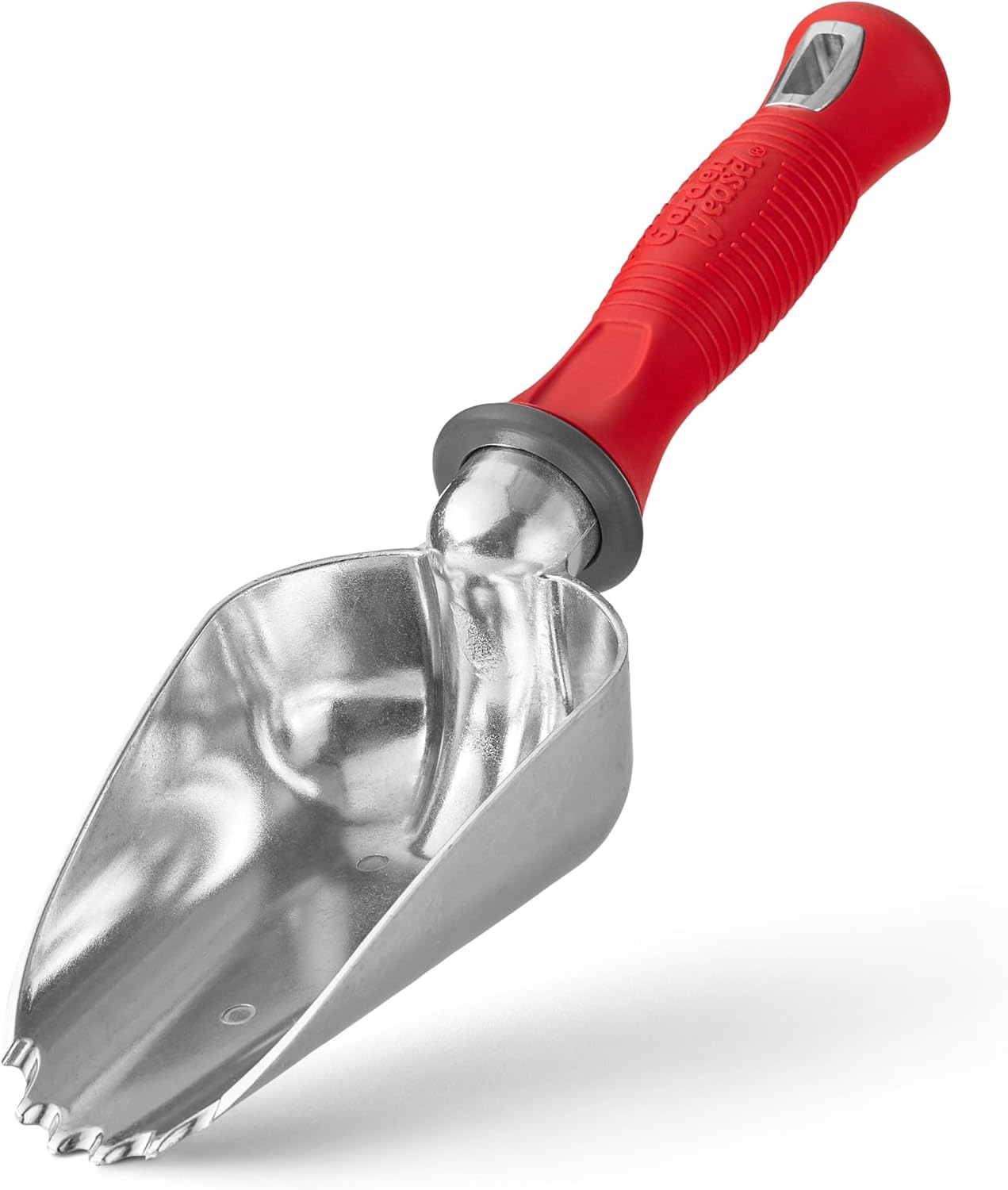
The Garden Weasel oversized potting scoop is a one-piece hand tool designed to dig, cut and scoop soil, compost, and fertilizer with minimal spillage. Its deep, 1.25-inch scoop and tall sides let you transfer loose material from bags or containers directly into pots and planting holes, while the serrated tip breaks up clumps and slices through small roots so you do not need a separate knife. Construction uses a proprietary Aluminiron alloy for a lightweight yet rust-resistant blade and a full-length tang for strength, and the 6-inch textured non-slip rubberized grip reduces hand fatigue during repetitive tasks. The tool hangs easily when not in use and rinses clean after a day in the garden. It is not intended for prying large rocks or heavy-duty digging in compacted clay where a full-size spade would be better, and very large roots will blunt the serration over time, so occasional sharpening or replacement may be needed for intensive root cutting.
Best for: Buyers who want a single, durable hand tool that speeds routine potting, planting, and bag-to-bed transfers while minimizing mess and wrist strain.
Less Ideal for: Gardeners who need a heavy digging tool for rocky or compacted soils or who frequently tackle large roots should choose a full-size spade or root saw instead.
- Deep scoop with tall sides reduces spillage when transferring soil and amendments
- Serrated tip cuts roots and breaks up clumps so you can use one tool for multiple tasks
- One-piece Aluminiron construction offers lightweight strength and corrosion resistance
- Ergonomic textured TPR grip reduces hand fatigue during extended use
- Built-in eyelet for hanging makes storage simple
- Not suitable for heavy prying or breaking up very compacted ground
- Serration can dull if used persistently on large roots
Verdict: If you want a durable, multiuse hand scoop that reduces spillage and replaces several small tools during potting and planting, this is a top practical choice.
Fiskars FiberComp Soil Scoop (hand shovel)

| Material Type | Alloy Steel |
|---|---|
| Blade Material | Fiberglass/Nylon Composite |
| Grip Type | Ergonomic |
| Item Type Name | FiberComp Soil Scoop |
| Manufacturer Warranty Description | Lifetime |
The Fiskars FiberComp Soil Scoop is a compact hand shovel built for moving soil, mulch, or potting mix quickly thanks to its oversized scoop and ergonomic grip. Its one-piece Nyglass (fiberglass/nylon) composite construction keeps the tool light for extended use while resisting rust and bending that can affect metal scoops. Typical uses include filling pots, scooping mulch into planting beds, transplanting small plants, and loading birdseed or compost. The generous scoop volume reduces trips back to a wheelbarrow and the hang hole makes storage simple. Because the handle and blade are molded as a single piece, you do not need to worry about a loose ferrule or handle separation during routine digging. The main limitations are that it is a hand tool intended for small to medium tasks rather than heavy digging in compacted soil or roots, and the composite blade is not sharpened for cutting through dense sod. For gardeners who value a lightweight, rustproof scoop for routine mulching and potting work, this is a practical, low-maintenance choice backed by a long-standing brand.
Best for: Gardeners who want a lightweight, low-maintenance hand tool for scooping mulch, potting mix, and soil during planting and routine bed work, and who prioritize ease of use and durability over heavy-duty digging power.
Less Ideal for: People who need a tool for breaking hardpan, cutting roots, or large-scale trenching should choose a full-size spade or digging fork instead.
- Oversized scoop displaces more soil or mulch per pass to speed common tasks
- One-piece fiberglass/nylon composite construction is lightweight and resists rust and bending
- Ergonomic grip improves comfort during repeated scooping
- Hang hole for convenient storage
- Backed by a lifetime warranty from the manufacturer
- Not intended for heavy-duty digging in compacted or rocky ground
- Blade is not sharpened for cutting roots or sod
Verdict: If you want a lightweight, rustproof scoop that moves mulch and potting mix quickly with minimal effort, this Fiskars FiberComp Soil Scoop is an easy practical pick.
Choosing the Right Scoop Garden Shovel: Key Factors to Consider
Scoop Capacity and Shape
Scoop capacity determines how much material you can move per lift. Larger, deeper bowls reduce trips when filling pots or topping beds, but an oversized scoop can be awkward to maneuver in narrow spaces or heavy when full.
Shape matters too. A rounded bowl holds loose mixes well and helps prevent spillover when walking. A flatter or squared front can be helpful for scraping the bottom of bags or leveling soil, but it may not retain fine compost as effectively. Match capacity and shape to the tasks you do most often.
Handle Length and Grip
Handle length affects reach and leverage. A longer handle reduces bending when filling raised beds or wheelbarrows, while a shorter handle offers better control for working inside pots and tight beds.
Grip material and shape influence comfort during repeated use. A contoured or cushioned grip reduces hand fatigue and helps prevent slipping with wet hands. Consider a D-handle or a straight shaft depending on whether you need two-handed leverage or one-handed precision.
Blade Material and Construction
Blade construction affects long-term durability. Stamped steel scoops are lightweight and often cheaper, but heavy-duty forged blades resist bending when working with dense mixes or occasional gravel. Coatings can slow corrosion, especially if you frequently move damp compost or salty soil.
Look for welded handles or fully forged one-piece constructions if you expect heavy use. Reinforced lips on the scoop front will withstand scraping and bag work without deforming.
Weight and Balance
A shovel that is too heavy will tire you quickly, especially when lifting full scoops repeatedly. Conversely, an overly light tool may feel unstable when loaded and can transmit shock into your hands when contacting hard material.
Balance is the ability of the tool to feel neutral when loaded, reducing wrist strain. Well-balanced shovels put the center of mass close to the hand grip so each lift requires less corrective effort. Consider the typical load you will carry when evaluating weight and balance.
Edge Design and Cleaning
The scoop edge affects how the tool cuts into bags and scrapes the bottom of containers. A slightly tapered or sharpened edge helps when slicing into compacted potting mix or breaking crusted soil in bags.
Smooth interior surfaces and simple seams reduce places where compost and clay can stick. Tools that shed dirt easily save time during cleanup and reduce the risk of cross-contaminating beds with persistent debris.
Storage and Corrosion Resistance
How you store a shovel and its resistance to rust affect longevity. Tools with protective coatings, stainless components, or powder-coated finishes tolerate damp potting sheds and greenhouses better.
Compact shapes or hanging holes make storage easier in crowded sheds. If you work in coastal or high-humidity areas, prioritize corrosion-resistant finishes and consider removable grips that dry quickly.
Best Scoop Shapes for Different Tasks
Different scoop shapes suit distinct jobs in the garden. Deep, rounded scoops excel at moving loose potting mix and compost because they contain material without spilling, making them ideal for filling pots or raised bed cells.
Shallower, wider scoops work well for spreading mulch or leveling soil over a surface. A squared front edge helps when scraping the last bits from a bag or compacting mix into a container. Think about whether you need containment for walks across the yard or scraping ability for finishing jobs.
- Deep rounded scoop: best for moving loose mixes and compost
- Shallow wide scoop: better for spreading and leveling
- Squared front: useful for scraping bags and compacting soil
Ergonomics That Reduce Fatigue
Ergonomic features like a cushioned grip, a slight shaft bend, or a D-handle change how forces travel through your arms and back. If you often move full scoops, prioritize a comfortable grip and a handle length that keeps your torso upright.
Try to match handle type to typical tasks. A short straight shaft is easier for potting benches and working in low troughs. A longer shaft provides leverage when lifting into wheelbarrows and reduces bending when working in taller beds.
- Cushioned grips reduce vibration and blistering during extended work
- Appropriate shaft length prevents excessive bending and back strain
Maintenance Tips to Extend Tool Life
Rinse off sticky compost and damp soil after use and let the shovel dry before storing to prevent rust. A light brushing and occasional oiling of metal parts keeps moving joints and welds healthy.
Sharpen or file the front lip if it becomes rounded from scraping; this restores bag-cutting performance and reduces the effort needed when slicing into compacted mixes. Replace worn grips to maintain safety and comfort.
- Rinse and dry after use to limit corrosion
- Oil joints and touch up coatings as needed
- Sharpen front lip to maintain scraping performance
Using a Scoop Shovel Efficiently
Load the scoop with smaller amounts when working alone to avoid overfilling and to keep balance. Use your legs and hips to lift rather than relying entirely on your back, especially when moving heavy, wet material.
When filling containers, hold the shovel close to the rim and tip gently to control flow. For bag work, use the front edge to score and then pull material toward you instead of forcing the shovel deep into the bag.
- Keep loads manageable to protect your back
- Use controlled tipping for neat filling
- Score bags with the edge rather than stabbing
Choosing a Shovel for Specific Garden Types
Container gardeners and small-space growers benefit from compact, short-handled scoops that offer precise control and easy storage. Raised bed gardeners often prefer longer-handled scoops that reduce stooping when filling beds or moving amendments.
For mixed-use suburban gardens where you handle bags, wheelbarrows, and pots, a medium-length handle with a moderate bowl capacity gives the best versatility. Match the tool to the majority of your daily tasks rather than rare jobs.
- Small-space gardens: short, precise scoops
- Raised beds: longer handles for reduced bending
- Mixed-use: medium-length, versatile scoops
How We Chose the Best Scoop Garden Shovel
We focused on the features that most affect day-to-day use in a mixed home garden. Key evaluation criteria included scoop volume and shape, which determine how much material a gardener can move in a single pass and how well the blade releases soil or compost. Handle comfort and length were assessed for leverage, reach, and reduced wrist strain during repeated scooping. Construction and blade material were reviewed for resistance to bending, corrosion, and edge wear when digging into compacted or gravelly mixes. Balance and weight were considered because a heavy, poorly balanced shovel becomes tiring over long sessions. Finally we looked at ease of maintenance and how readily dirt and sticky compost clean off the scoop. We excluded specialty digging shovels intended primarily for breaking ground, narrow transplant trowels, and folding or ultralight backpack tools that sacrifice capacity. Our shortlist reflects garden-ready shovels designed for moving bulk potting mix, mulch, soil amendments, and similar materials rather than tools for trenching or edging.
FAQ
What size scoop is best for filling pots?
A medium to deep scoop with a rounded bowl is usually best for filling pots because it holds enough mix to reduce trips while still fitting into container openings. Choose a handle length that lets you reach into pots without overstretching.
Can I use a scoop shovel for heavy soil or gravel?
Scoop shovels are designed for loose materials like compost, potting mix, and mulch. For heavy clay or gravel, look for a shovel with a thicker, reinforced blade or a tool specifically meant for digging and heavy loads because standard scoops can bend.
How should I care for a scoop shovel to prevent rust?
Clean off damp soil and compost after each use, allow the shovel to dry, and store it in a dry location. Periodically rub a light coat of oil on metal surfaces and touch up any worn paint or coatings to slow corrosion.
Is a D-handle better than a straight shaft for scooping?
A D-handle offers better two-handed leverage and control when lifting heavy scoops, while a straight shaft gives more reach and easier maneuvering in tight spaces. The better choice depends on whether you prioritize lifting power or precision.
How heavy should a scoop shovel be?
Aim for a balance where the unloaded tool is light enough for comfortable handling but substantial enough to feel stable when carrying full scoops. Many gardeners prefer a medium-weight shovel that reduces fatigue without sacrificing control.
Final Verdict
Pick a scoop shovel that matches the materials you handle most often and the space you work in. Prioritize scoop capacity and a comfortable handle if you move lots of potting mix or mulch daily; favor a compact shape and shorter shaft for container work. Tradeoffs are normal: larger scoops speed work but increase load weight, while lighter tools reduce fatigue but may feel less stable when full. Focus on the criteria discussed here to choose a shovel that keeps your planting and filling tasks quicker and easier.
